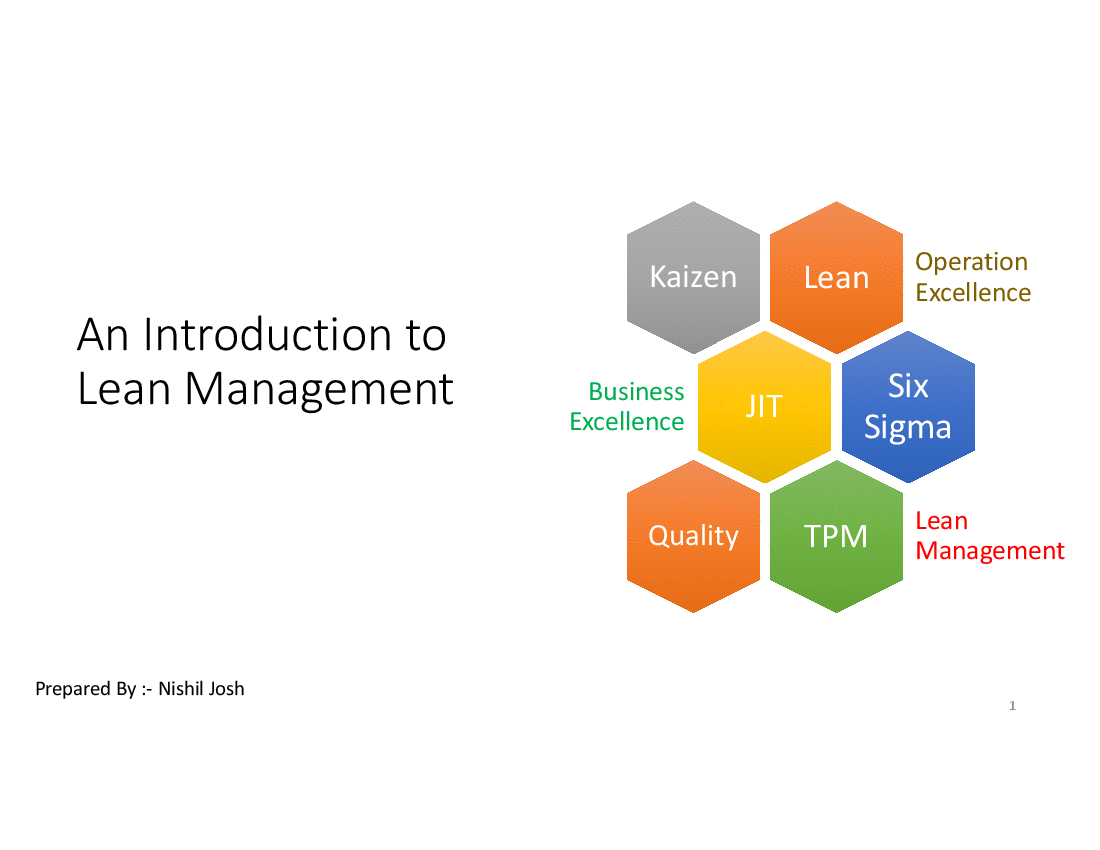
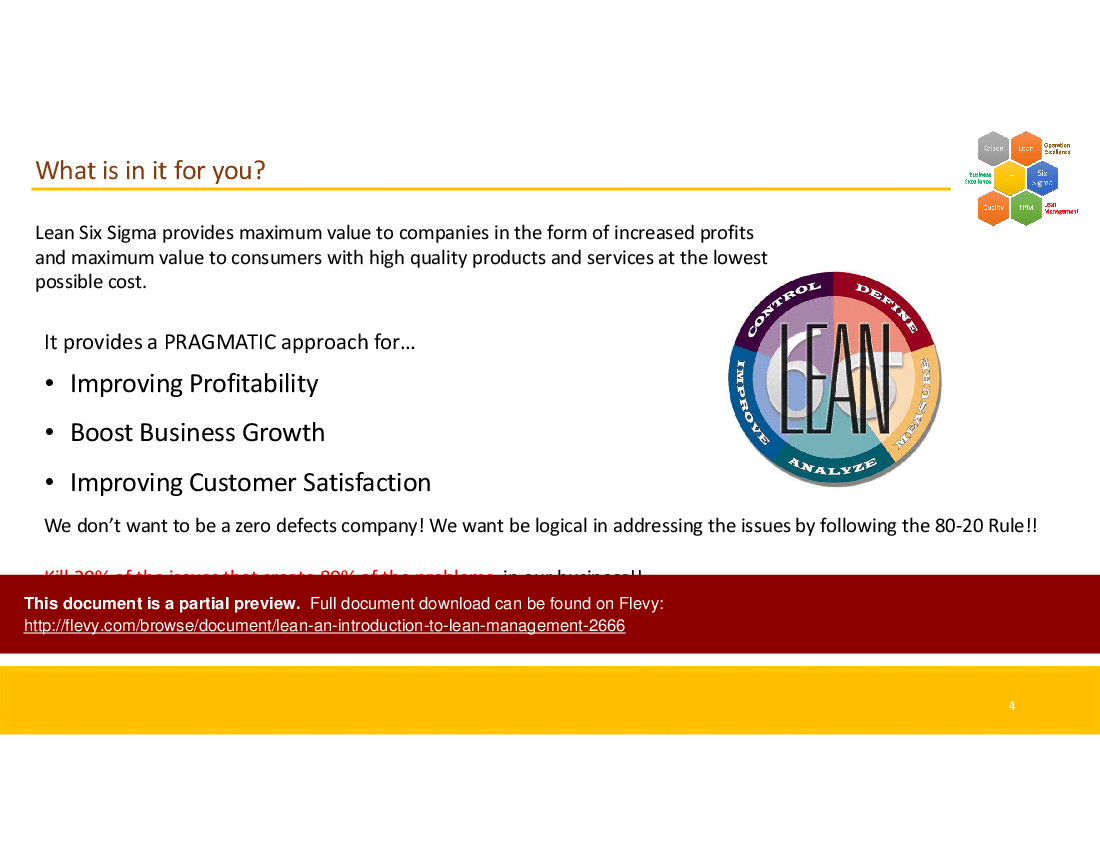
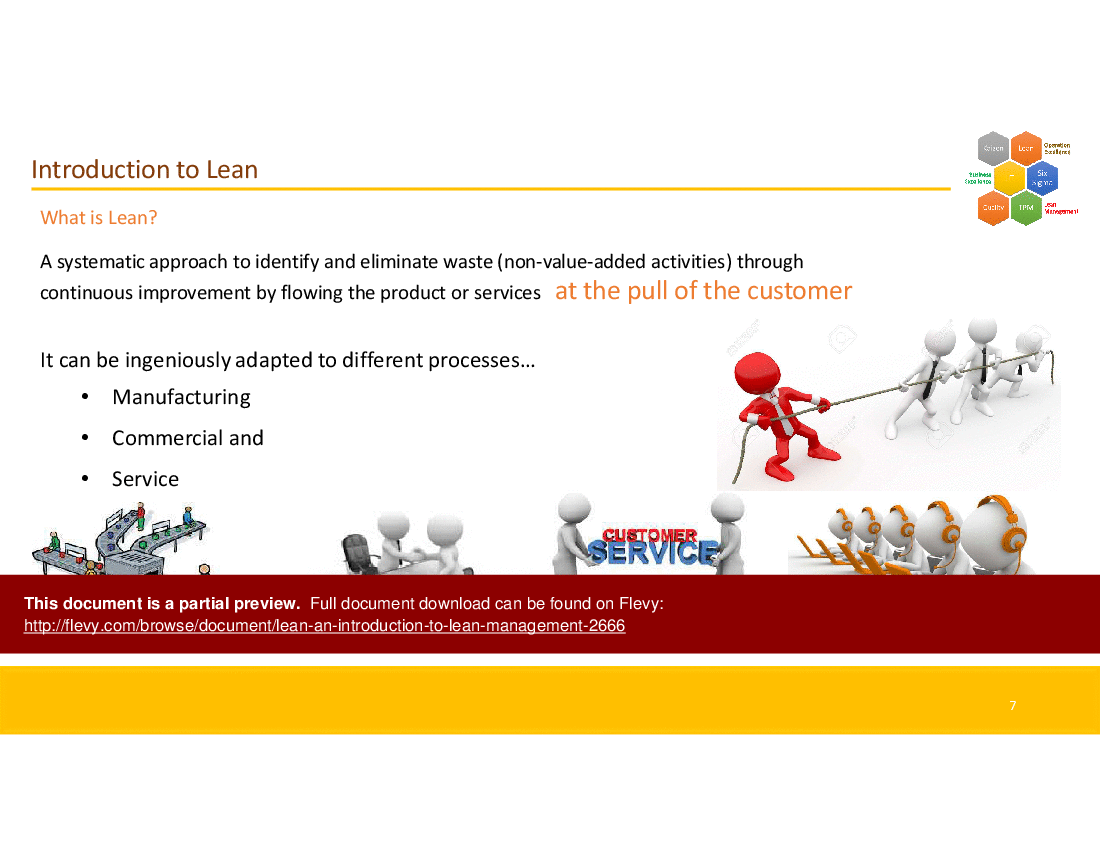
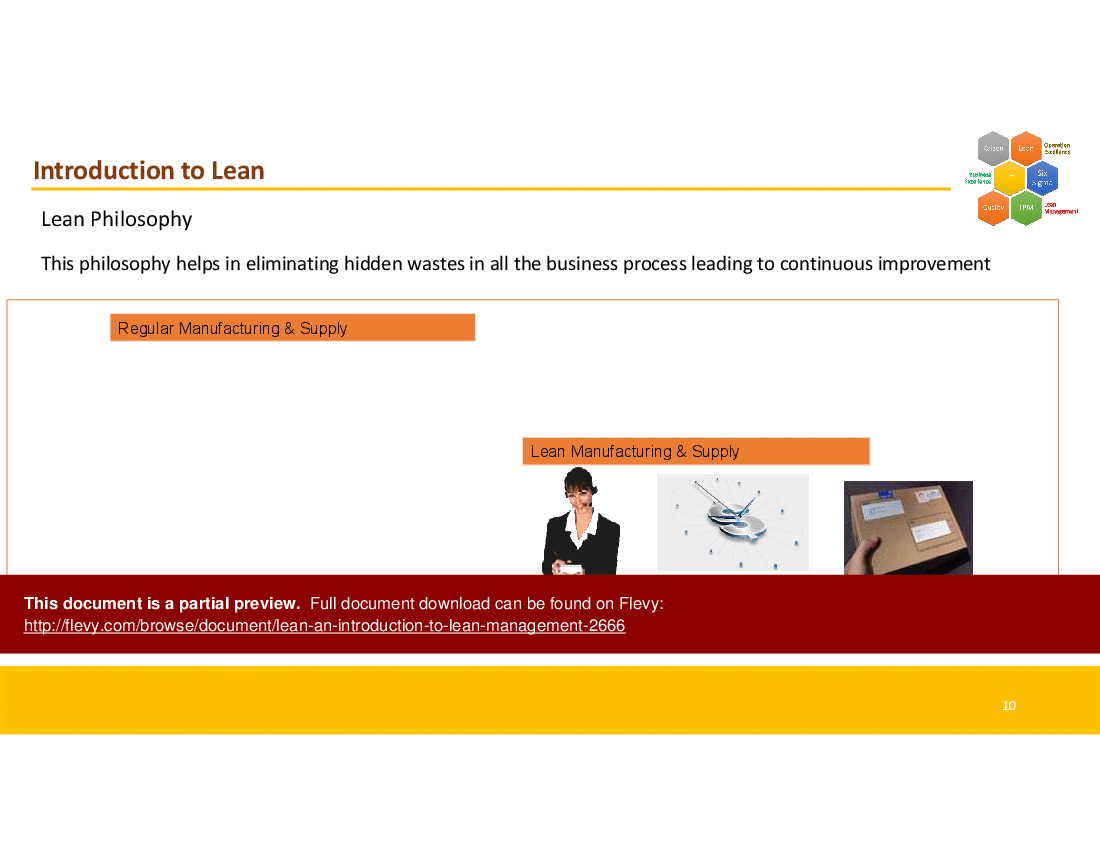

Introduction to Lean Management   50-slide PPT PowerPoint presentation slide deck (PPTX)
$24.99

Introduction to Lean Management (50-slide PPT PowerPoint presentation slide deck (PPTX)) Preview Image
Log in to unlock full preview.
Introduction to Lean Management (50-slide PPT PowerPoint presentation slide deck (PPTX)) Preview Image
Arrow   Click main image to view in full screen.

Introduction to Lean Management (PowerPoint PPTX Slide Deck)

PowerPoint (PPTX) 50 Slides

$24.99

Add to Cart


Immediate download
Fully editable PowerPoint
Free lifetime updates

BENEFITS OF THIS POWERPOINT DOCUMENT

  1. Understanding the concepts of "value added" and "non-value added" activities (from customer
  2. Understand the types of waste and common Lean tools.
  3. Provide a foundational understanding to Lean Management and Lean principles.

PPT DESCRIPTION

Editor Summary A 50-slide PowerPoint introduction to Lean Management focused on the Theory of Constraints (TOC), presenting core TOC tools including the Five Focusing Steps, Thinking Processes, Throughput Accounting, Drum-Buffer-Rope, Current Reality Tree, Future Reality Tree, Strategy & Tactics Tree, Value Stream Mapping templates, and a 5S guide. Read more

This presentations is cover basic understanding of Lean management and very useful for shop floor team. This presentation can be modified to your own business needs. It is suitable for formal classroom training.

This presentation covering the following topics:
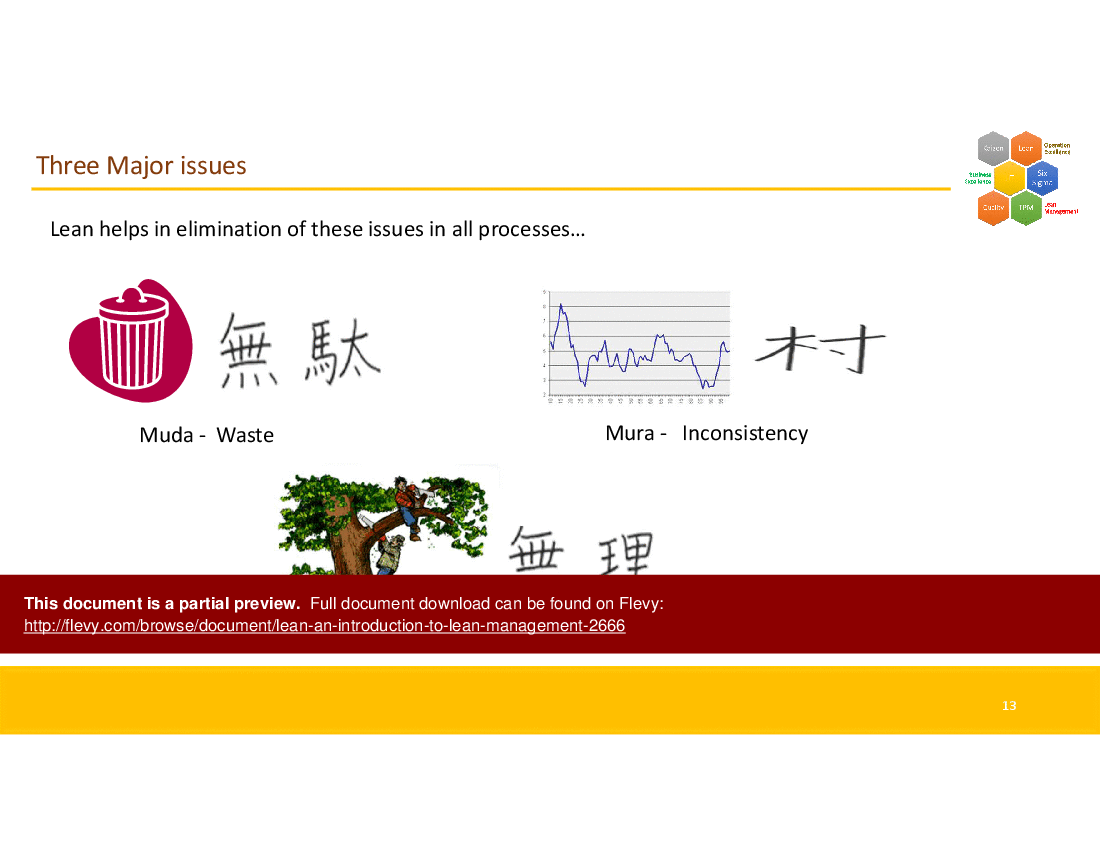
Lean Management & 5 Lean Principals
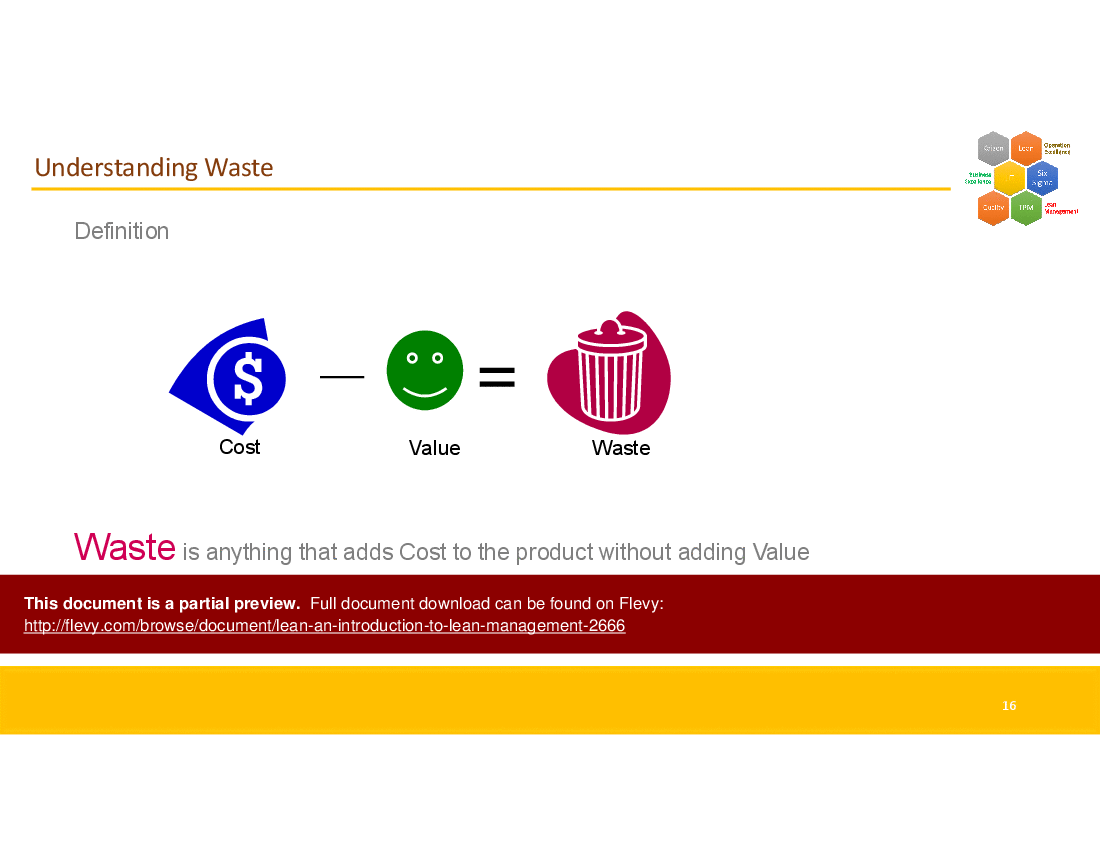
Understanding the concepts of "value added" and "non-value added" activities (from customer point of view)
Type of wastages
1. Over-production against plan
2. Waiting time of operators and machines
3. Unnecessary transportation
4. Waste in the process itself
5. Excess stock (inventory) of material and components
6. Non value-adding motion
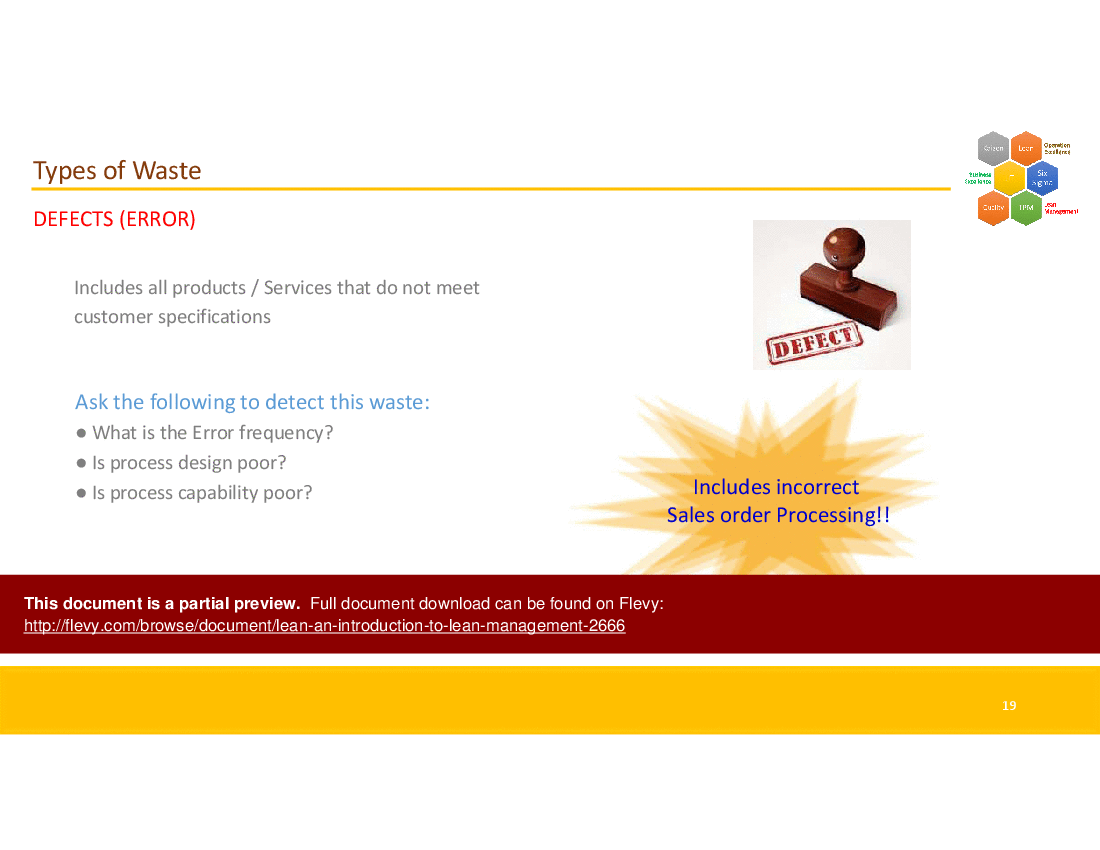
7. Defects in quality
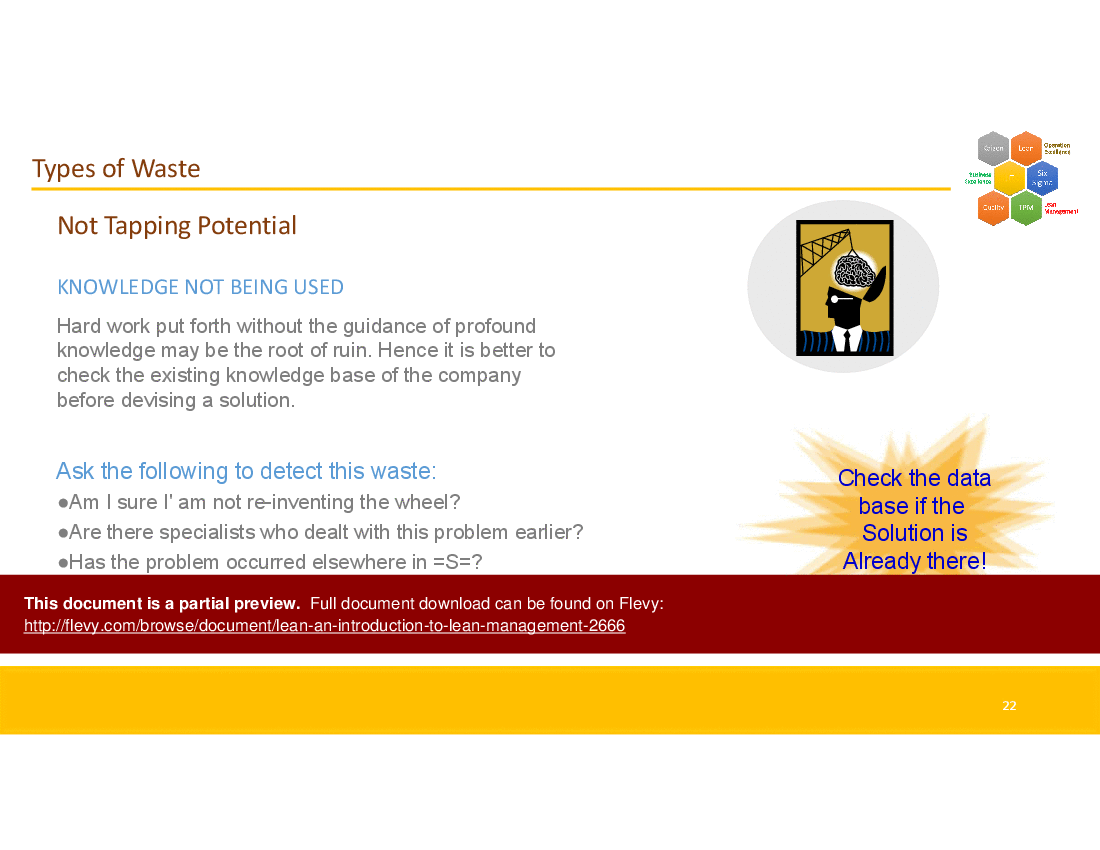
8. Not tapping potential (unutilized resources)

Got a question about the product? Email us at support@flevy.com or ask the author directly by using the "Ask the Author a Question" form. If you cannot view the preview above this document description, go here to view the large preview instead.

MARCUS OVERVIEW

This synopsis was written by Marcus [?] based on the analysis of the full 50-slide presentation.


Executive Summary
The Theory of Constraints (TOC) is a robust methodology designed to identify and improve the most critical limiting factor, or constraint, that hinders an organization from achieving its goals. This approach emphasizes a systematic focus on constraints, enabling organizations to enhance throughput and profitability. Key tools within TOC include the Five Focusing Steps, Thinking Processes, and Throughput Accounting, all aimed at optimizing performance and driving rapid improvements. Implementing TOC can lead to increased profits, improved capacity, reduced lead times, and minimized inventory.

Who This Is For and When to Use
•  Manufacturing executives seeking to enhance operational efficiency
•  Process improvement teams focused on maximizing throughput
•  Supply chain managers looking to reduce bottlenecks
•  Continuous improvement professionals aiming to implement systematic methodologies

Best-fit moments to use this framework:
•  When identifying bottlenecks in production processes
•  During strategic planning sessions to prioritize improvement initiatives
•  In training workshops aimed at enhancing team understanding of constraints

Learning Objectives
•  Define the Theory of Constraints and its core principles
•  Identify the current constraint within a manufacturing process
•  Implement the Five Focusing Steps to improve throughput
•  Analyze problems using the Thinking Processes to uncover root causes
•  Apply Throughput Accounting to guide management decisions
•  Evaluate the effectiveness of improvements made to constraints

Table of Contents
•  Introduction to Theory of Constraints (page 1)
•  Core Concepts of TOC (page 2)
•  The Five Focusing Steps (page 3)
•  Thinking Processes Overview (page 4)
•  Throughput Accounting Fundamentals (page 5)
•  Drum-Buffer-Rope Methodology (page 6)
•  Types of Constraints (page 7)
•  Implementing TOC: A Simplified Roadmap (page 8)
•  Integrating TOC with Lean Manufacturing (page 9)

Primary Topics Covered
•  Theory of Constraints Overview - A methodology for identifying and improving the most significant limiting factor in achieving organizational goals.
•  Five Focusing Steps - A cyclical process for identifying and eliminating constraints to enhance throughput.
•  Thinking Processes - Tools designed to analyze and resolve problems by identifying root causes of undesirable effects.
•  Throughput Accounting - An accounting method that emphasizes increasing throughput over cutting expenses.
•  Drum-Buffer-Rope - A synchronization method that aligns production with the constraint while minimizing inventory.
•  Types of Constraints - Various forms of constraints including physical, policy, paradigm, and market constraints.

Deliverables, Templates, and Tools
•  Current Reality Tree for documenting the current state and identifying undesirable effects
•  Future Reality Tree for visualizing the desired future state post-improvement
•  Strategy and Tactics Tree for organizing action plans to achieve improvements
•  Throughput Accounting metrics for measuring performance and guiding decisions
•  Value Stream Mapping templates for visualizing production flow and identifying constraints
•  5S implementation guide for organizing work areas to enhance performance

Slide Highlights
•  Diagram illustrating the Five Focusing Steps and their cyclical nature
•  Current Reality Tree showcasing the identification of root causes of undesirable effects
•  Future Reality Tree depicting the envisioned improvements after implementing changes
•  Overview of Throughput Accounting metrics and their significance in decision-making
•  Visual representation of the Drum-Buffer-Rope methodology in action

Potential Workshop Agenda
Introduction to Theory of Constraints (60 minutes)
•  Overview of TOC principles and methodologies
•  Discussion on the importance of identifying constraints

Five Focusing Steps Workshop (90 minutes)
•  Interactive session on applying the Five Focusing Steps
•  Group activity to identify and analyze constraints in a simulated environment

Thinking Processes Deep Dive (60 minutes)
•  Exploration of tools used in the Thinking Processes
•  Case study analysis to practice identifying root causes

Customization Guidance
•  Tailor the Current Reality Tree to reflect specific organizational challenges and constraints
•  Adjust the Five Focusing Steps to align with unique operational processes
•  Incorporate industry-specific metrics into Throughput Accounting for better relevance

Secondary Topics Covered
•  Policy constraints and their impact on organizational performance
•  The role of paradigms in shaping operational behaviors
•  Market constraints and their implications for production capacity
•  Strategies for overcoming policy constraints through effective change management

Topic FAQ

What are the Five Focusing Steps in the Theory of Constraints and how are they applied?

The Five Focusing Steps are a cyclical process: identify the system constraint, exploit it, subordinate other processes to it, elevate the constraint, and repeat the cycle. They are applied by locating the throughput limiter, making quick gains around it, aligning surrounding processes, investing to raise capacity, and then searching for the next constraint — Five Focusing Steps.

How do Thinking Processes help uncover root causes in a production problem?

Thinking Processes are logical tools for mapping cause-and-effect relationships to reveal root causes of undesirable effects. Practitioners document the current state with a Current Reality Tree, test causal links, and design a Future Reality Tree to predict outcomes after changes, enabling structured root-cause analysis using the Current Reality Tree.

How does Throughput Accounting change decision making compared with traditional accounting?

Throughput Accounting prioritizes increasing throughput (sales minus truly variable costs) and treats inventory as a liability, shifting decisions toward maximizing flow and profitable output rather than simply cutting operating expenses. Metrics used under this approach guide investment and operational choices through Throughput Accounting metrics.

What should I look for when choosing a TOC or Lean training deck for shop-floor teams?

Choose a deck that explains core TOC concepts (Five Focusing Steps, Drum-Buffer-Rope), includes practical templates (Value Stream Mapping, Current Reality Tree), offers workshop agendas and 5S guidance, and allows customization for specific processes; Flevy's Introduction to Lean Management includes these elements and a suggested workshop agenda and templates.

How can I estimate the value of using TOC templates on a manufacturing line?

Estimate value by modelling throughput gains and inventory reductions using Throughput Accounting, and by mapping flow improvements with Value Stream Mapping to forecast lead-time and work-in-process reductions. Templates that capture throughput and inventory changes make it easier to quantify expected gains using Throughput Accounting metrics.

I need to reduce lead time on my production line—what TOC tool should I apply first?

Start by walking the line to observe work-in-process accumulations and operator constraints, then apply the Five Focusing Steps to confirm the bottleneck and use Drum-Buffer-Rope to synchronize upstream flow to the identified constraint and minimize WIP, beginning with Drum-Buffer-Rope.

How can I train shop-floor teams to identify types of waste using Lean and TOC?

Use classroom modules on Lean’s 5 principles and the eight waste types, combine with Value Stream Mapping exercises to visualize non-value activities, and run interactive 5S sessions for workplace organization; Flevy's Introduction to Lean Management includes 5S guidance and waste-type coverage for shop-floor training and practical exercises.

Can TOC be integrated with Lean practices and what does that integration look like?

Yes. TOC focuses on elevating the system constraint while Lean removes non-value-added activities in processes subordinated to that constraint. Integration typically uses Value Stream Mapping to expose wastes and applies the Five Focusing Steps to sequence improvements that increase throughput while reducing waste, using Value Stream Mapping.

Document FAQ
These are questions addressed within this presentation.

What is the Theory of Constraints?
The Theory of Constraints is a methodology focused on identifying and improving the most significant limiting factor that hinders an organization from achieving its goals.

What are the Five Focusing Steps?
The Five Focusing Steps are a cyclical process that includes identifying the constraint, exploiting it, subordinating other processes to it, elevating its performance, and repeating the cycle.

How does Throughput Accounting differ from traditional accounting?
Throughput Accounting emphasizes increasing throughput and views inventory as a liability, contrasting with traditional accounting that treats inventory as an asset.

What is Drum-Buffer-Rope?
Drum-Buffer-Rope is a method for synchronizing production to the constraint while minimizing inventory and work-in-process.

What types of constraints exist?
Constraints can be physical (equipment), policy (procedures), paradigm (beliefs), or market-related (demand).

How can Lean Manufacturing integrate with TOC?
Lean Manufacturing techniques can complement TOC by eliminating waste in processes that are subordinated to the identified constraints.

What is a Current Reality Tree?
A Current Reality Tree is a diagram that documents the current state of a process, identifying undesirable effects and tracing them back to their root causes.

How can I identify the current constraint in my process?
Walk through the manufacturing process, observe work-in-process accumulations, and consult with operators to identify areas where throughput is limited.

What is the significance of policy constraints?
Policy constraints are often the most common and can be difficult to identify, as they stem from long-established practices and beliefs within the organization.

How do I ensure continuous improvement using TOC?
Implement the Five Focusing Steps as a continuous improvement cycle, always looking for the next constraint to address once the current one is resolved.

Glossary
•  Theory of Constraints - A methodology for identifying and improving the most significant limiting factor in achieving goals.
•  Constraint - Any factor that limits an organization from achieving its goals.
•  Throughput - The rate at which sales are generated minus truly variable costs.
•  Drum-Buffer-Rope - A method for synchronizing production to the constraint while minimizing inventory.
•  Current Reality Tree - A diagram documenting the current state and identifying root causes of problems.
•  Future Reality Tree - A diagram showing the desired future state after implementing changes.
•  5S - A methodology for organizing work areas to improve efficiency.
•  Value Stream Mapping - A tool for visualizing production flow and identifying constraints.
•  Thinking Processes - Tools for analyzing and resolving problems in complex systems.
•  Throughput Accounting - An accounting method emphasizing throughput over expense reduction.
•  Policy Constraint - A constraint arising from established procedures or regulations.
•  Paradigm Constraint - A constraint based on deeply ingrained beliefs or habits.
•  Market Constraint - A limitation imposed by the external marketplace on production capacity.
•  Kaizen - A philosophy of continuous improvement through small, incremental changes.
•  TPM - Total Productive Maintenance, a proactive approach to maintenance.
•  SMED - Single-Minute Exchange of Dies, a method for reducing changeover times.
•  Poka-Yoke - A technique for mistake-proofing processes to prevent defects.
•  Jidoka - Intelligent automation that emphasizes human oversight in production processes.
•  Overall Equipment Effectiveness - A measure of how effectively a manufacturing operation is utilized.
•  Short Interval Control - A technique for ongoing reviews to improve performance.
•  Investment - Money tied up in physical assets like inventory and equipment.
•  Operating Expense - Costs incurred to create throughput, excluding truly variable costs.

Source: Introduction to Lean Management PowerPoint (PPTX) Presentation Slide Deck, Nishil Josh


$24.99

Add to Cart
  

ABOUT THE AUTHOR

Author: Nishil Josh
Additional documents from author: 23

I am a Business Excellence Professional with over 25 years of experience in Manufacturing Operations, Quality Assurance & Improvement, and Resource Management across various industry sectors. Throughout my career, I have specialized in managing production activities, optimizing processes, and implementing best practices to enhance operational efficiency and productivity.

My expertise includes ... [read more]

Ask the Author a Question

You must be logged in to contact the author.

Click here to log in Click here register

Did you know?
The average daily rate of a McKinsey consultant is $6,625 (not including expenses). The average price of a Flevy document is $65.
Bundle and save! You can save up to % with bundles!

View bundle(s)


Trusted by over 10,000+ Client Organizations
Since 2012, we have provided business templates to over 10,000 businesses and organizations of all sizes, from startups and small businesses to the Fortune 100, in over 130 countries.
AT&T GE Cisco Intel IBM Coke Dell Toyota HP Nike Samsung Microsoft Astrazeneca JP Morgan KPMG Walgreens Walmart 3M Kaiser Oracle SAP Google E&Y Volvo Bosch Merck Fedex Shell Amgen Eli Lilly Roche AIG Abbott Amazon PwC T-Mobile Broadcom Bayer Pearson Titleist ConEd Pfizer NTT Data Schwab


Read Customer Testimonials

 
"I have used FlevyPro for several business applications. It is a great complement to working with expensive consultants. The quality and effectiveness of the tools are of the highest standards."

– Moritz Bernhoerster, Global Sourcing Director at Fortune 500
 
"FlevyPro has been a brilliant resource for me, as an independent growth consultant, to access a vast knowledge bank of presentations to support my work with clients. In terms of RoI, the value I received from the very first presentation I downloaded paid for my subscription many times over! The "

– Roderick Cameron, Founding Partner at SGFE Ltd
 
"As a young consulting firm, requests for input from clients vary and it's sometimes impossible to provide expert solutions across a broad spectrum of requirements. That was before I discovered Flevy.com.

Through subscription to this invaluable site of a plethora of topics that are key and crucial to consulting, I "

– Nishi Singh, Strategist and MD at NSP Consultants
 
"If you are looking for great resources to save time with your business presentations, Flevy is truly a value-added resource. Flevy has done all the work for you and we will continue to utilize Flevy as a source to extract up-to-date information and data for our virtual and onsite presentations!"

– Debbi Saffo, President at The NiKhar Group
 
"As an Independent Management Consultant, I find Flevy to add great value as a source of best practices, templates and information on new trends. Flevy has matured and the quality and quantity of the library is excellent. Lastly the price charged is reasonable, creating a win-win value for "

– Jim Schoen, Principal at FRC Group
 
"I have found Flevy to be an amazing resource and library of useful presentations for lean sigma, change management and so many other topics. This has reduced the time I need to spend on preparing for my performance consultation. The library is easily accessible and updates are regularly provided. A wealth of great information."

– Cynthia Howard RN, PhD, Executive Coach at Ei Leadership
 
"As a consulting firm, we had been creating subject matter training materials for our people and found the excellent materials on Flevy, which saved us 100's of hours of re-creating what already exists on the Flevy materials we purchased."

– Michael Evans, Managing Director at Newport LLC
 
"FlevyPro provides business frameworks from many of the global giants in management consulting that allow you to provide best in class solutions for your clients."

– David Harris, Managing Director at Futures Strategy


Save with Bundles

This document is available as part of the following discounted bundle(s):

Save %!
Lean Management Training Course

This bundle contains 6 total documents. See all the documents to the right.

$50.00


Add Bundle & Save


Customers Also Like These Documents

Explore Templates on Related Management Topics


Your Recently Viewed Documents
Receive our FREE Primer on Lean Management

This 32-page presentation from Operational Excellence Consulting explains the Lean Management philosophy, based on the Toyota Production System (TPS). Learn to eliminate waste.









