 Click main image to view in full screen.
Indonesia's Singapore Energy Opportunity – PDF
PDF document 16 Pages


BENEFITS OF THIS DOWNLOADABLE PDF DOCUMENT
- Provides a structured framework for assessing where Indonesia can capture strategic value across the energy-export value chain.
- Helps decision-makers compare export-only, export-plus-industrialization, and regional-corridor strategies through a common strategic lens.
- Identifies critical control points, value-leakage risks, execution bottlenecks, and optionality requirements affecting the Indonesia–Singapore energy opportunity.
ENERGY INDUSTRY PDF DESCRIPTION
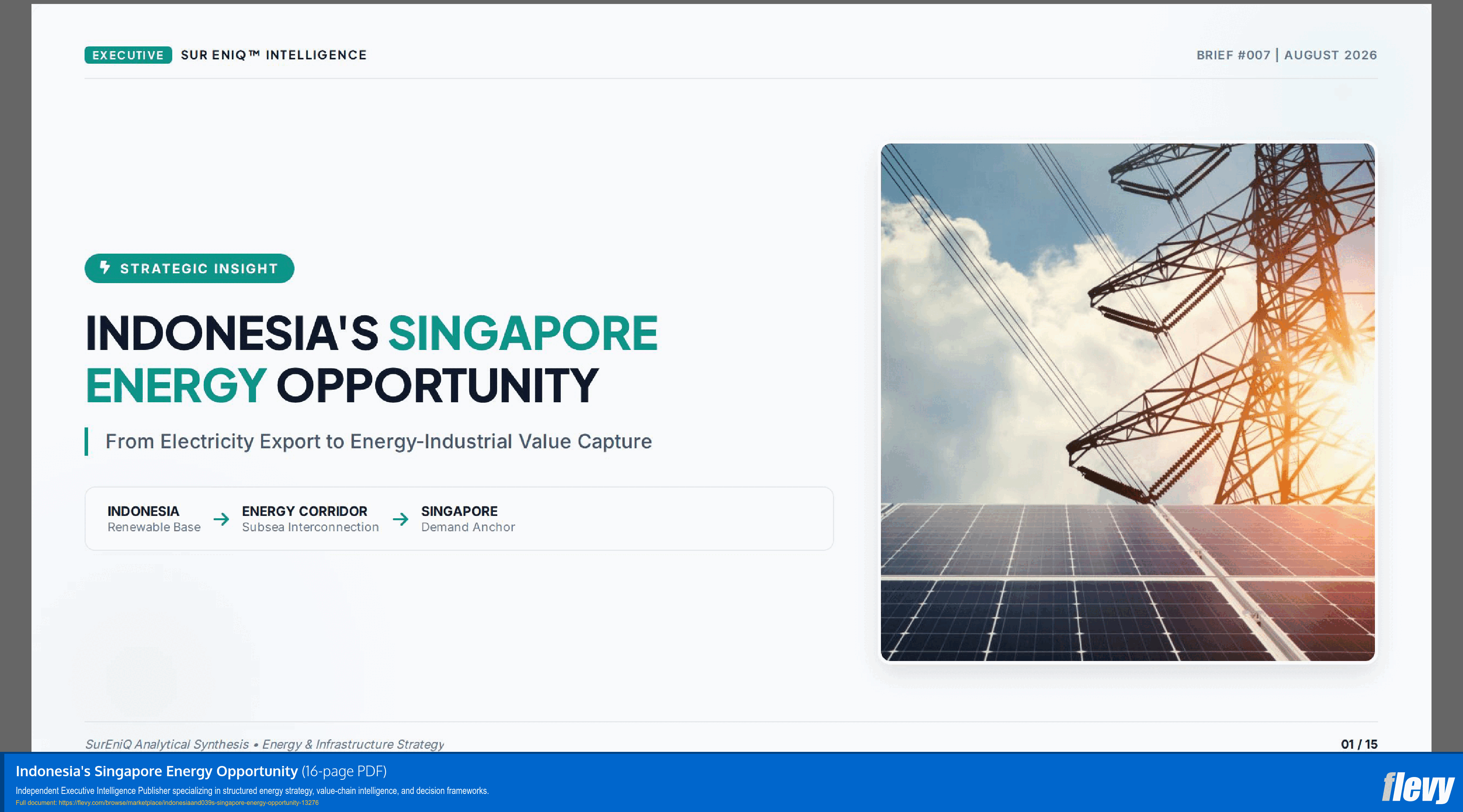
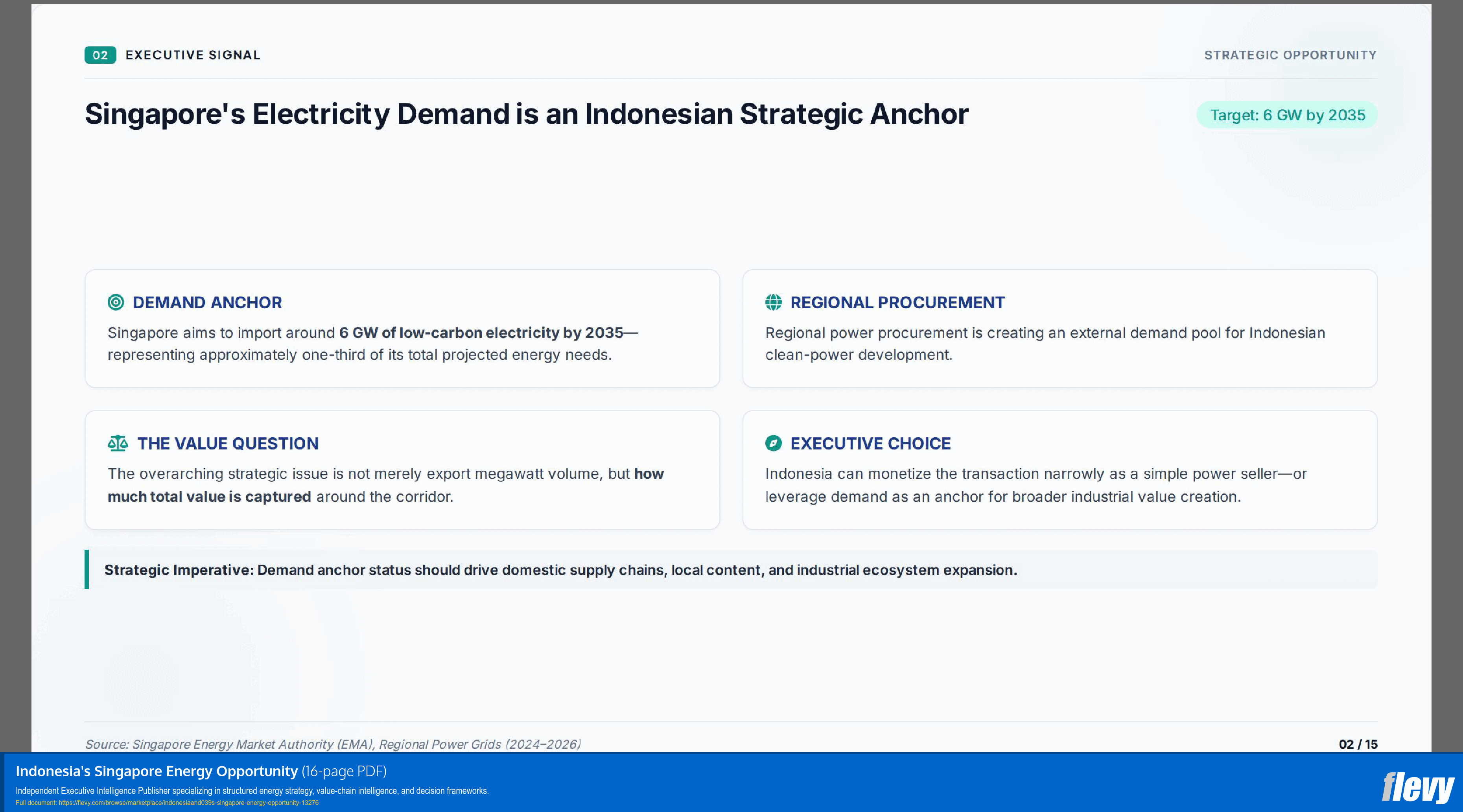
Singapore's growing demand for imported low-carbon electricity is creating more than an electricity-export opportunity for Indonesia. It creates a potential strategic anchor around which Indonesia can capture value across energy infrastructure, industrial activity, technology, finance, and regional market positioning.
This Executive Intelligence Brief examines how Indonesia can move beyond a narrow export model and evaluate Singapore's demand as part of a broader energy-industrial corridor strategy.
The brief begins with Singapore's emerging regional electricity-import architecture and the competitive landscape involving Indonesia, Malaysia, Vietnam, Australia, and other regional suppliers. Rather than treating Singapore simply as an electricity buyer, the analysis reframes Singapore as a potential demand anchor—and asks where the resulting economic value can accrue.
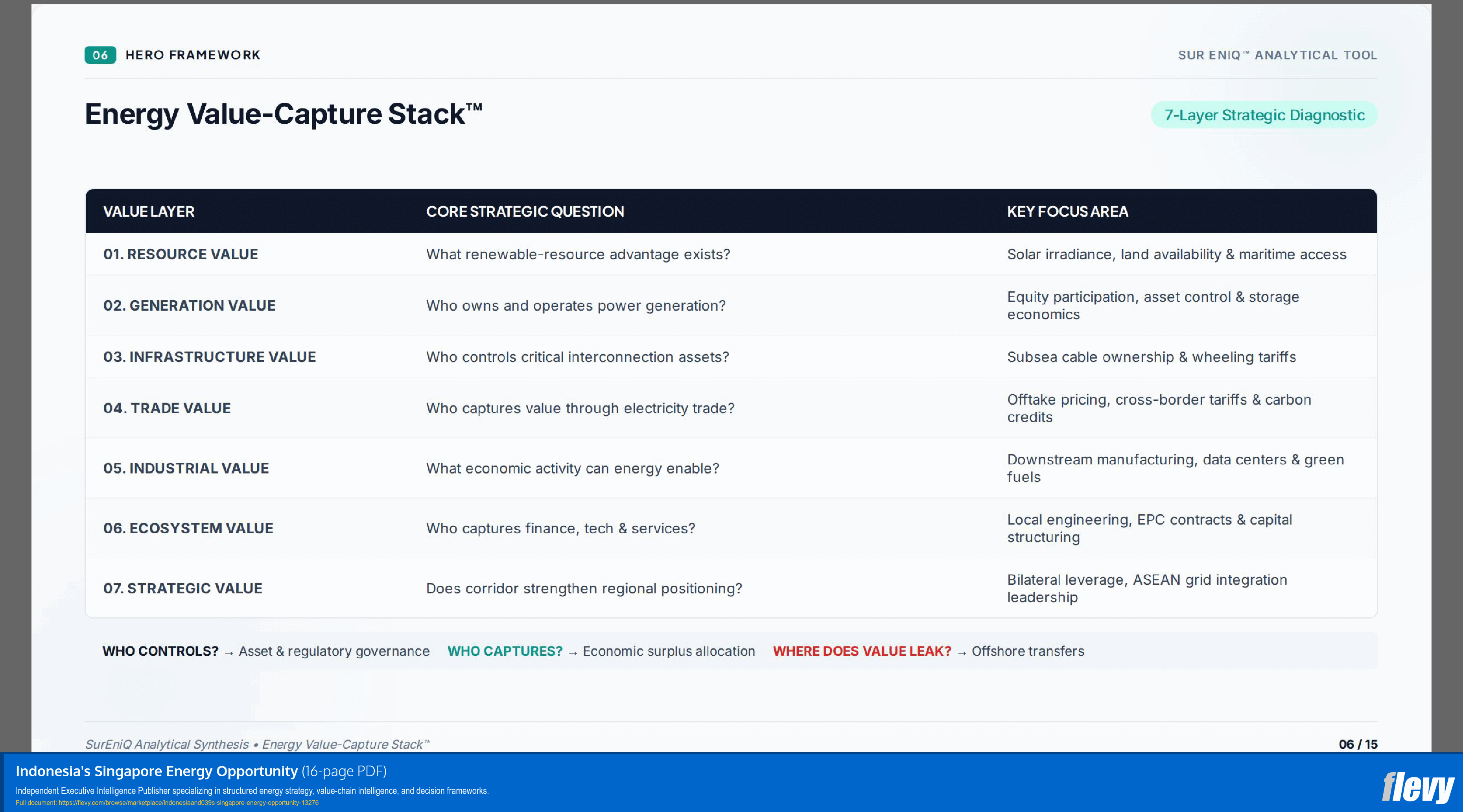
At the centre of the brief is the Energy Value-Capture Stack™, a seven-layer framework covering Resource, Generation, Infrastructure, Trade, Industrial, Ecosystem, and Strategic Value. The framework helps decision-makers examine three critical questions: who controls each scarce node, who captures the resulting value, and where value can leak outside Indonesia.
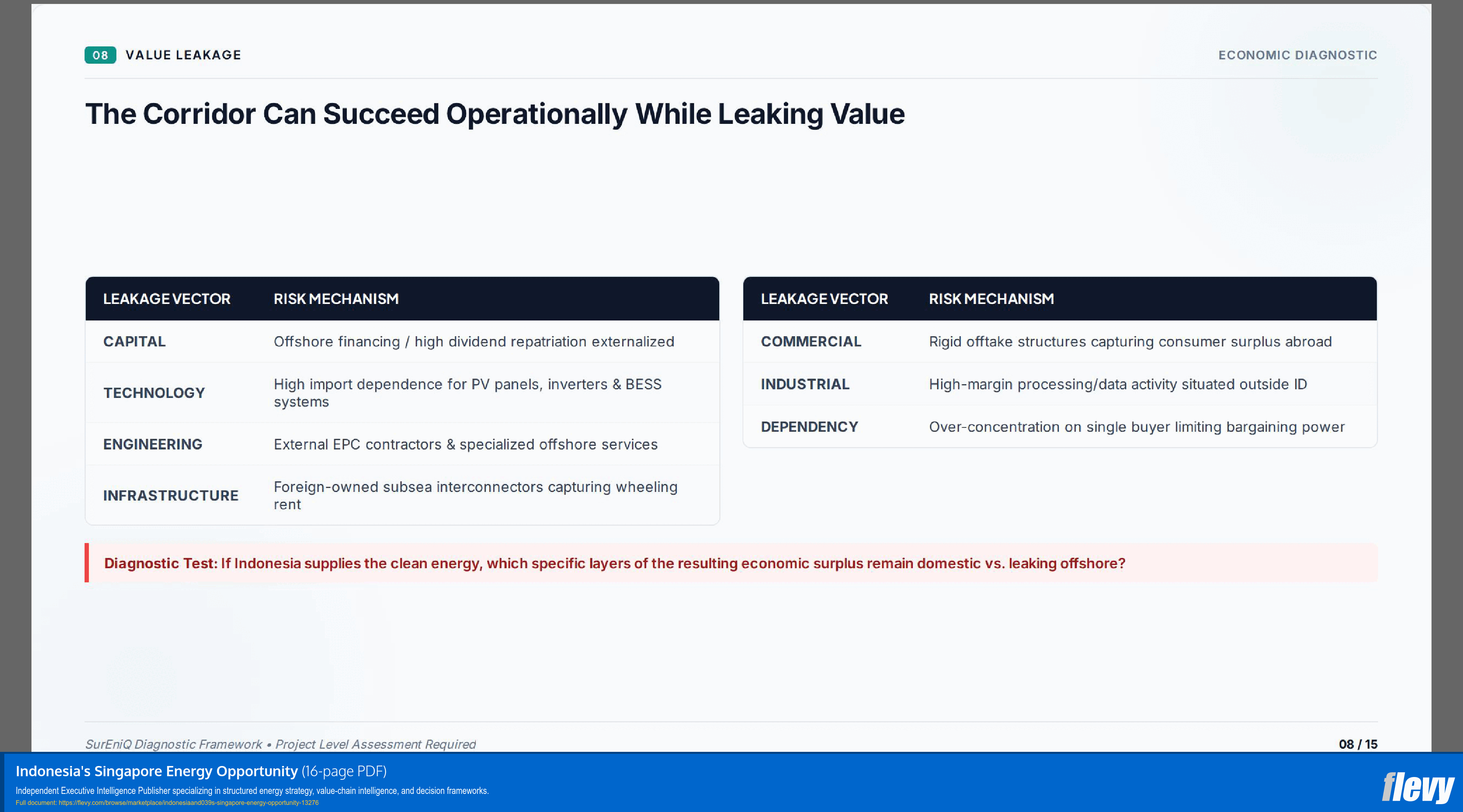
The brief then applies this logic to critical control points including generation ownership, interconnection infrastructure, electricity offtake and pricing, technology and engineering, financing, industrial demand, and regional market interfaces. A dedicated Value Leakage diagnostic highlights how an export corridor can succeed operationally while still producing limited domestic value capture.
The analysis also tests the industrial dimension. Clean electricity alone does not automatically create industrial competitiveness, so the brief evaluates power cost, power quality, connectivity, industrial ecosystem, market access, policy alignment, and alternative demand pathways. Candidate opportunity classes include data centres, advanced manufacturing, battery and materials industries, green fuels and derivatives, and supporting energy and infrastructure activities.
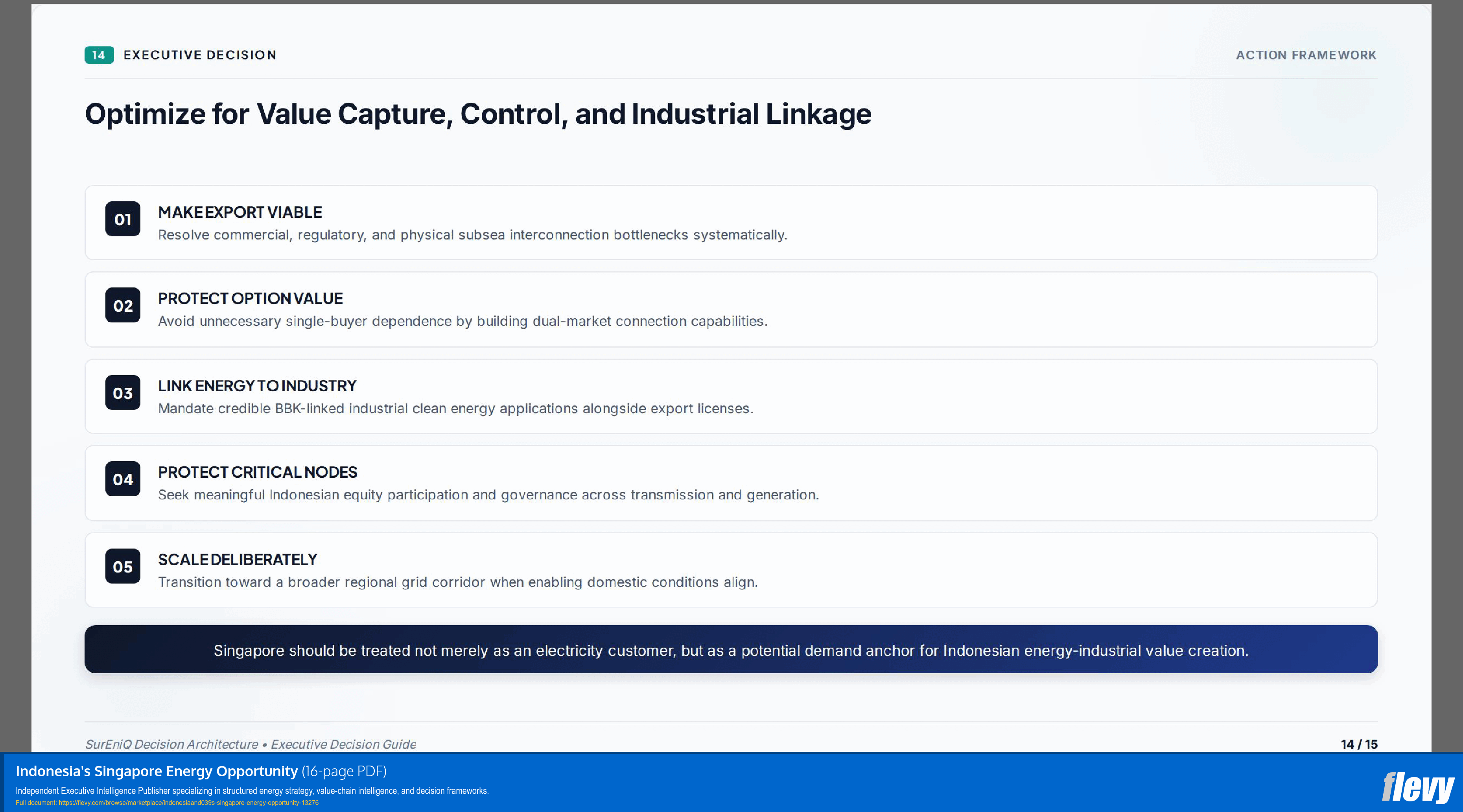
A dual-market optionality lens addresses the strategic risk of excessive dependence on a single external buyer. The brief also identifies commercial, infrastructure, regulatory, and institutional bottlenecks that could determine whether Indonesia captures the opportunity within Singapore's 2035 import window.
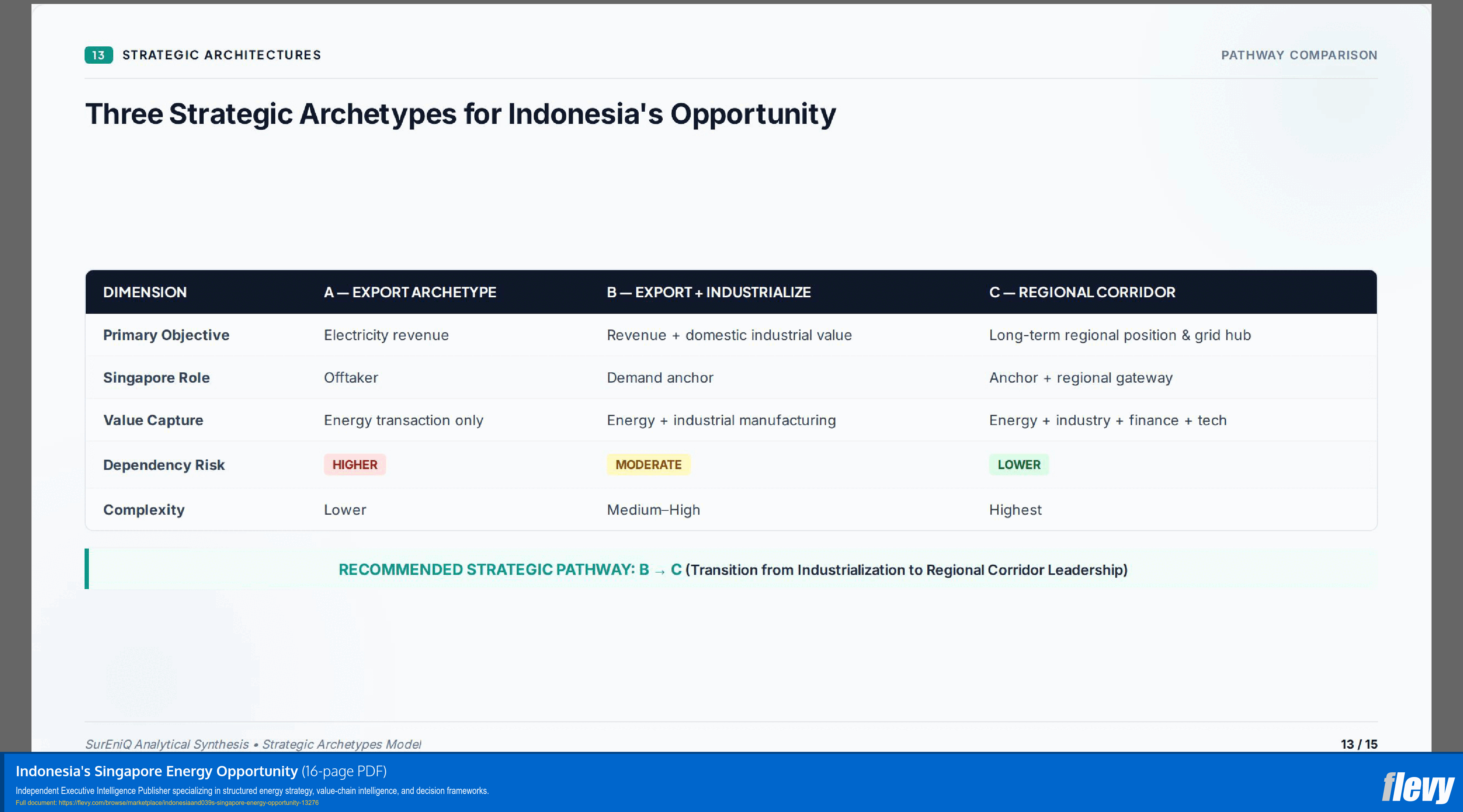
Finally, the brief presents three strategic architectures: Export, Export + Industrialize, and Regional Corridor. The recommended pathway is B → C—first make the export relationship commercially and physically viable, then progressively connect it to domestic industrial value creation and a broader regional energy corridor as enabling conditions align.
This is not an investment case, financial model, engineering feasibility study, or legal opinion. It is an executive decision-intelligence asset designed to help energy companies, infrastructure investors, industrial strategists, policymakers, and regional decision-makers evaluate how cross-border electricity demand can translate into broader strategic value.
Got a question about the product? Email us at support@flevy.com or ask the author directly by using the "Ask the Author a Question" form. If you cannot view the preview above this document description, go here to view the large preview instead.
Source: Best Practices in Energy Industry, Market Entry PDF: Indonesia's Singapore Energy Opportunity PDF (PDF) Document, Wisnu Pandega Wardana
ABOUT THE AUTHOR

I am an independent Industrial Intelligence and Strategic Innovation Publisher focused on developing structured business intelligence, innovation frameworks, and opportunity-oriented research for decision-makers.
My work focuses on translating emerging technologies, industrial transformation, sustainability, resource efficiency, and market shifts into structured intelligence assets that
... [read more]
Ask the Author a Question
You must be logged in to contact the author.




























