 Click main image to view in full screen.
Import Landed Cost & Customs Valuation Reconciliation Tower – Excel XLSX
Excel (XLSX) + Zip archive file (ZIP)


COST OPTIMIZATION EXCEL DESCRIPTION
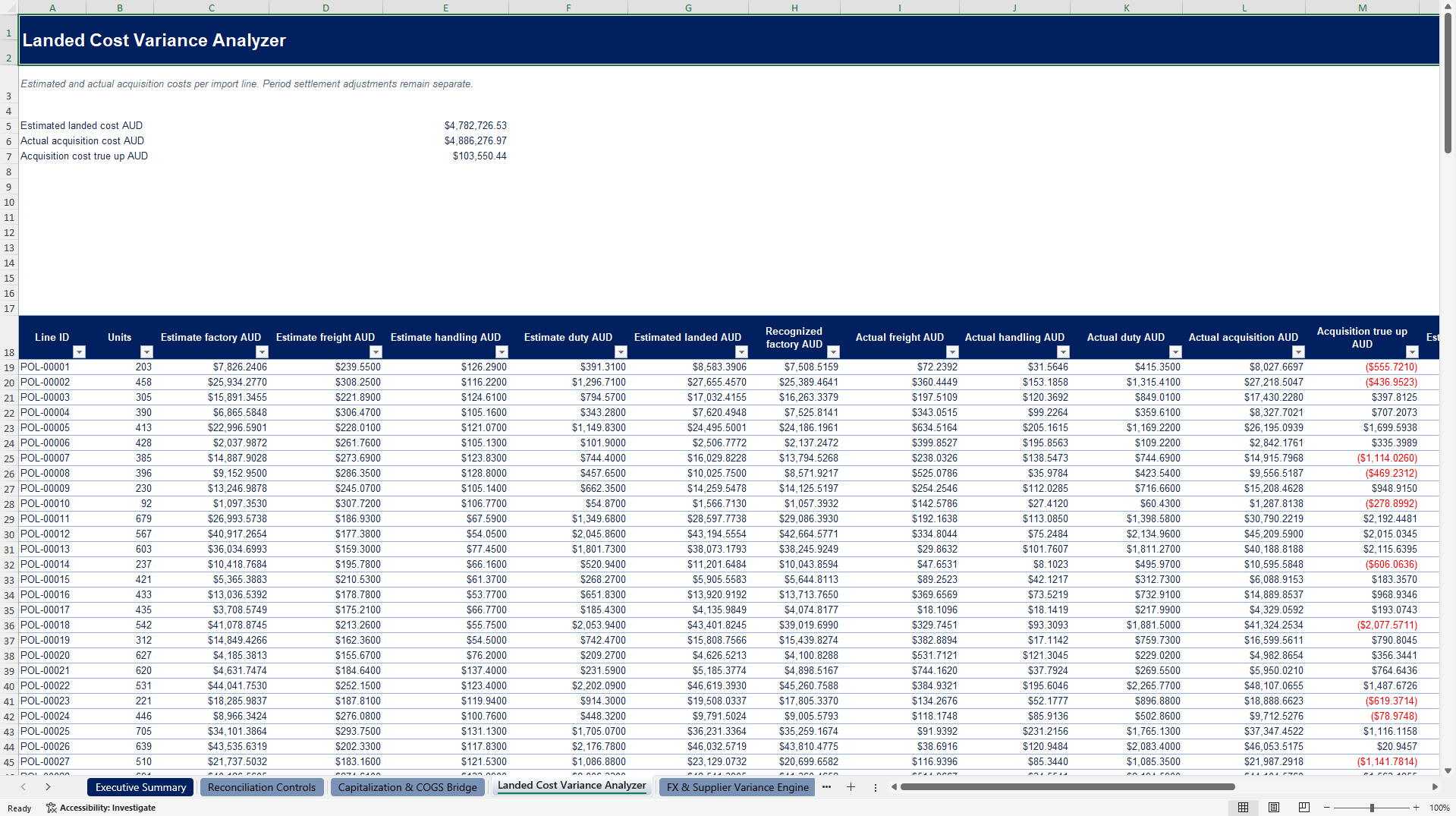
Import landed cost differences affect inventory, supplier settlement and the timing of cost recognition. This Excel control tower provides a documented workflow for comparing purchase order estimates with supplier invoices, shipment charges, supplied customs values and settlement evidence. It is designed for finance teams reviewing international import batches across ocean and air transport.
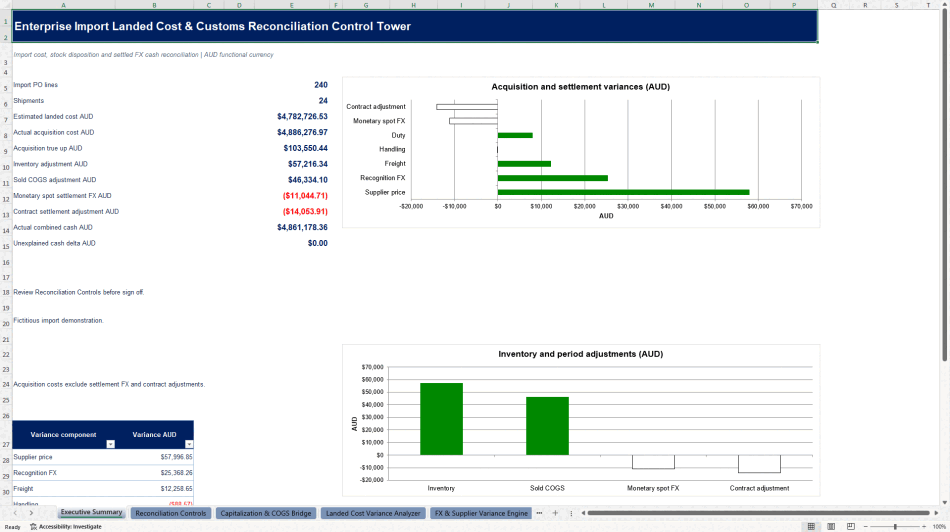
The demonstration contains 240 purchase order lines across 24 shipments, supported by supplier, freight, customs, exchange rate and ledger records. Transactions in USD, EUR and GBP are translated to AUD. The supplied information is fictitious and illustrates the operating method; it is not a client case study or a promise of future results.
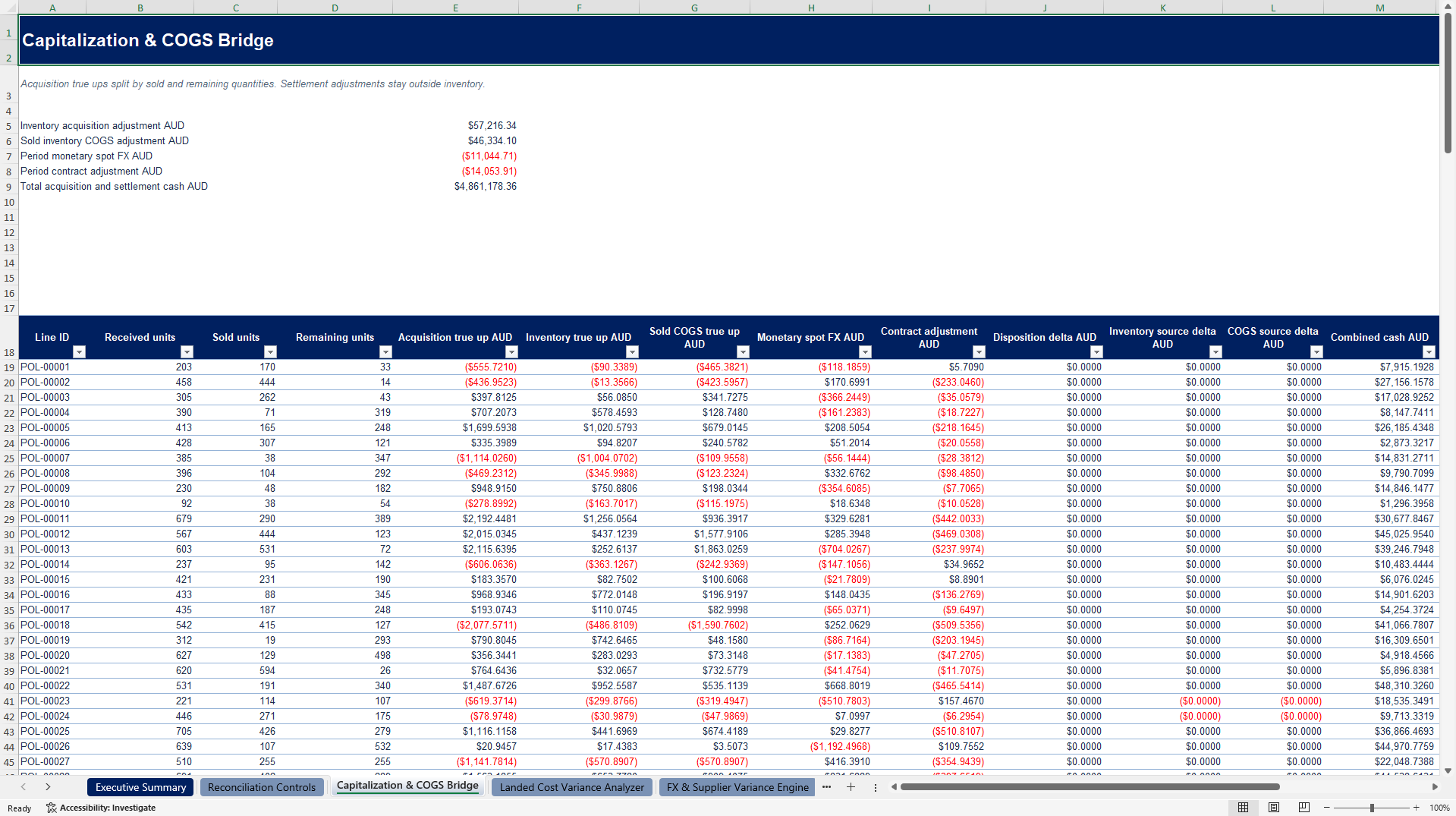
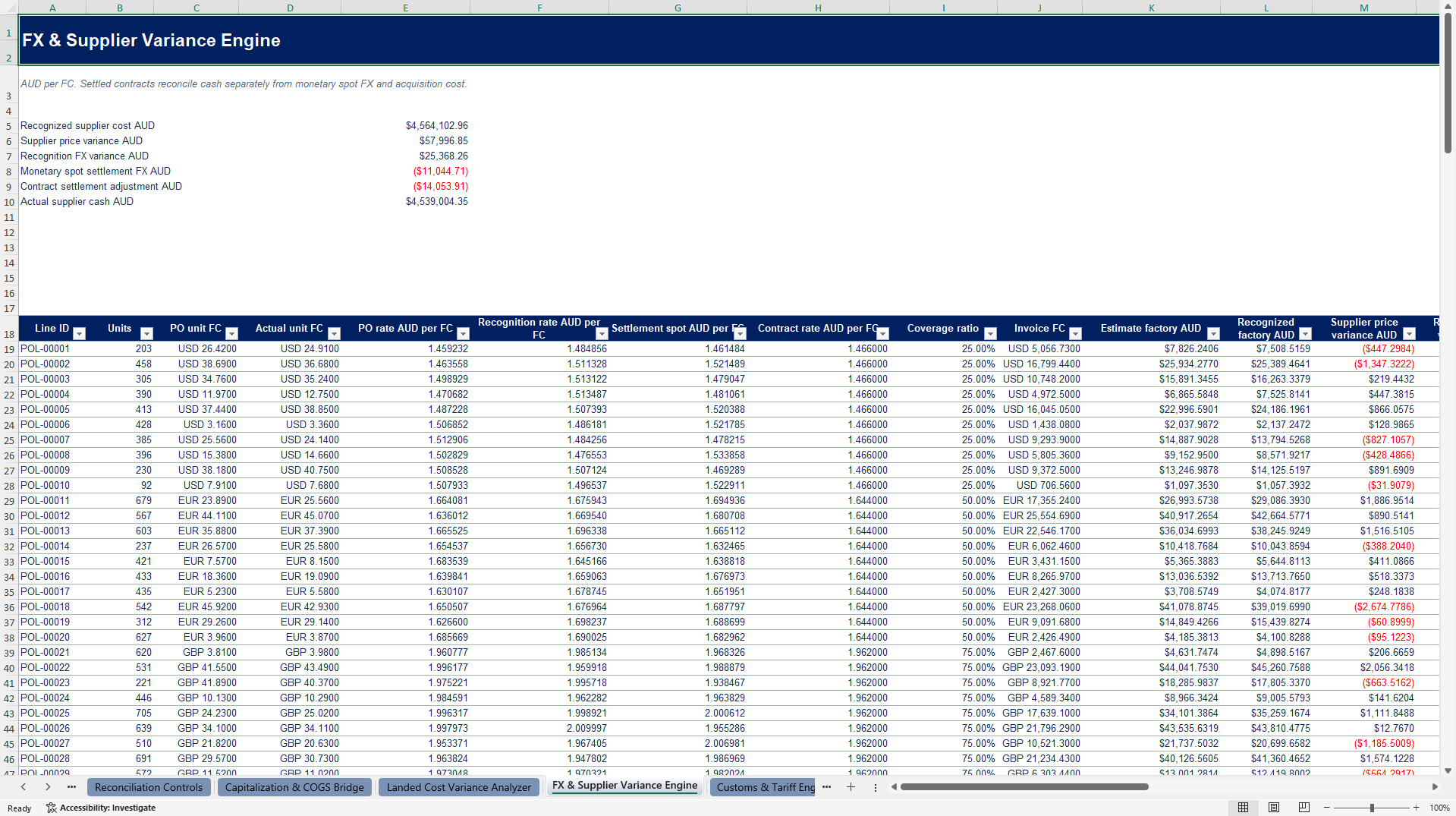
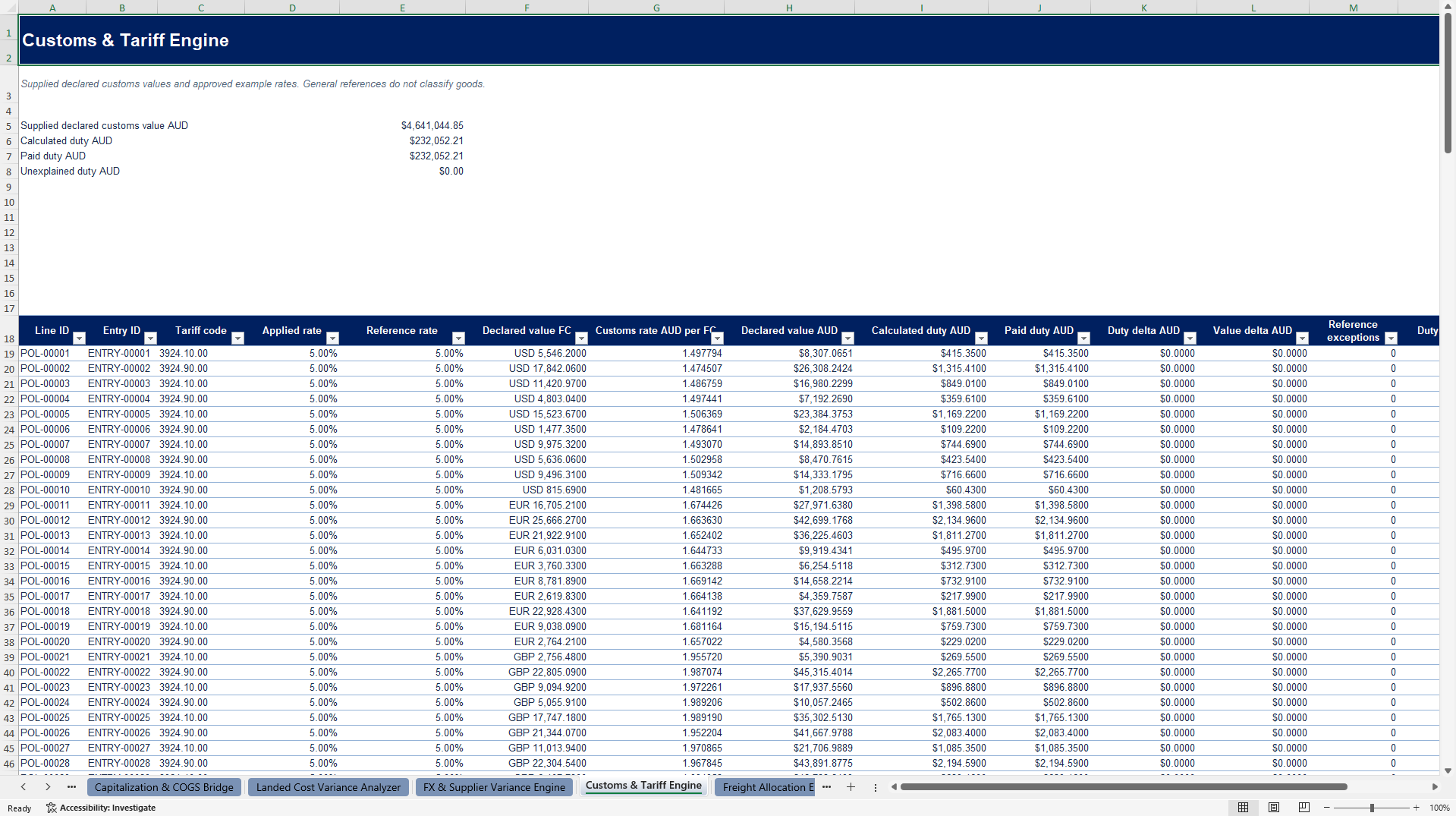
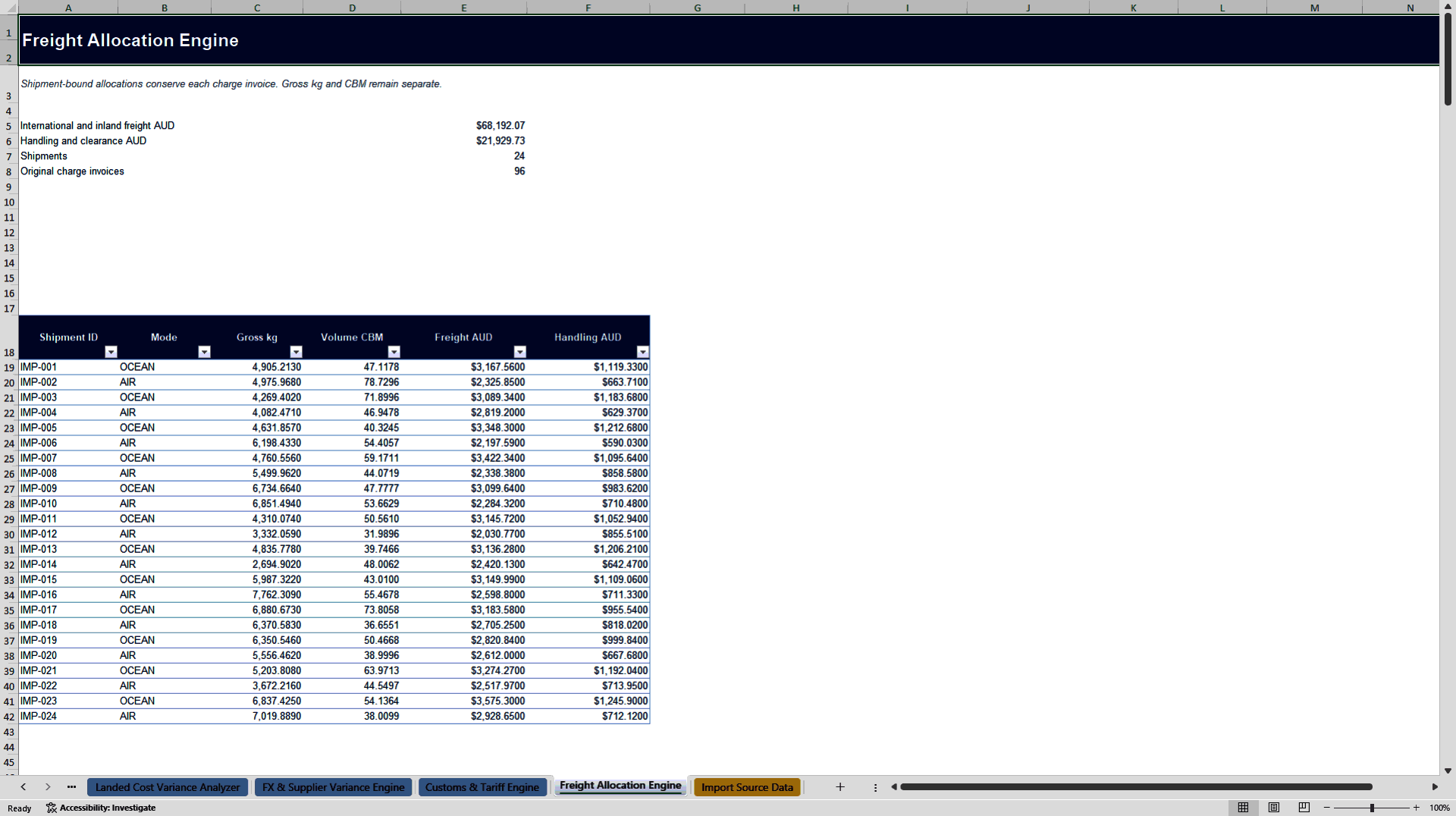
Freight is allocated within shipment cohorts using gross kilograms, while handling and clearance costs use cubic metres. Duties follow supplied customs values, approved example rates and declaration exchange rates. Separate views trace supplier price changes, recognition exchange differences, monetary settlement effects and settled contract adjustments. Acquisition cost differences flow through a bridge that separates remaining inventory from units already sold.
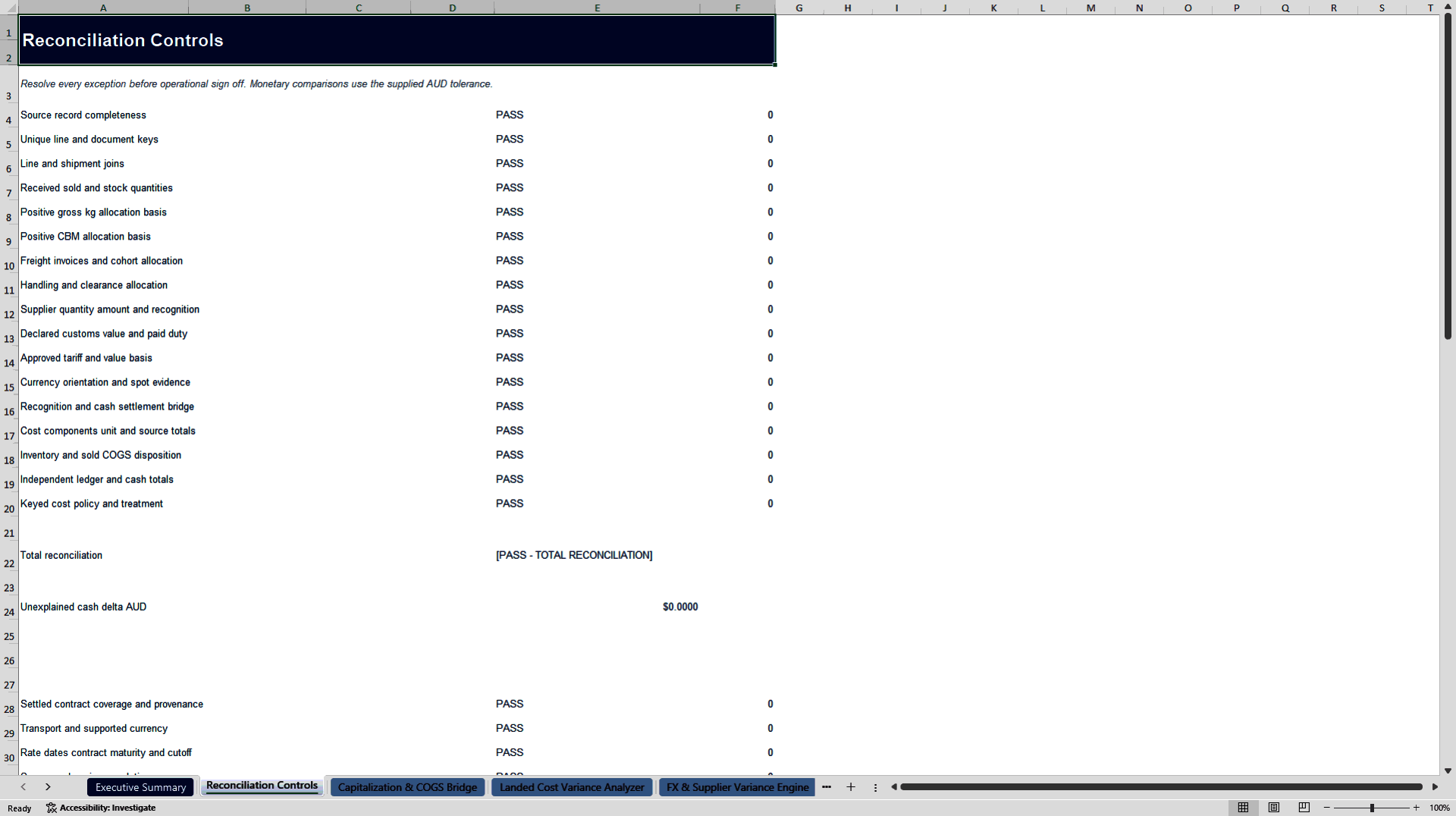
The executive summary presents acquisition cost, component variances and inventory and period adjustments through native Excel charts. Reconciliation controls identify missing or duplicate records, unsupported policies, inconsistent populations and other exceptions before operational sign off. Source currency labels distinguish foreign amounts from AUD values, supporting review across the component schedules.
The Flevy offer includes the workbook and three PDF guides: an implementation guide, a quick start guide, and a cutover and sign off template. The workbook contains the fictitious demonstration data. The guides explain responsibilities, source preparation, exception resolution and acceptance steps.
Use the model to organize evidence and investigate differences before posting inventory or period adjustments. Its treatment is limited to supplied import acquisition costs and settled cash reconciliation. It does not classify goods legally, determine transaction specific statutory rates, value open derivatives or implement hedge accounting. Recoverable taxes, additional levies and unsupported fees require separate approved treatment.
The model supports a structured finance review; it does not replace professional judgement, approved accounting policies or source document approval. Results depend on complete, accurate and appropriately authorized inputs.
Standard
One user; internal use only
No consulting, customization service, resale or client transfer included.
Got a question about the product? Email us at support@flevy.com or ask the author directly by using the "Ask the Author a Question" form. If you cannot view the preview above this document description, go here to view the large preview instead.
Source: Best Practices in Cost Optimization, Tariff Management Excel: Import Landed Cost & Customs Valuation Reconciliation Tower Excel (XLSX) Spreadsheet, Luke A.
ABOUT THE AUTHOR

CPA and Forensic Systems Architect specializing in financial control, ERP remediation, close governance, and automated reconciliation. Develops executive close control towers, J-SOX-oriented evidence frameworks, reconciliation governance, and finance operating models. Each framework makes exception handling, ownership, sign-off, and executive review visible and auditable. Fixed-price, ... [read more]
Ask the Author a Question
You must be logged in to contact the author.