Ideation - How to Generate Innovative Ideas   13-slide PPT PowerPoint presentation slide deck (PPTX)
$59.00

Ideation - How to Generate Innovative Ideas (13-slide PPT PowerPoint presentation slide deck (PPTX)) Preview Image
Flevy is the marketplace for business best practices.
Ideation - How to Generate Innovative Ideas (13-slide PPT PowerPoint presentation slide deck (PPTX)) Preview Image
Arrow   Click main image to view in full screen.

Ideation - How to Generate Innovative Ideas (PowerPoint PPTX Slide Deck)

PowerPoint (PPTX) 13 Slides

#2 in Ideation $59.00
FlevyPro price: $44.25 (25% discount)


Add to Cart


Immediate download
Free lifetime updates

INNOVATION MANAGEMENT PPT DESCRIPTION

Editor Summary "Ideation - How to Generate Innovative Ideas" is a 13‑slide PowerPoint by Straticx presenting a structured ideation process for uncovering unmet needs, defining problems, and creating solutions. Read more

The first document in Straticx's new InnovationWorks series focuses on Ideation: A framework and process for developing new innovative ideas. The deck covers the tools and methodologies for:

1. Uncovering unmet needs
2. Defining the problem
3. Creating solutions

The tools and methodologies are agnostic and can be used in all situations, industries etc. The deck is suitable for anyone looking to build innovation capabilities.

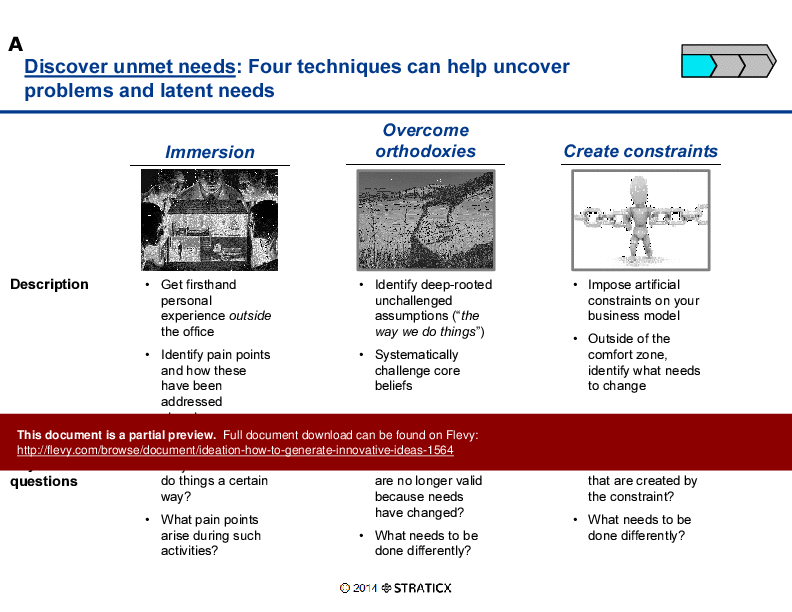
This presentation dives deep into the practical techniques for discovering unmet needs, overcoming orthodoxies, and creating constraints to foster innovation. It offers a comprehensive guide on how to immerse yourself in the problem space, systematically challenge core beliefs, and impose artificial constraints to drive creative thinking. These methods are designed to push your team out of their comfort zones, encouraging them to identify what needs to change to achieve breakthrough solutions.

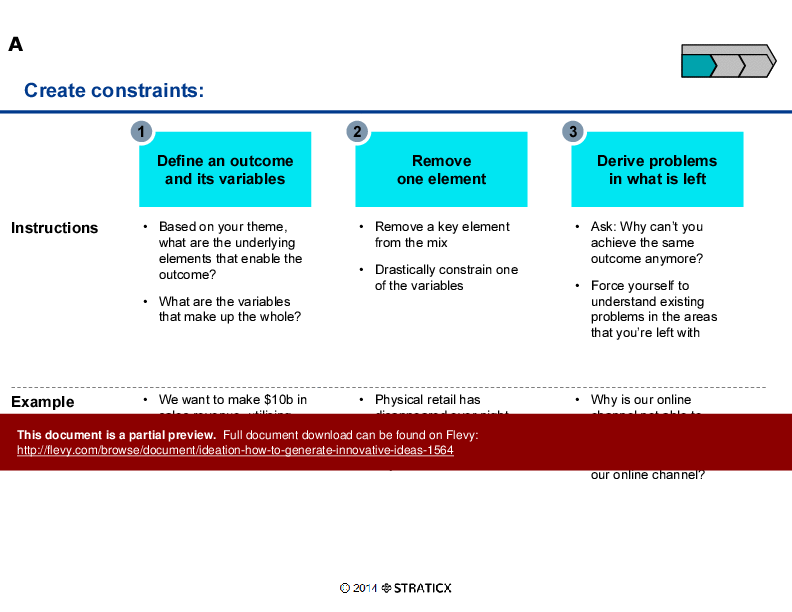
The deck also provides a step-by-step approach for defining outcomes and their variables, removing key elements to create constraints, and deriving problems from what remains. This structured process helps in pinpointing the underlying elements that enable desired outcomes and forces a reevaluation of existing assumptions. By removing one element from the mix, it becomes easier to identify areas that need innovation and understand the problems that arise from these constraints.

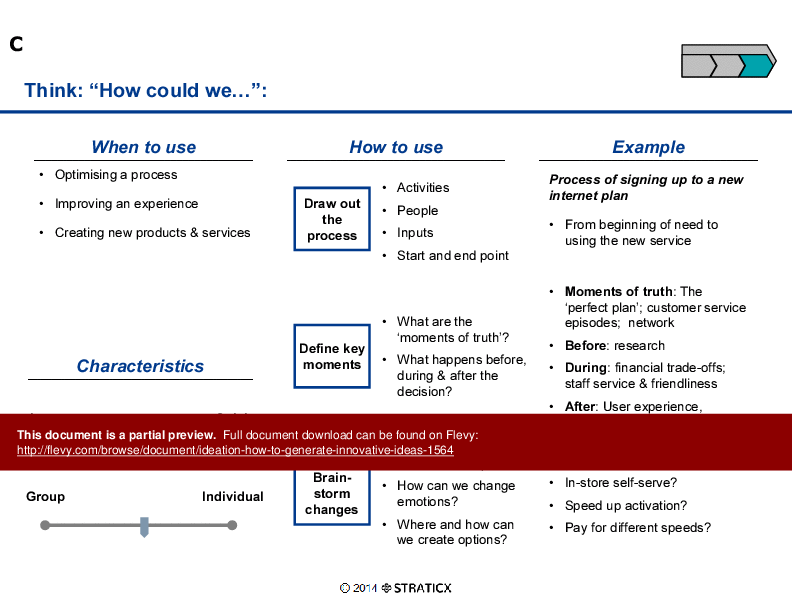
In addition, the presentation covers the "How could we..." method, which is essential for optimizing processes, improving experiences, and creating new products and services. This method involves drawing out the process, defining key moments, and brainstorming changes to enhance customer experiences. Examples provided, such as improving the process of signing up for a new internet plan, illustrate how to apply these techniques in real-world scenarios. This deck is a must-have for executives looking to instill a culture of innovation within their organizations.

Got a question about the product? Email us at support@flevy.com or ask the author directly by using the "Ask the Author a Question" form. If you cannot view the preview above this document description, go here to view the large preview instead.

MARCUS OVERVIEW

This synopsis was written by Marcus [?] based on the analysis of the full 13-slide presentation.


Executive Summary
The "Ideation - How to Generate Innovative Ideas" presentation from Straticx offers a structured yet flexible approach to innovation, emphasizing the critical first step of ideation. This consulting-grade deck (McKinsey, Bain, or BCG-quality; not affiliated) equips executives and teams with the tools to generate new ideas, evaluate customer demand, and validate concepts effectively. By leveraging various techniques to discover unmet needs, define problems, and create solutions, users will be able to foster a continuous pipeline of innovative ideas that can lead to successful product and service development.

Who This Is For and When to Use

•  Corporate executives seeking to drive innovation within their organizations
•  Product development teams focused on creating new offerings
•  Marketing professionals aiming to understand customer needs and preferences
•  Consultants advising clients on innovation strategies

Best-fit moments to use this deck:
•  During brainstorming sessions to kickstart the ideation process
•  When assessing customer pain points and unmet needs
•  In workshops aimed at developing innovative solutions
•  For strategic planning meetings focused on new product development

Learning Objectives

•  Define the ideation process and its significance in innovation
•  Identify and analyze customer pain points and unmet needs
•  Develop a clear problem statement that guides solution creation
•  Generate innovative ideas through structured brainstorming techniques
•  Validate concepts through customer feedback and market testing
•  Create a working prototype to test feasibility and demand

Table of Contents

•  Introduction to Ideation (page 3)
•  Objectives of Ideation (page 5)
•  Techniques for Discovering Unmet Needs (page 7)
•  Defining the Problem (page 10)
•  Creating Solutions (page 12)
•  Summary and Next Steps (page 15)

Primary Topics Covered

•  Objectives of Ideation - The primary goals of ideation include generating new ideas and receiving feedback to refine concepts.
•  Discover Unmet Needs - Techniques such as immersion and ethnography help identify customer pain points and latent needs.
•  Define the Problem - Crafting a specific problem statement that outlines the customer segment, activity, and constraints is essential for focused innovation.
•  Create Solutions - Various brainstorming techniques support the generation of innovative ideas to address defined problems.
•  Overcome Orthodoxies - Challenging existing beliefs and assumptions can lead to new insights and innovative solutions.
•  Create Constraints - Imposing limitations can stimulate creative thinking and uncover new problem-solving avenues.

Deliverables, Templates, and Tools

•  Ideation framework template to guide the innovation process
•  Problem statement template for defining customer needs and constraints
•  Brainstorming session guidelines to facilitate idea generation
•  Feedback collection tools for validating concepts with customers
•  Prototype development checklist to ensure feasibility and market readiness
•  Market testing framework to evaluate customer demand

Slide Highlights

•  Overview of the ideation process and its significance in innovation
•  Techniques for discovering unmet needs, including immersion and ethnography
•  Step-by-step guide for defining a clear problem statement
•  Brainstorming techniques to generate innovative solutions
•  Examples of how to challenge orthodoxies and create constraints for creative thinking

Potential Workshop Agenda

Ideation Kickoff Session (60 minutes)
•  Introduce the ideation process and its objectives
•  Discuss techniques for discovering unmet needs
•  Begin brainstorming potential ideas

Problem Definition Workshop (90 minutes)
•  Guide participants in crafting specific problem statements
•  Review customer segments and constraints
•  Validate problem statements with group feedback

Solution Generation Session (120 minutes)
•  Facilitate brainstorming using various techniques
•  Encourage participants to challenge existing beliefs
•  Collect and prioritize innovative ideas for further exploration

Customization Guidance

•  Tailor the problem statement template to reflect specific customer segments and constraints
•  Adjust brainstorming techniques based on team dynamics and preferences
•  Incorporate industry-specific examples to enhance relevance
•  Modify feedback collection tools to align with organizational goals

Secondary Topics Covered

•  The role of customer feedback in the ideation process
•  Techniques for evaluating the feasibility of generated ideas
•  Strategies for fostering a culture of innovation within teams
•  The importance of continuous iteration in the innovation process

Topic FAQ

What are the typical phases of an ideation process I should plan for?

A common ideation sequence begins with framing the challenge, setting objectives, discovering unmet needs, defining a clear problem statement, generating solutions through brainstorming, and concluding with next steps for validation. The deck organizes these as 6 topics, including Discover Unmet Needs and Creating Solutions.

How do teams effectively identify unmet customer needs during ideation?

Effective techniques involve direct observation and qualitative research such as immersion and ethnography to reveal latent behaviors and pain points customers may not articulate, followed by synthesizing findings into opportunity areas using immersion and ethnography.

What elements make a useful problem statement for innovation work?

A focused problem statement specifies the target customer segment, the valuable activity or outcome sought, and the constraints or barriers preventing that outcome, ensuring ideation targets a concrete issue defined by customer segment, activity, and constraints.

In what ways can imposing constraints boost creative idea generation?

Introducing constraints narrows the solution space and forces alternative approaches, for example by removing one element from a process or outcome to reveal what changes are necessary, a technique described as creating constraints and removing one element from the mix.

What should I look for in an ideation toolkit before purchasing for my team?

Look for reusable templates and facilitation aids that support discovery, problem definition, generation, and validation—specifically a problem statement template, brainstorming guidelines, feedback collection tools, a prototype checklist, and a market testing framework as found in this deck.

How long should workshop sessions be when using an ideation deck to generate solutions?

Typical session lengths in the deck’s suggested agenda include a 60‑minute Ideation Kickoff, a 90‑minute Problem Definition Workshop, and a 120‑minute Solution Generation Session, which can be combined or spread across multiple days depending on objectives.

I need to update our product roadmap after customer research—what ideation approach should I follow?

Use immersion/ethnography to surface unmet needs, craft focused problem statements for key segments, run structured brainstorming (including "How could we..." prompts), then validate top concepts with prototypes and market testing, ending with a prototype development checklist.

What methods help validate ideas with customers before full development?

Validation methods include collecting customer feedback through surveys and interviews, prototype testing to assess feasibility and demand, and structured market testing; the deck explicitly provides feedback collection tools and a market testing framework.

Document FAQ
These are questions addressed within this presentation.


What is the primary goal of the ideation process?
The primary goal is to generate new ideas and receive feedback to refine those concepts, ultimately leading to innovative products and services.

How can we identify customer pain points effectively?
Utilizing techniques like immersion and ethnography allows teams to observe customer behaviors and uncover latent needs.

What should be included in a problem statement?
A problem statement should define the customer segment, outline the valuable activity, and specify the constraints that hinder that activity.

What brainstorming techniques are recommended?
Techniques include overcoming orthodoxies, creating constraints, and using the "How could we..." approach to stimulate innovative thinking.

How can we validate our ideas with customers?
Collect feedback through surveys, interviews, or prototype testing to gauge customer demand and refine concepts accordingly.

What is the significance of challenging orthodoxies?
Challenging existing beliefs can lead to new insights and innovative solutions that better meet customer needs.

How can constraints foster creativity?
Imposing limitations can stimulate creative thinking by forcing teams to explore alternative solutions and uncover new problem-solving avenues.

What steps should we take after generating ideas?
Evaluate the feasibility of ideas, create prototypes, and conduct market testing to validate concepts before full-scale rollout.

Glossary

•  Ideation - The process of generating new ideas and concepts for innovation.
•  Unmet Needs - Customer requirements that are not currently being fulfilled by existing products or services.
•  Problem Statement - A clear definition of the issue to be addressed, including customer segment and constraints.
•  Brainstorming - A creative technique for generating a large number of ideas in a short period.
•  Immersion - A method of observing and analyzing customer behaviors in their natural environments.
•  Ethnography - A qualitative research method focused on understanding cultural and social dynamics through observation.
•  Orthodoxies - Established beliefs or assumptions that may limit innovative thinking.
•  Constraints - Limitations imposed on a problem that can stimulate creative solutions.
•  Prototype - An early sample or model of a product used to test concepts and gather feedback.
•  Market Testing - The process of evaluating a product or service with potential customers to assess demand.
•  Feedback Loop - A continuous process of gathering input from customers to refine and improve ideas.
•  Innovation Pipeline - A structured approach to continuously generate and develop new ideas for products and services.

INNOVATION MANAGEMENT PPT SLIDES

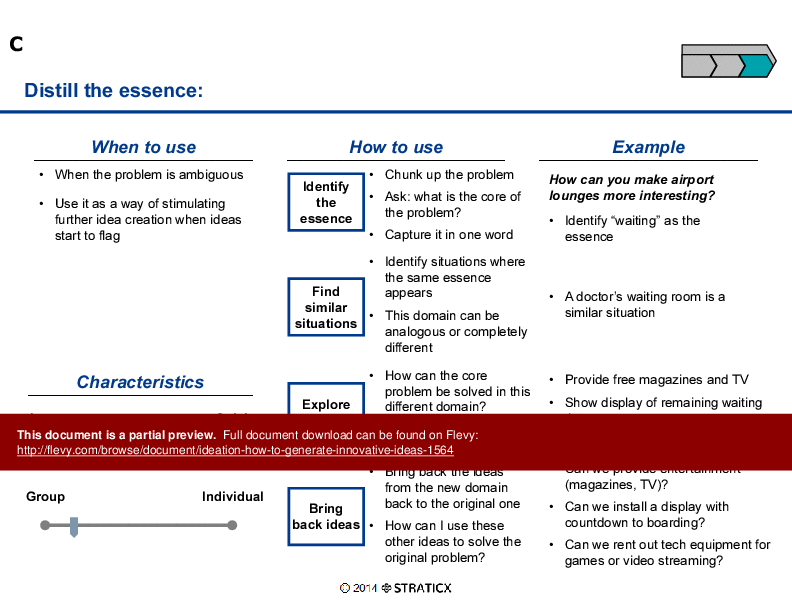
Structured Ideation Process for Continuous Innovation

Framework for Radical Ideation in Innovation

Framework for Effective Ideation in Innovation

Framework for Challenging Organizational Beliefs

Source: Best Practices in Innovation Management, Ideation PowerPoint Slides: Ideation - How to Generate Innovative Ideas PowerPoint (PPTX) Presentation Slide Deck, STRATICX


$59.00
FlevyPro price: $44.25 (25% discount)


Add to Cart
  

ABOUT THE AUTHOR

Author: STRATICX
Additional documents from author: 14

Straticx is redefining strategy and innovation consulting through online access to high value consulting partners, who work with senior executives and boards of corporations to frame key business issues, develop hypothesis, apply structured problem solving and commercial acumen to drive development of solutions. The partners all have 10+ consulting experience covering a broad range of sectors and ... [read more]

Ask the Author a Question

You must be logged in to contact the author.

Click here to log in Click here register

Did you know?
The average daily rate of a McKinsey consultant is $6,625 (not including expenses). The average price of a Flevy document is $65.


Trusted by over 10,000+ Client Organizations
Since 2012, we have provided business templates to over 10,000 businesses and organizations of all sizes, from startups and small businesses to the Fortune 100, in over 130 countries.
AT&T GE Cisco Intel IBM Coke Dell Toyota HP Nike Samsung Microsoft Astrazeneca JP Morgan KPMG Walgreens Walmart 3M Kaiser Oracle SAP Google E&Y Volvo Bosch Merck Fedex Shell Amgen Eli Lilly Roche AIG Abbott Amazon PwC T-Mobile Broadcom Bayer Pearson Titleist ConEd Pfizer NTT Data Schwab


Read Customer Testimonials

 
"The wide selection of frameworks is very useful to me as an independent consultant. In fact, it rivals what I had at my disposal at Big 4 Consulting firms in terms of efficacy and organization."

– Julia T., Consulting Firm Owner (Former Manager at Deloitte and Capgemini)
 
"[Flevy] produces some great work that has been/continues to be of immense help not only to myself, but as I seek to provide professional services to my clients, it gives me a large "tool box" of resources that are critical to provide them with the quality of service and outcomes they are expecting."

– Royston Knowles, Executive with 50+ Years of Board Level Experience
 
"Last Sunday morning, I was diligently working on an important presentation for a client and found myself in need of additional content and suitable templates for various types of graphics. Flevy.com proved to be a treasure trove for both content and design at a reasonable price, considering the time I "

– M. E., Chief Commercial Officer, International Logistics Service Provider
 
"As a niche strategic consulting firm, Flevy and FlevyPro frameworks and documents are an on-going reference to help us structure our findings and recommendations to our clients as well as improve their clarity, strength, and visual power. For us, it is an invaluable resource to increase our impact and value."

– David Coloma, Consulting Area Manager at Cynertia Consulting
 
"Flevy.com has proven to be an invaluable resource library to our Independent Management Consultancy, supporting and enabling us to better serve our enterprise clients.

The value derived from our [FlevyPro] subscription in terms of the business it has helped to gain far exceeds the investment made, making a subscription a no-brainer for any growing consultancy – or in-house strategy team."

– Dean Carlton, Chief Transformation Officer, Global Village Transformations Pty Ltd.
 
"Flevy is our 'go to' resource for management material, at an affordable cost. The Flevy library is comprehensive and the content deep, and typically provides a great foundation for us to further develop and tailor our own service offer."

– Chris McCann, Founder at Resilient.World
 
"FlevyPro provides business frameworks from many of the global giants in management consulting that allow you to provide best in class solutions for your clients."

– David Harris, Managing Director at Futures Strategy
 
"I like your product. I'm frequently designing PowerPoint presentations for my company and your product has given me so many great ideas on the use of charts, layouts, tools, and frameworks. I really think the templates are a valuable asset to the job."

– Roberto Fuentes Martinez, Senior Executive Director at Technology Transformation Advisory


Customers Also Bought These Documents


Customers Also Like These Documents

Explore Templates on Related Management Topics


Your Recently Viewed Documents
Download our FREE Strategy & Transformation Framework Templates

Download our free compilation of 50+ Strategy & Transformation slides and templates. Frameworks include McKinsey 7-S, Balanced Scorecard, Disruptive Innovation, BCG Curve, and many more.










