Your AI assistant becomes a Flevy-powered consultant, with direct access to our full library of frameworks, templates, and case studies. Free to connect. No account, sign-in, or API key required.
STEP 1 · CHOOSE YOUR ASSISTANT
STEP 2 · CONNECT
1
No copying needed. Flevy is in the official Claude Connectors Directory.
2
Click the button below, then click Connect on the Flevy listing.
This toolkit was created by ex-McKinsey, Deloitte and BCG Strategy Consultants. It includes 550 PowerPoint slides, 27 Excel sheets and 60 minutes of video training.
Includes 550 PowerPoint slides + 27 Excel sheets + 60 minutes of video training.
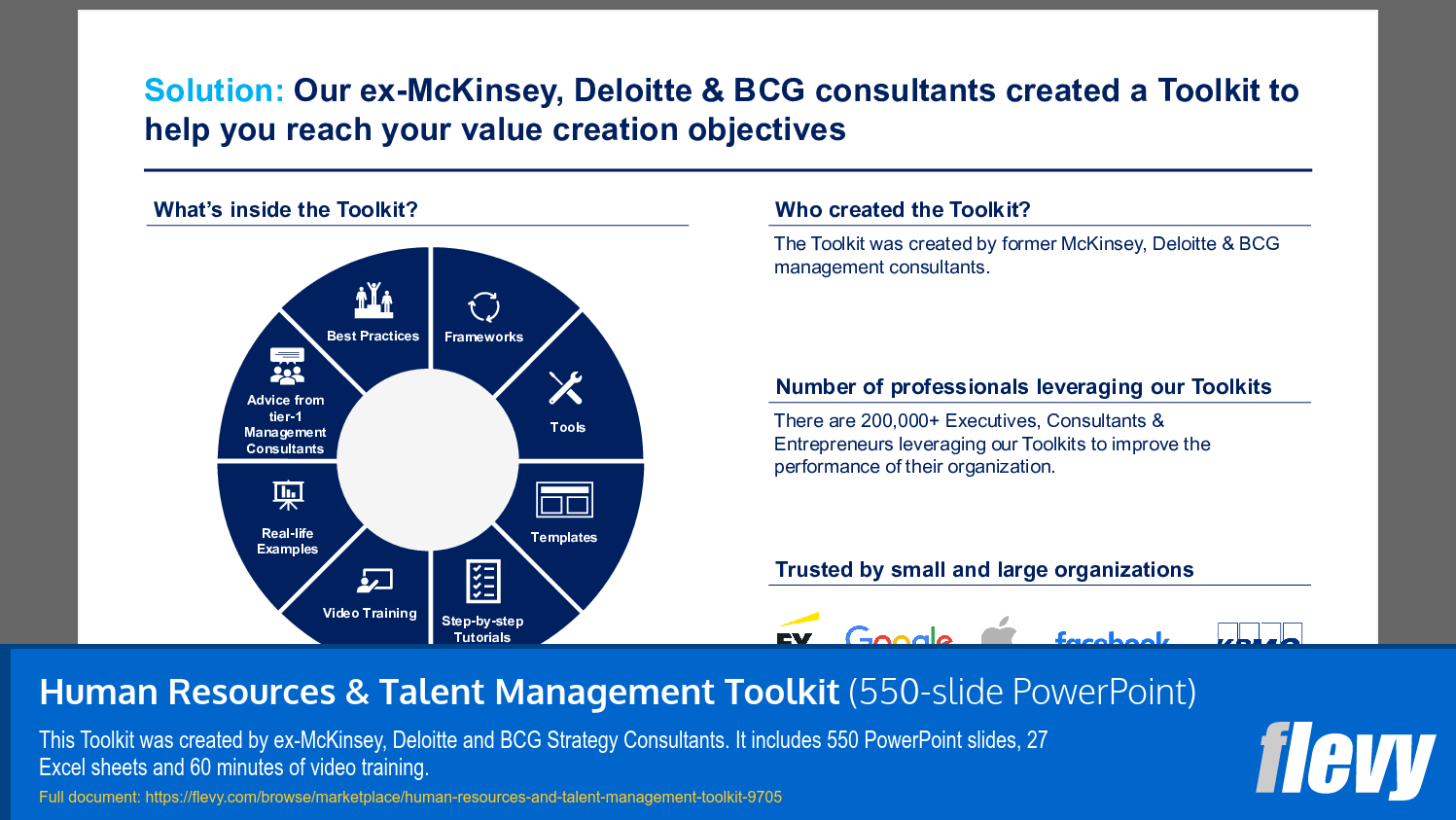
Includes frameworks, tools, templates, tutorials, real-life examples, best practices, and video training.
Domont Consulting is trusted by 200,000+ executives, consultants and entrepreneurs from small & large organizations.
TALENT MANAGEMENT PPT TEMPLATE DESCRIPTION
Discover the HR & Talent Management Toolkit by ex-McKinsey, Deloitte, and BCG consultants. 550 slides, 27 Excel sheets, and 60 mins of training for strategic HR excellence. Human Resources & Talent Management Toolkit is a 550-slide PPT PowerPoint presentation template (PPTX) with a supplemental Zip archive file document available for immediate download upon purchase.
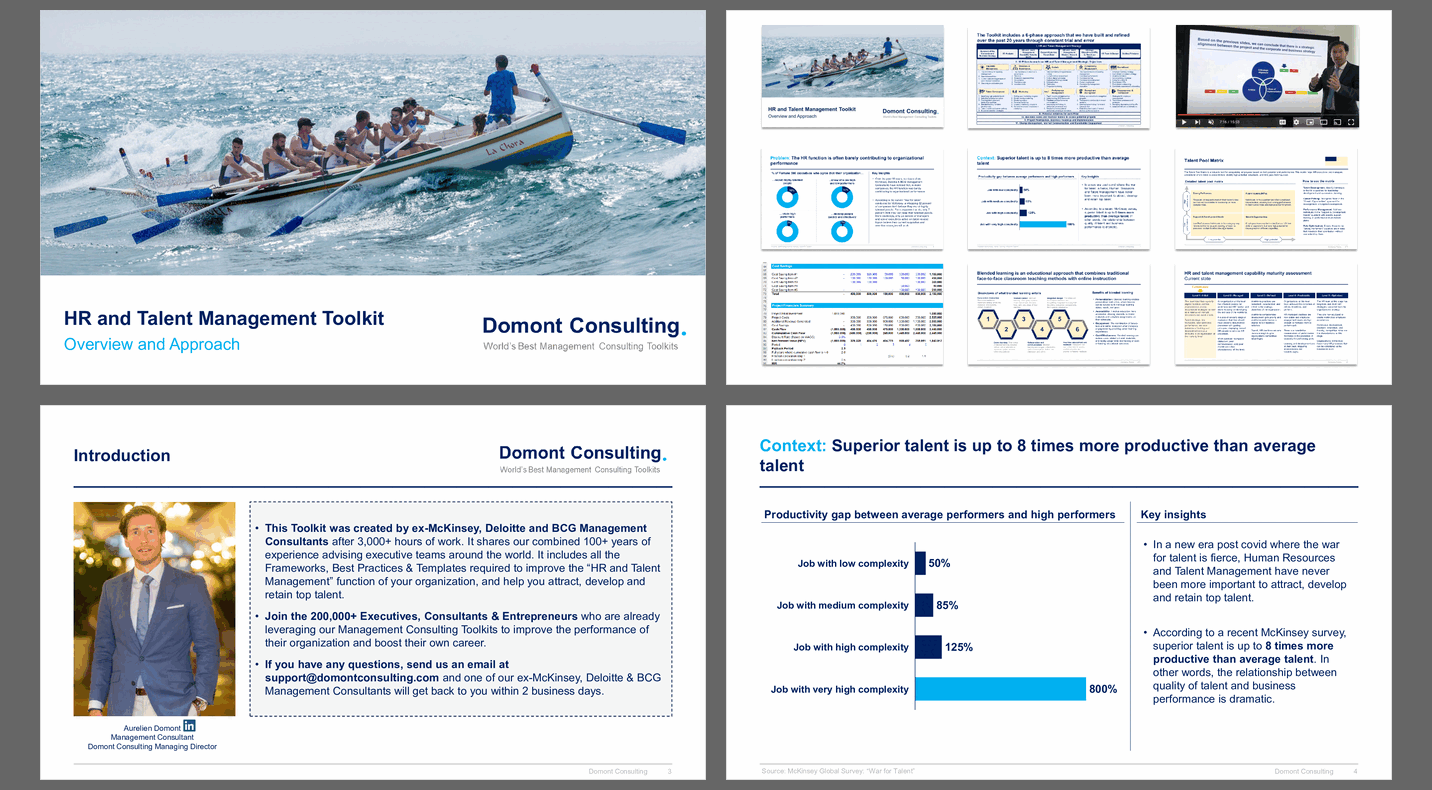
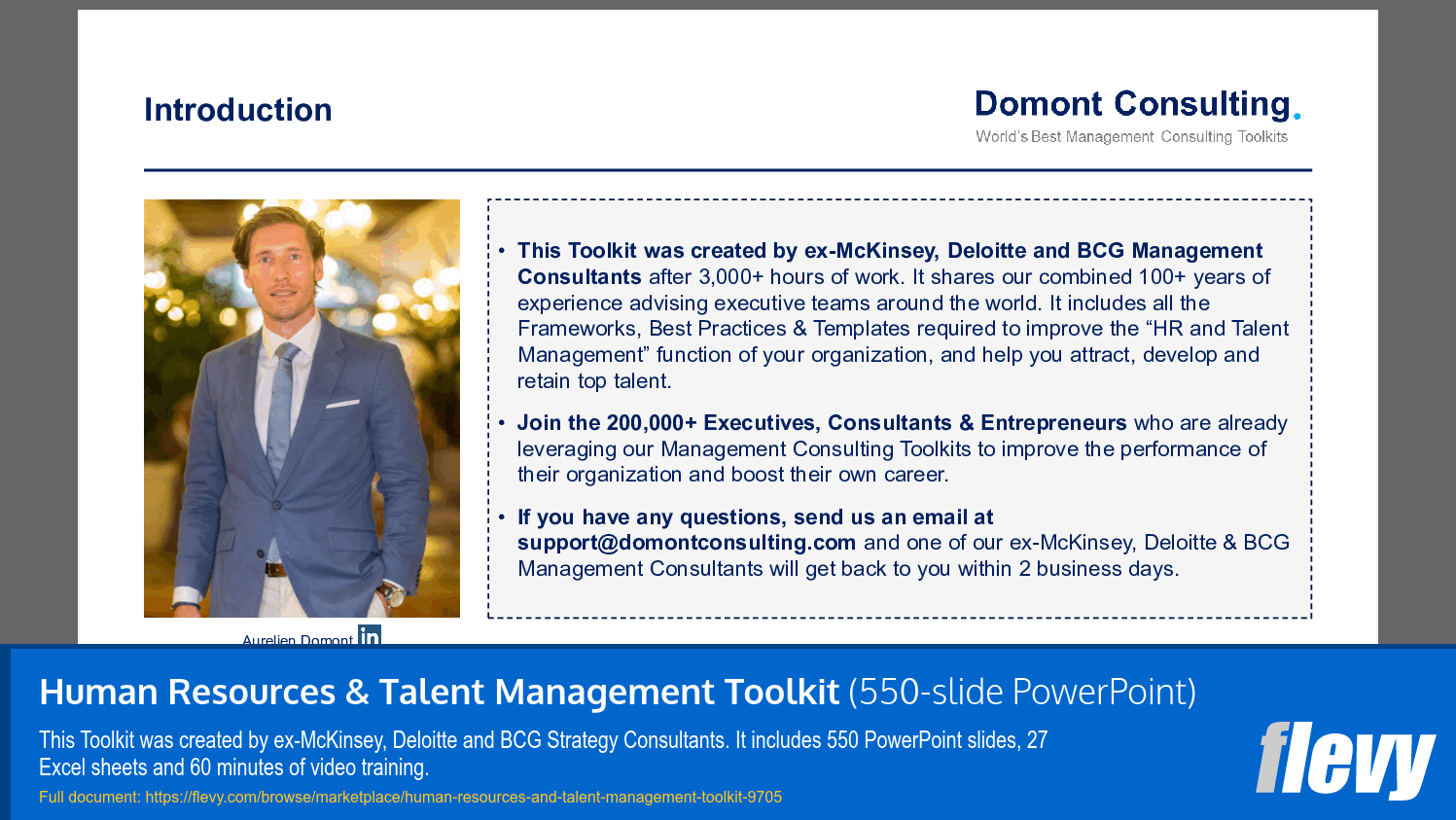
This Toolkit was created by ex-McKinsey, Deloitte and BCG Management Consultants after 3,000+ hours of work. It shares our combined 100+ years of experience advising executive teams around the world. It includes all the Frameworks, Best Practices & Templates required to improve the "HR and Talent Management" function of your organization, and help you attract, develop and retain top talent.
The Toolkit includes: 550 PowerPoint slides + 27 Excel sheets + 60 minutes of video training.
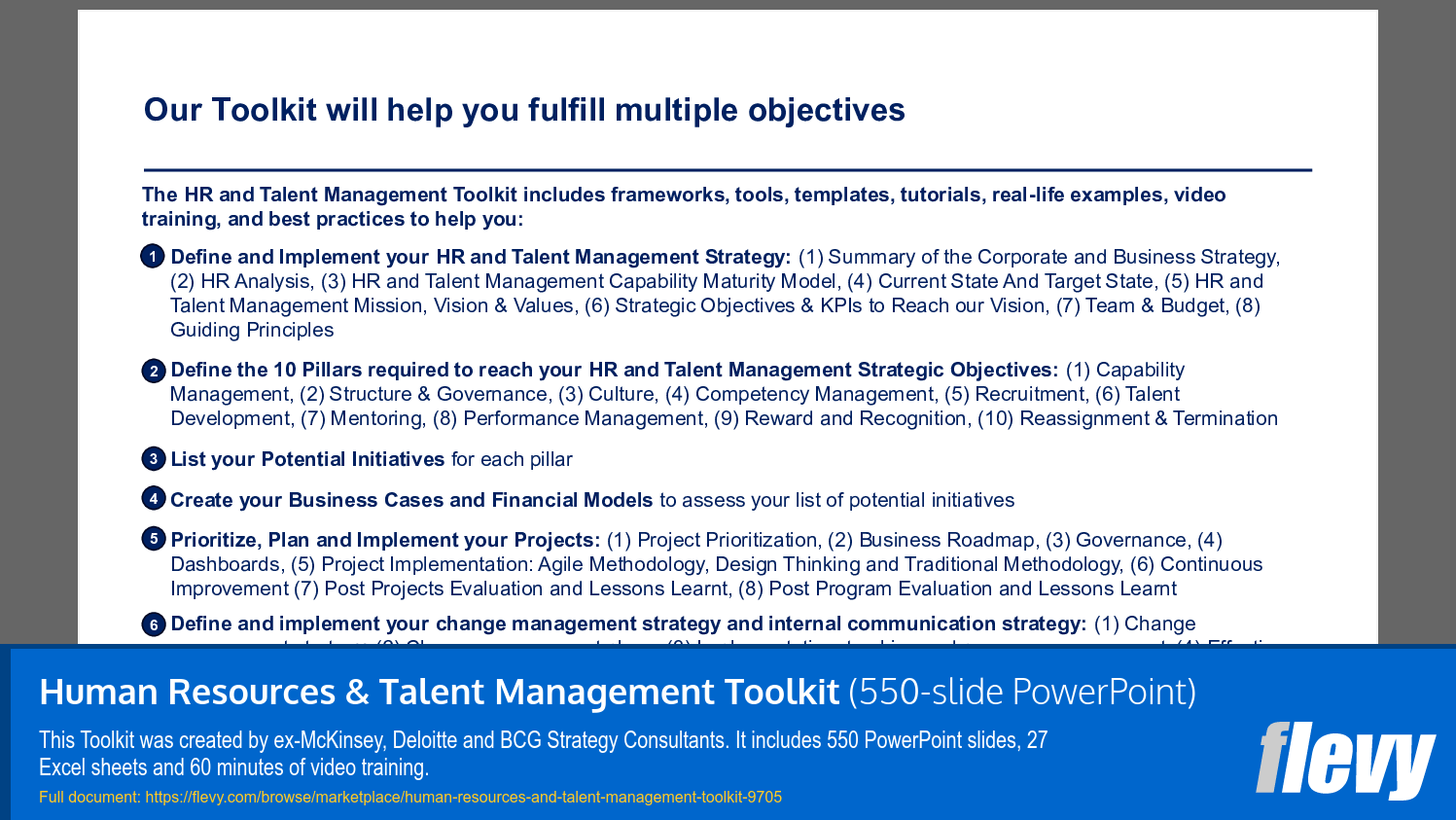
This Toolkit includes frameworks, tools, templates, tutorials, real-life examples, best practices, and video training to help you: • Define and Implement your HR and Talent Management Strategy: (1) Summary of the Corporate and Business Strategy, (2) HR Analysis, (3) HR and Talent Management Capability Maturity Model, (4) Current State And Target State, (5) HR and Talent Management Mission, Vision & Values, (6) Strategic Objectives & KPIs to Reach our Vision, (7) Team & Budget, (8) Guiding Principles • Define the 10 Pillars required to reach your HR and Talent Management Strategic Objectives: (1) Capability Management, (2) Structure & Governance, (3) Culture, (4) Competency Management, (5) Recruitment, (6) Talent Development, (7) Mentoring, (8) Performance Management, (9) Reward and Recognition, (10) Reassignment & Termination • List your Potential Initiatives for each pillar • Create your Business Cases and Financial Models to assess your list of potential initiatives • Prioritize, Plan and Implement your Projects: (1) Project Prioritization, (2) Business Roadmap, (3) Governance, (4) Dashboards, (5) Project Implementation: Agile Methodology, Design Thinking and Traditional Methodology, (6) Continuous Improvement (7) Post Projects Evaluation and Lessons Learnt, (8) Post Strategy Evaluation and Lessons Learnt • Define and implement your change management strategy and internal communication strategy: (1) Change management strategy, (2) Change management plans, (3) Implementation, tracking and progress management, (4) Effective communication, (5) Stakeholder engagement strategy
Got a question about the product? Email us at support@flevy.com or ask the author directly by using the "Ask the Author a Question" form. If you cannot view the preview above this document description, go here to view the large preview instead.
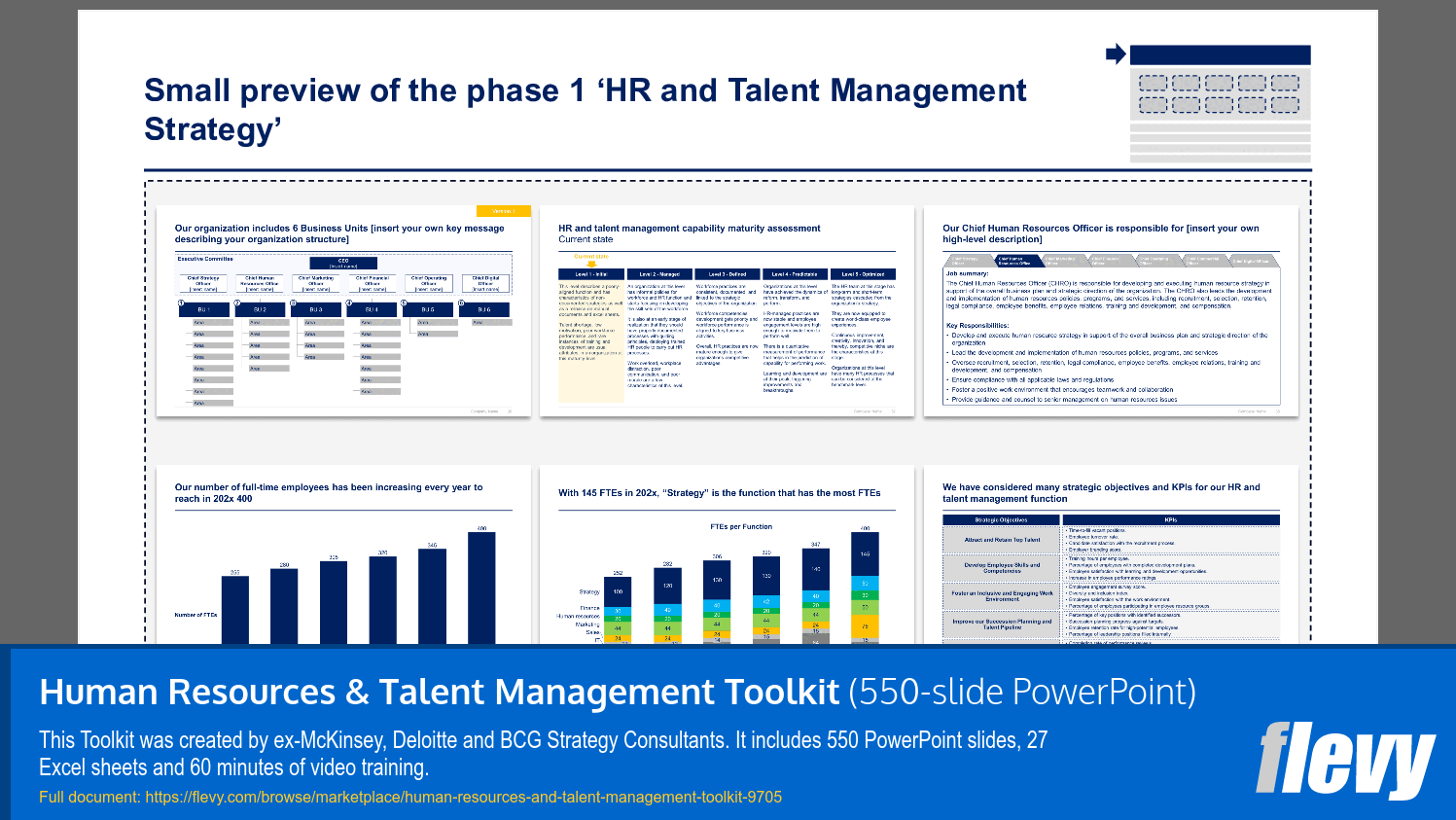
This PPT slide template provides an overview of the initial phase of an HR and Talent Management strategy. It includes organizational charts, maturity assessments, role descriptions, and KPI analyses. The first visual outlines the organizational structure, highlighting key roles such as the CEO and HR executives. The second visual assesses HR maturity levels from "Level 1" to "Level 5," indicating a progression from basic to optimized practices. The third visual details the Chief Human Resources Officer's responsibilities, focusing on workforce planning, policy development, and employee engagement. Additional visuals present quantitative insights, including projected growth to 400 full-time employees by 2022 and FTE distribution across functions. Key strategic objectives and KPIs emphasize talent attraction, skills development, engagement, and succession planning, signaling a structured approach to HR aligned with organizational growth and talent needs.
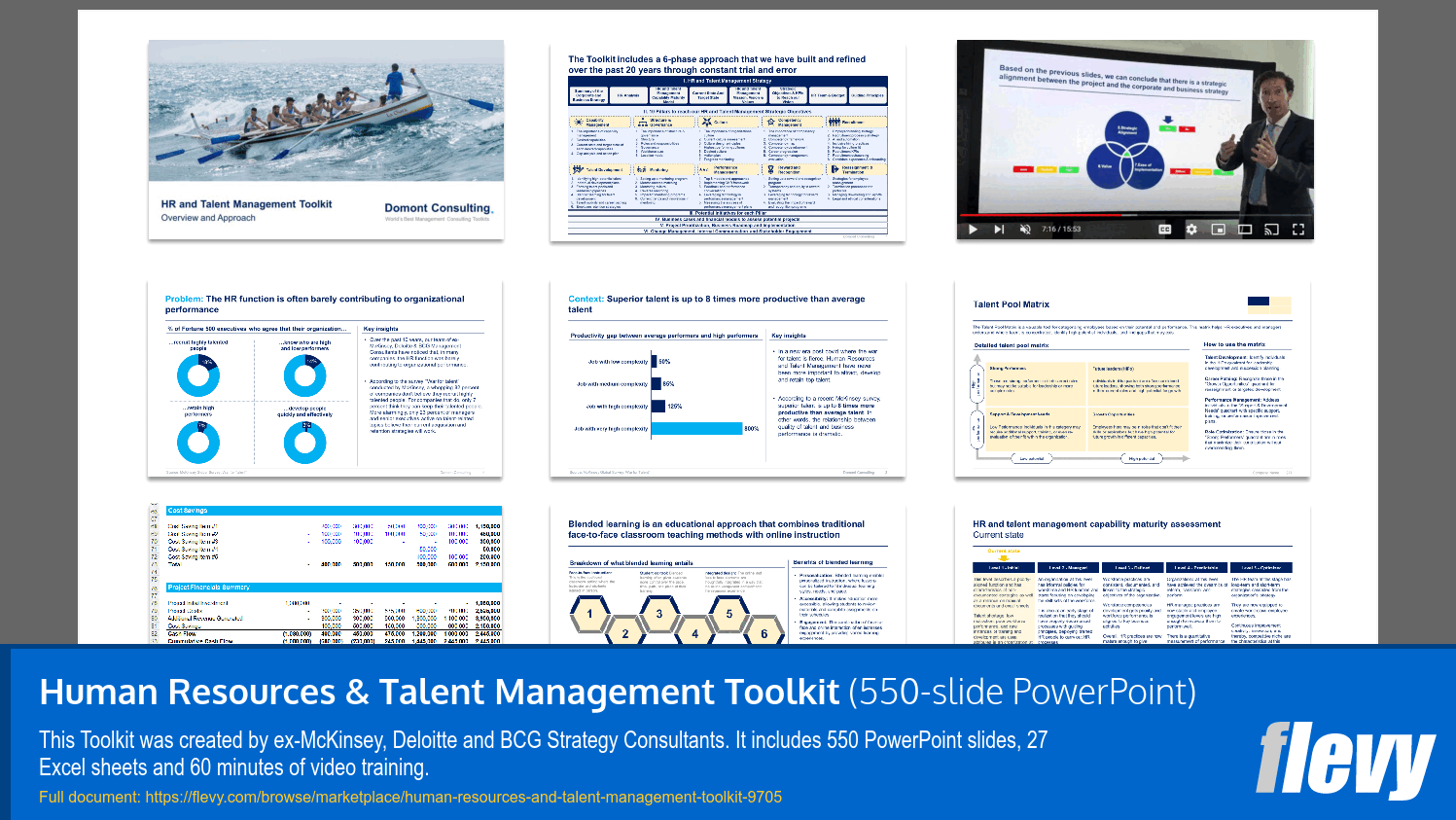
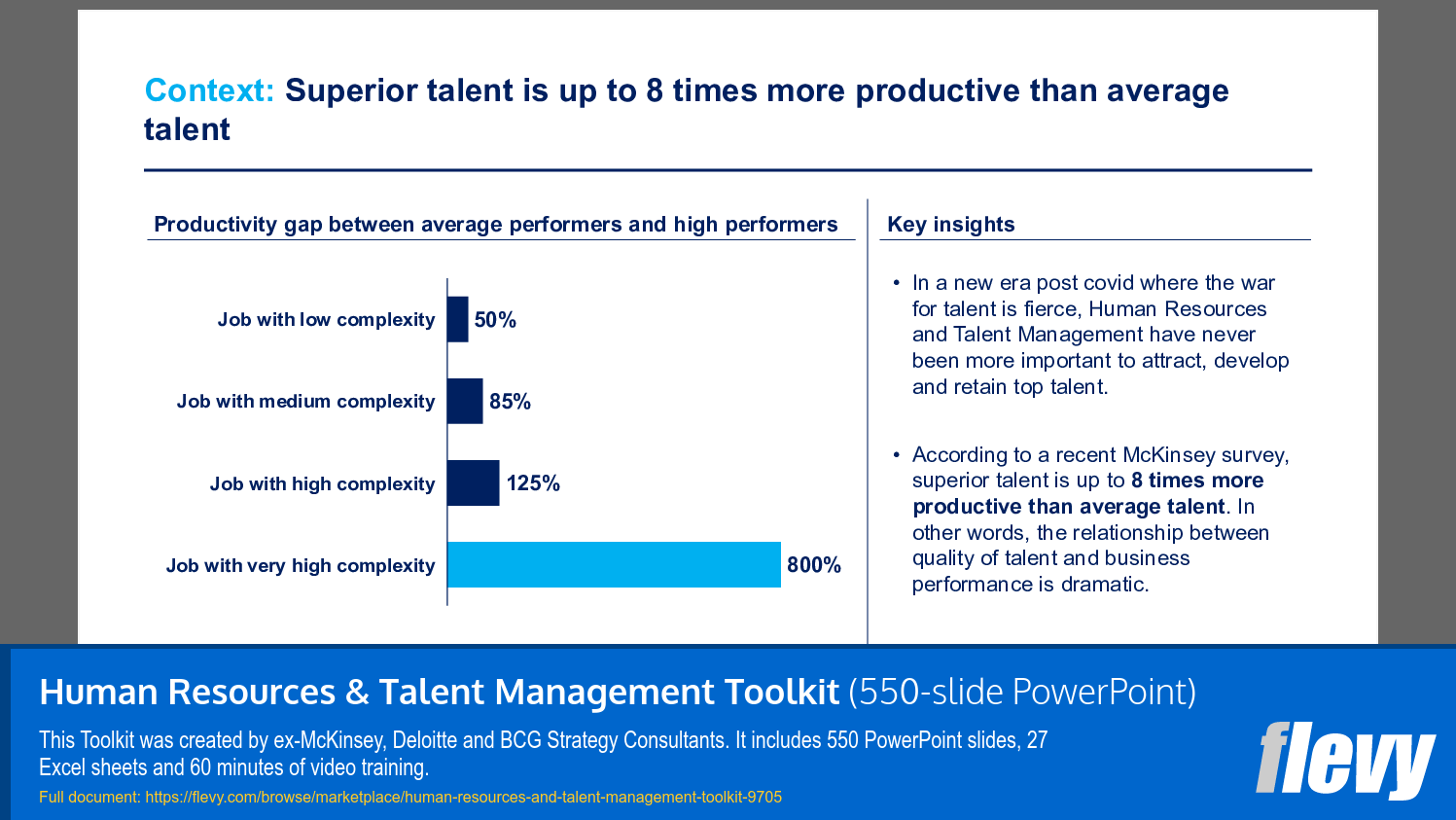
This PPT slide template highlights the productivity disparity between high performers and average talent, with top talent being up to eight times more productive. A bar chart illustrates productivity gaps across job complexity levels: low complexity shows a 50% increase, medium complexity an 85% boost, and very high complexity reveals an 800% increase for high performers. The data emphasizes the importance of talent quality in complex roles and suggests that investing in top-tier talent yields higher returns. In the post-pandemic environment, the war for talent intensifies, making Human Resources and Talent Management critical for attracting, developing, and retaining top talent. A recent McKinsey survey supports that superior talent can be up to eight times more productive, reinforcing the need for strategic talent initiatives to drive business performance.
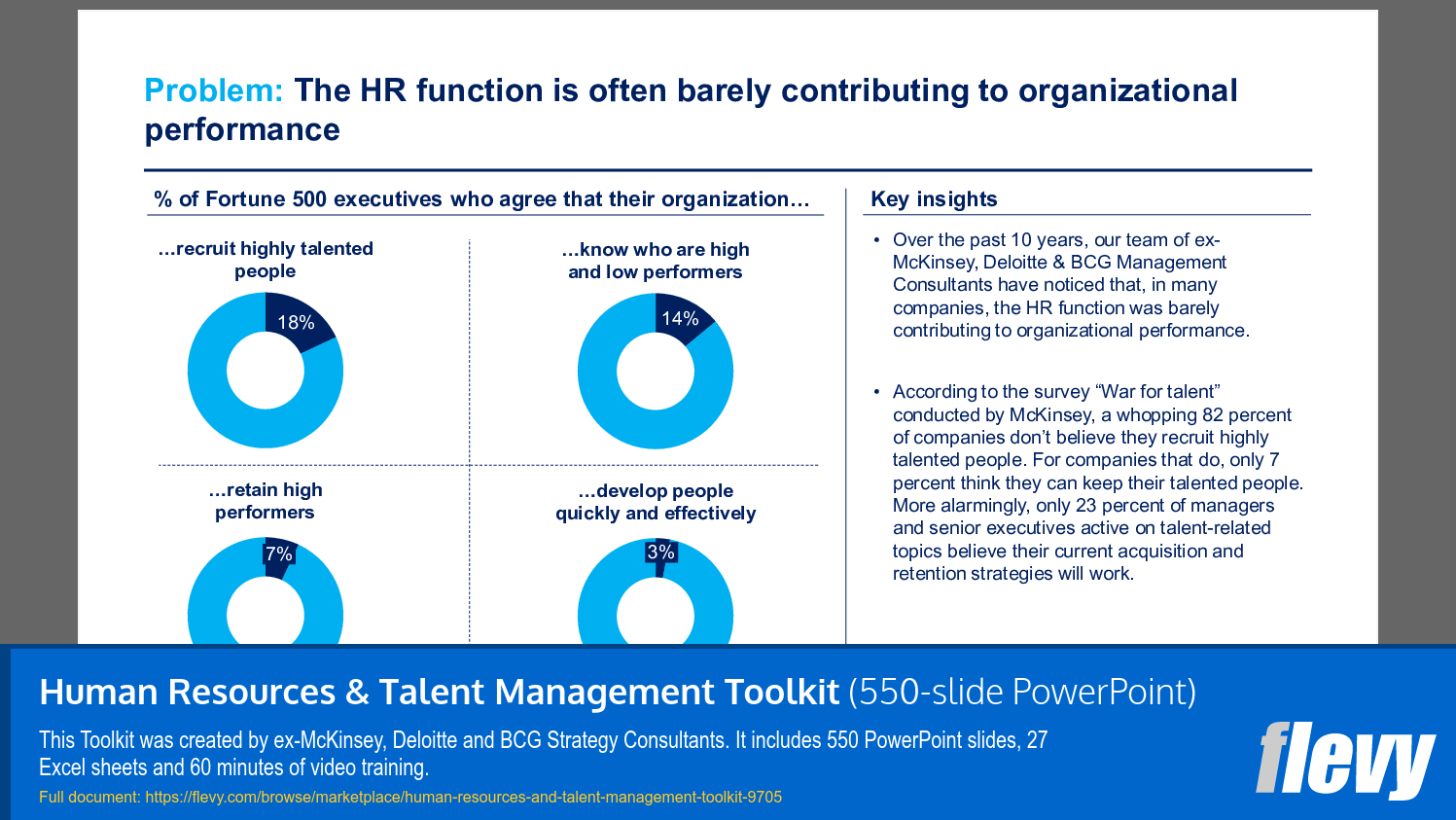
The HR function's limited impact on organizational performance is evident, with only 18% of Fortune 500 executives believing their organization recruits highly talented individuals. Just 14% can identify high and low performers, while only 7% feel capable of retaining high performers, and a mere 3% can develop talent efficiently. This data indicates a disconnect between HR activities and strategic outcomes, highlighting the need for alignment with business goals. Insights from McKinsey, Deloitte, and BCG reveal that 82% of companies struggle to attract and retain top talent. Organizations must re-evaluate their talent management strategies to improve acquisition, retention, and development, as failure to do so risks performance and growth. A strategic overhaul of HR functions is essential to better support organizational objectives and unlock underutilized potential.
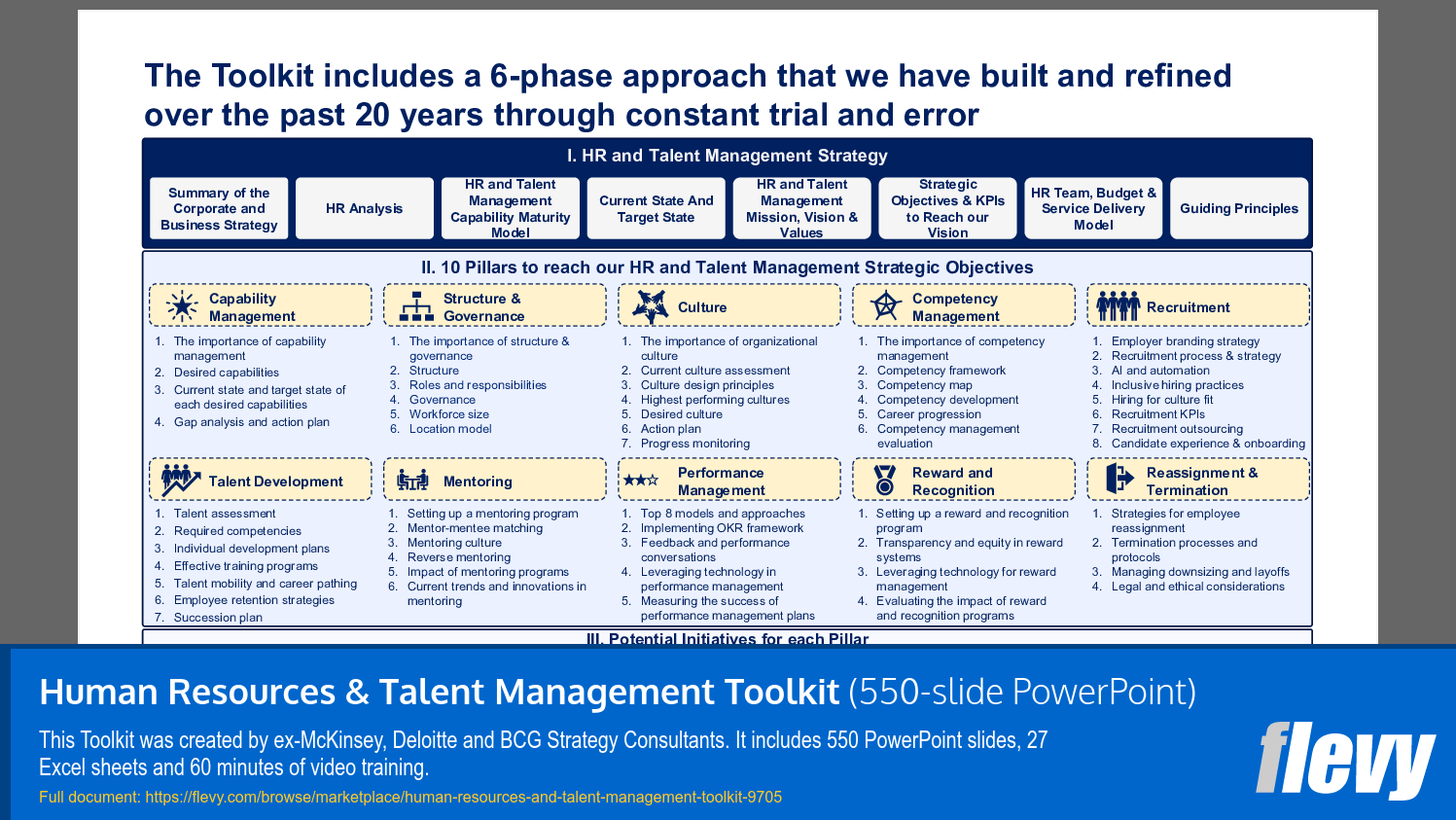
This PPT slide template provides an overview of a human resources and talent management toolkit developed over 2 decades, structured around a six-phase approach for HR transformation initiatives. Key components include corporate strategy, HR analysis, talent management capability maturity, current state assessment, and vision articulation. Ten strategic pillars serve as levers for HR goals, focusing on capability management, structure and governance, organizational culture, competency management, recruitment, talent development, mentoring, performance management, reward and recognition, and reallocation and termination. Each pillar outlines potential initiatives, emphasizing alignment with organizational objectives. This toolkit offers a structured framework for managing complex HR change programs, focusing on strategic alignment, operational clarity, and measurable outcomes.
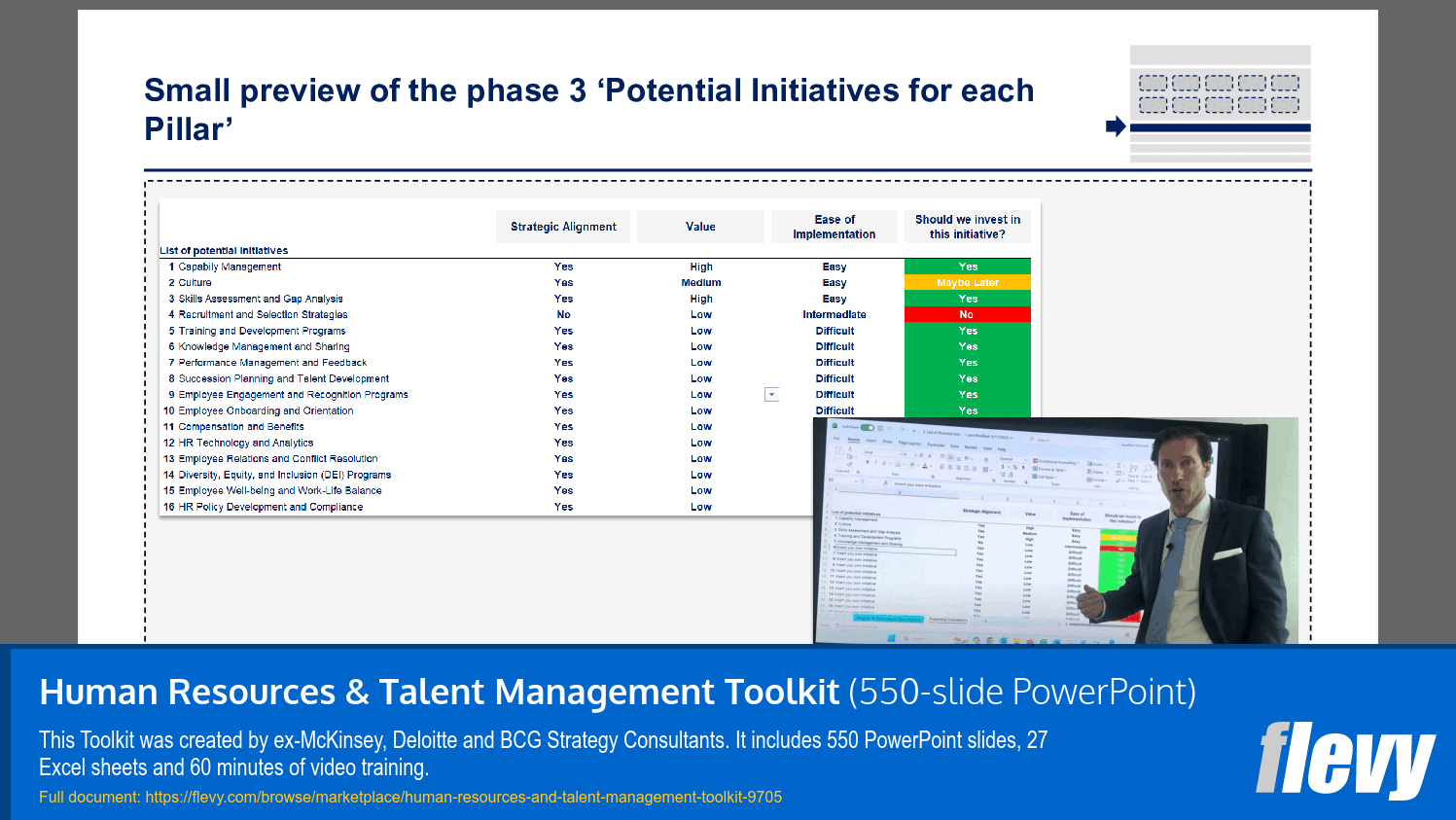
This PPT slide template outlines 16 HR initiatives evaluated across 4 criteria: strategic alignment, value, ease of implementation, and investment recommendation. Initiatives such as "Capability Management," "Skills Assessment and Gap Analysis," and "Performance Management and Feedback" score highly, indicating strong alignment with strategic goals and ease of implementation. In contrast, "Recruitment and Selection Strategies" and "Succession Planning and Talent Development" show mixed or lower scores, suggesting higher complexity. The color-coded assessment—green for "Yes," yellow for "Maybe Later," and red for "No"—provides a visual prioritization tool. This structured approach aids decision-makers in selecting high-value, low-effort HR initiatives that align with organizational goals while considering implementation factors.
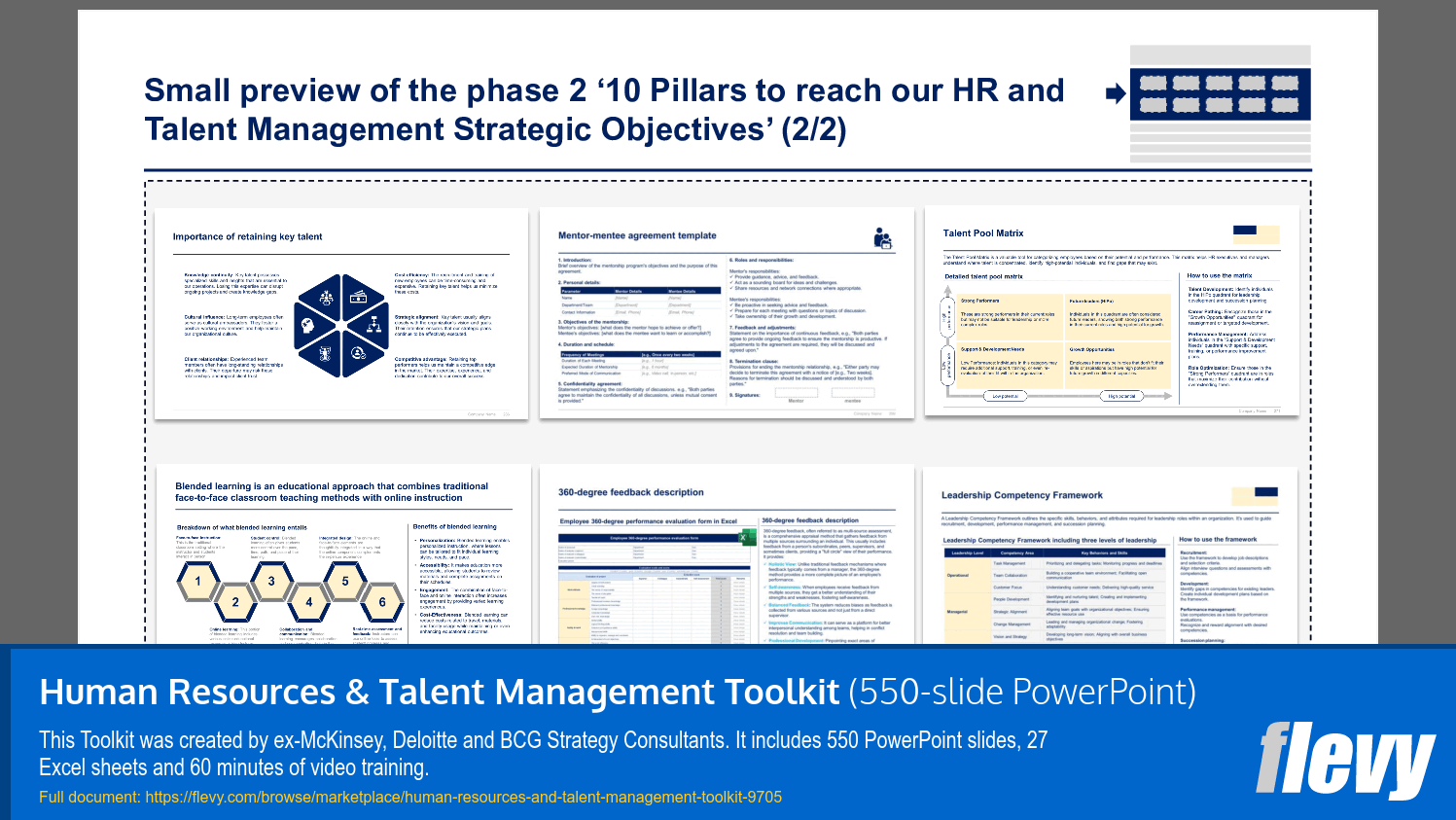
This PPT slide template outlines a toolkit for HR and Talent Management strategies, focusing on ten key pillars to achieve strategic HR objectives. It features a grid layout with 6 tools, including a talent retention diagram, a mentor-mentee agreement template, a talent pool matrix, blended learning approaches, a 360-degree feedback form, and a leadership competency framework. These resources emphasize structured processes like feedback, mentorship, and leadership assessment, supporting decision-making, talent retention, and leadership development. The inclusion of ready-to-use templates indicates practical utility for HR teams looking to implement or refine talent strategies, underscoring a holistic approach to talent management.
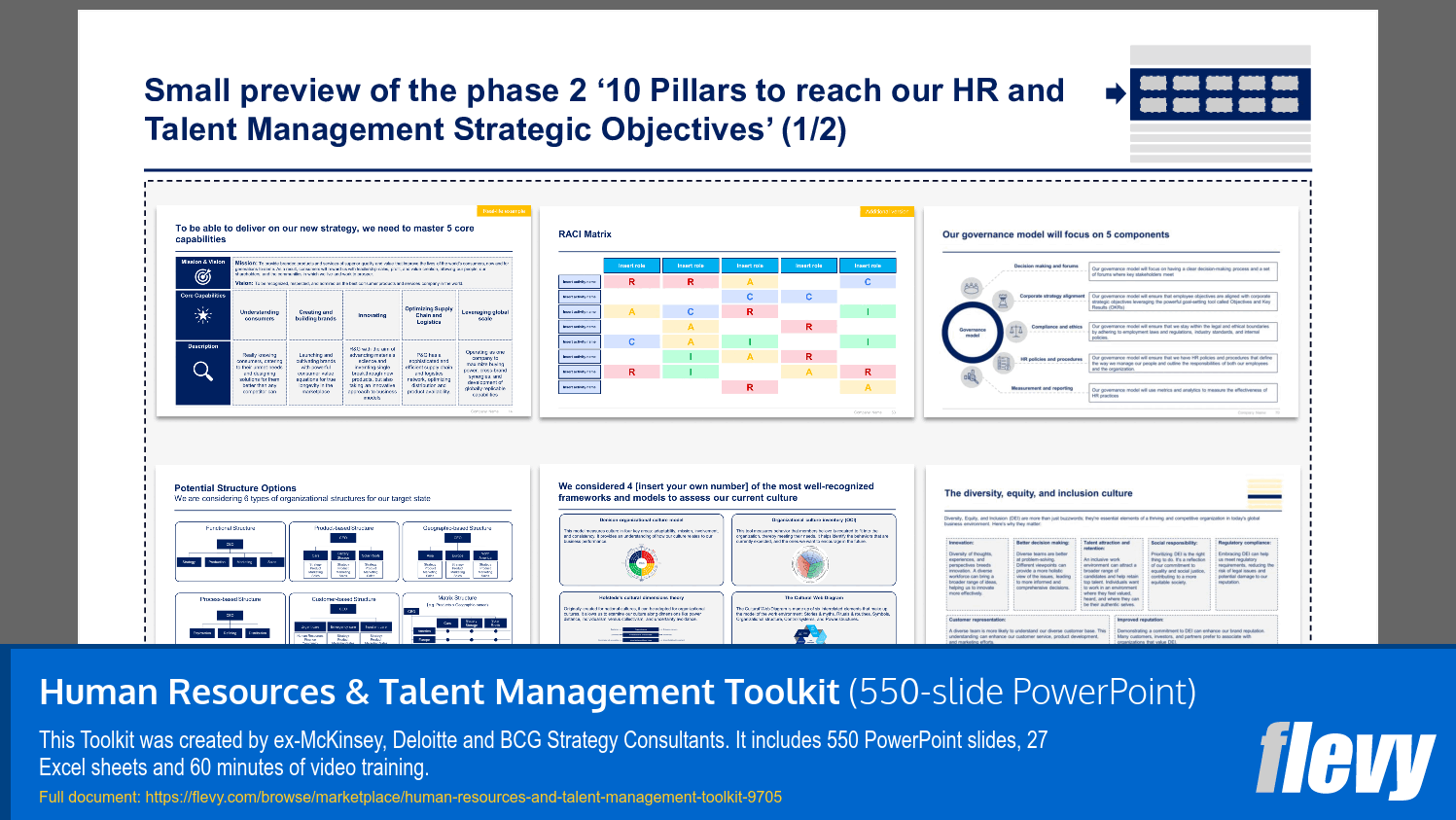
This PPT slide template outlines the second phase of a strategic initiative focused on HR and Talent Management, highlighting ten key pillars for achieving organizational objectives. It includes a summary of core capabilities such as talent acquisition, development, engagement, retention, and compliance. A RACI matrix defines accountability across activities, indicating responsible, accountable, consulted, and informed roles. The governance model emphasizes decision-making frameworks, strategic alignment, compliance, and measurement for managing HR initiatives. Potential organizational structures discussed include functional, matrix, and hybrid models, tailored to organizational size and complexity. The assessment of the current cultural environment references frameworks like the Denison model and cultural web, illustrating how culture influences strategic HR efforts. This slide provides foundational elements essential for a successful HR and talent management strategy.
Source: Best Practices in Talent Management PowerPoint Slides: Human Resources & Talent Management Toolkit PowerPoint (PPTX) Presentation Slide Deck, Domont Consulting
This toolkit was created by ex-McKinsey, Deloitte and BCG Strategy Consultants. It includes 550 PowerPoint slides, 27 Excel sheets and 60 minutes of video training.
Improve the Growth & Efficiency of your Organization and become a Subject Matter Expert. Leverage Toolkits created by ex-McKinsey, Deloitte & BCG Management Consultants and JP Morgan Investment Bankers.
Domont Consulting is trusted by 200,000+ executives, consultants and entrepreneurs from small & large organizations.
Domont Consulting is a global management consulting firm providing
... [read more] Management Consulting Toolkits & Services in 180+ countries.
Domont Consulting was founded by Aurelien Domont, who is a well-known ex-Deloitte Management Consultant with 20+ years of experience helping companies improve their performance. He is also a Linkedin Influencer, with 35,000+ Executives, Consultants & Entrepreneurs following him.
The average daily rate of a McKinsey consultant is $6,625 (not including expenses). The average price of a Flevy document is $65.
Trusted by over 10,000+ Client Organizations
Since 2012, we have provided business templates to over 10,000 businesses and organizations of all sizes, from startups and small businesses to the Fortune 100, in over 130 countries.
"Flevy.com has proven to be an invaluable resource library to our Independent Management Consultancy, supporting and enabling us to better serve our enterprise clients.
The value derived from our [FlevyPro] subscription in terms of the business it has helped to gain far exceeds the investment made, making a subscription a no-brainer for any growing consultancy – or in-house strategy team."
– Dean Carlton, Chief Transformation Officer, Global Village Transformations Pty Ltd.
"FlevyPro has been a brilliant resource for me, as an independent growth consultant, to access a vast knowledge bank of presentations to support my work with clients. In terms of RoI, the value I received from the very first presentation I downloaded paid for my subscription many times over! The
quality of the decks available allows me to punch way above my weight – it's like having the resources of a Big 4 consultancy at your fingertips at a microscopic fraction of the overhead.
"
– Roderick Cameron, Founding Partner at SGFE Ltd
"As an Independent Management Consultant, I find Flevy to add great value as a source of best practices, templates and information on new trends. Flevy has matured and the quality and quantity of the library is excellent. Lastly the price charged is reasonable, creating a win-win value for
the customer, Flevy and the various authors. This is truly a service that benefits the consulting industry and associated clients. Thanks for providing this service.
"
– Jim Schoen, Principal at FRC Group
"I am extremely grateful for the proactiveness and eagerness to help and I would gladly recommend the Flevy team if you are looking for data and toolkits to help you work through business solutions."
– Trevor Booth, Partner, Fast Forward Consulting
"[Flevy] produces some great work that has been/continues to be of immense help not only to myself, but as I seek to provide professional services to my clients, it gives me a large "tool box" of resources that are critical to provide them with the quality of service and outcomes they are expecting."
– Royston Knowles, Executive with 50+ Years of Board Level Experience
"FlevyPro provides business frameworks from many of the global giants in management consulting that allow you to provide best in class solutions for your clients."
– David Harris, Managing Director at Futures Strategy
"I like your product. I'm frequently designing PowerPoint presentations for my company and your product has given me so many great ideas on the use of charts, layouts, tools, and frameworks. I really think the templates are a valuable asset to the job."
– Roberto Fuentes Martinez, Senior Executive Director at Technology Transformation Advisory
"As a consultant requiring up to date and professional material that will be of value and use to my clients, I find Flevy a very reliable resource.
The variety and quality of material available through Flevy offers a very useful and commanding source for information. Using Flevy saves me time, enhances my expertise and ends up being a good decision."

 Click main image to view in full screen. Unlock all 21 preview images: