Toolkits and critical elements of a Go-To-Market Strategy
GO-TO-MARKET PPT TEMPLATE DESCRIPTION
Developed by ex-PwC, BCG, and EY consultants, this GTM Strategy Toolkit offers actionable insights for effective market execution and alignment with business goals. Go-To-Market (GTM) Strategy: Training Toolkit is a 18-slide PPT PowerPoint presentation template (PPTX) available for immediate download upon purchase.
This document serves as a comprehensive guide to developing a robust Go-To-Market (GTM) Strategy, focusing on building understanding, practical execution, and industry relevance. It is intended for professionals seeking to align their market approach with organizational goals and deliver measurable business outcomes.
The document begins by building a foundational understanding of GTM Strategy, explaining what it entails and how it functions as a bridge between strategy formulation and market execution. It defines GTM as a structured plan that guides how a company brings its product or service to customers, ensuring the right positioning, timing, and delivery across chosen markets.
Next, it underscores the importance of a strong GTM Strategy in today's competitive business environment. A well-crafted GTM plan not only accelerates revenue generation but also mitigates the risks associated with product launches, market entry, and customer acquisition. It enables organizations to align marketing, sales, and operational functions while maintaining customer-centricity and maximizing return on investment.
The document then details the GTM Strategy process, outlining key phases – market analysis, customer segmentation, value proposition definition, channel identification, pricing modeling, marketing communication planning, and implementation tracking. Each stage is explained in a step-by-step manner, offering clarity on how cross-functional teams can collaborate to ensure a seamless market rollout.
Further, it identifies essential toolkits and critical elements necessary for execution success. These include templates for market sizing, competitor benchmarking, sales enablement frameworks, customer journey mapping, and performance measurement dashboards. These tools help teams translate strategic intent into actionable deliverables with greater precision.
To illustrate real-world applicability, the document highlights industry examples of successful GTM strategies adopted by market leaders across technology, healthcare, and consumer goods sectors. These examples demonstrate how effective GTM execution drives scalability, brand differentiation, and sustainable growth.
In essence, this document combines conceptual depth with practical guidance to help organizations design market-ready, customer-focused Go-To-Market strategies that deliver long-term business value.
Got a question about the product? Email us at support@flevy.com or ask the author directly by using the "Ask the Author a Question" form. If you cannot view the preview above this document description, go here to view the large preview instead.
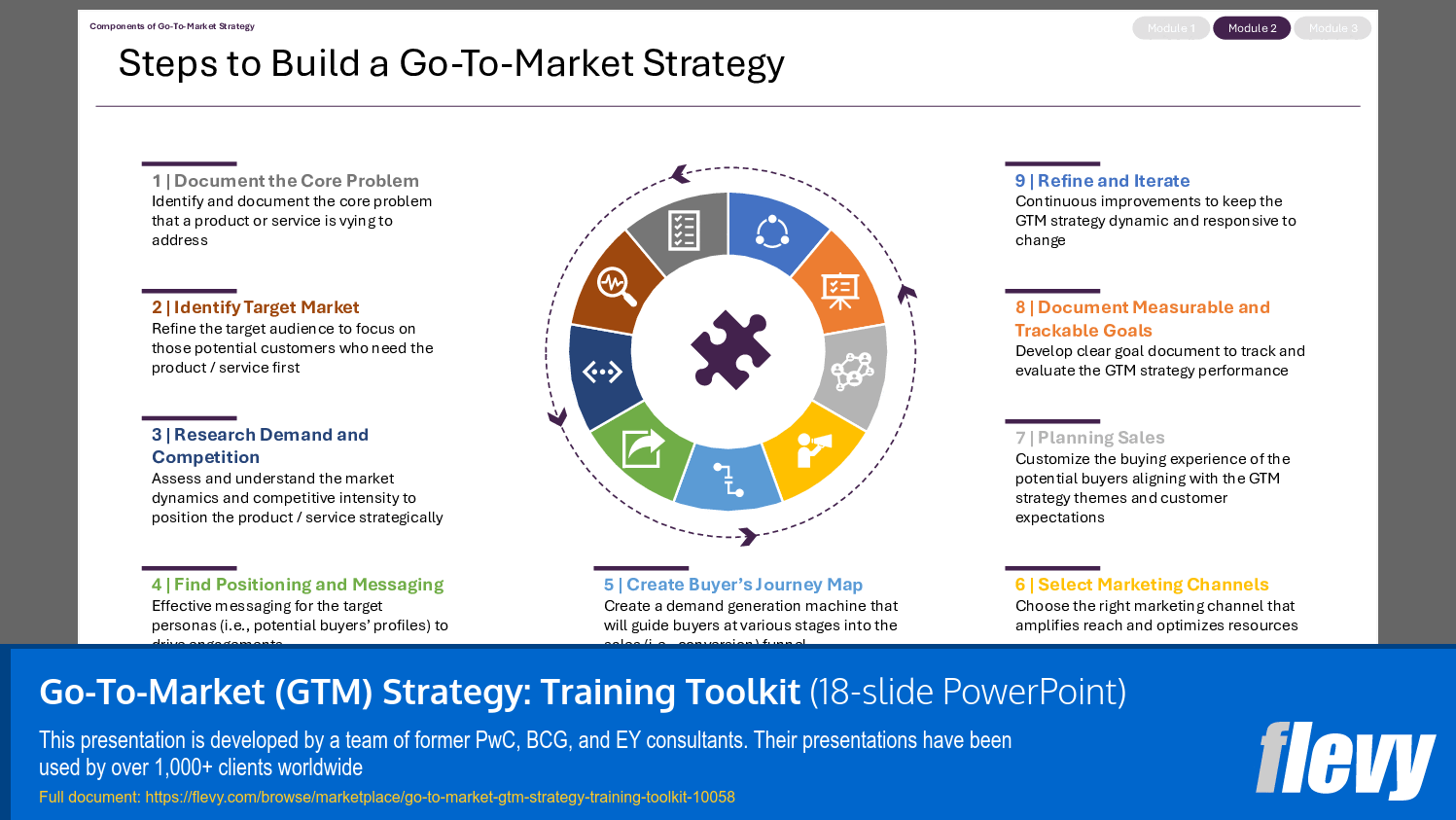
This PPT slide template outlines the sequential steps for constructing a go-to-market (GTM) strategy, illustrated by a circular diagram with eight key actions. The process begins with identifying the core problem and refining target audiences, which are foundational for strategic planning. Researching demand and competition assesses market dynamics, while defining positioning and messaging ensures the value proposition resonates with the target segment. Creating a buyer’s journey map guides customer engagement. Later steps focus on execution and optimization, including selecting marketing channels, aligning sales processes with customer expectations, and documenting measurable goals. The final step emphasizes continuous refinement, ensuring the GTM strategy adapts to market changes.
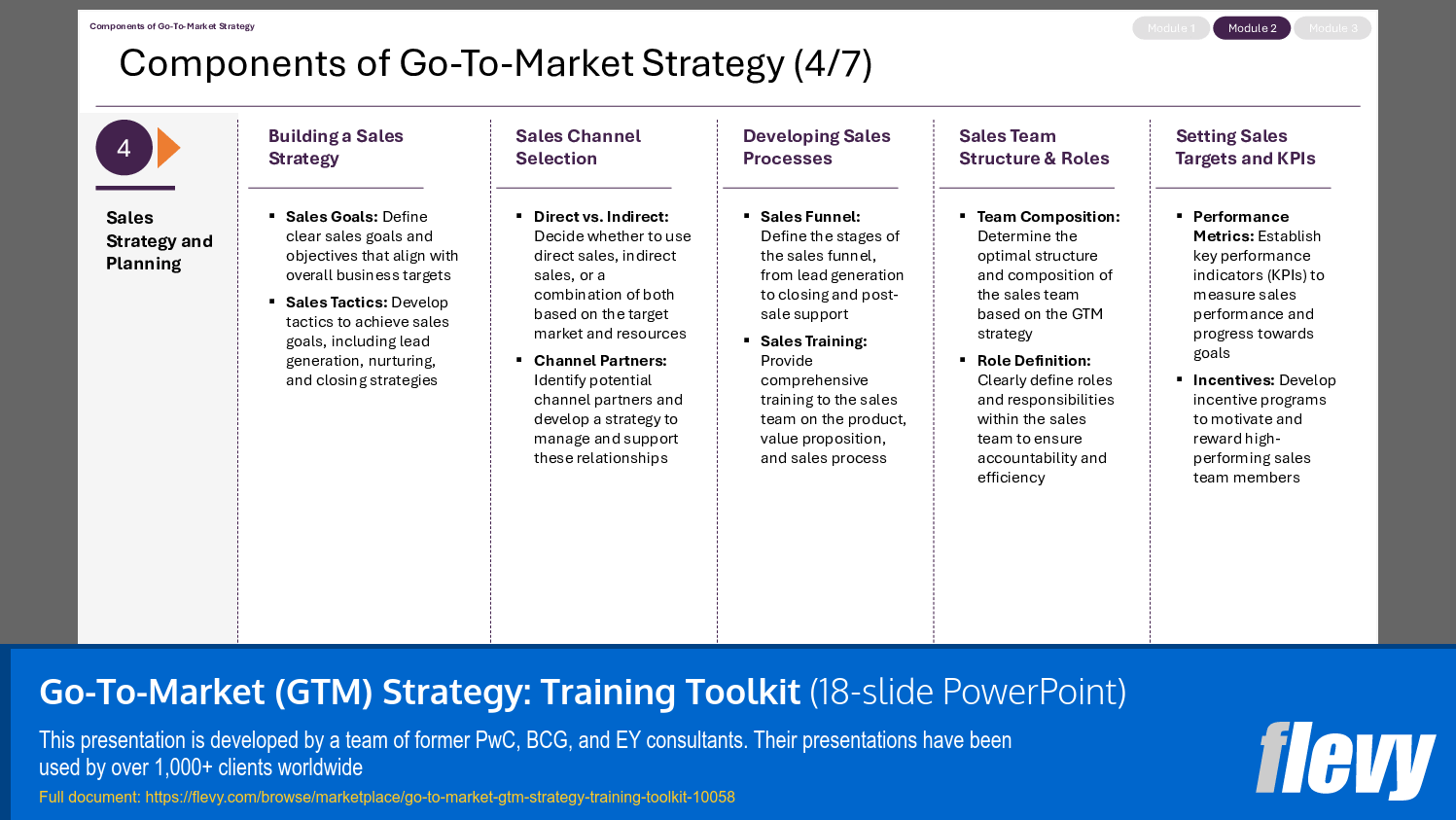
This PPT slide template outlines key components of a go-to-market strategy, focusing on sales strategy and planning. It includes 5 main sections: defining sales goals aligned with business targets, selecting direct or indirect sales channels, detailing the sales funnel from lead generation to post-sale support, optimizing sales team structure and roles, and establishing measurable sales targets and KPIs. Each section emphasizes actionable insights for developing a robust sales strategy, ensuring accountability, and driving sales success. This serves as a practical guide for senior leaders to design and implement effective sales strategies that align with market entry plans.
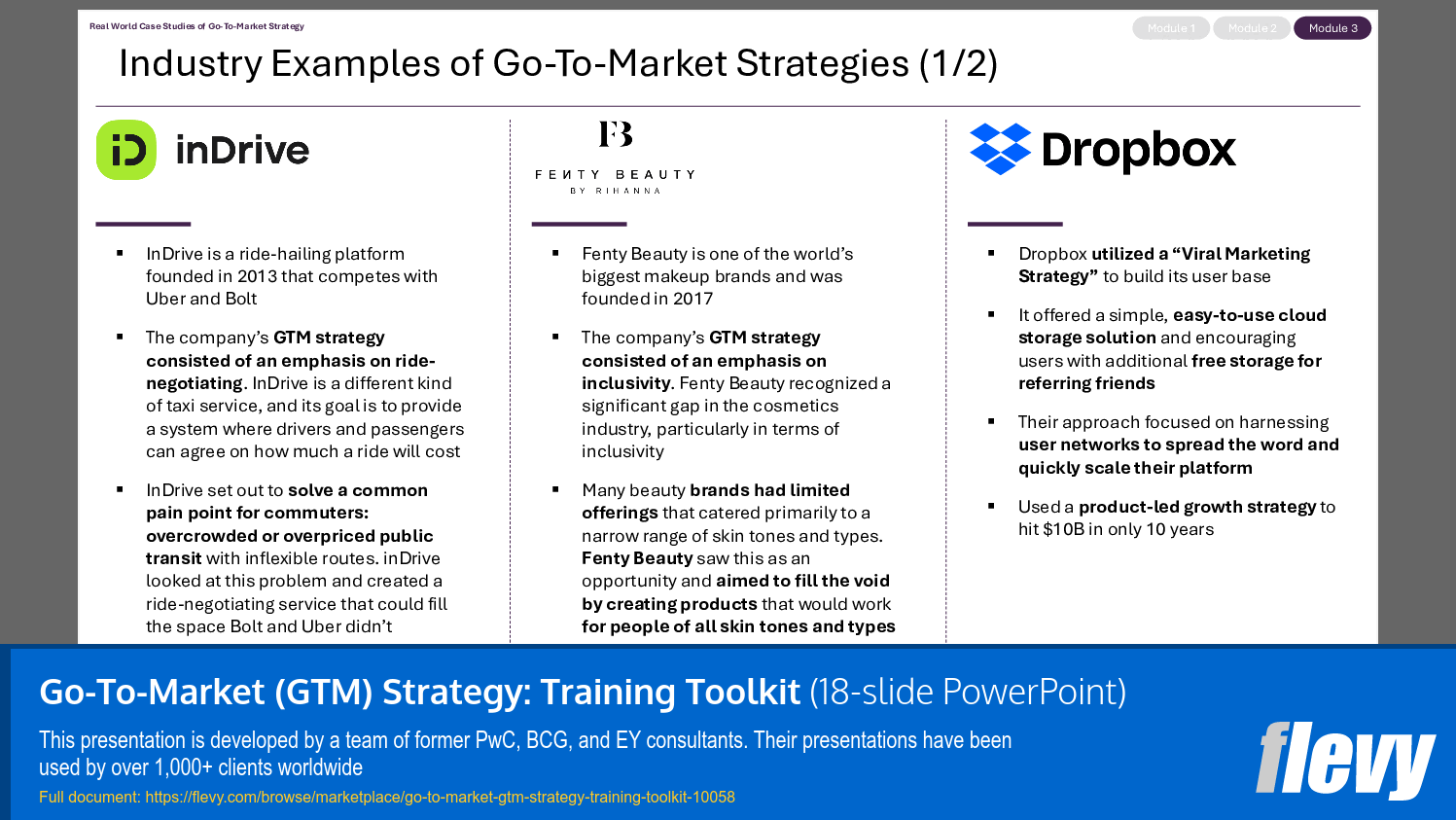
This PPT slide template presents 3 examples of companies utilizing go-to-market strategies: InDrive, Fenty Beauty, and Dropbox. InDrive, a ride-hailing platform launched in 2013, differentiates itself from Uber and Bolt through ride-negotiating, addressing urban mobility challenges by offering customer-centric solutions. Fenty Beauty, founded in 2017, targets inclusivity in cosmetics by creating products for diverse skin tones, filling a significant market gap. Dropbox employs a viral marketing strategy with a user-friendly cloud storage solution, leveraging user networks and free storage to rapidly scale its user base. These examples illustrate the necessity for tailored go-to-market tactics across different industries.
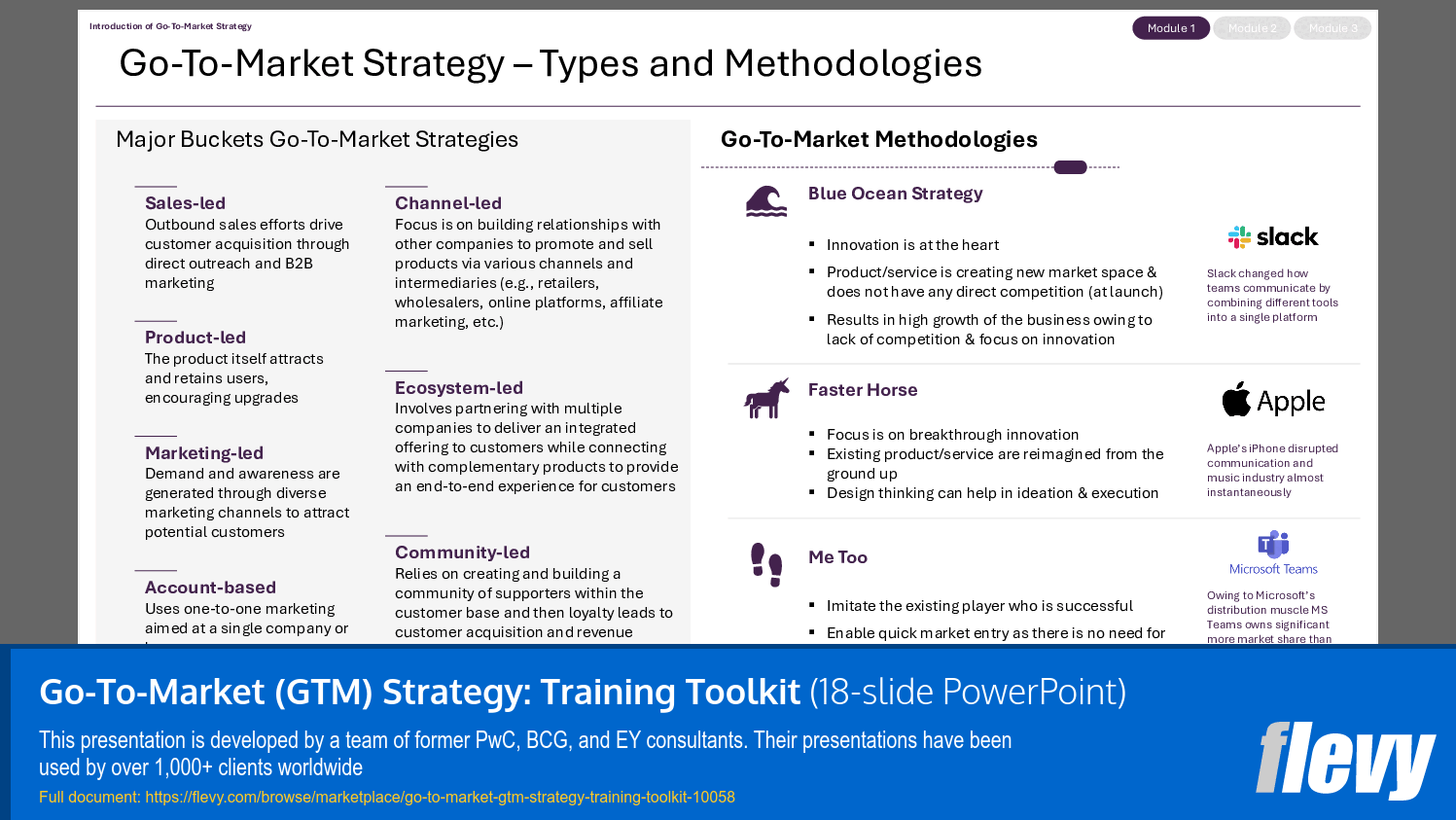
This PPT slide template categorizes go-to-market (GTM) strategies into 4 main types: sales-led, channel-led, product-led, and marketing-led. Sales-led strategies focus on outbound sales and direct outreach, while channel-led approaches build relationships with partners. Product-led strategies leverage the product to attract customers, and marketing-led strategies emphasize demand generation through various channels. Account-based GTM targets individual accounts with personalized marketing.
The slide also introduces 3 GTM methodologies: Blue Ocean Strategy, which emphasizes innovation and creating new market space; the Faster Horse methodology, which focuses on breakthrough innovation, exemplified by Apple’s iPhone; and the Me Too approach, which involves imitating successful players, as seen with Microsoft Teams. Each methodology illustrates how different strategies align with company goals and market conditions, optimizing market impact.
This PPT slide template outlines the sequential steps for constructing a go-to-market (GTM) strategy, illustrated by a circular diagram with eight key actions. The process begins with identifying the core problem and refining target audiences, which are foundational for strategic planning. Researching demand and competition assesses market dynamics, while defining positioning and messaging ensures the value proposition resonates with the target segment. Creating a buyer’s journey map guides customer engagement. Later steps focus on execution and optimization, including selecting marketing channels, aligning sales processes with customer expectations, and documenting measurable goals. The final step emphasizes continuous refinement, ensuring the GTM strategy adapts to market changes.
This PPT slide template outlines key components of a go-to-market strategy, focusing on sales strategy and planning. It includes 5 main sections: defining sales goals aligned with business targets, selecting direct or indirect sales channels, detailing the sales funnel from lead generation to post-sale support, optimizing sales team structure and roles, and establishing measurable sales targets and KPIs. Each section emphasizes actionable insights for developing a robust sales strategy, ensuring accountability, and driving sales success. This serves as a practical guide for senior leaders to design and implement effective sales strategies that align with market entry plans.
This PPT slide template presents 3 examples of companies utilizing go-to-market strategies: InDrive, Fenty Beauty, and Dropbox. InDrive, a ride-hailing platform launched in 2013, differentiates itself from Uber and Bolt through ride-negotiating, addressing urban mobility challenges by offering customer-centric solutions. Fenty Beauty, founded in 2017, targets inclusivity in cosmetics by creating products for diverse skin tones, filling a significant market gap. Dropbox employs a viral marketing strategy with a user-friendly cloud storage solution, leveraging user networks and free storage to rapidly scale its user base. These examples illustrate the necessity for tailored go-to-market tactics across different industries.
This PPT slide template categorizes go-to-market (GTM) strategies into 4 main types: sales-led, channel-led, product-led, and marketing-led. Sales-led strategies focus on outbound sales and direct outreach, while channel-led approaches build relationships with partners. Product-led strategies leverage the product to attract customers, and marketing-led strategies emphasize demand generation through various channels. Account-based GTM targets individual accounts with personalized marketing.
The slide also introduces 3 GTM methodologies: Blue Ocean Strategy, which emphasizes innovation and creating new market space; the Faster Horse methodology, which focuses on breakthrough innovation, exemplified by Apple’s iPhone; and the Me Too approach, which involves imitating successful players, as seen with Microsoft Teams. Each methodology illustrates how different strategies align with company goals and market conditions, optimizing market impact.
Source: Best Practices in Go-to-Market PowerPoint Slides: Go-To-Market (GTM) Strategy: Training Toolkit PowerPoint (PPTX) Presentation Slide Deck, Insights Locus
Insights Locus is a group of market intelligence professionals who assist organizations to tap potential market opportunities by providing business insights. We are the growth catalysts providing inside-out as well as outside-in view of target companies and industries.
We decode competitive potential and add-in the value creation.
We understand the power of information and its strategic
... [read more] usage. We collate data, synthesize information, develop insights, deliver intelligence, and drive transformation. We are redefining the context of research from knowledge gathering to analytical understanding to vision-oriented strategic execution.
The average daily rate of a McKinsey consultant is $6,625 (not including expenses). The average price of a Flevy document is $65.
Trusted by over 10,000+ Client Organizations
Since 2012, we have provided business templates to over 10,000 businesses and organizations of all sizes, from startups and small businesses to the Fortune 100, in over 130 countries.
"I have used FlevyPro for several business applications. It is a great complement to working with expensive consultants. The quality and effectiveness of the tools are of the highest standards."
– Moritz Bernhoerster, Global Sourcing Director at Fortune 500
"I like your product. I'm frequently designing PowerPoint presentations for my company and your product has given me so many great ideas on the use of charts, layouts, tools, and frameworks. I really think the templates are a valuable asset to the job."
– Roberto Fuentes Martinez, Senior Executive Director at Technology Transformation Advisory
"As a consulting firm, we had been creating subject matter training materials for our people and found the excellent materials on Flevy, which saved us 100's of hours of re-creating what already exists on the Flevy materials we purchased."
– Michael Evans, Managing Director at Newport LLC
"If you are looking for great resources to save time with your business presentations, Flevy is truly a value-added resource. Flevy has done all the work for you and we will continue to utilize Flevy as a source to extract up-to-date information and data for our virtual and onsite presentations!"
– Debbi Saffo, President at The NiKhar Group
"My FlevyPro subscription provides me with the most popular frameworks and decks in demand in today’s market. They not only augment my existing consulting and coaching offerings and delivery, but also keep me abreast of the latest trends, inspire new products and service offerings for my practice, and educate me
in a fraction of the time and money of other solutions. I strongly recommend FlevyPro to any consultant serious about success.
"
– Bill Branson, Founder at Strategic Business Architects
"As a consultant requiring up to date and professional material that will be of value and use to my clients, I find Flevy a very reliable resource.
The variety and quality of material available through Flevy offers a very useful and commanding source for information. Using Flevy saves me time, enhances my expertise and ends up being a good decision."
– Dennis Gershowitz, Principal at DG Associates
"As a young consulting firm, requests for input from clients vary and it's sometimes impossible to provide expert solutions across a broad spectrum of requirements. That was before I discovered Flevy.com.
Through subscription to this invaluable site of a plethora of topics that are key and crucial to consulting, I
have been able to exceed expectations and deliver quality advice and solutions to my clients. The quality and expertise of the authors are exemplary and gives me great confidence to use as part of my service offerings.
I highly recommend this company for any consultant wanting to apply international best practice standards in their service offerings.
"
– Nishi Singh, Strategist and MD at NSP Consultants
"The wide selection of frameworks is very useful to me as an independent consultant. In fact, it rivals what I had at my disposal at Big 4 Consulting firms in terms of efficacy and organization."
– Julia T., Consulting Firm Owner (Former Manager at Deloitte and Capgemini)
Download our free compilation of 50+ Strategy & Transformation slides and templates. Frameworks include McKinsey 7-S, Balanced Scorecard, Disruptive Innovation, BCG Curve, and many more.
 Click main image to view in full screen.