 Click main image to view in full screen.


MANUFACTURING EXCEL DESCRIPTION
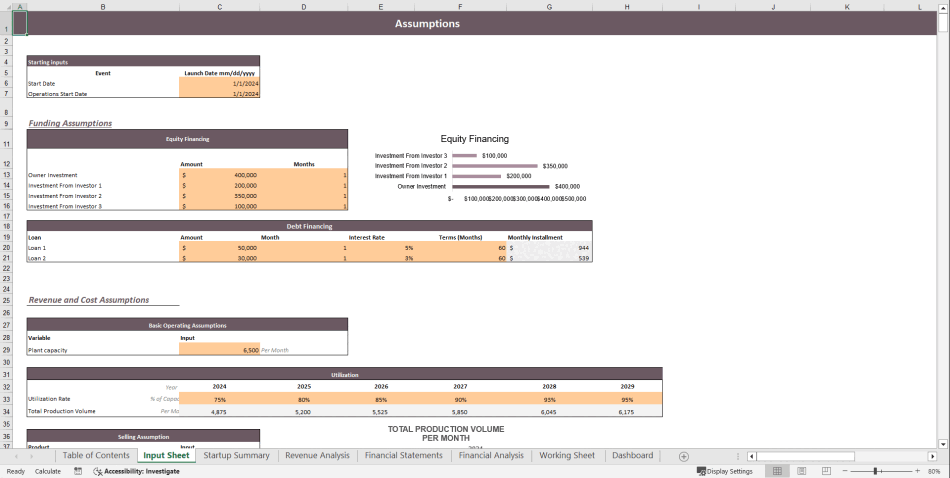
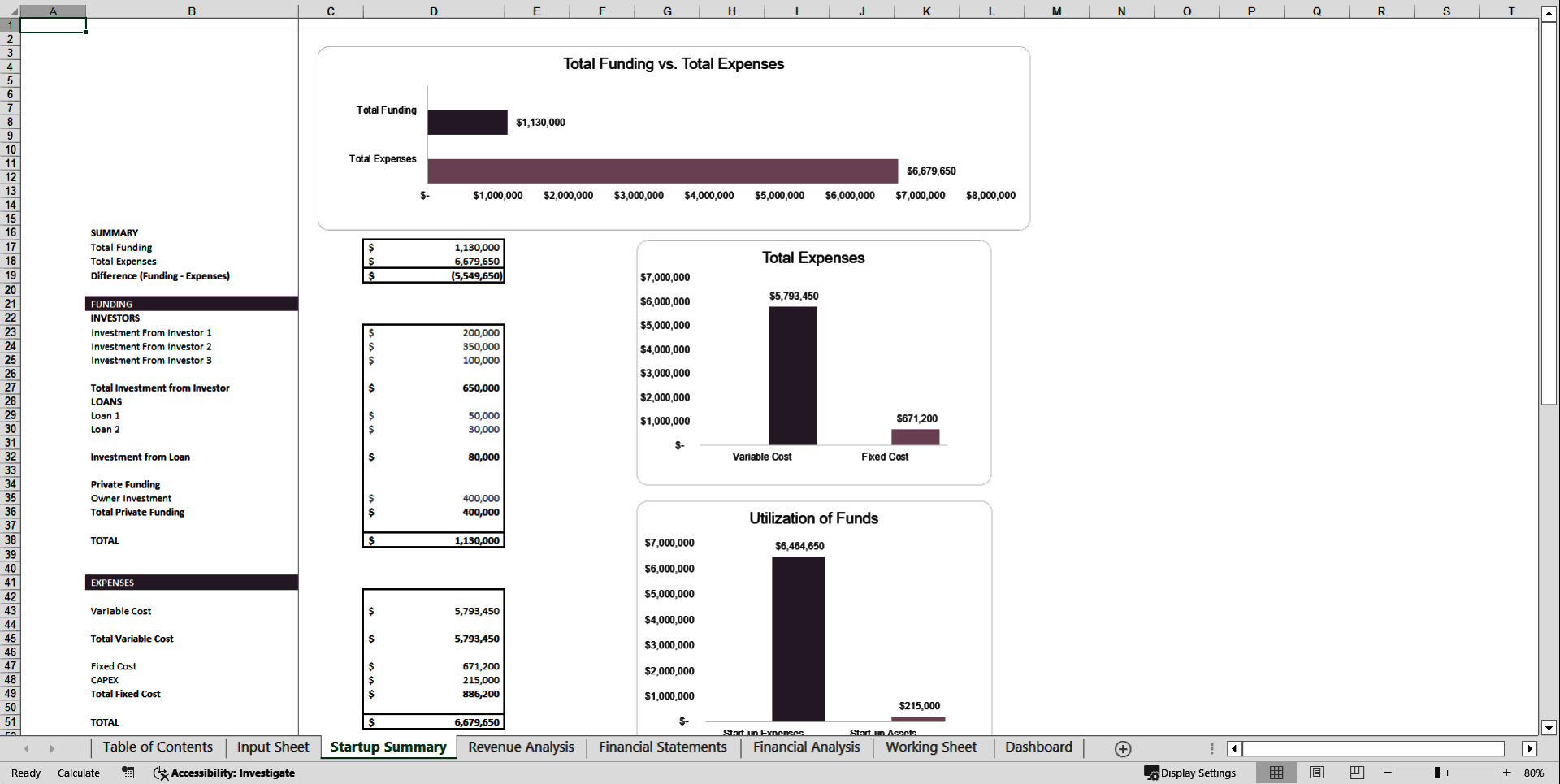
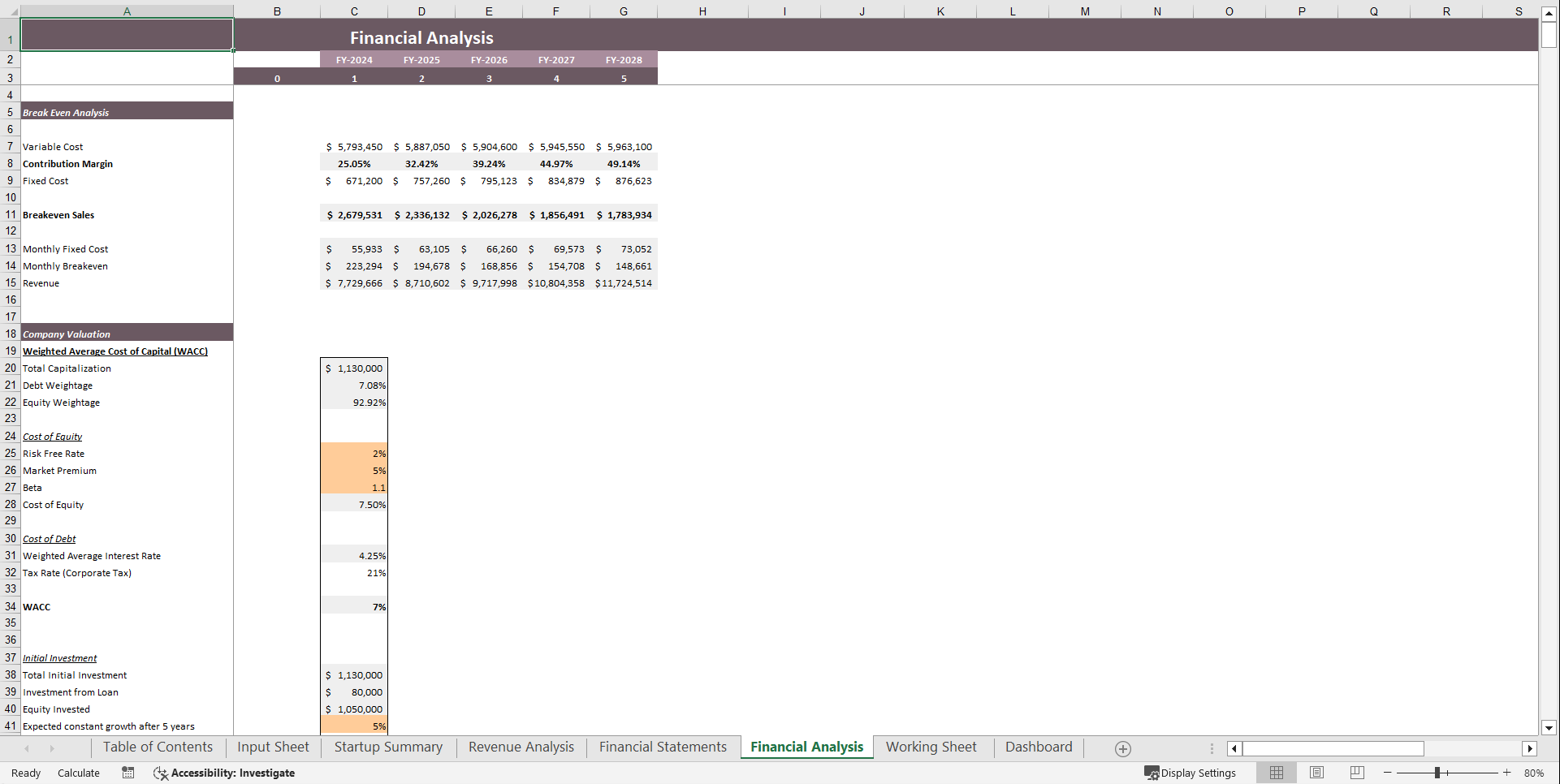
Garment Manufacturer Financial Model Template presents the business case of a brand new start-up consultancy business with an upfront investment in a website, SEO, logo, copywriting. The model contains the three financial statements including the cash flows and calculates the relevant metrics (Sensitivity Analysis, Break-even Analysis, Diagnostic Tools, Project evaluation, and Charts). The financing options for the project include a standard long-term loan as well as an investment made by the investors and of course marketing sheet ( include automated inbound and outbound marketing costs sheet which also contains how many customers will achieve as a result).
Key Features of the Model:
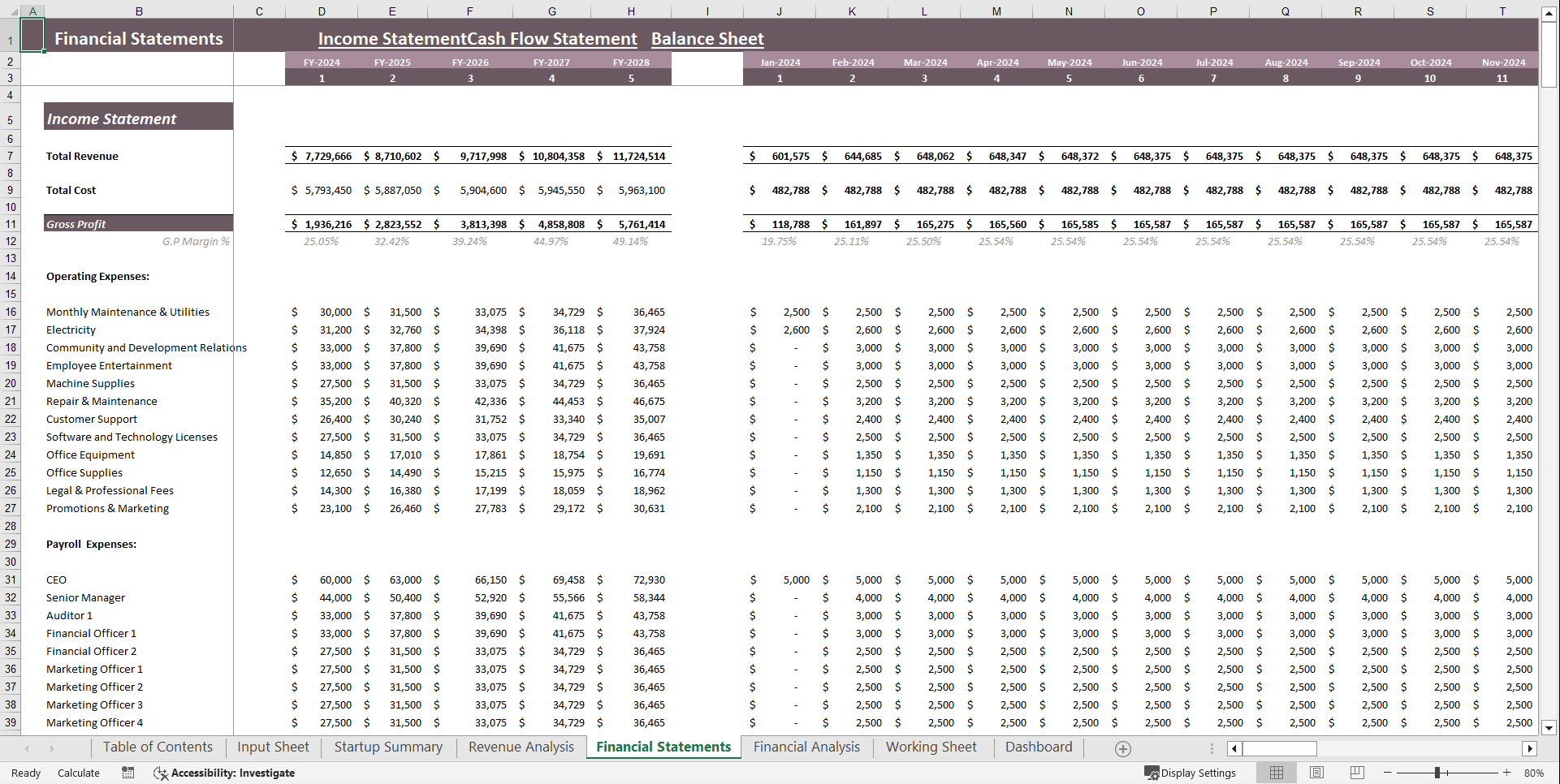
1. Income Statement
2. Cash Flow Statement
3. Balance Sheet Forecast
Revenue Structure:
1. Revenue by Customers – Track income based on customer segments or bulk buyers.
2. Revenue by No. of Orders – Forecast revenue through monthly or seasonal sales order volume.
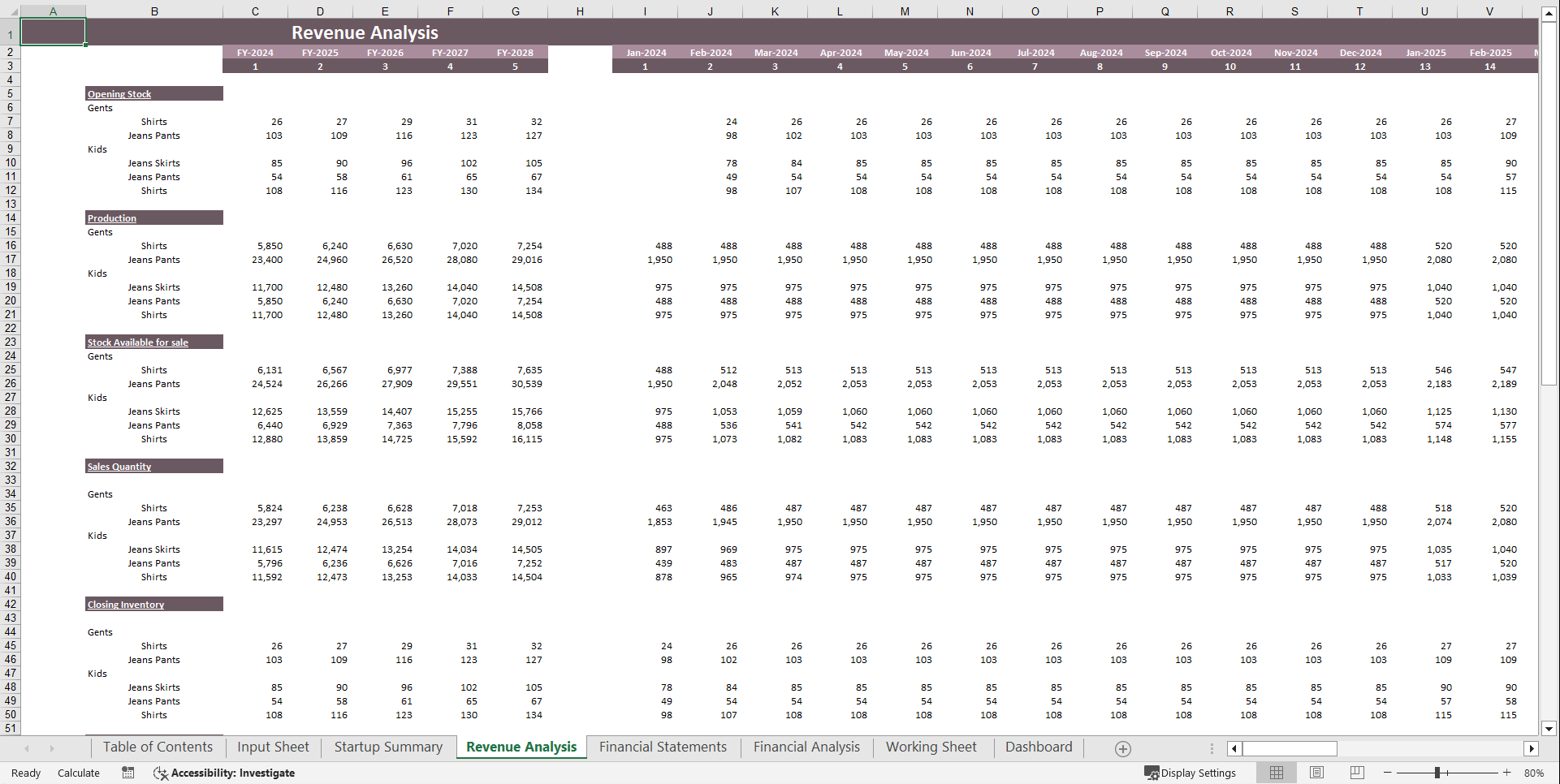
3. Revenue by Product Lines – Analyze sales from different garments like shirts, trousers, jackets, etc.
Cost Structure:
1. Fabric & Labor Costs – Core production costs including stitching, cutting, and tailoring wages.
2. Variable Costs – Includes trims, packaging, and utility costs which vary with production volume.
3. Overhead & Operating Expenses – Covers rent, marketing, equipment depreciation, and admin salaries.
4. Startup Costs – Initial setup costs like machinery, workspace setup, and licensing.
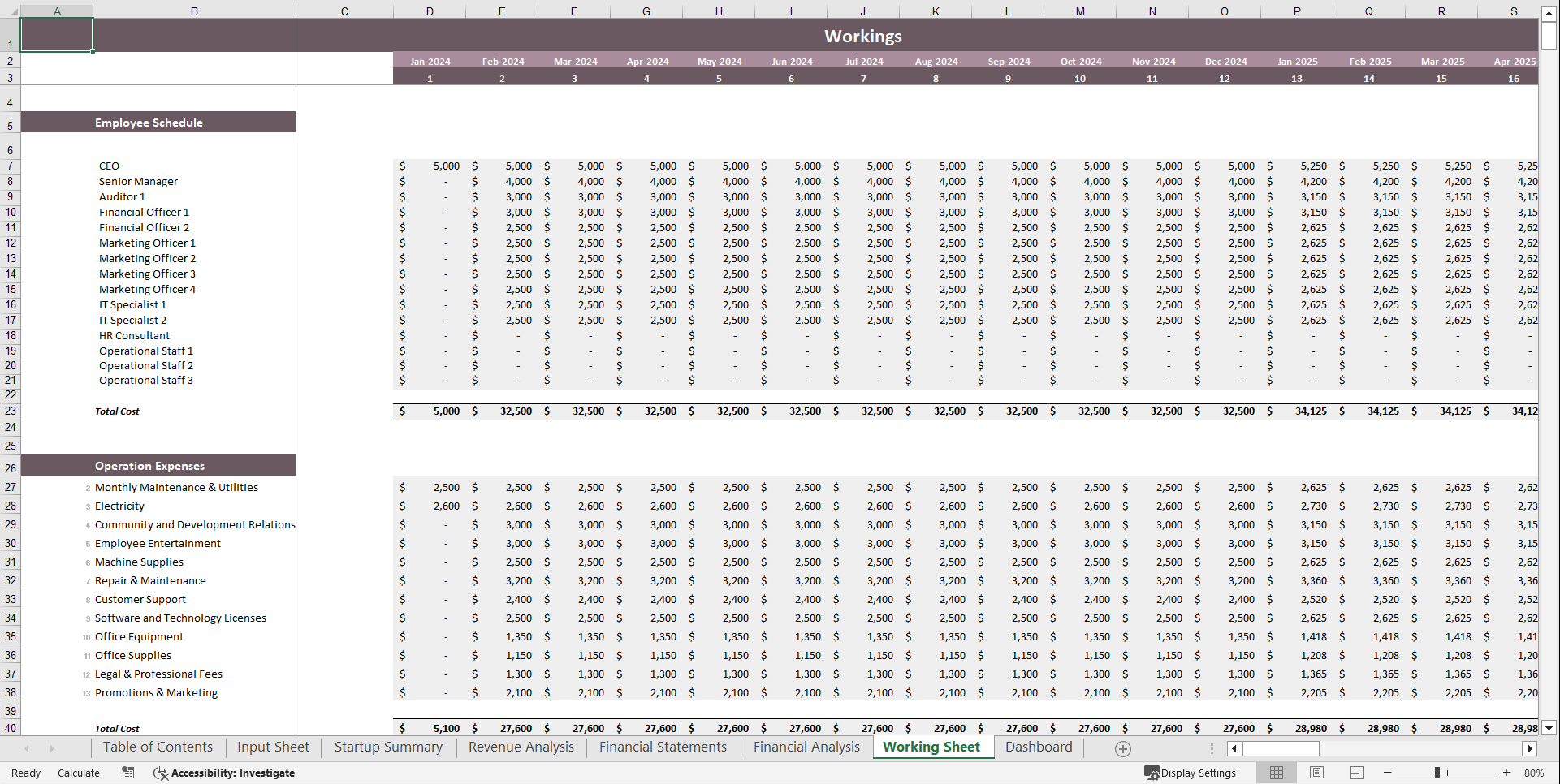
5. Recurring Monthly Expenses – Regular costs such as salaries, raw material restocking, and maintenance.
Profitability Analysis:
1. Gross Margin – Measure the financial picture of the business's profitability.
2. Operating Expenses – Track the impact of fixed costs and rental expenses.
3. Net Profit – Assess the return on investment and overall financial position.
Cash Flow Management:
1. Working Capital – Plan for business operations and day-to-day expenses.
2. Cash Burn Rate – Monitor cash movements and future cash inflows.
3. Break-Even Analysis – Determine the sales potential needed to cover all costs.
Scenario Analysis:
1. Sensitivity Analysis – Adjust variables like average price and sales volume to see the impact on financial projections.
2. Market Conditions – Evaluate different business strategies to adapt to changes in demand.
Key Performance Indicators (KPIs):
1. Operational Efficiency – Track essential tools and financial planning tools.
2. Advertising Expenses – Measure the impact of marketing on sales.
Funding and Valuation:
1. Capital Requirements – Identify funding needs for business expansion.
2. Valuation Metrics – Analyze financial statements to assess business growth.
Visual Dashboards:
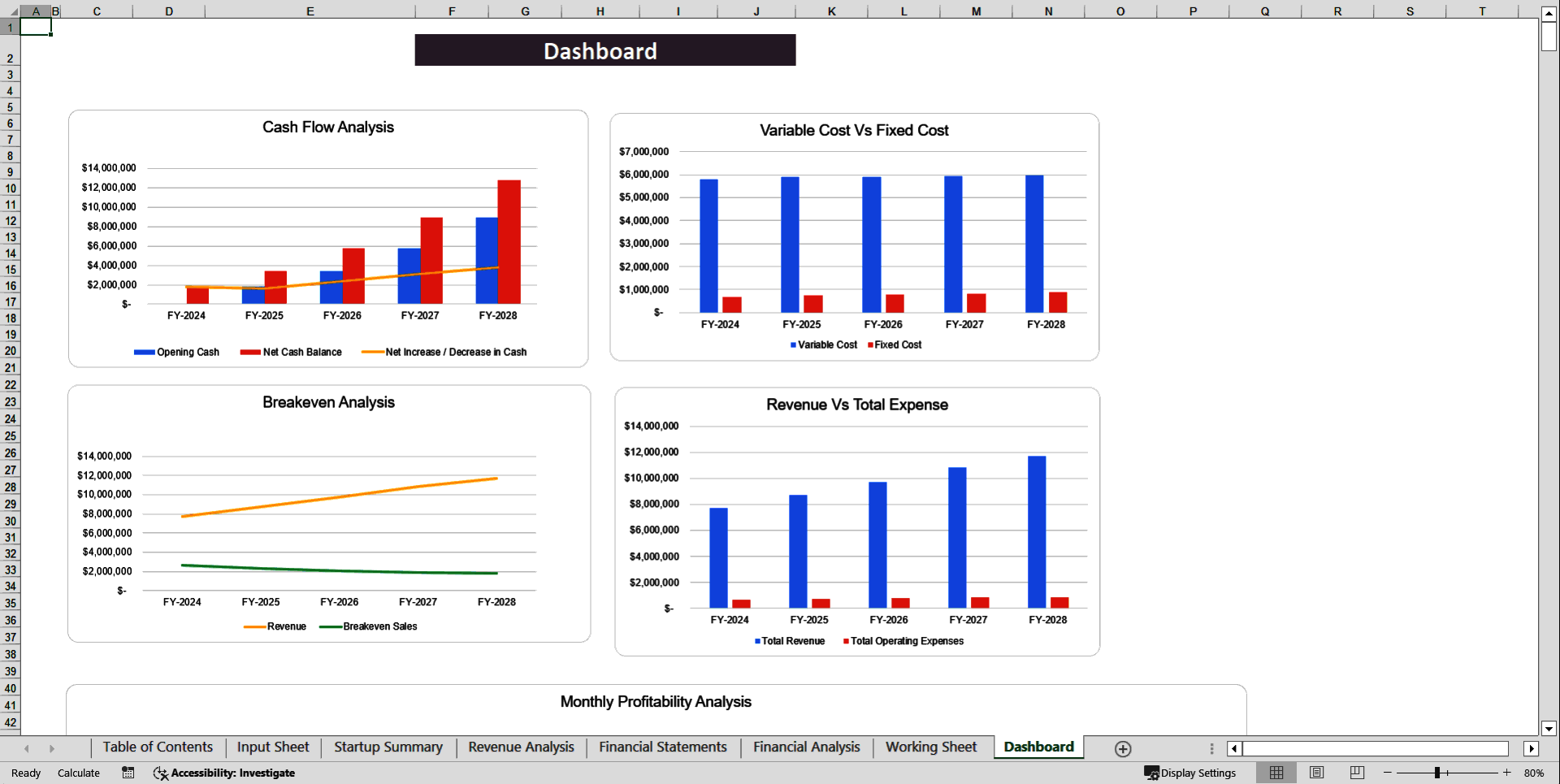
1. Financial Analysis – Graphical representation of cash payments and accounts payable.
2. Revenue Projections – Track revenue trends and future cash inflows.
FAQs
What does this financial model include?
It covers revenue forecasting, cost of goods sold, production planning, and profitability analysis.
Can I estimate profit margins by product type?
Yes, the model allows margin analysis by product category or SKU.
Does it include inventory and raw material planning?
Yes, it features detailed sheets for inventory management and raw material consumption.
Is this model suitable for small or large garment businesses?
It's scalable and works for startups, SMEs, and large manufacturers.
Can I adjust labor, fabric, and overhead costs easily?
Yes, all cost inputs are editable to reflect your real-time operations.
Got a question about the product? Email us at support@flevy.com or ask the author directly by using the "Ask the Author a Question" form. If you cannot view the preview above this document description, go here to view the large preview instead.
Source: Best Practices in Manufacturing, Integrated Financial Model Excel: Garment Manufacturer Financial Model Template Excel (XLSX) Spreadsheet, Oak Business Consultant




























