 Click main image to view in full screen.
EU Pay Transparency Directive Guide – PDF
PDF document 9 Pages


BENEFITS OF THIS DOWNLOADABLE PDF DOCUMENT
- Turn EUPTD requirements into a practical framework
- Build a defensible pay equity foundation
- Identify and close your pay transparency gaps
COMPLIANCE PDF DESCRIPTION
# EU Pay Transparency Directive Guide: The Pay Equity House
## One structure. Five obligations. One outcome.
The EU Pay Transparency Directive (EUPTD) fundamentally changes the way organisations need to think about pay equity. Compliance is not simply about publishing salary ranges or producing a gender pay gap report. It requires organisations to have transparent, objective and gender-neutral approaches to how work is evaluated, how pay is set and progressed, and how differences in pay can be understood and explained.
This practical guide provides HR and Reward practitioners with a structured framework for translating the requirements of the EUPTD into an effective and defensible pay equity framework.
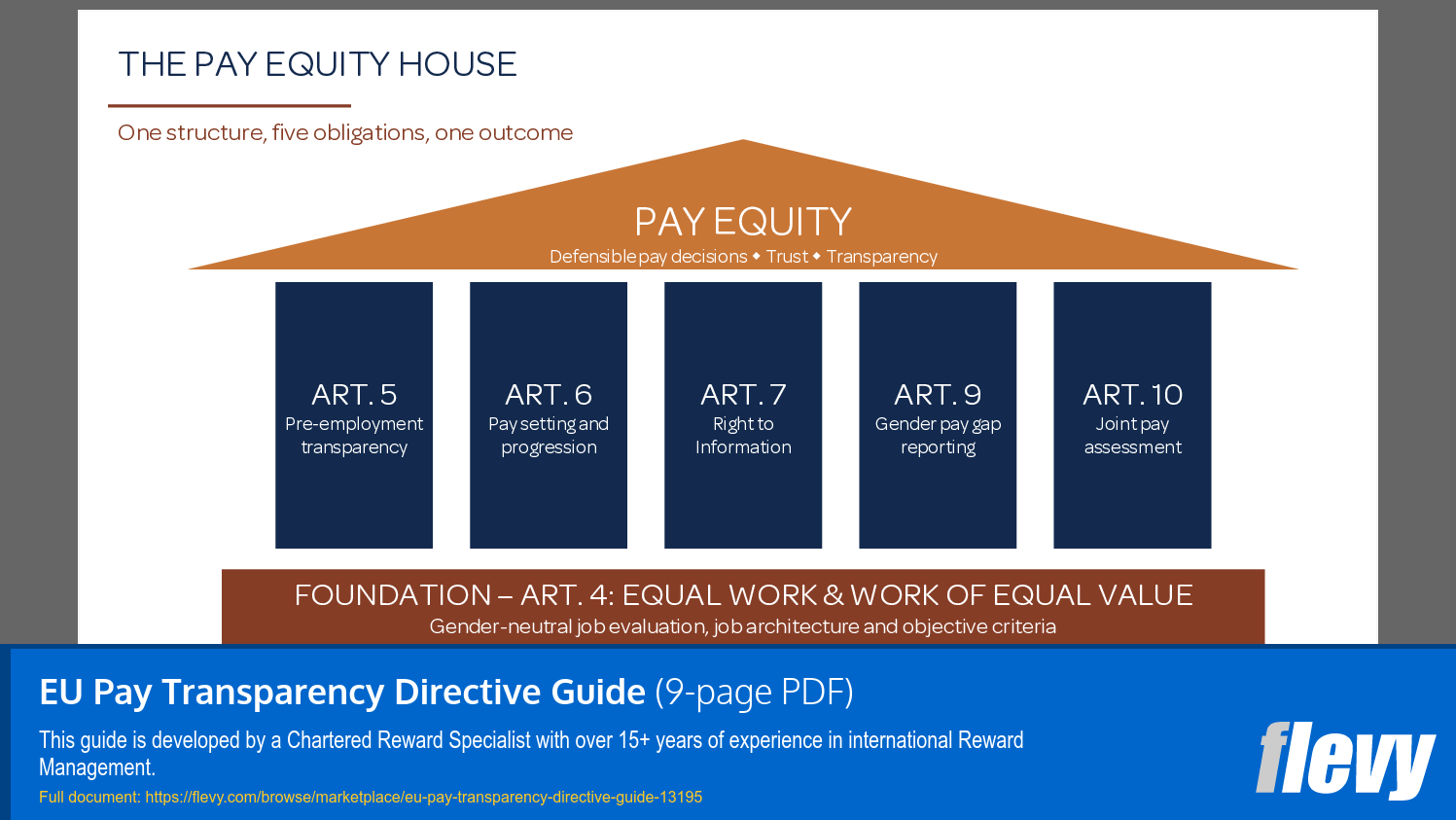
The framework is built around the Pay Equity House:
Article 4 – Equal Work & Work of Equal Value forms the foundation. Five key EUPTD obligations form the pillars. Together, they support one outcome: Pay Equity – underpinned by defensible pay decisions, trust and transparency.
## The Foundation: Article 4 – Equal Work & Work of Equal Value
Everything begins with the ability to establish what constitutes equal work and work of equal value.
Article 4 provides the essential foundation for the framework by requiring the comparison of work using objective and gender-neutral criteria. These include factors such as skills, effort, responsibility and working conditions.
For HR and Reward practitioners, this means that a robust approach to job evaluation, job architecture and the identification of comparable work is not simply a Reward best practice; it is fundamental to the effective implementation of the Directive.
Without a credible foundation for determining equal work and work of equal value, the organisation's ability to demonstrate that its pay decisions are objective, consistent and non-discriminatory is significantly weakened.
## The Five Pillars: The EUPTD Obligations
Built on the Article 4 foundation are five core obligations that translate the Directive into practical HR and Reward requirements.
### Article 5 – Pre-employment Transparency
Organisations must establish transparent approaches to remuneration during recruitment, including providing candidates with information about the initial pay or pay range and ensuring recruitment processes do not perpetuate historic or discriminatory pay practices.
This pillar considers how organisations should embed transparency into job advertisements, recruitment processes, starting pay and candidate communications.
### Article 6 – Pay Setting and Pay Progression
Organisations need transparent, objective and gender-neutral criteria for determining workers' pay and their progression within pay structures.
This pillar examines the frameworks required to make pay decisions consistent, explainable and defensible, including pay structures, pay ranges, progression criteria and the governance surrounding pay decisions.
### Article 7 – Right to Information
The Directive gives workers enhanced rights to information about their individual pay and the average pay levels, broken down by sex, for categories of workers performing the same work or work of equal value.
This pillar considers the organisational processes, data and governance required to respond effectively to employee information requests while maintaining appropriate confidentiality and data protection controls.
### Article 9 – Gender Pay Gap Reporting
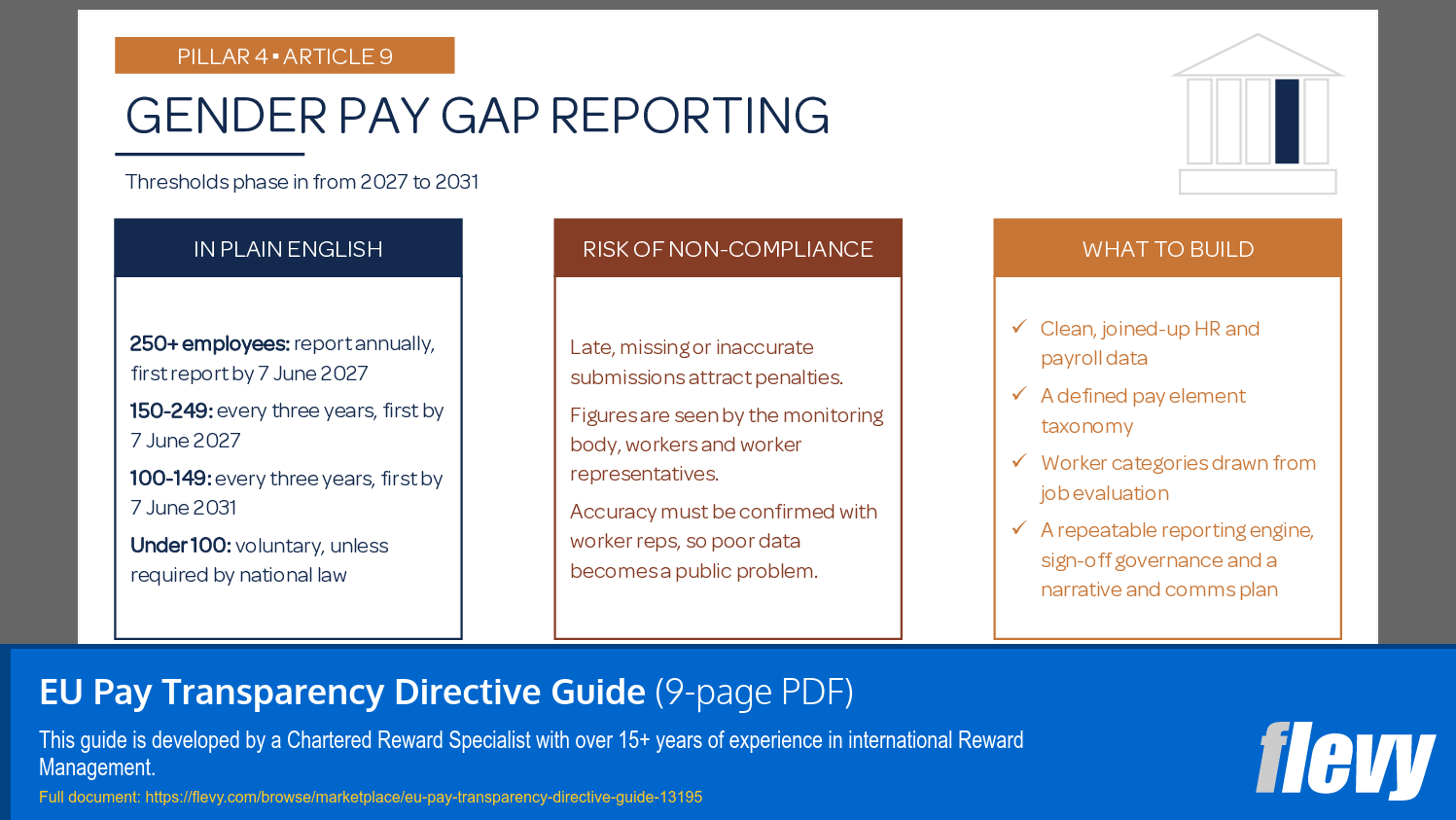
The EUPTD introduces enhanced gender pay gap reporting requirements, requiring organisations to collect, analyse and report information that enables gender pay differences to be identified and understood.
This pillar provides a framework for considering pay gap data, reporting requirements, analysis and the identification of potentially unexplained pay differences.
### Article 10 – Joint Pay Assessment
Where the conditions set out in the Directive are met, employers must work with worker representatives to undertake a joint pay assessment.
This pillar addresses the processes required to investigate, understand and address unjustified differences in pay, moving beyond reporting a pay gap towards identifying its underlying causes and taking appropriate corrective action.
## The Outcome: Pay Equity
When the foundation and five pillars work together, they create a coherent Pay Equity framework.
The objective is not simply technical compliance with individual EUPTD obligations. It is the ability to demonstrate that pay decisions are based on objective, gender-neutral and defensible principles, that workers have appropriate access to information, and that the organisation can identify, explain and address unjustified pay differences.
The roof of the Pay Equity House therefore represents the ultimate outcome:
### PAY EQUITY
Defensible pay decisions • Trust • Transparency
## A Practical Guide for HR and Reward Practitioners
The guide is designed to help practitioners move from understanding the legislation to determining what needs to be in place within the organisation. The Pay Equity House can therefore be used as a practical reference point for HR and Reward teams undertaking an EUPTD readiness assessment, designing their implementation roadmap, reviewing existing Reward frameworks or establishing a broader pay equity strategy.
## From Directive to Framework
The EUPTD sets out the obligations. The challenge for organisations is translating those obligations into practical, consistent and defensible processes.
This guide provides that bridge.
By using Article 4 as the foundation, the five key obligations as the pillars, and Pay Equity as the desired outcome, practitioners can view the Directive as one interconnected framework rather than a collection of separate compliance requirements.
The result is a structured approach that helps organisations answer three fundamental questions:
Do we have a robust foundation for determining equal work and work of equal value?
Do our HR and Reward processes address each of the five EUPTD obligations?
Can we demonstrate that our pay decisions are objective, transparent, defensible and capable of supporting pay equity?
The Pay Equity House provides HR and Reward practitioners with a practical blueprint for answering those questions and building the organisational frameworks needed to support compliance with the EU Pay Transparency Directive.
Got a question about the product? Email us at support@flevy.com or ask the author directly by using the "Ask the Author a Question" form. If you cannot view the preview above this document description, go here to view the large preview instead.
Source: Best Practices in Compliance, Compensation PDF: EU Pay Transparency Directive Guide PDF (PDF) Document, Ignite Reward Consulting
ABOUT THE AUTHOR

Carmen completed her BCom degree in Human Resources Management at the University of Pretoria. She has obtained a wealth of experience while working in the United Kingdom in global reward management roles for international organizations. Since her return to South Africa in 2019, Carmen has provided reward consultancy services to a wide range of clients, including retail, financial services, ... [read more]
Ask the Author a Question
You must be logged in to contact the author.




























