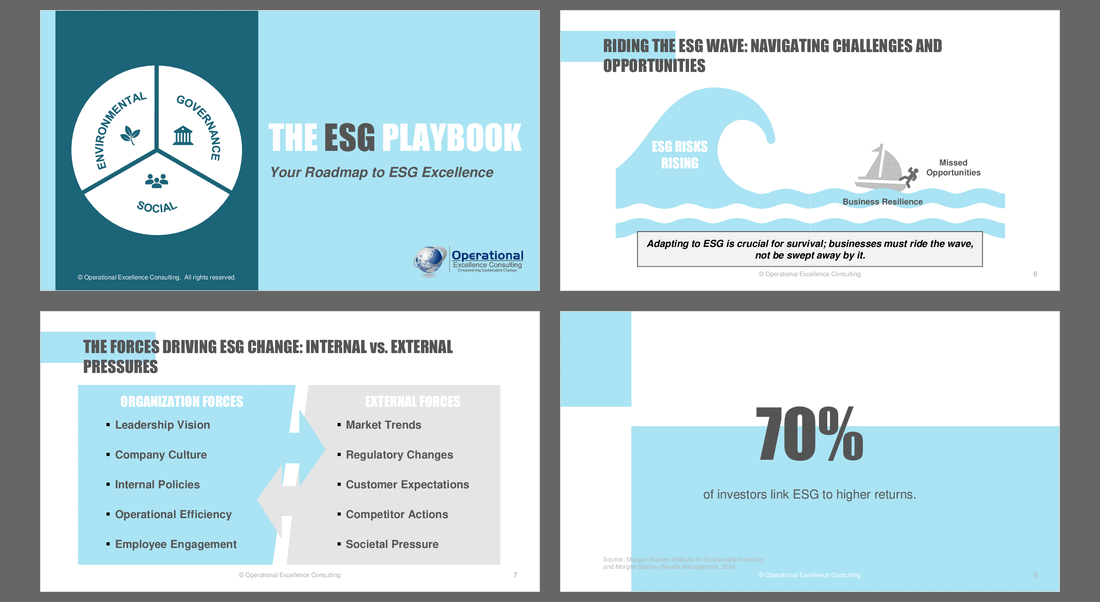
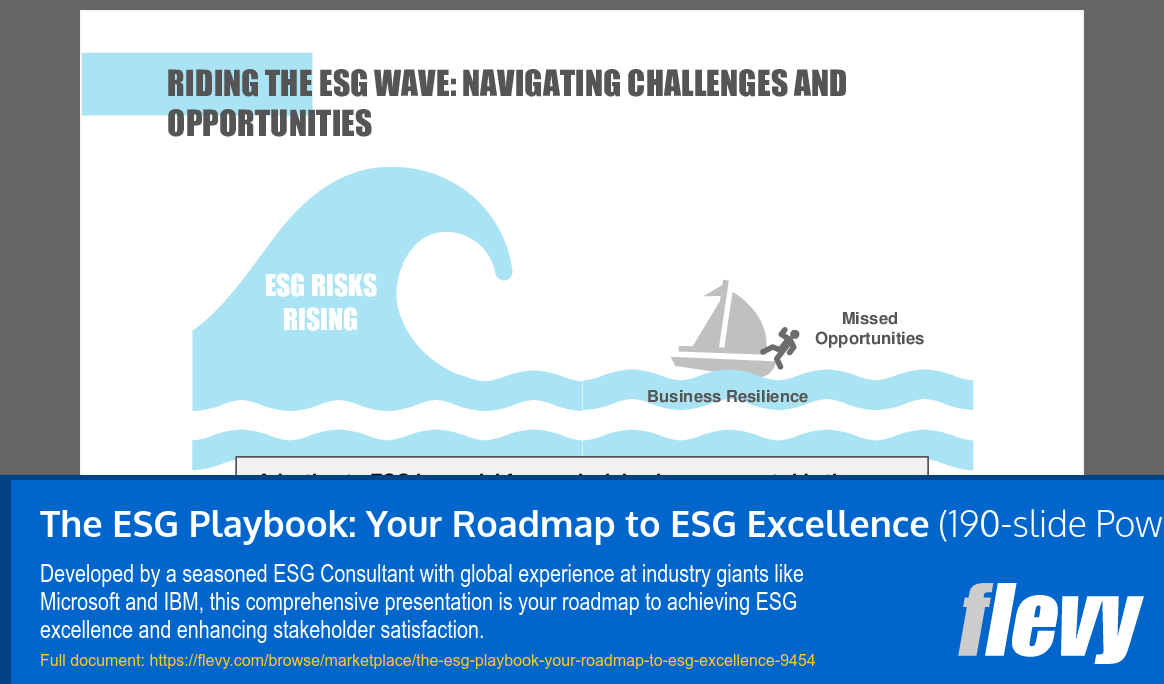
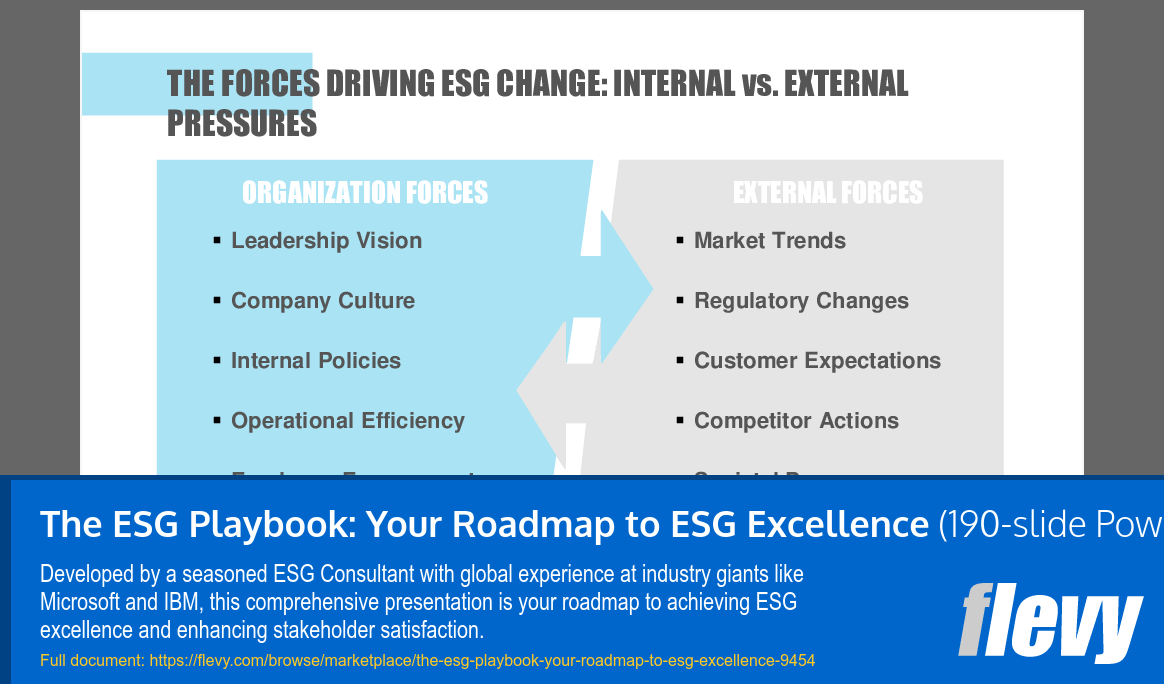

In today's rapidly evolving business landscape, ESG is no longer optional—it's a strategic imperative. The ESG Playbook is a comprehensive, professional slide deck designed to equip organizations with the knowledge, frameworks, and tools to navigate ESG challenges, drive sustainability initiatives, and achieve long-term business success.

This playbook goes beyond theory—it provides a structured, practical roadmap for companies to integrate ESG into corporate strategy, compliance, and operations. From understanding global regulations, reporting standards, and market trends to implementing decarbonization strategies, governance best practices and case studies, this deck is a must-have resource for businesses at any stage of their ESG journey.
Why This Playbook Matters
✅ Stay Ahead of Regulatory & Market Shifts – Navigate the evolving ESG landscape with clarity.
✅ Turn ESG Compliance into Competitive Advantage – Transform regulatory obligations into business opportunities.
✅ Improve ESG Performance & Reporting – Gain insights into frameworks, metrics, and industry best practices.
✅ Drive Long-Term Sustainability & Business Value – Align ESG with growth, resilience, and stakeholder expectations.
Who Should Use This Playbook?
• Business Leaders & Executives looking to future-proof their organizations.
• Sustainability & ESG Professionals responsible for strategy, compliance, and reporting.
• Finance & Risk Managers navigating ESG risks and investment implications.
• Investors & Stakeholders assessing corporate ESG performance.
Whether your organization is embarking on ESG for the first time or refining its sustainability strategy, this playbook will serve as your trusted guide to ESG excellence.
LEARNING OBJECTIVES
1. Master ESG Fundamentals & Business Impact – Understand the core principles of ESG, its factors, and how evolving regulations shape business strategies.
2. Integrate ESG into Corporate Strategy & Compliance – Learn how to embed ESG practices into corporate governance, risk management, reporting, and leadership frameworks.
3. Accelerate Sustainability & Decarbonization – Explore strategies for reducing carbon footprints across key sectors while driving long-term environmental and social impact.
4. Stay Ahead in ESG's Evolving Landscape – Identify future trends, potential pitfalls, and best practices to build resilient, forward-thinking ESG strategies.
CONTENTS
1. ESG Essentials: Foundations, Factors & Impact
• Understand the core principles of ESG, its three pillars, and why it matters for businesses, investors, and stakeholders in today's evolving global landscape.
2. ESG Trends & Business Impacts
• Explore the latest ESG trends, market shifts, and how sustainability initiatives are driving competitive advantage, risk mitigation, and long-term business value.
3. ESG Regulations & Global Policies
• Gain insights into the evolving ESG regulatory landscape, key global policies, and how businesses can stay compliant while leveraging ESG for strategic growth.
4. The "E" Pillar: Environmental Imperatives
• Dive into critical environmental challenges such as climate change, resource management, and carbon reduction, and explore how businesses can drive sustainability.
• Case Study Spotlight: Unilever – Sustainable Living Plan
5. The "S" Pillar: Social Responsibility
• Understand the social dimension of ESG, covering human rights, diversity & inclusion, labor practices, and corporate social impact on communities and stakeholders.
• Case Study Spotlight: Patagonia – Purpose-Driven Social Responsibility
6. The "G" Pillar: Governance & Accountability
• Explore corporate governance best practices, ethical leadership, risk management, and transparency to ensure accountability in ESG initiatives.
7. Navigating ESG Regulations & Compliance
• Learn how to align with ESG regulatory requirements, reporting obligations, and risk management frameworks to strengthen governance and compliance strategies.
• Case Study Spotlight: DBS Bank – ESG Reporting & Governance Excellence
8. ESG Standards, Reporting & Frameworks
• Understand the key ESG reporting frameworks (e.g., GRI, SASB, TCFD) and how organizations can standardize ESG disclosures to meet investor and stakeholder expectations.
9. ESG Ratings, Metrics & Market Influence
• Unpack the role of ESG ratings, how they impact investment decisions, and the growing demand for standardized ESG performance metrics and accountability.
10. Corporate ESG Strategy & Leadership
• Discover how organizations can integrate ESG into corporate strategy, leadership, and business operations to drive sustainable growth and resilience.
11. Decarbonization Strategies for Key Sectors
• Examine sector-specific strategies for achieving net-zero goals, reducing carbon footprints, and implementing sustainable practices across industries.
• Case Study Spotlight: Microsoft – Carbon Negative Strategy
12. Navigating the Future of ESG: Trends, Pitfalls & Best Practices
• Stay ahead of the ESG evolution by identifying emerging trends, potential challenges, and actionable best practices to future-proof your ESG strategy.
• Case Study Spotlight: IKEA – Circular Economy & Future ESG Strategy
Got a question about the product? Email us at support@flevy.com or ask the author directly by using the "Ask the Author a Question" form. If you cannot view the preview above this document description, go here to view the large preview instead.
Executive Summary
The ESG Playbook is a strategic guide designed to help organizations navigate the complexities of Environmental, Social, and Governance (ESG) principles. Developed by Operational Excellence Consulting, this presentation provides a comprehensive framework for integrating ESG into corporate strategies, ensuring compliance with evolving regulations, and enhancing stakeholder engagement. The playbook equips corporate executives and consultants with actionable insights to drive sustainability initiatives, improve reporting practices, and foster a culture of accountability within their organizations.
Who This Is For and When to Use
• Corporate executives seeking to align business strategies with ESG principles
• Sustainability officers responsible for implementing ESG initiatives
• Compliance teams managing regulatory requirements and reporting
• Consultants advising organizations on ESG integration and best practices
Best-fit moments to use this deck:
• During strategic planning sessions to embed ESG into corporate governance
• When preparing for regulatory audits or compliance assessments
• In workshops aimed at enhancing stakeholder engagement and transparency
• For training sessions focused on ESG fundamentals and business impact
Learning Objectives
• Master ESG fundamentals and their business impact
• Integrate ESG into corporate strategy and compliance frameworks
• Accelerate sustainability and decarbonization efforts
• Stay ahead in ESG’s evolving landscape by identifying trends and best practices
Table of Contents
• ESG Essentials: Foundations, Factors & Impact (page 5)
• ESG Trends & Business Impacts (page 33)
• ESG Regulations & Global Policies (page 56)
• The “E” Pillar: Environmental Imperatives (page 71)
• The “S” Pillar: Social Responsibility (page 84)
• The “G” Pillar: Governance & Accountability (page 95)
• Navigating ESG Regulations & Compliance (page 106)
• ESG Standards, Reporting & Frameworks (page 120)
• ESG Ratings, Metrics & Market Influence (page 134)
• Corporate ESG Strategy & Leadership (page 141)
• Decarbonization Strategies for Key Sectors (page 154)
• Navigating the Future of ESG: Trends, Pitfalls & Best Practices (page 165)
Primary Topics Covered
• ESG Fundamentals - Understanding the core principles of ESG and its relevance to business strategy.
• ESG Trends - Identifying current trends and their implications for corporate practices.
• Regulatory Compliance - Navigating the evolving landscape of ESG regulations and reporting requirements.
• Environmental Imperatives - Strategies for reducing carbon footprints and enhancing sustainability efforts.
• Social Responsibility - Best practices for fostering diversity, equity, and community engagement.
• Governance - Establishing accountable policies and procedures to enhance corporate governance.
Deliverables, Templates, and Tools
• ESG strategy framework template for integrating ESG into business operations
• Compliance checklist for navigating ESG regulations and reporting requirements
• Stakeholder engagement plan template to enhance transparency and communication
• Metrics dashboard for tracking ESG performance and progress
• Case study examples illustrating successful ESG implementation
Slide Highlights
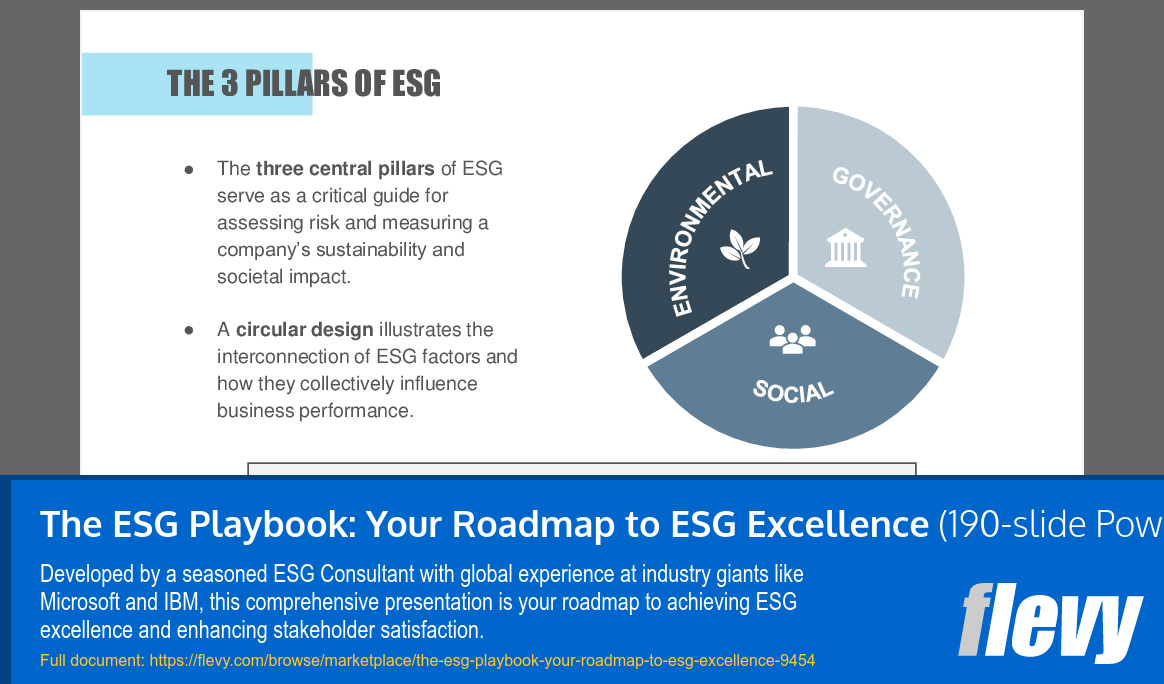
• Overview of ESG’s 3 pillars and their interconnectedness
• Key trends in ESG investments and market performance
• Regulatory landscape changes impacting corporate ESG practices
• Case studies of leading companies excelling in ESG initiatives
• Visual frameworks for integrating ESG into corporate governance
Potential Workshop Agenda
ESG Fundamentals Workshop (90 minutes)
• Introduction to ESG principles and business impact
• Discussion on integrating ESG into corporate strategy
• Group activity: Identifying ESG opportunities in your organization
Regulatory Compliance Session (60 minutes)
• Overview of current ESG regulations and reporting requirements
• Best practices for ensuring compliance and transparency
• Q&A session with compliance experts
Stakeholder Engagement Strategies (90 minutes)
• Techniques for enhancing stakeholder communication and trust
• Developing a stakeholder engagement plan
• Role-playing scenarios to practice stakeholder interactions
Customization Guidance
• Tailor the ESG strategy framework to align with your organization’s specific goals and values
• Update compliance checklists to reflect the latest regulatory changes in your industry
• Modify stakeholder engagement plans to address the unique needs of your audience
• Incorporate case studies relevant to your sector to enhance relatability
Secondary Topics Covered
• The impact of climate change on business operations
• Best practices for sustainable supply chain management
• The role of technology in advancing ESG initiatives
• Corporate social responsibility (CSR) and its relationship with ESG
• Strategies for effective ESG communication and reporting
Topic FAQ
Document FAQ
These are questions addressed within this presentation.
What is ESG?
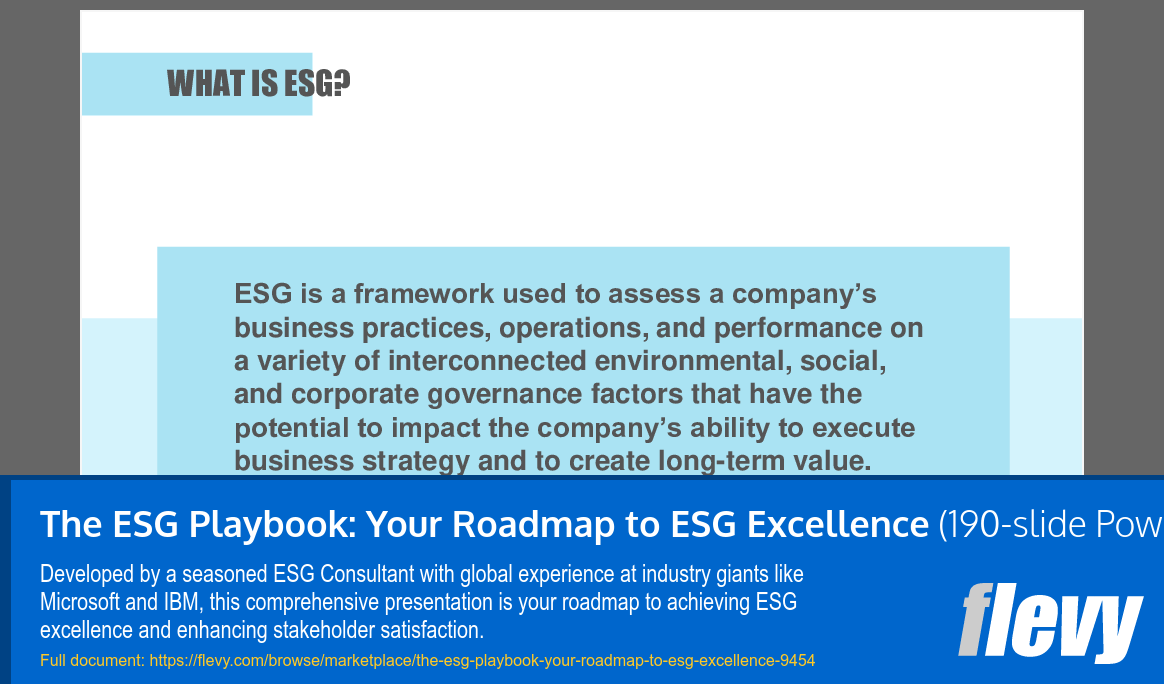
ESG stands for Environmental, Social, and Governance, a framework used to assess a company's practices and performance in these 3 areas, impacting long-term value creation.
Why is ESG important for businesses?
ESG is crucial for attracting investment, mitigating risks, enhancing reputation, and ensuring compliance with regulatory requirements.
How can organizations integrate ESG into their strategies?
Organizations can embed ESG principles into their governance structures, risk management processes, and corporate culture, aligning them with business objectives.
What are the key ESG regulations to be aware of?
Key regulations include climate disclosure mandates, labor rights protections, and requirements for transparency in supply chains.
How can companies measure their ESG performance?
Companies can use metrics dashboards, stakeholder feedback, and compliance audits to track ESG performance and identify areas for improvement.
What are the common pitfalls in ESG implementation?
Common pitfalls include lack of leadership commitment, inadequate stakeholder engagement, and failure to integrate ESG across the value chain.
How can organizations stay ahead of ESG trends?
Organizations can stay informed through continuous learning, engaging with industry experts, and adapting their strategies to emerging trends.
What role does technology play in ESG?
Technology can enhance data collection, reporting accuracy, and stakeholder engagement, facilitating better ESG performance tracking.
How can companies avoid greenwashing?
Companies can ensure transparency in their ESG claims, provide verifiable data, and align their practices with established standards to avoid misleading stakeholders.
What are the benefits of a strong ESG strategy?
A robust ESG strategy can lead to improved financial performance, enhanced brand loyalty, and a stronger competitive position in the market.
Glossary
• ESG - Environmental, Social, and Governance; a framework for assessing a company's sustainability practices.
• CSR - Corporate Social Responsibility; voluntary actions to improve social and environmental impact.
• Decarbonization - The process of reducing carbon emissions to mitigate climate change.
• Stakeholder Engagement - The process of involving stakeholders in decision-making and communication.
• Compliance - Adhering to laws, regulations, and standards relevant to ESG practices.
• Sustainability Reporting - The practice of disclosing environmental, social, and governance performance metrics.
• Greenwashing - Misleading claims about the environmental benefits of a product or practice.
• Materiality - The significance of ESG issues to a company's financial performance and stakeholder interests.
• Climate Risk - The potential financial impact of climate-related events on business operations.
• Governance - The systems and processes that ensure accountability, fairness, and transparency in a company's relationship with its stakeholders.
• Biodiversity - The variety of life in the world or in a particular habitat, crucial for ecosystem health.
• Circular Economy - An economic system aimed at eliminating waste and promoting the continual use of resources.
• Sustainable Development Goals (SDGs) - A set of 17 global goals established by the United Nations to address social, economic, and environmental challenges.
• Green Technology - Innovations that aim to reduce environmental impact and promote sustainability.
• Impact Investing - Investments made with the intention to generate positive, measurable social and environmental impact alongside a financial return.
• Ethics - Moral principles that govern a person's behavior or the conducting of an activity.
• Transparency - Openness in communication and decision-making processes, especially regarding ESG practices.
• Accountability - The obligation of an organization to explain its actions and decisions to stakeholders.
Source: Best Practices in ESG PowerPoint Slides: ESG Playbook: Your Roadmap to ESG Excellence PowerPoint (PPTX) Presentation Slide Deck, Operational Excellence Consulting
|
Download our FREE Organization, Change, & Culture, Templates
Download our free compilation of 50+ slides and templates on Organizational Design, Change Management, and Corporate Culture. Methodologies include ADKAR, Burke-Litwin Change Model, McKinsey 7-S, Competing Values Framework, etc. |