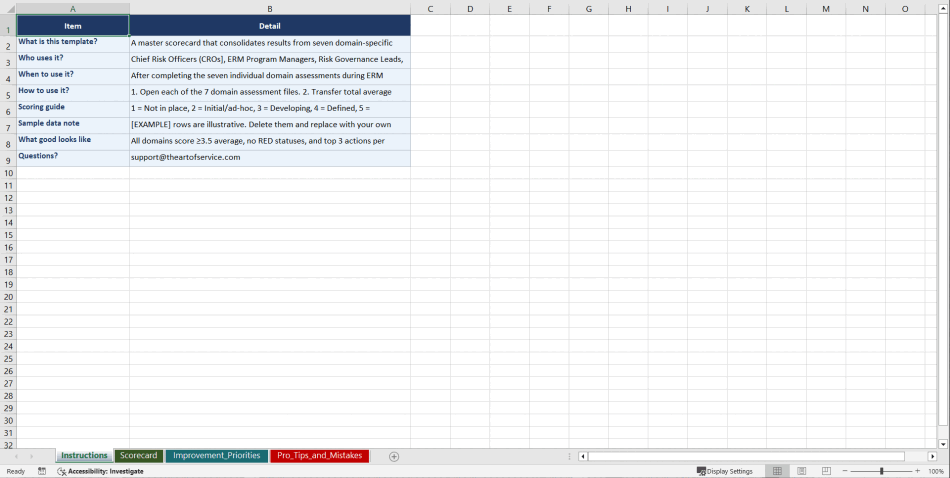
 Click main image to view in full screen.
Enterprise Risk Management ERM Framework for Financial Services Playbook – Excel XLSX
Excel (XLSX) + Zip archive file (ZIP)


BENEFITS OF THIS DOWNLOADABLE EXCEL DOCUMENT
- 64 professional files with 349+ spreadsheet tabs and 2,730+ data rows
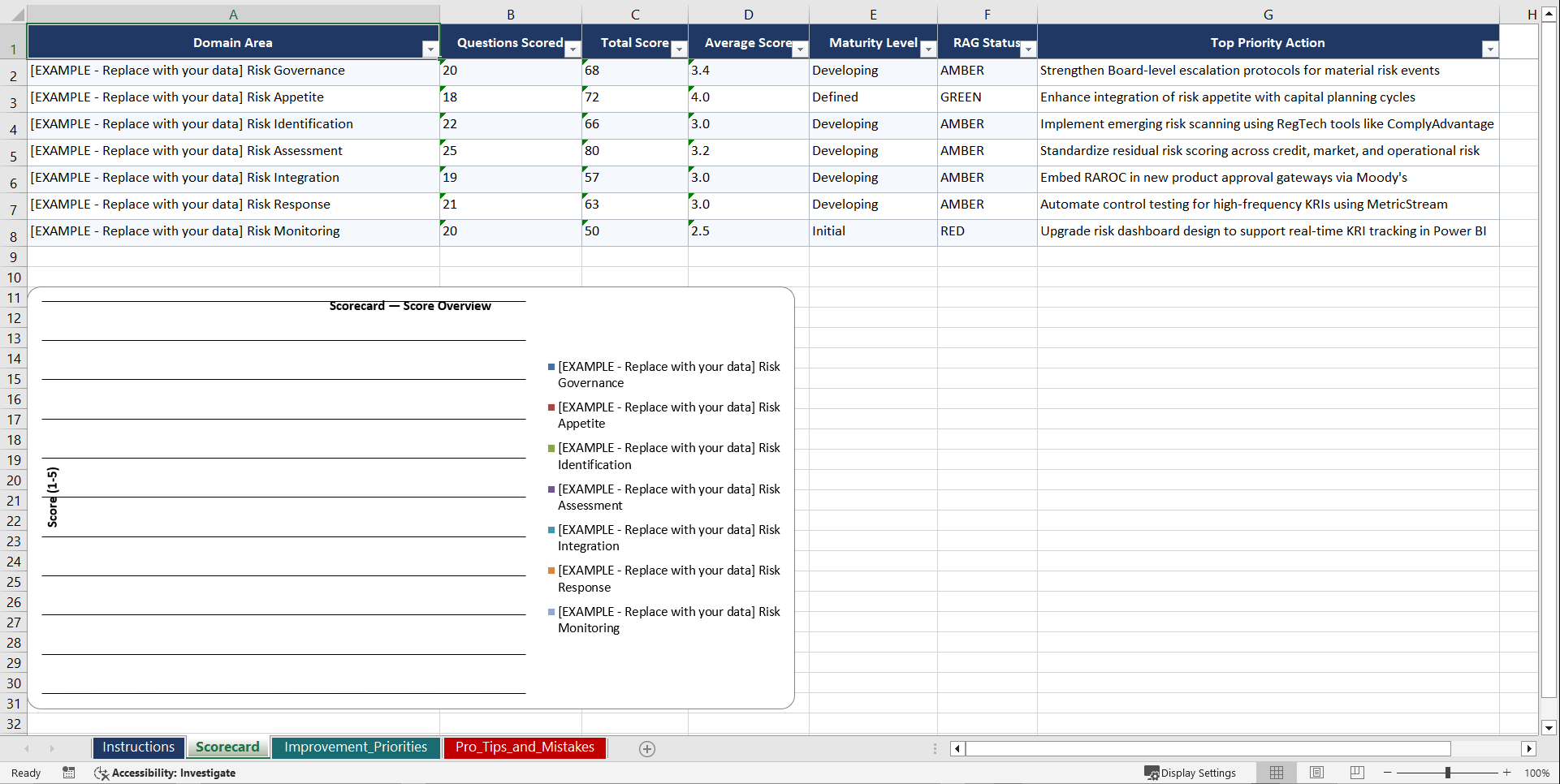
- 210 scored assessment questions across 7 domain areas
- 9 operational runbooks and checklists ready for immediate use
RISK MANAGEMENT EXCEL DESCRIPTION
Your ERP implementation is behind schedule, over budget, or failing to deliver the business outcomes leadership expected. Disconnected workstreams, unclear data ownership, and change resistance are creating risk that grows with every passing sprint.
ERP consulting runs $250 to $700 per hour. A full implementation programme costs $500,000 to several million. This playbook delivers the same structured methodology and practitioner-grade tools for a fraction of that investment.
WHAT IS INSIDE: 139 PROFESSIONAL FILES
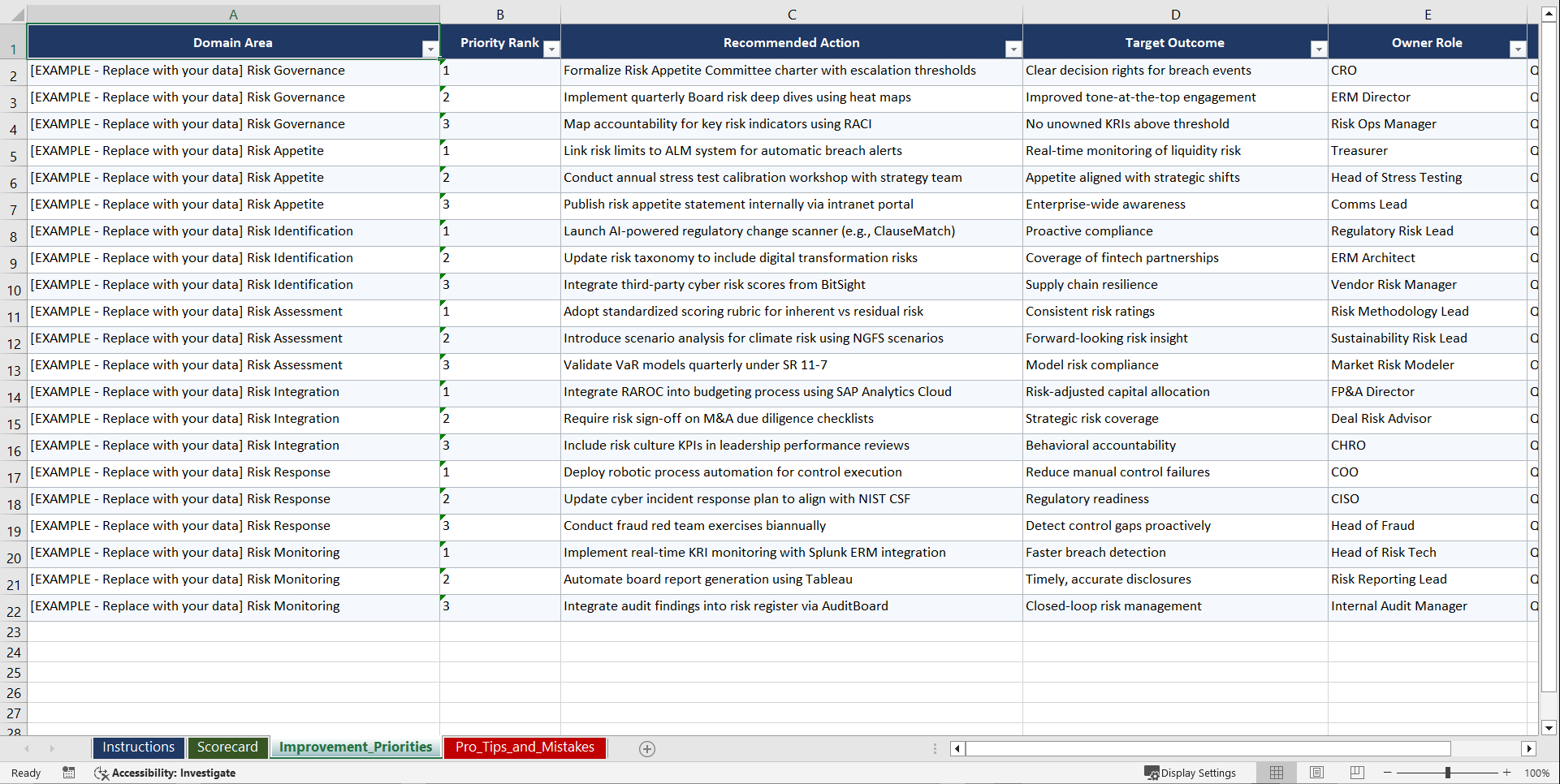
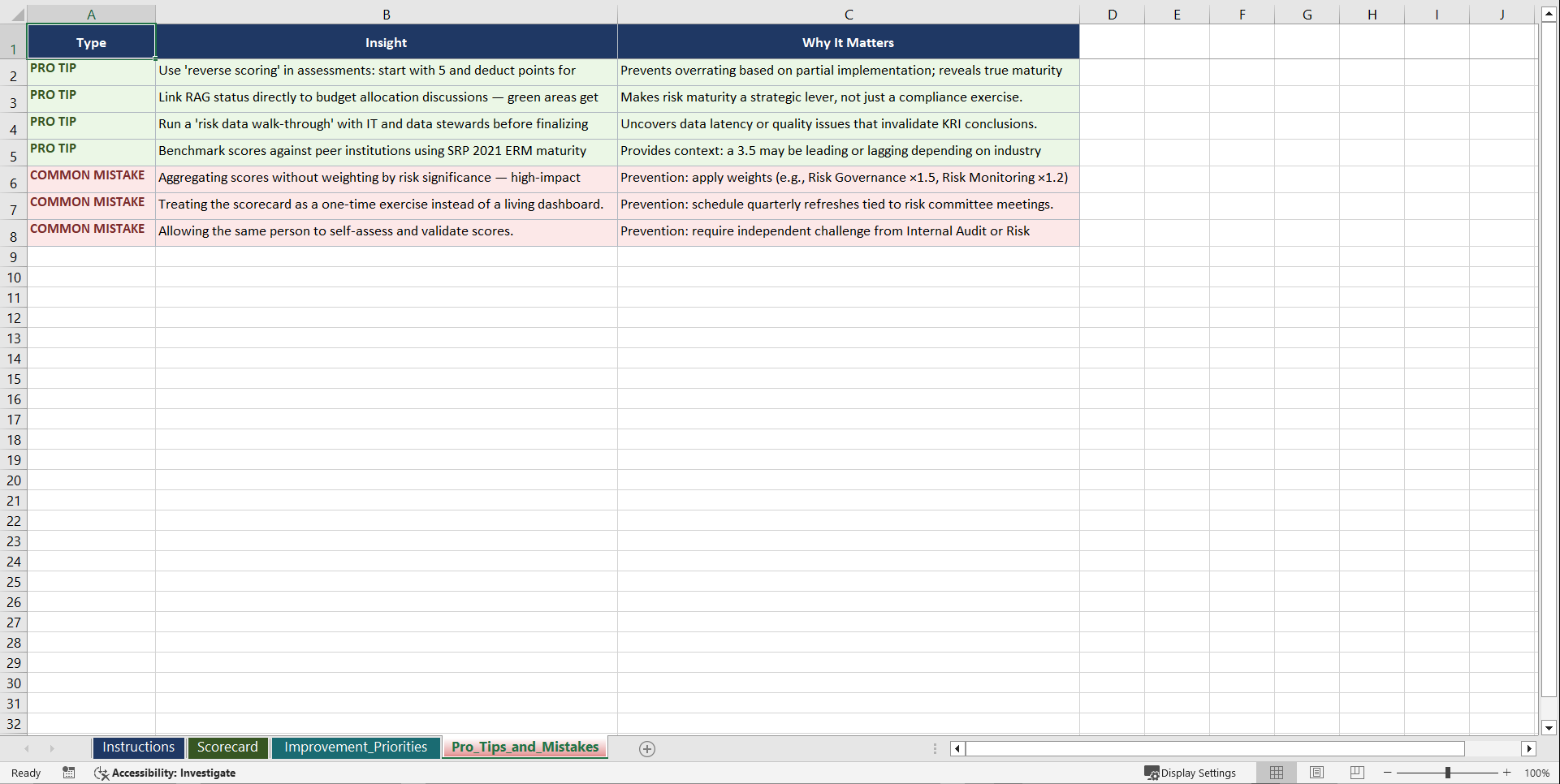
This is not a course, not a workbook, not a set of slides. This is 139 practitioner-grade tools (9 PDFs + 54 Excel workbooks) organised across 11 folders, built for professionals who need to implement, not just learn.
THREE-PHASE IMPLEMENTATION JOURNEY
Phase 1 – Get your bearings (02_Self_Assessment_and_Diagnostics): Start with the Quick Scan diagnostic PDF for a fast executive-level overview. Then work through the RDMAICS Scoring Dashboard and Maturity Radar to understand exactly where you are across all 7 domains. No guesswork, just data.
Phase 2 – Set concrete goals (03_Requirements_and_Goal_Setting): Use the Project Charter and Scope Statement to lock in what success looks like. The RACI Matrix and Requirements Traceability Matrix ensure every stakeholder knows their role and every requirement is tracked to completion.
Phase 3 – Implement, track, and sustain (05_Project_Management_Forms onwards): Work through a comprehensive library of PM form templates covering all five PMBOK process groups: Initiating, Planning, Executing, Monitoring and Controlling, and Closing. Every template is pre-configured for immediate use.
210 ASSESSMENT QUESTIONS ACROSS 7 DOMAINS
Each domain contains 30 scored questions with automated maturity scoring. Run your first assessment in under an hour and know exactly where you stand.
• Risk Governance Structure
• Risk Appetite Framework
• Risk Identification Taxonomy
• Risk Assessment Measurement
• Strategic Risk Integration
• Risk Response Mitigation
• Risk Monitoring Reporting
7 OPERATIONAL RUNBOOKS AND CHECKLISTS
Not theory. Not concepts. Step-by-step operational procedures your team can execute from day one.
• Cyber Risk Detection and Response Handoff Protocol
• ERM Data Governance Integration Checklist
• Monthly KRI Reporting Cycle Checklist
• Regulatory Change Impact Assessment Checklist
• Risk Appetite Statement Approval Checklist
• Stress Testing Scenario Design Guide
• Third Party Risk Onboarding to Offboarding Checklist
WHO BUYS THIS
• Professionals implementing enterprise risk management erm framework implement who need structure, not another generic guide
• Consultants who want to deliver a professional-grade engagement without building every tool from scratch
• Team leads and managers who need to demonstrate progress to leadership with real metrics
• Compliance officers and auditors who need documented, defensible processes
WHAT MAKES THIS DIFFERENT
• 139 files, not a single PDF. This is a complete implementation toolkit.
• 210 scored assessment questions across 7 domains. Know exactly where you stand in under an hour.
• 7 operational runbooks. Not theory, step-by-step procedures your team can execute immediately.
• Built by practitioners with 25 years of enterprise experience across 692 frameworks.
• Used by professionals in 160+ countries.
Instant download. Open the first assessment. Score your organisation. Know exactly where to start.
Stop spending months building what already exists. Stop paying consultants $300/hour to create templates you could have today.
Got a question about the product? Email us at support@flevy.com or ask the author directly by using the "Ask the Author a Question" form. If you cannot view the preview above this document description, go here to view the large preview instead.
Source: Best Practices in Risk Management Excel: Enterprise Risk Management ERM Framework for Financial Services Playbook Excel (XLSX) Spreadsheet, Gerard Blokdijk




























