
 Click main image to view in full screen. Unlock all 12 preview images:
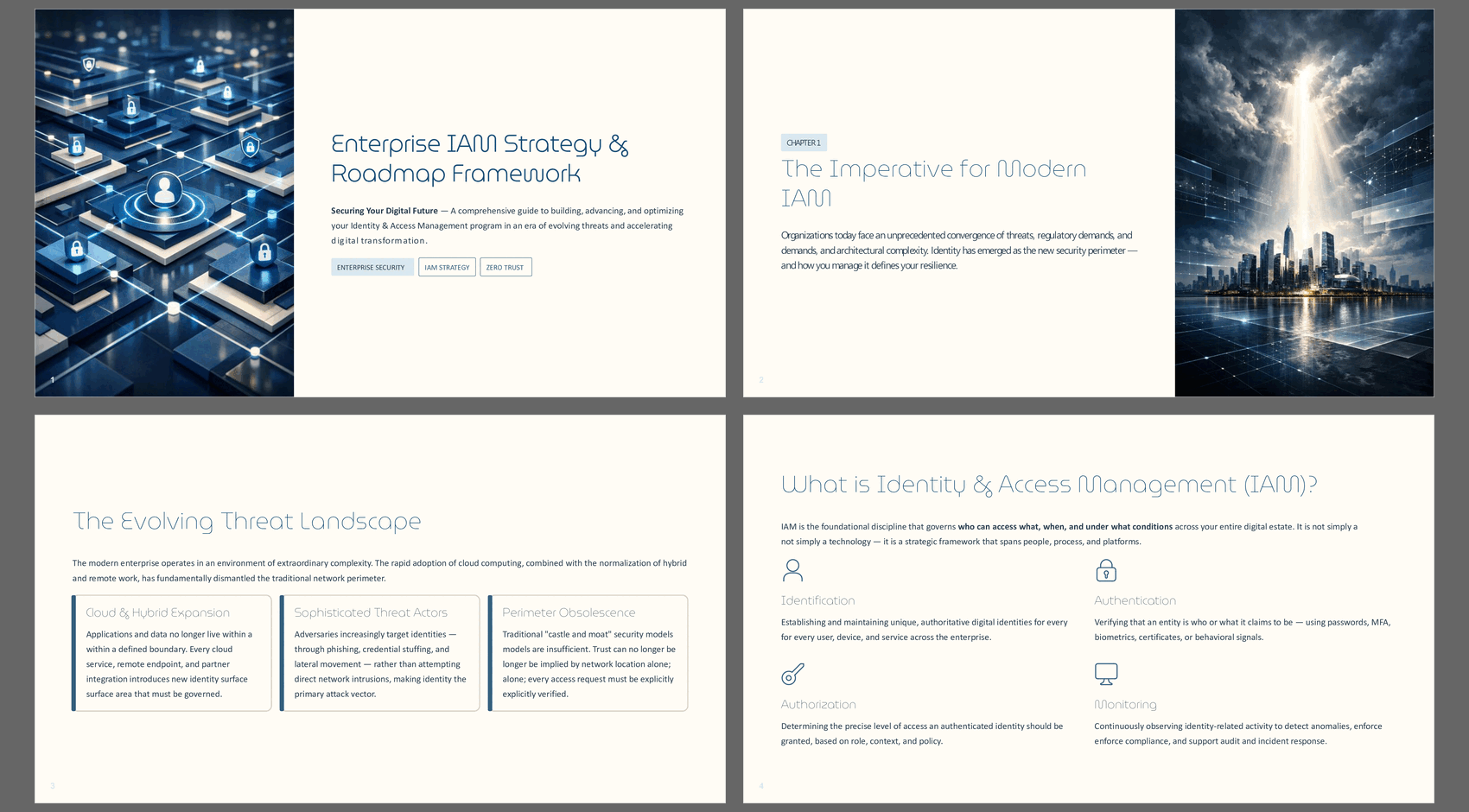
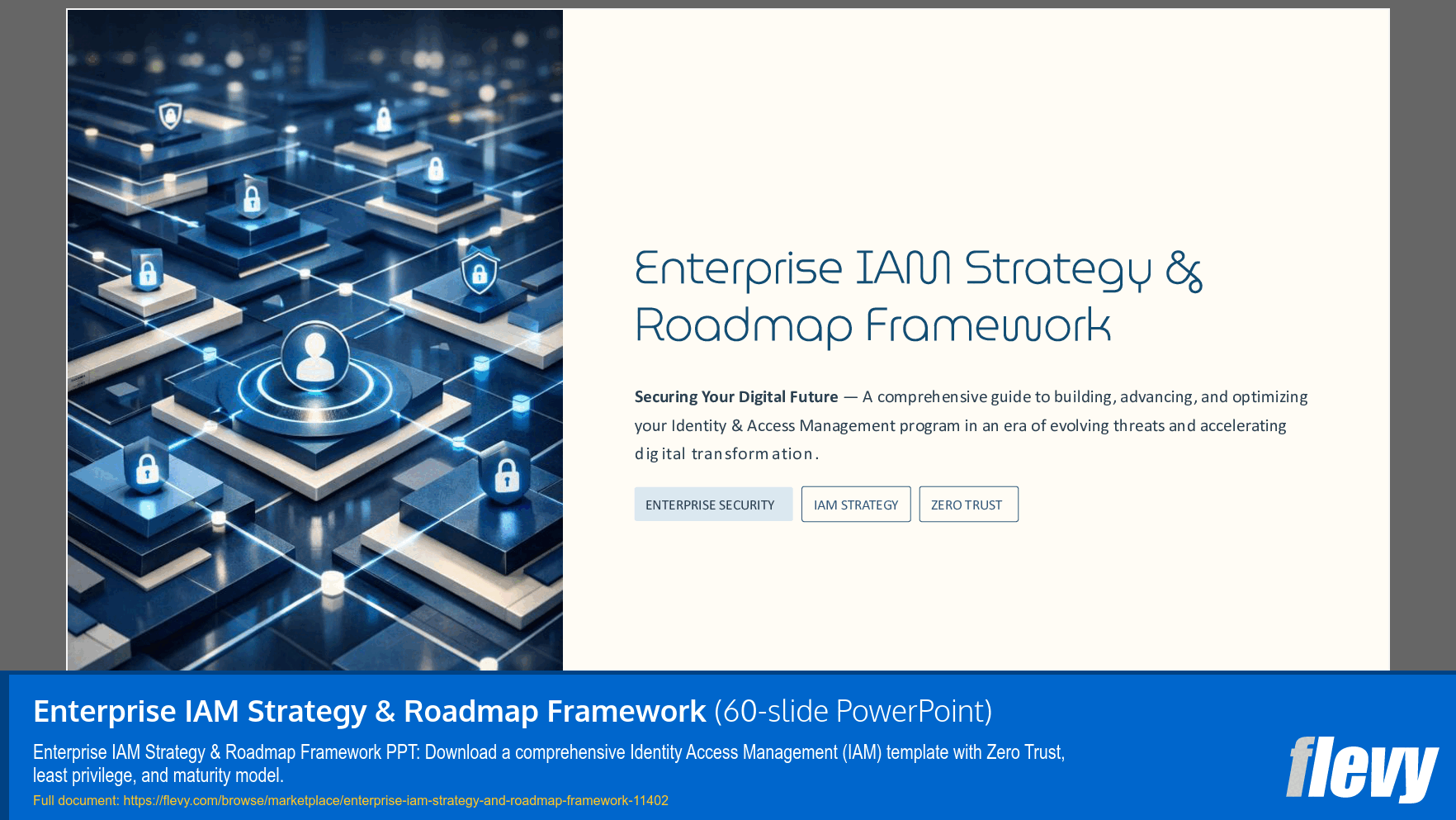
Enterprise IAM Strategy & Roadmap Framework – PowerPoint PPTX Template
PowerPoint (PPTX) 60 Slides


ACCESS MANAGEMENT PPT TEMPLATE DESCRIPTION
Outline
Enterprise IAM Strategy & Roadmap Framework: Securing Your Digital Future
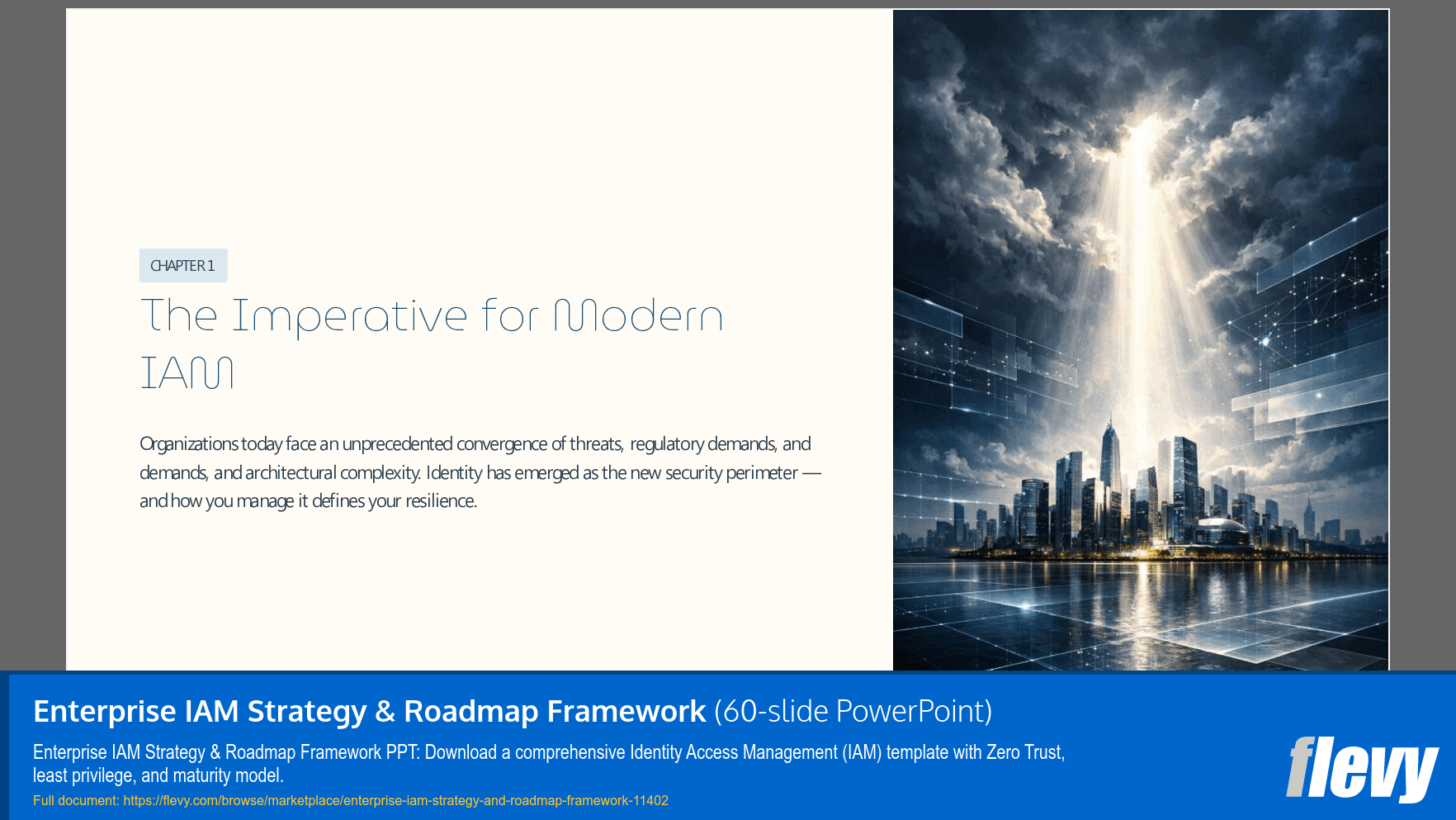
Chapter 1: The Imperative for Modern IAM
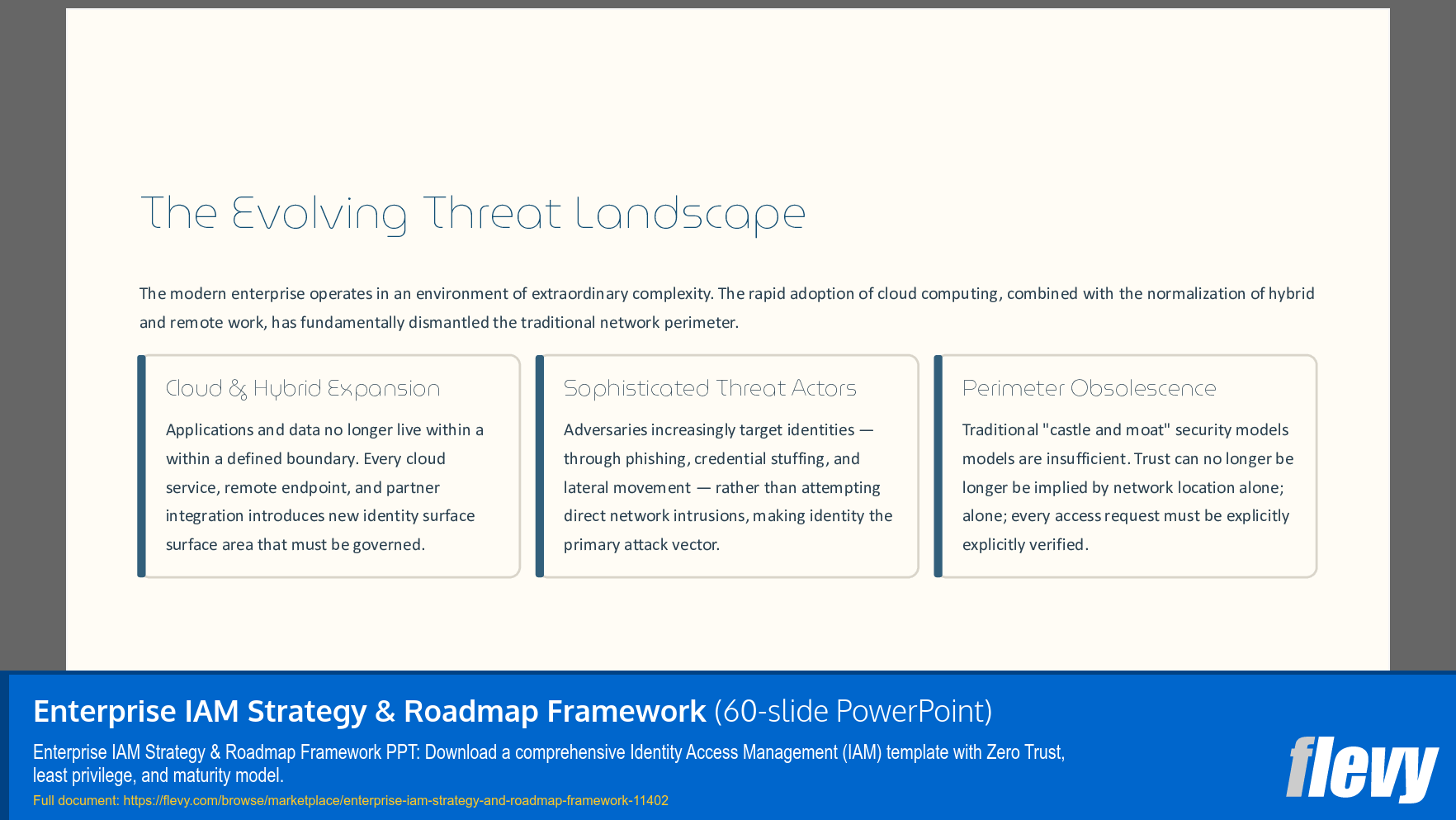
The Evolving Threat Landscape
• Rapid adoption of cloud computing and hybrid/remote work
• Complex threat environments necessitate robust security
• Traditional perimeters are no longer sufficient
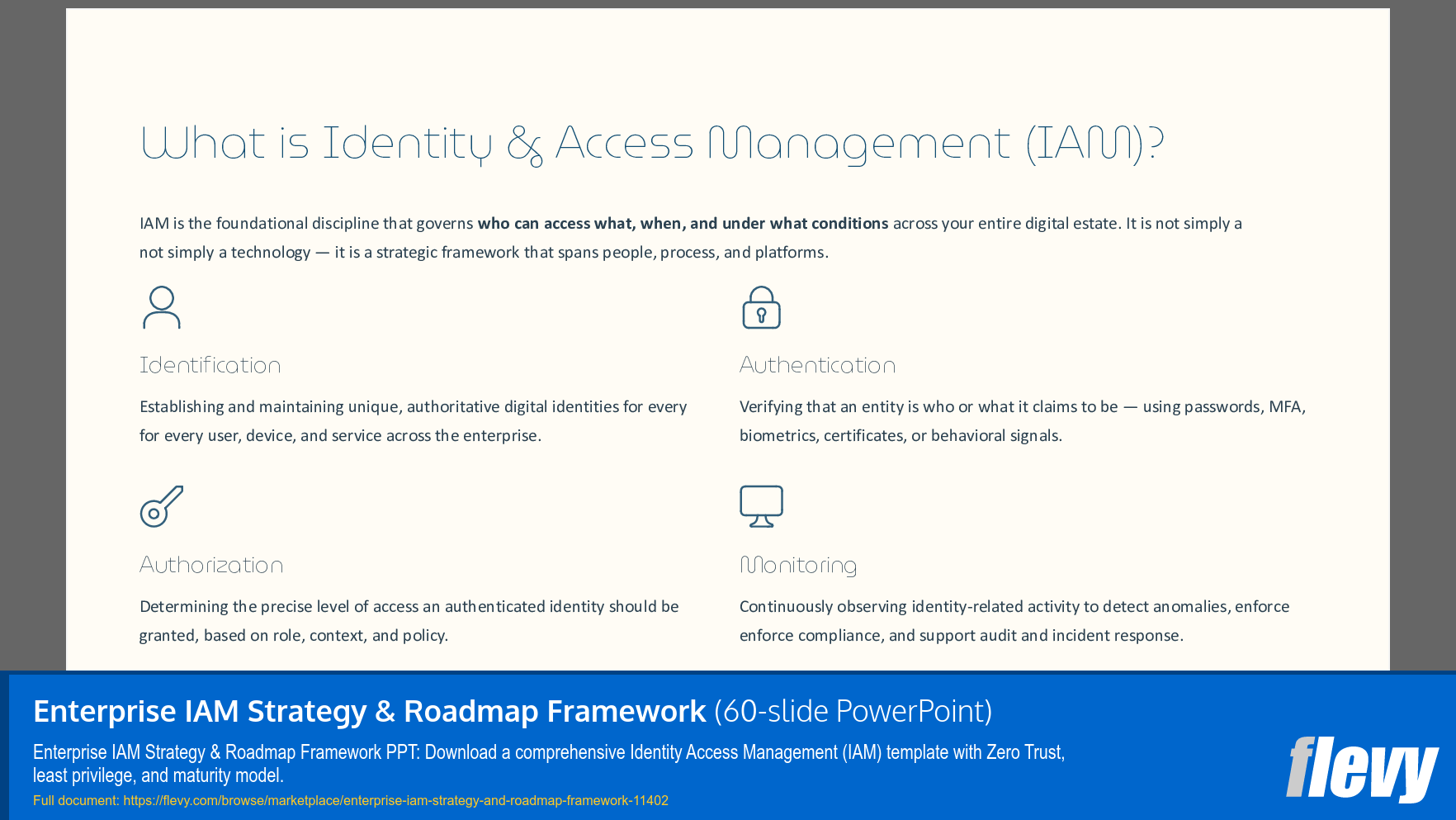
What is Identity & Access Management (IAM)?
• The foundation for governing digital identities
• Manages user authentication and access to systems, applications, and data
• Encompasses identification, authentication, authorization, and monitoring
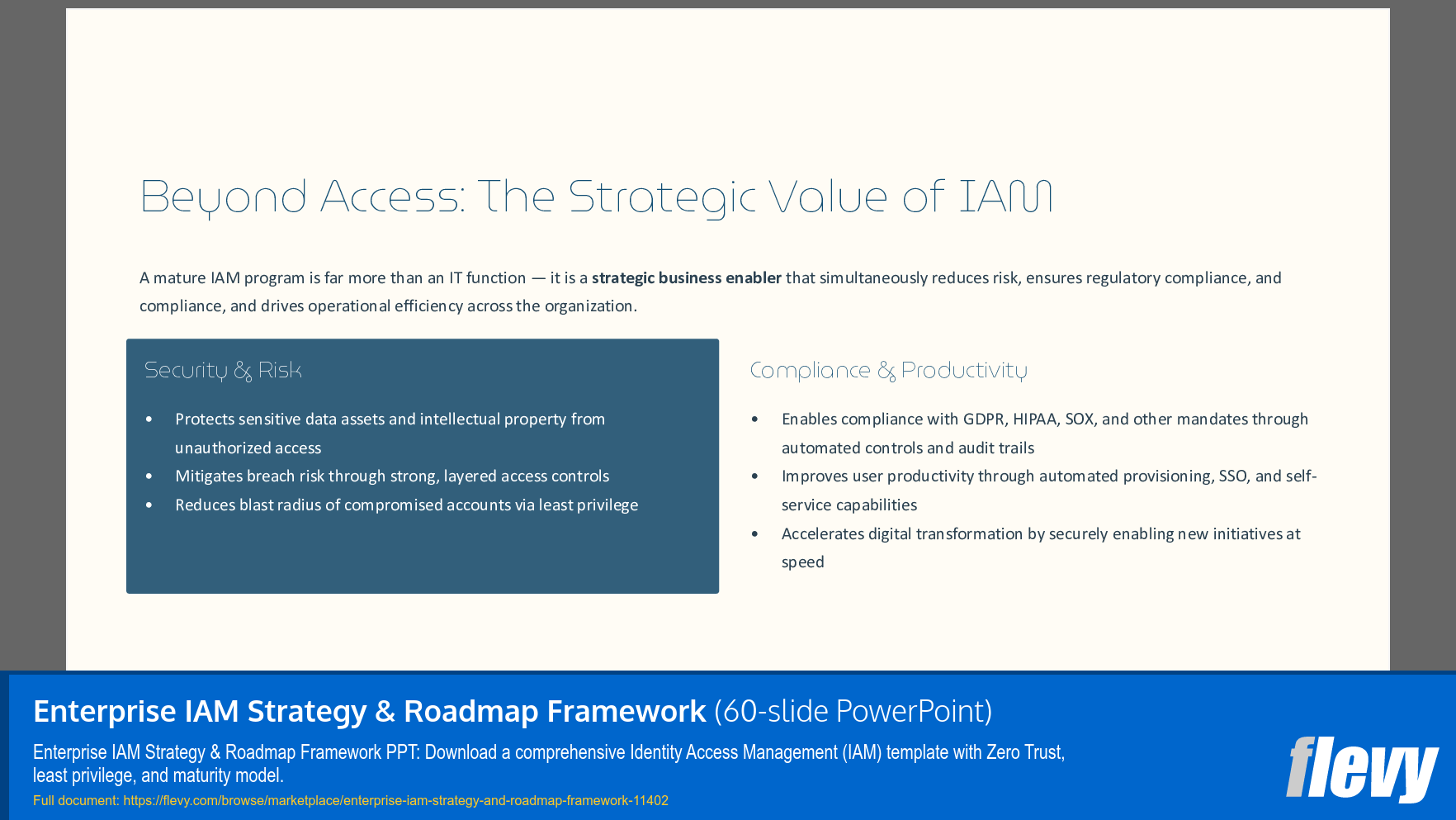
Beyond Access: The Strategic Value of IAM
• Protects sensitive assets
• Enables compliance with regulations (GDPR, HIPAA, SOX)
• Mitigates data breaches through strong controls
• Improves user productivity via automated processes
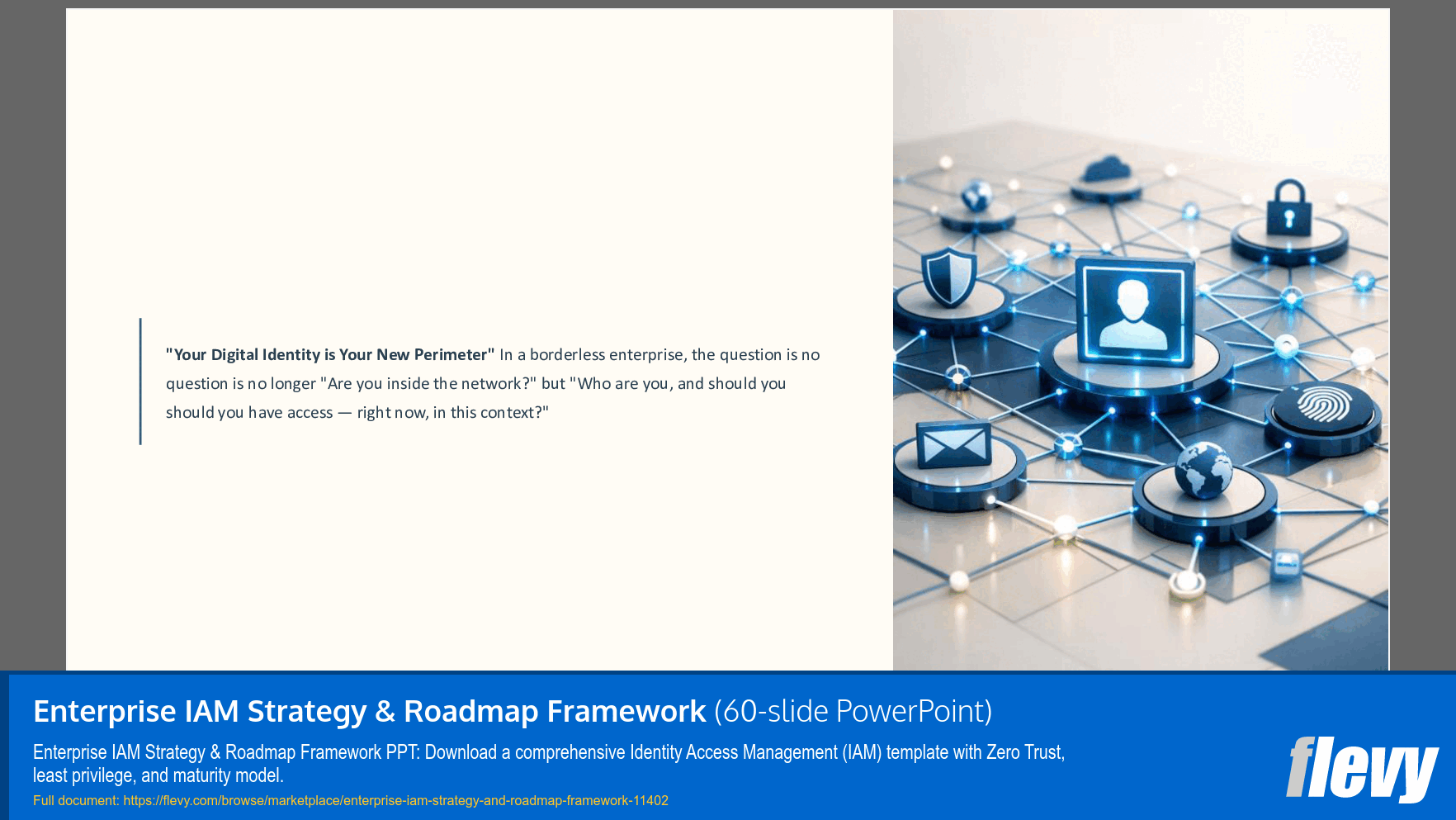
[image] A complex network diagram with glowing nodes representing identities and connections, text: "Your Digital Identity is Your New Perimeter"
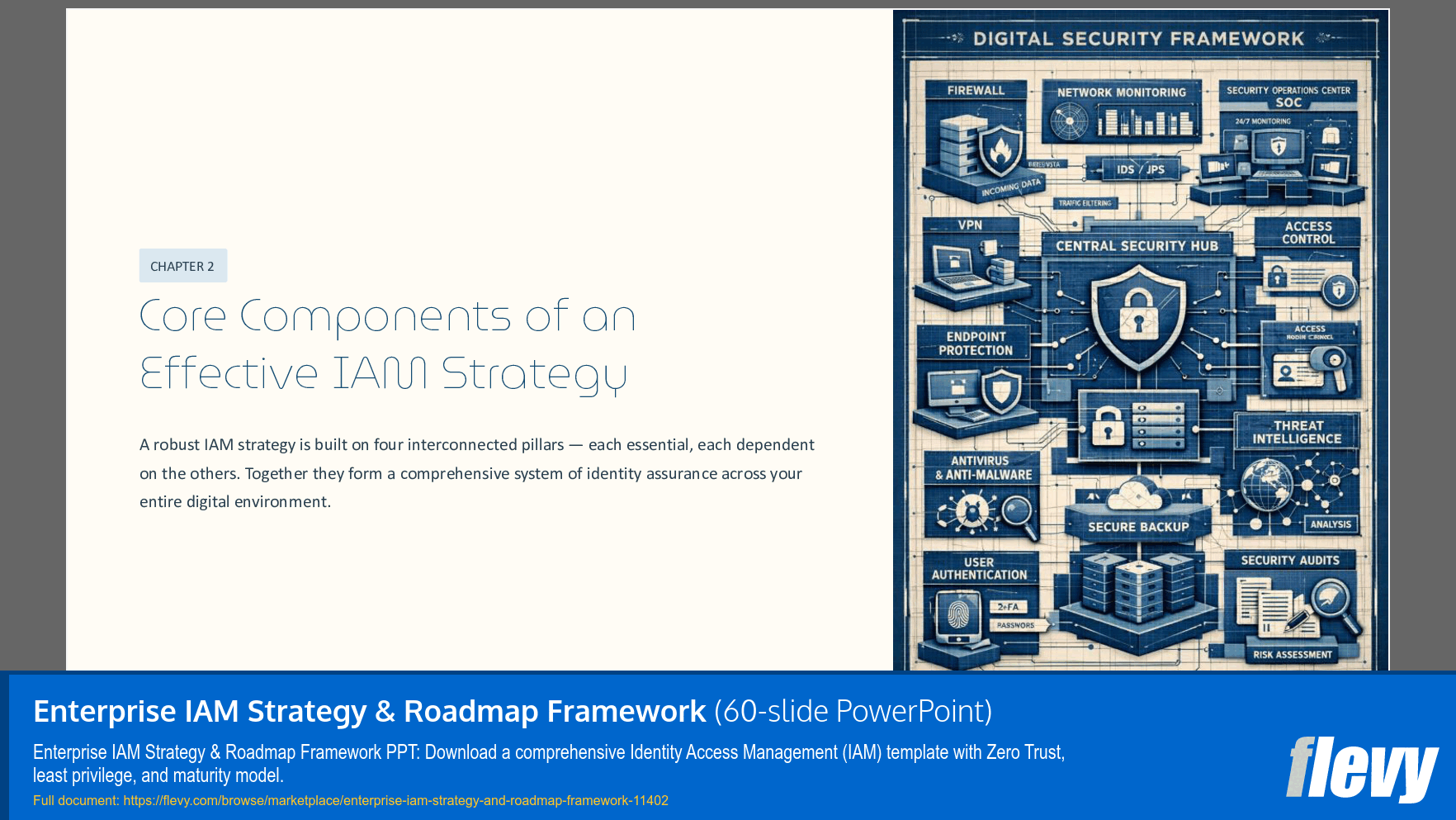
Chapter 2: Core Components of an Effective IAM Strategy
1. Identity Provisioning: The Digital Identity Lifecycle
• Creation, modification, and removal of digital identities
• Seamless account creation for new hires
• Automated offboarding to prevent lingering access
2. Authentication & Secure Access: Verifying Every Request
• Continuous verification of users, devices, and access requests
• Embracing Zero Trust principles: "Never trust, always verify"
• Moving beyond traditional perimeter security
3. Authorization & Least Privilege: Granting the Right Access
• Ensuring access privileges are assigned according to policy
• Mandating the principle of least privilege
• Minimizing potential damage from compromised accounts
4. Monitoring & Auditing: Maintaining Visibility and Accountability
• Recording and managing user identities and access permissions
• Ensuring all users and services are authenticated, authorized, and audited
• Providing audit trails for compliance and incident response
[image] A dashboard showing real-time security alerts and user activity, text: "Visibility is Power"
Chapter 3: The IAM 2.0 Maturity Model
Assessing Your Current State: The Maturity Model
• A structured, measurable way to assess your IAM program
• Grounded in the TechVision IAM 2.0 Reference Architecture
• Maps directly to RA layers, patterns, and capabilities
Five Maturity Levels: From Ad Hoc to Optimized
• Level 1: Ad Hoc: Reactive, manual, spreadsheet-based. Critical risk.
• Level 2: Basic: Foundational tools, inconsistent application. High risk.
• Level 3: Managed: Standardized core processes, clear roles. Medium risk.
• Level 4: Advanced: Proactive, data-driven, risk-based decisions. Low risk.
• Level 5: Optimized: Fully autonomous, self-healing, Zero Trust native. Minimal risk.
Key Insight: Most organizations are at Levels 2-3
• Reaching Level 4-5 requires significant transformation
[image] A staircase graphic with 5 steps labeled 1-5, showing increasing levels of automation and security, text: "Climbing the Maturity Ladder"
Chapter 4: Key Capabilities for IAM Advancement
Capability Family 1: Identity Lifecycle Management (ILM)
• Automate the full employee journey (joiner, mover, leaver)
• Reduces manual errors and compliance risks
• Typically the first target for automation
Key Questions for ILM:
• Are JML processes driven by authoritative HR data?
• What percentage of departing employees are deprovisioned within 1 hour?
• How long does a new hire take to become productive?
Capability Family 2: Authentication & Secure Access
• Implementing multi-factor authentication (MFA) everywhere
• Context-aware access policies based on user, device, and location
• Continuous authentication and re-authentication
Capability Family 3: Privileged Access Management (PAM)
• Securing, controlling, and monitoring privileged accounts
• Just-in-time (JIT) access for critical systems
• Session recording and vaulting for sensitive credentials
[image] A lock icon with a shield overlay, text: "Protecting Your Most Sensitive Access"
Capability Family 4: Identity Governance and Administration (IGA)
• Automating access reviews and certifications
• Managing entitlements and segregation of duties (SoD)
• Ensuring policy adherence and audit readiness
Capability Family 5: Data Security & Access Governance
• Classifying sensitive data
• Applying access controls based on data sensitivity
• Monitoring data access patterns for anomalies
Capability Family 6: API Security & Access Management
• Securing APIs with robust authentication and authorization
• Managing API access for internal and external applications
• Protecting against API-specific threats
Capability Family 7: Cloud Identity & Access Management
• Managing identities and access across multi-cloud environments
• Consistent policy enforcement across AWS, Azure, GCP
• Leveraging cloud-native IAM services effectively
[image] Icons representing AWS, Azure, and GCP connected by a central IAM hub, text: "Unified Cloud Identity"
Chapter 5: Strategic Roadmap for IAM Transformation
Phase 1: Foundation & Assessment (0-12 Months)
• Objective: Establish baseline, implement core controls.
• Activities:
• Conduct IAM maturity assessment (TechVision Model)
• Define IAM policies and governance framework
• Implement foundational IdP and MFA
• Begin basic Identity Lifecycle Management automation (e.g., onboarding)
Phase 2: Managed & Advanced Capabilities (12-24 Months)
• Objective: Standardize processes, introduce risk-based controls.
• Activities:
• Expand ILM automation (movers, leavers)
• Implement IGA for access reviews and certifications
• Deploy PAM for privileged accounts
• Integrate AI/ML for anomaly detection
Phase 3: Optimization & Zero Trust (24+ Months)
• Objective: Achieve autonomous operations and full Zero Trust.
• Activities:
• Implement policy-as-code for continuous enforcement
• Achieve self-healing capabilities
• Fully integrate AI/ML for predictive security
• Establish event-driven, API-first architecture
[image] A roadmap graphic with three distinct phases, each with key milestones and timelines.
Focusing on Outcomes Over Tools (Gartner Insight)
• Modernize IAM architecture with a focus on business enablement and security outcomes.
• Address all identities: human, non-human, and machine.
Chapter 6: Key Considerations for Success
Organizational Model Change
• Shift from an approval-gate to a policy-engine approach
• Foster collaboration between security, IT, and business units
AI/ML Integration
• Leverage AI/ML for continuous governance and risk-based decisions
• Enhance anomaly detection and predictive security capabilities
Architectural Shift: Event-Driven, API-First
• Design IAM systems to be flexible and scalable
• Enable seamless integration with other enterprise systems
[image] Abstract graphic representing data flow and interconnected systems, text: "Building a Resilient IAM Architecture"
The "Secret Zero" Problem (Gartner Insight)
• Addressing the security risks associated with non-human identities (service accounts, APIs, IoT devices).
• These often lack traditional user oversight.
•
Chapter 7: The Future of IAM
Embracing Zero Trust Natively
• IAM is the cornerstone of a successful Zero Trust strategy
• Continuous verification and least privilege are paramount
Autonomous IAM
• Self-healing systems that automatically remediate issues
• Predictive capabilities to anticipate and prevent threats
Identity as a Service (IDaaS)
• Cloud-based IAM solutions offering scalability and agility
• Streamlined management and reduced infrastructure overhead
[image] A futuristic cityscape with digital overlays, representing a secure and interconnected digital world.
The Impact on Business: Enabling Agility and Productivity
• Securely enable new business initiatives and digital transformation
• Provide a seamless and consistent user experience
Chapter 8: Call to Action
Your IAM Journey Starts Now
• Assess your current maturity level
• Define your target state and roadmap
• Prioritize key capabilities and phased implementation
[image] A compass pointing towards a bright horizon, text: "Navigate Your Digital Future with Confidence"
Key Takeaways Recap
• IAM is foundational to modern cybersecurity.
• A strategic, phased approach is crucial for success.
• Embrace Zero Trust and continuous improvement.
• Focus on outcomes, not just tools.
Thank You & Q&A
Got a question about the product? Email us at support@flevy.com or ask the author directly by using the "Ask the Author a Question" form. If you cannot view the preview above this document description, go here to view the large preview instead.
Source: Best Practices in Access Management PowerPoint Slides: Enterprise IAM Strategy & Roadmap Framework PowerPoint (PPTX) Presentation Slide Deck, Mohamed Alshamey
ABOUT THE AUTHOR

Senior Consultant in Cybersecurity GRC, Data Governance, Cybersecurity, Privacy, and Data Management, with over 20 years of experience in information technology, consulting, training, and technical capacity building. holds a PhD. In AI & Data Privacy, he has a master's degree in cybersecurity and is currently pursuing research focused on data privacy. possesses extensive expertise in ... [read more]
Ask the Author a Question
You must be logged in to contact the author.




























