 Click main image to view in full screen.


BENEFITS OF THIS DOWNLOADABLE WORD DOCUMENT
- ecommerce business plan
- online business plan
- ecommerce business
E-COMMERCE WORD DESCRIPTION
This e-commerce business plan is a detailed roadmap that will guide you in starting a successful e-commerce business. It has pre-written content, including important sections like market research, product offerings, marketing strategies, and financial projections.
You can use this sample plan as a starting point and customize it to fit your specific business needs. This will save you time and resources, and ensure that you have a solid plan in place before you start investing in your business.
This e-commerce business plan has been used by thousands of business owners and has helped them to launch and grow their online businesses. Don't miss out on this opportunity to jumpstart your e-commerce venture. Download the e-commerce business plan template now and take the first step toward building a successful online business.
This e-commerce business plan includes a detailed SWOT analysis, providing insights into the strengths, weaknesses, opportunities, and threats associated with launching an online store. It outlines a robust marketing strategy focused on pricing, secured payment platforms, and superior customer service to ensure timely delivery and customer retention. The plan emphasizes leveraging the internet to maximize reach and market penetration.
Got a question about the product? Email us at support@flevy.com or ask the author directly by using the "Ask the Author a Question" form. If you cannot view the preview above this document description, go here to view the large preview instead.
MARCUS OVERVIEW
This synopsis was written by Marcus [?] based on the analysis of the full 13-slide presentation.
Executive Summary
The E-commerce Business Plan (DOC) provides a structured framework for launching and managing an online retail business. It outlines essential components such as market analysis, sales strategies, and operational frameworks to help entrepreneurs establish a successful e-commerce venture. This template enables users to craft a comprehensive business strategy that addresses product offerings, target markets, and competitive advantages. By utilizing this ready-to-use document, aspiring entrepreneurs can effectively navigate the complexities of e-commerce, ensuring a robust foundation for their online store.
Who This Is For and When to Use
• Aspiring entrepreneurs looking to launch an e-commerce business
• Business consultants advising clients on e-commerce strategies
• Marketing teams developing online retail strategies
• Investors assessing potential e-commerce ventures
Best-fit moments to use this deck:
• During the initial planning phase of an e-commerce startup
• When seeking funding or investment for an online retail business
• For strategic reviews of existing e-commerce operations
• To guide marketing and sales strategy development for online platforms
Learning Objectives
• Define the key components of a successful e-commerce business plan
• Build a comprehensive market analysis to identify target customers
• Establish effective sales and marketing strategies for online retail
• Analyze competitive advantages in the e-commerce landscape
• Develop a sustainability and expansion strategy for long-term growth
• Create a detailed budget and financial forecast for startup operations
Table of Contents
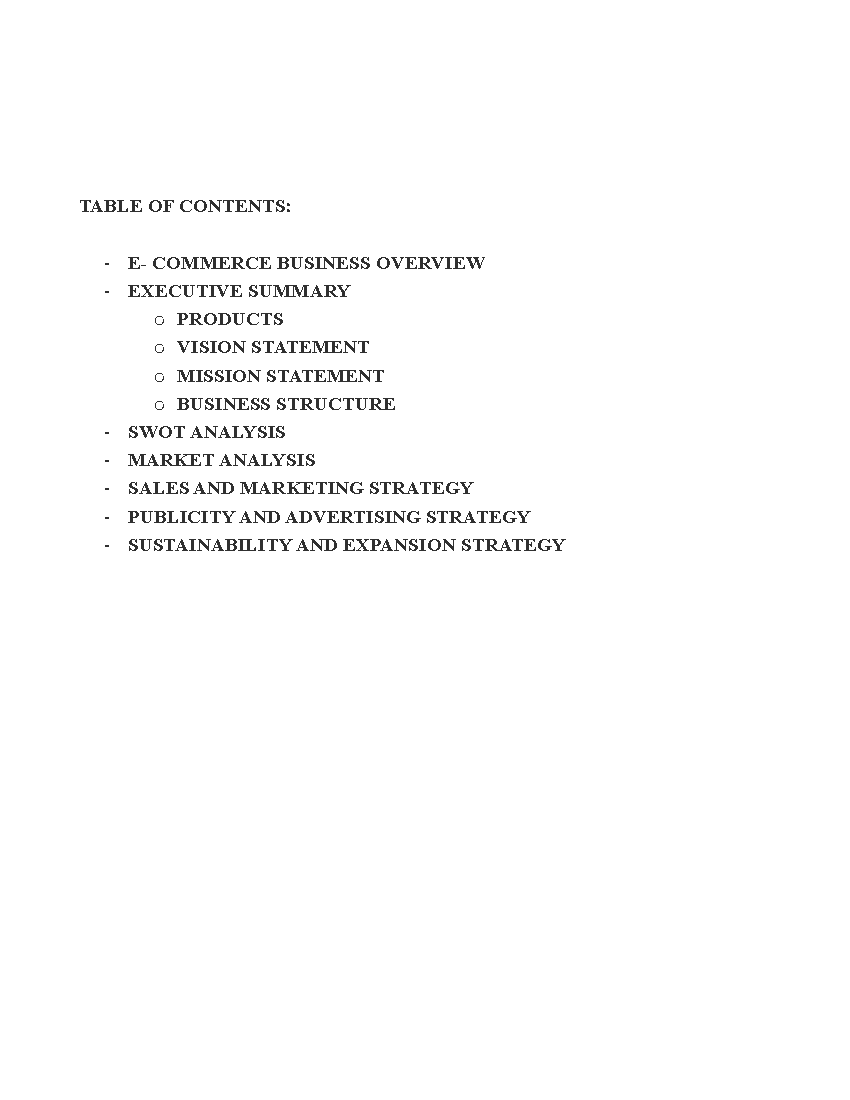
• E-Commerce Business Overview (page 1)
• Executive Summary (page 1)
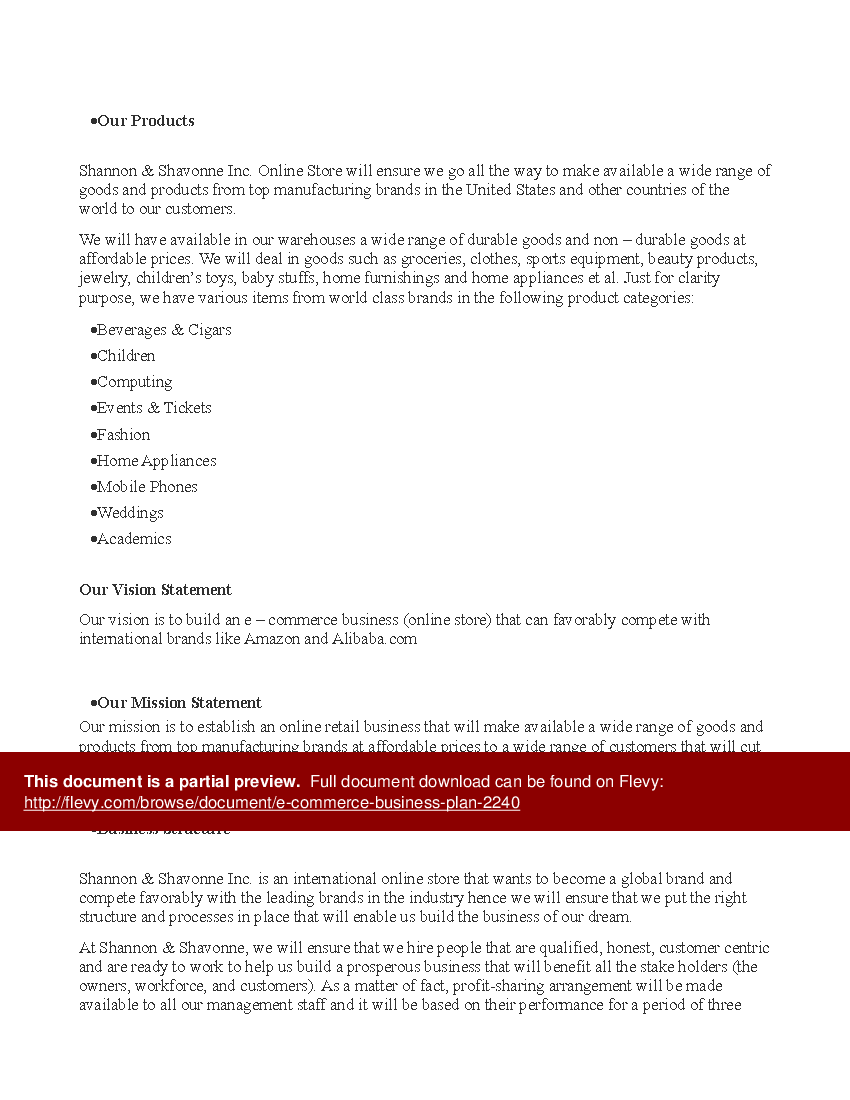
• Products (page 3)
• Vision Statement (page 3)
• Mission Statement (page 3)
• Business Structure (page 4)
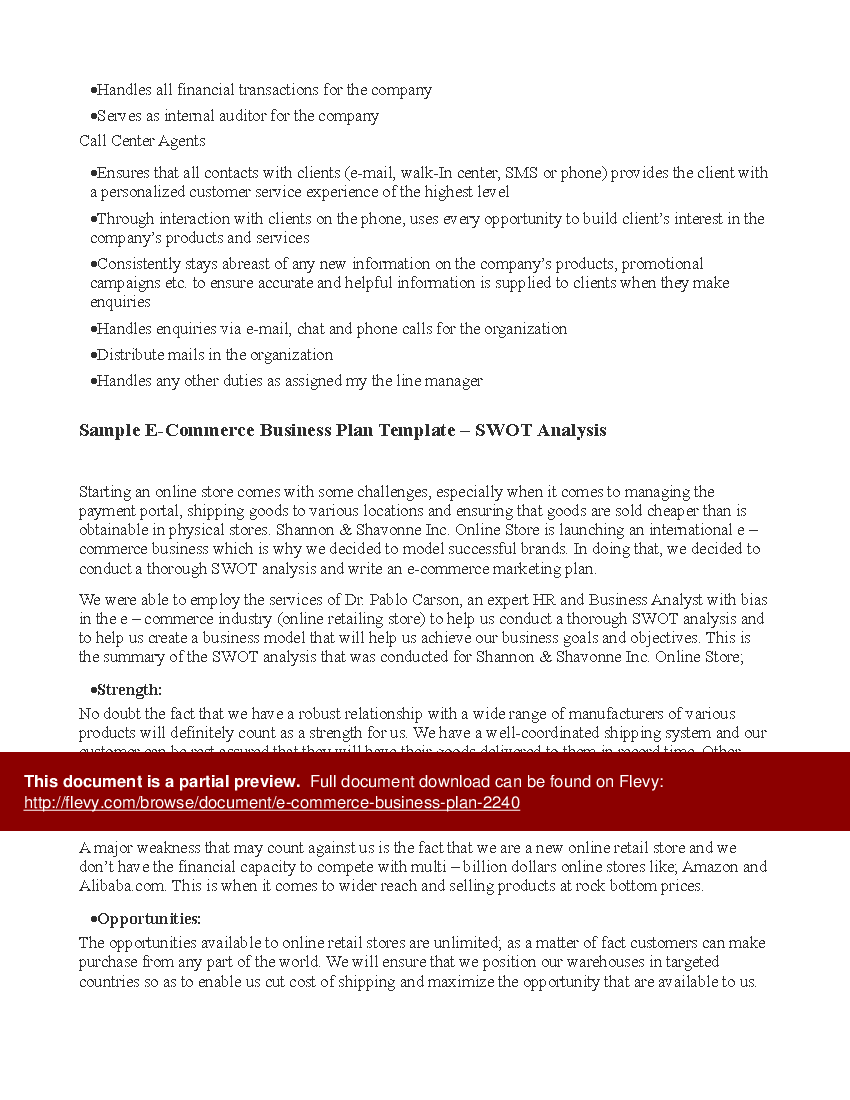
• SWOT Analysis (page 7)
• Market Analysis (page 8)
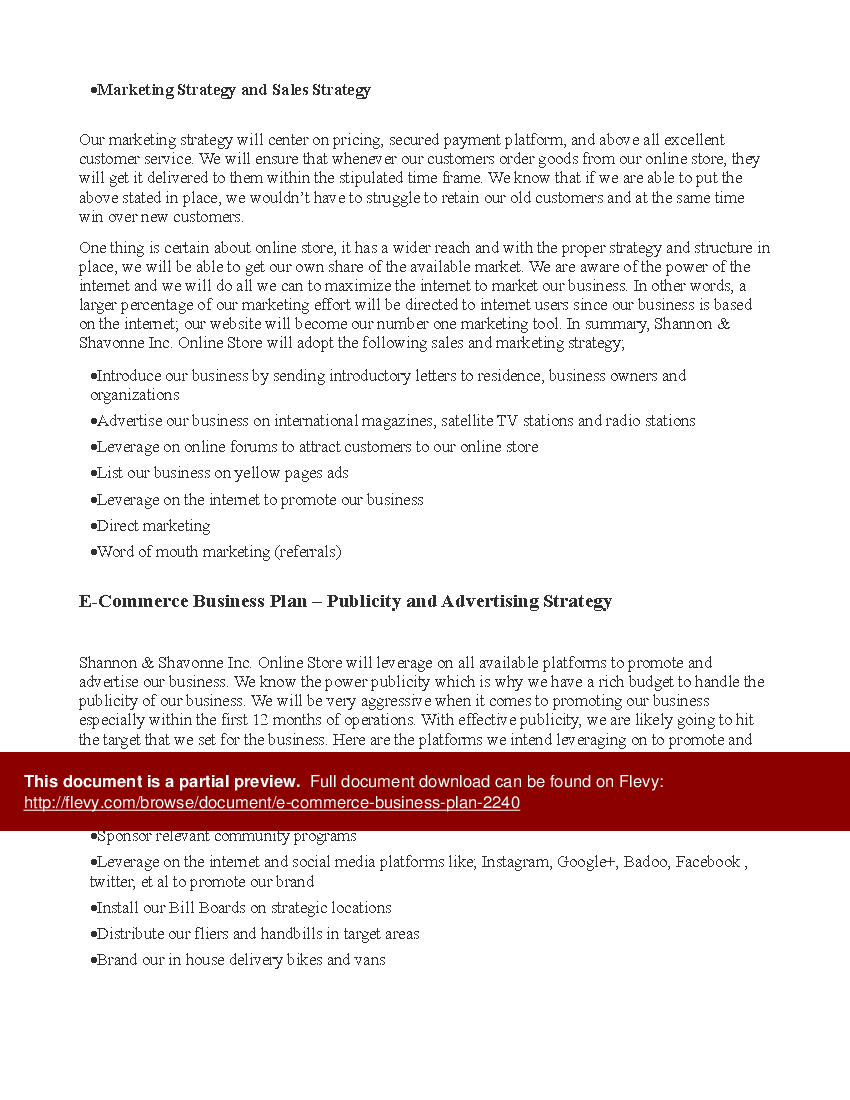
• Sales and Marketing Strategy (page 9)
• Publicity and Advertising Strategy (page 10)
• Sustainability and Expansion Strategy (page 12)
Primary Topics Covered
• E-Commerce Business Overview - This section introduces the concept of e-commerce, highlighting its significance in modern business and the advantages it offers to entrepreneurs.
• SWOT Analysis - A detailed examination of strengths, weaknesses, opportunities, and threats that an e-commerce business may face, providing insights for strategic planning.
• Market Analysis - An exploration of market trends and target demographics, emphasizing the importance of understanding consumer behavior in the online retail space.
• Sales and Marketing Strategy - A framework for developing effective sales tactics and marketing initiatives tailored to the e-commerce environment.
• Publicity and Advertising Strategy - Guidelines for leveraging various media platforms to promote the e-commerce business and enhance brand visibility.
• Sustainability and Expansion Strategy - Strategies for ensuring long-term growth and customer loyalty, focusing on workforce development and operational efficiency.
Deliverables, Templates, and Tools
• E-commerce business plan template for structuring business ideas
• SWOT analysis framework for assessing business viability
• Market analysis template to identify target demographics
• Sales forecast model for projecting revenue over 3 years
• Marketing strategy outline for promoting online retail
• Budget template for calculating startup and operational costs
Slide Highlights
• Overview of e-commerce trends and their impact on business
• Detailed SWOT analysis showcasing internal and external factors
• Market segmentation insights to guide targeting efforts
• Sales forecast projections illustrating growth potential
• Comprehensive marketing strategy emphasizing digital channels
Potential Workshop Agenda
E-Commerce Business Planning Session (90 minutes)
• Review the e-commerce business overview and its significance
• Discuss the components of a successful business plan
• Conduct a SWOT analysis for participants' business ideas
Market Analysis Workshop (60 minutes)
• Identify target markets and customer segments
• Analyze market trends and competitive landscape
• Develop strategies for market entry and positioning
Sales and Marketing Strategy Session (90 minutes)
• Outline effective sales tactics for online retail
• Explore digital marketing strategies to enhance visibility
• Create a preliminary marketing plan for participants' businesses
Customization Guidance
• Tailor the business plan template to reflect specific product offerings and market conditions
• Adjust the SWOT analysis to incorporate unique business strengths and challenges
• Modify the sales forecast based on realistic market research and historical data
• Personalize the marketing strategy to align with brand identity and target audience preferences
Secondary Topics Covered
• E-commerce regulations and compliance considerations
• Payment processing options and security measures
• Logistics and supply chain management for e-commerce
• Customer relationship management (CRM) strategies
• Technology requirements for operating an online store
Topic FAQ
What are the typical sections I should include in an e-commerce business plan?
A typical e-commerce plan covers an overview of the business, products, vision and mission, business structure, SWOT analysis, market analysis, sales and marketing strategy, publicity/advertising, sustainability/expansion, and financials. These elements are arranged across the template’s 13-page DOC.How do I conduct a SWOT analysis for an online retail business?
Conduct a SWOT by listing internal strengths and weaknesses (product offering, operations) and external opportunities and threats (market trends, competitors). Use objective evidence from market research and customer segments. The E-commerce Business Plan includes a dedicated SWOT analysis framework to structure this assessment.What inputs are needed to build a sales forecast for an e-commerce store?
Build a sales forecast using historical data (if available), market research, conversion assumptions, average order value, and acquisition costs. Adjust assumptions for seasonality and shipping options. The template supplies a sales forecast model designed to project revenue over 3 years.What should I look for when choosing a downloadable e-commerce business plan template?
Look for pre-written market research sections, a SWOT framework, a sales forecast model, a budget template, and guidance on marketing strategy and customization. Confirm file format and page count to match your needs; this product is a 13-page DOC with templates like a 3-year sales forecast and budget template.How does buying a paid e-commerce template compare with building a plan from scratch?
A paid template saves time by providing pre-written content and structured tools for market analysis, marketing strategy, and financial projections. It reduces rework and accelerates investor or internal review preparation by supplying items such as a market analysis template and budget template.What should an investor-facing e-commerce plan emphasize to secure funding?
Investors expect clear market analysis, competitive positioning, a SWOT, customer segmentation, realistic sales projections, and a startup/operational budget. The E-commerce Business Plan includes sections and templates for market analysis, SWOT, and a 3-year sales forecast to support fundraising discussions.How can I structure an online store’s marketing and advertising plan?
Structure marketing around target segments, digital channels, acquisition tactics, and publicity approaches. Include channel-specific budgets, conversion assumptions, and timelines. The E-commerce Business Plan contains a marketing strategy outline and publicity/advertising section focused on digital channels to guide planning.Which operational topics should an e-commerce plan cover beyond marketing and finance?
Operational topics include payment processing options and security measures, logistics and supply chain management, inventory management, and customer relationship management (CRM) strategies. The template’s secondary topics and guidance address payment options, logistics, and CRM strategies.Document FAQ
These are questions addressed within this presentation.
What is the purpose of an e-commerce business plan?
An e-commerce business plan serves as a roadmap for launching and managing an online retail business, outlining key strategies, market analysis, and operational frameworks.
How can I conduct a SWOT analysis for my e-commerce business?
Identify your business's strengths, weaknesses, opportunities, and threats by evaluating internal capabilities and external market conditions, using the provided framework in the template.
What are the key components of a market analysis?
A market analysis should include an assessment of market trends, target demographics, competitive landscape, and consumer behavior to inform strategic decisions.
How do I project sales for my e-commerce business?
Utilize historical data, market research, and industry benchmarks to create a sales forecast, considering factors like shipping options and customer acquisition strategies.
What marketing strategies are effective for e-commerce?
Effective strategies include leveraging digital marketing channels, utilizing social media, and implementing targeted advertising campaigns to reach potential customers.
How can I ensure my e-commerce business is sustainable?
Focus on building customer loyalty, investing in employee development, and continuously adapting to market changes to ensure long-term viability.
What payment options should I offer in my e-commerce store?
Consider offering a variety of payment methods, including credit cards, debit cards, electronic fund transfers, and digital wallets to accommodate customer preferences.
How do I handle logistics and shipping for my e-commerce business?
Establish partnerships with reliable shipping companies, implement an efficient inventory management system, and ensure timely delivery to enhance customer satisfaction.
Glossary
• E-Commerce - The buying and selling of goods and services over the Internet.
• SWOT Analysis - A strategic planning tool used to identify strengths, weaknesses, opportunities, and threats.
• Market Analysis - An assessment of the market conditions, trends, and target demographics.
• Sales Forecast - A projection of future sales based on historical data and market research.
• CRM - Customer Relationship Management, a system for managing a company's interactions with current and potential customers.
• Logistics - The process of planning and executing the efficient transportation and storage of goods.
• Digital Marketing - Marketing efforts that use the Internet and electronic devices to reach customers.
• Payment Processing - The handling of transactions made by customers through various payment methods.
• Inventory Management - The supervision of non-capitalized assets, or inventory, and stock items.
• Brand Visibility - The extent to which a brand is recognized by potential customers.
• Customer Loyalty - The tendency of customers to continue buying from a specific brand.
• E-commerce Regulations - Laws and guidelines governing online business transactions.
Source: Best Practices in E-commerce Word: E-commerce Business Plan Word (DOC) Document, Safwan Khan
ABOUT THE AUTHOR

Founder of Startupily | Write articles for Influencive & Thrive Global | Author of Mind Influence & Eternal Wisdom
I have a database of 100 business documents that are professionally created to take your business to the next level.
Ask the Author a Question
You must be logged in to contact the author.




























