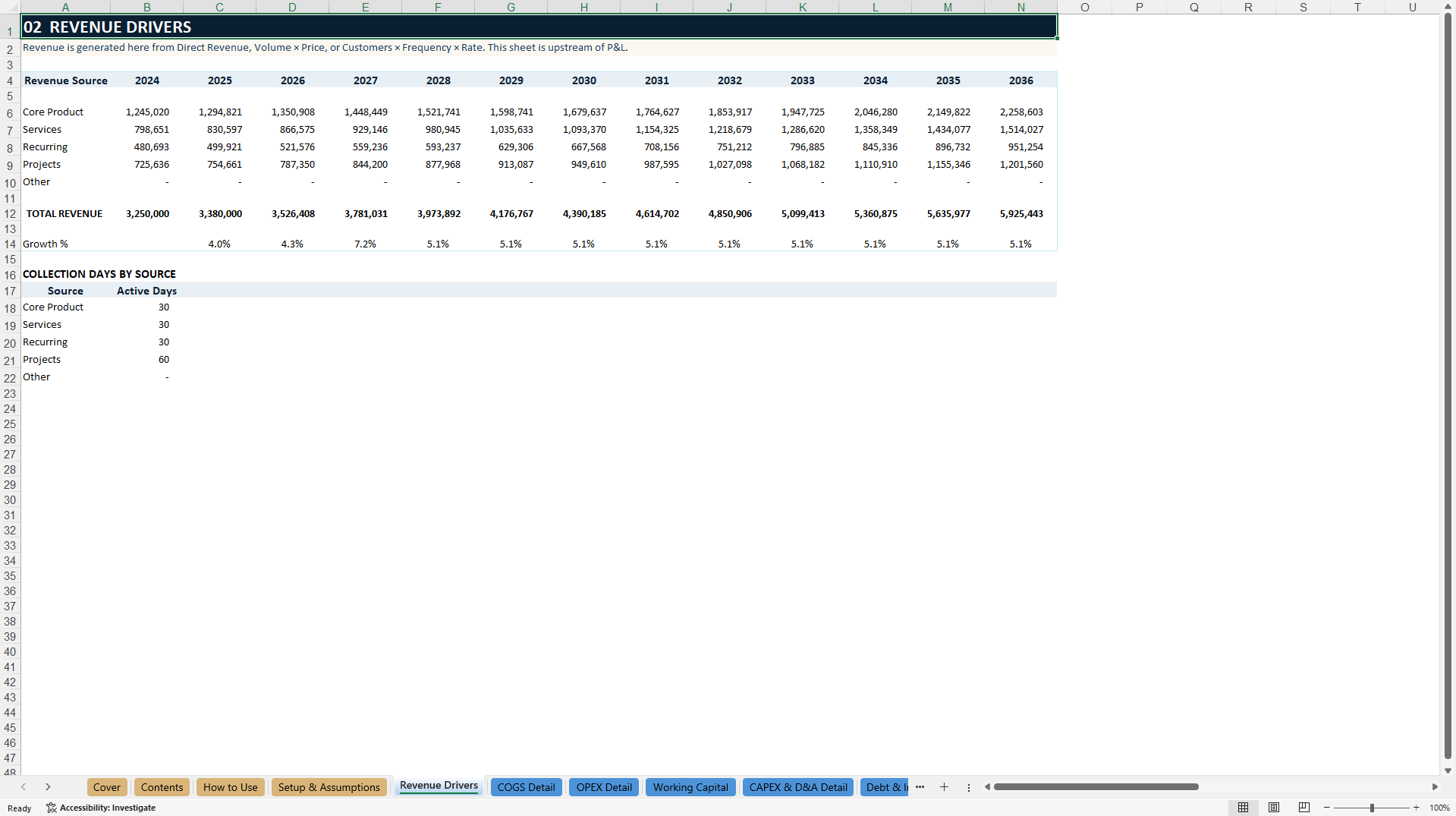
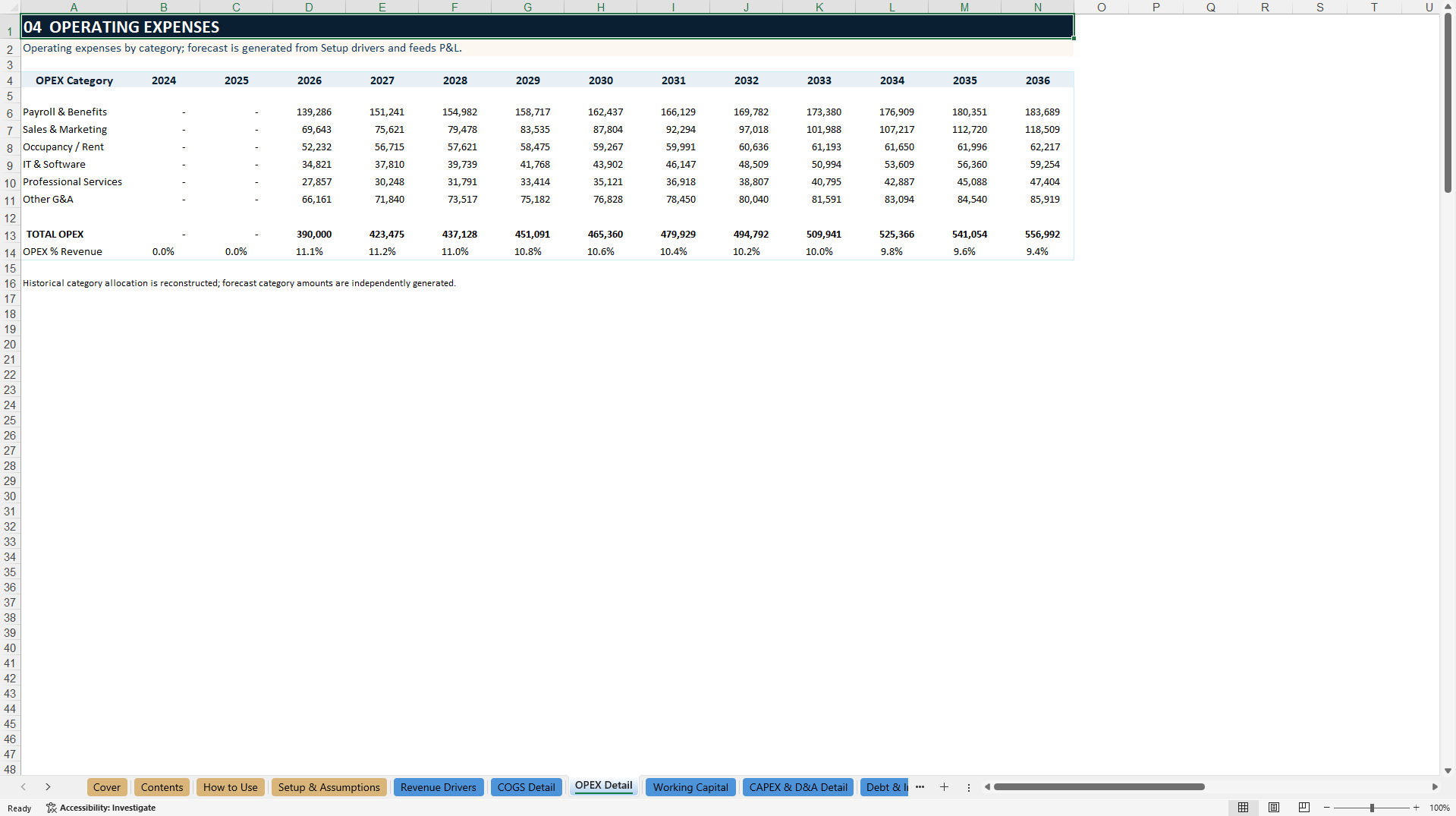
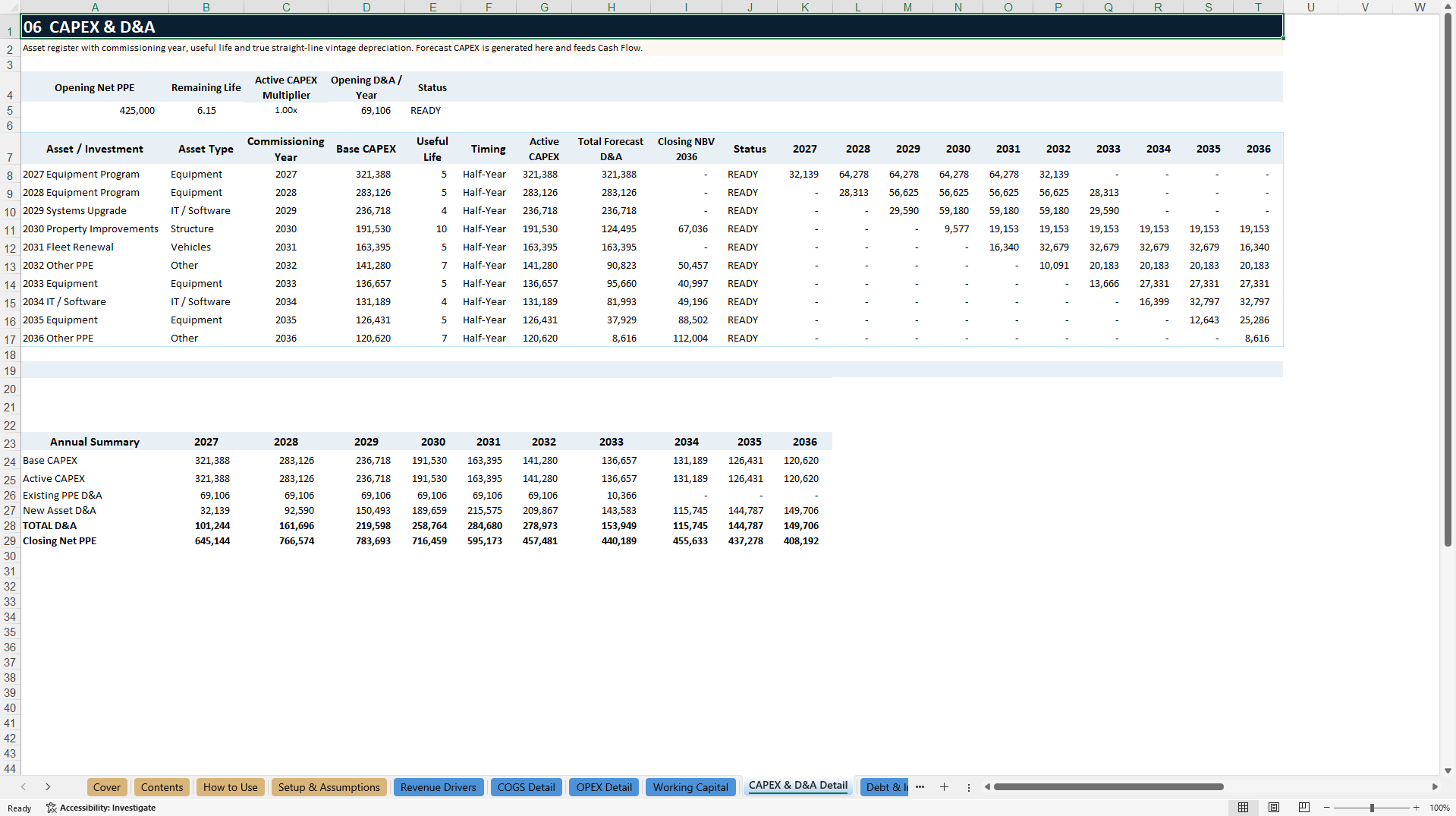
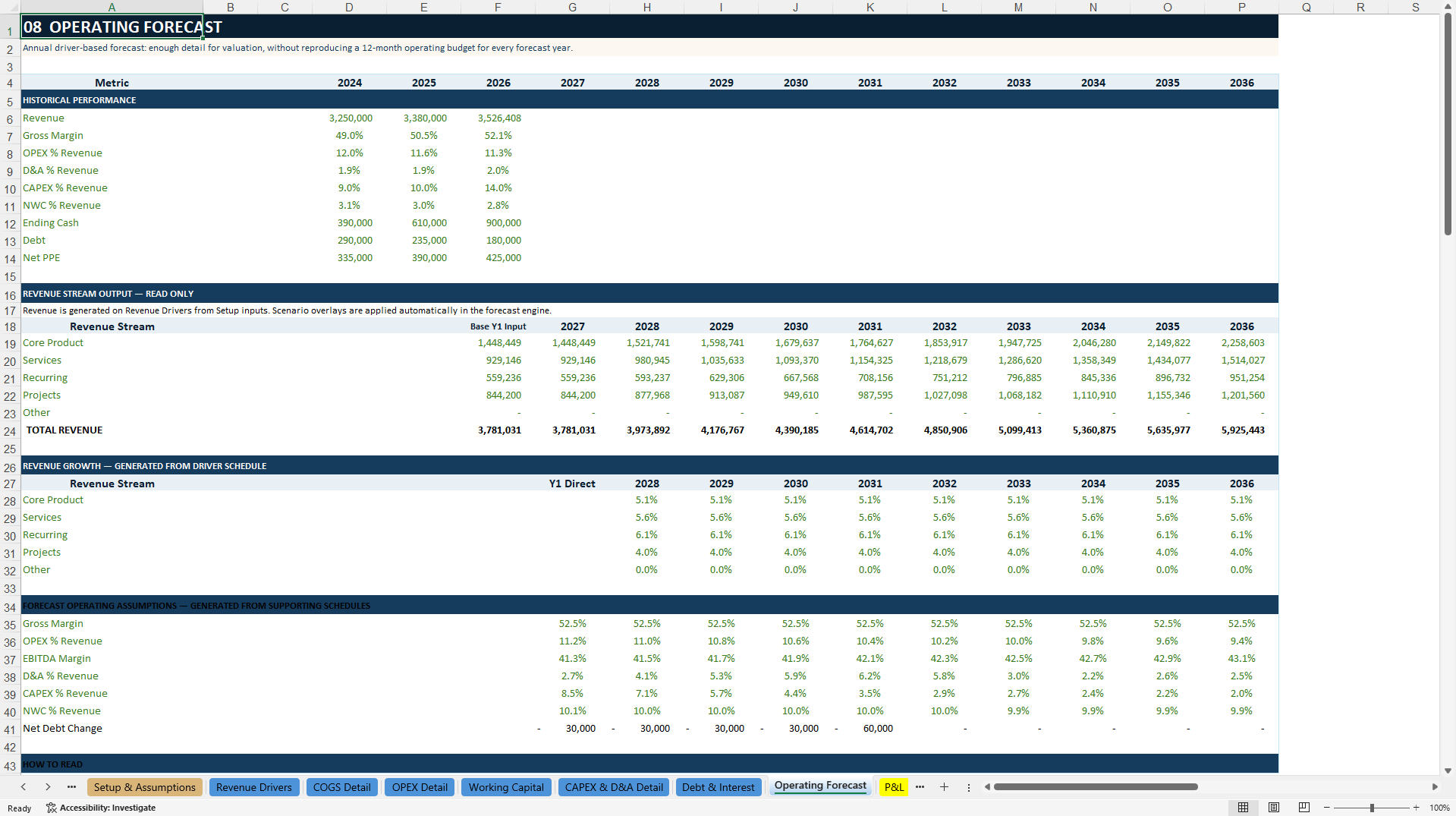
 Click main image to view in full screen. Unlock all 20 preview images:
DCF Valuation and Value Creation Model – Excel XLSX
Excel (XLSX)


BENEFITS OF THIS DOWNLOADABLE EXCEL DOCUMENT
- Provides an integrated DCF valuation framework linking operating performance, free cash flow, cost of capital, enterprise value, and equity value.
- Helps identify the operational and financial drivers that create or destroy value through ROIC, NOPLAT, EVA, and related performance analysis.
- Supports scenario and sensitivity analysis to evaluate how changes in growth, margins, reinvestment, and WACC affect valuation outcomes.
VALUATION EXCEL DESCRIPTION
The DCF Valuation and Value Creation Model is a professional financial analysis tool designed to estimate enterprise value, equity value, and long-term value creation through an integrated discounted cash flow framework.
The model is intended for finance professionals, business owners, analysts, consultants, investors, and management teams who need a structured and transparent approach to valuation rather than a simplified single-sheet DCF calculator.
The model combines operating performance, free cash flow generation, cost of capital, return on invested capital, and value creation metrics within one connected framework. It supports a forward-looking analysis of how business performance translates into enterprise value and shareholder value over time.
The core valuation methodology is based on Free Cash Flow to the Firm, allowing users to forecast operating cash generation and discount future cash flows using the Weighted Average Cost of Capital. The model also incorporates terminal value assumptions, enterprise value, equity value, and sensitivity analysis to help users understand how changes in key assumptions influence the valuation outcome.
Beyond a standard DCF calculation, the model includes a broader value creation perspective. It evaluates Return on Invested Capital, Net Operating Profit After Tax, Economic Value Added, and related performance drivers. This helps users distinguish between accounting profitability and genuine economic value creation.
The model is structured to support both valuation and management analysis. Users can assess whether forecast growth is supported by sufficient returns, whether capital allocation is creating or destroying value, how margins and reinvestment affect free cash flow, and how changes in the cost of capital influence enterprise value.
Key analytical areas include:
Free Cash Flow to the Firm forecasting.
Weighted Average Cost of Capital estimation.
Enterprise Value and Equity Value calculation.
Terminal value analysis.
Return on Invested Capital assessment.
Net Operating Profit After Tax analysis.
Economic Value Added analysis.
Sensitivity analysis around major valuation assumptions.
Investment and value creation diagnostics.
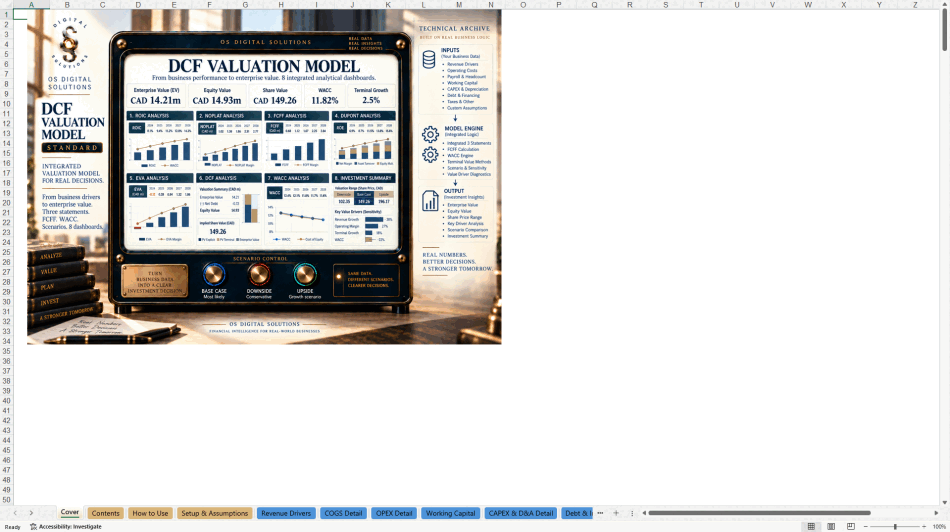
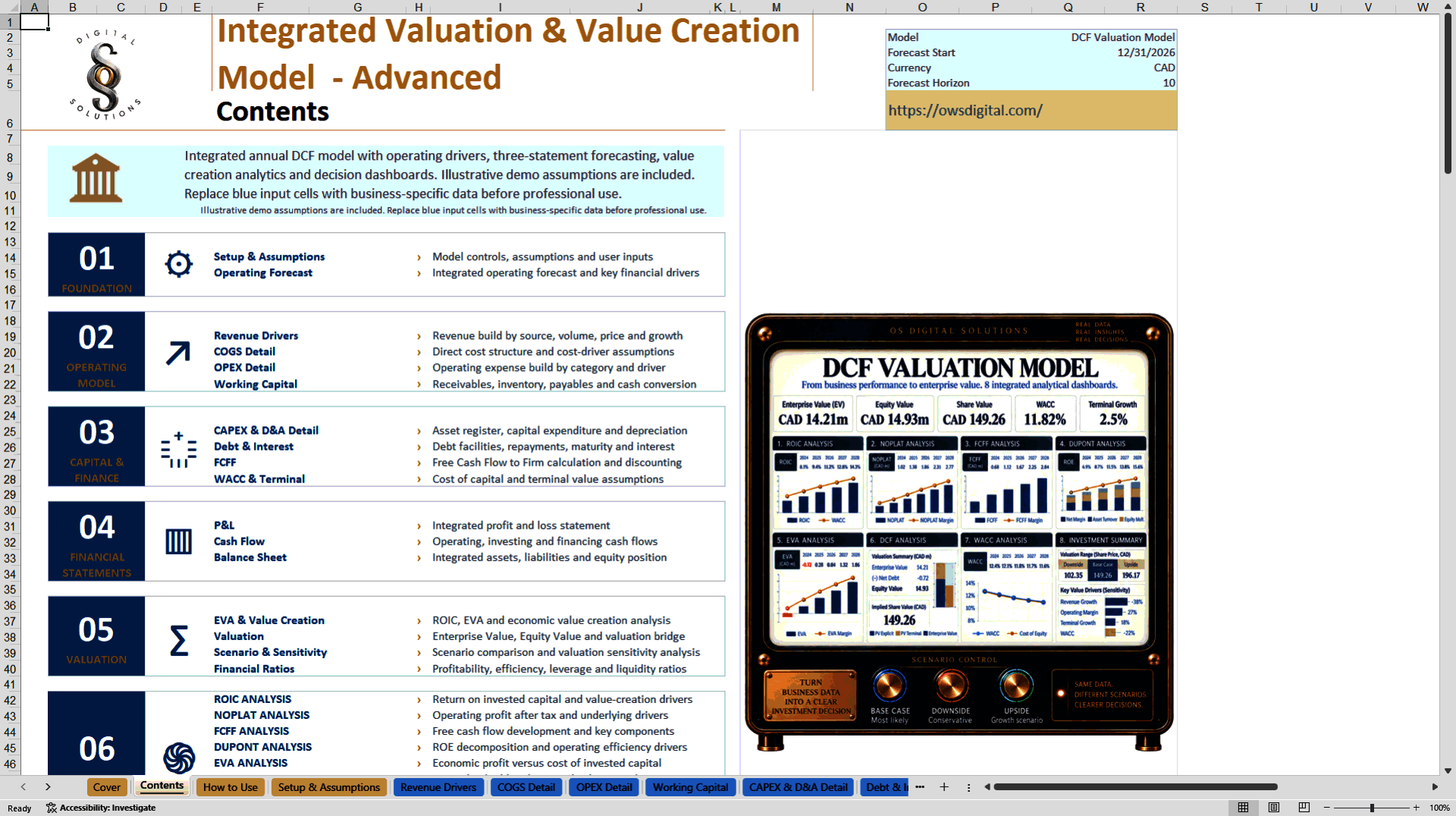
The model includes dedicated dashboards for major analytical themes, including ROIC, NOPLAT, FCFF, DuPont-style performance analysis, EVA, DCF valuation, WACC, and investment summary outputs. This makes it possible to move from detailed calculation logic to management-level interpretation without relying on separate disconnected files.
The model can be used for business valuation, investment analysis, strategic planning, transaction preparation, internal capital allocation, management review, investor discussions, and evaluation of alternative operating and financing assumptions.
A key design principle is transparency. The workbook is formula-driven and editable, allowing users to inspect the underlying valuation mechanics and adapt assumptions to their own company or project rather than relying on an opaque valuation engine.
The model is particularly useful for users who need more than a simple present value calculation and want to understand not only what a business may be worth, but also which operational and financial drivers are creating that value.
This tool is intended for financial analysis and planning purposes. It does not constitute investment, accounting, tax, legal, or transaction advice.
Got a question about the product? Email us at support@flevy.com or ask the author directly by using the "Ask the Author a Question" form. If you cannot view the preview above this document description, go here to view the large preview instead.
Source: Best Practices in Valuation, Integrated Financial Model Excel: DCF Valuation and Value Creation Model Excel (XLSX) Spreadsheet, OS Digital Solutions
ABOUT THE AUTHOR

OS Digital Solutions develops practical financial and management decision tools for business owners, finance professionals, and managers.
Our products combine robust financial modeling with clear, decision-oriented dashboards and structured workflows. The focus is not only on calculation accuracy, but on helping users understand what is happening, why it is happening, and what actions are
... [read more]
Ask the Author a Question
You must be logged in to contact the author.