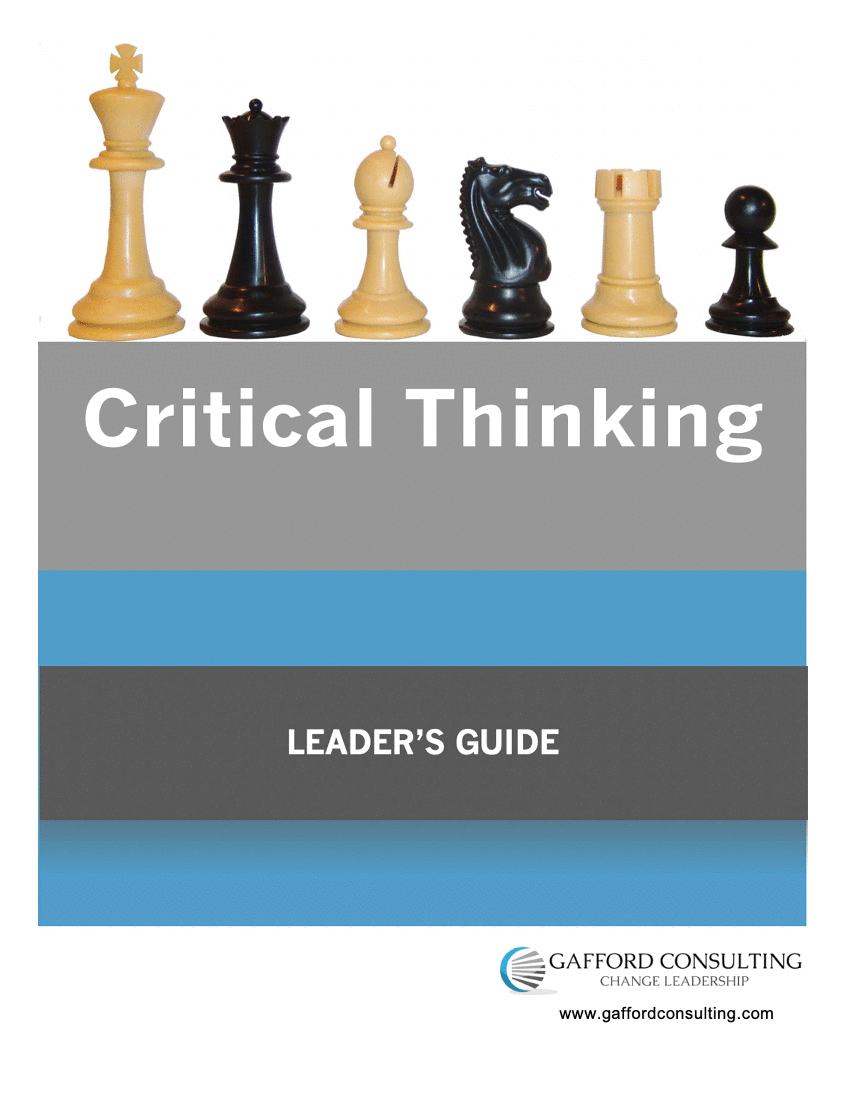





In today's society, many people experience information overload. We are bombarded with messages to believe various ideas, purchase things, support causes, and lead our lifestyle in a particular way. How do you know what to believe? How do you separate the truth from the myths?
The answer lies in critical thinking skills. The ability to clearly reason through problems and to present arguments in a logical, compelling way has become a key skill for survival in today's world. This two-day workshop will give you some practical tools and hands-on experience with critical thinking and problem solving.
Critical thinking of any kind is never universal in any individual; everyone is subject to episodes of undisciplined or irrational thought. Its quality is therefore typically a matter of degree and dependent on, among other things, the quality and depth of experience in a given domain of thinking or with respect to a particular class of questions. No one is a critical thinker through-and-through, but only to such-and-such a degree, with such-and-such insights and blind spots, subject to such-and-such tendencies towards self-delusion. For this reason, the development of critical thinking skills and dispositions is a life-long endeavor.

This will help you teach participants how to:
Define critical and non-critical thinking
Identify your critical thinking style(s), including areas of strength and improvement
Describe other thinking styles, including left/right brain thinking and whole-brain thinking
Work through the critical thinking process to build or analyze arguments
Develop and evaluate explanations
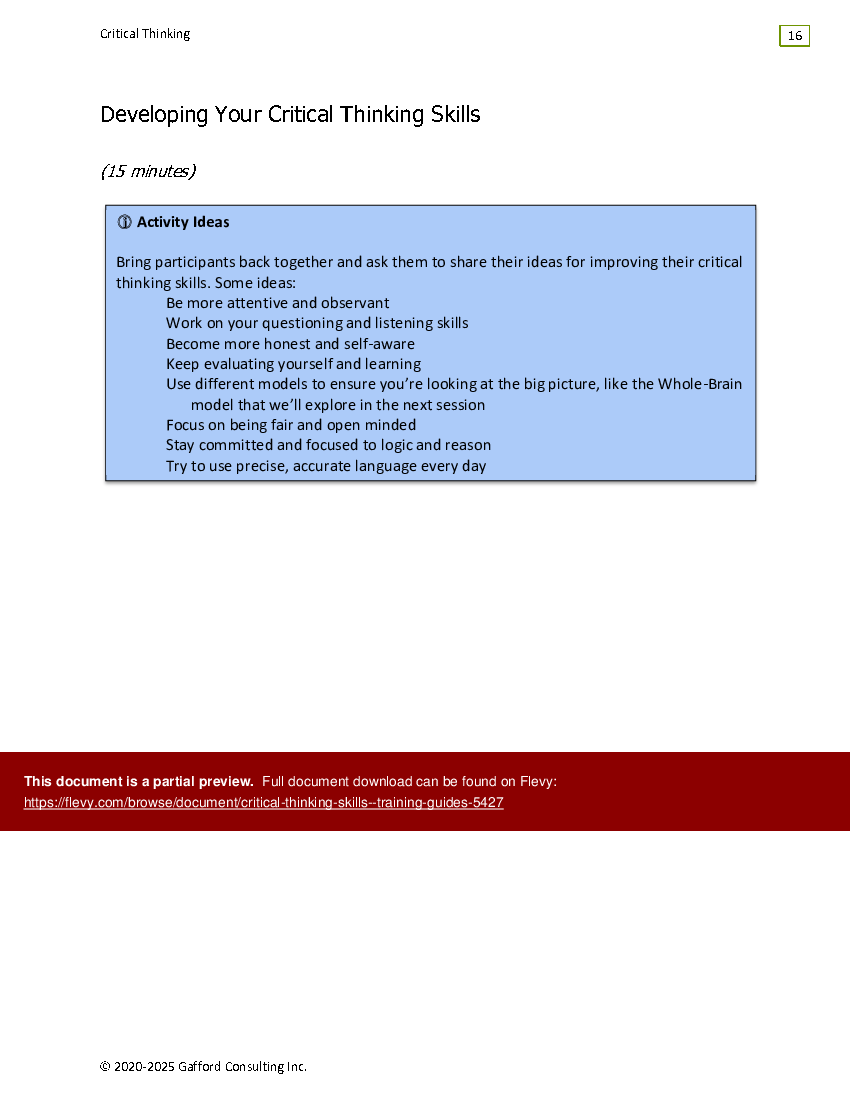
Improve key critical thinking skills, including active listening and questioning
Use analytical thought systems and creative thinking techniques
Prepare and present powerful arguments
Gafford Consulting is proud to offer tools that will help you navigate personal and professional change.

Got a question about the product? Email us at support@flevy.com or ask the author directly by using the "Ask the Author a Question" form. If you cannot view the preview above this document description, go here to view the large preview instead.
Executive Summary
The Critical Thinking Skills - Training Guides (DOCX) is a comprehensive resource designed to enhance problem-solving abilities, structured thinking, argument building, and analytical skills. This training guide equips participants with practical tools and methodologies to navigate complex decision-making scenarios effectively. By engaging in interactive sessions, participants will learn to apply critical thinking frameworks, evaluate arguments, and develop persuasive communication strategies. This guide is essential for professionals seeking to foster a culture of analytical thinking within their teams and organizations.
Who This Is For and When to Use
• Corporate executives looking to enhance decision-making processes.
• Team leaders aiming to improve problem-solving capabilities among team members.
• HR professionals focused on developing training programs that emphasize critical thinking.
• Consultants seeking structured frameworks to facilitate client workshops.
Best-fit moments to use this deck:
• During team-building retreats focused on enhancing collaborative problem-solving.
• In training sessions aimed at improving analytical skills across departments.
• When preparing for strategic planning meetings that require robust argumentation and analysis.
Learning Objectives
• Define critical and non-critical thinking.
• Identify personal critical thinking styles and areas for improvement.
• Describe various thinking styles, including left/right brain and whole-brain thinking.
• Work through the critical thinking process to build or analyze arguments.
• Develop and evaluate explanations effectively.
• Improve key critical thinking skills, including active listening and questioning.
Table of Contents
• Preface (page 1)
• Understanding Your Training Package (page 2)
• Preparing for Training (page 5)
• Our Top 10 Training Tips (page 6)
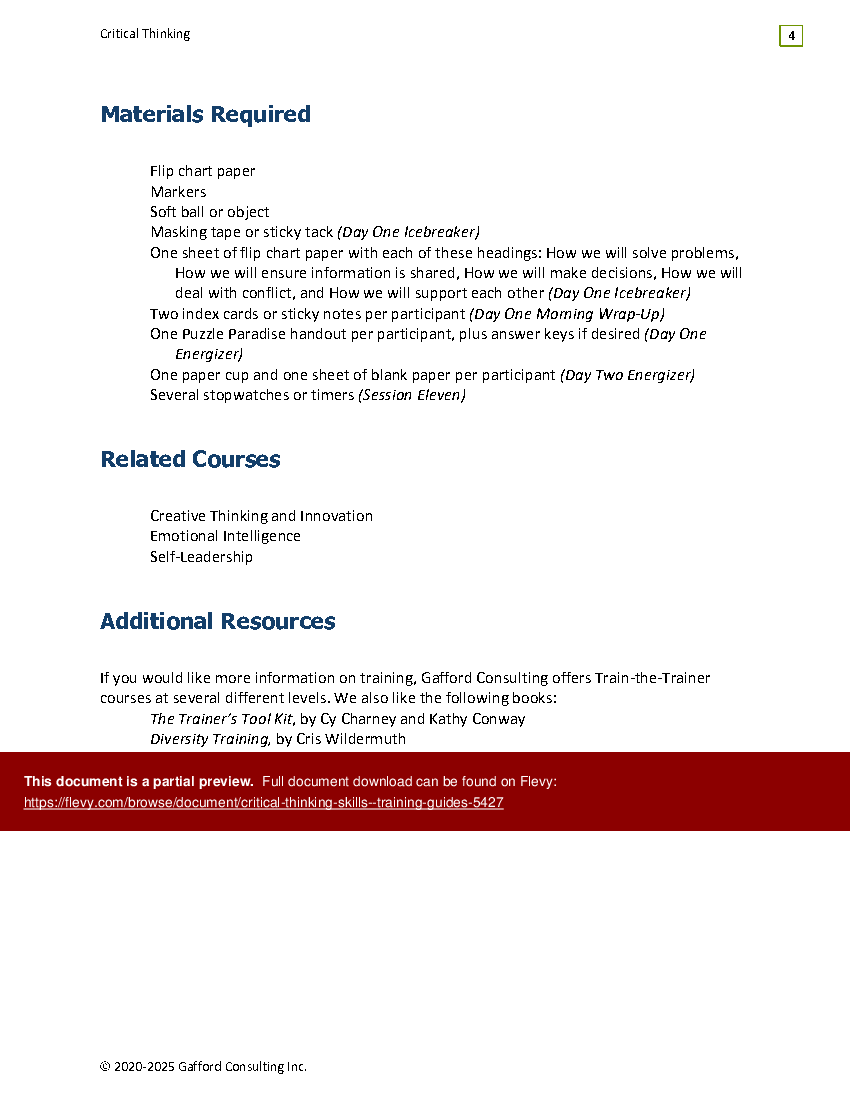
• Materials Required (page 7)
• Related Courses (page 8)
• Additional Resources (page 8)
• Agenda: Day One (page 5)
• Icebreaker: Creating Norms (page 6)
• Session One: Course Overview (page 7)
• Session Two: Understanding Critical Thinking (page 10)
• Session Three: Where Do Other Types of Thinking Fit In? (page 17)
• Session Four: Pitfalls to Reasoned Decision Making (page 19)
• Session Five: The Critical Thinking Process (page 27)
• Day One Wrap-Up (page 43)
• Agenda: Day Two (page 44)
• Session Six: A Critical Thinker’s Skill Set (page 46)
• Session Seven: Creating Explanations (page 53)
• Session Eight: Dealing with Assumptions (page 59)
• Session Nine: Common Sense (page 60)
• Session Ten: Critical and Creative Thought Systems (page 62)
• Session Eleven: Putting It Into Practice (page 67)
• Workshop Wrap-Up (page 74)
Primary Topics Covered
• Understanding Critical Thinking - This section defines critical thinking and contrasts it with non-critical thinking, emphasizing the importance of logical reasoning in decision-making.
• Critical Thinking Styles - Participants explore various styles of thinking, including left-brain and right-brain approaches, to enhance their analytical capabilities.
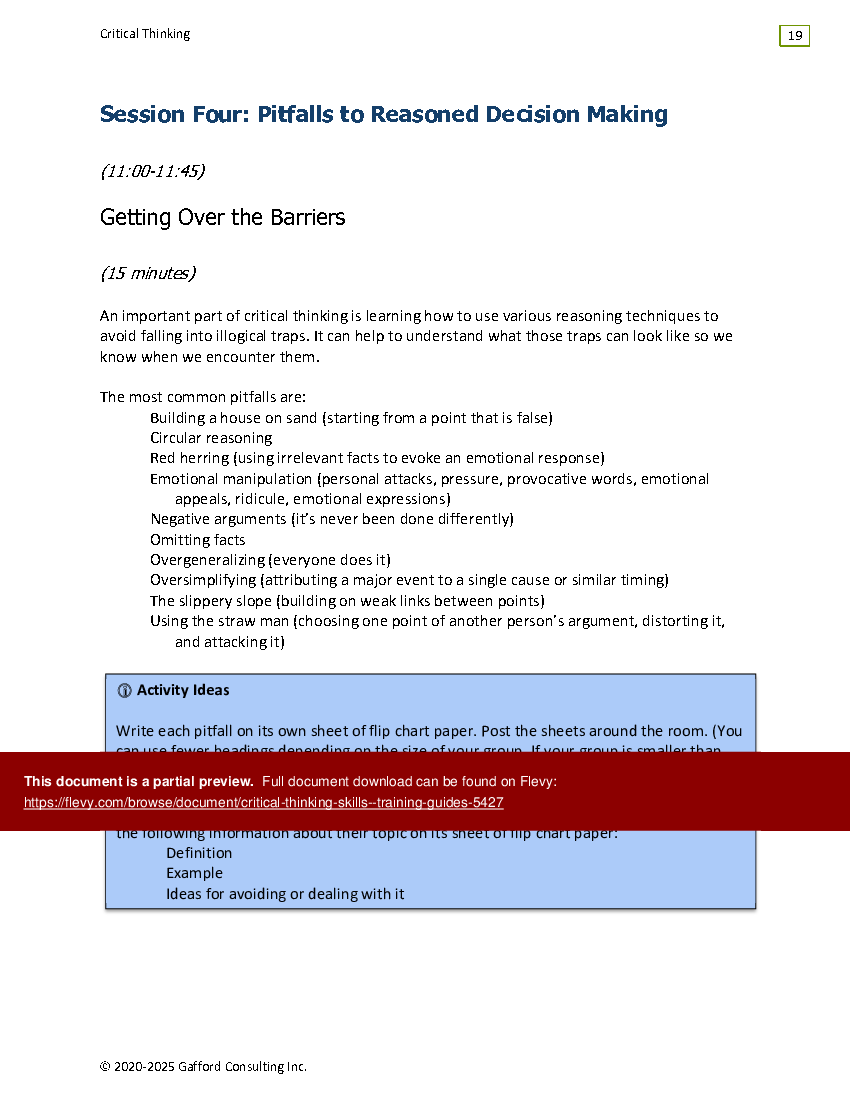
• Pitfalls to Reasoned Decision Making - This module identifies common logical fallacies and barriers to effective reasoning, equipping participants to recognize and avoid these pitfalls.
• The Critical Thinking Process - A structured approach to problem identification, argument evaluation, and decision-making is presented, guiding participants through practical applications.
• Active Listening and Questioning Techniques - Emphasizes the importance of listening and probing questions in fostering effective communication and understanding.
• Creative Thinking Techniques - Introduces methods for generating innovative ideas and solutions, enhancing participants' ability to think outside the box.
Deliverables, Templates, and Tools
• Critical thinking worksheets for structured analysis and evaluation.
• Presentation templates for articulating arguments effectively.
• Guides for conducting brainstorming sessions and creative thinking exercises.
• Evaluation frameworks for assessing arguments and evidence.
• Action plan templates to implement critical thinking skills in the workplace.
Slide Highlights
• Overview of critical thinking definitions and importance.
• Visual representation of left-brain vs. right-brain thinking styles.
• Examples of common pitfalls in reasoning with corresponding solutions.
• Flowchart detailing the critical thinking process phases.
• Engaging activities designed to foster group participation and discussion.
Potential Workshop Agenda
Icebreaker: Creating Norms (15 minutes)
• Establish group norms and expectations for participation.
• Facilitate introductions and set the tone for collaboration.
Session One: Course Overview (15 minutes)
• Present learning objectives and outline the workshop structure.
• Encourage participants to set personal goals for the training.
Session Two: Understanding Critical Thinking (90 minutes)
• Define critical thinking and its significance in professional settings.
• Discuss characteristics of critical thinkers and common thinking styles.
Session Three: Where Do Other Types of Thinking Fit In? (30 minutes)
• Explore left-brain and right-brain thinking characteristics.
• Discuss the importance of integrating different thinking styles.
Customization Guidance
• Tailor the training materials to reflect organizational terminology and specific challenges.
• Adjust session timings based on participant engagement and feedback.
• Incorporate real-world examples relevant to the participants' industries for enhanced relatability.
Secondary Topics Covered
• Emotional intelligence in decision-making.
• The role of assumptions in critical thinking.
• Techniques for effective group discussions and consensus building.
• Strategies for overcoming cognitive biases in reasoning.
Topic FAQ
Document FAQ
These are questions addressed within this presentation.
What is critical thinking?
Critical thinking is the mental process of actively and skillfully conceptualizing, applying, analyzing, synthesizing, and evaluating information to reach a conclusion.
How can I improve my critical thinking skills?
Engage in exercises that challenge your reasoning, seek feedback from peers, and practice active listening and questioning techniques.
What are common pitfalls in reasoning?
Common pitfalls include circular reasoning, emotional manipulation, and overgeneralization, which can lead to flawed conclusions.
How does this training apply to my role?
This training equips you with tools to enhance decision-making, improve team collaboration, and foster a culture of analytical thinking within your organization.
What materials are included in the training package?
The package includes a leader's guide, participant workbooks, PowerPoint slides, and various templates for practical application.
How long is the training program?
The training spans 2 days, with each day structured around interactive sessions and practical exercises.
Can this training be customized for my organization?
Yes, the training can be tailored to meet the specific needs and terminology of your organization.
What outcomes can I expect from this training?
Participants will gain practical skills in critical thinking, improved problem-solving abilities, and enhanced communication strategies.
Glossary
• Critical Thinking - The mental process of analyzing and evaluating information to make informed decisions.
• Argument - The framework used to convince someone of a particular conclusion with evidence.
• Conclusion - The position taken on an issue based on reasoning.
• Evidence - Facts or reasons that support a particular conclusion.
• Issue - The statement or situation under evaluation.
• Assumption - A belief accepted as true without proof.
• Cognitive Bias - A systematic pattern of deviation from norm or rationality in judgment.
• Active Listening - Fully concentrating, understanding, responding, and remembering what is being said.
• Brainstorming - A group creativity technique for generating a large number of ideas for the solution to a problem.
• Whole-Brain Thinking - An approach that integrates both left-brain (logical) and right-brain (creative) thinking styles.
• Logical Fallacy - An error in reasoning that renders an argument invalid.
• Evaluation - The systematic assessment of a program or policy to determine its effectiveness.
• Feedback - Information about reactions to a product, a person's performance of a task, etc., used as a basis for improvement.
• Persuasion - The act of convincing someone to believe or do something.
• Collaboration - Working together to achieve a common goal.
• Problem-Solving - The process of finding solutions to difficult or complex issues.
• Decision-Making - The process of making choices by identifying a decision, gathering information, and assessing alternative resolutions.
• Creativity - The ability to produce original and unusual ideas or to make something new or imaginative.
• Analytical Thinking - The ability to think logically and break down complex problems into smaller, manageable parts.
• Communication Skills - The ability to convey information effectively and efficiently.
• Presentation Skills - The ability to present information clearly and effectively to an audience.
Source: Best Practices in Problem Solving Word: Critical Thinking Skills - Training Guides Word (DOCX) Document, Gafford Consulting
|
Receive our FREE whitepaper on the Top 101 Consulting Frameworks
Download our 200+ page guide summarizing the Top 101 Management Consulting Frameworks. Each framework provides a structured approach to analyzing and solving a common business problem. |