
 Click main image to view in full screen.
Conveyor Commissioning & Risk Assessment Toolkit ISO 14224 – Excel XLSX
Excel (XLSX)


BENEFITS OF THIS DOWNLOADABLE EXCEL DOCUMENT
- Prevent Costly Early-Life Failures
- Full Visibility & Control During Commissioning
- Build a Strong Foundation for Long-Term Reliability
MANUFACTURING EXCEL DESCRIPTION
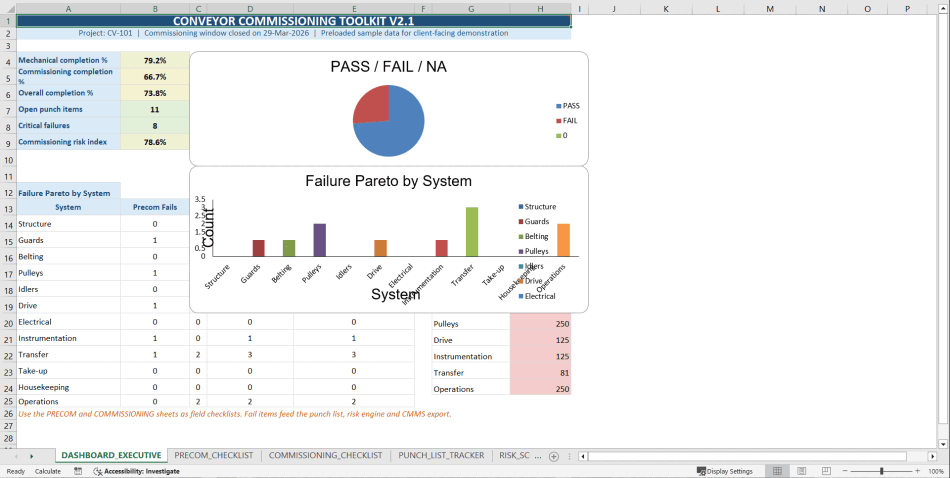
A conveyor commissioning checklist is a structured, step-by-step verification process used to ensure that a conveyor system is installed correctly, operates safely, and performs according to design specifications before being handed over for production. It plays a critical role in preventing early-life failures, reducing downtime, and establishing a reliable baseline for future maintenance.
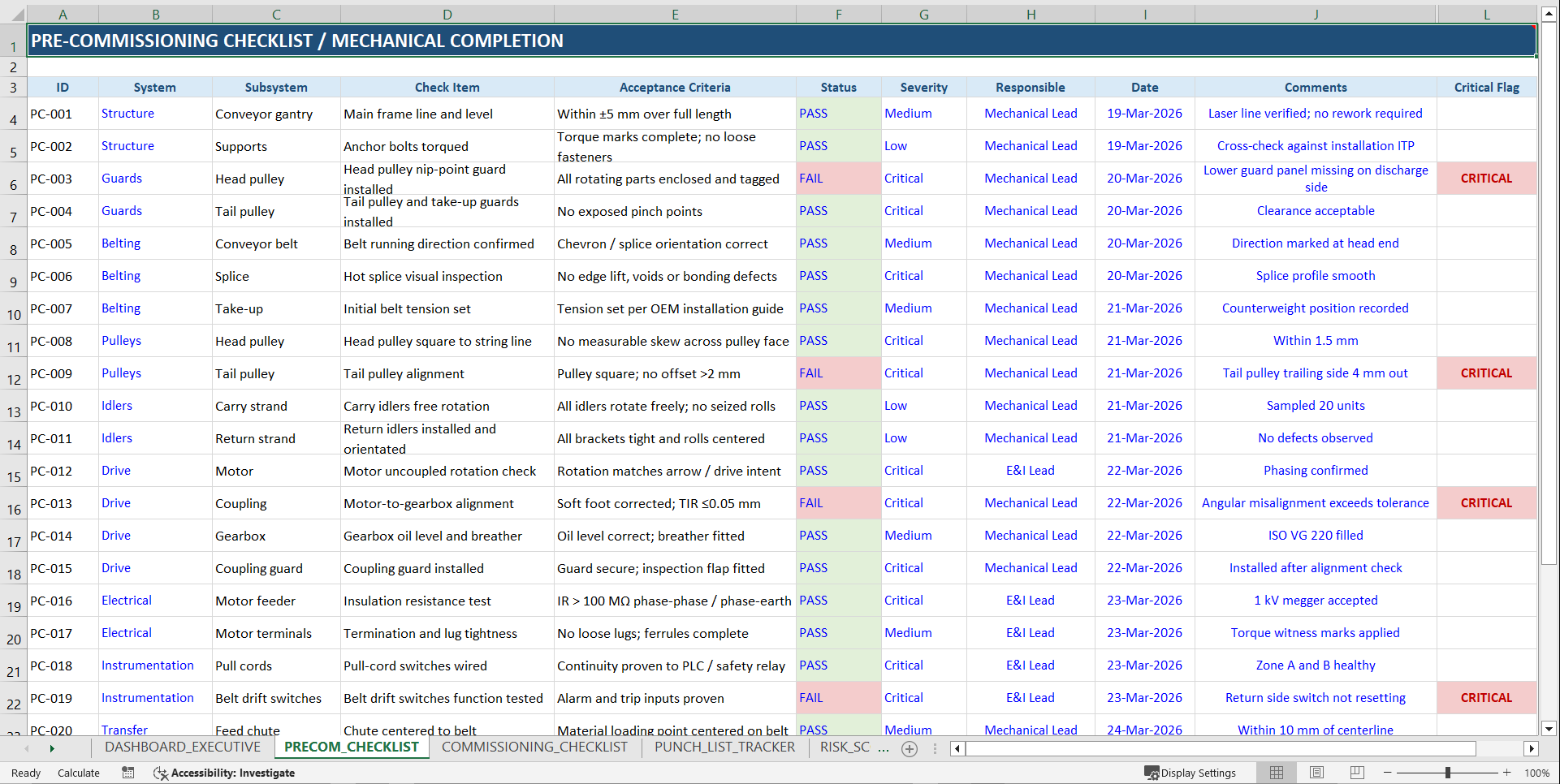
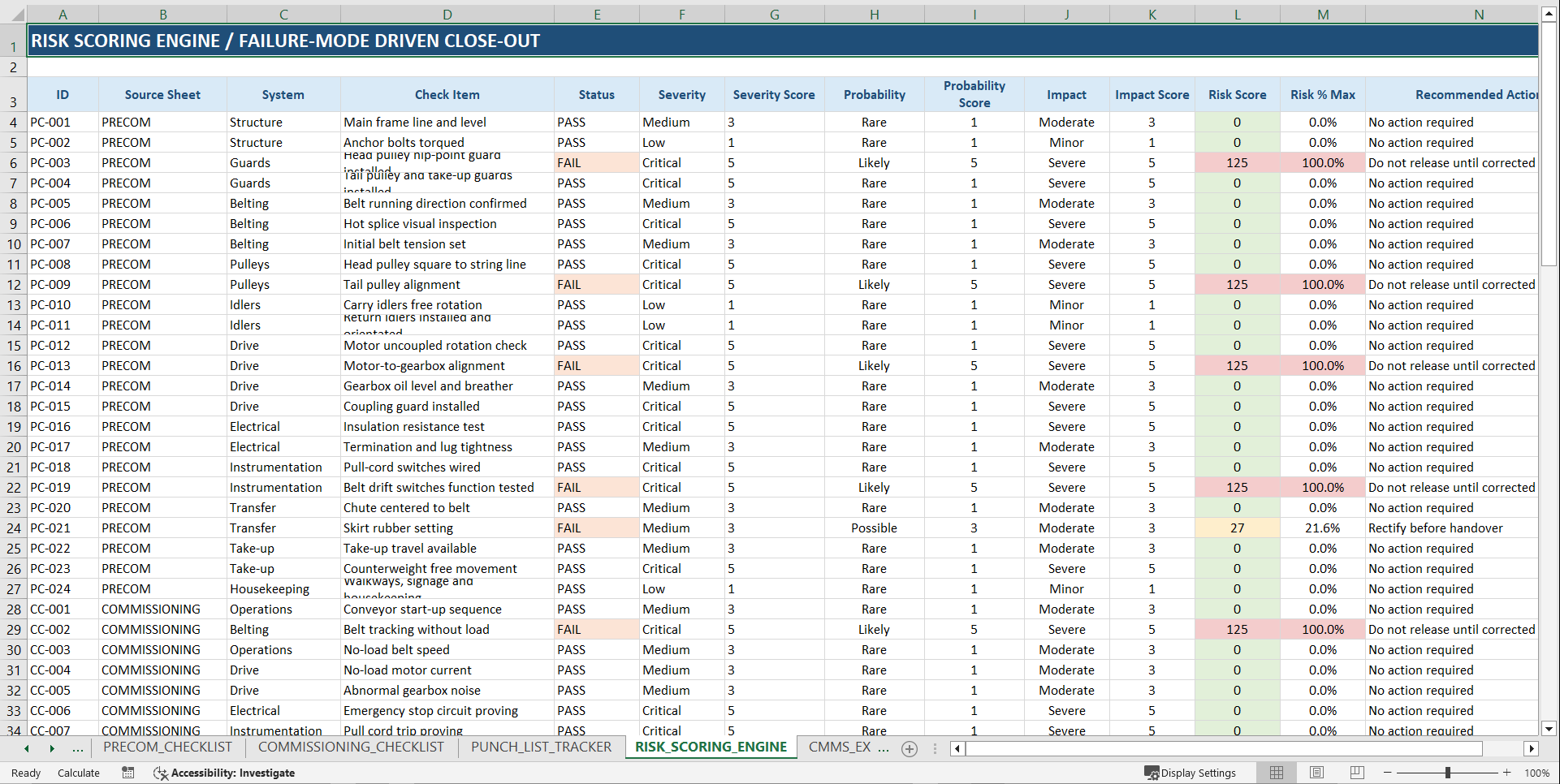
The process typically begins with pre-commissioning checks, also known as mechanical completion. At this stage, all physical components are inspected to confirm proper installation. This includes verifying structural alignment, pulley positioning, idler installation, belt tracking, and correct tensioning. Drive components such as motors, gearboxes, and couplings are checked for alignment, lubrication, and secure mounting. Safety systems, including guards, pull cords, drift switches, and emergency stops, are also validated to ensure compliance with safety standards.
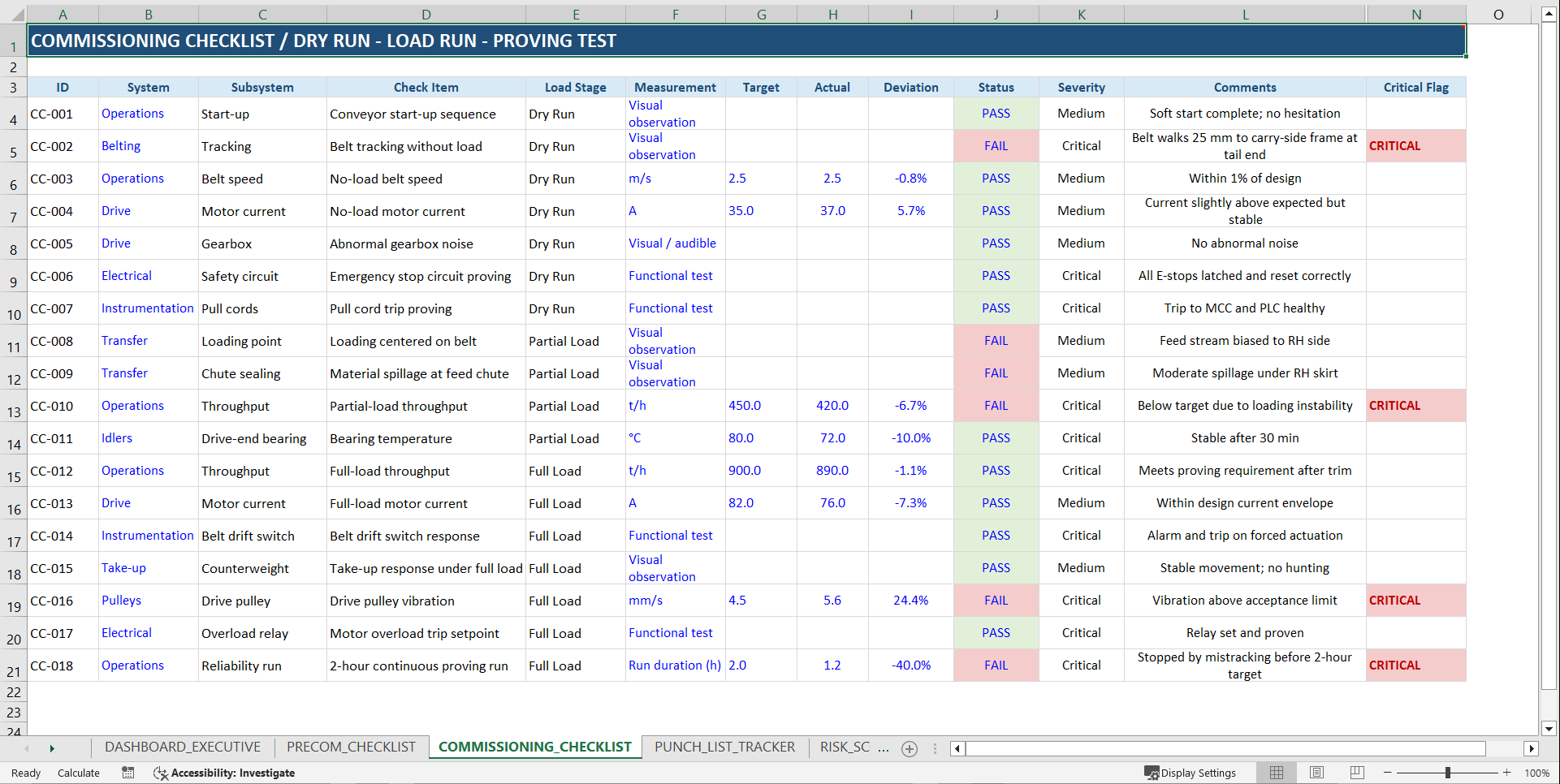
Once mechanical integrity is confirmed, the system proceeds to commissioning and operational testing. A dry run (no-load test) is conducted to observe belt tracking, vibration levels, noise, and motor current under controlled conditions. This is followed by load testing, where material is introduced to assess flow, throughput, spillage, and transfer point performance. Key performance indicators such as belt speed, power consumption, and system stability are measured against design expectations.
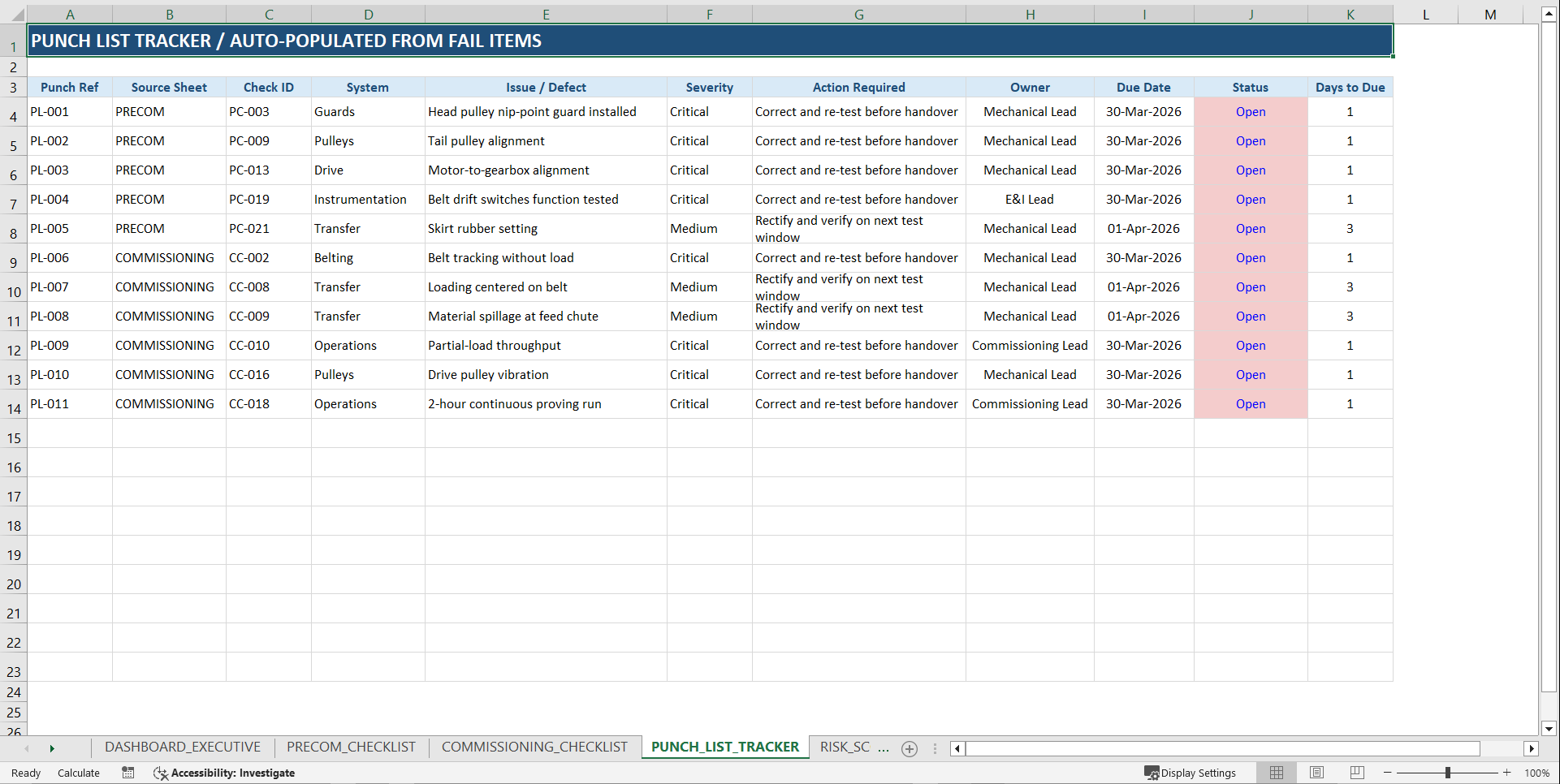
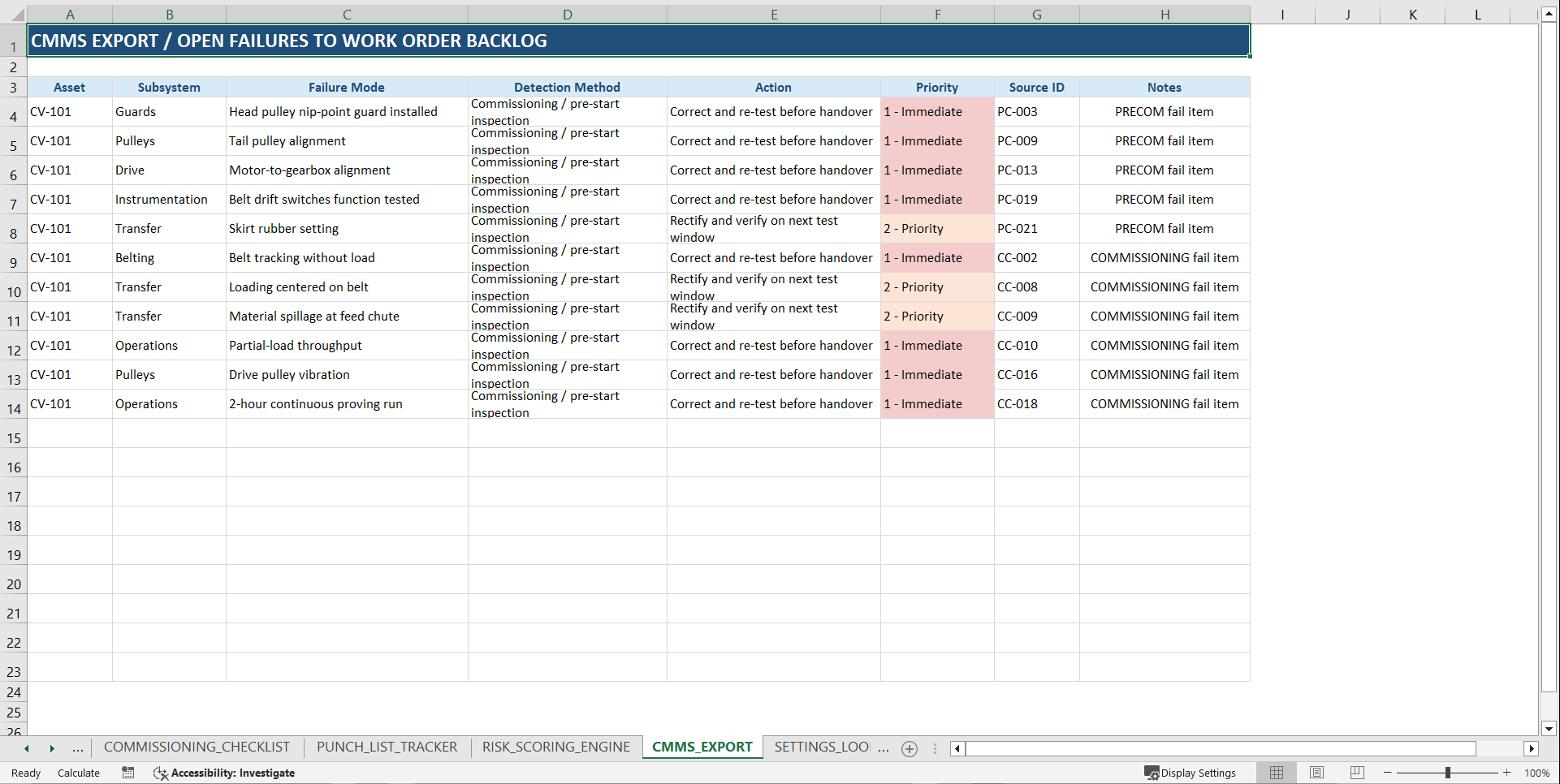
An effective checklist also includes a punch list tracking mechanism, capturing any failed or incomplete items that must be resolved before final sign-off. Advanced systems incorporate risk-based scoring, prioritising critical issues that could lead to failure if left unaddressed.
Ultimately, a well-executed conveyor commissioning checklist ensures a smooth transition from installation to operation, minimises commissioning-related defects, and supports long-term reliability by aligning with structured maintenance and CMMS systems.
Got a question about the product? Email us at support@flevy.com or ask the author directly by using the "Ask the Author a Question" form. If you cannot view the preview above this document description, go here to view the large preview instead.
Source: Best Practices in Manufacturing, ISO 14224 Excel: Conveyor Commissioning & Risk Assessment Toolkit ISO 14224 Excel (XLSX) Spreadsheet, Virtuoso Trading
ABOUT THE AUTHOR

I am a Reliability Engineer with over 20 years of experience in bulk material handling systems across industries including ports, mining, cement, sugar, and fertilizer plants in Africa. My expertise focuses on eliminating repeat equipment failures in conveyors, rotating equipment, and mechanical drive systems.
With a background in resident engineering, I specialize in practical, field-driven
... [read more]
Ask the Author a Question
You must be logged in to contact the author.