
ERP CHANGE MANAGEMENT PPT DESCRIPTION
Editor Summary
Change Management Strategy for SAP/GBO Program is a 61-slide PowerPoint change management strategy and reference template for SAP and Global Business Operations implementations, crafted with consulting-grade rigor aligned to McKinsey/Bain/BCG standards (not affiliated).
Read more
Includes 6 templates: Change Management Activity Plan, Stakeholder Analysis and Engagement Plan, Communication Strategy and Plan, Training Needs Assessment and Curriculum, Organizational Design Strategy and Plan, and Risk Management Approach. Target users include change leaders, HR teams, PMOs, and functional leaders across HR, Finance, Procurement, and IT. Sold as a digital download on Flevy.
Use this deck when an organization plans or executes a SAP/GBO rollout and needs to coordinate adoption, governance, stakeholder engagement, and training across regions (initial focus NA and EMEA).
Change Management leaders: build a Change Management Activity Plan and governance model to coordinate global and local activities.
HR teams: conduct a Training Needs Assessment and design role-based and process-based curricula for affected employee groups.
PMOs: define timelines, deliverables, and roles to align program governance and implementation sequencing.
Functional leaders (HR, Finance, Procurement, IT): prepare impacted roles and align organizational design and performance management.
The structured approach—combining governance, stakeholder engagement, training, risk management, and local change networks—reflects consulting-grade program design used at McKinsey, Bain, and BCG.
This document includes the Change Management Strategy for a GBO (Global Business Operations) and SAP program. It has been converted into a reference template.
GBO and SAP program include the following:
Functions: HR, F&A, Procurement, IS, TO&PS (MRP, SOP & distribution)
Countries: Initial implementation focuses on NA and EMEA
Business Units: Pharmaceuticals, Consumer Health, Corporate
Locations: North America, EMEA
This Change Management Strategy for SAP/GBO Program document is meticulously structured to guide organizations through the complexities of transitioning to a global business operations model integrated with SAP. The document provides a comprehensive deliverable outline, detailing the scope, objectives, principles, and core components of the change strategy. It emphasizes the importance of governance and clearly defines roles and responsibilities, ensuring that all stakeholders are aligned and committed to the program's success.
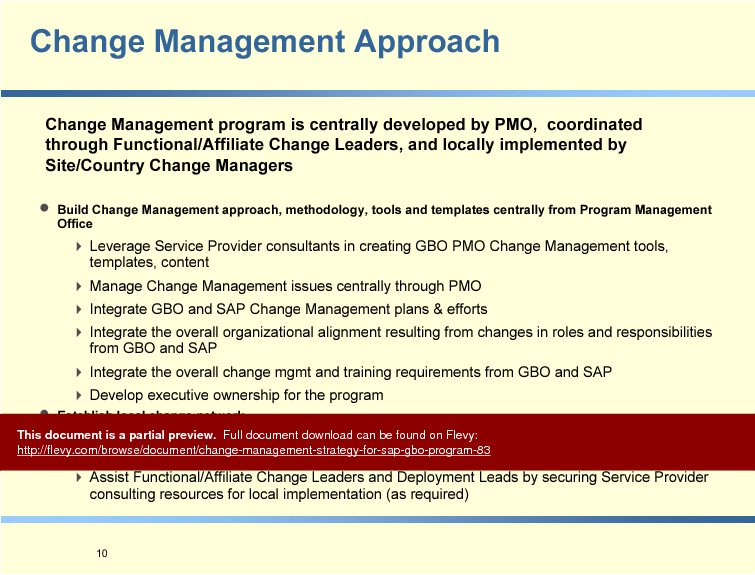
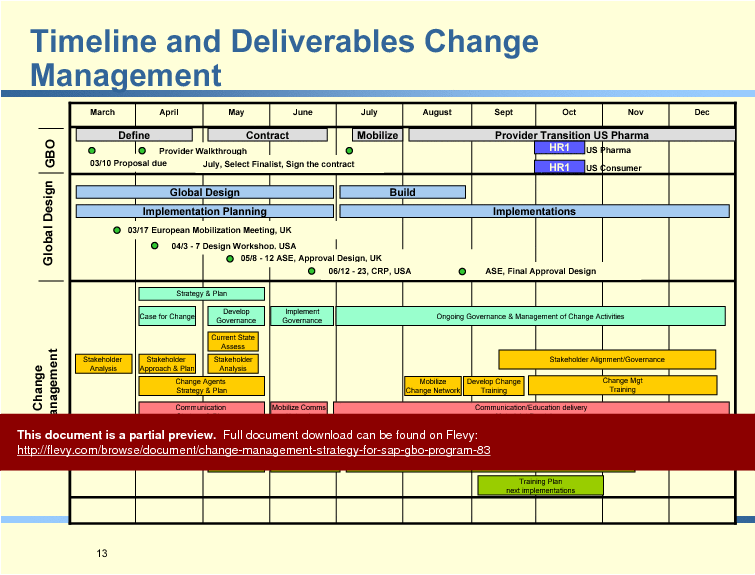
The document outlines a robust change management approach, centrally developed by the PMO and coordinated through functional and affiliate change leaders. It includes a detailed timeline and deliverables, ensuring that every phase of the implementation is meticulously planned and executed. The strategy focuses on facilitating user adoption, managing organizational alignment, and minimizing disruption during the implementation process. It also highlights the need for continuous stakeholder engagement and communication to build commitment and prepare for change.
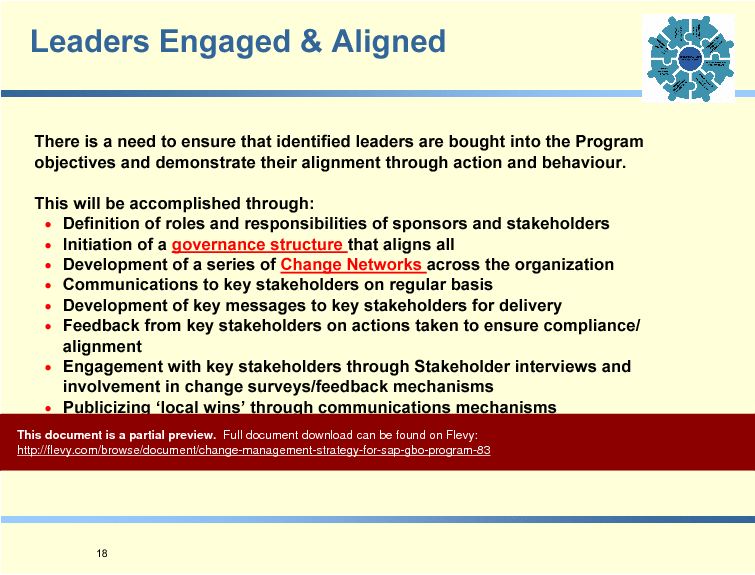
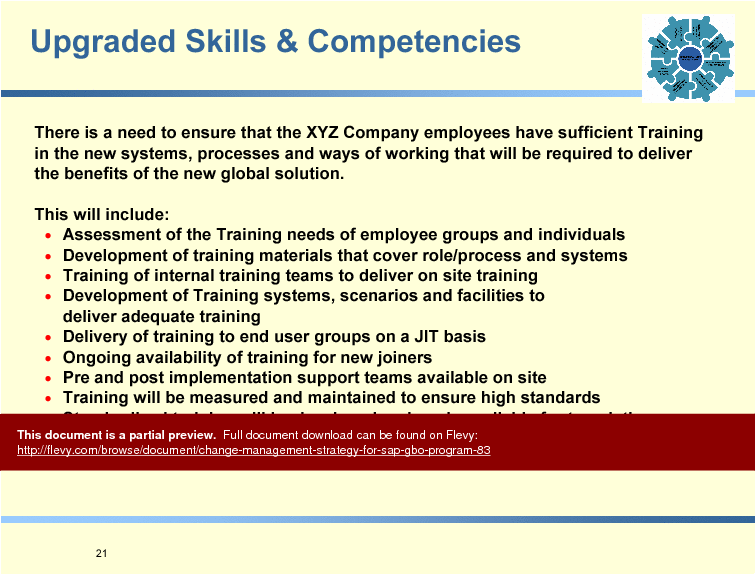
A key feature of this document is its emphasis on leadership engagement and alignment. It outlines the development of governance structures and change networks across the organization, ensuring that leaders are bought into the program objectives and demonstrate their alignment through action and behavior. The strategy also addresses the need for upgraded skills and competencies, providing a detailed plan for training and development to ensure that employees are equipped to deliver the benefits of the new global solution. This comprehensive approach ensures that the change management strategy is not only effective, but also sustainable in the long term.
Got a question about the product? Email us at support@flevy.com or ask the author directly by using the "Ask the Author a Question" form. If you cannot view the preview above this document description, go here to view the large preview instead.

MARCUS OVERVIEW
This synopsis was written by Marcus
[?] based on the analysis of the full 61-slide presentation.
Executive Summary
This Change Management Strategy for the SAP/GBO Program is designed to facilitate user adoption and transition to the global service delivery model and SAP systems. Crafted with the rigor expected from a McKinsey, Bain, or BCG-quality presentation (consulting-grade; not affiliated), this strategy outlines a structured approach to managing organizational change. Buyers will be equipped to proactively manage transitions, minimize disruptions, and build employee commitment, ensuring that the benefits of the SAP/GBO implementations are fully realized.
Who This Is For and When to Use
• Change Management leaders overseeing SAP/GBO implementations
• HR teams involved in organizational design and employee training
• Project Management Offices (PMOs) coordinating change initiatives
• Functional leaders in HR, Finance, Procurement, and IT
• Stakeholders responsible for communication and training strategies
Best-fit moments to use this deck:
• During the initial planning phases of the SAP/GBO implementation
• When developing stakeholder engagement and communication strategies
• In readiness assessments and training program development
Learning Objectives
• Define the objectives and principles of the Change Management Strategy
• Build a comprehensive Change Management Activity Plan
• Establish governance structures for design and implementation
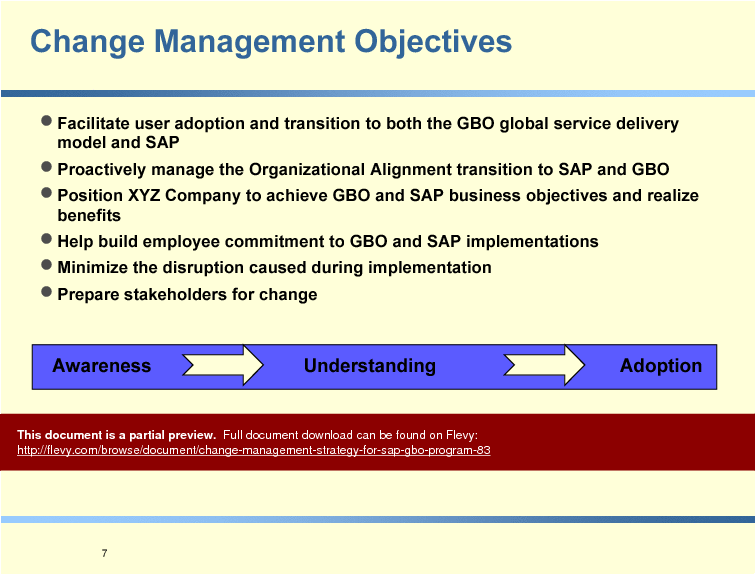
• Facilitate user adoption and transition to the GBO global service delivery model
• Prepare stakeholders for organizational change
• Minimize disruption during the implementation process
Table of Contents
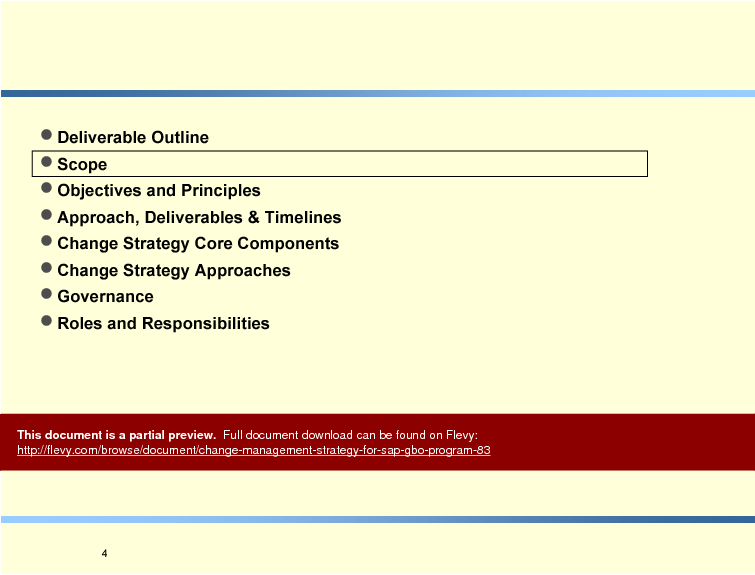
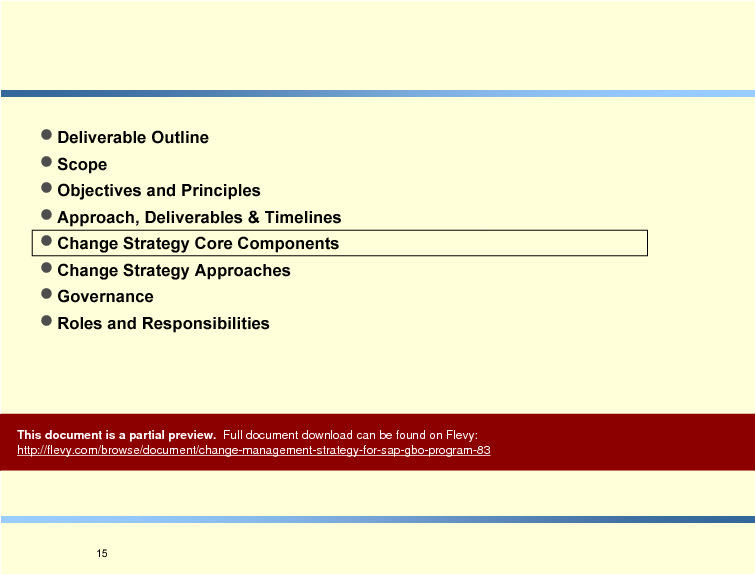
• Deliverable Outline (page 2)
• Scope (page 4)
• Objectives and Principles (page 6)
• Approach, Deliverables & Timelines (page 9)
• Change Strategy Core Components (page 15)
• Change Strategy Approaches (page 25)
• Governance (page 41)
• Roles and Responsibilities (page 46)
Primary Topics Covered
• Scope - This document encompasses the Change Management Strategy for the GBO and SAP program, focusing on functions such as HR, Finance, and Procurement across North America and EMEA.
• Objectives and Principles - The strategy aims to facilitate user adoption, minimize disruption, and prepare stakeholders for change, ensuring alignment with business objectives.
• Change Management Approach - A structured methodology that integrates GBO and SAP Change Management plans, leveraging local change networks for effective implementation.
• Governance - Clear roles and responsibilities for Change Management activities across global and local levels, ensuring accountability and alignment.
• Training Strategy - Development of training materials and programs to equip employees with the necessary skills for new systems and processes.
• Stakeholder Engagement - Strategies for identifying and mobilizing stakeholders throughout the implementation phases.
Deliverables, Templates, and Tools
• Change Management Activity Plan template
• Stakeholder Analysis and Engagement Plan template
• Communication Strategy and Plan template
• Training Needs Assessment and Curriculum template
• Organizational Design Strategy and Plan template
• Risk Management Approach template
Slide Highlights
• Overview of Change Management Objectives and Principles
• High-Level Critical Path for Change Strategy and Plan
• Governance structure detailing roles and responsibilities
• Timeline and deliverables for change management activities
• Stakeholder Engagement Approach and Communication Strategy
Potential Workshop Agenda
Change Management Kickoff Session (90 minutes)
• Introduce the Change Management Strategy and objectives
• Discuss roles and responsibilities for implementation
• Outline the governance structure and communication plan
Stakeholder Engagement Workshop (60 minutes)
• Identify key stakeholders and their needs
• Develop a stakeholder engagement strategy
• Discuss communication materials and timelines
Training Development Session (90 minutes)
• Assess training needs for different employee groups
• Develop a training curriculum and delivery plan
• Review training materials and feedback mechanisms
Customization Guidance
• Tailor the Change Management Activity Plan to reflect specific organizational needs and timelines
• Adjust communication materials to align with local languages and cultural contexts
• Incorporate specific metrics and KPIs relevant to the organization’s objectives
• Modify training programs based on employee roles and responsibilities
Secondary Topics Covered
• Organizational Impact Assessment
• Change Agents Network and Training
• Performance Management adjustments
• Risk Management in Change Initiatives
• Communication Strategies for Stakeholder Engagement
Topic FAQ
What are the core components I should include in a change management strategy for an SAP/GBO implementation?
A complete change management strategy should define scope and objectives, outline principles, integrate GBO and SAP plans, establish governance with clear roles and responsibilities, design training and stakeholder engagement approaches, and include risk management and local change networks. These components are detailed under Change Strategy Core Components and Governance in the deck on slide 15 and slide 41.
How should I structure stakeholder engagement for an SAP rollout to ensure adoption across countries?
Structure engagement by identifying stakeholder groups, assessing needs, creating targeted messaging and communication plans, and maintaining local stakeholder groups supported by change networks to implement activities at site level. The approach is operationalized via a Stakeholder Analysis and Engagement Plan template and a Stakeholder Engagement Approach slide.
What does a Training Needs Assessment for an SAP/GBO program typically cover and how is it delivered?
A Training Needs Assessment identifies required skills by role and process, defines role-based and process-based curricula, selects delivery methods (classroom and e-training), and creates feedback mechanisms for refinement. Flevy's Change Management Strategy for SAP/GBO Program includes a Training Needs Assessment and Curriculum template to document these elements.
When comparing change management templates, what practical features should I look for before purchasing?
Look for templates that cover activity planning, stakeholder analysis, communication plans, training curriculum, organizational design, and risk management; clarity on governance and roles; regional applicability (e.g., NA and EMEA); and guidance for customization to local languages and contexts, such as the Change Management Activity Plan and Risk Management Approach templates.
Are pre-built PowerPoint change management templates useful for SAP program budgets and timelines?
Pre-built templates centralize deliverables and can reduce time spent creating planning artifacts by providing ready formats for activity plans, stakeholder engagement, training, and governance. The product converted into a reference template includes 6 named templates and a 61-slide structure to map timelines and deliverables.
I need to align global and local change activities across North America and EMEA — what framework elements support that alignment?
Align global and local activities using a governance structure that defines global and country/site roles, deploy local change networks to implement tasks in-country, coordinate through PMO-led timelines and deliverables, and use stakeholder engagement and communication plans to maintain consistency; governance and local change networks are covered in the deck.
What typical workshop agendas and durations help a PMO prepare stakeholders for an SAP/GBO change?
Typical sessions include a 90-minute Change Management Kickoff to introduce objectives and governance, a 60-minute Stakeholder Engagement Workshop to map stakeholders and communications, and a 90-minute Training Development Session to assess needs and draft curricula; these agendas are provided in the Potential Workshop Agenda.
What should HR leaders plan for in an organizational design strategy during a SAP/GBO implementation?
HR should plan organizational impact assessments, define updated roles and responsibilities, adjust performance management, design training and upskilling, and create an Organizational Design Strategy and Plan to align structure with the new solution; an Organizational Design Strategy and Plan template is included in the materials.
Document FAQ
These are questions addressed within this presentation.
What are the primary objectives of the Change Management Strategy?
The strategy aims to facilitate user adoption, manage organizational alignment, minimize disruption, and prepare stakeholders for the transition to the SAP/GBO systems.
How does the governance structure support the Change Management process?
The governance structure clarifies roles and responsibilities, ensuring accountability and coordination of Change Management activities across global and local levels.
What types of training will be provided to employees?
Training will include role-based and process-based training, utilizing various methods such as classroom sessions and e-training to ensure comprehensive coverage.
How will stakeholder engagement be managed?
Stakeholder engagement will involve creating and maintaining stakeholder groups, assessing their needs, and developing targeted communication plans to ensure awareness and acceptance.
What deliverables can be expected from this Change Management Strategy?
Deliverables include a Change Management Activity Plan, Stakeholder Engagement Plan, Communication Strategy, and Training Needs Assessment.
What is the role of local change networks?
Local change networks are responsible for implementing Change Management tasks at the country/site level, ensuring that local needs and contexts are addressed effectively.
How will risks be managed during the Change Management process?
A Risk Management Approach will be developed to identify, assess, and mitigate potential risks associated with the implementation of the SAP/GBO systems.
What are the expected outcomes of the Change Management Strategy?
Expected outcomes include increased user adoption, minimized disruption during implementation, and successful alignment of organizational processes with the new systems.
Glossary
•
Change Management - The process of managing organizational change to achieve desired outcomes.
•
Stakeholder - Individuals or groups affected by or involved in the change process.
•
Governance - The framework of roles, responsibilities, and processes that guide decision-making and accountability.
•
Training Needs Assessment - A systematic process to identify the training requirements of employees.
•
Organizational Design - The process of aligning an organization’s structure and roles with its strategic objectives.
•
Risk Management - The identification, assessment, and prioritization of risks followed by coordinated efforts to minimize, monitor, and control the probability of unfortunate events.
•
Communication Strategy - A plan for delivering messages to stakeholders to ensure awareness and understanding of the change process.
•
Change Agents - Individuals who facilitate and support change initiatives within an organization.
•
Performance Management - The process of ensuring that organizational goals are consistently met in an effective and efficient manner.
•
SAP/GBO - SAP refers to the enterprise resource planning software, while GBO refers to the Global Business Operations model being implemented.
•
Training Curriculum - A structured plan outlining the training topics, methods, and materials to be used.
•
Stakeholder Engagement Plan - A strategy for involving stakeholders in the change process to ensure their needs and concerns are addressed.
Source: Best Practices in ERP Change Management, SAP PowerPoint Slides: Change Management Strategy for SAP/GBO Program PowerPoint (PPT) Presentation Slide Deck, kgoldin









