
Editor Summary
Cash Flow and Cost Reduction Guide is a 33-slide PowerPoint (PPTX) with a supplemental XLSX developed by Corporate Finance 101 that provides tools for assessing and improving financial resilience.
Read moreIncludes a current state assessment tool, cash flow forecasting template (simple 12-month forecast), crisis cash flow management tool, treasury planning guidance, and cost-optimization checklists. Target users include CFOs, finance teams, corporate executives, and consultants. Sold as a digital download on Flevy with immediate digital download.
Use this guide when an organization faces acute liquidity pressure, needs to build longer-term financial strategies for volatility, or is undertaking organizational changes that affect cash and working capital.
CFOs and treasurers developing a treasury plan and liquidity actions using the cash flow forecasting template and treasury guidance.
Finance managers building and monitoring a 12-month cash flow forecast and KPIs to detect stress.
Consultants conducting a current state assessment to identify cash drains and recommend cost-optimization steps.
Operational leaders redesigning receivables, inventory, and payables to shorten the cash conversion cycle.
The emphasis on immediate liquidity preservation, forecasting, and current-state assessment mirrors the survival-first liquidity response described by McKinsey.
According to McKinsey, when the COVID-19 crisis began to affect companies worldwide, the preliminary response of CEOs and CFOs was all about survival: freeing up cash and resources to keep the lights on and the doors open. The liquidity crisis triggered by the sharp disruption in economic activities prompted organizations to rush toward cash and liquidity to keep operations going.
In a cash flow crisis, every cent counts. Organizations worldwide are currently faced with serious financial challenges. Cash flow management during a crisis is one of the key factors to an organizations' sustainability beyond a crisis and will have to become an inseparable part of corporate strategic planning.
This guide aims to enable organizations to stay prepared and manage risks as a result of the impact.
The Guide comprises of the following sections:
1. Resilience and its need in the current environment
2. Financial resilience and what it means
3. Implementation steps to consider to tackle a cash flow crisis
Appendices:
A: Organization current state assessment tool
B: Future proof your finances – Use cash flow planning for good strategic decisions (included is a simple 12-month cash flow forecast)
This guide recommends the steps that organizations can take to optimize cash flow management during a crisis and integrate the process for managing financial resilience into the organization's overall strategy.
The guide provides an operational review current state assessment in order to fully gauge where cash is being utilized and a monthly cash flow template to ensure effective cash flow management during a crisis.
This guide also includes a comprehensive organization design current state assessment tool, providing a structured approach to analyze and report key findings. It outlines critical steps for defining and collecting information, analyzing data, and reporting key findings to inform strategic decisions.
Got a question about the product? Email us at support@flevy.com or ask the author directly by using the "Ask the Author a Question" form. If you cannot view the preview above this document description, go here to view the large preview instead.
MARCUS OVERVIEW
This synopsis was written by Marcus [?] based on the analysis of the full 33-slide presentation.
Executive Summary
The Financial Resilience Guide is a consulting-grade resource designed to equip organizations with strategies to enhance financial resilience in today’s volatile environment. This guide, crafted with insights from industry veterans, provides a comprehensive framework for assessing current financial states, implementing effective cash flow management, and preparing for unforeseen disruptions. Users will gain the ability to develop actionable treasury plans, optimize cash flow, and make informed strategic decisions that safeguard their financial health.
Who This Is For and When to Use
• Corporate executives responsible for financial strategy and risk management
• Finance teams tasked with cash flow forecasting and management
• Organizational leaders navigating crisis scenarios and operational disruptions
• Consultants assisting clients in enhancing financial resilience
Best-fit moments to use this guide:
• During financial crises requiring immediate cash flow assessments
• When developing long-term financial strategies to withstand economic volatility
• In preparation for organizational changes impacting financial stability
Learning Objectives
• Define financial resilience and its importance in today’s business landscape
• Identify key indicators of financial health and cash flow management
• Develop a comprehensive treasury plan to manage cash flow effectively
• Assess organizational readiness for financial shocks through current state evaluations
• Implement strategies for optimizing costs and managing resources during crises
• Create actionable plans for maintaining operational continuity
Table of Contents
• Background (page 3)
• Resilience Framework (page 6)
• Implementation Steps to Address a Cash Flow Crisis (page 7)
• Appendix A: Organization Current State Assessment Tool (page 12)
• Appendix B: Crisis Cash Flow Management Tool (page 32)
Primary Topics Covered
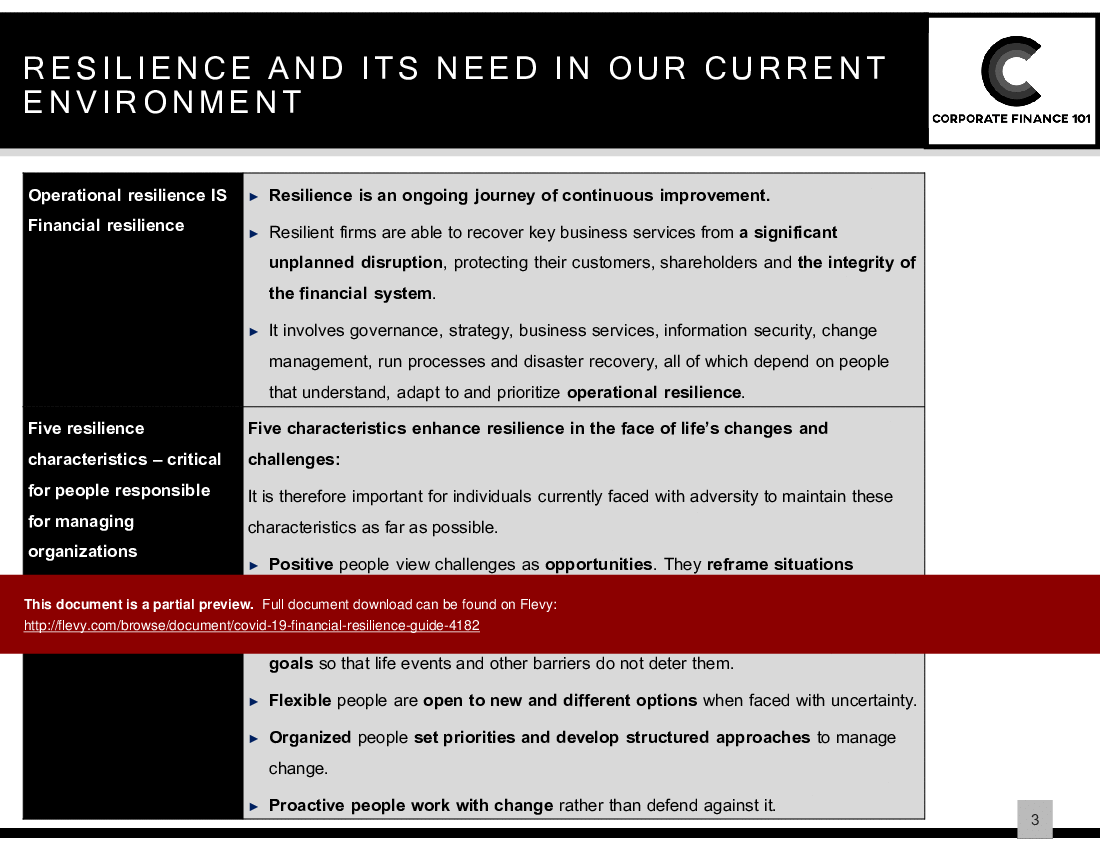
• Resilience and Its Need - Understanding the critical importance of resilience in the current economic environment, emphasizing the need for organizations to adapt and thrive amidst disruptions.
• Financial Resilience Definition - A detailed explanation of financial resilience, focusing on an organization’s ability to manage day-to-day finances and absorb financial shocks.
• Crisis Cash Flow Management - Strategies for managing cash flow effectively during crises, including forecasting and monitoring key performance indicators.
• Current State Assessment - A framework for evaluating an organization’s financial health and operational readiness, essential for informed decision-making.
• Implementation Steps - Practical steps organizations can take to address cash flow crises, including managing supply chain risks and optimizing costs.
• Tools for Financial Management - Resources and templates to assist in cash flow planning and organizational assessments.
Deliverables, Templates, and Tools
• Current state assessment tool for evaluating organizational financial health
• Cash flow forecasting template to project sources and uses of cash
• Guidelines for implementing cost optimization strategies
• Framework for assessing supply chain risks and financing options
• Best practices for managing receivables and inventory during crises
• Strategic planning templates for treasury management
Slide Highlights
• Overview of resilience characteristics critical for organizational leaders
• Framework for assessing current financial states and identifying improvement areas
• Step-by-step guide for implementing cash flow management strategies
• Visual representation of the cash conversion cycle and its importance
• Key indicators for monitoring financial health during crises
Potential Workshop Agenda
Financial Resilience Overview (60 minutes)
• Discuss the importance of financial resilience in the current environment
• Review key characteristics of resilient organizations
• Explore case studies of successful financial management during crises
Cash Flow Management Strategies (90 minutes)
• Identify and assess cash flow requirements
• Develop a cash flow forecasting model
• Discuss best practices for managing receivables and payables
Current State Assessment Workshop (120 minutes)
• Conduct a current state assessment using provided tools
• Analyze findings and identify areas for improvement
• Develop action plans based on assessment results
Customization Guidance
• Tailor the current state assessment tool to reflect your organization’s specific financial metrics and operational context
• Adjust cash flow forecasting templates to include organization-specific revenue streams and expense categories
• Integrate organizational terminology and governance structures into the resilience framework for better alignment
Secondary Topics Covered
• Importance of proactive financial management in crisis scenarios
• Strategies for optimizing variable costs and managing fixed costs
• Techniques for enhancing communication and collaboration with suppliers
• Best practices for leveraging technology in cash flow management
• Considerations for long-term financial planning and sustainability
Topic FAQ
What are the core steps to manage a cash flow crisis?
Core steps focus on assessing the current state, forecasting cash flows, monitoring key performance indicators, optimizing costs, and addressing supply chain or working-capital risks. The guide lists practical implementation steps and crisis-specific actions under "Implementation Steps to Address a Cash Flow Crisis" (page 7).
How should I assess my organization’s current financial health?
Use a structured current state assessment to collect financial and operational metrics, map cash uses, and report findings. The Cash Flow and Cost Reduction Guide includes a Current State Assessment Tool that outlines data collection, analysis, and reporting in Appendix A on page 12.
What is the cash conversion cycle and why is it important during a crisis?
The cash conversion cycle measures how long it takes to convert inventory and receivables into cash from sales; shorter cycles free liquidity and reduce vulnerability. The guide highlights visual representations and analysis of the cash conversion cycle as a key resilience indicator and operational lever.
What should I look for when buying a cash-flow resilience toolkit for my company?
Look for practical templates (forecasting, assessment), crisis-specific guidance, customization instructions, and deliverables that support workshops or implementation. The Cash Flow and Cost Reduction Guide provides slide content, a supplemental XLSX with forecasting templates, and customization guidance in a 33-slide PPTX format.
How much time and team capacity is typically needed to use these tools in workshops?
The guide provides a sample workshop agenda with discrete sessions: a 60-minute resilience overview, a 90-minute cash flow management session, and a 120-minute current state assessment workshop, allowing staged engagement across leadership and finance teams.
I need to restructure my department after a merger—how can cash flow tools help prioritize actions?
Use a current state assessment to map where cash is consumed, run a 12-month cash flow forecast to test scenarios, and identify receivables, inventory, or supplier actions that improve liquidity. The guide’s templates support diagnosis and prioritization with a 12-month cash flow forecast.
Can the templates be adapted to our company’s specific metrics and governance?
Yes; the Cash Flow and Cost Reduction Guide includes customization guidance to tailor the current state assessment and cash flow forecasting templates to organization-specific revenue streams, expense categories, and governance structures.
What is the value of buying cash flow templates versus building them internally?
Purchased templates provide a pre-structured approach to assess cash use, run scenario forecasts, and run workshops immediately, reducing setup time if internal capacity is limited. The guide includes ready templates and a simple 12-month cash flow forecast to expedite planning.
Document FAQ
These are questions addressed within this presentation.
What is financial resilience?
Financial resilience refers to an organization’s ability to manage its finances effectively, absorb financial shocks, and remain on track to meet its financial goals.
How can this guide help during a financial crisis?
This guide provides actionable strategies for assessing current financial states, implementing effective cash flow management, and preparing for unforeseen disruptions.
What tools are included in the guide?
The guide includes a current state assessment tool, cash flow forecasting templates, and guidelines for optimizing costs and managing resources.
How should I assess my organization’s current financial state?
Utilize the current state assessment tool provided in the guide to evaluate financial health and operational readiness.
What steps should I take to manage cash flow effectively?
Focus on cash flow forecasting, monitor key performance indicators, and implement strategies for managing receivables and payables.
Can this guide be customized for my organization?
Yes, the guide includes customization guidance to tailor tools and frameworks to your organization’s specific needs.
What are the key indicators of financial health?
Key indicators include cash flow forecasts, working capital management, and the ability to absorb financial shocks.
How can I optimize costs during a crisis?
Identify non-essential expenses, streamline operations, and focus on variable cost management to enhance financial resilience.
Glossary
• Financial Resilience - The capacity of an organization to manage its finances and absorb financial shocks.
• Cash Flow Management - The process of monitoring, analyzing, and optimizing net cash flows.
• Current State Assessment - An evaluation of an organization’s financial health and operational readiness.
• Treasury Plan - A strategic plan for managing an organization’s cash flow and financial resources.
• Working Capital - The difference between current assets and current liabilities, indicating short-term financial health.
• Cost Optimization - Strategies aimed at reducing expenses while maintaining operational efficiency.
• Supply Chain Risk Management - The process of identifying and mitigating risks within the supply chain.
• Receivables Management - The process of managing outstanding customer invoices to ensure timely payments.
• Variable Costs - Costs that vary with production output, such as materials and labor.
• Fixed Costs - Costs that remain constant regardless of production output, such as rent and salaries.
• Crisis Management - Strategies and processes for responding to unexpected disruptions.
• Performance Indicators - Metrics used to assess the financial health and operational efficiency of an organization.
• Strategic Planning - The process of defining an organization’s direction and making decisions on allocating resources.
• Operational Resilience - The ability of an organization to continue delivering services despite disruptions.
• Cash Conversion Cycle - The time taken to convert investments in inventory and other resources into cash flows from sales.
• Financial Health - A term used to describe the overall financial condition of an organization.
• Governance Structure - The framework of rules, practices, and processes by which an organization is directed and controlled.
• Equity Financing - Raising capital through the sale of shares in the business.
• Debt Financing - Borrowing funds to be paid back with interest.
• Crisis Cash Flow Management - Strategies for managing cash flow during periods of financial distress.
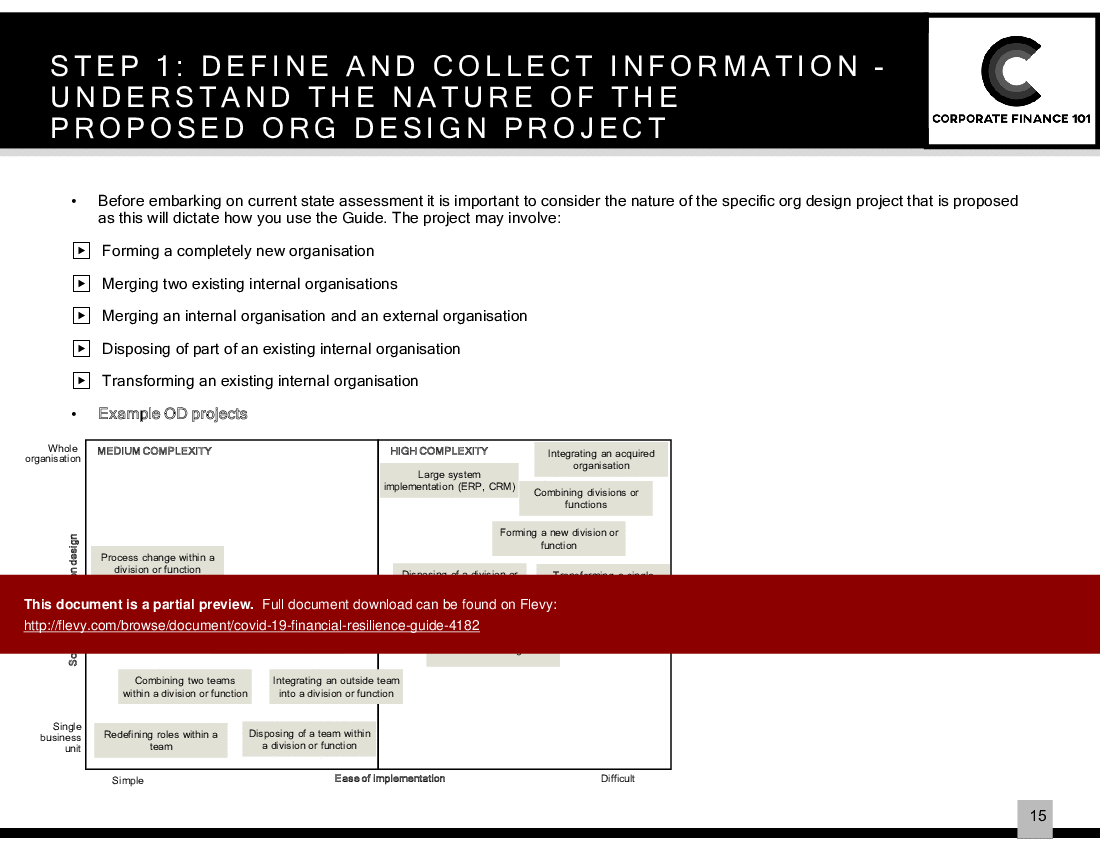
This PPT slide outlines a structured approach for utilizing the Org Design Current State Assessment Guide across 5 types of organizational design projects. The first type involves forming a new organization, focusing on data collection from similar entities to inform design and evaluate leading practices. The second type addresses merging 2 internal organizations, requiring data analysis for smooth integration into a leading practice organization. The third type pertains to merging an internal organization with an external one, emphasizing effective integration through data analysis. The fourth type discusses the disposal of part of an organization, necessitating careful data assessment for post-disposal leadership. Lastly, transforming an existing organization involves data collection and analysis to evolve into a leading practice entity. This framework ensures each phase of organizational design is actionable and well-defined.
The initial step in an organizational design project is defining the project scope prior to a current state assessment. Project types range from forming a new organization to transforming an existing one. These projects are categorized by complexity into low, medium, and high, with examples such as combining teams within a division for low complexity and integrating an acquired organization for high complexity. A matrix visualizes the relationship between organizational scale and design complexity, serving as a tool for executives to assess their situation. Understanding where their project fits within this framework enables leaders to allocate resources effectively and tailor strategies for successful organizational transformation.
This PPT slide outlines a structured approach for reporting key findings from a current state assessment, classifying organizational elements into categories of reinvention, improvement, or sustenance. The table includes elements such as structure, roles, capabilities, resources, processes, governance, infrastructure, performance, culture, and talent, with comments and recommendations for each. For example, the "Structure: headquarters" entry highlights a geographical mismatch between operations in Asia and headquarters in Europe, indicating a need for alignment. The "Roles: role-based activities" section reveals inefficiencies due to non-value-adding tasks, suggesting process optimization. The "Capability: health & safety culture" entry points to a lack of training, while the "Resources: headcount" section indicates workforce distribution imbalances. Governance and decision-making processes require streamlining to enhance efficiency, with recommendations focused on refining performance measurement and leadership training to align with customer service goals.
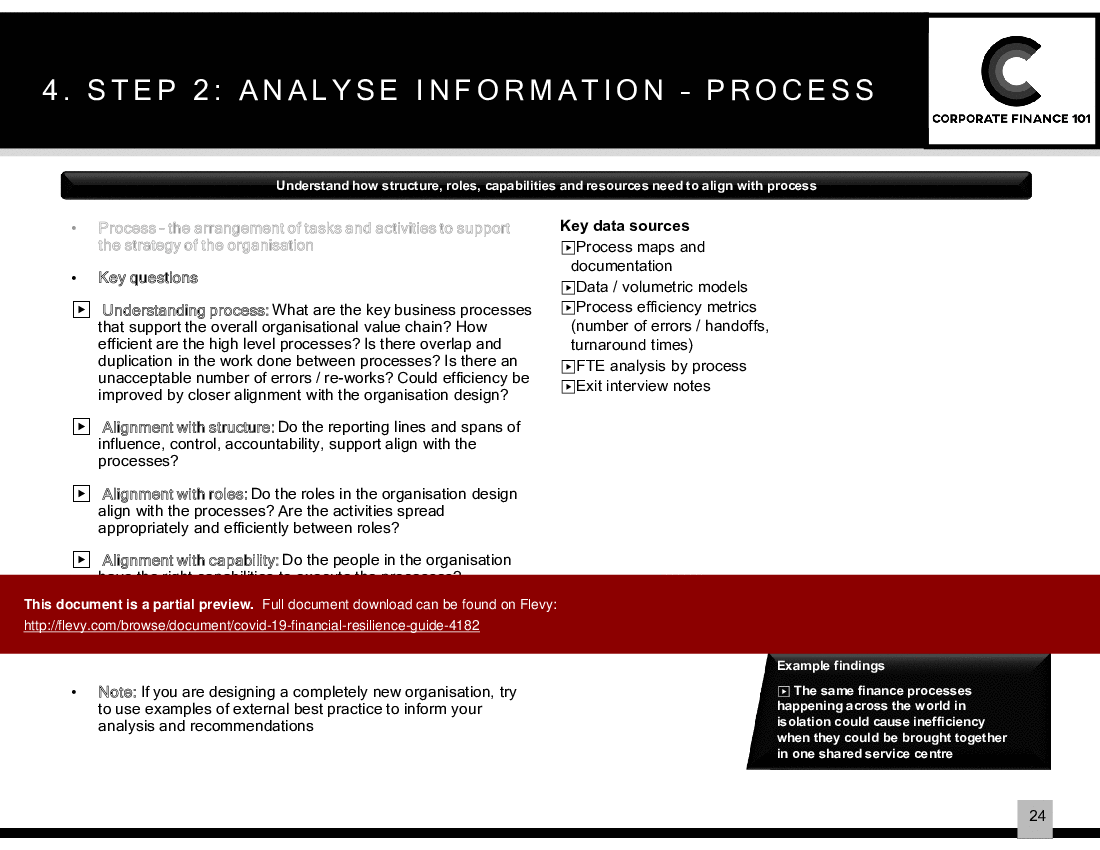
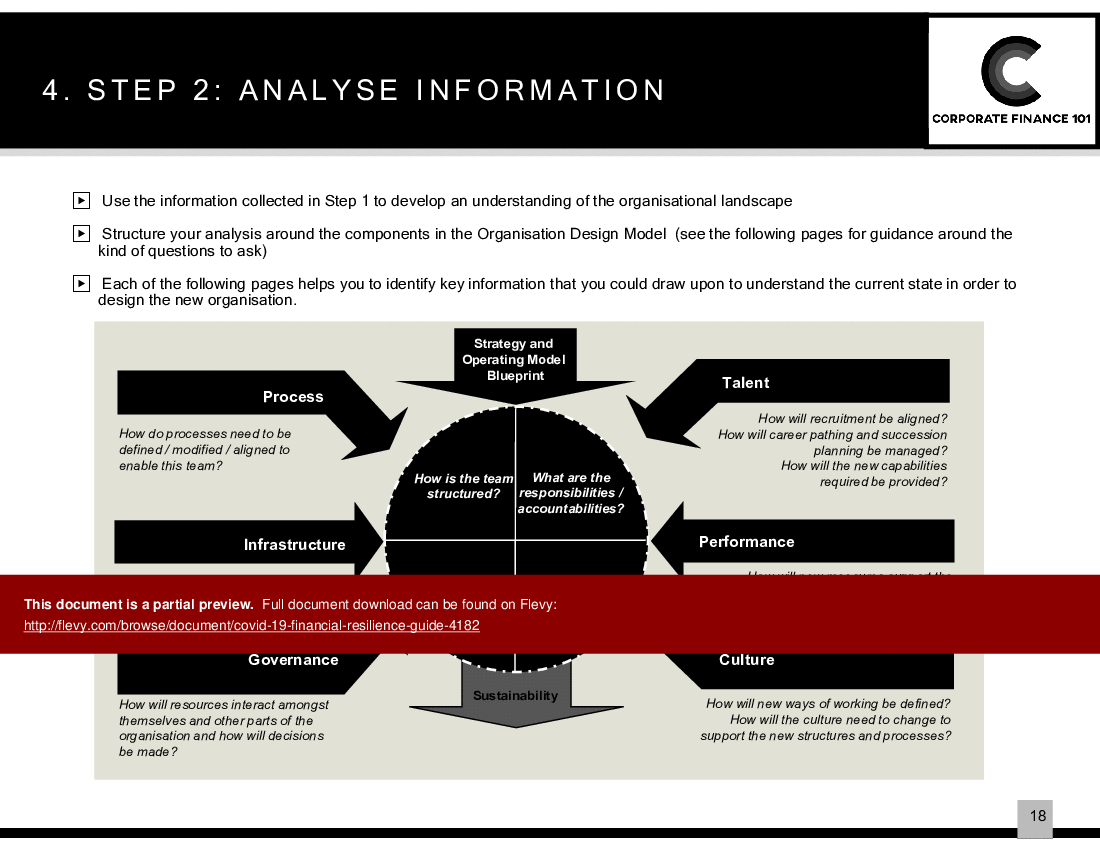
This PPT slide outlines a structured approach for organizations to analyze their operational framework using the Organization Design Model. Key components include Process, Infrastructure, Governance, Talent, Performance, and Culture, each accompanied by targeted questions for deeper analysis. The "Process" section focuses on aligning workflows with team objectives, while "Infrastructure" addresses necessary resources like technology and real estate. Governance highlights the importance of clarity in roles and responsibilities. Talent management emphasizes aligning recruitment and career development with organizational needs. The "Performance" and "Culture" sections stress measuring success and adapting culture to support new roles. This framework encourages a holistic view for effective organizational redesign.
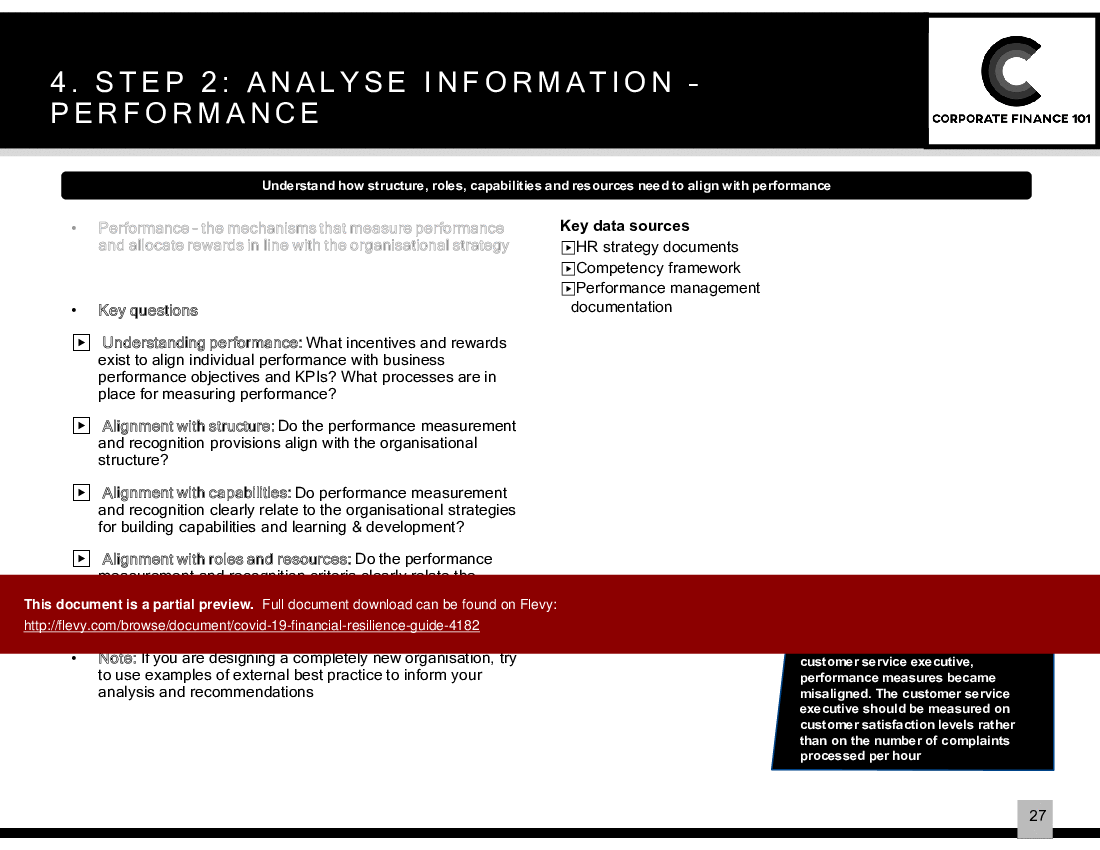
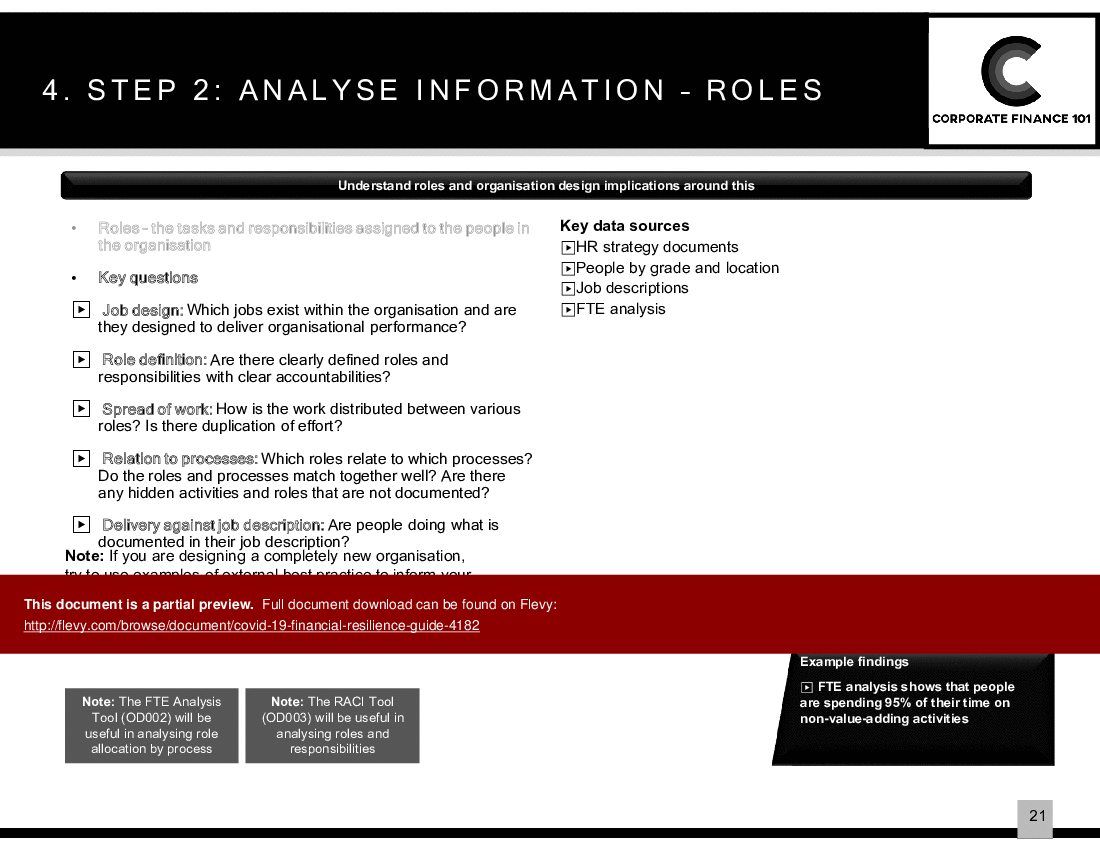
This PPT slide analyzes organizational roles, emphasizing job design and alignment with performance goals. Key questions include whether roles have well-defined responsibilities, which is essential for accountability and performance tracking. The distribution of tasks among roles is examined to identify overlaps or inefficiencies. Additionally, the alignment of roles with organizational processes is explored, revealing gaps or undocumented roles that hinder operations. The slide prompts a review of actual job performance against documented descriptions to assess if employees fulfill their roles effectively. Key data sources for this analysis include HR strategy documents, job descriptions, and FTE analysis, providing insights into workforce allocation and effectiveness. Best practices from external sources should be considered when designing new organizational structures.
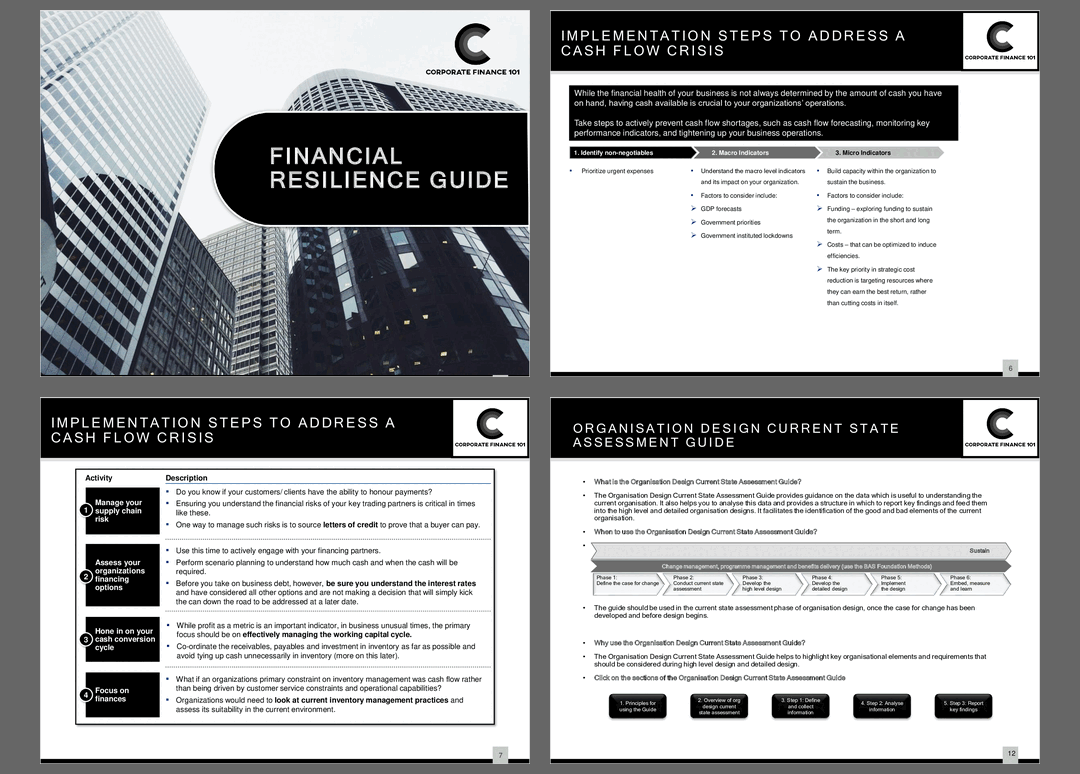
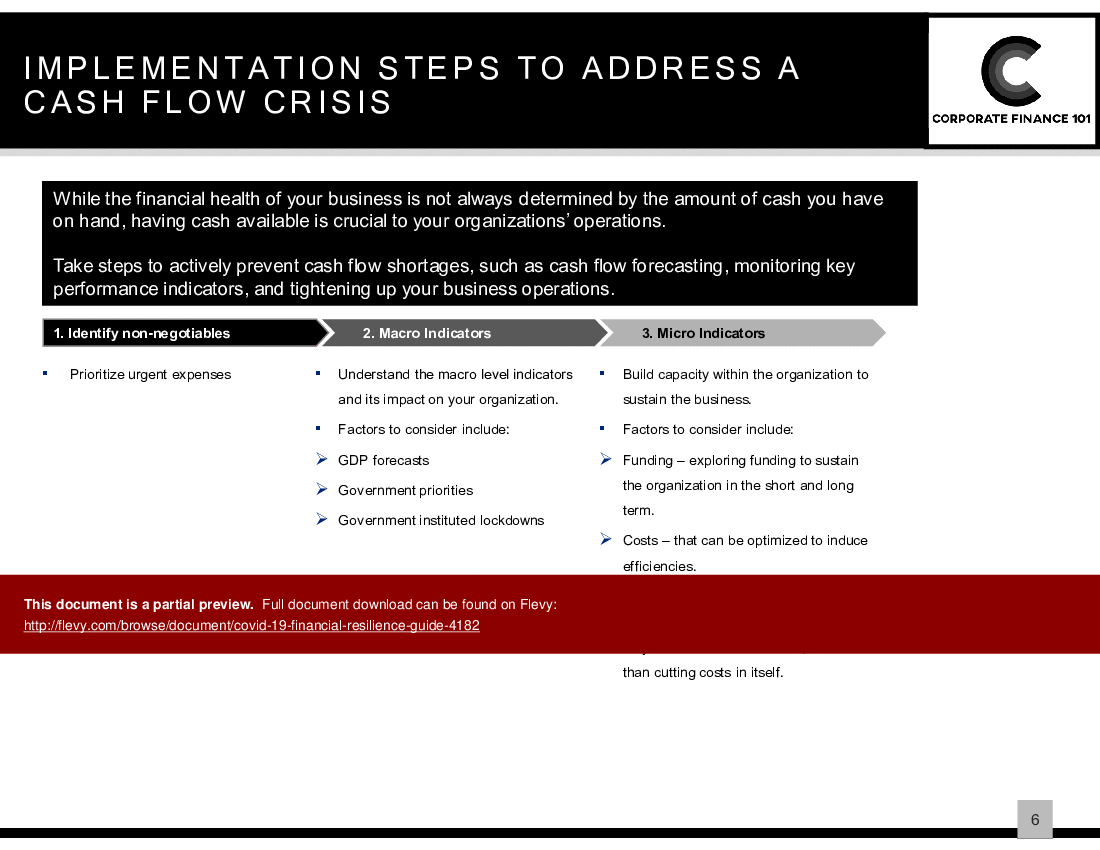
This PPT slide outlines a structured approach to addressing cash flow crises through 3 key categories: non-negotiables, macro indicators, and micro indicators. Non-negotiables involve prioritizing urgent expenses to ensure critical operations continue. Macro indicators encompass broader economic factors affecting cash flow, such as GDP forecasts, government priorities, and lockdown measures, enabling organizations to anticipate external challenges. Micro indicators focus on building organizational capacity, exploring funding options, and optimizing costs to enhance operational efficiencies. This approach emphasizes strategically targeting resources to maximize returns rather than indiscriminately cutting costs, essential for maintaining financial health during turbulent times.
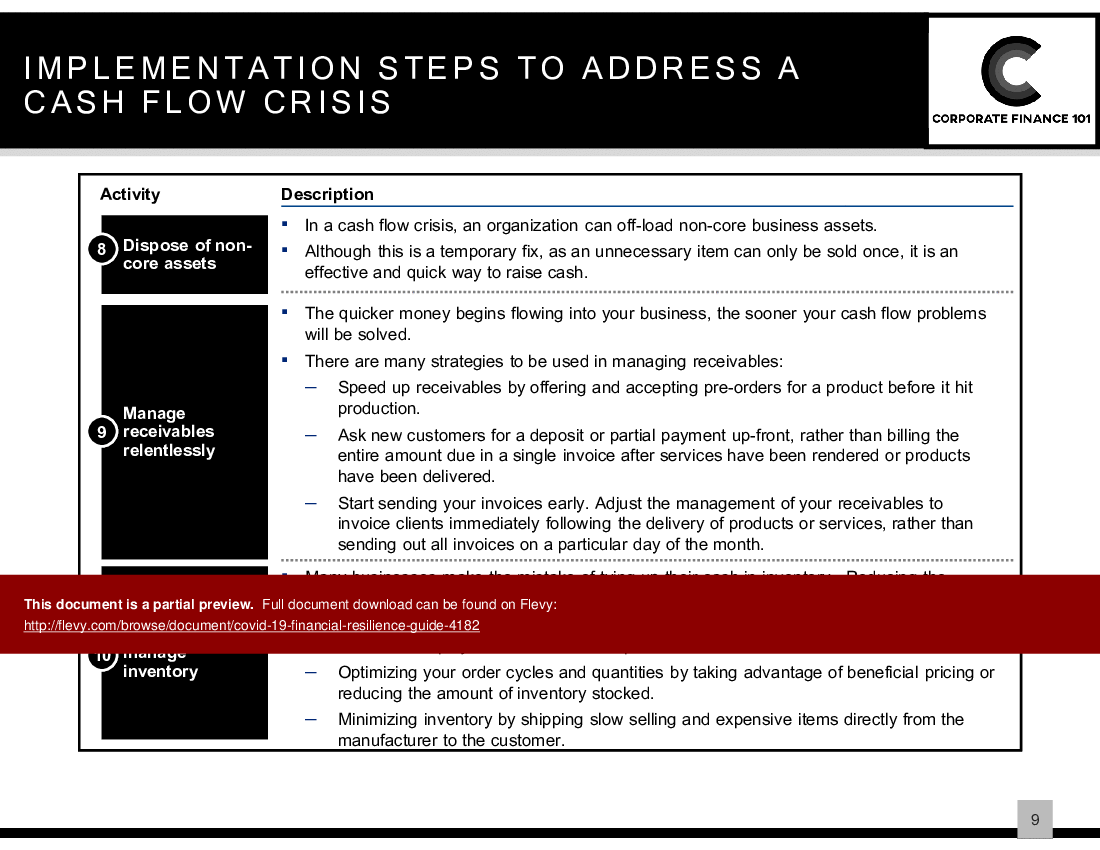
Key activities to address a cash flow crisis include managing supply chain risk, assessing financing options, optimizing the cash conversion cycle, and reevaluating inventory management strategies. Managing supply chain risk involves understanding customer payment capabilities and sourcing letters of credit to mitigate risks. Assessing financing options requires engaging with financing partners and scenario planning to determine cash needs, with a caution against business debt and interest rate implications. Focusing on the cash conversion cycle emphasizes managing working capital effectively, coordinating receivables, payables, and inventory to avoid cash ties. Lastly, organizations should evaluate inventory management practices to ensure they support financial health amidst cash flow constraints driven by customer service or operational limitations.
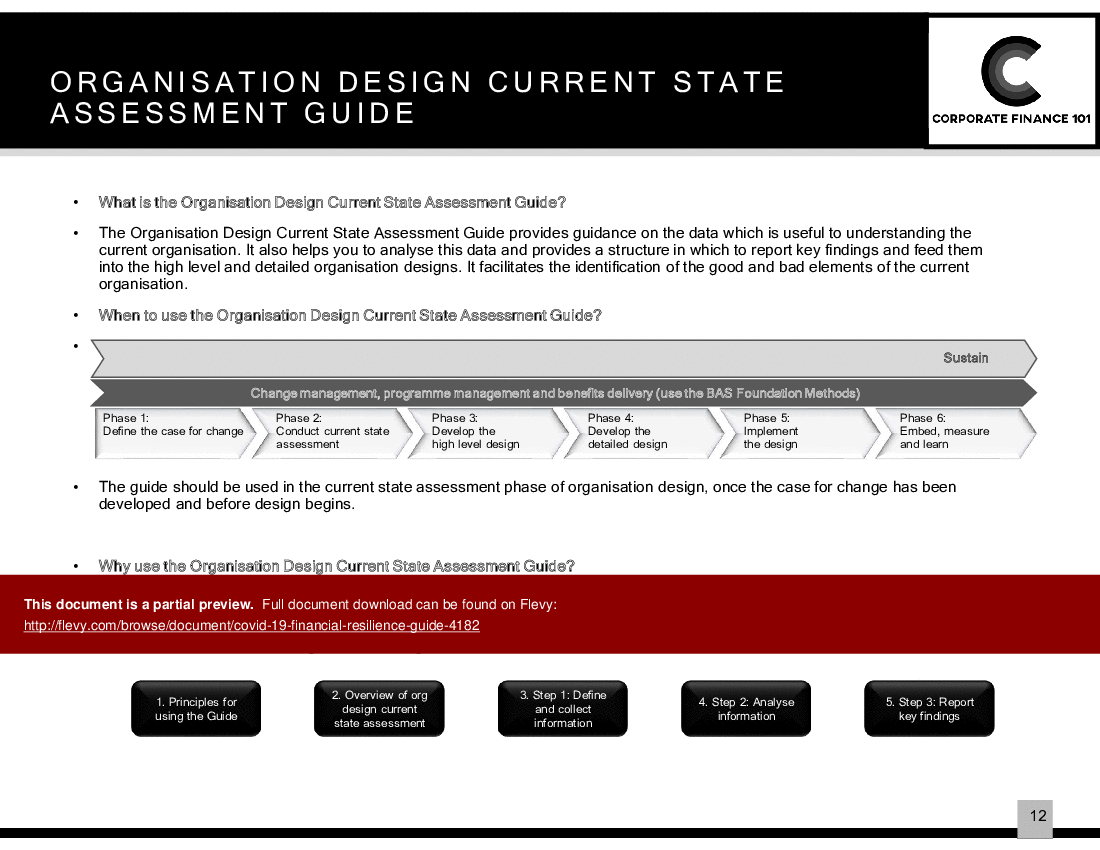
The "Organisation Design Current State Assessment Guide" is a framework for analyzing organizational structure and current operations before design changes. It assists users in collecting and reporting data for a comprehensive evaluation of organizational strengths and weaknesses. The guide is most effective during the current state assessment phase, following the establishment of a case for change. It outlines a 6-phase assessment process: defining the case for change, conducting the current state assessment, developing high-level and detailed designs, implementing the design, and embedding, measuring, and learning from changes. This structured approach highlights essential organizational elements and requirements during the design phases, making it a valuable resource for optimizing design processes.
Source: Best Practices in Cost Reduction Assessment, Cash Flow Management, Business Resilience PowerPoint Slides: Cash Flow and Cost Reduction Guide PowerPoint (PPTX) Presentation Slide Deck, Corporate Finance 101
Corporate Finance 101 consists of ex EY and Grant Thornton consultants who have experience helping professionals across disciplines, with a focus on strategy consulting and transaction advisory.
These documents are prepared to help you increase the impact of your business communication and save you valuable time.
The documents are based upon techniques learned while working at
... [read more] multinational consultancy firms. The products were then refined during the course of consulting engagements with organisations across the world.
The average daily rate of a McKinsey consultant is $6,625 (not including expenses). The average price of a Flevy document is $65.
Trusted by over 10,000+ Client Organizations
Since 2012, we have provided business templates to over 10,000 businesses and organizations of all sizes, from startups and small businesses to the Fortune 100, in over 130 countries.
"FlevyPro provides business frameworks from many of the global giants in management consulting that allow you to provide best in class solutions for your clients."
– David Harris, Managing Director at Futures Strategy
"I like your product. I'm frequently designing PowerPoint presentations for my company and your product has given me so many great ideas on the use of charts, layouts, tools, and frameworks. I really think the templates are a valuable asset to the job."
– Roberto Fuentes Martinez, Senior Executive Director at Technology Transformation Advisory
"I have used Flevy services for a number of years and have never, ever been disappointed. As a matter of fact, David and his team continue, time after time, to impress me with their willingness to assist and in the real sense of the word. I have concluded in fact
that it is not at all just a repository of documents/resources but, in the way that David and his team manage the firm, it is like dealing with consultants always ready to assist, advise and direct you to what you really need, and they always get it right.
I am an international hospitality accomplished senior executive who has worked and lived during the past 35 years in 23 countries in 5 continents and I can humbly say that I know what customer service is, trust me.
Aside from the great and professional service that Flevy's team provide, their wide variety of material is of utmost great quality, professionally put together and most current.
Well done Flevy, keep up the great work and I look forward to continue working with you in the future and to recommend you to a variety of colleagues around the world.
"
– Roberto Pelliccia, Senior Executive in International Hospitality
"Last Sunday morning, I was diligently working on an important presentation for a client and found myself in need of additional content and suitable templates for various types of graphics. Flevy.com proved to be a treasure trove for both content and design at a reasonable price, considering the time I
saved. I encountered a download issue during the ordering process. However, a quick email to Flevy's support team, even on a Sunday (!!!), resulted in assistance within less than an hour, allowing me to download the content I needed. Fantastic job, Flevy! I give 5 stars for both content/price and customer service. Thank you!
"
– M. E., Chief Commercial Officer, International Logistics Service Provider
"As a consultant requiring up to date and professional material that will be of value and use to my clients, I find Flevy a very reliable resource.
The variety and quality of material available through Flevy offers a very useful and commanding source for information. Using Flevy saves me time, enhances my expertise and ends up being a good decision."
– Dennis Gershowitz, Principal at DG Associates
"As a young consulting firm, requests for input from clients vary and it's sometimes impossible to provide expert solutions across a broad spectrum of requirements. That was before I discovered Flevy.com.
Through subscription to this invaluable site of a plethora of topics that are key and crucial to consulting, I
have been able to exceed expectations and deliver quality advice and solutions to my clients. The quality and expertise of the authors are exemplary and gives me great confidence to use as part of my service offerings.
I highly recommend this company for any consultant wanting to apply international best practice standards in their service offerings.
"
– Nishi Singh, Strategist and MD at NSP Consultants
"As a small business owner, the resource material available from FlevyPro has proven to be invaluable. The ability to search for material on demand based our project events and client requirements was great for me and proved very beneficial to my clients. Importantly, being able to easily edit and tailor
the material for specific purposes helped us to make presentations, knowledge sharing, and toolkit development, which formed part of the overall program collateral. While FlevyPro contains resource material that any consultancy, project or delivery firm must have, it is an essential part of a small firm or independent consultant's toolbox.
"
– Michael Duff, Managing Director at Change Strategy (UK)
"Flevy is now a part of my business routine. I visit Flevy at least 3 times each month.
Flevy has become my preferred learning source, because what it provides is practical, current, and useful in this era where the business world is being rewritten.
many challenges and there is the need to make the right decisions in a short time, with so much scattered information, we are fortunate to have Flevy. Flevy investigates, selects, and puts at our disposal the best of the best to help us be successful in our work.
Receive our FREE presentation on Operational Excellence
This 50-slide presentation provides a high-level introduction to the 4 Building Blocks of Operational Excellence. Achieving OpEx requires the implementation of a Business Execution System that integrates these 4 building blocks.