
Developed by a Senior Executive and Operational Excellence Coach with experience at organizations including NOKIA, MICROVENTION, and MAGELLAN, this is a presentation on the BPI 7 methodology for business process management/improvement.

establishes a common and shared language across the entire organization,
helps an organization examine the effectiveness of its processes, and
helps you identify, develop and implement improvements to ensure stable, capable, and mature processes.
PROCESS IMPROVEMENT PPT DESCRIPTION
Editor Summary
Business Process Improvement (BPI 7) is a 139-slide PowerPoint training module (with supplemental DOCX worksheets) presenting a seven-step business process improvement methodology developed by Operational Excellence Consulting LLC and a Senior Executive/Operational Excellence Coach with experience at NOKIA, MICROVENTION, and MAGELLAN.
Read moreIncludes templates and tools such as a process definition template, process mapping tools, SIPOC, Cause-and-Effect/Ishikawa diagrams, Why-Why analysis, Impact-Effort Matrix, and a change management plan. Targeted at Operational Excellence teams, Business Analysts, Project Managers, Senior Executives, and Change Management professionals; sold as a digital download on Flevy.
Use this module when an organization needs a structured, measurement-driven approach to document, analyze, and improve operational workflows—such as during process workshops, performance target setting, or training on continuous improvement.
Operational Excellence teams running process optimization workshops to map current-state workflows and identify non-value-add activities.
Business Analysts building SIPOC diagrams and visual process maps to establish inputs, outputs, and responsibilities.
Project Managers defining performance measures and setting targets for improvement initiatives.
Change Management professionals preparing stakeholder engagement and adoption plans.
The seven-step, measurement-focused sequence—from defining scope through managing processes—reflects standard, stepwise process-improvement practice used in management consulting.
Our business process improvements methodology BPI 7 is a proven and systematic approach to continuously improve an organization's existing business processes.
The Business Process Improvement (BPI 7) Training Module includes:
1. MS PowerPoint Presentation including 141 slides covering our seven-steps Business Process Improvement Methodology.
• Defining the Scope of a Process
• Mapping the Process
• Defining Process Measures
• Setting Process Targets
• Analyzing the Process
• Improving the Process
• Managing the Process
2. MS Word Process Measure Definition Worksheet
3. MS Word Activity Assessment Worksheet
4. MS Word Change Management Worksheet
5. MS Word Process Management Worksheet
"After you have downloaded the training material, you can change any part of the training material and remove all logos and references to Operational Excellence Consulting. You can share the material with your colleagues and clients, and re-use it as you need. The only restriction is that you cannot publicly re-distribute, sell, rent or license the material as though it is your own. Thank you."
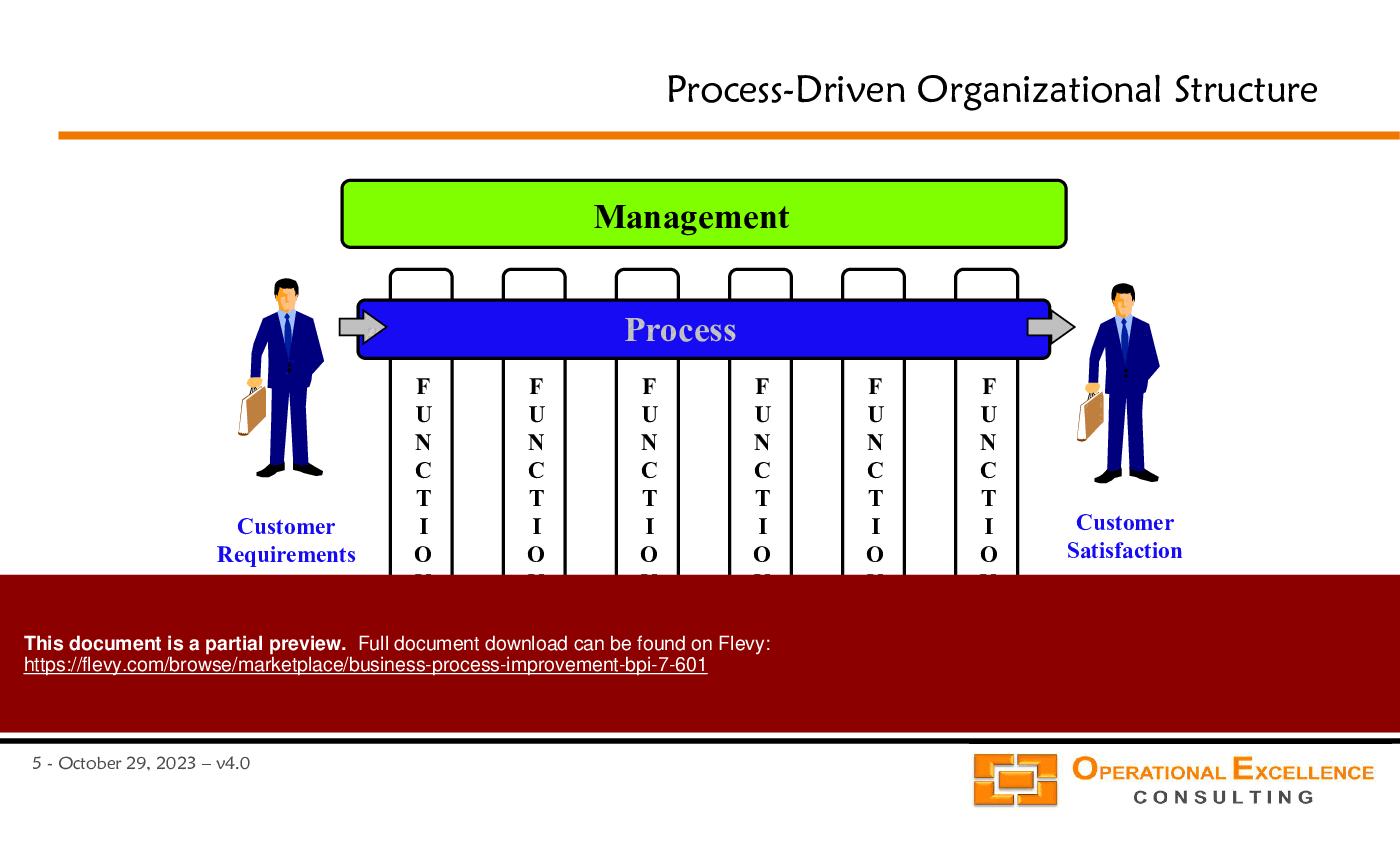
The BPI 7 module provides a detailed framework for a process-driven organizational structure, ensuring alignment between customer requirements and satisfaction. It emphasizes the importance of defining the process scope, mapping, and setting clear targets to drive continuous improvement. The module includes practical worksheets and templates, such as the SIPOC diagram, to facilitate thorough process analysis and management.
The training material also addresses common challenges in performance measure deployment, offering strategies to overcome issues like fear, fudging, and denial. By the end of the module, participants will be equipped with the knowledge and tools to implement effective process improvements, ensuring measurable and sustainable results.
Got a question about the product? Email us at support@flevy.com or ask the author directly by using the "Ask the Author a Question" form. If you cannot view the preview above this document description, go here to view the large preview instead.
MARCUS OVERVIEW
This synopsis was written by Marcus [?] based on the analysis of the full 139-slide presentation.
Executive Summary
The Business Process Improvement (BPI 7) presentation provides a structured approach to optimizing workflows and enhancing operational efficiency. Developed by a seasoned Operational Excellence Coach, this deck outlines the BPI 7 methodology, which emphasizes defining, mapping, measuring, and improving business processes. By utilizing this presentation, organizations can establish clear process objectives, engage stakeholders effectively, and implement continuous improvement strategies that drive measurable results.
Who This Is For and When to Use
• Operational Excellence Teams focused on process optimization
• Business Analysts tasked with mapping and analyzing workflows
• Project Managers overseeing process improvement initiatives
• Senior Executives seeking to enhance organizational efficiency
• Change Management Professionals facilitating transitions
Best-fit moments to use this deck:
• During process improvement workshops to define and map workflows
• When establishing performance measures and targets for business processes
• In training sessions for teams on continuous improvement methodologies
• For management reviews to assess process performance and improvement opportunities
Learning Objectives
• Define the purpose and scope of a business process
• Map the current state of a process to visualize workflows
• Establish meaningful performance measures for process evaluation
• Set achievable targets to drive process improvements
• Analyze processes to identify bottlenecks and improvement areas
• Implement changes effectively while managing stakeholder expectations
Table of Contents
• Introduction to Business Process Improvement (page 1)
• Defining the Process (page 12)
• Mapping the Process (page 20)
• Defining Measures (page 37)
• Setting Targets (page 62)
• Analyzing the Process (page 68)
• Improving the Process (page 101)
• Managing the Process (page 127)
Primary Topics Covered
• Process Definition - Clearly articulate the purpose, inputs, outputs, and scope of the process to ensure alignment among stakeholders.
• Process Mapping - Create visual representations of workflows to identify roles, responsibilities, and interaction points among functions.
• Performance Measures - Develop metrics that reflect time, cost, quality, and customer satisfaction to assess process effectiveness.
• Target Setting - Establish specific, measurable targets that drive focus and accountability for process improvement initiatives.
• Process Analysis - Utilize tools to evaluate current processes, identify inefficiencies, and prioritize areas for improvement.
• Change Management - Plan for the human and technological impacts of process changes to ensure successful implementation and adoption.
Deliverables, Templates, and Tools
• Process definition template to outline scope and objectives
• Process mapping tools for visualizing workflows and interactions
• Performance measurement framework to track key metrics
• Target setting guidelines to establish achievable goals
• Analysis tools such as Cause-and-Effect diagrams and Value-Add assessments
• Change management plan template to guide implementation efforts
Slide Highlights
• Overview of BPI 7 methodology and its significance in operational excellence
• Detailed process mapping examples illustrating the flow of activities
• Visual representations of performance measures and their dimensions
• Change management strategies to address resistance and facilitate adoption
• Tools for analyzing processes and identifying improvement opportunities
Potential Workshop Agenda
Introduction to BPI 7 (30 minutes)
• Overview of the methodology and its importance
• Discussion on the objectives of the workshop
Defining and Mapping Processes (90 minutes)
• Group activity to define and scope a process
• Collaborative mapping of the current state workflow
Setting Measures and Targets (60 minutes)
• Workshop on developing performance measures
• Setting realistic targets aligned with business objectives
Analyzing and Improving Processes (90 minutes)
• Group analysis of mapped processes using provided tools
• Identification of key improvement opportunities
Customization Guidance
• Tailor the process definition template to reflect organizational terminology and specific objectives.
• Adapt performance measures to align with industry standards and organizational goals.
• Modify the change management plan to incorporate unique stakeholder dynamics and organizational culture.
Secondary Topics Covered
• Stakeholder engagement strategies for process improvement
• Techniques for effective communication during change initiatives
• Best practices for sustaining continuous improvement efforts
• Tools for monitoring and reporting process performance
Topic FAQ
What are the typical phases of a business process improvement project?
A structured process improvement project follows sequential phases: defining the process scope, mapping the current state, defining performance measures, setting targets, analyzing the process for root causes, implementing improvements, and managing ongoing performance. BPI 7 explicitly organizes these as 7 steps in its methodology.
How should I choose performance measures for a process?
Choose measures that reflect time, cost, quality, and customer satisfaction so you get a balanced view of effectiveness. Ensure metrics align with process purpose and targets, and use a performance measurement framework to document definitions; BPI 7 outlines these dimensions and provides a measurement framework.
What is a SIPOC diagram and when is it useful?
SIPOC maps Suppliers, Inputs, Process, Outputs, and Customers to clarify scope and high-level flow before detailed mapping. Use it during initial process definition workshops to align stakeholders on boundaries and inputs; BPI 7 includes guidance and template examples for SIPOC diagrams.
How can I prioritize improvement opportunities in a process?
Prioritize using impact-versus-effort criteria and focus on changes that reduce bottlenecks or non-value-add activities. Tools such as an Impact-Effort Matrix and Value-Add assessments help rank options; BPI 7 references these tools for analysis and prioritization.
What should I look for when buying a process improvement toolkit?
Look for a stepwise methodology, process mapping templates, measurement frameworks, analysis tools, and change management guidance to support workshops and implementation. Also check delivery format and editable worksheets; the BPI 7 module includes a slide deck plus MS Word worksheets.
Are ready-made templates and worksheets worth the cost for process improvement?
Pre-built templates can speed workshops, ensure consistent terminology, and codify measurement definitions, reducing ambiguity in rollouts. Practical worksheets for measure definition, activity assessment, change management, and process management are included in the BPI 7 training module as MS Word files.
How do I handle stakeholder resistance during process changes?
Engage stakeholders early, communicate clear objectives, and use structured change management plans that address concerns and adoption steps. BPI 7 includes change management strategies and a Change Management Worksheet to guide planning and stakeholder communications.
I need to redesign a process after a merger—what framework should I use to start?
Begin with defining scope and creating SIPOC diagrams to align on inputs/outputs, map current-state workflows to surface differences, then set common performance measures and targets. A seven-step approach that combines mapping, measurement, analysis, and change planning supports post-merger harmonization, as in BPI 7.
Document FAQ
These are questions addressed within this presentation.
What is the BPI 7 methodology?
BPI 7 is a structured approach to business process improvement that includes defining, mapping, measuring, analyzing, improving, and managing processes to enhance efficiency and effectiveness.
How can this presentation help my organization?
This presentation provides a comprehensive framework for optimizing business processes, enabling teams to identify inefficiencies, set measurable targets, and implement sustainable improvements.
What tools are included in the BPI 7 methodology?
The methodology includes templates for process definition, mapping tools, performance measurement frameworks, and change management plans to support effective implementation.
How do I measure process performance?
Process performance can be measured using metrics related to time, cost, quality, and customer satisfaction, ensuring a balanced view of effectiveness.
What are the key steps in the BPI 7 process?
The key steps include defining the process, mapping workflows, establishing measures, setting targets, analyzing current performance, implementing improvements, and managing ongoing performance.
How can I ensure stakeholder buy-in during process improvements?
Engaging stakeholders early in the process, clearly communicating objectives, and addressing concerns through change management strategies can foster buy-in and support.
What challenges might arise during process improvement initiatives?
Common challenges include resistance to change, misalignment of objectives, and difficulties in measuring performance. Addressing these proactively can mitigate risks.
How often should the BPI 7 process be repeated?
The BPI 7 process should be repeated regularly to adapt to changing business needs, customer requirements, and performance outcomes, ensuring continuous improvement.
Glossary
• BPI 7 - A structured methodology for business process improvement.
• Process Mapping - The visual representation of workflows to identify roles and interactions.
• Performance Measures - Metrics used to evaluate the effectiveness of a process.
• Change Management - Strategies to facilitate the adoption of process improvements.
• Stakeholder Engagement - Involving individuals affected by process changes in the improvement process.
• Continuous Improvement - Ongoing efforts to enhance processes over time.
• Value-Add Activities - Actions that contribute to customer satisfaction and process output.
• Non-Value-Add Activities - Actions that do not contribute to customer satisfaction and may be eliminated.
• Target Setting - Establishing specific goals to drive process improvements.
• Process Analysis - Evaluating current processes to identify inefficiencies and improvement opportunities.
• SIPOC - A tool used to define Suppliers, Inputs, Process, Outputs, and Customers in a process.
• Cause-and-Effect Diagram - A visual tool used to identify root causes of problems.
• Ishikawa Diagram - Another name for the Cause-and-Effect diagram, used in quality management.
• Why-Why Analysis - A technique for uncovering root causes by repeatedly asking "why."
• Affinity Diagram - A tool for organizing ideas into natural relationships.
• Impact-Effort Matrix - A tool for prioritizing improvement opportunities based on their potential impact and required effort.
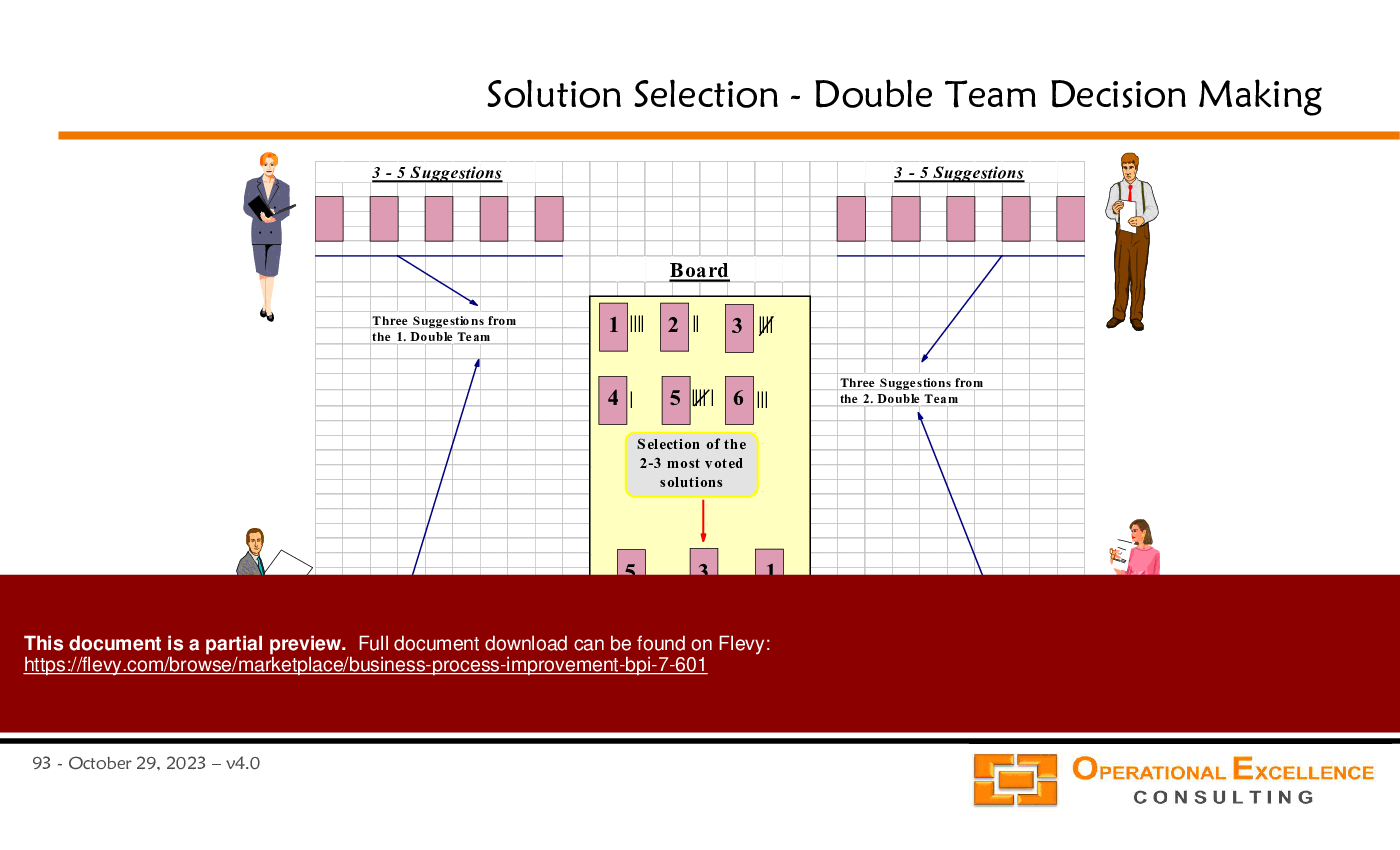
• Double Team Decision Making - A collaborative approach to generating and selecting ideas.
• Poka-Yoke - A mistake-proofing technique to prevent errors in processes.
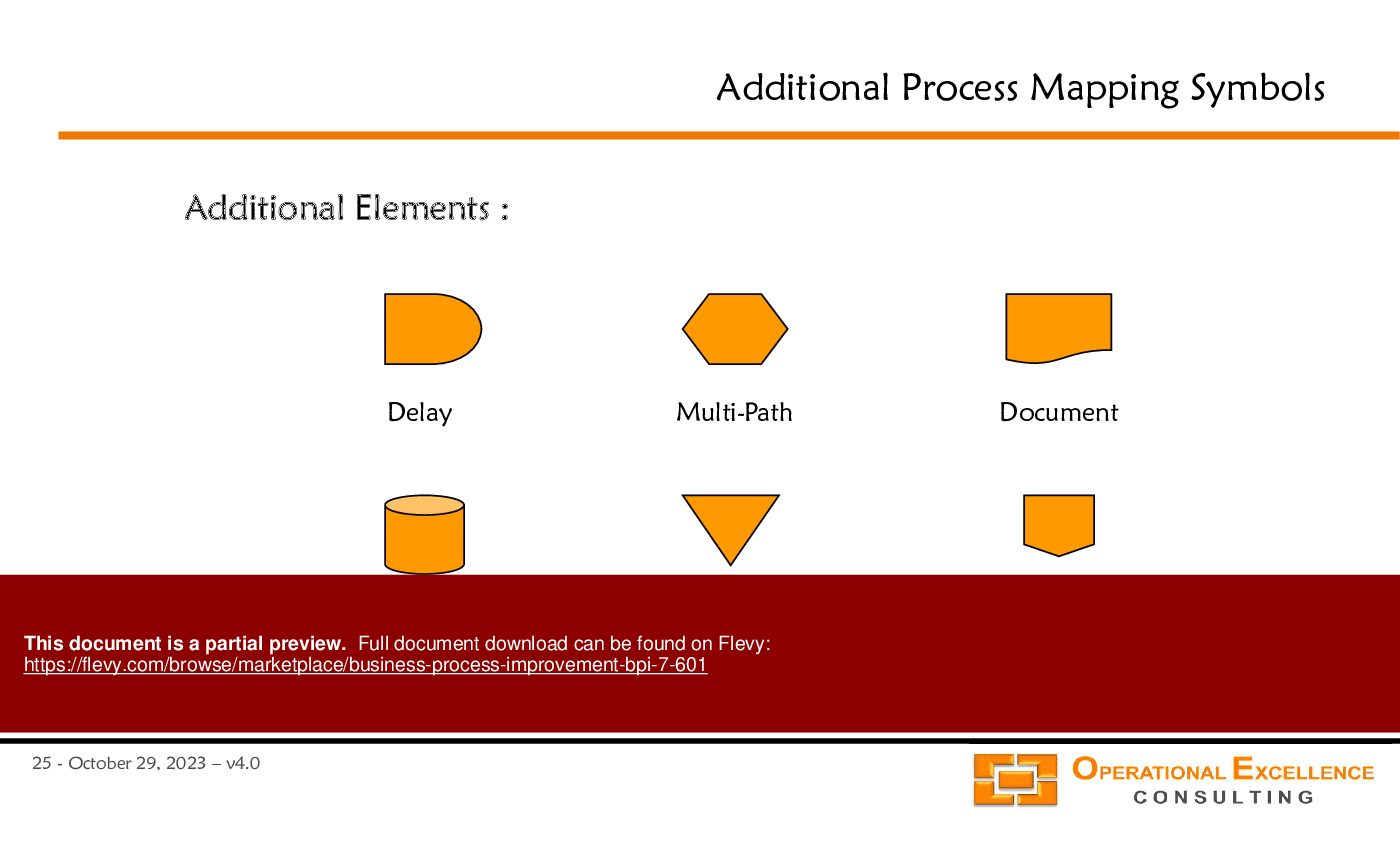
This PPT slide outlines essential steps for creating an effective process map. Start with the overarching structure to capture the essence of the current workflow, maintaining 6 to 12 steps for clarity. Detail can be added iteratively, accommodating evolving insights. Focus on linking activities with outputs to understand the flow of information and tasks. Emphasize activities over functions, using actions like "Prepare" or "Document" to clarify responsibilities and outcomes. Recommended tools include whiteboards, paper, or post-it notes for brainstorming and collaboration. An "Opportunity Log" is suggested for recording potential improvements, ensuring insights are captured. Utilize software tools like PowerPoint or Visio for process map visualization, fostering a culture of continuous improvement.
This PPT slide presents a framework categorizing performance indicators into 4 measures: M1 through M4. M1, the Organizational Level, includes executive scorecard indicators for strategic oversight aligned with high-level goals. M2, the Process or Functional Level, utilizes VP or Director scorecard indicators to assess process effectiveness. M3, the Sub-Process or Departmental Level, employs manager scorecard indicators to evaluate departmental performance and alignment with organizational objectives. M4, the Task or Activity Level, uses work group scorecard indicators for monitoring individual task performance and operational efficiency. The diagram illustrates task flow and performance assessment across M3 and M4, linking outcomes to M2 and impacting M1, ultimately enhancing customer experience. This structured approach ensures alignment of organizational layers with overall objectives.
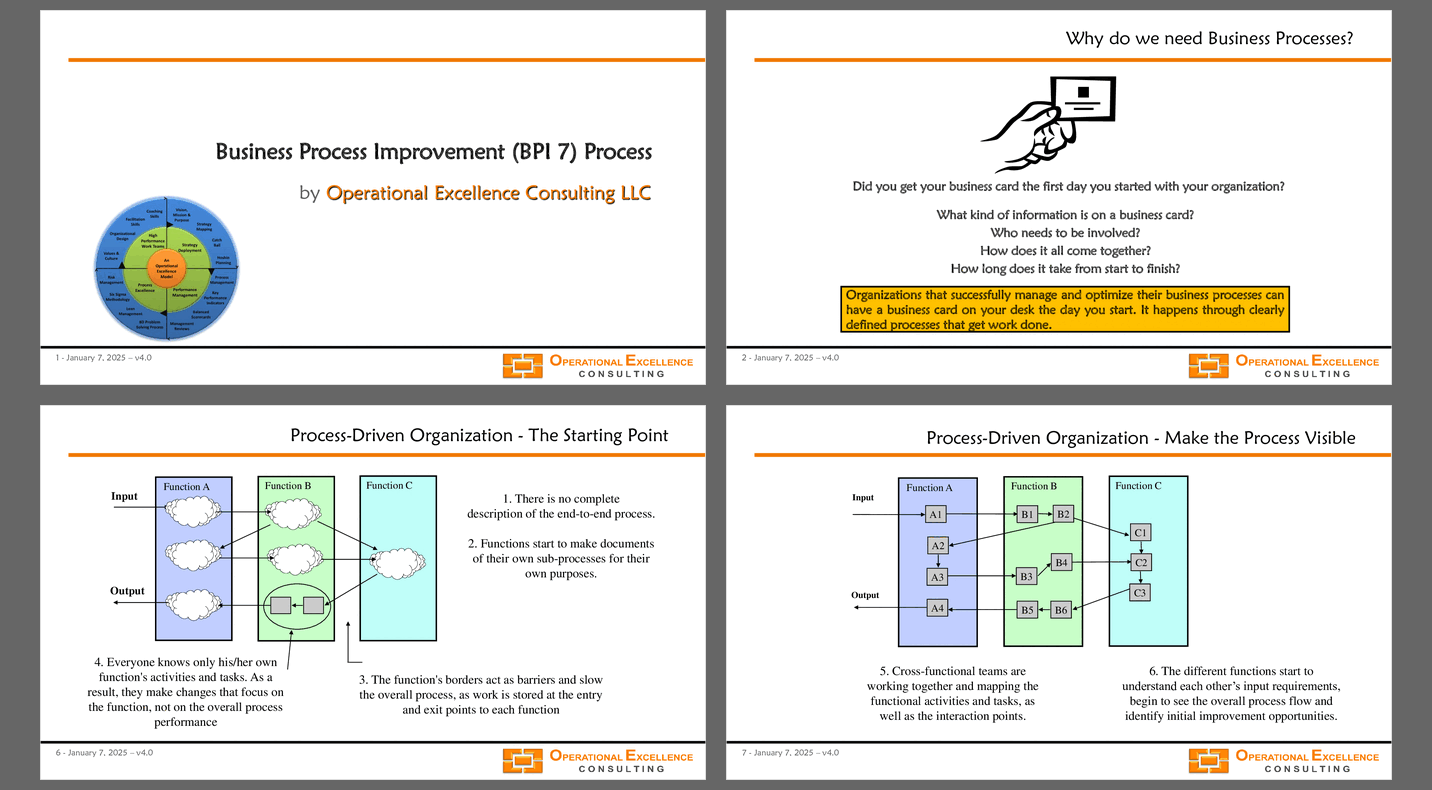
This PPT slide presents a framework for enhancing organizational processes through visualizing interrelated functions: Function A, Function B, and Function C, with tasks A1 to A4, B1 to B6, and C1 to C3. It emphasizes cross-functional collaboration, enabling teams to map activities and identify interaction points, which is essential for understanding dependencies. Increased visibility of input requirements allows for better process flow visualization and the identification of improvement opportunities. By highlighting inefficiencies that arise from siloed operations, organizations can foster a culture of continuous improvement. Investing in tools and methodologies for mapping functional activities enhances operational efficiency and drives employee engagement by illustrating the impact of their contributions on overall processes.
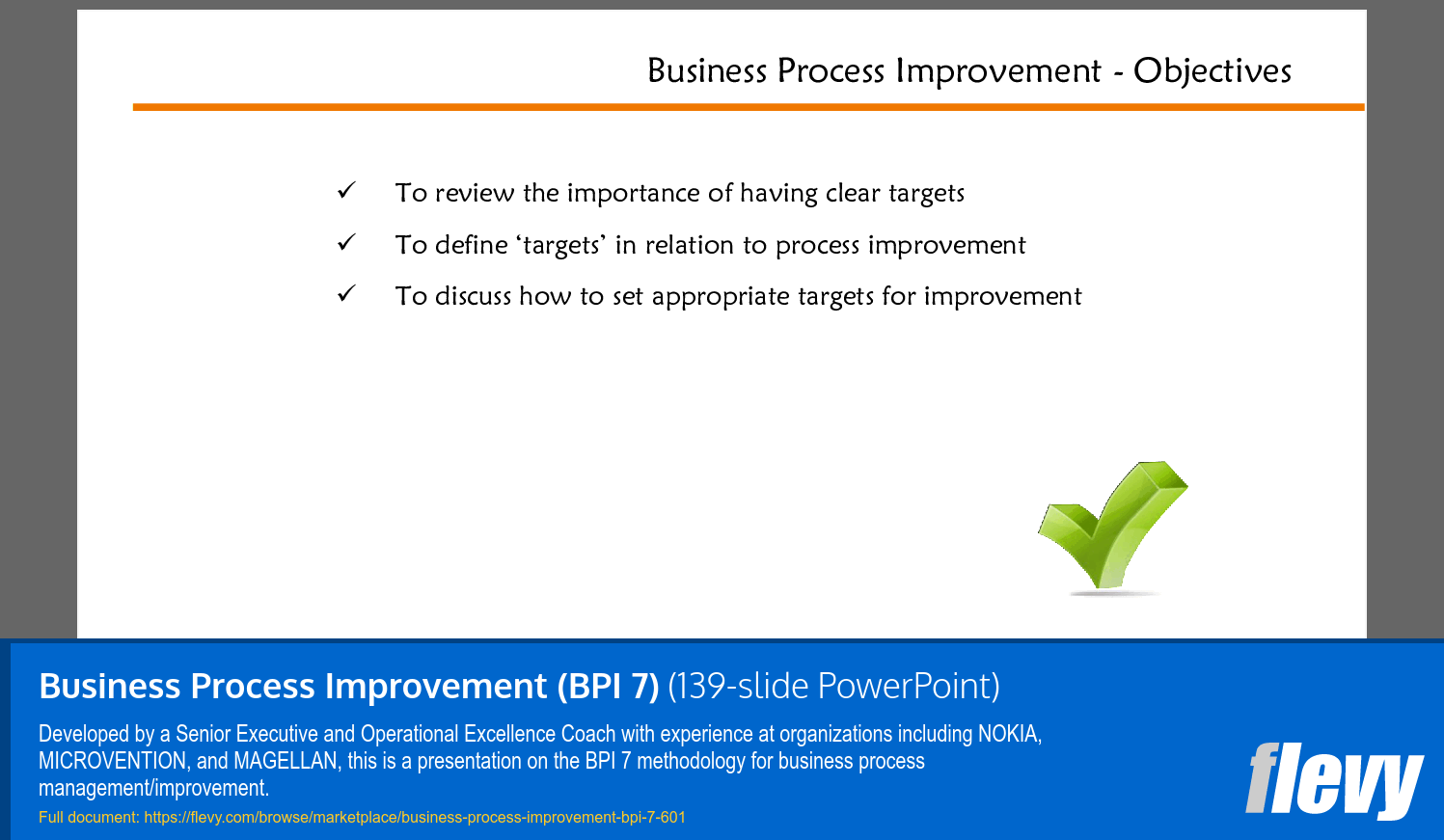
This PPT slide outlines 3 key objectives for business process improvement. The first objective emphasizes establishing clear, measurable targets to guide improvement efforts, preventing wasted resources and missed opportunities. The second objective highlights the need for a shared understanding among stakeholders regarding what constitutes a target, ensuring targets are quantifiable and relevant to specific processes. The third objective focuses on a strategic methodology for setting realistic and achievable targets that motivate teams while driving significant improvements. Clarity, shared understanding, and strategic target-setting are essential components for successful process improvement initiatives aligned with organizational goals.
This PPT slide presents a framework for analyzing business processes, focusing on 3 critical areas: People Issues, Technology Issues, and Process Issues. People Issues include Skills, Attitudes, and Values, which directly impact employee performance and engagement. Technology Issues involve Supporting Technology and Technological Fit, emphasizing the need for alignment with organizational needs to enhance operational efficiency. The Process Flow section highlights Process Maps, Activity Links, and Process Measures, essential for visualizing task interconnections and identifying bottlenecks. Successful process analysis requires integrating these areas, as neglecting any can compromise overall performance. This framework aids organizations in diagnosing issues and implementing improvements for enhanced operational efficiency.
This PPT slide outlines a structured approach to creating a Stakeholder Analysis Matrix, essential for assessing stakeholder influence and importance in projects. The process begins with compiling a list of stakeholders, considering both interest and influence. The matrix is divided into 4 quadrants, which can be further subdivided into sixteen, categorizing stakeholders based on their importance and influence levels. The left side reflects varying degrees of importance, while the top indicates influence. Stakeholders in the upper left corner represent the highest importance and influence, warranting prioritization for consultation. Conversely, those in the lower right corner hold minimal importance and influence. This method enhances strategic planning, communication, and engagement with key stakeholders throughout the project lifecycle.
This PPT slide compares functional and cross-functional performance measures within organizations. Relying solely on functional interests can lead to misalignment and inefficiencies, as indicated by the red and green arrows representing siloed measurements that emphasize departmental performance. The accompanying sad face icon highlights dissatisfaction with results from this approach. In contrast, the lower section illustrates a cross-functional view, where integrated measures encompass the entire process, signified by happy face icon representing positive outcomes. A critical point is that performance measures must align with customer requirements to drive improvements and meet organizational objectives effectively. This advocates for a shift from functional silos to a customer-centric, interconnected approach to performance measurement.
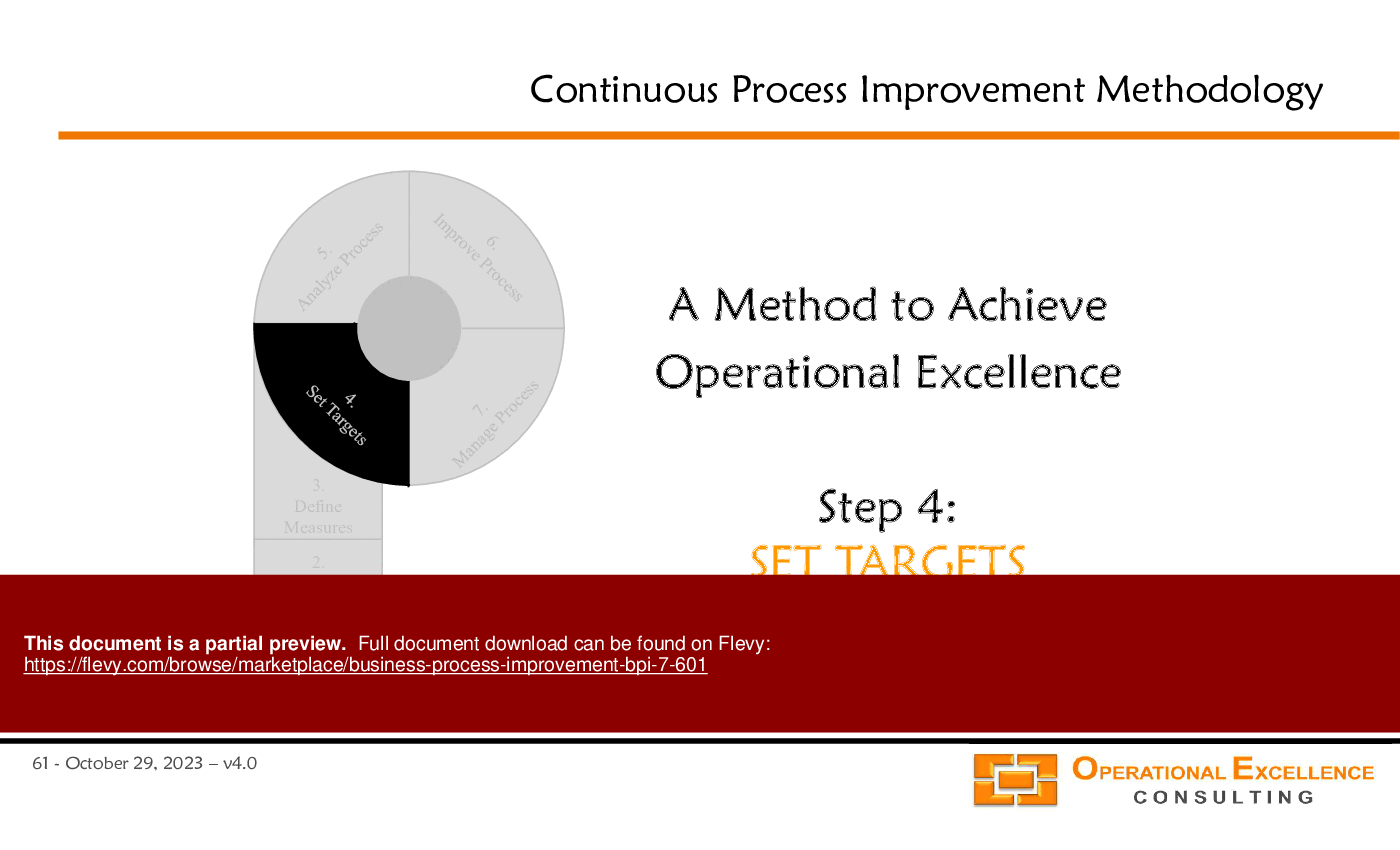
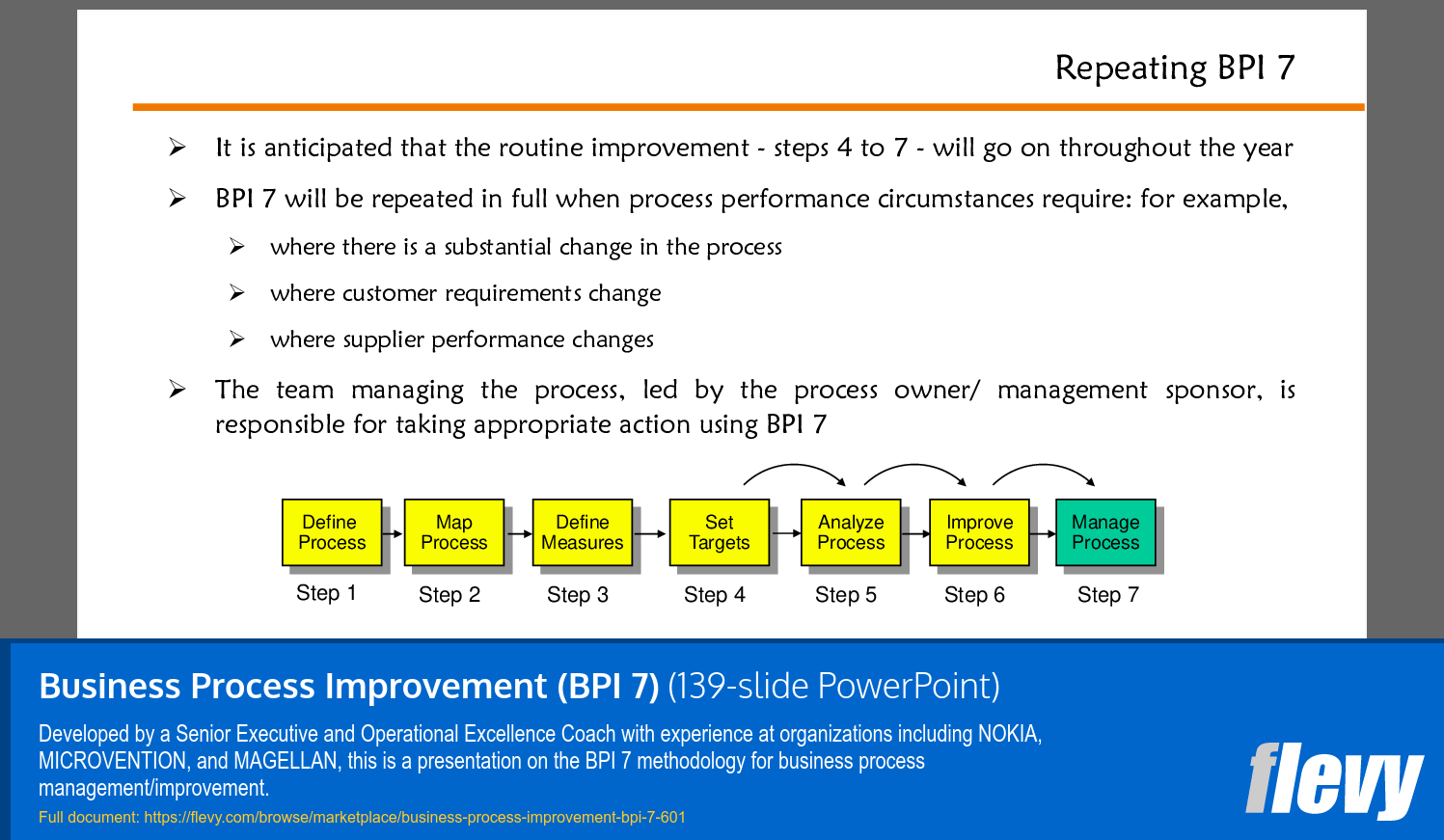
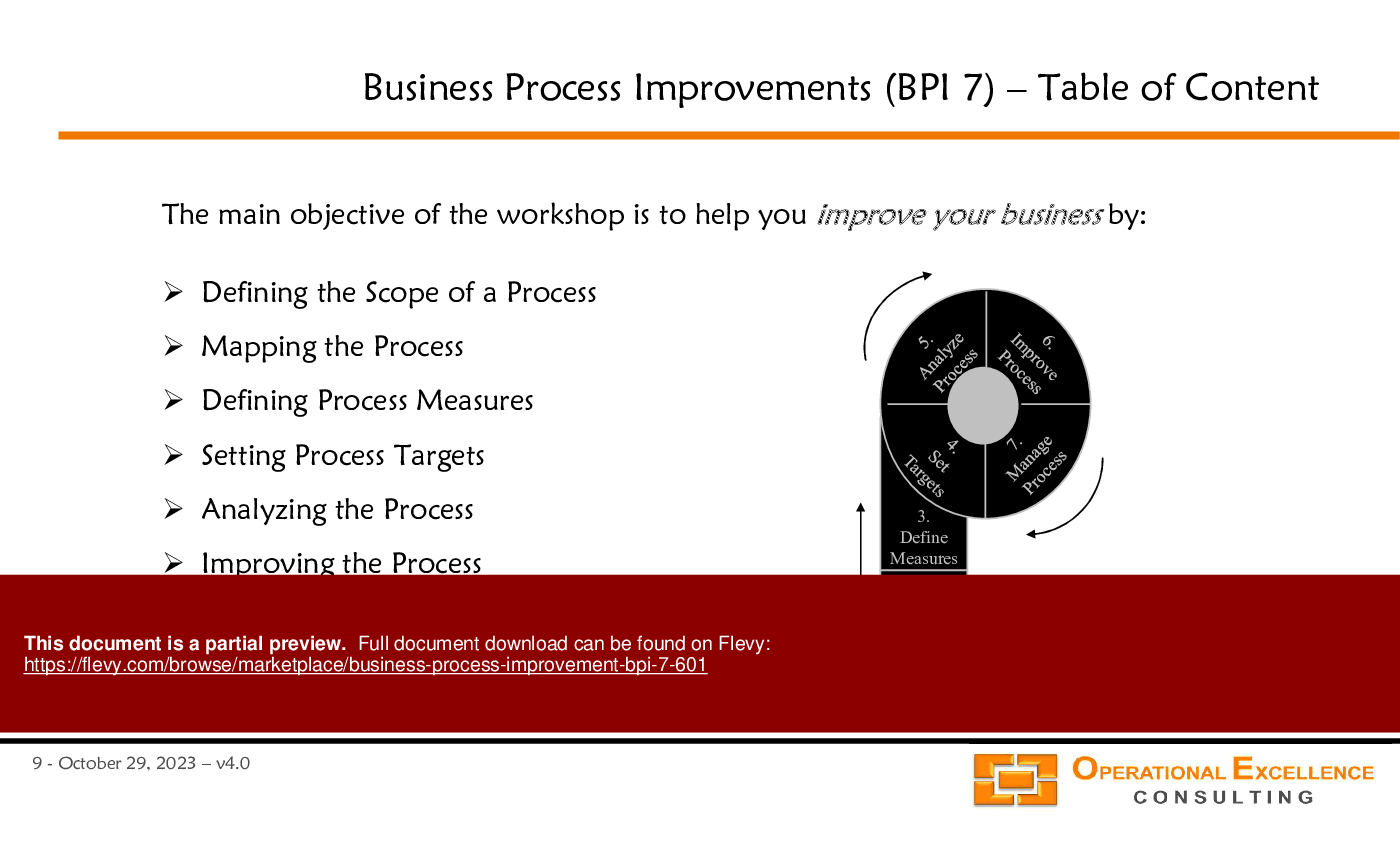
This PPT slide outlines the iterative application of the Business Process Improvement (BPI) 7 methodology, emphasizing continuous revisitation of steps 4 to 7 in response to significant changes in processes, customer requirements, or supplier performance. The BPI 7 framework requires regular reassessment and action, led by a designated process owner or management sponsor to drive improvements. The visual representation includes steps: Define Process, Map Process, Define Measures, Set Targets, Analyze Process, Improve Process, and Manage Process, ensuring alignment with organizational goals. This structured approach fosters sustained operational efficiency and responsiveness to evolving circumstances, enhancing alignment with customer and supplier expectations.
This PPT slide outlines the Business Process Improvement (BPI 7) methodology, a structured approach to enhancing organizational processes. The cyclical framework begins with defining the process, mapping it, and establishing measures for effectiveness. These foundational steps ensure improvements are based on a clear understanding of current operations. Continuous improvement efforts involve setting realistic targets and analyzing them for attainability. The improvement phase focuses on implementing actionable changes informed by analysis insights. Finally, managing process performance sustains improvements over time, allowing for ongoing adjustments. This systematic approach is essential for organizations aiming to refine processes and drive efficiency.
This PPT slide presents a framework for process-driven organizations, focusing on the interactions between 3 functions: Function A, Function B, and Function C. Each function operates independently, leading to inefficiencies and a lack of comprehensive end-to-end process visibility. This fragmentation results in the development of function-specific documentation, hindering collaboration and alignment. Additionally, boundaries between functions create barriers, causing delays and bottlenecks as work accumulates at entry and exit points. This narrow focus on individual tasks neglects broader process performance implications. Organizations must foster cross-functional collaboration and develop a unified understanding of processes to enhance efficiency and drive better outcomes.
The interrelationship diagram visualizes complex relationships among ideas, focusing on causes, effects, objectives, and methods. It begins with positioning ideas in a circular format, highlighting interdependencies. The second step involves identifying whether each idea influences another, using directional arrows to clarify these relationships. This method helps pinpoint pivotal ideas within the framework. The third step analyzes the diagram by counting arrows associated with each idea, revealing the flow of influence. Ideas with primarily outgoing arrows are identified as basic causes that need attention to address the overarching problem statement. Key ideas include "Lack of motivation to change" and "Fear of technical tools and methods," each assigned a numerical value indicating significance. This structured approach aids in problem-solving and enhances understanding of underlying issues hindering progress.
Source: Best Practices in Process Improvement, Process Design PowerPoint Slides: Business Process Improvement (BPI 7) PowerPoint (PPTX) Presentation Slide Deck, Operational Excellence Consulting LLC
Developed by a Senior Executive and Operational Excellence Coach with experience at organizations including NOKIA, MICROVENTION, and MAGELLAN, this is a presentation on the BPI 7 methodology for business process management/improvement.
Operational Excellence Consulting LLC provides assessments, training solutions, kaizen event facilitation, and implementation support to enable our clients to achieve superior performance through Operational Excellence - Strategy Deployment & Hoshin Planning, Performance Management & Balanced Scorecards, Process Excellence & Lean Six Sigma, and High
... [read more] Performance Work Teams.
Frank Adler co-founded OEC LLC in 2009 to follow his passion for Operational Excellence and to be able to work with individuals and organizations that share this passion.
He is an accomplished and recognized Operational Excellence, Lean Management, and Six Sigma coach, with over 20 years of domestic and international executive leadership experience in General Management, multi-site Operations & Supply Chain Management, and Quality & Customer Support Management.
Frank is a certified and experienced Lean Six Sigma Master Black Belt with a proven track record of implementing these methods, concepts, and tools in various organizations and industries.
He holds a Master of Science in Mathematics & Physics from the Freie University of Berlin (Germany) and a Doctor of Philosophy in Applied Mathematics & Industrial Economics from the Helsinki University of Technology (Finland).
Since 2012, we have provided business templates to over 10,000 businesses and organizations of all sizes, from startups and small businesses to the Fortune 100, in over 130 countries.
Read Customer Testimonials
"FlevyPro has been a brilliant resource for me, as an independent growth consultant, to access a vast knowledge bank of presentations to support my work with clients. In terms of RoI, the value I received from the very first presentation I downloaded paid for my subscription many times over! The
quality of the decks available allows me to punch way above my weight – it's like having the resources of a Big 4 consultancy at your fingertips at a microscopic fraction of the overhead.
"
– Roderick Cameron, Founding Partner at SGFE Ltd
"I have used Flevy services for a number of years and have never, ever been disappointed. As a matter of fact, David and his team continue, time after time, to impress me with their willingness to assist and in the real sense of the word. I have concluded in fact
that it is not at all just a repository of documents/resources but, in the way that David and his team manage the firm, it is like dealing with consultants always ready to assist, advise and direct you to what you really need, and they always get it right.
I am an international hospitality accomplished senior executive who has worked and lived during the past 35 years in 23 countries in 5 continents and I can humbly say that I know what customer service is, trust me.
Aside from the great and professional service that Flevy's team provide, their wide variety of material is of utmost great quality, professionally put together and most current.
Well done Flevy, keep up the great work and I look forward to continue working with you in the future and to recommend you to a variety of colleagues around the world.
"
– Roberto Pelliccia, Senior Executive in International Hospitality
"I am extremely grateful for the proactiveness and eagerness to help and I would gladly recommend the Flevy team if you are looking for data and toolkits to help you work through business solutions."
– Trevor Booth, Partner, Fast Forward Consulting
"FlevyPro provides business frameworks from many of the global giants in management consulting that allow you to provide best in class solutions for your clients."
– David Harris, Managing Director at Futures Strategy
"I have found Flevy to be an amazing resource and library of useful presentations for lean sigma, change management and so many other topics. This has reduced the time I need to spend on preparing for my performance consultation. The library is easily accessible and updates are regularly provided. A wealth of great information."
– Cynthia Howard RN, PhD, Executive Coach at Ei Leadership
"One of the great discoveries that I have made for my business is the Flevy library of training materials.
As a Lean Transformation Expert, I am always making presentations to clients on a variety of topics: Training, Transformation, Total Productive Maintenance, Culture, Coaching, Tools, Leadership Behavior, etc. Flevy
It is well worth the money to purchase these presentations. Sure, I have the knowledge and information to make my point. It is another thing to create a presentation that captures what I want to say. Flevy has saved me countless hours of preparation time that is much better spent with implementation that will actually save money for my clients.
"
– Ed Kemmerling, Senior Lean Transformation Expert at PMG
"As a young consulting firm, requests for input from clients vary and it's sometimes impossible to provide expert solutions across a broad spectrum of requirements. That was before I discovered Flevy.com.
Through subscription to this invaluable site of a plethora of topics that are key and crucial to consulting, I
have been able to exceed expectations and deliver quality advice and solutions to my clients. The quality and expertise of the authors are exemplary and gives me great confidence to use as part of my service offerings.
I highly recommend this company for any consultant wanting to apply international best practice standards in their service offerings.
"
– Nishi Singh, Strategist and MD at NSP Consultants
"Flevy is our 'go to' resource for management material, at an affordable cost. The Flevy library is comprehensive and the content deep, and typically provides a great foundation for us to further develop and tailor our own service offer."
– Chris McCann, Founder at Resilient.World
Save with Bundles
This document is available as part of the following discounted bundle(s):
Receive our FREE presentation on Operational Excellence
This 50-slide presentation provides a high-level introduction to the 4 Building Blocks of Operational Excellence. Achieving OpEx requires the implementation of a Business Execution System that integrates these 4 building blocks.
Receive our FREE presentation on Operational Excellence
Get Our FREE Product.
This 50-slide presentation provides a high-level introduction to the 4 Building Blocks of Operational Excellence. Achieving OpEx requires the implementation of a Business Execution System that integrates these 4 building blocks.