
Explore a comprehensive Business Model Design Report for a European construction firm, crafted by industry experts. Analyze competitive positioning, PMCs, and growth strategies. Business Model Design Report is a 218-slide PPT PowerPoint presentation slide deck (PPT) available for immediate download upon purchase.
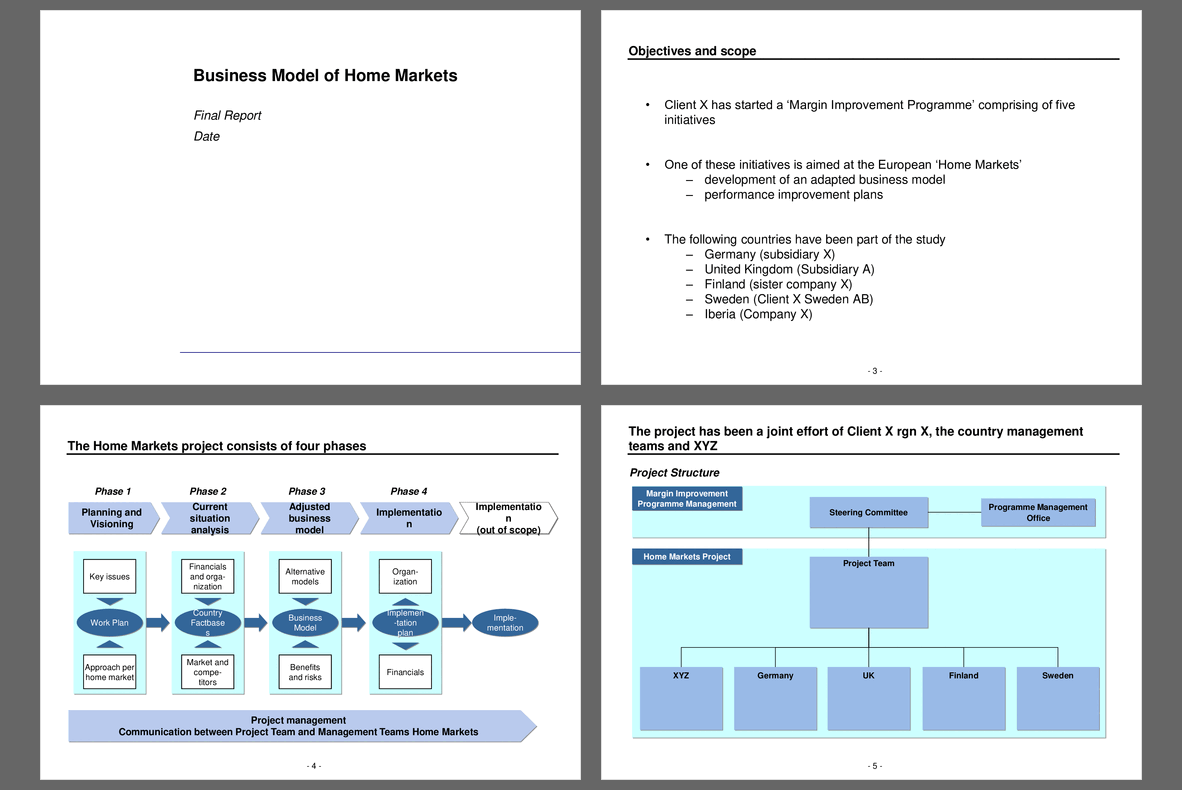
This presentation is a final report of a business model design project for a European construction service provider. The firm started a "Margin Improvement Program" comprising of five initiatives. One of these initiatives is aimed at the European "Home Markets," which focuses on:
• Development of an adapted business model
• Performance improvement plans
The report provides a strategic assessment of the firm's competitive position in 5 European countries including new business models, cost reduction opportunities and business alignment.
The Business Model Design Report delves into a comprehensive analysis of the firm's current market position and competitive landscape. It breaks down the financial performance and organizational structure across various European markets, providing a granular view of revenue streams and cost structures. The report identifies key areas for improvement and potential growth, supported by detailed financial data and strategic insights.
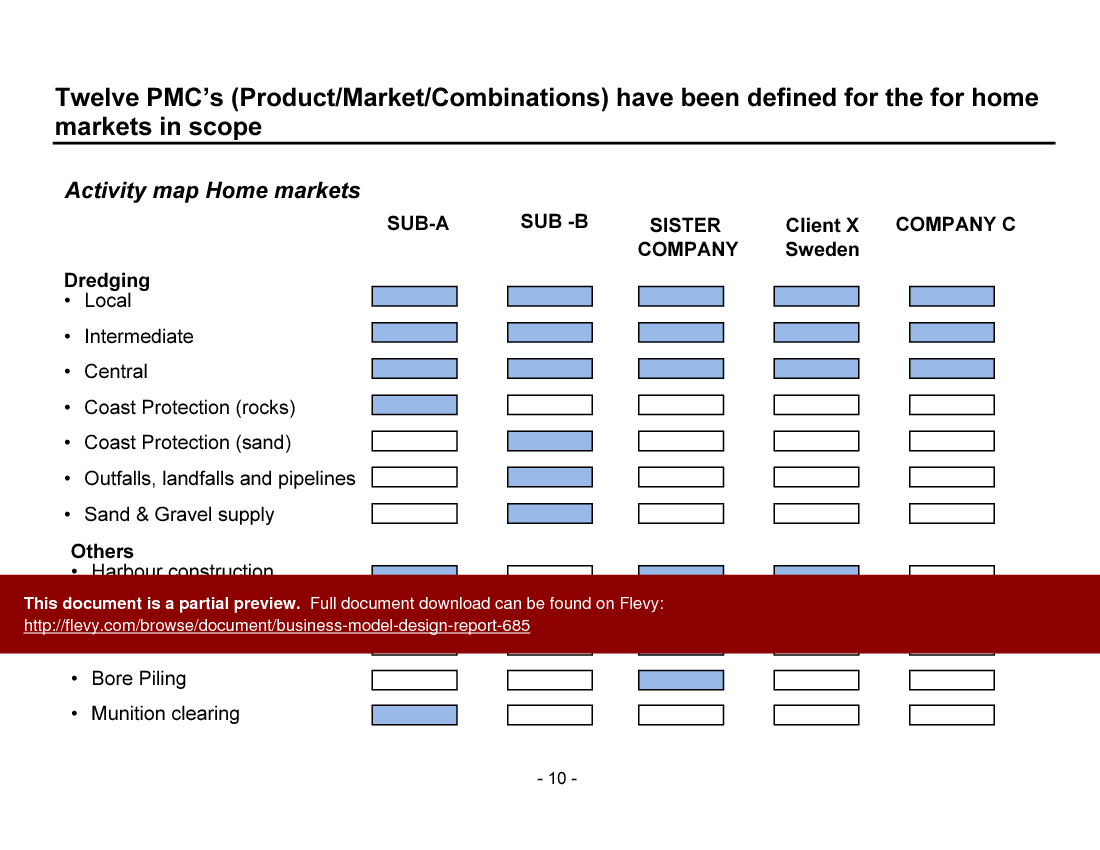
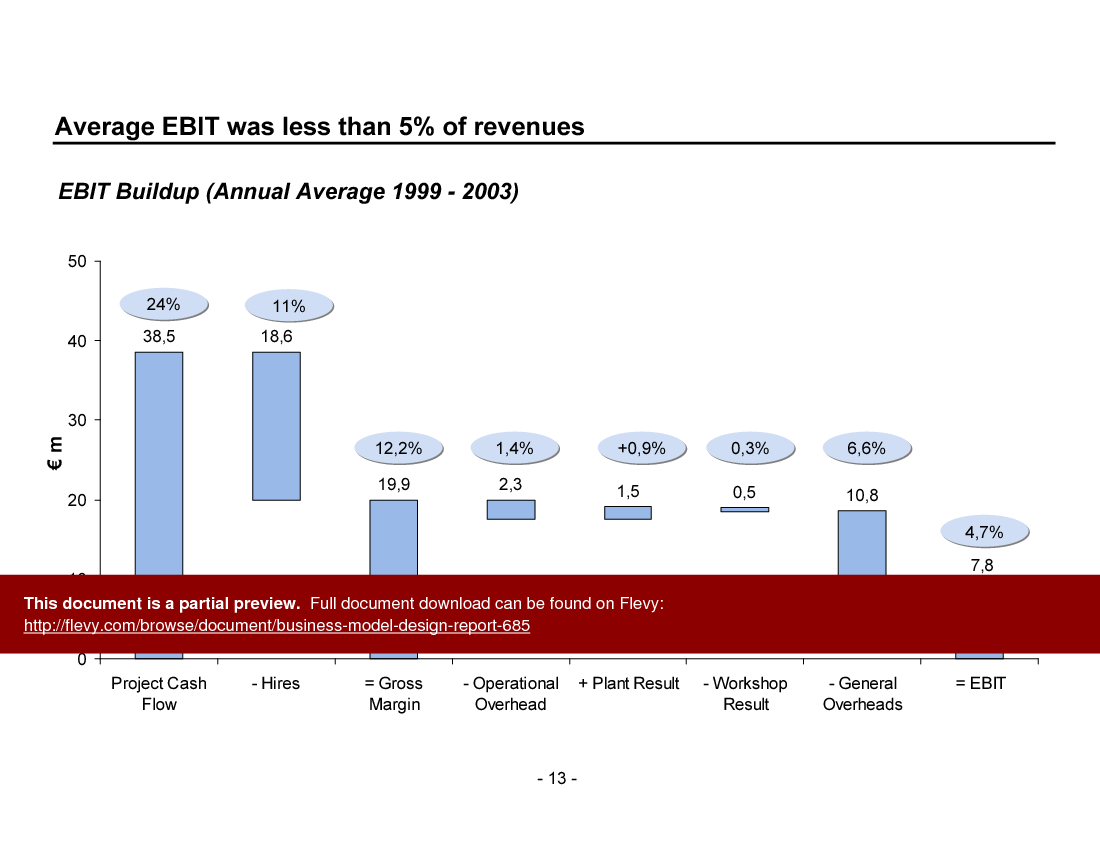
The document outlines twelve distinct Product/Market/Combinations (PMCs) that have been defined for the home markets, offering a clear activity map that highlights the firm's strengths and weaknesses. It also includes a thorough evaluation of the firm's EBIT margins, revealing that average EBIT was less than 5% of revenues, with significant variations across different markets and activities.
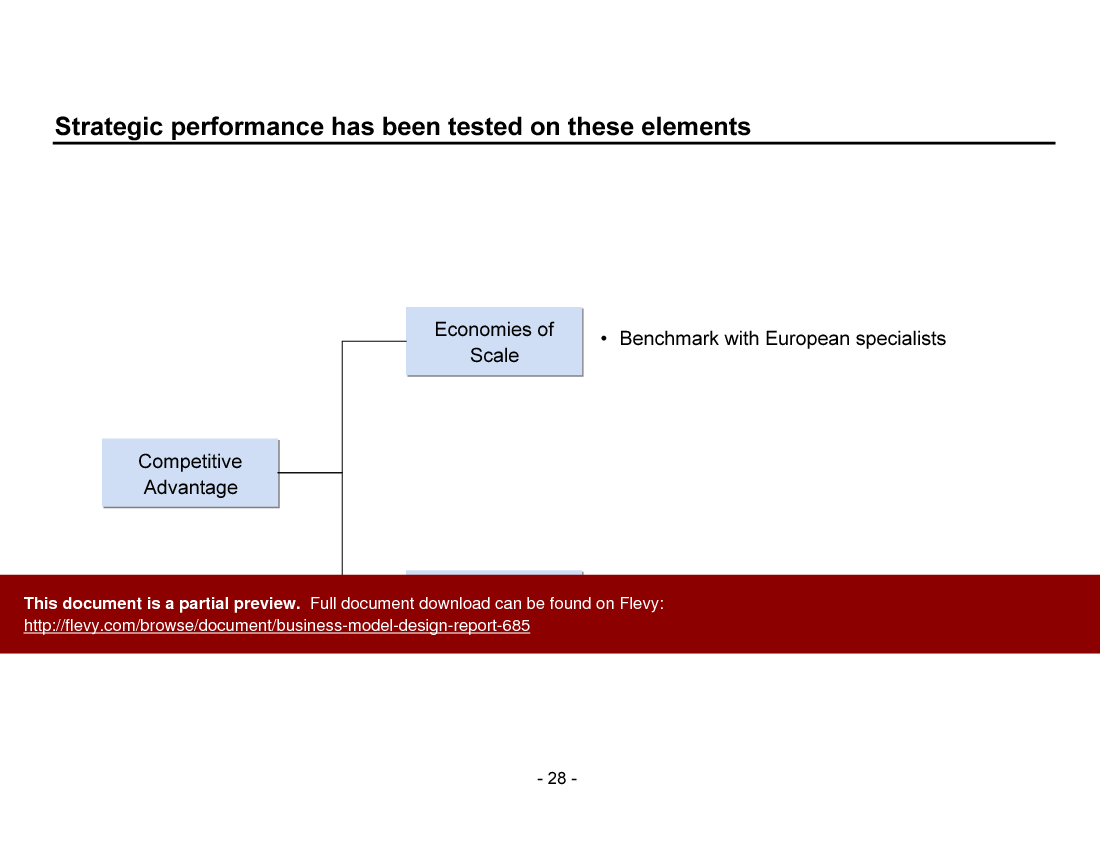
The strategic assessment includes a detailed analysis of the competitive landscape, highlighting that the firm's decentralized business model limits economies of scale. Competitors with more centralized and focused approaches are better positioned to exploit market opportunities. The report suggests that the firm needs to streamline its operations and focus on core activities to enhance profitability.
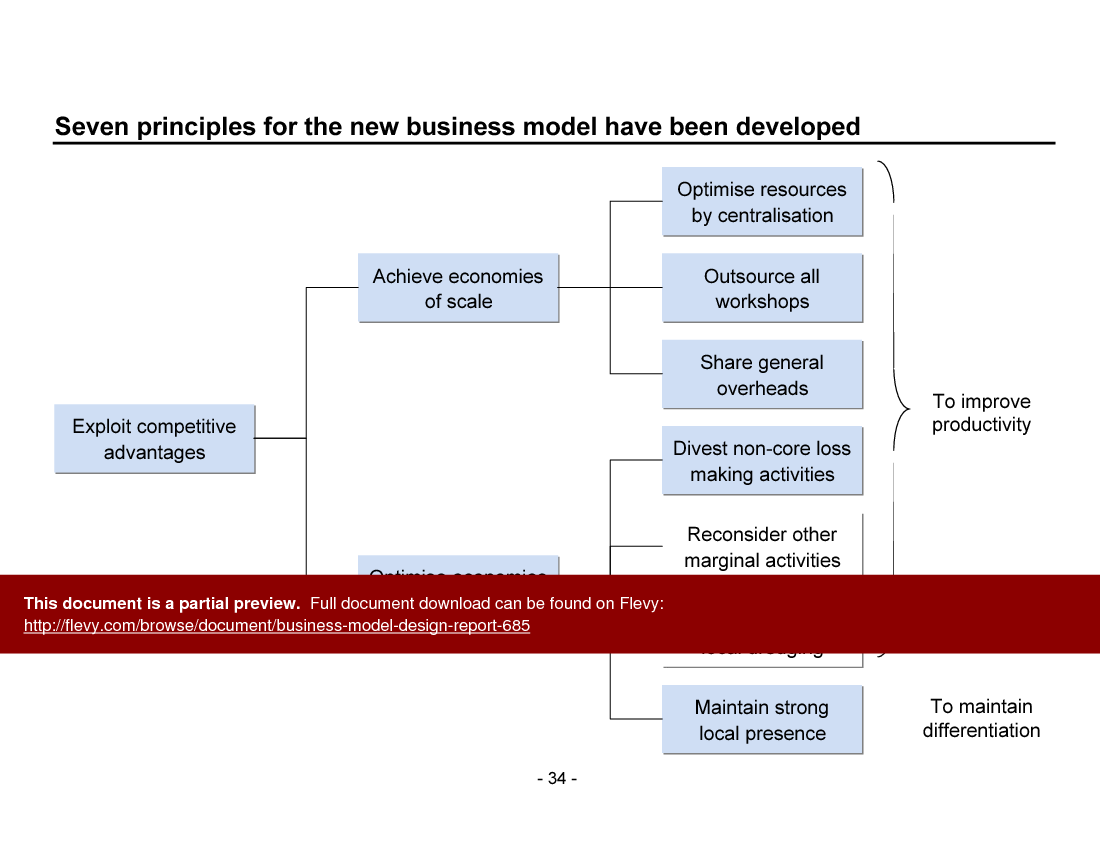
The report also provides a roadmap for implementing the new business model, emphasizing the importance of achieving economies of scale, optimizing resources through centralization, and divesting non-core loss-making activities. It presents various strategic options, each evaluated based on financial impact and risk-reward trade-offs, to guide the firm in making informed decisions for future growth.
Got a question about the product? Email us at support@flevy.com or ask the author directly by using the "Ask the Author a Question" form. If you cannot view the preview above this document description, go here to view the large preview instead.
MARCUS OVERVIEW
This synopsis was written by Marcus [?] based on the analysis of the full 218-slide presentation.
Executive Summary
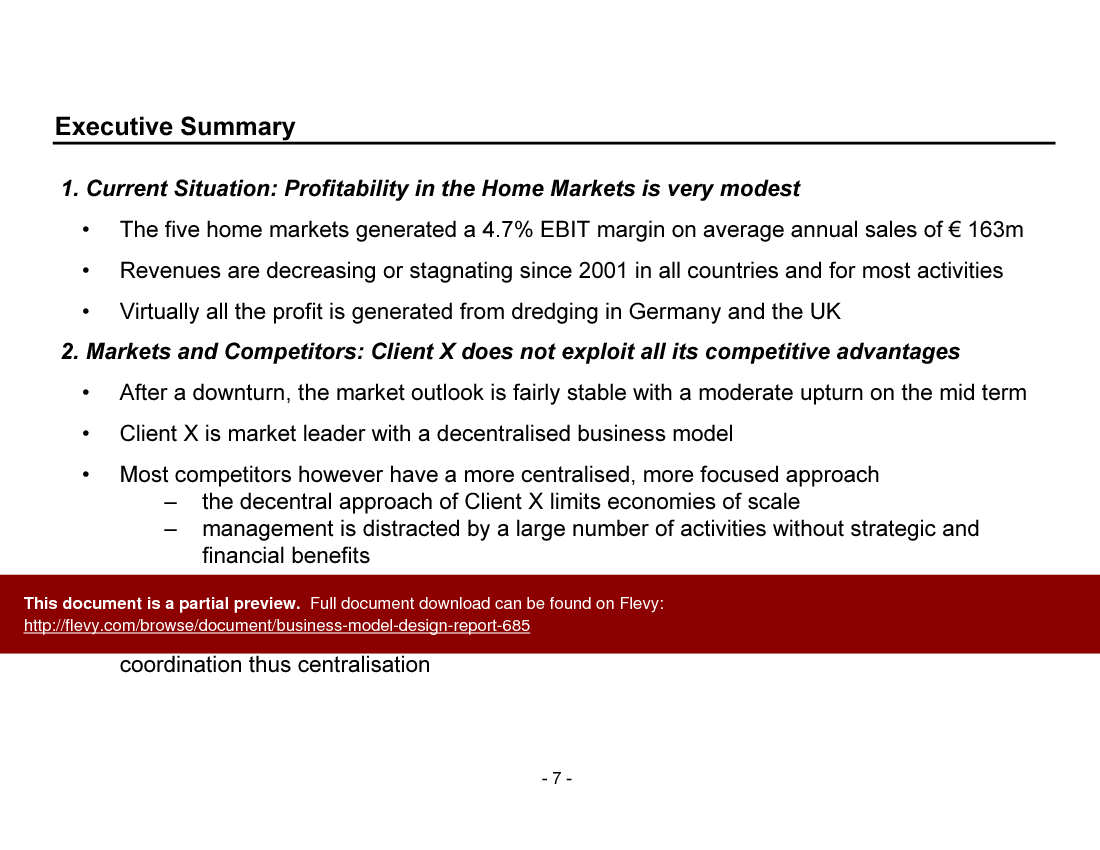
This Business Model Design Report provides an in-depth analysis of the current situation and strategic opportunities for Client X in the European home markets, specifically focusing on the construction sector. The report is structured in a consulting-grade format, akin to McKinsey, Bain, or BCG-quality presentations (not affiliated). It outlines the profitability challenges faced by Client X, which has seen stagnating revenues and modest EBIT margins averaging 4.7% across 5 home markets. The report identifies key competitive dynamics, including the need for a more centralized business model to leverage economies of scale and improve operational efficiency. Ultimately, it presents a new business model aimed at enhancing profitability through focused local operations and strategic divestments.
Who This Is For and When to Use
• Corporate executives overseeing strategic initiatives in construction and dredging sectors
• Integration leaders tasked with implementing business model transformations
• Consultants advising on operational efficiency and market positioning
• Financial analysts evaluating profitability and investment opportunities in the construction industry
Best-fit moments to use this deck:
• During strategic planning sessions focused on operational improvements and profitability enhancement
• In workshops aimed at aligning management teams on new business model implementations
• When assessing competitive positioning and market entry strategies in European home markets
Learning Objectives
• Define the current profitability landscape across European home markets for Client X
• Analyze competitive positioning and identify key market players
• Develop a new business model that focuses on operational efficiency and profitability
• Establish a clear implementation plan for transitioning to the new business model
• Identify potential risks and benefits associated with the proposed changes
• Create a framework for ongoing performance monitoring and adjustment
Table of Contents
• Introduction (page 2)
• Current Situation (page 3)
• Markets and Competitors (page 10)
• New Business Model (page 34)
• Implementation (page 62)
Primary Topics Covered
• Current Profitability Challenges - Client X's EBIT margins are modest, averaging 4.7%, with revenues stagnating since 2001.
• Market Dynamics - The report highlights the competitive landscape, noting that Client X's decentralized model limits economies of scale and operational efficiency.
• New Business Model Proposal - A centralized approach is recommended to enhance coordination and operational effectiveness across home markets.
• Implementation Timeline - A six-month transition plan is outlined, detailing preparation and execution phases.
• Financial Implications - The report provides a financial analysis, including expected transformation costs and projected EBIT improvements.
• Risk Assessment - Key risks associated with the transition are identified, along with strategies for mitigation.
Deliverables, Templates, and Tools
• Business model framework template for assessing operational efficiencies
• Financial analysis model for projecting EBIT improvements
• Risk assessment tool for evaluating potential challenges during implementation
• Communication plan template for engaging stakeholders throughout the transition
• Performance monitoring dashboard for tracking key metrics post-implementation
Slide Highlights
• Overview of profitability challenges across home markets
• Competitive landscape analysis highlighting Client X's market position
• Proposed new business model structure emphasizing centralization
• Implementation timeline detailing key milestones and deliverables
• Financial projections illustrating expected EBIT improvements
Potential Workshop Agenda
Business Model Overview Session (90 minutes)
• Present findings on current profitability and market dynamics
• Discuss proposed new business model and its implications
Implementation Planning Session (120 minutes)
• Review the implementation timeline and key milestones
• Identify roles and responsibilities for each team member
Risk Assessment Workshop (60 minutes)
• Analyze potential risks associated with the new business model
• Develop mitigation strategies for identified risks
Customization Guidance
• Adjust financial projections based on specific market conditions and operational capabilities
• Tailor the implementation timeline to align with internal organizational processes
• Modify communication strategies to fit the unique culture and structure of Client X
Secondary Topics Covered
• Overview of competitive advantages and disadvantages in the current market
• Analysis of customer needs and expectations across different product-market combinations
• Assessment of operational efficiencies and inefficiencies within existing business practices
• Exploration of alternative business models and their potential impacts
FAQ What are the main profitability challenges facing Client X?
Client X faces stagnating revenues and modest EBIT margins averaging 4.7%, primarily due to a decentralized business model that limits operational efficiencies.
How does the new business model improve profitability?
The new business model focuses on centralization, which enhances coordination, reduces overhead costs, and allows for better resource allocation, ultimately leading to improved EBIT margins.
What is the expected timeline for implementation?
The transition to the new business model is expected to take approximately 6 months, with clearly defined phases for preparation, execution, and monitoring.
What are the transformation costs associated with the new model?
Transformation costs are projected to be around €6 million, with additional asset write-offs estimated at €4 million.
How will success be measured post-implementation?
Success will be measured through key performance indicators (KPIs) related to EBIT margins, operational efficiency, and market share growth.
What risks are associated with the proposed changes?
Key risks include potential resistance to change from staff, challenges in resource reallocation, and the need for effective communication throughout the transition.
How can the organization ensure stakeholder buy-in?
Engaging stakeholders early in the process through transparent communication and inclusive decision-making will help secure buy-in and support for the new business model.
What financial metrics should be monitored after implementation?
Key financial metrics include EBIT margins, cash flow, revenue growth, and operational overhead ratios.
Glossary
• EBIT - Earnings Before Interest and Taxes, a measure of a firm's profitability.
• PMC - Product Market Combination, a framework for categorizing business activities.
• Centralization - The process of consolidating decision-making authority at a central point in the organization.
• Operational Efficiency - The ability to deliver products or services in the most cost-effective manner without compromising quality.
• Stakeholder - Any individual or group that has an interest in the outcome of a project or business decision.
• Transformation Costs - Expenses incurred during the process of changing a business model or operational structure.
• Risk Mitigation - Strategies and actions taken to reduce the impact of potential risks.
• Market Dynamics - The forces that impact the supply and demand of products and services in a market.
• Financial Projections - Estimates of future financial outcomes based on historical data and market analysis.
• Customer Needs - The requirements and expectations of customers that drive purchasing decisions.
• Implementation Timeline - A schedule outlining the key phases and milestones of a project.
• Performance Monitoring - The process of tracking and assessing the effectiveness of a business strategy or operational change.
This PPT slide analyzes average annual revenue across 5 key home markets, totaling €163 million over 5 years. Revenue is categorized by country and product, with a visual representation for easy comparison. The "Coastal" product line shows significant revenue contributions, while "Local" and "Intermediate" categories indicate a diversified revenue stream. The "Central" product line is the least represented, suggesting potential areas for growth. Each product category is further broken down, revealing contributions from projects like "Bore Piling" and "Foundation," highlighting revenue drivers and investment opportunities. This analysis informs strategic decisions regarding resource allocation and market focus, optimizing performance and identifying growth areas.
The project structure for the collaborative initiative involving Client X and country management teams includes 2 primary components: Margin Improvement Programme Management and the Home Markets Project. The Margin Improvement Programme Management focuses on enhancing financial performance, while the Home Markets Project targets specific regional strategies. The Steering Committee and Programme Management Office oversee project execution and alignment, with the Project Team responsible for implementing strategies and managing daily activities. The Home Markets Project is segmented into geographical areas: XYZ, Germany, UK, Finland, and Sweden, indicating a tailored approach to regional market dynamics. Each country has specific objectives aligned with overarching project goals, highlighting the collaborative nature of the initiative and the importance of coordinated efforts across teams and regions.
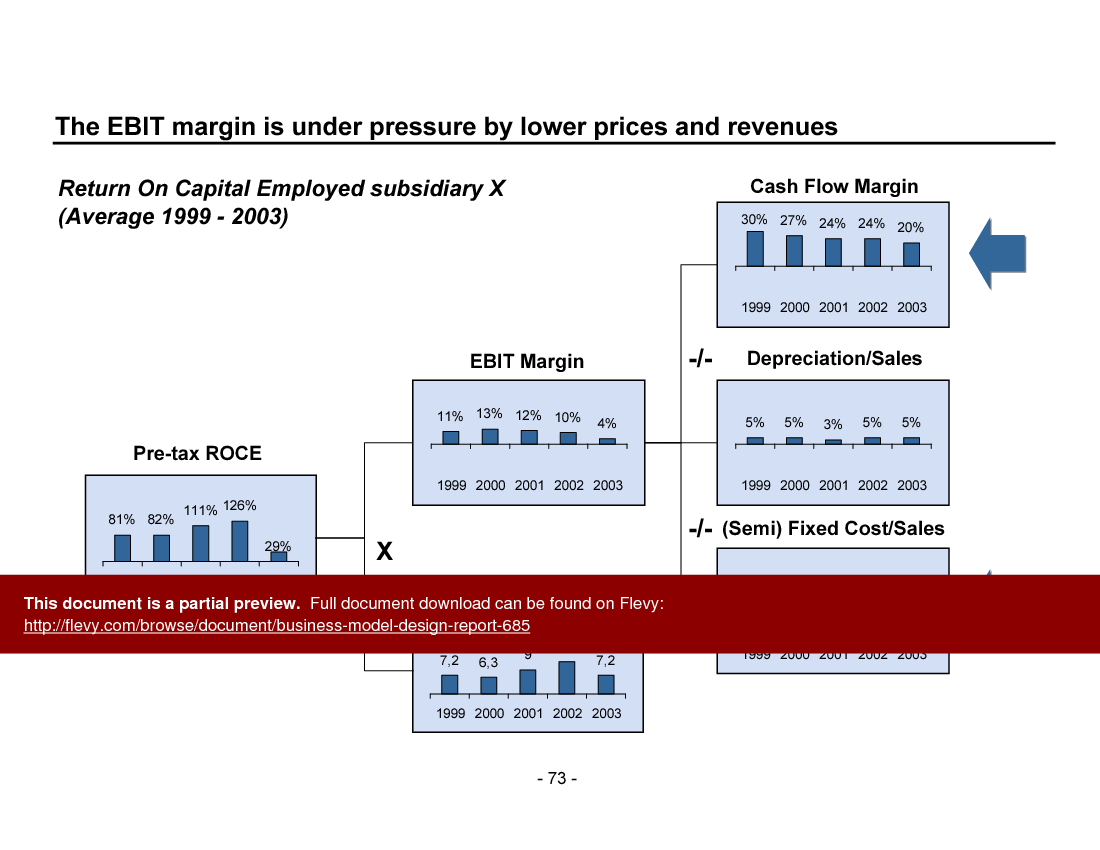
This PPT slide analyzes the EBIT margin of a subsidiary over 5 years, revealing a decline from 11% in 1999 to 4% in 2003, raising concerns about profitability and operational efficiency. It illustrates the relationship between EBIT margin, Pre-tax ROCE, and Net Asset Turnover. Pre-tax ROCE peaked at 126% in 2002, but fell to 29% in 2003, indicating challenges in capital utilization. Net Asset Turnover peaked at 12.4 in 2002, dropping to 7.2 in 2003, suggesting inefficiencies in asset management. Components affecting EBIT margin include Cash Flow Margin, which declined from 30% in 1999 to 20% in 2003, indicating liquidity concerns. Depreciation/Sales and (Semi) Fixed Cost/Sales ratios remained stable, suggesting they are not primary drivers of EBIT margin decline.
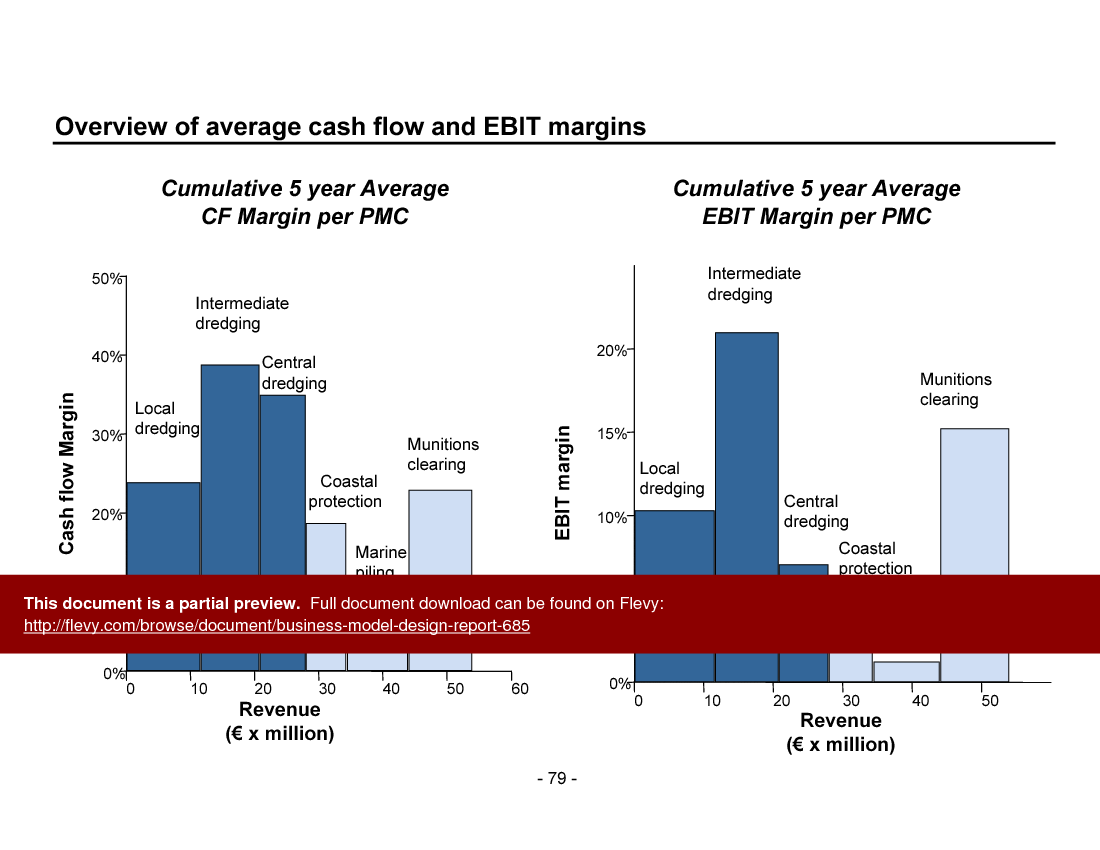
This PPT slide analyzes cash flow and EBIT margins for dredging activities over 5 years. Cumulative cash flow margins per project management company (PMC) exceed 17%, indicating strong cash flow relative to operational costs. The bar chart shows fluctuations in cash flow margins across revenue levels, with some PMCs achieving high margins while others fall below average. In contrast, cumulative EBIT margins range from -3% to 3%, revealing that most PMCs struggle with profitability despite healthy cash flow. This discrepancy suggests operational inefficiencies or high fixed costs impacting overall profitability. Stakeholders should consider these metrics for informed decisions on resource allocation and investment viability in dredging operations.
This PPT slide provides an overview of market developments in the European construction sector, categorizing key indicators such as GDP growth and construction market growth. Germany shows positive GDP growth and a stable construction market, with a favorable capital dredging outlook, positioning it as a leader in investment opportunities. The UK also reflects positive GDP growth,, but its capital dredging outlook is less optimistic, indicating a need for strategic focus. Finland and Sweden exhibit positive GDP growth and strong construction indicators, with favorable dredging outlooks, suggesting sustained growth potential. The Iberian region shows mixed results, with Spain identified as a laggard in the construction market, necessitating strategic reassessment for competitive positioning.
This PPT slide analyzes the UK economic outlook, focusing on GDP growth and the construction sector. Nominal GDP growth from 1999 to 2007 shows fluctuations with a general upward trend. A minor economic upturn is anticipated, driven by US growth, with limited growth in continental Europe. The construction market outlook is modestly positive, projecting 3% growth for 2004 and 2005, indicating investment opportunities. Central government spending on transport is expected to rise from £7.3 billion in 2003/04 to £8.4 billion in 2005/06, potentially stimulating further construction market growth. However, concerns about public finances predict deterioration in 2003/04, highlighting the need for fiscal discipline under the "golden rule." Stakeholders should consider these insights for investment strategies in the construction sector.
This PPT slide presents a comparative analysis of 3 dredging companies: Wasa Dredging, Rohde Nielsen, and Suomen Vesityö OY. Wasa Dredging, a Finland-based company with nine employees, focuses on local dredging and subcontracting for harbor construction, operating 2 backhoe dredgers and support vessels. Rohde Nielsen employs 137 staff and specializes in maintenance dredging, land reclamation, and coastal defense, with a fleet of 4 mid-size hoppers, leveraging a low-cost structure for global operations. Suomen Vesityö OY, also from Finland, has eight employees and specializes in small water projects, reporting revenues of approximately €1.2 million. This analysis provides insights into operational scope, equipment, and financial performance, aiding strategic decisions for partnerships in the dredging sector.
This PPT slide outlines a structured four-phase approach to analyzing the Swedish home market. The first phase, "Planning and Visioning," identifies initial issues and establishes a tailored plan of work for each home market, aligning stakeholders and defining objectives. The second phase, "Current Situation Analysis," examines market dynamics, financials, and competitor positioning to provide insights into the current market state. Phase 3 focuses on developing an "Adjusted Business Model," exploring alternative models and assessing their benefits and risks to ensure adaptability to market changes. The final phase, "Implementation Plan," details the steps for executing the adjusted business model, including organizational considerations and financial implications, while noting that implementation is "out of scope." This framework serves as a roadmap for stakeholders analyzing the Swedish home market.
This PPT slide analyzes the relationship between equipment age and depreciation in the construction industry. Most equipment is over 15 years old, significantly depreciated, while Gema and Bellatrix maintain a book value exceeding €1 million, indicating potential operational relevance. The scatter plot illustrates this relationship, with the x-axis representing equipment age in years and the y-axis showing purchase value in thousands of euros. Larger circles denote main plants, while smaller circles represent supporting equipment. The trend shows older equipment generally has lower purchase values,, but Gema and Bellatrix's positioning suggests they retain value due to maintenance or unique attributes. Additional categories like "tugboats" and "multicats" at the lower end warrant further analysis for investment decisions.
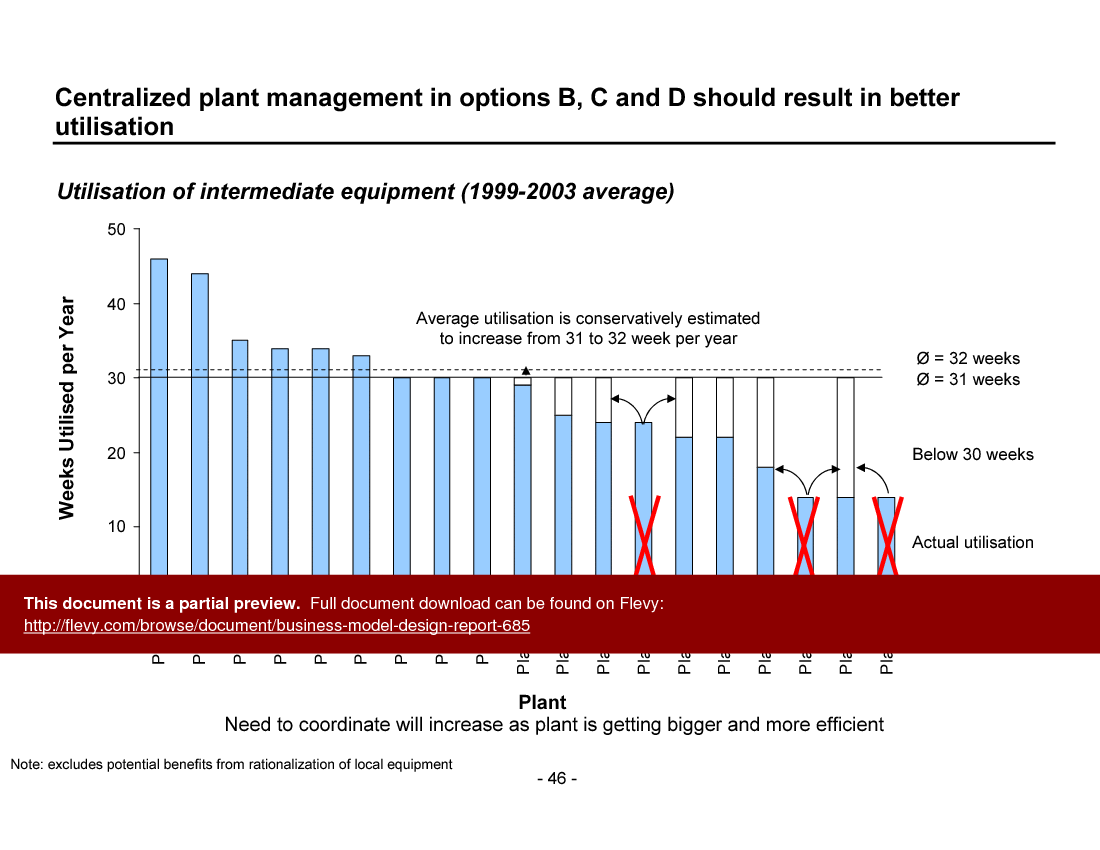
This PPT slide outlines key assumptions for financial evaluation using Pro Forma Profit and Loss statements, focusing on Revenue, Plant, Crew, Workshop, and General Overheads. Revenue analysis is based on historical averages from 1999 to 2003, adjusted for the termination of specific activities, indicating reliance on past performance and current strategic decisions. The Plant section notes increased utilization of central and intermediate equipment due to operational centralization, suggesting potential cost savings. The Crew section highlights a decrease in crew requirements linked to improved plant resource utilization, indicating a shift towards automation. The Workshop segment reveals that most activities will be outsourced, with a 10% cost reduction in Finland, reflecting a focus on core competencies. General Overheads will not increase across options, suggesting controlled overhead management for financial stability.
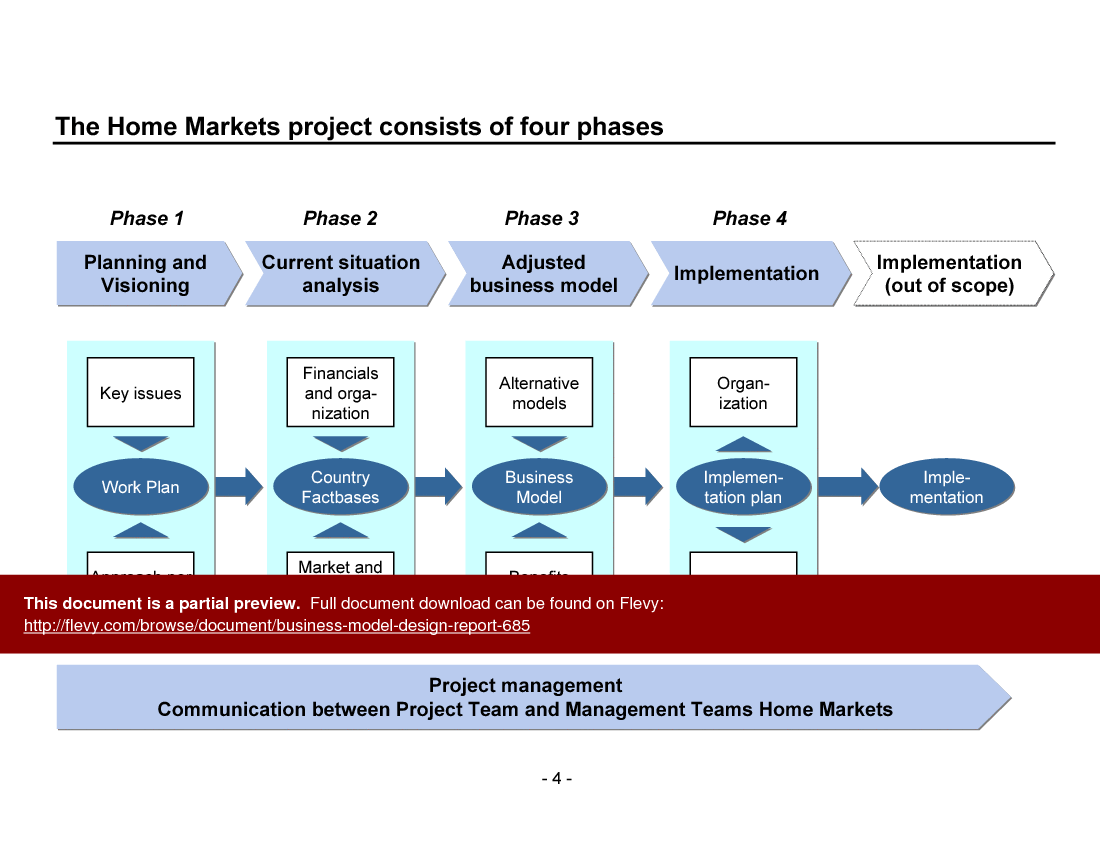
The Home Markets project consists of 4 phases:
Phase 1, "Planning and Visioning," identifies key issues and develops a tailored work plan, aligning stakeholders on objectives.
Phase 2, "Current Situation Analysis," examines the existing environment, including financial assessments and organizational structures, to understand market dynamics and competitors.
Phase 3, "Adjusted Business Model," refines the business model based on insights from the previous phase, evaluating benefits and risks of alternative approaches.
Phase 4, "Implementation," outlines organizational requirements and the implementation plan, translating strategy into action. Notably, "Implementation (out of scope)" indicates aspects excluded from this project, which stakeholders should consider.
This framework aids decision-makers in navigating market entry complexities and business model adaptation.
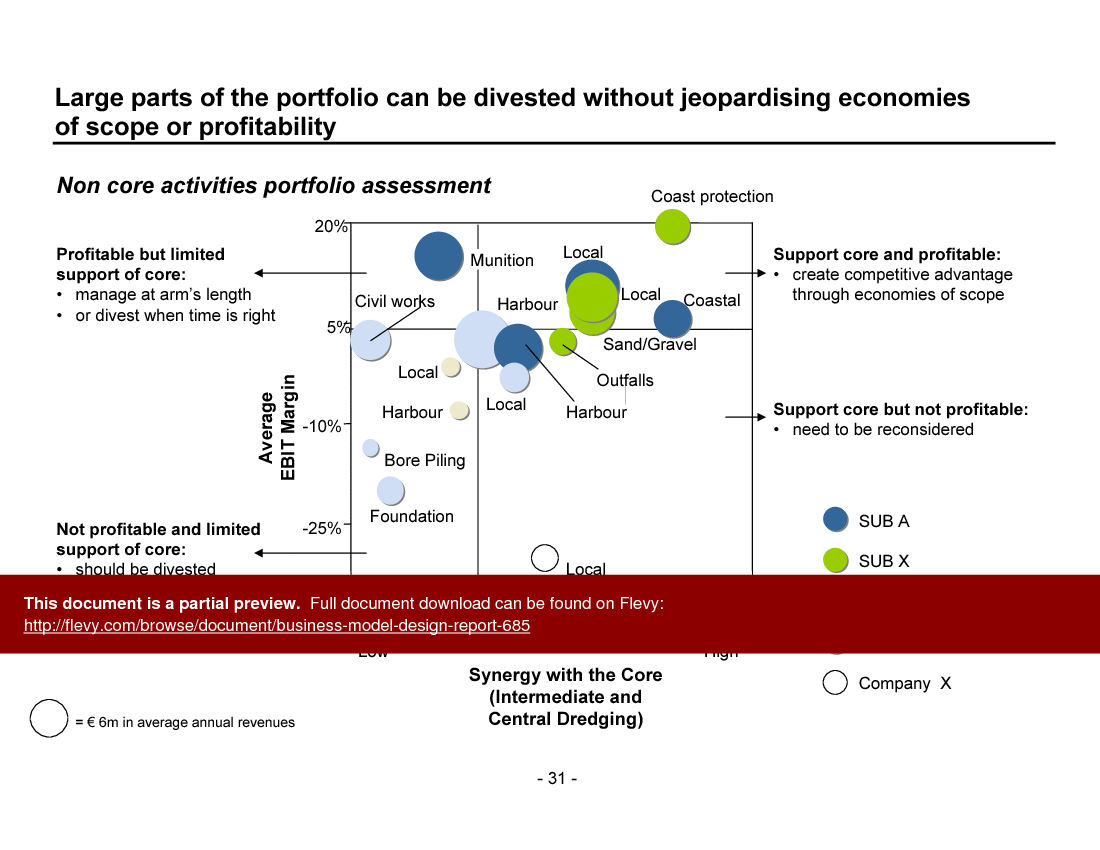
This PPT slide assesses non-core activities within a portfolio, focusing on profitability and synergy with core business operations. A scatter plot illustrates this, with the x-axis representing synergy levels and the y-axis showing average EBT margins from -40% to 20%. The upper right quadrant identifies profitable activities that support the core, which may be candidates for careful management or divestment. The upper left quadrant contains profitable activities with limited core support, suggesting strategic management or divestment. The lower quadrants reveal unprofitable activities, with the lower left indicating limited core support and a need for divestment, while the lower right shows supportive, but unprofitable activities requiring reevaluation. Circle sizes represent different subsidiaries, and color coding distinguishes entities like SUB A and SUB X, aiding in organizational context. This analysis serves as a strategic tool for portfolio management and resource allocation.
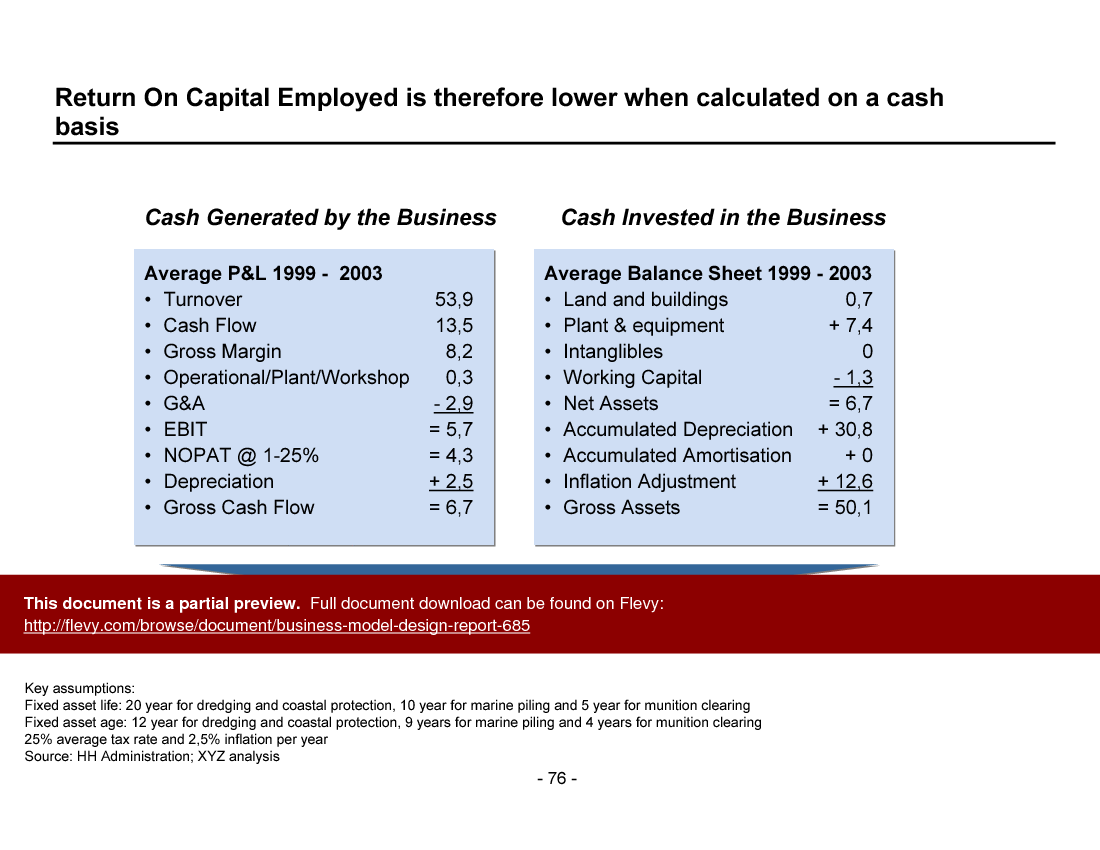
This PPT slide provides a financial analysis of cash flow metrics from 1999 to 2003, excluding the impact of PMC central. Key figures include average turnover at 46.7, cash flow of 11.0, and gross margin of 7.1. General and administrative expenses (G&A) are -2.4, while EBIT is 5.1, indicating positive operational performance. The cash invested includes land and buildings, plant and equipment, and working capital, with total gross assets at 39.5 and accumulated depreciation at +24.4. Net assets are 5.3, reflecting overall investment. The cash flow return on investment is 13.6%, highlighting capital allocation effectiveness. Key assumptions detail asset lifespan, essential for understanding depreciation and amortization calculations.
This PPT slide outlines a structured approach to analyzing the UK home market in 4 phases. Phase 1, "Planning and Visioning," focuses on identifying initial issues and developing a tailored plan. Phase 2, "Current Situation Analysis," examines key components such as "Financials and Organization," "Insight," and "Market and Competitors," essential for understanding market dynamics. Phase 3, "Adjusted Business Model," explores alternative models, assessing benefits and risks based on insights from the previous phase. Finally, Phase 4, "Implementation Plan," outlines actionable strategies, including "Organization," "Implementation Plan," and "Financials," while noting that execution is beyond the scope of this analysis. This methodical approach emphasizes analysis and strategic planning before implementation.
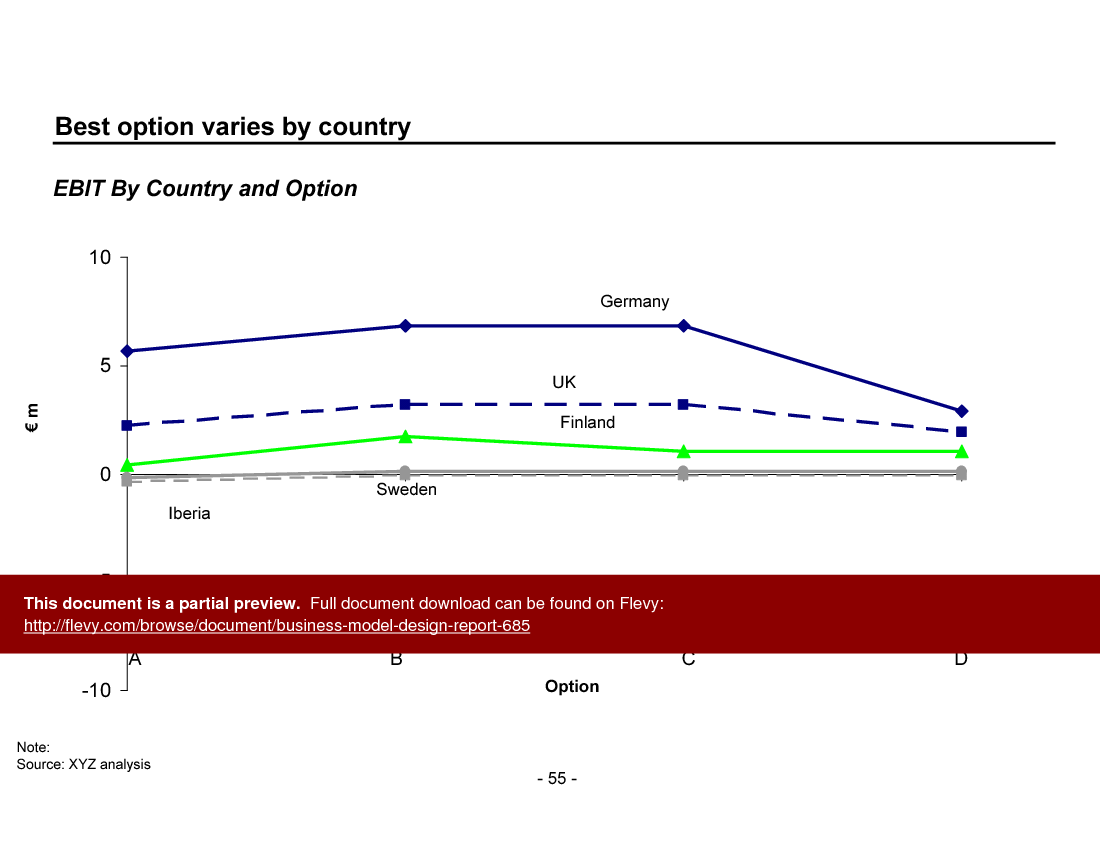
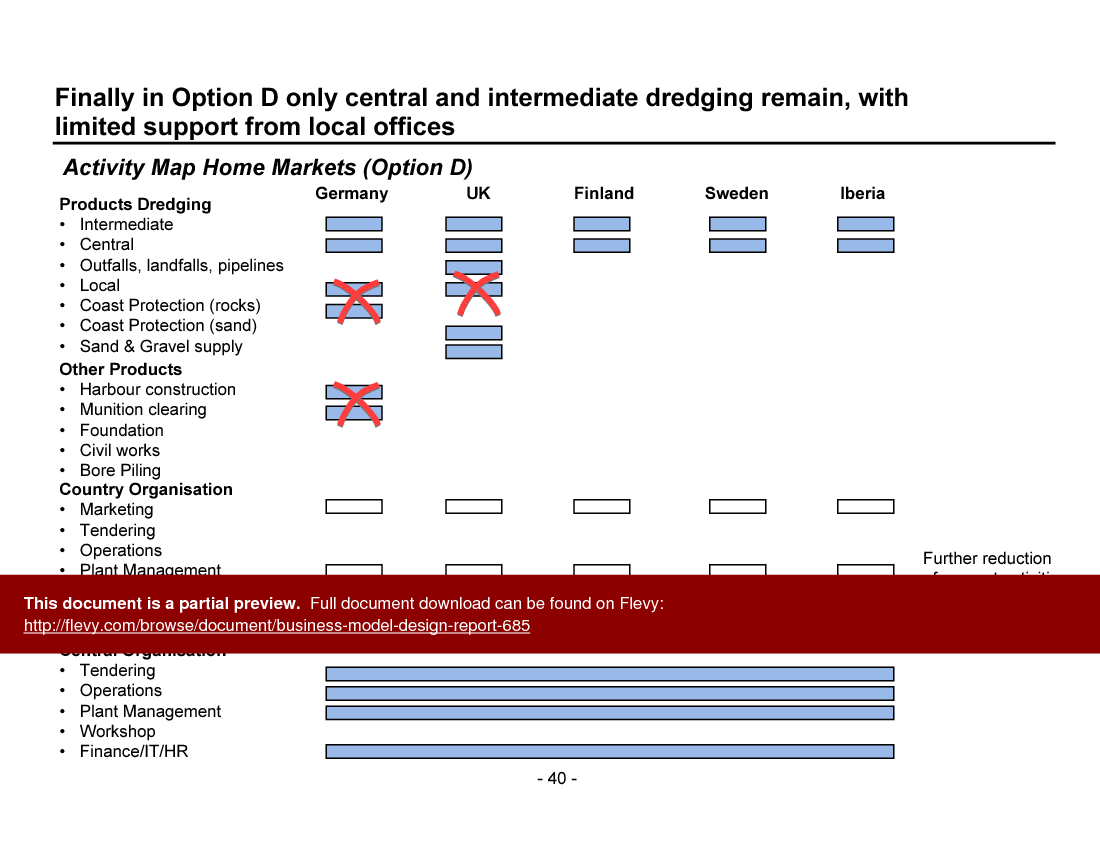
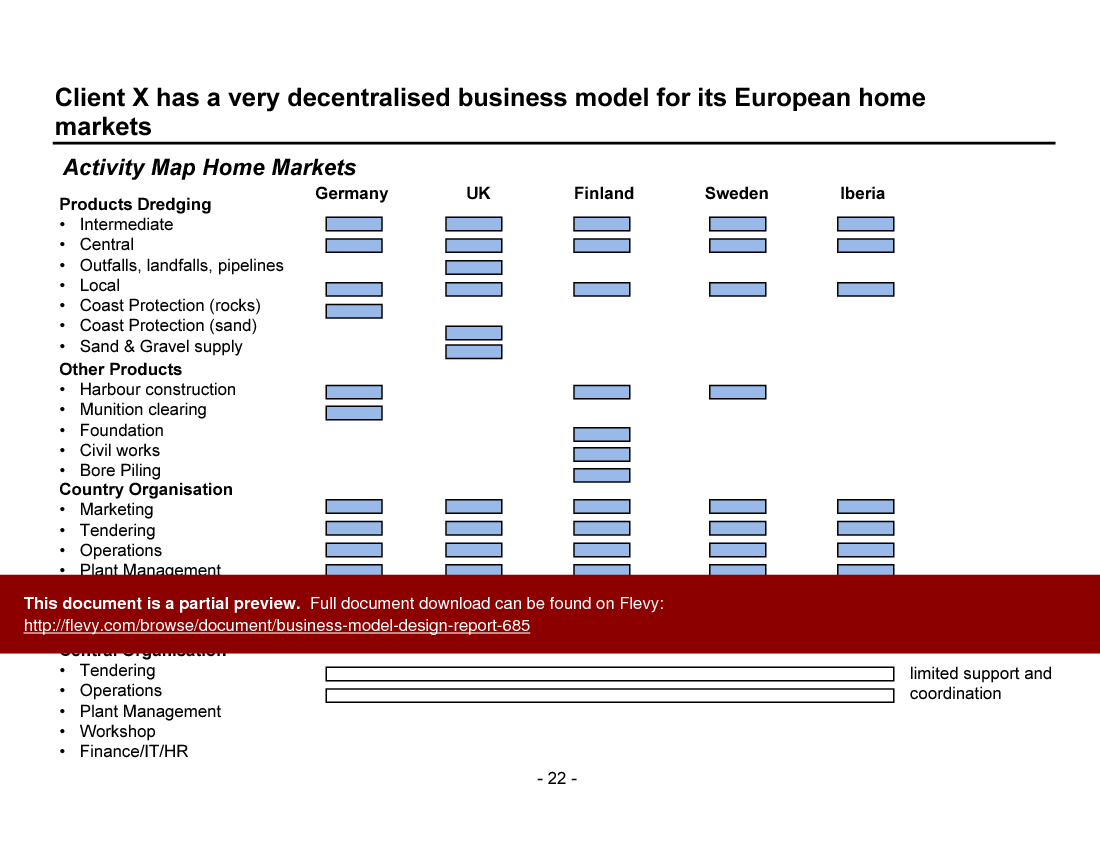
This PPT slide outlines a strategic overview of "Option B," centralizing all central and intermediate dredging activities in Sweden while maintaining a marketing office in Iberia. The activity map highlights home markets for dredging products and services across Germany, the UK, Finland, Sweden, and Iberia, revealing significant gaps in local dredging and coast protection in Sweden. The "Other Products" section lists Harbour construction, Munitions clearing, Foundation work, Civil works, and Bore Piling, with varying emphasis across regions. Key functions such as Marketing, Tendering, Operations, and Finance/IT/HR are centralized, with only marketing remaining in Sweden and Iberia. The transfer of all central and intermediate dredging activities indicates a restructuring aimed at streamlining operations and focusing resources, potentially improving efficiency, but raising concerns about local market responsiveness.
This PPT slide analyzes cash flow margins across 6 project categories from 1999 to 2003: Local Dredging, Intermediate Dredging, Central Dredging, Coastal Protection, Marine Piling, and Mine Clearing. The y-axis represents percentage margins while the x-axis denotes years. A downward trend in margins is evident across all categories, with fluctuations in cash flow margins; Local Dredging shows stability, whereas Central Dredging exhibits volatility. The shaded areas in the graphs indicate margin variability, reflecting the challenging market environment. This analysis provides insights into financial health, strategic positioning, and operational efficiencies within the construction industry, informing investment priorities and risk management approaches.
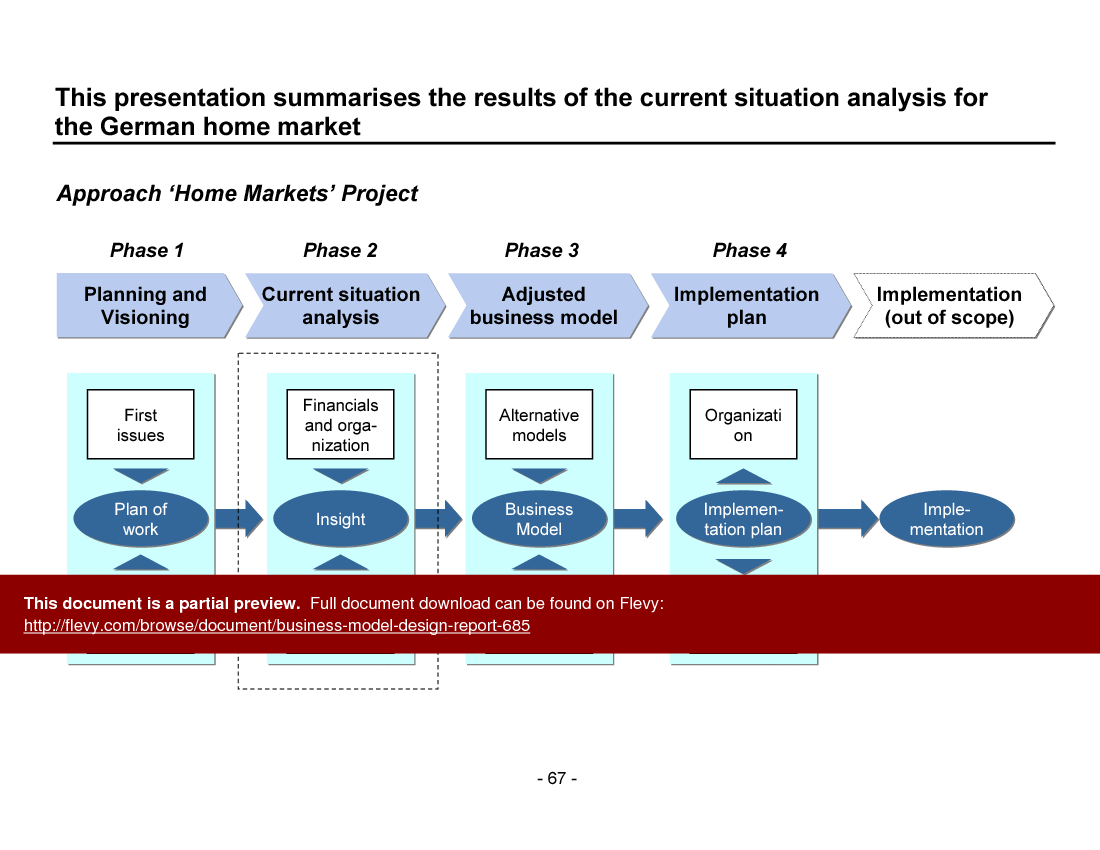
This PPT slide outlines a four-phase project framework for analyzing the German home market. The first phase, "Planning and Visioning," identifies initial issues and establishes a tailored plan of work. The second phase, "Current Situation Analysis," focuses on gaining insights into financials, organizational aspects, market conditions, and competitors, providing a comprehensive understanding of the landscape for informed decision-making. The third phase, "Adjusted Business Model," explores alternative models and assesses benefits and risks to ground strategic choices in solid analysis. The final phase, "Implementation Plan," details the required organizational structure and highlights financial considerations, while noting that actual implementation is outside the scope of this analysis.
This PPT slide presents a comparative analysis of average revenues and EBIT margins in a decentralized dredging business model from 1999 to 2003. The graph plots firms with EBIT margins on the vertical axis and average revenues on the horizontal axis. Key observations reveal that firms like HH and WD have higher EBIT margins with moderate revenues, while BS and TO show lower margins despite higher revenues, highlighting inefficiencies in decentralized operations. Factors contributing to the lack of scale advantages include suboptimal resource allocation and dispersed market development. Specific geographical markets, such as Finland, Sweden, and Iberia, lack critical mass, suggesting challenges in competitive effectiveness. This analysis underscores the limitations of decentralized structures in achieving financial outcomes and encourages reevaluation of operational strategies for improved profitability.
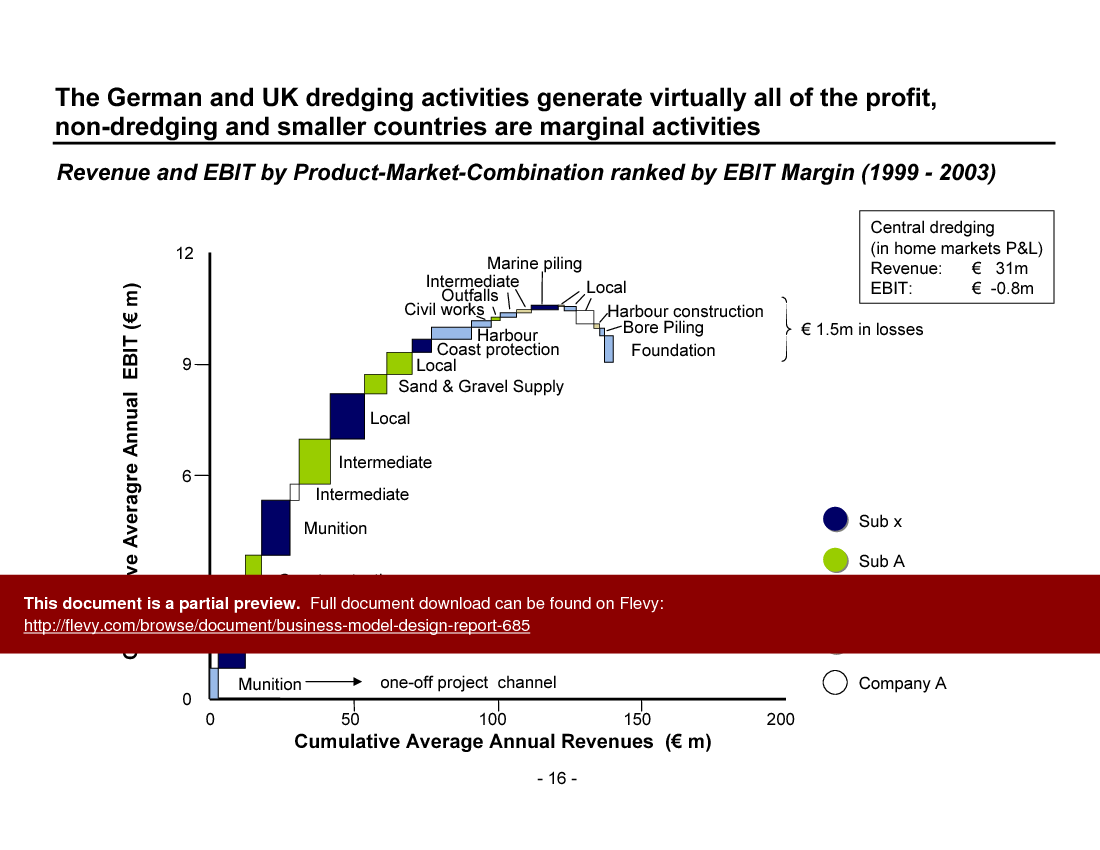
This PPT slide analyzes revenue and EBIT (Earnings Before Interest and Taxes) generated by product-market combinations in the dredging sector, focusing on the German and UK markets, which dominate profitability. The vertical axis quantifies cumulative average annual EBIT in millions of euros (0 to 12), while the horizontal axis categorizes activities like marine piling, civil works, and coast protection by EBIT margin. Marine piling and harbour construction emerge as the most lucrative, while sand and gravel supply and munition show lower profitability. Central dredging activities report €31 million in revenue with an EBIT loss of €0.8 million, highlighting sector challenges. Prioritizing high-margin activities is essential for maximizing profitability in dredging.
This PPT slide outlines the impact of major initiatives and economic growth on capital dredging demand in Spain and Portugal. Key drivers include "Major Initiatives," "Economic Growth," "Government Budgets," and the "Technical State of Ports," all influencing dredging services demand. In Portugal, a strong positive correlation exists between major initiatives and economic growth, benefiting local and central Project Management Consultants (PMCs), while the effect on intermediate PMCs is less pronounced. Spain mirrors these trends with varied intensity, suggesting regional differences in demand. The interconnectedness of these economic factors has significant implications for project management in the dredging sector.
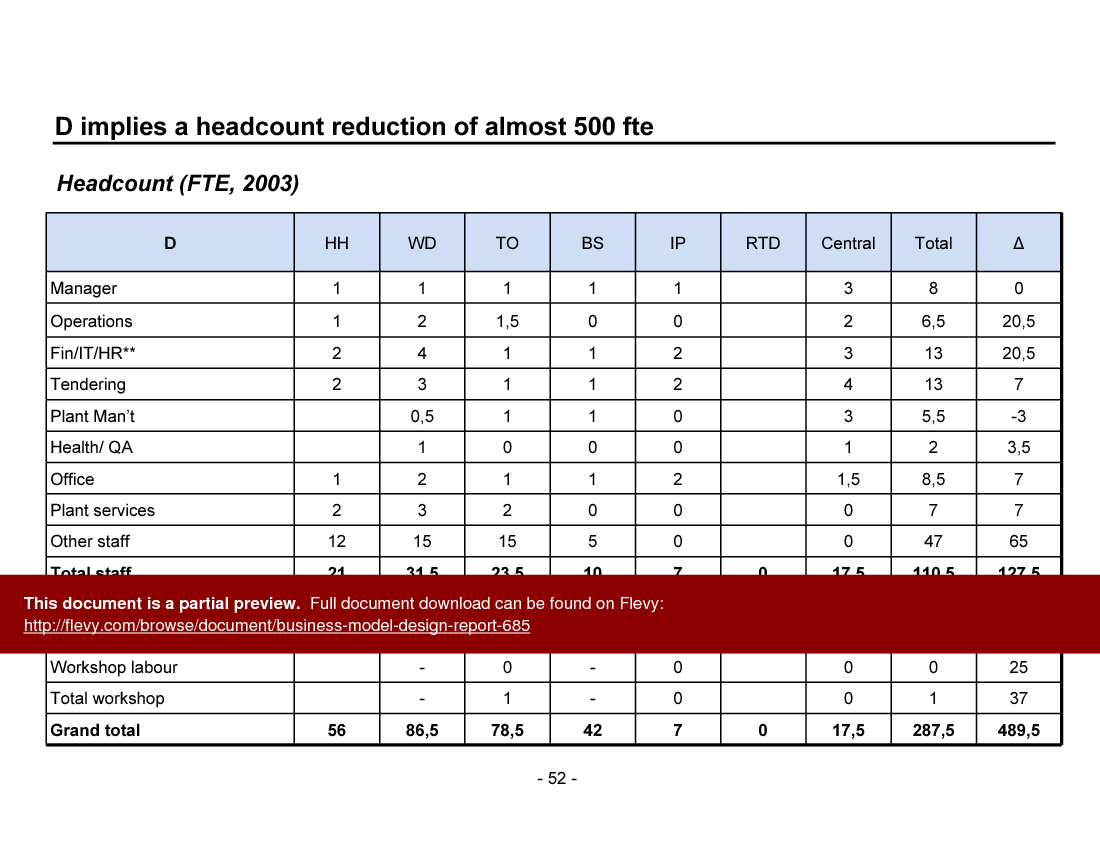
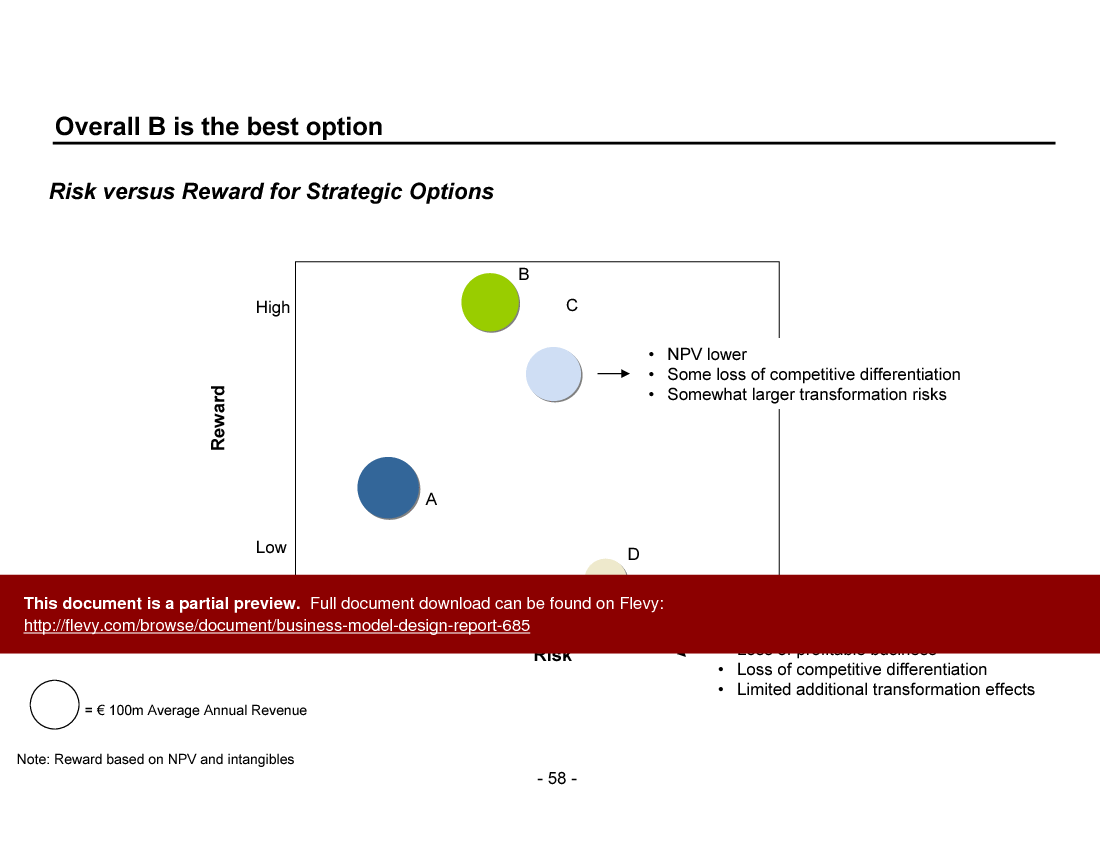
This PPT slide evaluates intangible benefits of 4 options: A, B, C, and D, across criteria including coordinated marketing efforts, competitive matching, local relations, technical know-how, project commitment, multinational project management, and plant management. Options B and C demonstrate stronger coordinated marketing across Europe, enhancing strategic agility through effective competitive matching. Local relations indicate option D may struggle due to a smaller footprint, impacting visibility. Options B and C excel in technical know-how, improving complex project management. Centralized project commitment may focus efforts, but could hinder smaller projects, as seen with option D. Options B and C provide a robust framework for managing large multinational projects and optimizing plant management for operational efficiency.
This PPT slide presents a financial analysis of Return on Capital Employed (ROCE) from 1999 to 2003, highlighting a drop to 3.4% when adjusted for cash and inflation. Key financial figures include a turnover of 18.4 million, cash flow of 5.3 million, gross margin of 3.0 million, and negative operational costs of -1.2 million. Earnings Before Interest and Taxes (EBIT) is 1.9 million, leading to a Net Operating Profit After Tax (NOPAT) of 1.4 million at a 1-25% tax rate. The gross cash flow is 2.0 million. The average balance sheet shows gross assets of 29.5 million, with a net asset value of 3.2 million after depreciation and inflation adjustments. Cash flow returns on investment indicate a 3.0% return overall and a 6.3% return from the sand and gravel supply segment, reflecting the business's financial health and investment efficiency.
Source: Best Practices in Strategic Plan Example, Business Model Design PowerPoint Slides: Business Model Design Report PowerPoint (PPT) Presentation Slide Deck, Documents & Files
The average daily rate of a McKinsey consultant is $6,625 (not including expenses). The average price of a Flevy document is $65.
Trusted by over 10,000+ Client Organizations
Since 2012, we have provided business templates to over 10,000 businesses and organizations of all sizes, from startups and small businesses to the Fortune 100, in over 130 countries.

"I have used FlevyPro for several business applications. It is a great complement to working with expensive consultants. The quality and effectiveness of the tools are of the highest standards."
– Moritz Bernhoerster, Global Sourcing Director at Fortune 500
"Flevy.com has proven to be an invaluable resource library to our Independent Management Consultancy, supporting and enabling us to better serve our enterprise clients.
The value derived from our [FlevyPro] subscription in terms of the business it has helped to gain far exceeds the investment made, making a subscription a no-brainer for any growing consultancy – or in-house strategy team."
– Dean Carlton, Chief Transformation Officer, Global Village Transformations Pty Ltd.
"Flevy is our 'go to' resource for management material, at an affordable cost. The Flevy library is comprehensive and the content deep, and typically provides a great foundation for us to further develop and tailor our own service offer."
– Chris McCann, Founder at Resilient.World
"As an Independent Management Consultant, I find Flevy to add great value as a source of best practices, templates and information on new trends. Flevy has matured and the quality and quantity of the library is excellent. Lastly the price charged is reasonable, creating a win-win value for
the customer, Flevy and the various authors. This is truly a service that benefits the consulting industry and associated clients. Thanks for providing this service.
"
– Jim Schoen, Principal at FRC Group
"As a consultant requiring up to date and professional material that will be of value and use to my clients, I find Flevy a very reliable resource.
The variety and quality of material available through Flevy offers a very useful and commanding source for information. Using Flevy saves me time, enhances my expertise and ends up being a good decision."
– Dennis Gershowitz, Principal at DG Associates
"As a consulting firm, we had been creating subject matter training materials for our people and found the excellent materials on Flevy, which saved us 100's of hours of re-creating what already exists on the Flevy materials we purchased."
– Michael Evans, Managing Director at Newport LLC
"As a young consulting firm, requests for input from clients vary and it's sometimes impossible to provide expert solutions across a broad spectrum of requirements. That was before I discovered Flevy.com.
Through subscription to this invaluable site of a plethora of topics that are key and crucial to consulting, I
have been able to exceed expectations and deliver quality advice and solutions to my clients. The quality and expertise of the authors are exemplary and gives me great confidence to use as part of my service offerings.
I highly recommend this company for any consultant wanting to apply international best practice standards in their service offerings.
"
– Nishi Singh, Strategist and MD at NSP Consultants
"If you are looking for great resources to save time with your business presentations, Flevy is truly a value-added resource. Flevy has done all the work for you and we will continue to utilize Flevy as a source to extract up-to-date information and data for our virtual and onsite presentations!"
Download our free compilation of 50+ Strategy & Transformation slides and templates. Frameworks include McKinsey 7-S, Balanced Scorecard, Disruptive Innovation, BCG Curve, and many more.