 Click main image to view in full screen. Unlock all 10 preview images:
Business Financial Model for Planning and Forecasting – Excel XLSX
Excel (XLSX)


BENEFITS OF THIS DOWNLOADABLE EXCEL DOCUMENT
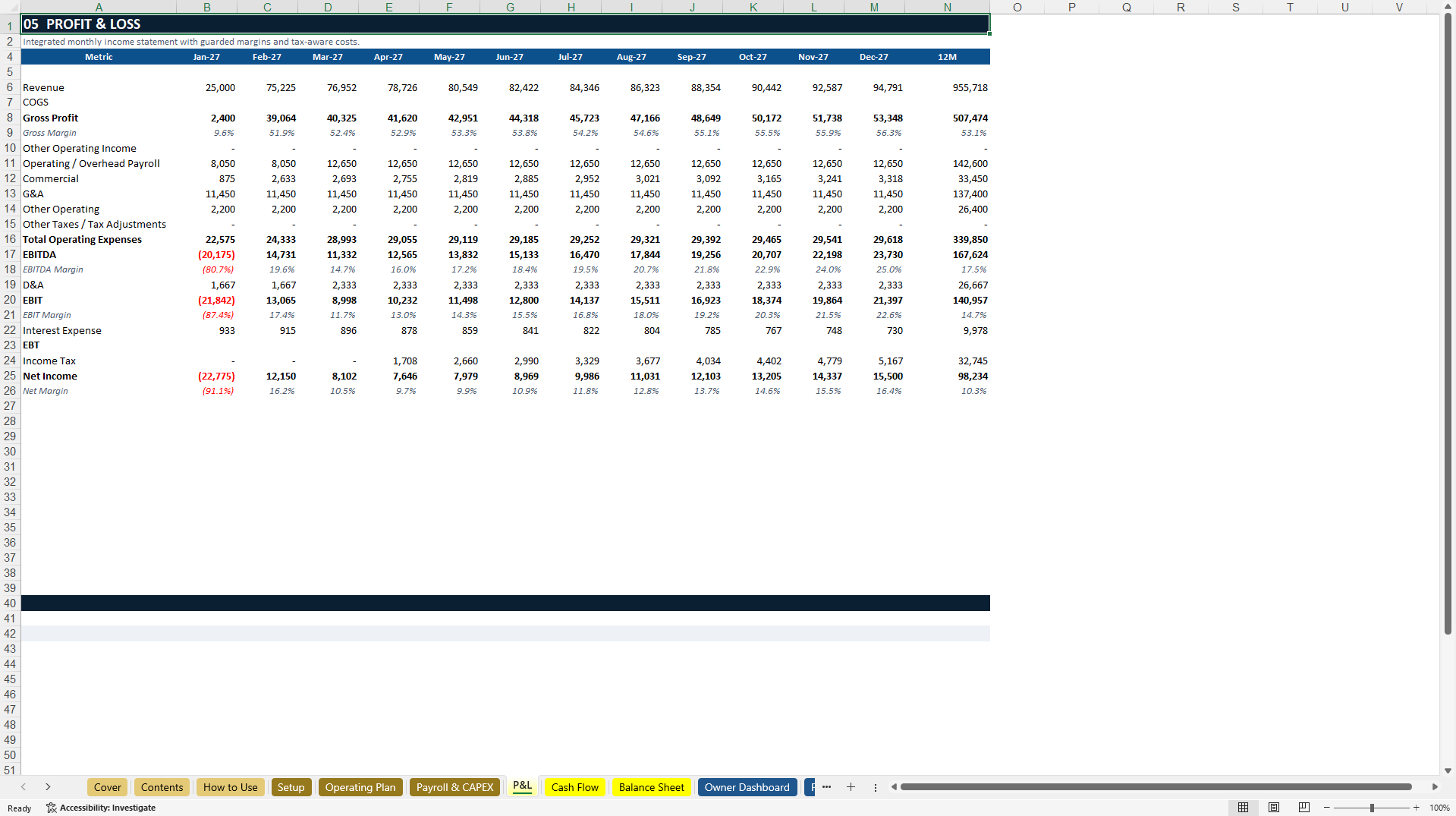
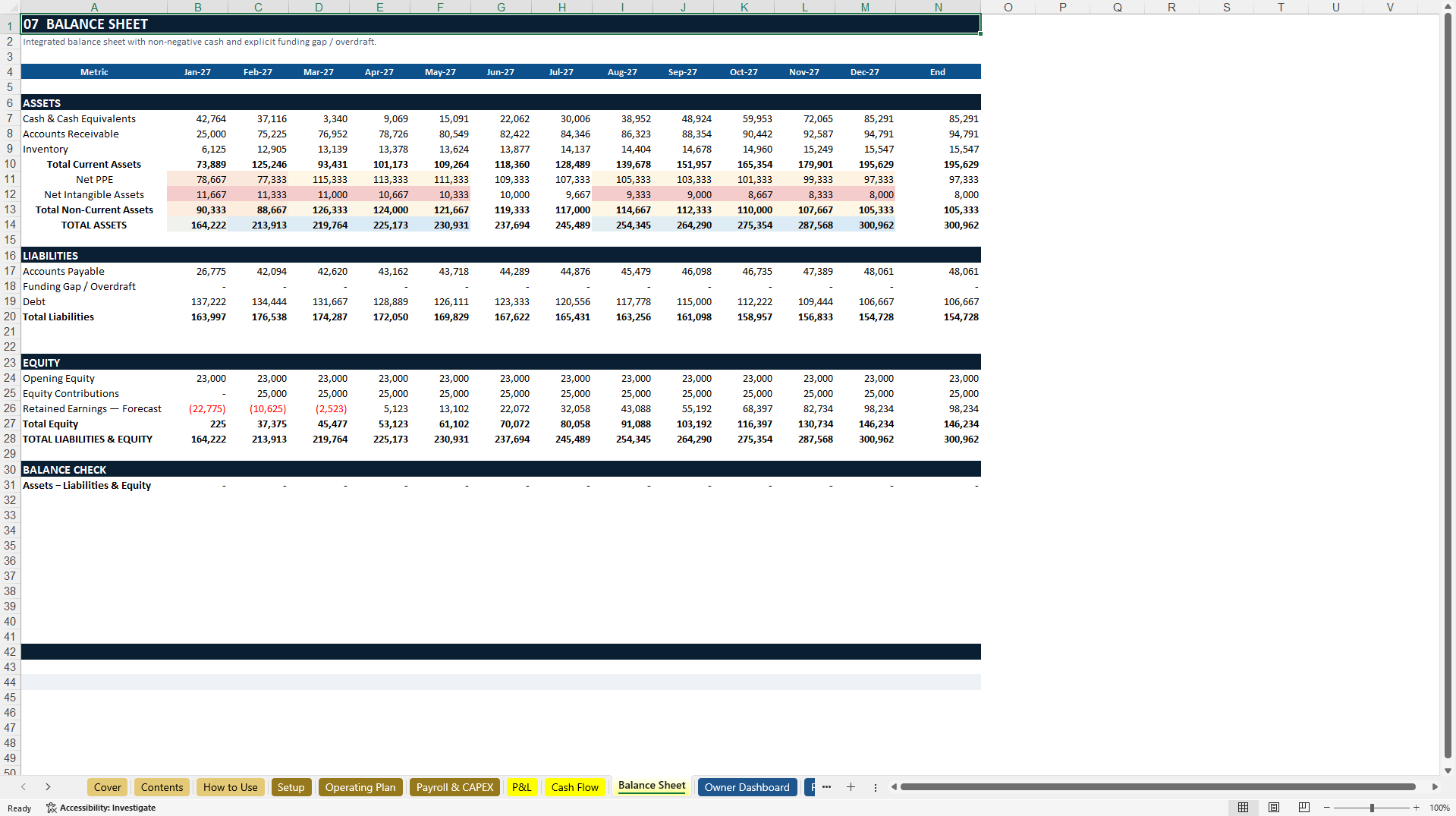
- Integrates the Profit & Loss Statement, Cash Flow Statement, and Balance Sheet into one connected forecasting framework.
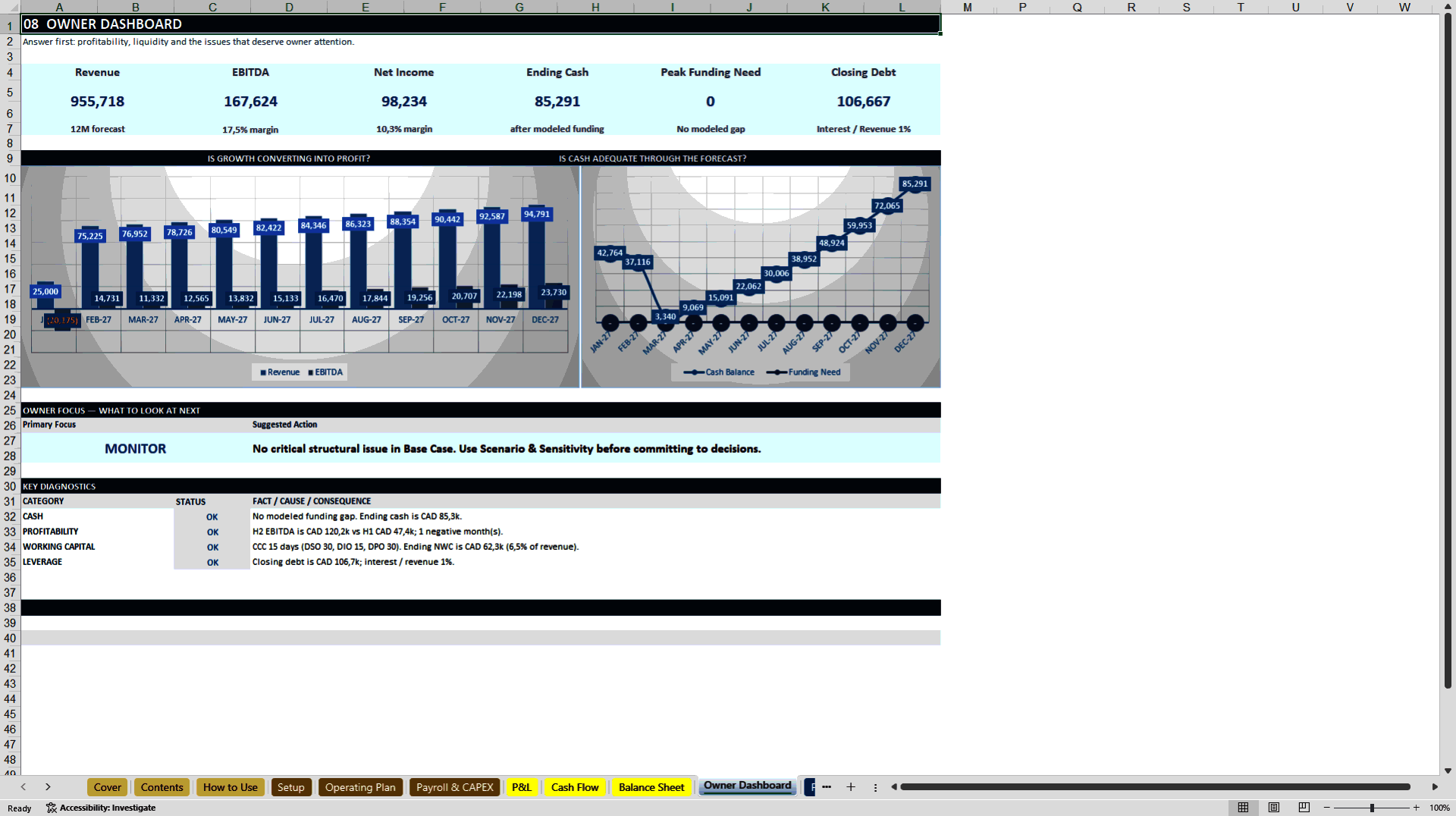
- Helps management evaluate profitability, liquidity, working capital, capital expenditure, and financing impacts under different business assumptions.
- Provides a transparent and editable financial planning structure for budgeting, forecasting, scenario analysis, and management decision support.
BUDGETING & FORECASTING EXCEL DESCRIPTION
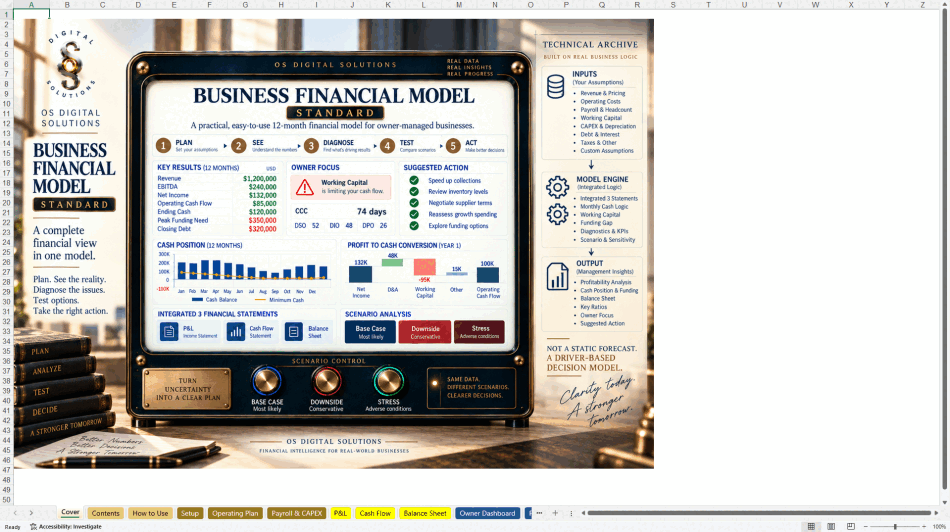
The Business Financial Model – Standard Edition is an integrated financial planning and forecasting tool designed for business owners, finance managers, analysts, consultants, and management teams that need a structured view of business performance, cash flow, and financial position.
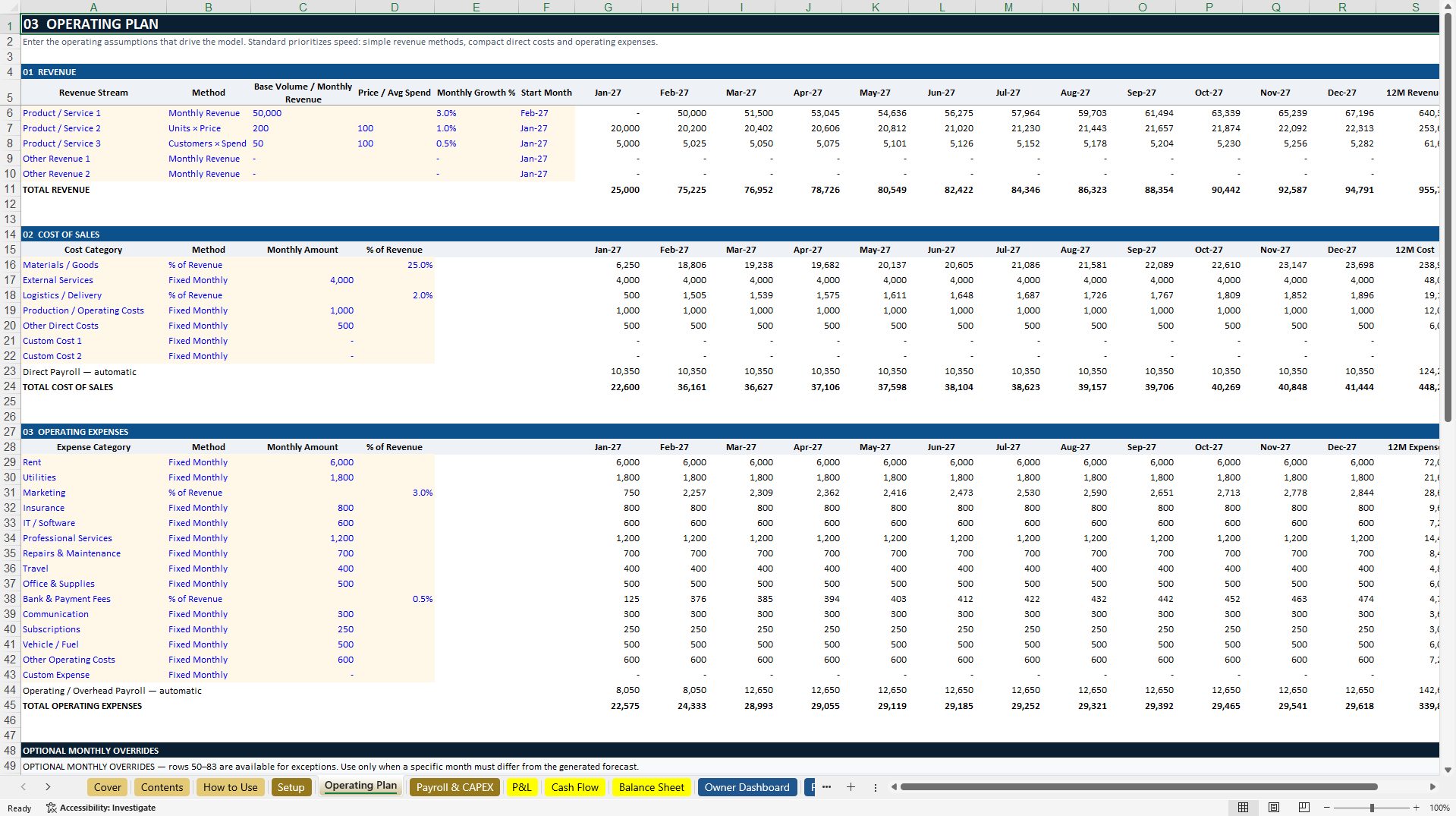
The model brings the core financial statements together within one connected forecasting framework. Rather than maintaining separate profit, cash flow, and balance sheet calculations, users can work with an integrated model in which operating assumptions flow through to the financial outputs.
The model is intended to support practical business planning, budgeting, forecasting, scenario analysis, and management review. Users can structure key assumptions around revenue, operating costs, working capital, capital expenditure, financing, and other major financial drivers, then evaluate how those assumptions affect profitability, cash generation, liquidity, and the balance sheet.
The three-statement structure connects the Profit & Loss Statement, Cash Flow Statement, and Balance Sheet. This allows management to assess not only whether the business is profitable, but also whether profits translate into cash, how working capital affects liquidity, how investment requirements influence funding needs, and how changes in operating assumptions affect the overall financial position.
The model can be used for annual planning, rolling forecasts, management budgeting, business plan preparation, internal financial analysis, scenario testing, lender or investor preparation, and evaluation of alternative operating assumptions. It can also serve as a structured starting point for finance professionals and consultants preparing company-specific forecasts for clients or management teams.
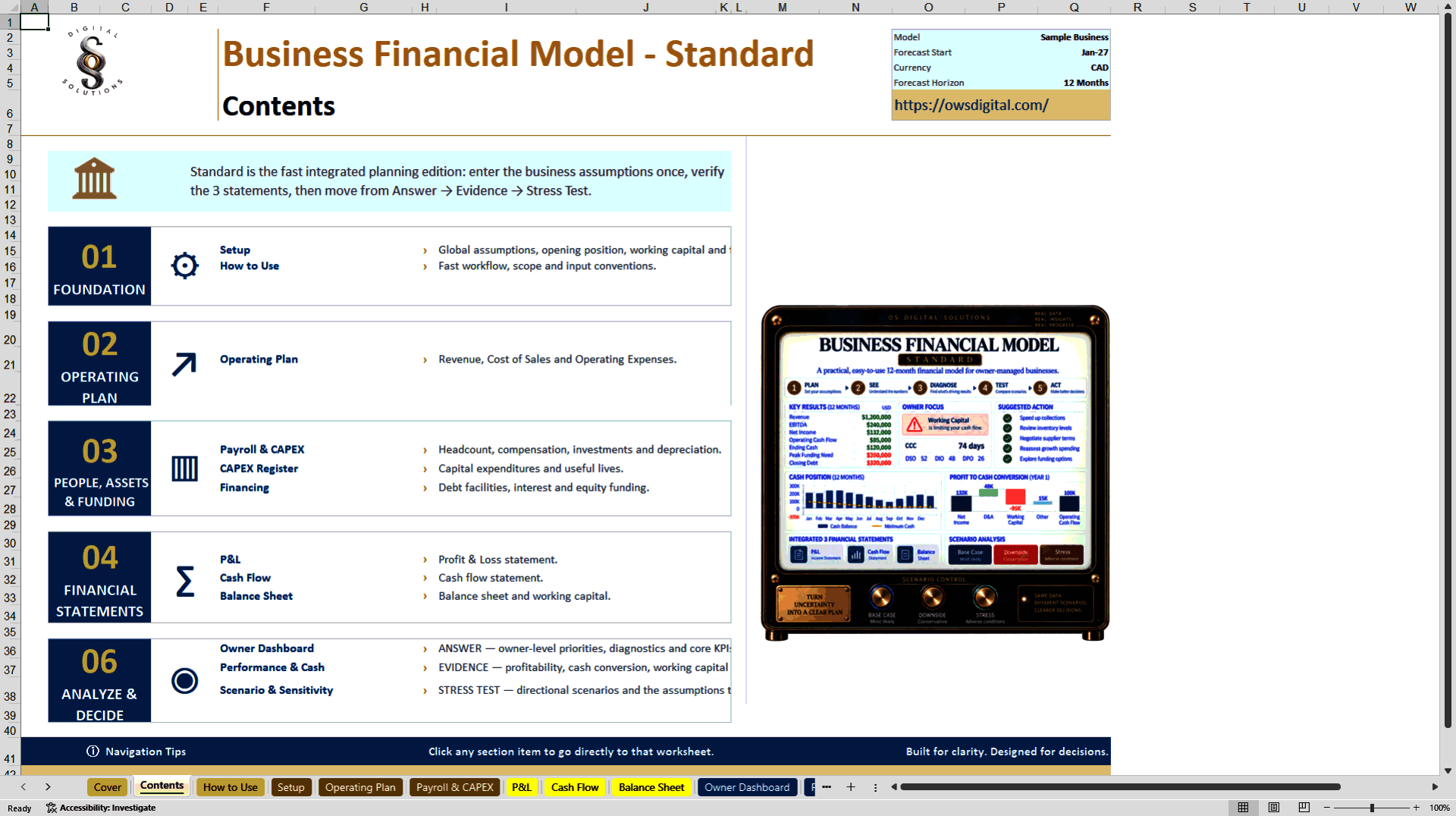
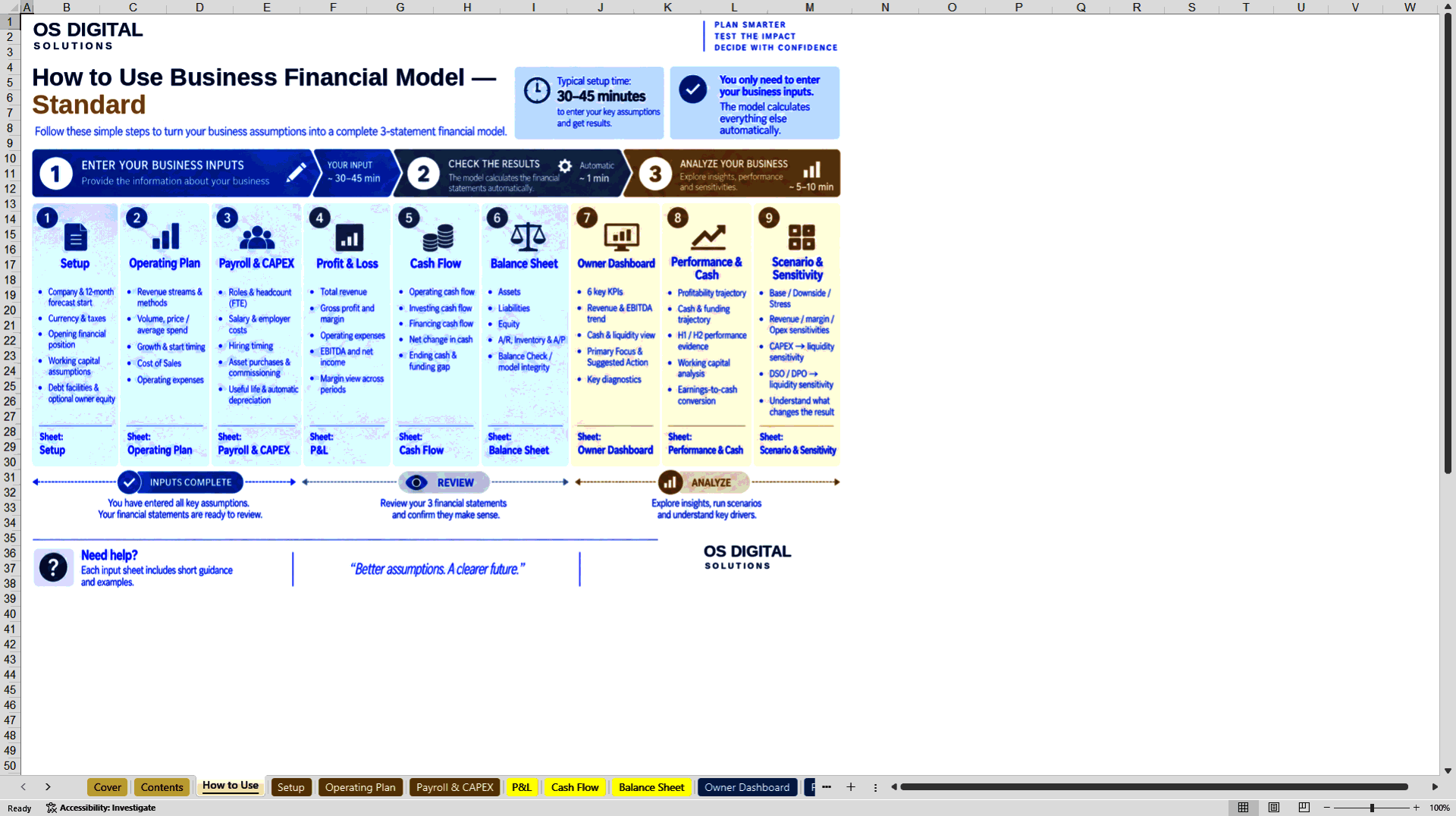
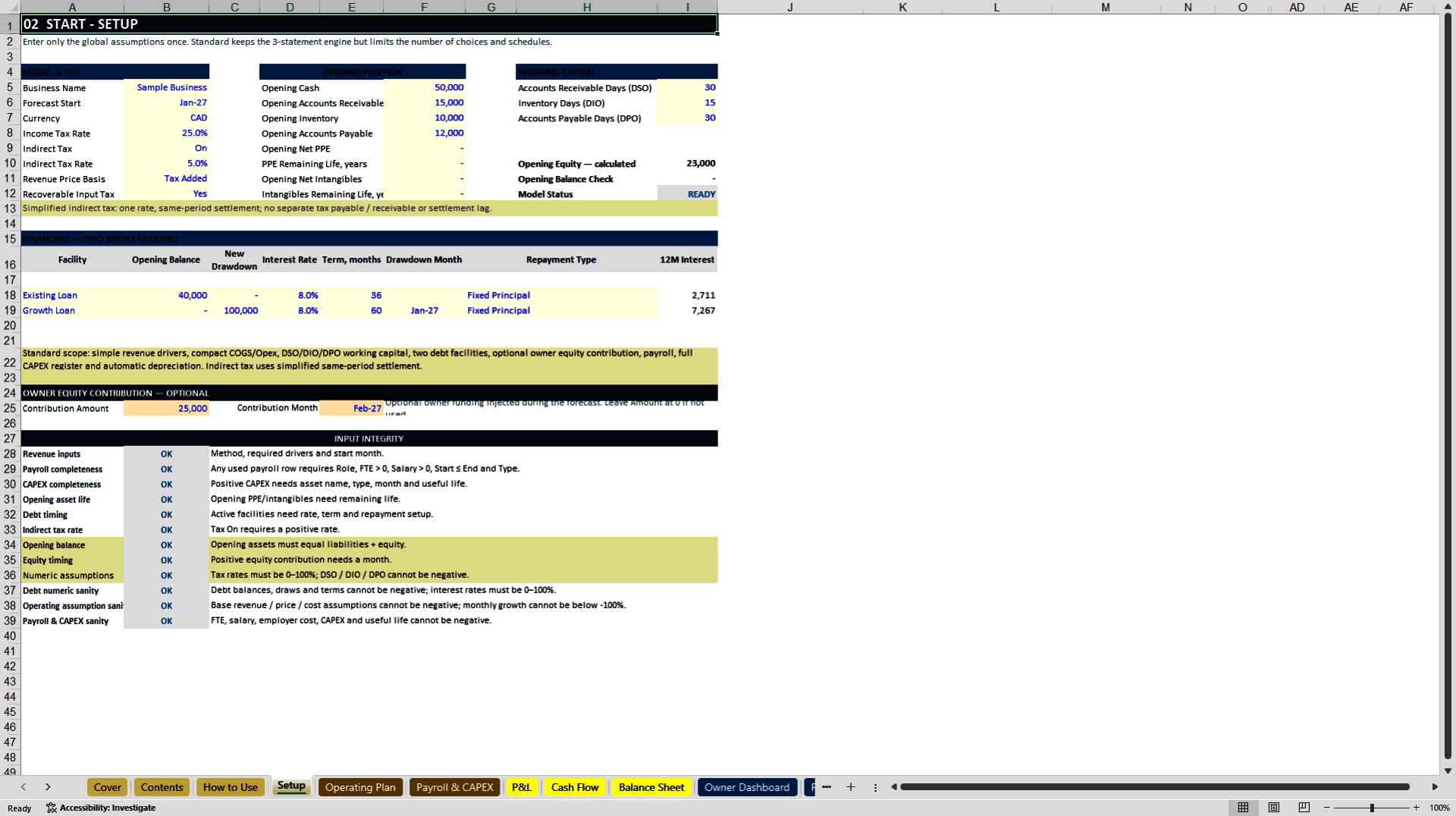
A key design principle is transparency. The workbook is formula-driven and editable, allowing users to review the underlying calculation logic and adapt assumptions to their own business rather than relying on a closed or opaque calculation engine. The structure separates user inputs from calculations and management outputs, helping reduce the risk of mixing assumptions with results.
The model is designed to provide management with a coherent financial picture rather than a collection of disconnected spreadsheets. Changes in business assumptions can therefore be evaluated across profitability, cash flow, funding requirements, and financial position within the same framework.
Typical questions the model can help address include:
How will the business perform under the current plan?
What level of revenue and operating performance is required to achieve the target result?
Will projected profitability generate sufficient cash?
How will working capital changes affect liquidity?
What is the financial impact of planned capital expenditure or financing?
How does a change in key operating assumptions affect the overall forecast?
The Standard Edition is suited to small and mid-sized businesses, finance teams, consultants, entrepreneurs, and managers who need a professional integrated financial model without the unnecessary complexity of a highly customized corporate planning system.
It is particularly useful where management wants to move beyond a basic budget or standalone cash flow spreadsheet and establish a more complete forecasting framework connecting operating assumptions to financial statements and management decisions.
This is an editable financial modeling tool intended for planning and analysis. It is not an accounting system and does not replace professional accounting, tax, legal, or investment advice.
Got a question about the product? Email us at support@flevy.com or ask the author directly by using the "Ask the Author a Question" form. If you cannot view the preview above this document description, go here to view the large preview instead.
Source: Best Practices in Budgeting & Forecasting, Integrated Financial Model Excel: Business Financial Model for Planning and Forecasting Excel (XLSX) Spreadsheet, OS Digital Solutions
ABOUT THE AUTHOR

OS Digital Solutions develops practical financial and management decision tools for business owners, finance professionals, and managers.
Our products combine robust financial modeling with clear, decision-oriented dashboards and structured workflows. The focus is not only on calculation accuracy, but on helping users understand what is happening, why it is happening, and what actions are
... [read more]
Ask the Author a Question
You must be logged in to contact the author.