 Click main image to view in full screen.
Business Continuity and Disaster Recovery (BCDR) SOP – Word DOCX
Word (DOCX) 8 Pages


BENEFITS OF THIS DOWNLOADABLE WORD DOCUMENT
- Provides a comprehensive framework for building and implementing an enterprise Business Continuity & Disaster Recovery strategy tailored to your organization.
- Establishes clear recovery priorities, RTOs, RPOs, crisis roles, failover procedures, backup resilience, and business continuity controls.
- Enables organizations to strengthen operational resilience, prepare for disruptive events, and execute tested, auditable recovery processes with confidence.
BCP WORD DESCRIPTION
Curated by McKinsey-trained Executives
🚨 ENTERPRISE BUSINESS CONTINUITY & DISASTER RECOVERY (BCDR) SOP MANUAL – THE COMPLETE FRAMEWORK FOR OPERATIONAL RESILIENCE, DISASTER RECOVERY, CYBER RECOVERY & AUDIT-READY BUSINESS CONTINUITY
⚡ STOP TREATING BUSINESS CONTINUITY & DISASTER RECOVERY AS A DOCUMENT THAT ONLY MATTERS AFTER A DISASTER.
Datacenter failures. Ransomware. Cloud outages. Natural disasters. Cyber-attacks. Power failures. Supply-chain disruption. Critical vendor outages. Workforce displacement.
When your critical operations go down, every minute matters.
Most organizations don't have a disaster recovery technology problem.
THEY HAVE A RESILIENCE & RECOVERY OPERATING MODEL PROBLEM.
❌ Undefined disaster declaration criteria
❌ Unclear crisis-management authority
❌ Unprioritized business-critical systems
❌ No consistent RTO/RPO framework
❌ Weak backup and data resilience controls
❌ Unvalidated disaster recovery procedures
❌ Poor coordination between IT and business teams
❌ Inadequate ransomware recovery readiness
❌ Unclear crisis communications
❌ Uncontrolled failback procedures
❌ Third-party and supply-chain continuity gaps
❌ Recovery plans that have never been realistically tested
🔥 INTRODUCING: THE ENTERPRISE BUSINESS CONTINUITY & DISASTER RECOVERY (BCDR) OPERATIONAL SOP
The end-to-end enterprise framework for business continuity planning, disaster recovery, crisis management, IT recovery, operational resilience, backup resilience, cyber recovery, failover, failback and disaster recovery testing.
Built to transform BCDR from a static policy document into a structured, repeatable and operational recovery system.
📋 ENTERPRISE BCDR SOP – TABLE OF CONTENTS
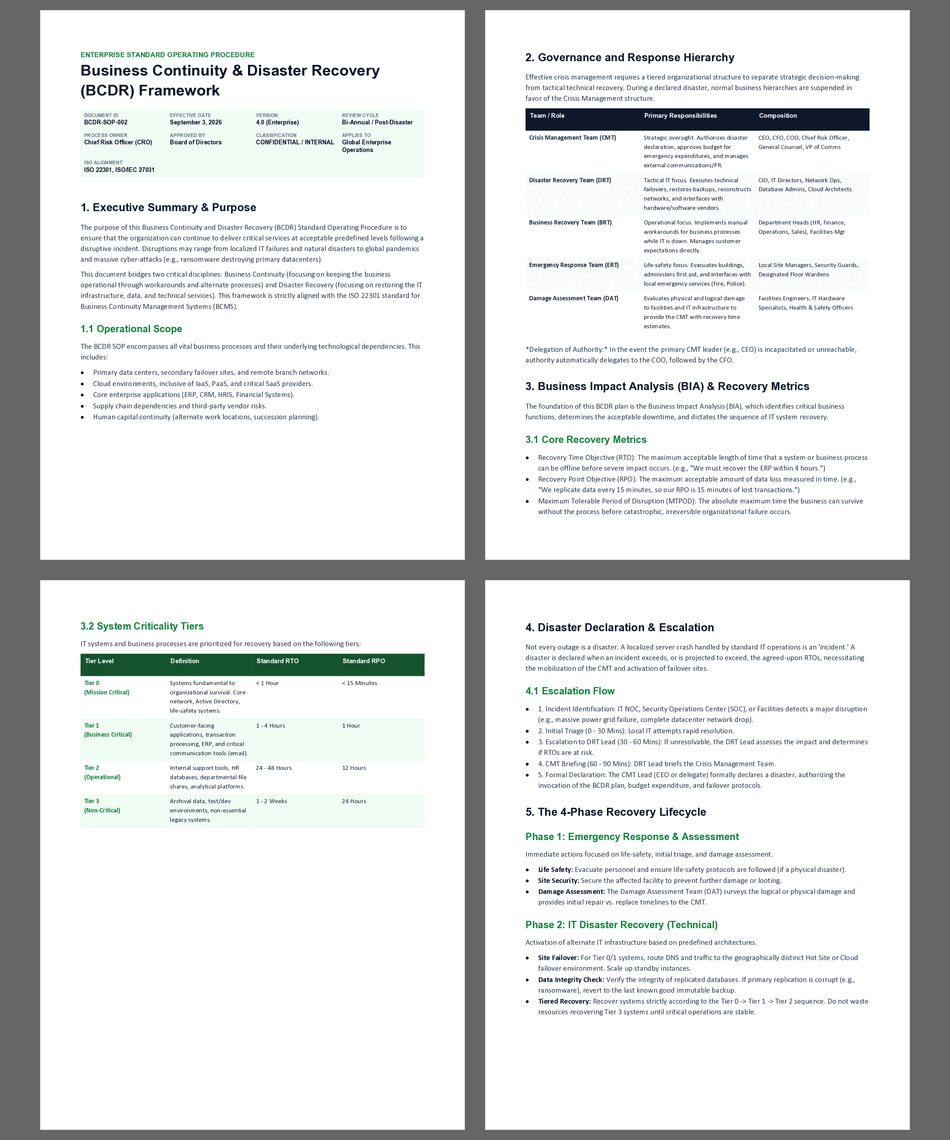
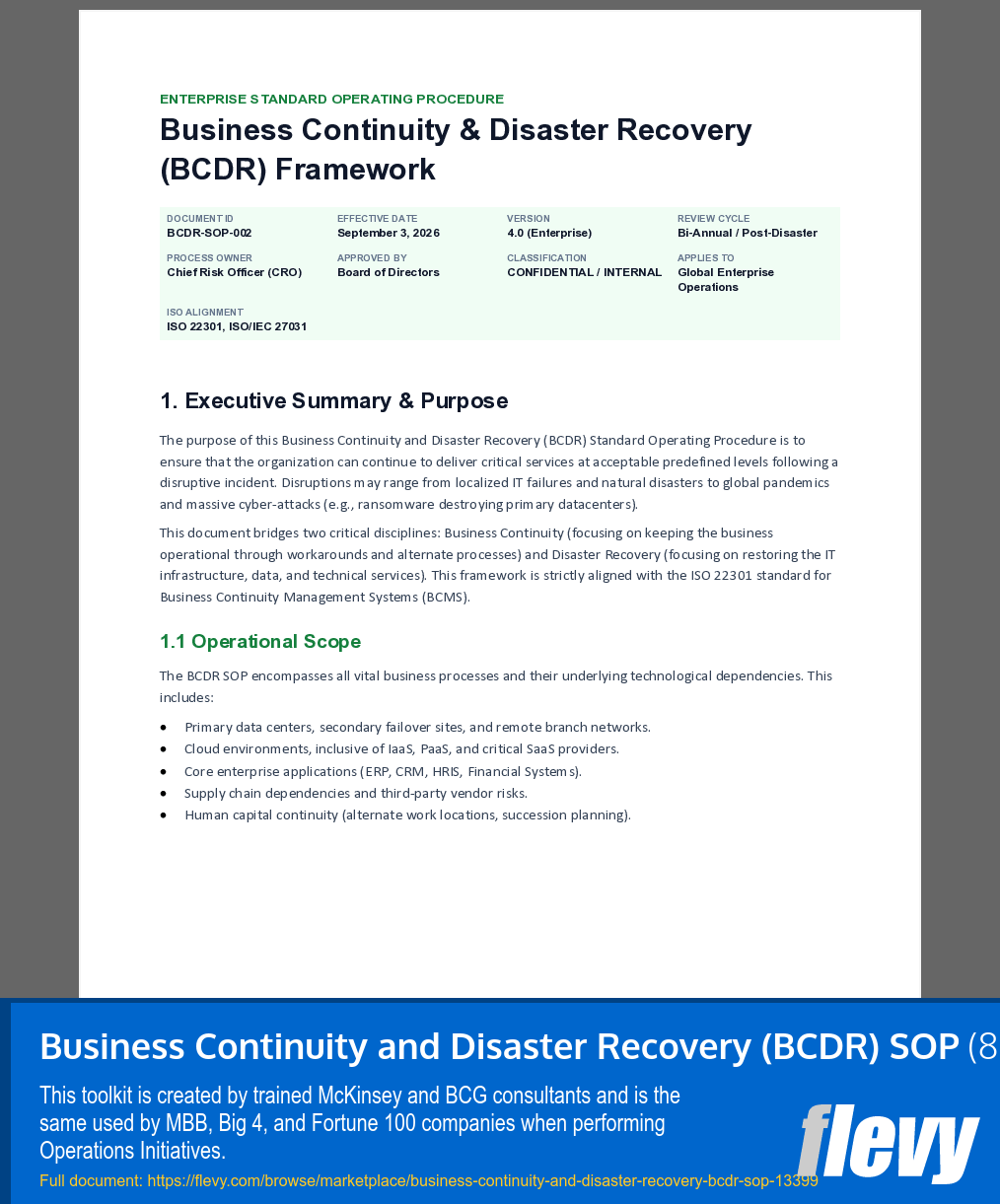
1. EXECUTIVE PURPOSE & STRATEGIC RESILIENCE
Establish enterprise-wide objectives for maintaining critical services during disruptive events and restoring technology, data and operational capabilities within predefined recovery thresholds.
2. OPERATIONAL SCOPE & BUSINESS DEPENDENCY MAPPING
Define the full BCDR scope across:
Primary and secondary datacenters
Cloud IaaS, PaaS and SaaS environments
Enterprise applications
ERP, CRM, HRIS and financial platforms
Remote offices and branch networks
Supply-chain dependencies
Critical third-party providers
Workforce and alternate-location requirements
3. CRISIS MANAGEMENT & RECOVERY GOVERNANCE
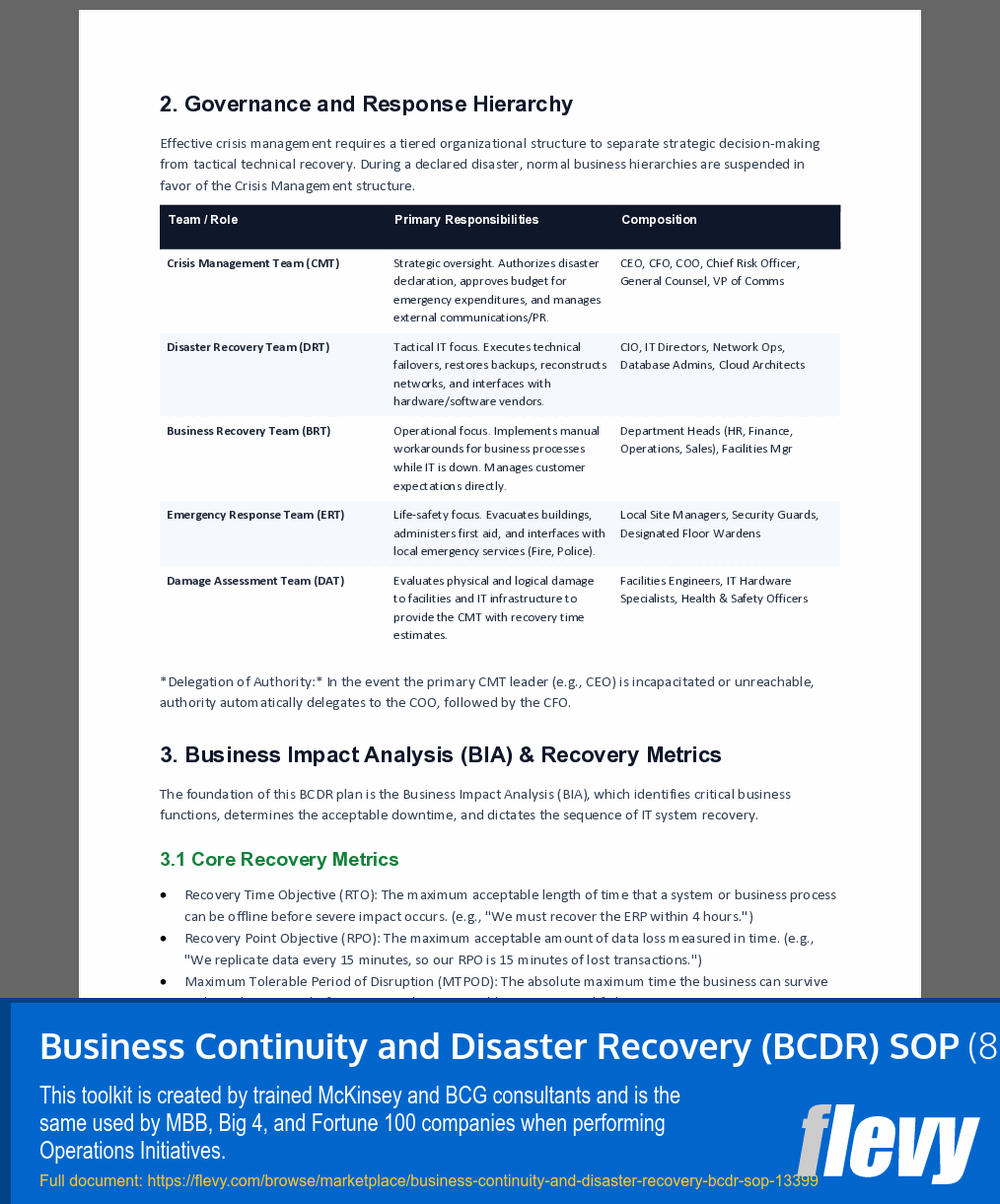
Establish a tiered disaster response hierarchy separating strategic crisis management, technical disaster recovery, business recovery, emergency response and damage assessment.
Define responsibilities for:
Crisis Management Team (CMT) • Disaster Recovery Team (DRT) • Business Recovery Team (BRT) • Emergency Response Team (ERT) • Damage Assessment Team (DAT)
Including formal delegation-of-authority controls when executive leadership is unavailable.
4. BUSINESS IMPACT ANALYSIS (BIA) & RECOVERY OBJECTIVES
Identify critical business processes, technology dependencies and acceptable disruption thresholds.
Define and operationalize:
RTO • RPO • MTPOD
Establish recovery priorities based on business impact rather than technology preference.
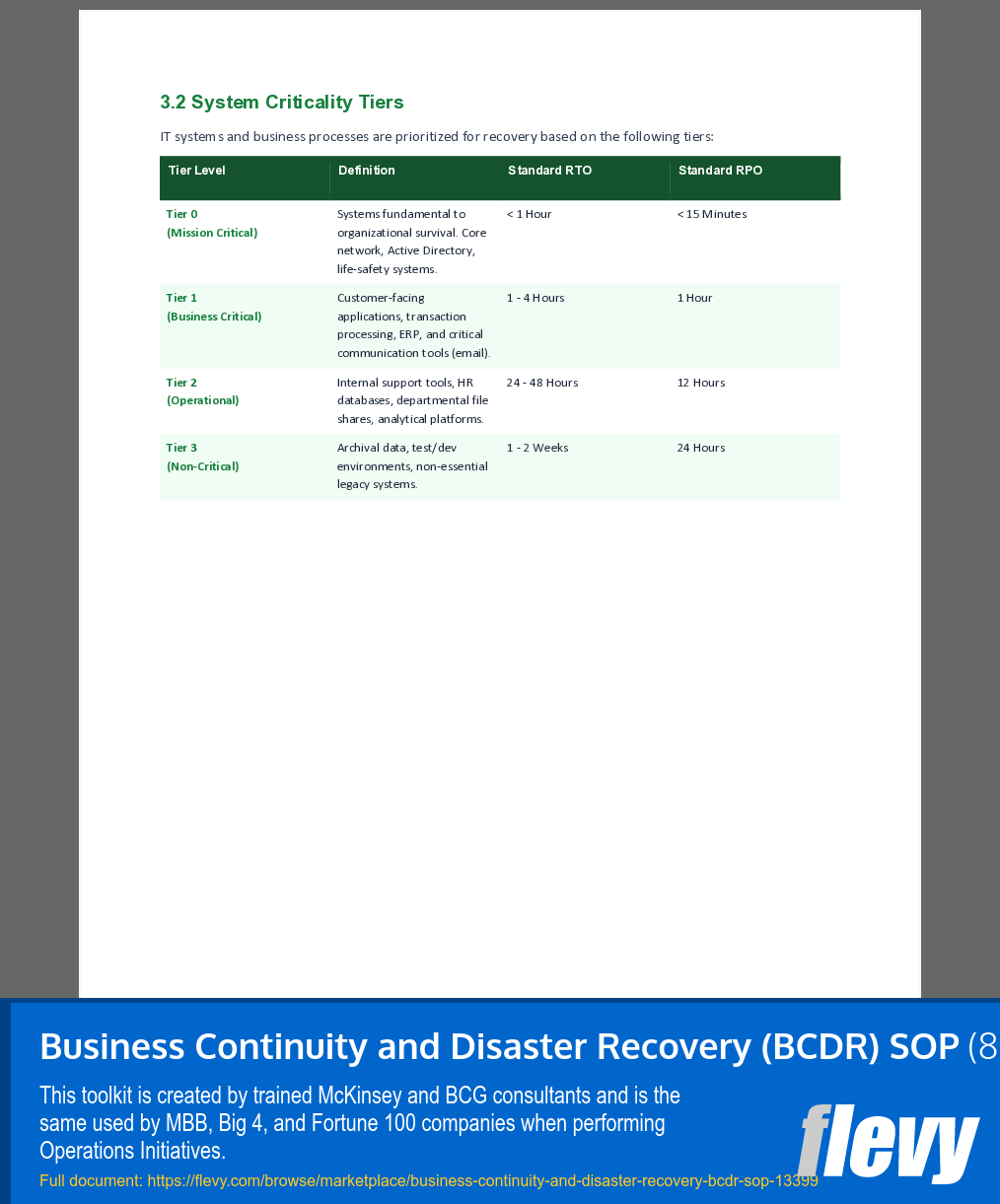
5. ENTERPRISE SYSTEM CRITICALITY & RECOVERY TIERS
Prioritize recovery using a structured Tier 0 → Tier 1 → Tier 2 → Tier 3 methodology.
Tier 0 – Mission Critical:
Core infrastructure, identity services and life-safety systems.
Tier 1 – Business Critical:
Customer-facing systems, ERP, transaction processing and critical communications.
Tier 2 – Operational:
HR databases, internal support systems, departmental platforms and analytics.
Tier 3 – Non-Critical:
Archives, development environments and non-essential legacy platforms.
Each tier is mapped to predefined RTO and RPO targets.
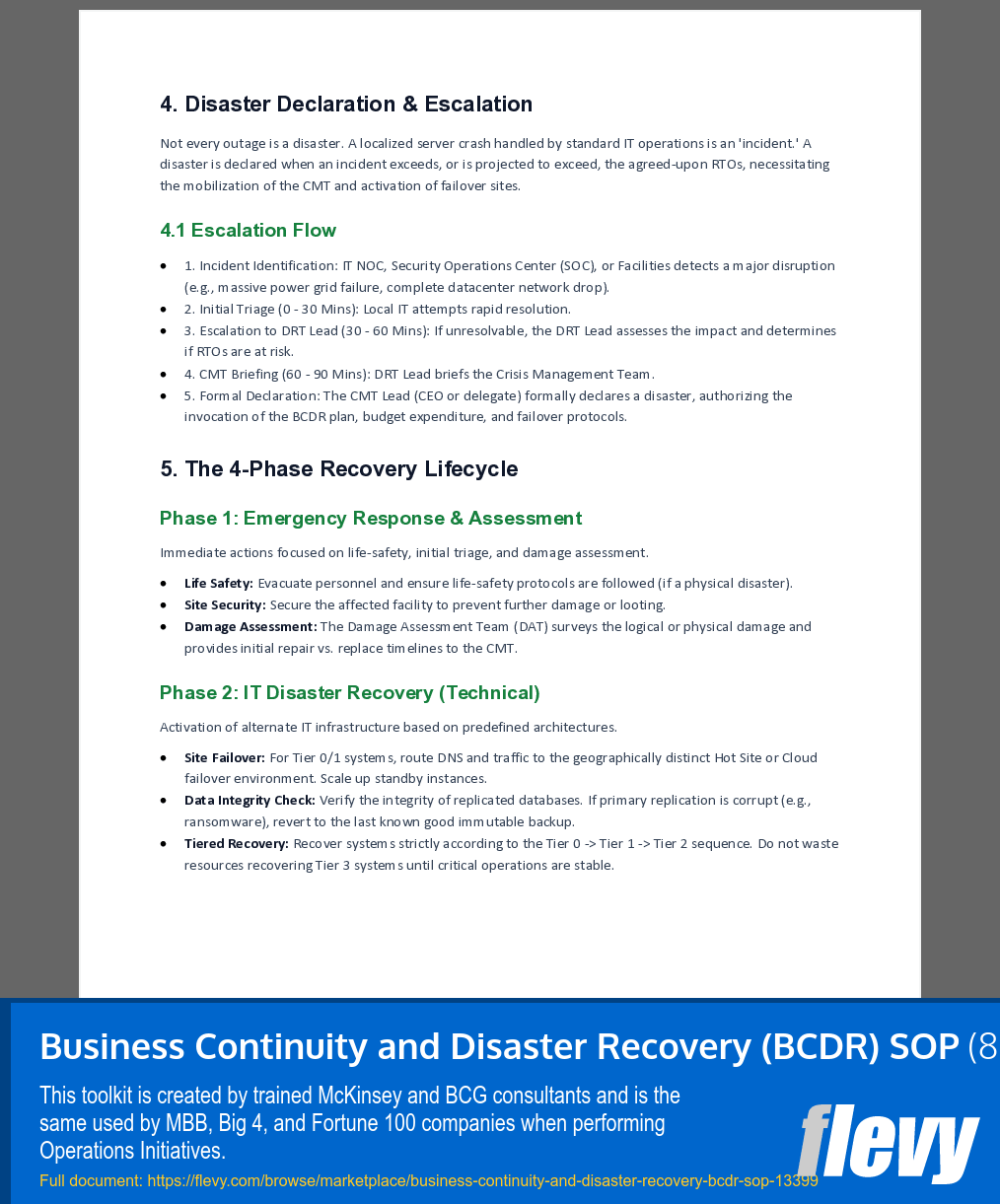
6. DISASTER DECLARATION & ESCALATION FRAMEWORK
Stop debating whether an outage is "serious enough."
Establish a structured escalation pathway:
Incident Identification → Initial Triage → DRT Escalation → CMT Briefing → Formal Disaster Declaration
Define the conditions under which standard IT incident management transitions into enterprise disaster recovery activation.
7. FOUR-PHASE DISASTER RECOVERY & BUSINESS CONTINUITY LIFECYCLE
Control the complete recovery journey:
PHASE 1 – Emergency Response & Assessment
Protect personnel, secure facilities and assess physical/logical damage.
PHASE 2 – IT Disaster Recovery
Activate alternate infrastructure, execute failover, validate data integrity and restore systems according to business criticality.
PHASE 3 – Business Continuity Operations
Deploy manual workarounds, alternate workspaces, remote operations and vendor rerouting.
PHASE 4 – Return to Normal / Planned Failback
Certify the primary environment, synchronize data, execute controlled failback and process operational backlogs.
8. ENTERPRISE DATA RESILIENCE & RANSOMWARE RECOVERY
Build recovery around the 3-2-1-1 backup strategy.
Protect critical enterprise data with:
3 Copies of Data
2 Media Types
1 Offsite Copy
1 Immutable / Air-Gapped / Offline Copy
Because a backup strategy that ransomware can encrypt is not a resilient recovery strategy.
9. CRISIS COMMUNICATIONS & STAKEHOLDER MANAGEMENT
Establish controlled internal and external communications during major incidents.
Define:
Emergency employee notification
Out-of-band communications
Executive communications
Customer communications
Media response
Approved holding statements
Communication frequency
Authorized spokespersons
Prevent misinformation, conflicting messages and uncontrolled external disclosures during a crisis.
10. BCDR TESTING, VALIDATION & CONTINUOUS IMPROVEMENT
A recovery plan that has never been tested is only an assumption.
Establish a structured testing program covering:
Semi-Annual Plan Walkthroughs
Annual Tabletop Exercises
Quarterly Component Testing
Annual Full Parallel Failover
Validate that recovery procedures, technical dependencies, personnel assignments, backup systems and alternate environments actually work under realistic conditions.
11. INITIAL 60-MINUTE DISASTER RECOVERY CHECKLIST
Give the Disaster Recovery Team an immediate operational checklist covering:
Life-safety verification
Personnel accountability
Damage assessment
Out-of-band communications
CMT notification
IT change freeze
Tier 0 recovery preparation
Tier 1 recovery preparation
Disaster declaration dependencies
Designed to eliminate hesitation during the first critical hour of a major disruption.
12. BCDR GLOSSARY & RECOVERY TERMINOLOGY
Standardize enterprise understanding of critical concepts including:
BCMS • RTO • RPO • Hot Site • Cold Site • Disaster Recovery • Business Continuity
🔥 CORE BCDR CAPABILITIES COVERED
BUSINESS CONTINUITY PLANNING
Keep critical business processes operating while technology and facilities are disrupted.
DISASTER RECOVERY PLANNING
Restore infrastructure, applications, networks and data according to predefined recovery priorities.
CYBER DISASTER RECOVERY
Prepare for destructive cyber incidents, including ransomware and compromised primary environments.
RANSOMWARE RECOVERY
Protect recovery capability through immutable, offline and air-gapped backup strategies.
CRISIS MANAGEMENT
Create clear executive authority, escalation and emergency decision-making.
IT FAILOVER & FAILBACK
Control the transition between primary and alternate environments without chaotic recovery activities.
BUSINESS IMPACT ANALYSIS
Translate business-criticality into measurable recovery requirements.
RTO & RPO MANAGEMENT
Define how quickly systems must return and how much data loss can be tolerated.
BCDR TESTING & VALIDATION
Move beyond theoretical recovery plans through tabletop, component and full failover testing.
OPERATIONAL RESILIENCE
Maintain essential services despite technology, facility, workforce, supplier or infrastructure disruption.
🌍 STANDARDS & COMPLIANCE ALIGNMENT
ISO 22301 – Business Continuity Management Systems
ISO/IEC 27031 – ICT Readiness for Business Continuity
Designed to support organizations building structured, documented and testable Business Continuity Management Systems (BCMS) and ICT disaster recovery capabilities.
👥 WHO USES THIS SOP?
CEOs • COOs • CIOs • CISOs • CROs • IT Directors • Disaster Recovery Managers • Business Continuity Managers • Risk Leaders • Crisis Management Teams • Infrastructure Teams • Cloud Architects • Network Operations • Database Administrators • Facilities Teams • Security Operations • Department Heads • Compliance & Audit Teams
🛡️ TURN BUSINESS CONTINUITY FROM A PDF INTO AN OPERATIONAL RECOVERY SYSTEM.
Don't wait for the next ransomware attack.
Don't wait for the next datacenter failure.
Don't wait for the next cloud outage.
Don't wait until your organization discovers that its disaster recovery plan cannot actually recover the business.
BUILD THE RECOVERY CAPABILITY BEFORE THE CRISIS.
🚀 DOWNLOAD THE COMPLETE ENTERPRISE BUSINESS CONTINUITY & DISASTER RECOVERY (BCDR) SOP MANUAL – AND BUILD AN ORGANIZATION THAT IS RESILIENT, RECOVERABLE, TESTED, RANSOMWARE-READY & OPERATIONALLY PREPARED FOR DISRUPTION.
Keywords: Inventory Management, Demand Planning, Inventory Optimization, Inventory Control, Supply Chain Management, Warehouse Operations, Replenishment Strategy, Inventory Analytics, WIP Reduction, Inventory Accuracy, Distribution Network, Inventory Forecasting, Supply Chain Excellence, Working Capital, Inventory KPIs, Procurement Strategy, Inventory Governance, Inventory SOPs, Continuous Improvement, Supply Chain Transformation, GenAI deployment SOPs, generative AI operating model, enterprise AI governance framework, AI Center of Excellence, responsible AI, AI risk management, AI use case prioritization, GenAI implementation roadmap, AI vendor selection, prompt engineering standards, AI compliance, AI adoption strategy, generative AI across value chain, AI strategy, enterprise transformation, AI implementation, AI scaling framework
Strategy & Transformation, Growth Strategy, Strategic Planning, Strategy Frameworks, Innovation Management, Pricing Strategy, Core Competencies, Strategy Development, Business Transformation, Marketing Plan Development, Product Strategy, Breakout Strategy, Competitive Advantage, Mission, Vision, Values, Strategy Deployment & Execution, Innovation, Vision Statement, Core Competencies Analysis, Corporate Strategy, Product Launch Strategy, BMI, Blue Ocean Strategy, Breakthrough Strategy, Business Model Innovation, Business Strategy Example, Corporate Transformation, Critical Success Factors, Customer Segmentation, Customer Value Proposition, Distinctive Capabilities, Enterprise Performance Management, KPI, Key Performance Indicators, Market Analysis, Market Entry Example, Market Entry Plan, Market Intelligence, Market Research, Market Segmentation, Market Sizing, Marketing, Michael Porter's Value Chain, Organizational Transformation, Performance Management, Performance Measurement, Platform Strategy, Product Go-to-Market Strategy, Reorganization, Restructuring, SWOT, SWOT Analysis, Service 4.0, Service Strategy, Service Transformation, Strategic Analysis, Strategic Plan Example, Strategy Deployment, Strategy Execution, Strategy Frameworks Compilation, Strategy Methodologies, Strategy Report Example, Value Chain, Value Chain Analysis, Value Innovation, Value Proposition, Vision Statement, Corporate Strategy, Business Development, Business plan pdf, business plan, PDF, Business Plan DOC, Business Plan Template, PPT, Market strategy playbook, strategic market planning, competitive analysis tools, market segmentation frameworks, growth strategy templates, product positioning strategy, market execution toolkit, strategic alignment playbook, KPI and OKR frameworks, business growth strategy guide, cross-functional strategy templates, market risk management, market strategy PowerPoint doc, guide, ebook, e-book ,McKinsey Change Playbook, Organizational change management toolkit, Change management frameworks 2025, Influence model for change, Change leadership strategies, Behavioral change in organizations, Change management PowerPoint templates, Transformational leadership in change, supply chain KPIs, supply chain KPI toolkit, supply chain PowerPoint template, logistics KPIs, procurement KPIs, inventory management KPIs, supply chain performance metrics, manufacturing KPIs, supply chain dashboard, supply chain strategy KPIs, reverse logistics KPIs, sustainability KPIs in supply chain, financial supply chain KPIs, warehouse KPIs, digital supply chain KPIs, 1200 KPIs, supply chain scorecard, KPI examples, supply chain templates, Corporate Finance SOPs, Finance SOP Excel Template, CFO Toolkit, Finance Department Procedures, Financial Planning SOPs, Treasury SOPs, Accounts Payable SOPs, Accounts Receivable SOPs, General Ledger SOPs, Accounting Policies Template, Internal Controls SOPs, Finance Process Standardization, Finance Operating Procedures, Finance Department Excel Template, FP&A Process Documentation, Corporate Finance Template, Finance SOP Toolkit, CFO Process Templates, Accounting SOP Package, Tax Compliance SOPs, Financial Risk Management Procedures.
NOTE: Our digital products are sold on an "as is" basis, making returns and refunds unavailable post-download. Please preview and inquire before purchasing. Please contact us before purchasing if you have any questions! This policy aligns with the standard Flevy Terms of Usage.
Got a question about the product? Email us at support@flevy.com or ask the author directly by using the "Ask the Author a Question" form. If you cannot view the preview above this document description, go here to view the large preview instead.
Source: Best Practices in BCP, Disaster Recovery Word: Business Continuity and Disaster Recovery (BCDR) SOP Word (DOCX) Document, SB Consulting
ABOUT THE AUTHOR

SB Consulting is dedicated to empowering businesses to communicate their ideas with impact. This consulting firm specializes in teaching organizations how to create effective corporate and management presentations. With training from top-tier global consulting firms, including McKinsey, BCG, and Porsche Consulting, extensive expertise in presentation design and ... [read more]
Ask the Author a Question
You must be logged in to contact the author.