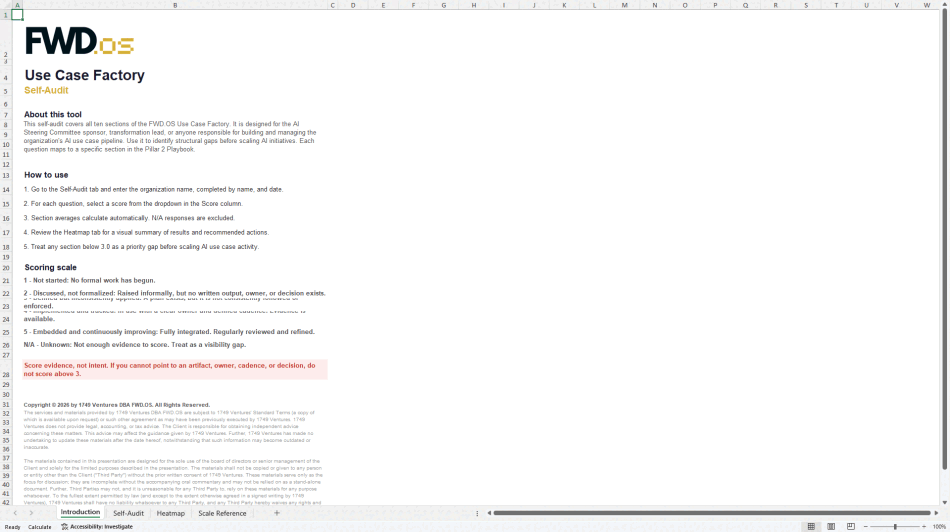
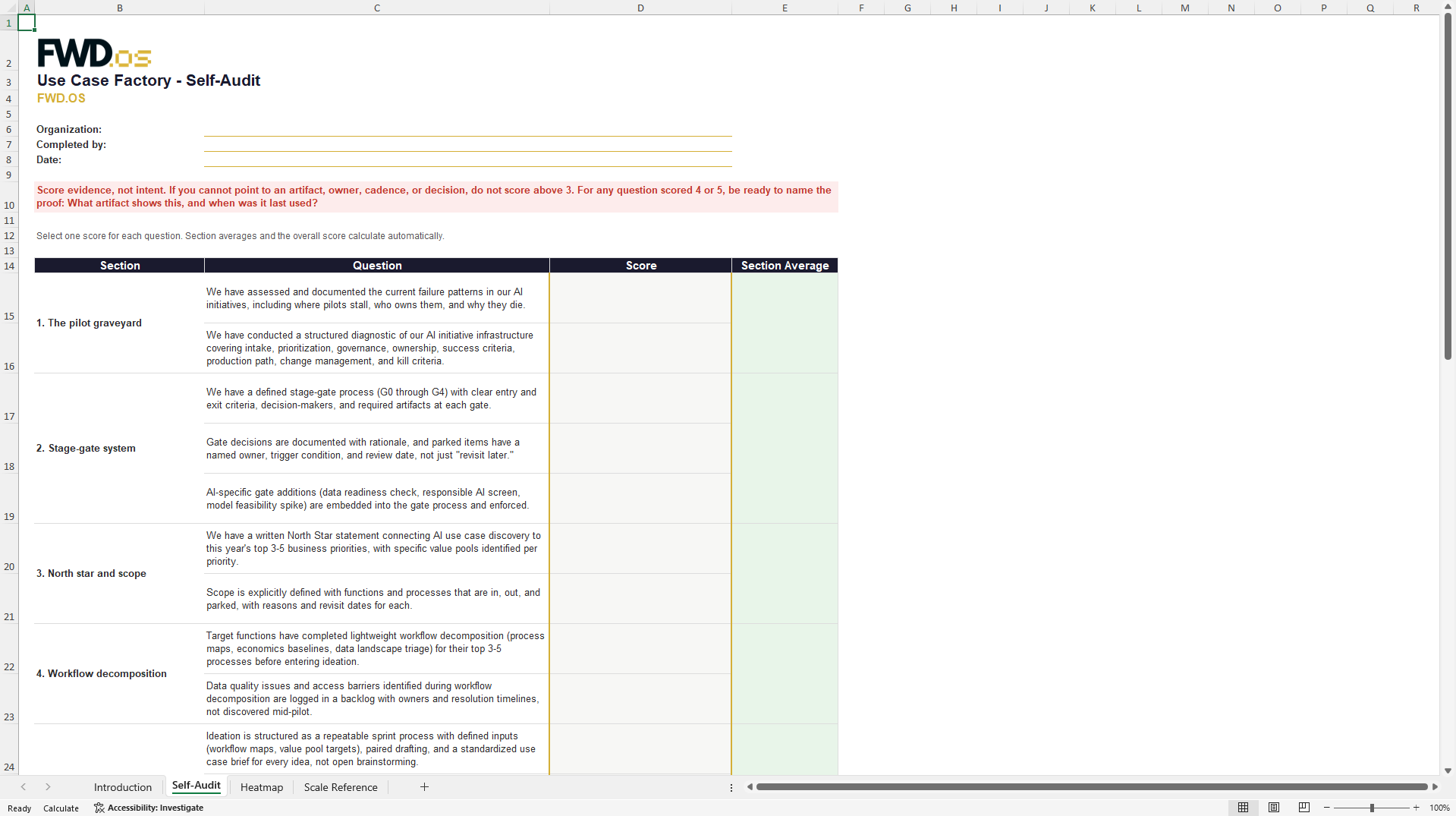
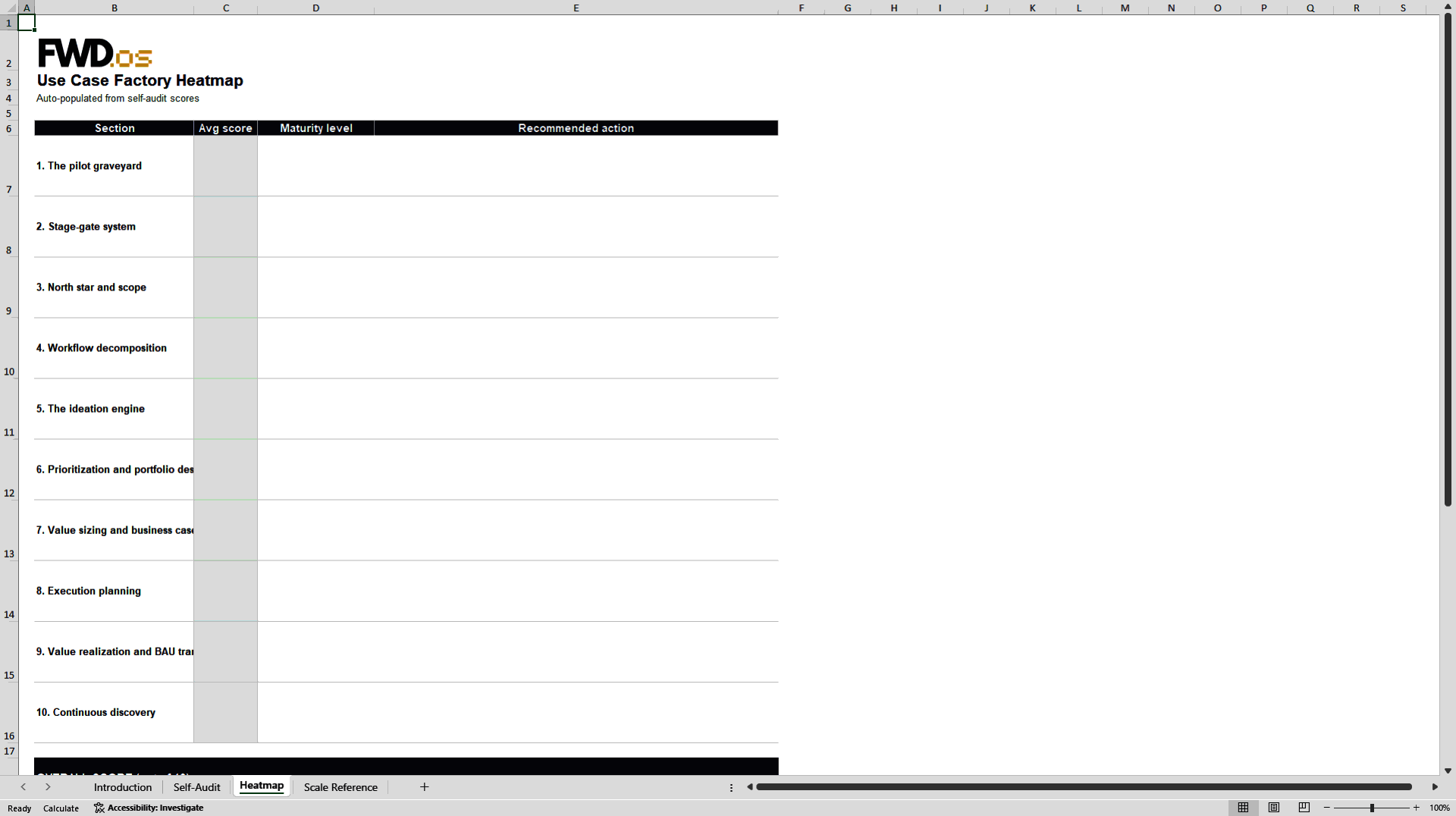
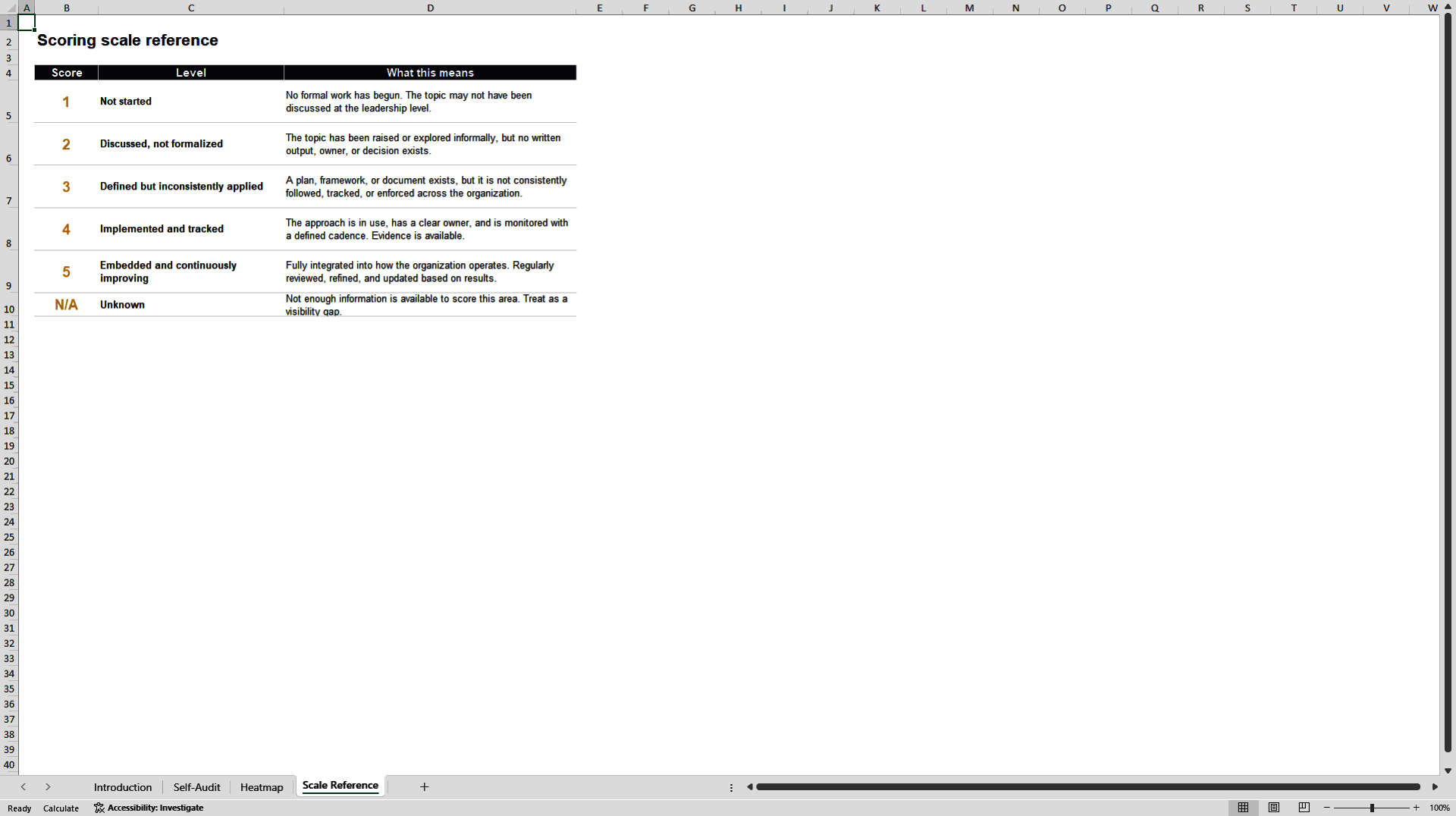
 Click main image to view in full screen.
AI Use-Case Factory Self-Audit (Idea to Production) – Excel XLSX
Excel (XLSX) + supplemental PDF


BENEFITS OF THIS DOWNLOADABLE EXCEL DOCUMENT
- Helps leadership teams assess whether their AI use case pipeline can actually move ideas from idea intake to production, not just launch pilots that stall.
- Identifies use case factory gaps across stage-gates, scope, ideation, prioritization, value sizing, pilot design, value realization, and production/BAU readiness.
- Turns maturity scoring into a practical discussion tool for prioritizing the execution-side actions needed to move AI from pilots to adoption at scale.
ARTIFICIAL INTELLIGENCE EXCEL DESCRIPTION
AI Use-Case Factory Self-Audit (Excel): Download an AI use case pipeline self-audit for transformation leaders and AI program owners: intake, stage-gates, prioritization, value sizing, and production readiness scoring. AI Use-Case Factory Self-Audit (Idea to Production) is an Excel template (XLSX) with a supplemental PDF document available for immediate download upon purchase.
AI Use-Case Factory Self-Audit is a practical diagnostic tool for leadership and transformation teams assessing how well their organization moves AI use cases from idea to production.
This self-audit is one module within the broader AI Operating Model Toolkit. The full toolkit is organized around three pillars and one foundation: the Human Operating System, the Use-Case Factory, and the Governance & Value Spine, all built on a Data & Access Layer. This module focuses specifically on the execution engine for AI: How use cases are sourced, screened, prioritized, sized, piloted, and moved into production, so AI becomes a repeatable pipeline that ships rather than scattered experiments.
Many organizations are running AI pilots, but most never reach production. Ideas get funded on enthusiasm instead of a calibrated score. Pilots launch with no hard stop, no kill criteria, and no production path. Business cases rest on estimates that cannot be proven later. Deployed use cases get declared successful at launch and never tracked against the value they promised. The result is a pilot graveyard: Activity without adoption.
This toolkit helps leaders find those breakpoints before scaling AI activity too quickly.
The self-audit is designed for transformation leaders, AI program owners, COOs, heads of strategy or innovation, and consultants supporting AI-enabled change. It evaluates the conditions an AI use case pipeline needs to deliver, across ten layers: Failure-pattern diagnosis, stage-gate system, North Star and scope, workflow decomposition, ideation, prioritization and portfolio design, value sizing and business case, execution planning, value realization and BAU transition, and continuous discovery.
The tool uses structured maturity scoring, where teams score evidence rather than intent: If you cannot point to an artifact, owner, cadence, or decision, you do not score above a 3. Section scores roll up to an overall score, a heatmap, and critical-gap flags that surface the weak layers most likely to stall a use case at scale. The output is intended to support leadership discussion, prioritization, and planning. It can be used as a standalone diagnostic, a workshop pre-read, a transformation planning input, or a baseline assessment before scaling an AI use case portfolio.
This is not a generic AI strategy template. It is a practical execution and operating model self-audit for organizations that need to move from AI activity to AI adoption, accountability, and measurable in-production value.
Additional self-audit modules address the AI Human Operating System, the Governance & Value Spine, and data and access readiness.
Got a question about the product? Email us at support@flevy.com or ask the author directly by using the "Ask the Author a Question" form. If you cannot view the preview above this document description, go here to view the large preview instead.
Source: Best Practices in Artificial Intelligence, Audit Management Excel: AI Use-Case Factory Self-Audit (Idea to Production) Excel (XLSX) Spreadsheet, FWD OS
ABOUT THE AUTHOR

creates practical tools for organizations working to move AI from scattered experimentation to governed, measurable adoption.
The work is led by Leah Davis, an independent transformation consultant and former Boston Consulting Group leader with 10 years of experience across large-scale transformation, operating model redesign, governance, performance management, growth strategy, and
... [read more]
Ask the Author a Question
You must be logged in to contact the author.




























