 Click main image to view in full screen.
AI Regulatory Compliance Risk Register - EU AI Act & DPDP – Excel XLSX
Excel (XLSX)


BENEFITS OF THIS DOWNLOADABLE EXCEL DOCUMENT
- Classifies up to 10 AI use cases against the EU AI Act's four risk tiers and India's DPDP Act in a single structured waterfall.
- Tracks a pre-seeded register of 30 compliance requirements by status, owner, evidence, and risk exposure, so remediation isn't left informal.
- Rolls classifications and gaps up into a board-ready dashboard with a risk-weighted Compliance Exposure Score and a prioritized top-10 remediation list.
ARTIFICIAL INTELLIGENCE EXCEL DESCRIPTION
AI programmes are moving faster than the governance built to classify them. Two regulatory frameworks now apply to most enterprise AI portfolios at once: the EU AI Act – whose phase-in was revised by the July 2026 Digital Omnibus on AI, pushing full high-risk obligations out to December 2027 and August 2028 and adding new Article 5 prohibitions on AI-generated non-consensual intimate imagery and child sexual abuse material – and India's Digital Personal Data Protection Act, in enforcement since 2024. Very few programmes have completed the step every later obligation depends on – a defensible, use-case-by-use-case risk classification. Left informal, that call gets made inconsistently across teams, which is exactly what a board risk committee, auditor, or regulator will test first.
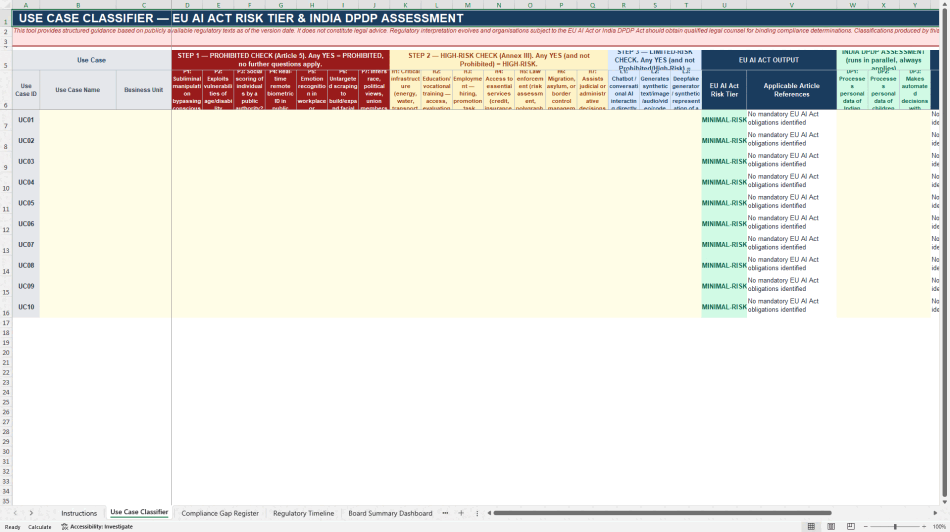
This Excel workbook gives that classification a structured, repeatable process. Its Use Case Classifier takes up to 10 AI use cases through a fixed waterfall: nine questions checking for Prohibited practices (the original seven plus two added for the Digital Omnibus), then seven checking High-Risk triggers under Annex III, then three checking Limited-Risk transparency triggers, defaulting to Minimal-Risk only when none apply. An independent three-question India DPDP assessment runs alongside every use case regardless of its EU tier. Each use case returns its risk tier, the relevant article references, and the DPDP obligations triggered.
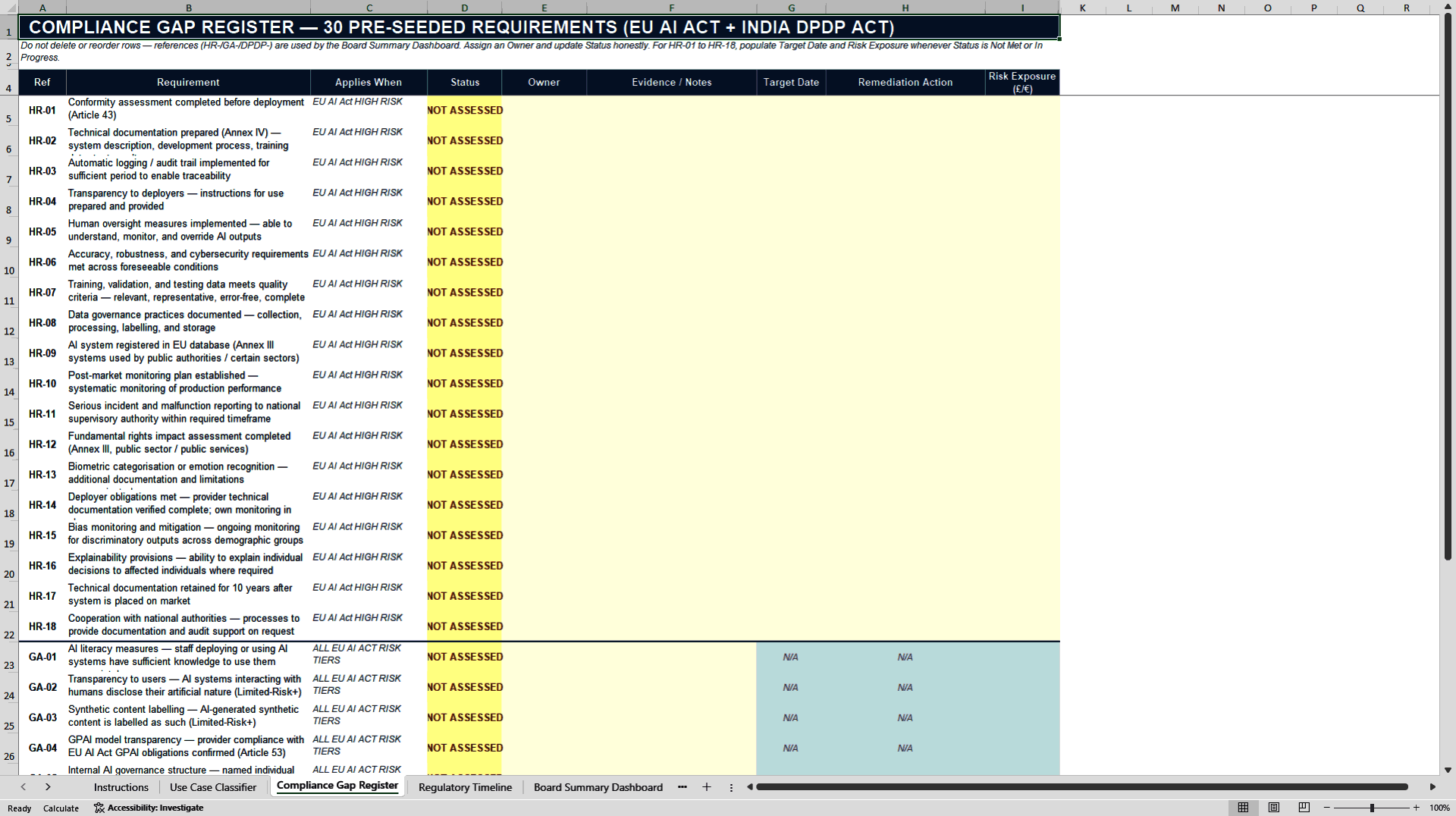
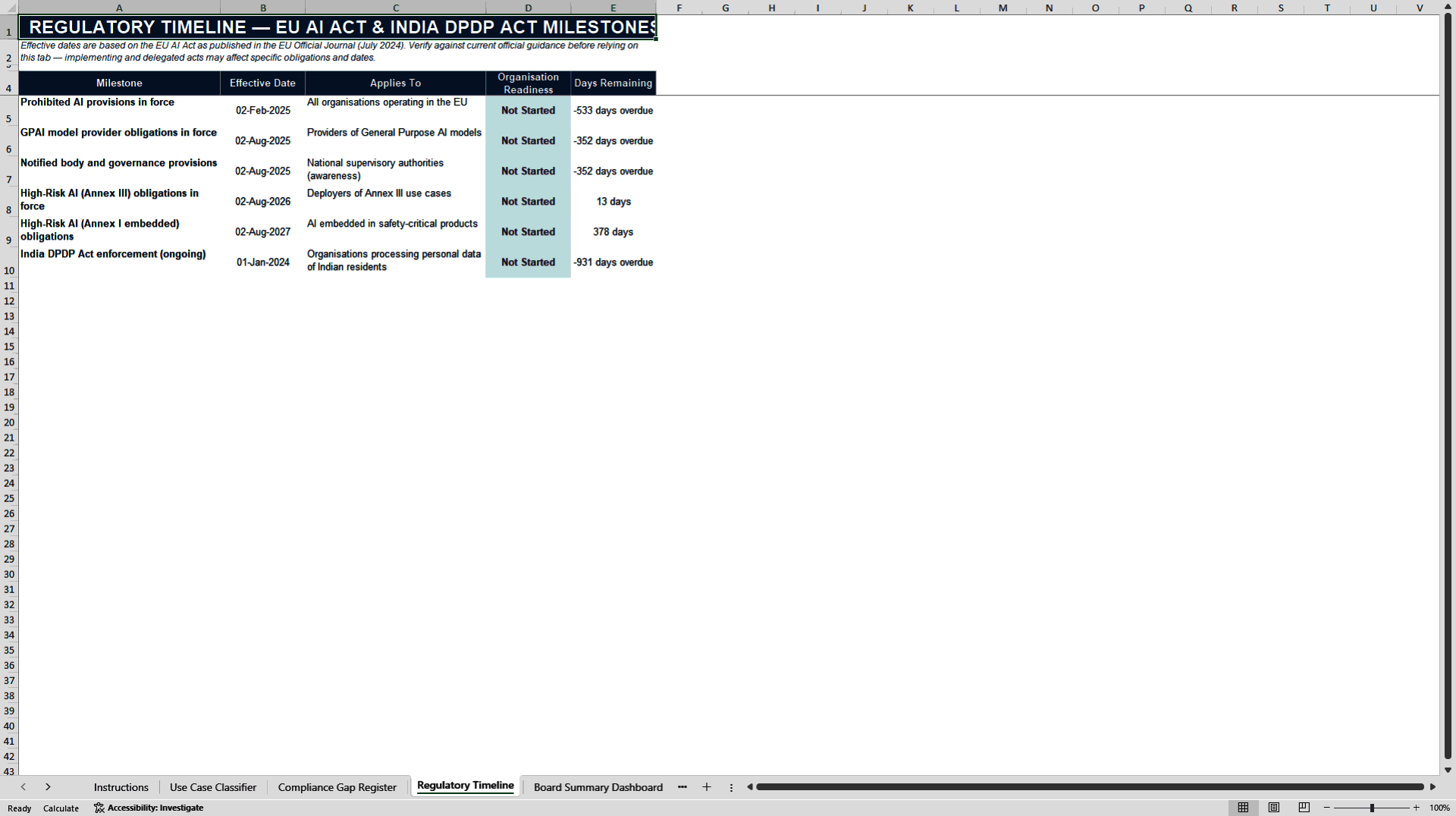
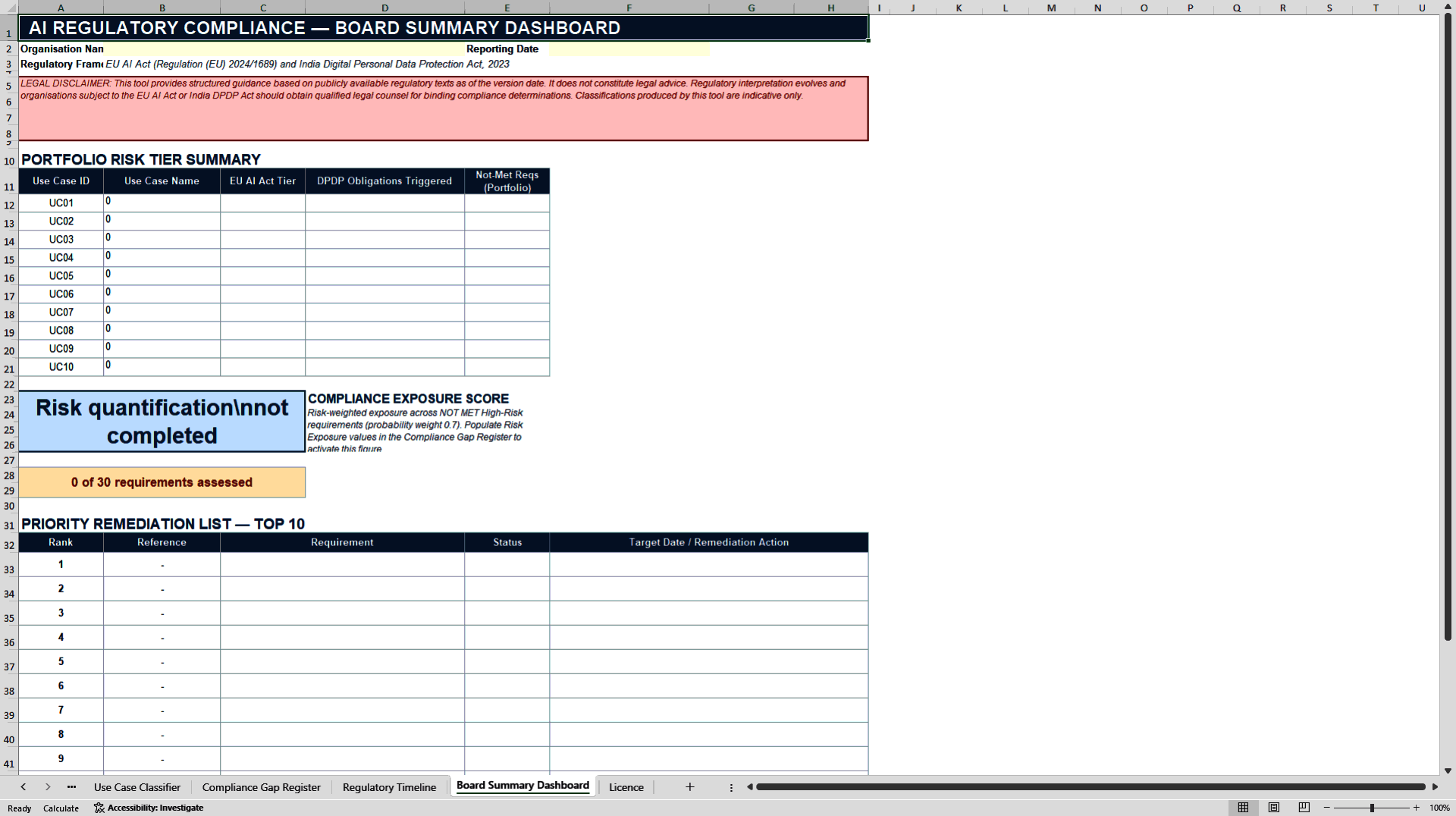
Behind the classifier sits a Compliance Gap Register pre-seeded with 30 requirements – 18 EU AI Act High-Risk obligations, 6 EU AI Act obligations applying across every tier, and 6 India DPDP Act obligations – each tracked by status, owner, evidence, target date, and risk exposure. A Regulatory Timeline tab tracks seven key milestones with editable organisational readiness status. All three feed a Board Summary Dashboard: a portfolio risk-tier view, a risk-weighted Compliance Exposure Score, a ranked top-10 remediation list, and an automatic flag for any overdue or at-risk milestone – the only manual entries on that tab are the organisation name and reporting date.
Built for AI governance leads, risk and compliance functions, PMO leaders classifying use cases at intake, and consultants running governance engagements across multiple clients – anyone who needs to walk into an audit committee or board risk meeting with a documented classification rather than an ad-hoc judgement call.
Format: Excel (.xlsx), no macros or VBA, works in Excel 2016+ and Microsoft 365. The download includes a companion User Guide (PDF) covering every tab, worked examples, and a troubleshooting FAQ. This tool provides structured, indicative guidance based on publicly available regulatory texts; it does not constitute legal advice, and organisations should obtain qualified legal counsel for binding compliance determinations.
Published by Viksya. Seller licence terms are included within the document and take precedence over platform defaults.
Got a question about the product? Email us at support@flevy.com or ask the author directly by using the "Ask the Author a Question" form. If you cannot view the preview above this document description, go here to view the large preview instead.
Source: Best Practices in Artificial Intelligence, Risk Management Excel: AI Regulatory Compliance Risk Register - EU AI Act & DPDP Excel (XLSX) Spreadsheet, Viksya
ABOUT THE AUTHOR

Viksya builds decision frameworks for leaders who answer to a board, not a hunch. Our Excel workbooks and playbooks are developed by a transformation leader with hands-on experience directing $100M+ AI and cloud portfolios inside large enterprises -- the same instruments used to justify, select, estimate, and govern real programmes, productized. The catalog spans three tracks: AI Transformation ... [read more]
Ask the Author a Question
You must be logged in to contact the author.




























