
 Click main image to view in full screen. Unlock all 12 preview images:
AI Vendor & Third-Party AI Risk Assessment Templates – PowerPoint PPTX Template
PowerPoint (PPTX) 60 Slides


ARTIFICIAL INTELLIGENCE PPT TEMPLATE DESCRIPTION
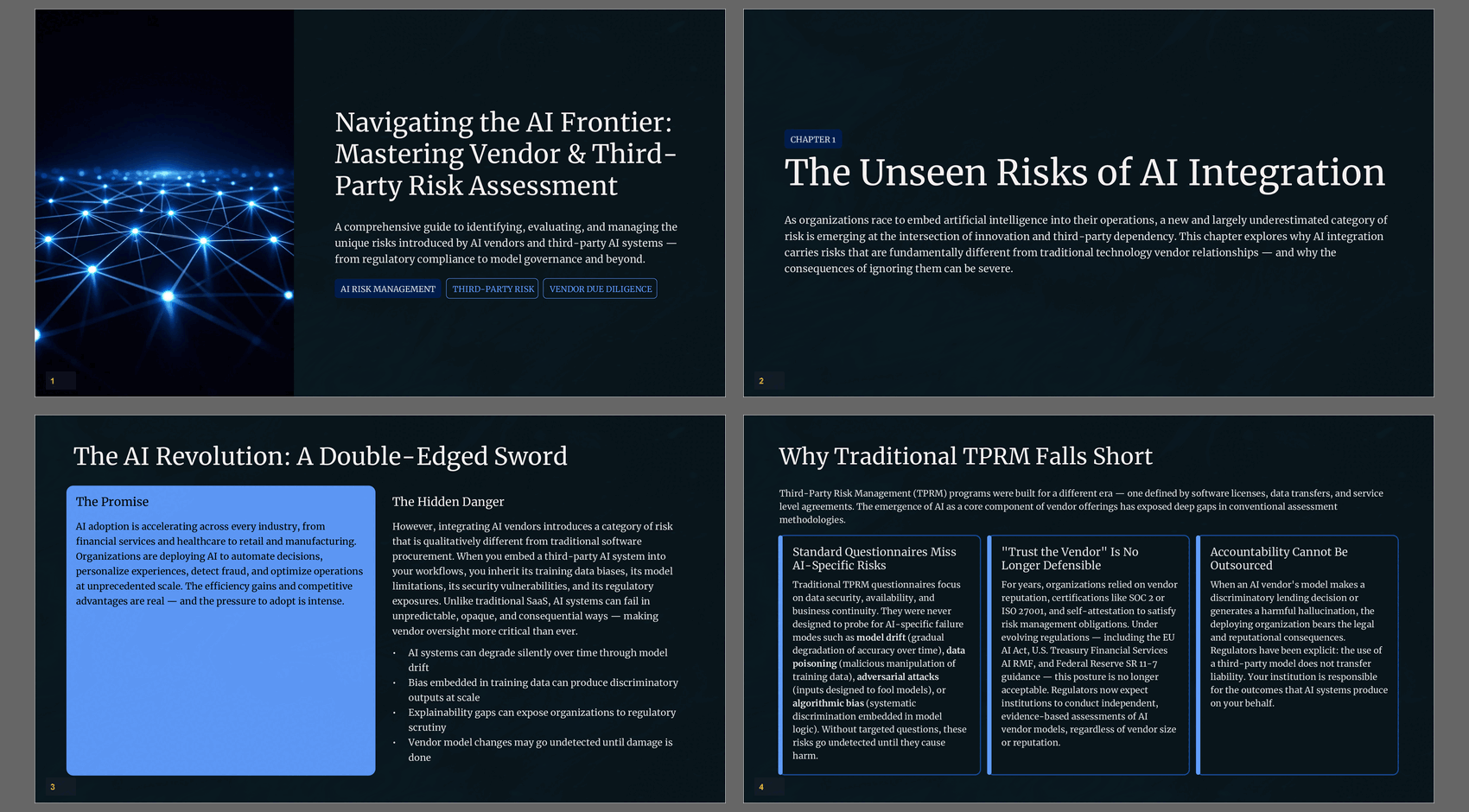
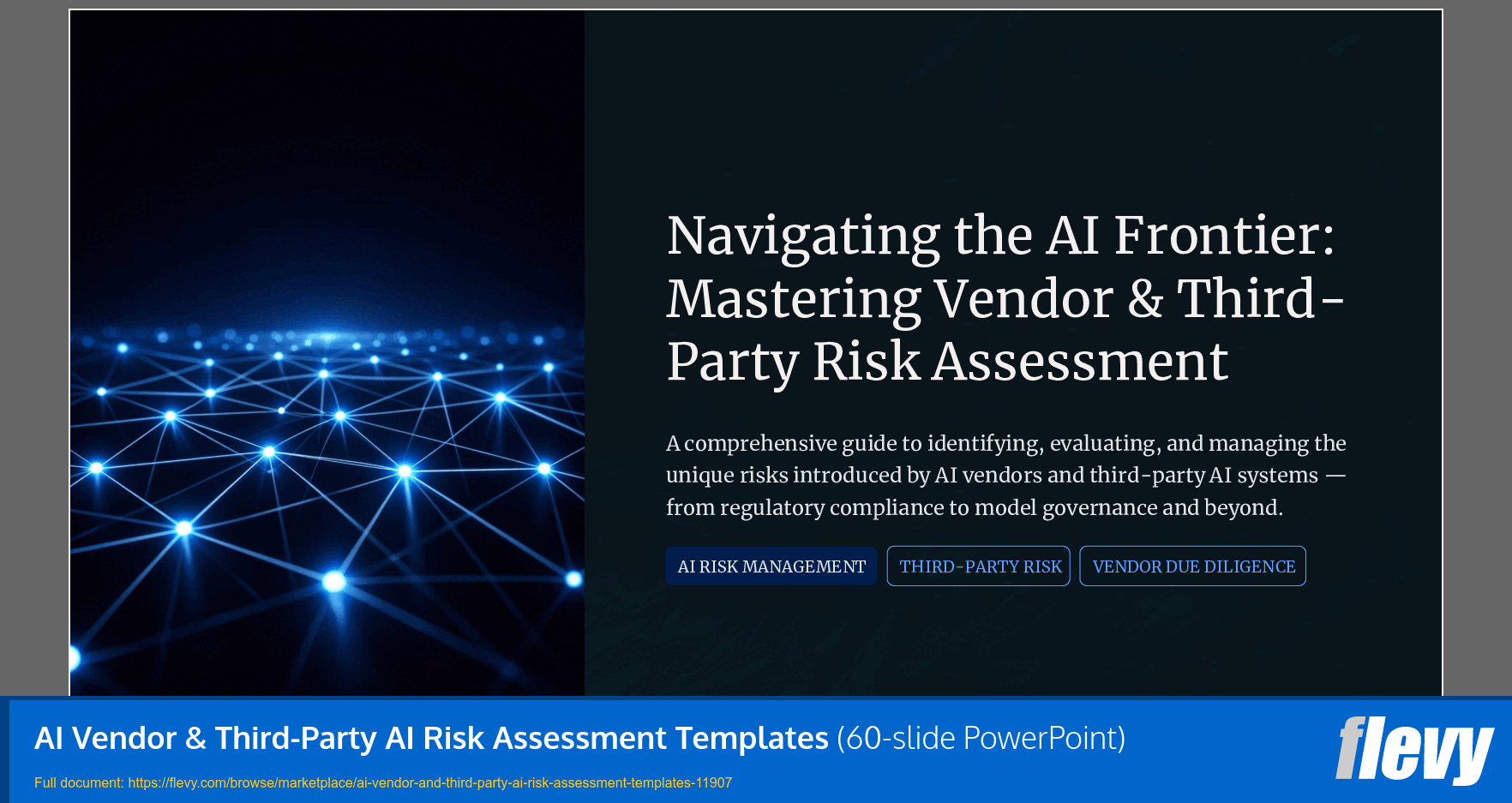
Navigating the AI Frontier: Mastering Vendor & Third-Party Risk Assessment
Chapter 1: The Unseen Risks of AI Integration
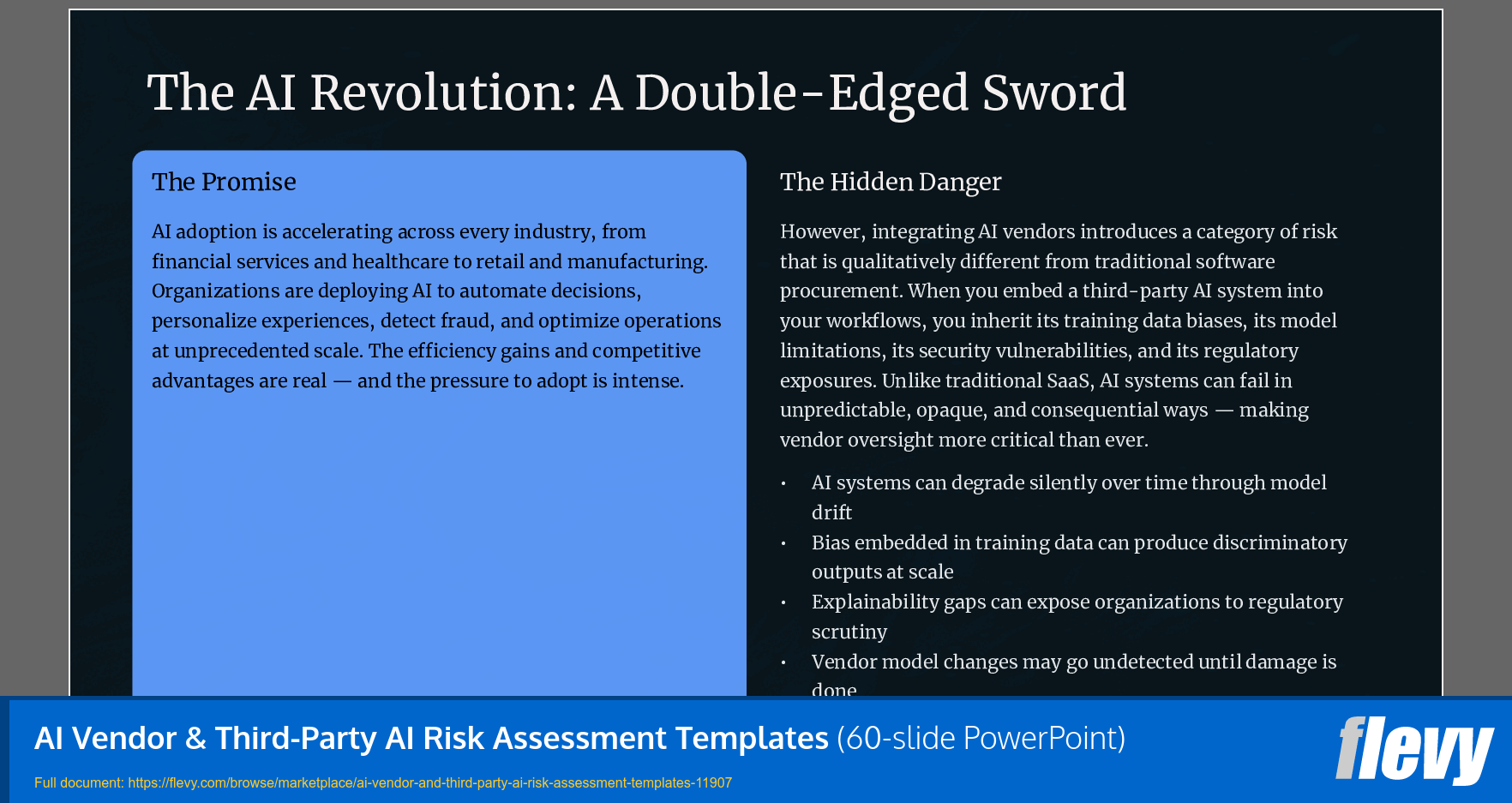
The AI Revolution: A Double-Edged Sword
• AI adoption is accelerating across industries, promising innovation and efficiency.
• However, integrating AI vendors introduces unique and complex third-party risks.
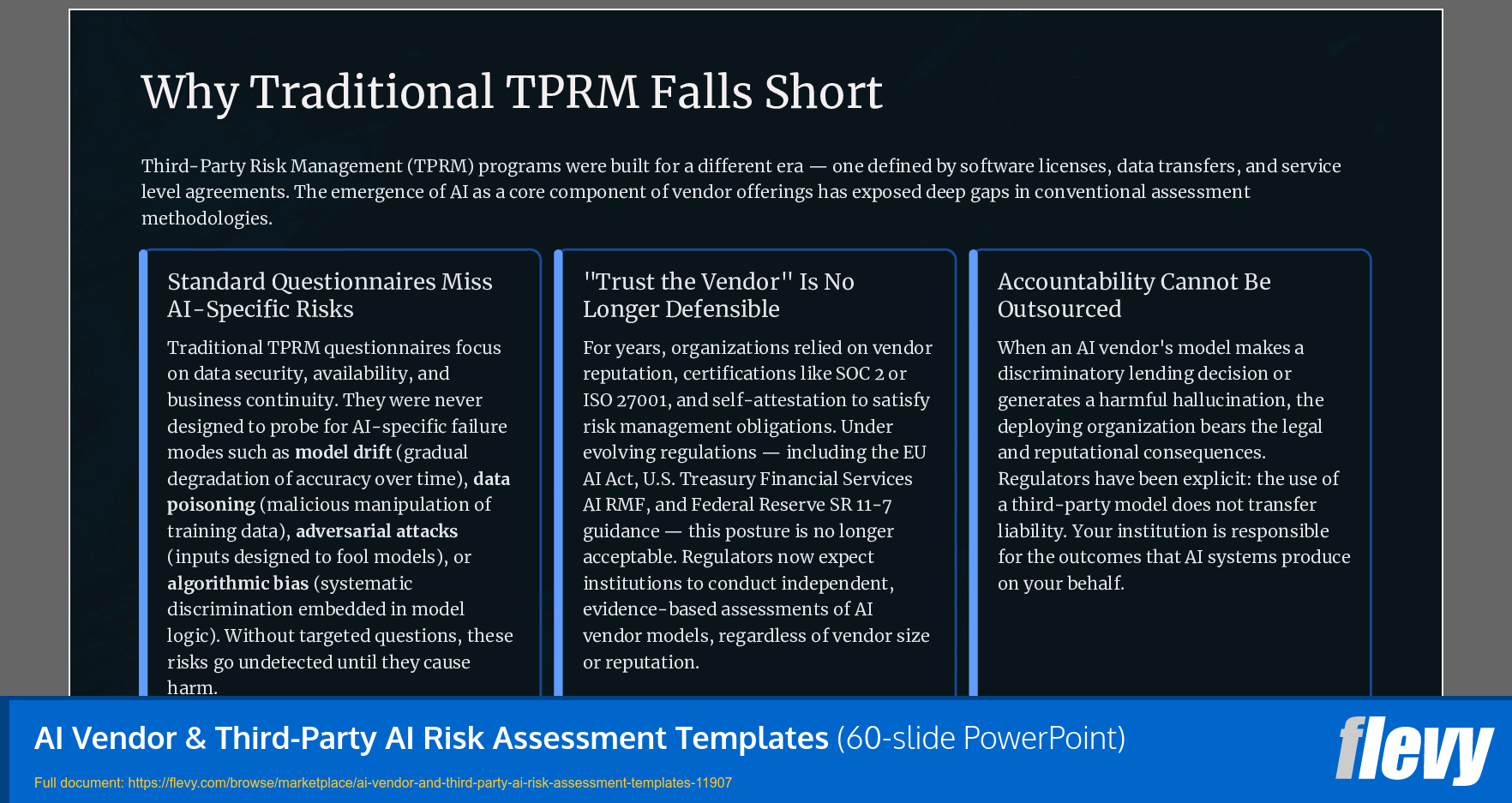
Why Traditional TPRM Falls Short
• Standard questionnaires miss AI-specific risks like model drift, data poisoning, and algorithmic bias.
• "Trust the vendor" is no longer a defensible strategy under evolving regulations.
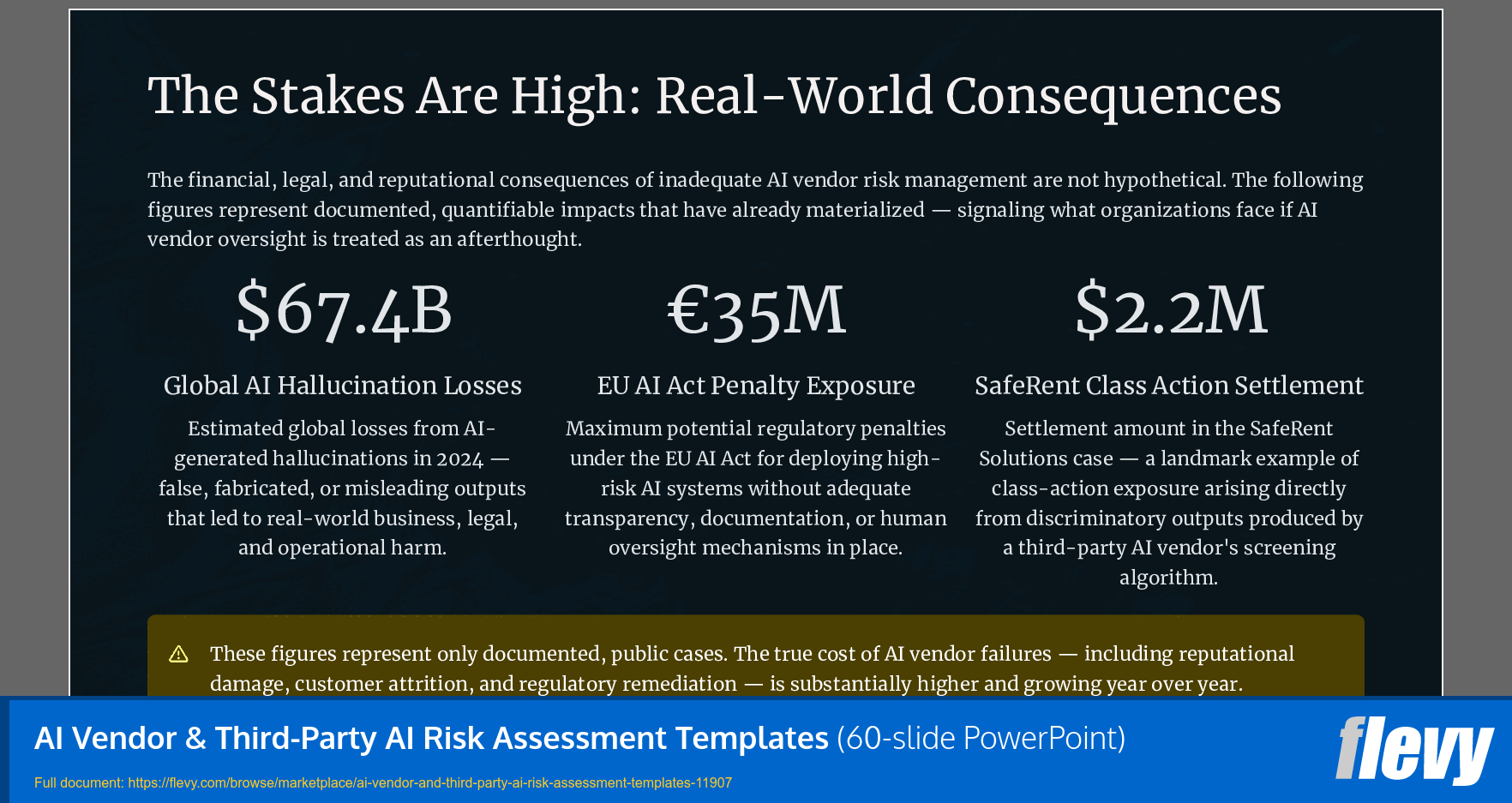
The Stakes Are High: Real-World Consequences
• $67.4 Billion: Estimated global losses from AI hallucinations in 2024.
• €35 Million: Potential regulatory penalties under the EU AI Act for deploying high-risk AI without transparency.
• $2.2 Million: Settlement in the SafeRent case, highlighting class-action exposure from AI vendor issues.
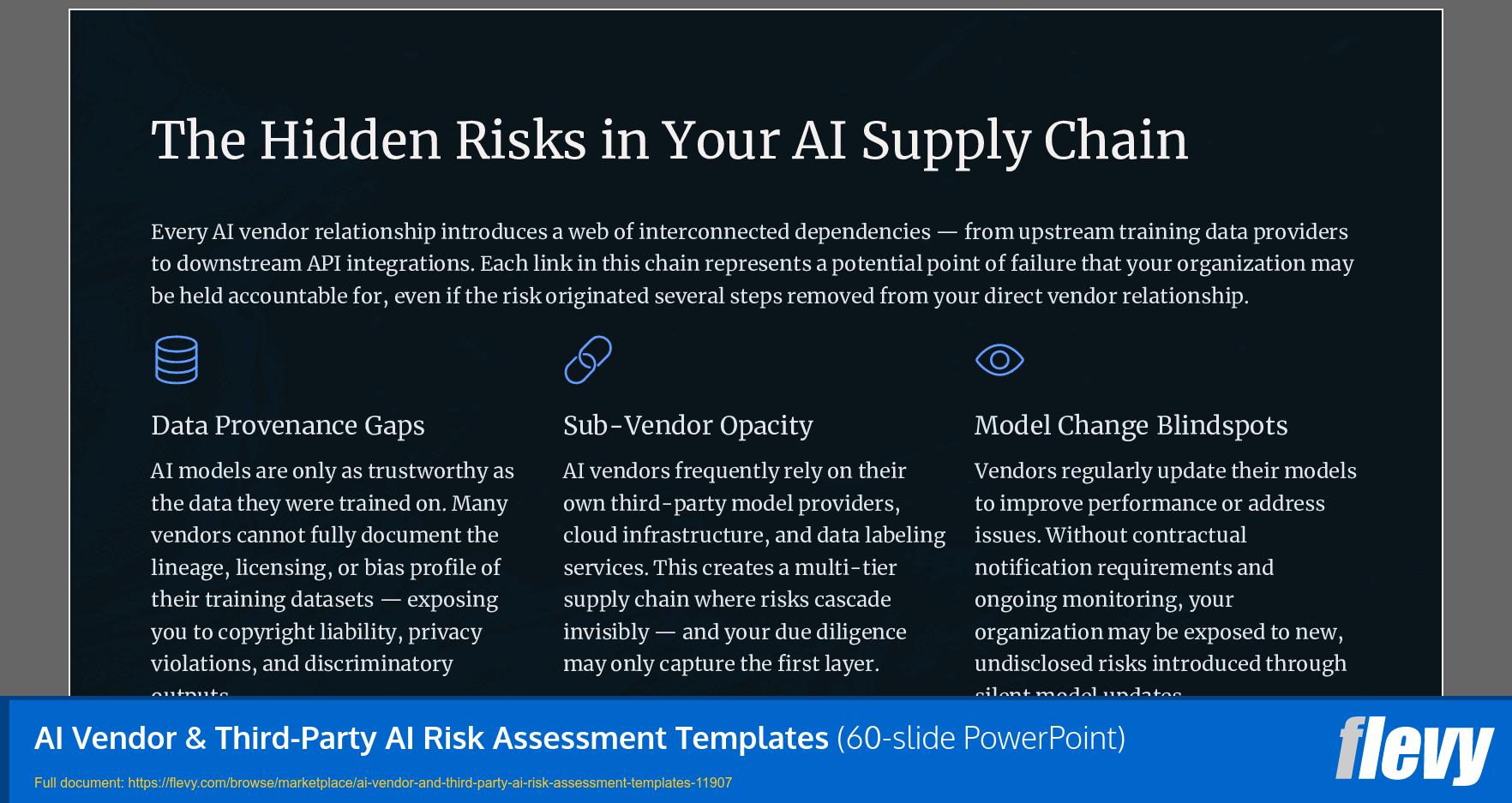
[image] A complex network diagram with some nodes highlighted in red, representing potential vulnerabilities. Text overlay: "The Hidden Risks in Your AI Supply Chain"
Chapter 2: The Evolving Regulatory Landscape
Key Regulatory Drivers
• SR 11-7 (Federal Reserve & OCC): Model risk management responsibilities extend to acquired AI models.
• GAO Report (May 2025): Financial regulators expect AI vendor assessment aligned with MRM and TPRM principles.
• U.S. Treasury's Financial Services AI RMF (February 2026): Formalizes evidence-based vendor AI assessment for financial institutions.
• EU AI Act (Effective 2026): Mandates supply chain obligations and transparency for AI systems.
The Burden of Proof is On You
• Institutions bear the responsibility for determining how AI risk frameworks apply to vendor arrangements.
• Regulators are actively probing due diligence processes for AI vendors.
[image] A gavel striking a block, with a backdrop of legal documents. Text overlay: "Compliance is Not Optional"
Chapter 3: Core Pillars of AI Vendor Risk Assessment
Six Critical Areas of AI Due Diligence
• Model Performance & Stability
• Bias & Fairness Assessment
• Training Data Provenance & Governance
• Security Controls & Vulnerabilities
• Explainability & Transparency
• Ongoing Monitoring & Incident Response
Beyond the Questionnaire: Evidence-Based Assessment
• Regulators expect more than just vendor responses.
• Independent testing, bias audits, hallucination measurement, and security testing are becoming standard.
[image] A magnifying glass hovering over a complex algorithm diagram. Text overlay: "Peering Inside the Black Box"
Chapter 4: Introducing AI-Specific Risk Assessment Templates
The Need for Specialized Tools
• Traditional TPRM questionnaires are insufficient for AI's unique risks.
• Specialized templates bridge the gap between conventional security and AI governance.
Daydream AI ML Vendor Risk Assessment Template
• Focus: Security, compliance, ethical AI, operational risk.
• Features: 150+ control questions mapped to SOC 2, ISO 27001, NIST AI RMF.
• Key Areas: Model governance, data handling, algorithmic bias, explainability.
• Risk Tiers: Categorizes vendors from low-risk ML APIs to high-risk decision-making systems.
[image] A screenshot of a structured questionnaire with clear sections like "Model Governance" and "Data Handling".
RiskTemplates' Third-Party AI Vendor Risk Assessment Framework
• Focus: Bridging the gap in traditional TPRM for AI.
• Key Areas: Training data bias, drift monitoring, hallucination rates, model change notifications.
• Guidance: Aligns with SR 11-7 and the U.S. Treasury's FS AI RMF.
• Contractual Protections: Emphasizes clauses that protect against vendor model failures.
GLACIS AI Vendor Due Diligence Checklist
• Focus: Comprehensive evaluation of AI vendors.
• Criteria: 50+ items covering security, model transparency, data practices, bias testing, compliance.
• Mapping: Aligns with EU AI Act supply chain obligations.
• Key Finding: Over 40% of AI vendors cannot explain their models.
[image] A checklist with items like "Bias Testing," "Data Provenance," and "Model Explainability" ticked off.
Field Guide to AI's AI Risk Assessment Template
• Focus: Systematic evaluation of AI system risks.
• Structure: 6 pages with 7 risk categories (technical, security, privacy, bias, regulatory, operational, reputational).
• Tools: Likelihood-times-impact matrix, risk register, mitigation roadmaps.
• Process: Four-phase assessment (pre-deployment to ongoing monitoring).
FS-ISAC Generative AI Vendor Risk Assessment Guide
• Focus: Evaluating generative AI vendors for financial institutions.
• Methodology: Customizable risk analysis across five domains (use case, integration, data, resiliency, exposure).
• Output: Guides to Level 1, 2, or 3 due diligence plans with dynamic vendor questionnaires.
• Context: Addresses rapidly evolving GenAI landscape and regulatory changes (e.g., U.S. Executive Order 14110).
[image] A flow chart illustrating a tiered risk assessment process, from initial analysis to detailed vendor questionnaires.
Daydream's AI Vendor Due Diligence Questionnaire
• Focus: Algorithm transparency, data handling, bias controls, operational security.
• Mapping: Aligns with SOC 2 AI criteria, ISO 27001, NIST AI RMF.
• Evidence: Requires model cards, bias testing reports, drift monitoring logs.
• Domains: Covers algorithm governance, data practices, bias/fairness, security, compliance, performance, incident response, and contracts.
BrianOnAI's AI Vendor Evaluation Scorecard
• Focus: Weighted scoring for AI tool selection.
• Criteria: 35 criteria across 7 categories (Technical, Security, AI Governance, Data Handling, Compliance, Support, Commercial).
• Features: Auto-calculates weighted scores, vendor comparison sheet, approval thresholds.
• Key Questions: "Does the vendor use your data to train their models?", "Can they explain AI decisions?"
[image] A comparison table showing multiple AI vendors with scores across different categories.
Chapter 5: Implementing Your AI Vendor Risk Assessment Program
Step 1: Vendor Classification and Risk Tiering
• Low Risk: Pre-trained models, standard APIs (e.g., basic NLP).
• Moderate Risk: Custom training on client data, limited PII.
• High Risk: Automated decision-making, critical applications (e.g., healthcare diagnostics, financial underwriting).
• Action: Tailor assessment depth to vendor risk tier.
[image] A visual representation of risk tiers, perhaps a pyramid with low risk at the base and high risk at the apex.
Step 2: Tailoring Your Assessment
• Don't use a one-size-fits-all approach.
• Adapt templates based on your organization's risk appetite, use case, and regulatory requirements.
• Leverage specific sections relevant to your AI deployment.
Step 3: Evidence Collection and Validation
• Go beyond self-attestation.
• Request concrete evidence: model cards, bias reports, data lineage documentation, security certifications.
• Conduct independent testing where feasible and critical.
[image] A stack of documents labeled "Evidence," with a checkmark on top.
Step 4: Scoring and Prioritization
• Utilize scoring methodologies provided by templates (e.g., likelihood x impact).
• Prioritize risks based on severity and your organization's risk appetite.
• Establish clear approval thresholds for vendor selection.
Step 5: Contractual Protections
• Ensure contracts include clauses for:
• Data usage and retention
• Model transparency and explainability
• Bias mitigation and remediation
• Incident notification and response
• Audit rights
[image] A contract document with key clauses highlighted. Text overlay: "Securing Your AI Future"
Chapter 6: Deep Dive into Key Assessment Areas
Model Governance and Development
• Training Data Management: Source documentation, lineage, bias assessment, quality control, privacy techniques.
• Model Lifecycle: Version control, change management, performance monitoring, drift detection.
Bias and Fairness Assessment
• Identify potential biases: Demographic disparities, fairness violations.
• Testing: Methods for detecting and quantifying bias in training data and model outputs.
• Mitigation: Strategies to reduce or eliminate identified biases.
[image] A split image: one side showing a diverse group of people, the other showing a skewed distribution graph. Text overlay: "Ensuring Equitable AI"
Data Practices and Privacy
• Data Sources & Licensing: Provenance, copyright, privacy exposure.
• Data Retention: Policies for model improvement vs. service delivery.
• Cross-Customer Data: Usage, isolation, and anonymization controls.
• Compliance: GDPR, CCPA, and other data privacy regulations.
Security Controls and Vulnerabilities
• Standard Security: Encryption, access controls, certifications.
• AI-Specific Threats: Prompt injection, adversarial attacks, data poisoning.
• Penetration Testing: Assessing AI system resilience.
[image] A shield icon with a circuit board pattern inside. Text overlay: "Fortifying Your AI Defenses"
Transparency and Explainability
• Model Opacity: Addressing the "black box" problem.
• Decision Logic: Explanations for high-stakes decisions.
• Model Cards: Documenting model behavior, limitations, and intended use.
Performance Monitoring and Incident Response
• Drift Monitoring: Detecting degradation in model performance over time.
• Hallucination Rates: Measuring and managing the generation of false information.
• Incident Management: Protocols for addressing AI-related failures or breaches.
[image] A dashboard showing key performance indicators for an AI system, including accuracy and drift.
Chapter 7: Future Trends and Best Practices
The Rise of AI Governance Frameworks
• Continued evolution of NIST AI RMF, EU AI Act, and industry-specific guidance.
• Increased focus on AI ethics, responsible AI, and human oversight.
AI Supply Chain Transparency
• Growing demand for end-to-end visibility into AI model development and deployment.
• Vendors will increasingly be required to disclose training data sources and model architectures.
[image] A chain link graphic with AI icons integrated into each link. Text overlay: "Building a Transparent AI Ecosystem"
Continuous Monitoring and Adaptation
• AI risk assessment is not a one-time event.
• Regular re-assessments and adaptation to new threats and regulations are crucial.
The Role of AI in Risk Management Itself
• Using AI tools to automate and enhance vendor risk assessments.
• AI-powered anomaly detection for identifying emerging risks.
[image] A futuristic interface showing AI analyzing risk data.
Chapter 8: Your Action Plan for AI Vendor Risk Management
Assess Your Current TPRM Program
• Identify gaps in your existing vendor risk management processes related to AI.
• Understand your organization's current AI adoption and vendor landscape.
Select and Adapt Your Tools
• Choose AI vendor risk assessment templates and questionnaires that best fit your needs.
• Customize them based on your risk appetite and specific use cases.
[image] A toolbox filled with various templates and checklists.
Train Your Teams
• Educate procurement, legal, risk, and IT teams on AI-specific risks and assessment methodologies.
• Foster a culture of responsible AI adoption.
Integrate and Automate
• Embed AI vendor risk assessment into your standard TPRM workflow.
• Explore automation opportunities for efficiency and consistency.
The Future is AI-Powered, Be Prepared.
• Proactive AI vendor risk assessment is essential for innovation, compliance, and trust.
• Take control of your AI supply chain today.
Got a question about the product? Email us at support@flevy.com or ask the author directly by using the "Ask the Author a Question" form. If you cannot view the preview above this document description, go here to view the large preview instead.
Source: Best Practices in Artificial Intelligence, Risk Management PowerPoint Slides: AI Vendor & Third-Party AI Risk Assessment Templates PowerPoint (PPTX) Presentation Slide Deck, Mohamed Alshamey
ABOUT THE AUTHOR

Senior Consultant in Cybersecurity GRC, Data Governance, Cybersecurity, Privacy, and Data Management, with over 20 years of experience in information technology, consulting, training, and technical capacity building. holds a PhD. In AI & Data Privacy, he has a master's degree in cybersecurity and is currently pursuing research focused on data privacy. possesses extensive expertise in ... [read more]
Ask the Author a Question
You must be logged in to contact the author.




























