
 Click main image to view in full screen. Unlock all 13 preview images:
AI Consulting Workbench: Management Consulting Toolkit – PDF
PDF document + Zip archive file (ZIP) 12 Pages


BENEFITS OF THIS DOWNLOADABLE PDF DOCUMENT
- Provides a structured 20-step consulting workflow that helps turn ambiguous business problems into evidence-backed, executive-ready recommendations.
- Improves rigor and traceability by linking hypotheses, analyses, evidence, findings, insights, and recommendations through explicit quality gates.
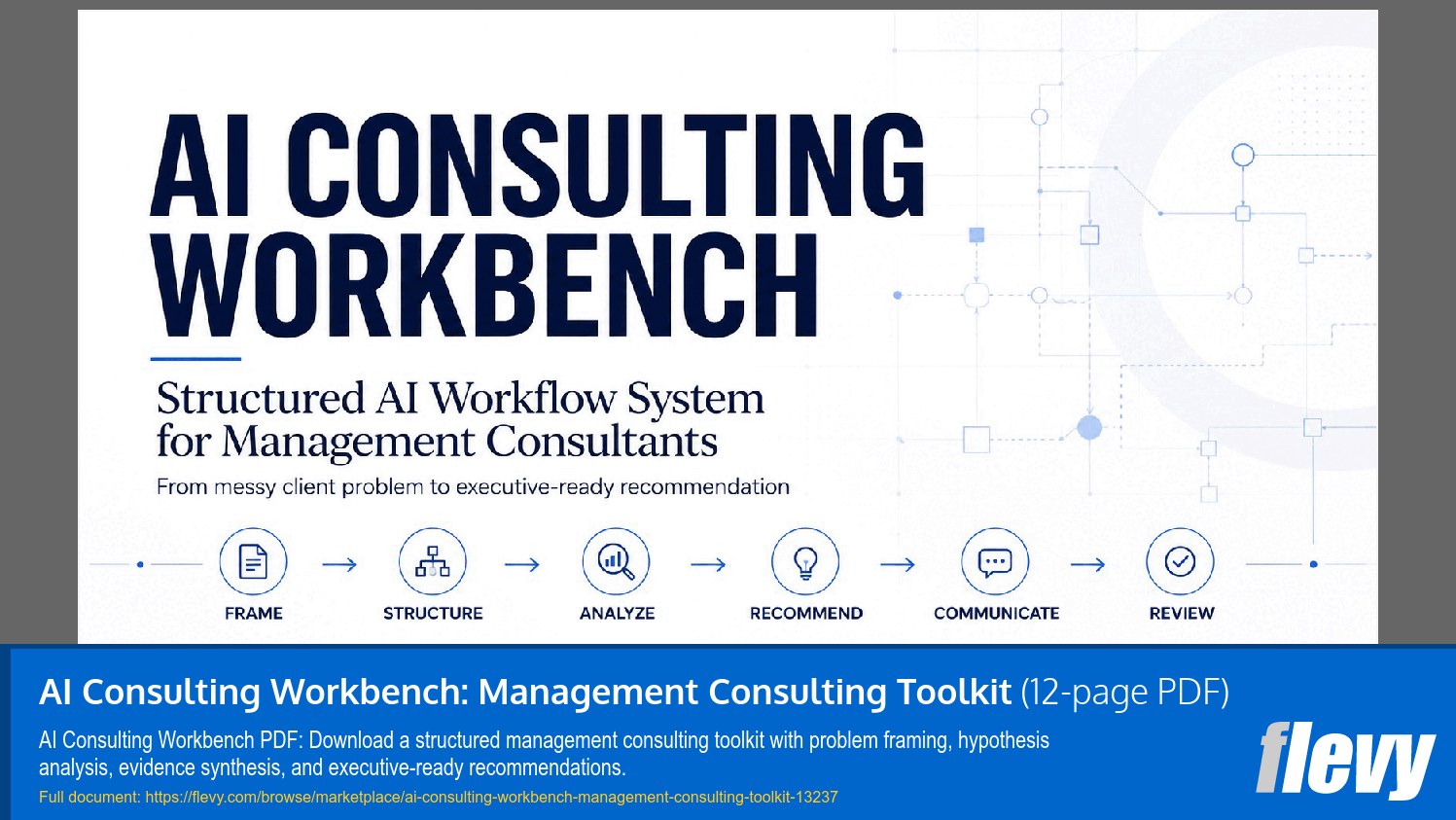
- Helps consultants use AI more critically by challenging causality, quantification, assumptions, and recommendation quality before client delivery.
ARTIFICIAL INTELLIGENCE PDF DESCRIPTION
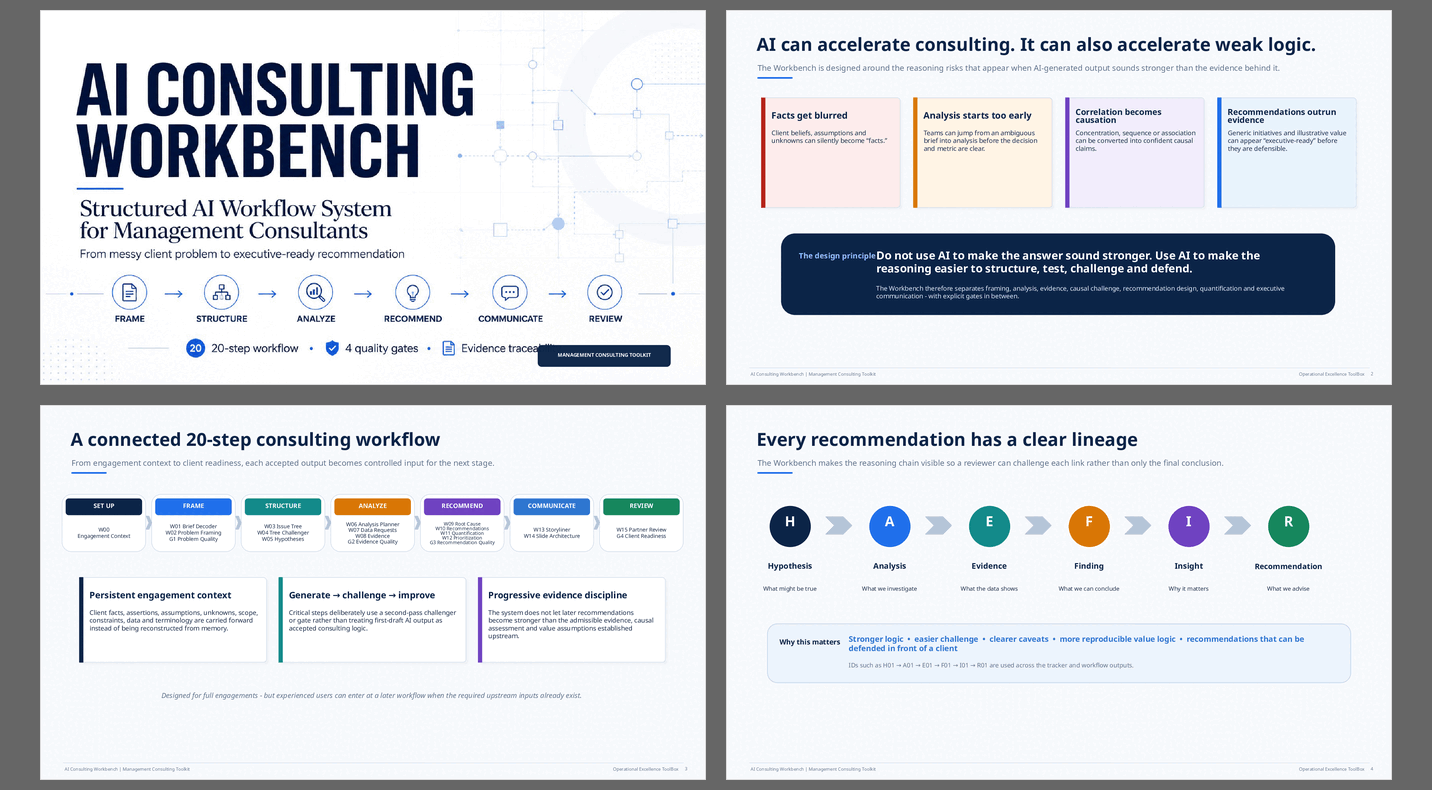
AI Consulting Workbench is a structured management consulting toolkit designed to help consultants use AI with greater rigor, traceability, and decision discipline.
Rather than offering a collection of disconnected prompts, the Workbench guides users through a complete consulting problem-solving process from initial client context to executive-ready recommendation.
The system covers the full consulting reasoning journey:
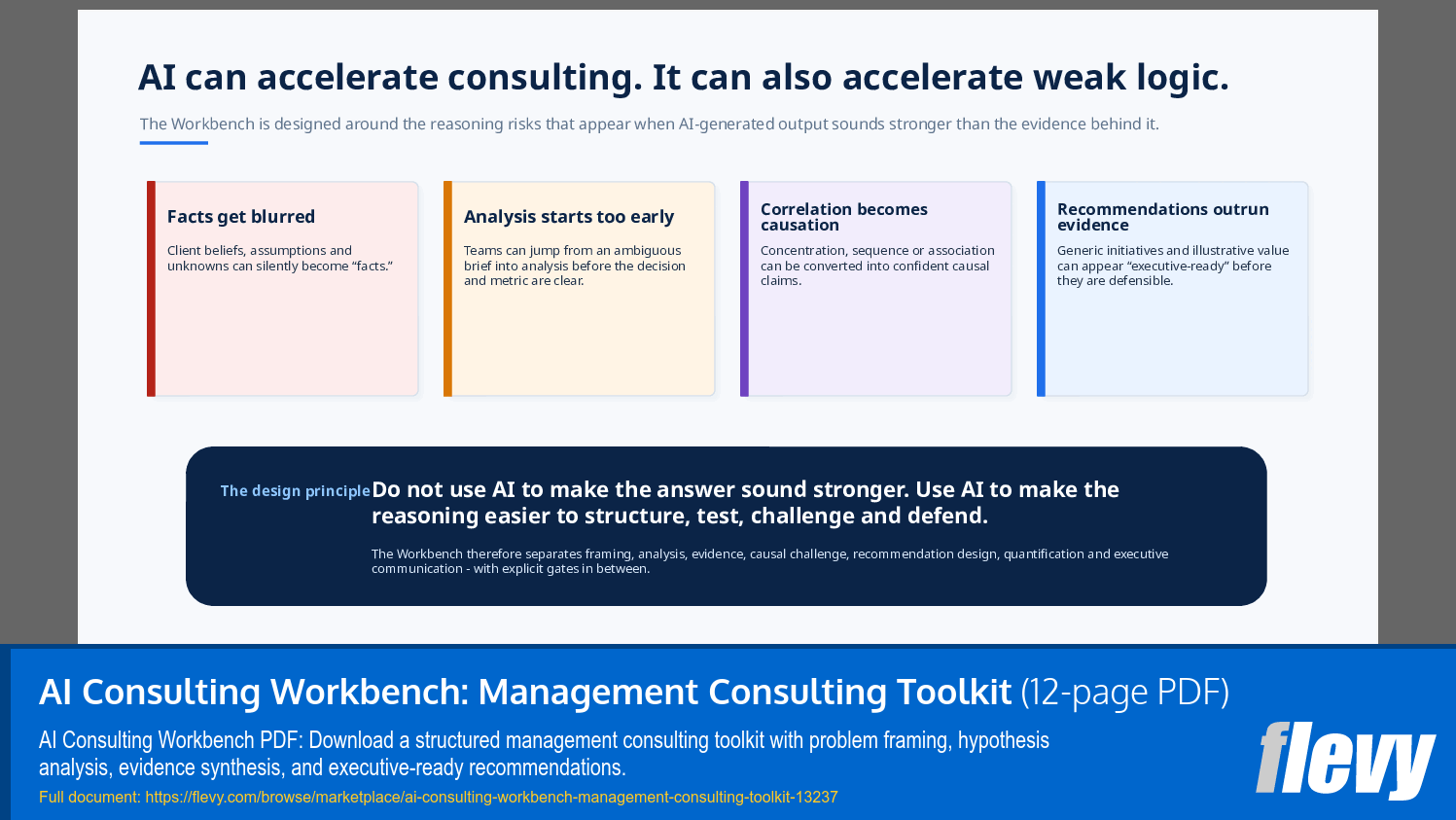
Engagement Context → Problem Framing → Issue Tree → Hypotheses → Analysis Planning → Data Requests → Evidence Synthesis → Root Cause Challenge → Recommendations → Opportunity Quantification → Prioritization → Executive Storyline → Slide Architecture → Partner Review → Client Readiness.
The toolkit includes 20 connected workflow and quality-gate steps. Each stage is designed to consume validated outputs from the previous stage, helping reduce one of the key risks of AI-assisted consulting: weak logic that becomes increasingly polished as it moves downstream.
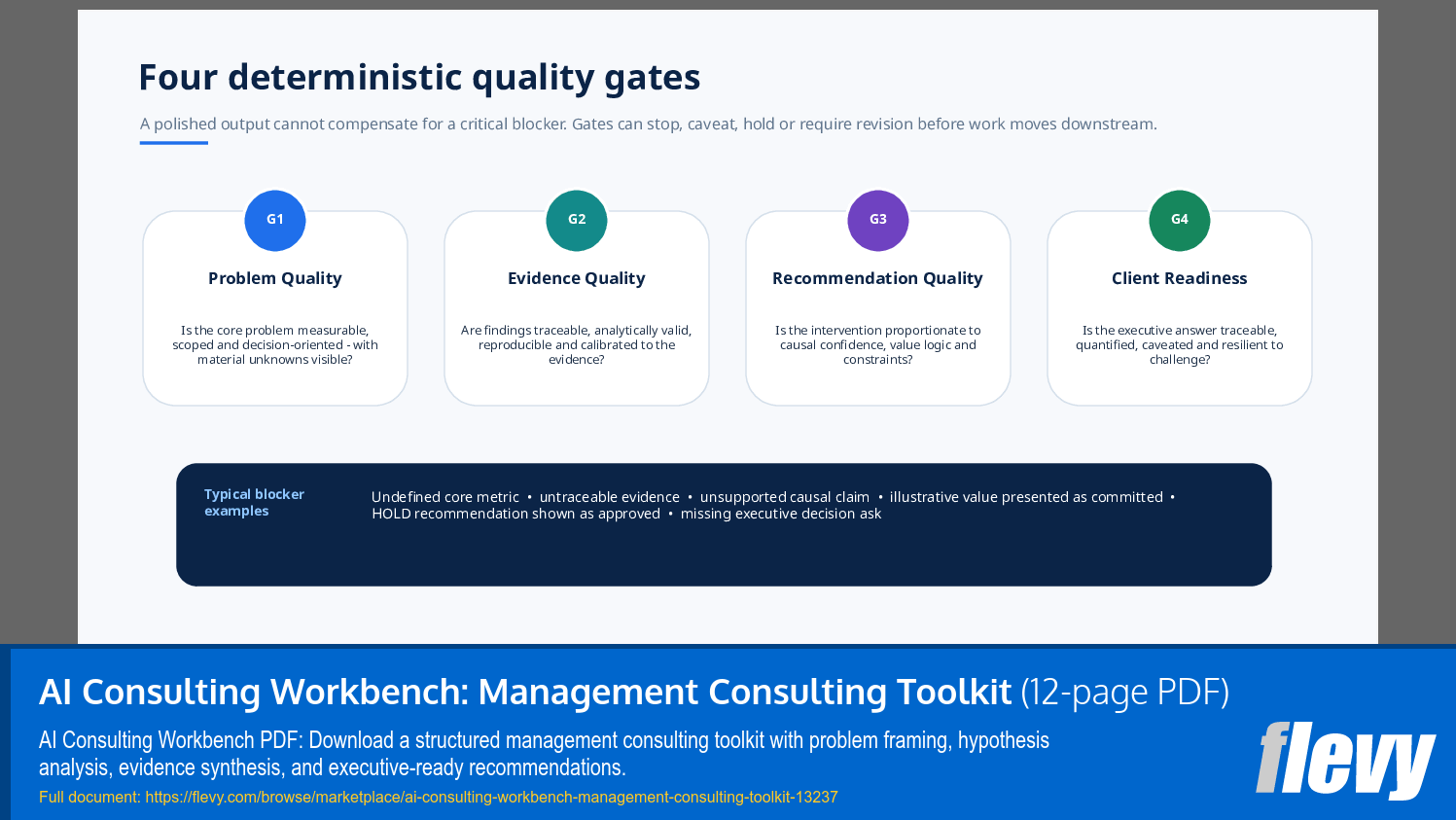
Four embedded quality gates provide structured checkpoints for:
G1 – Problem Quality: confirms that the problem, scope, metric, objective, and management decision are sufficiently defined before analysis begins.
G2 – Evidence Quality: evaluates whether findings are traceable, analytically valid, sufficiently supported, and appropriately calibrated to the available evidence.
G3 – Recommendation Quality: challenges whether recommendations are genuinely supported by the findings, whether causal claims are justified, and whether value assumptions and implementation logic are defensible.
G4 – Client Readiness: provides a final executive-level review of the analysis, recommendations, quantification, storyline, and decision ask before delivery.
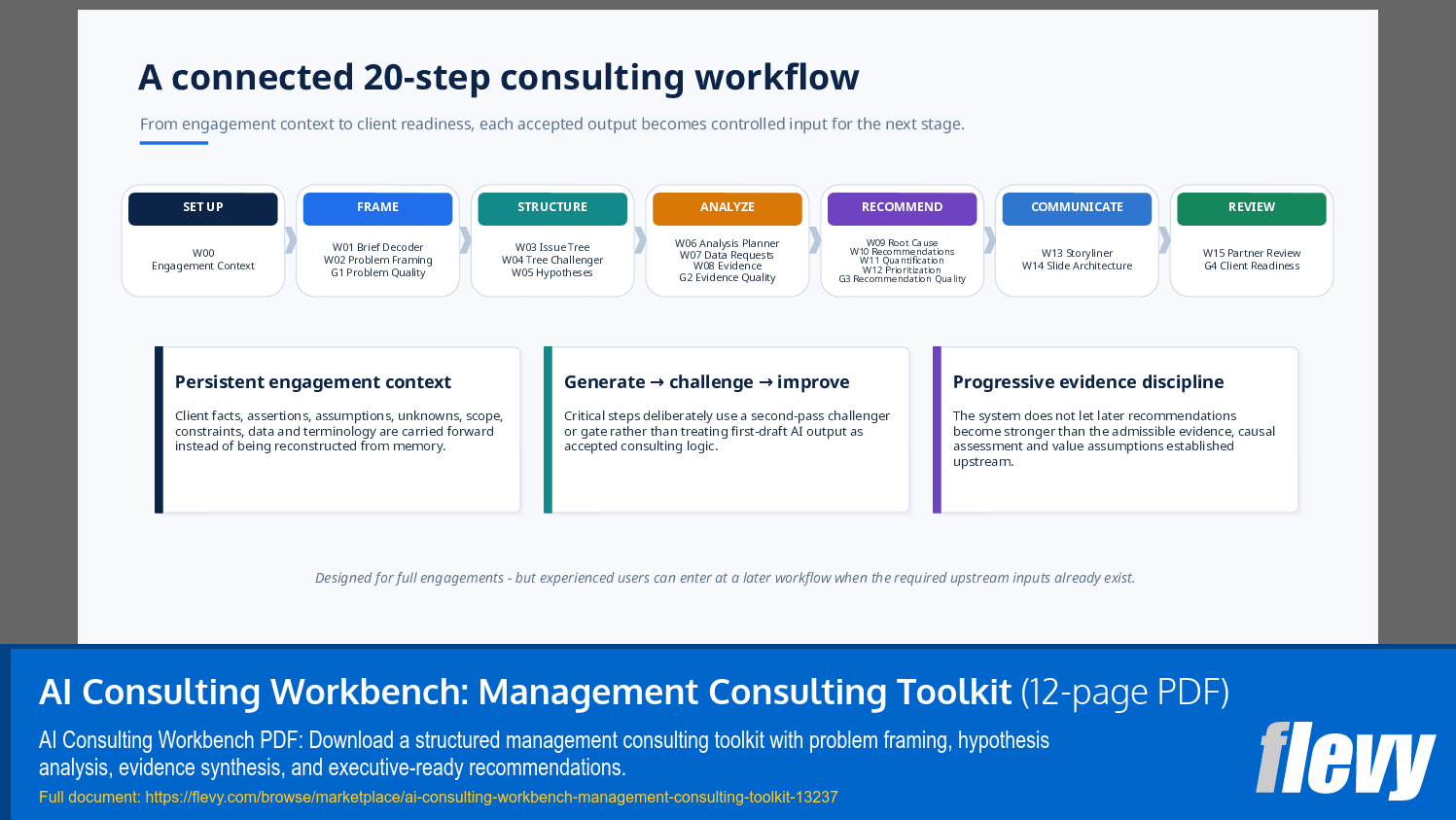
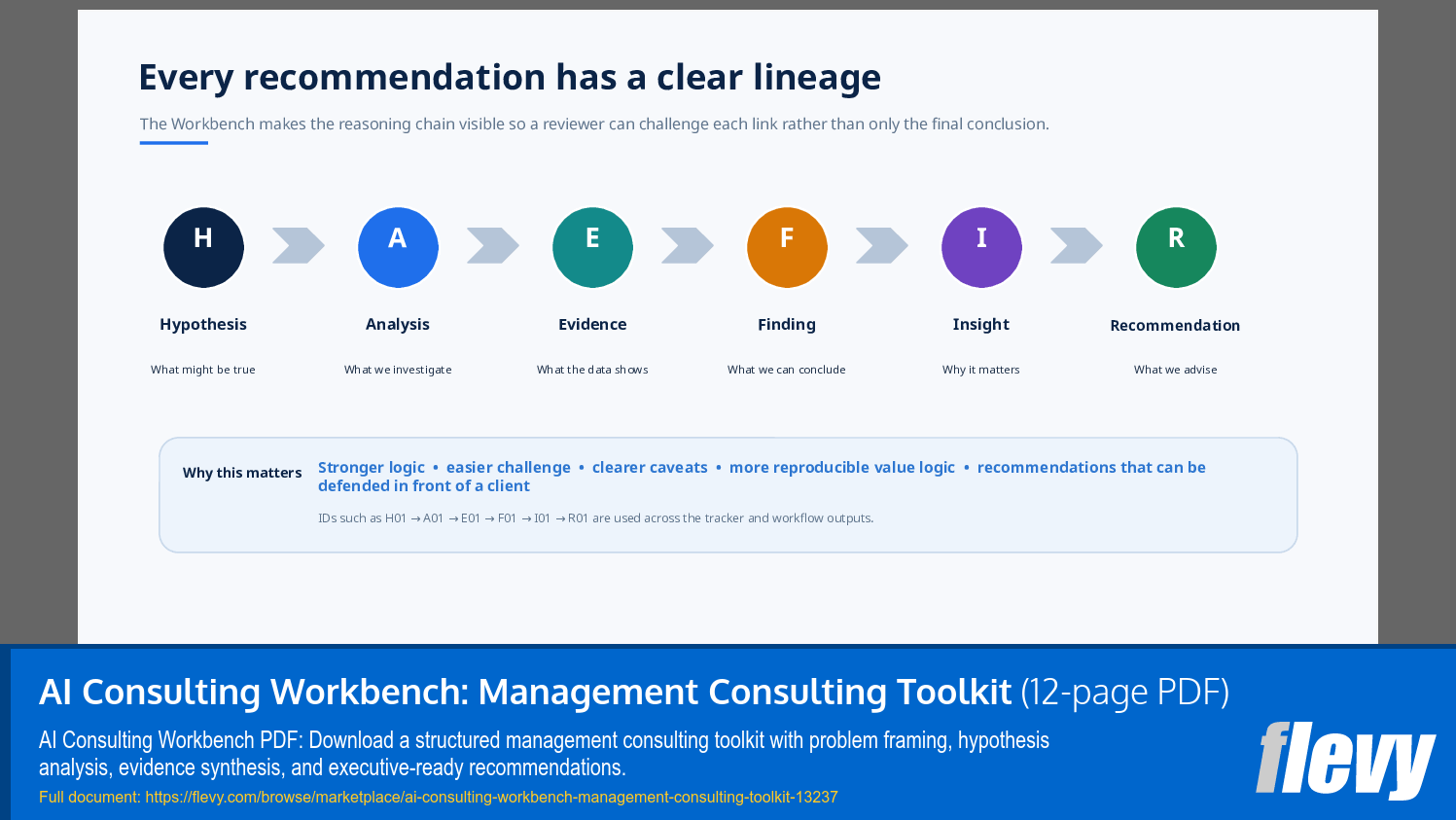
A key feature of the Workbench is evidence-to-recommendation traceability:
Hypothesis → Analysis → Evidence → Finding → Insight → Recommendation.
This makes it easier to understand where a recommendation came from, challenge unsupported conclusions, preserve caveats, and prevent assumptions or client assertions from silently becoming facts.
The toolkit also introduces explicit causal discipline. Correlation, concentration, management beliefs, and temporal sequence are not automatically treated as proof of causality. Where causal confidence is limited, the methodology encourages pilots, experiments, additional diagnosis, or staged interventions rather than unsupported full-scale recommendations.
The package includes:
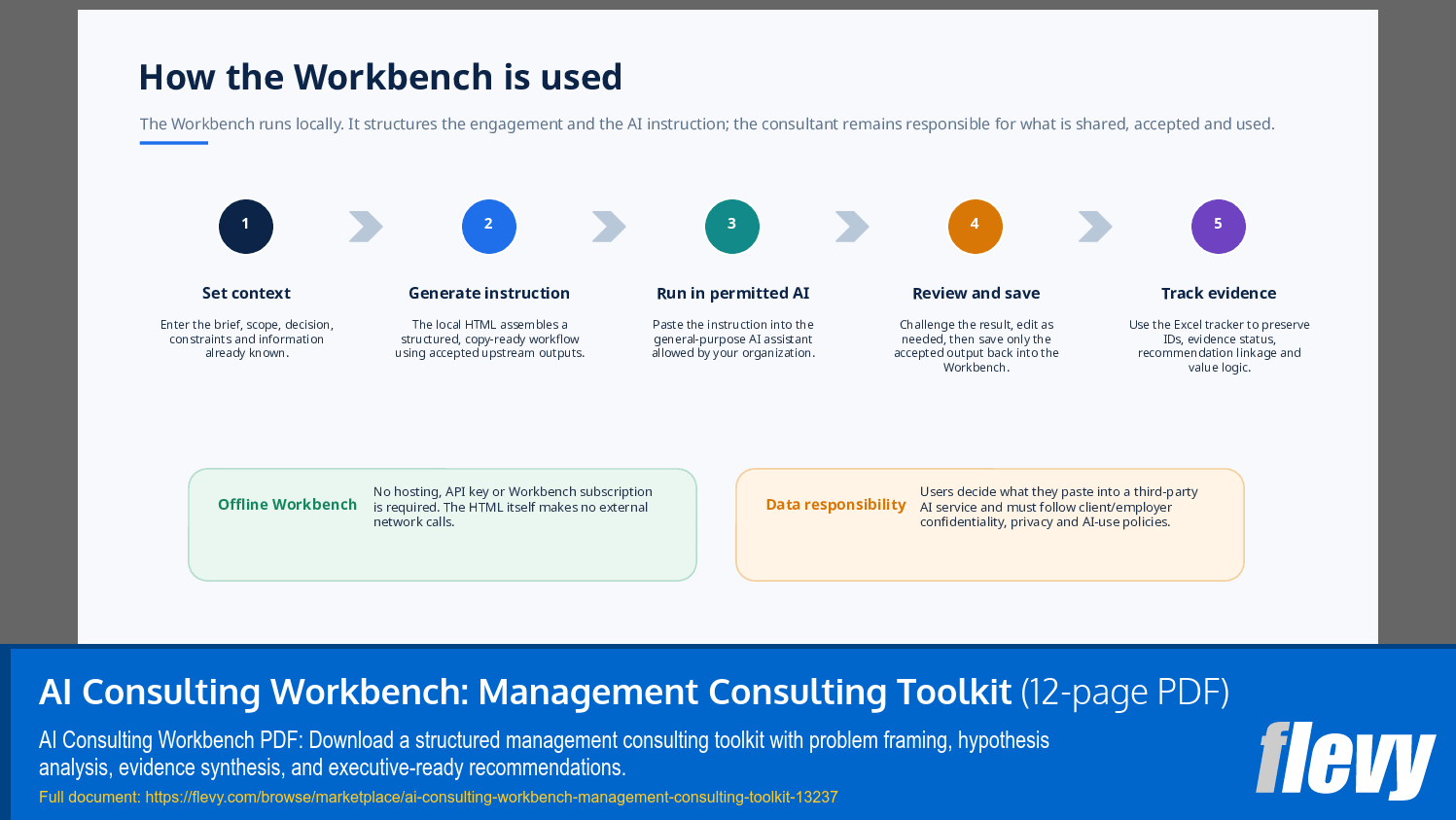
• AI Consulting Workbench – an offline interactive workflow interface that runs locally in a browser.
• Evidence & Insights Tracker – a structured Excel workbook for hypotheses, analyses, evidence, findings, insights, and recommendations.
• Populated IndustrialCo Example Tracker – a completed reference example showing end-to-end traceability.
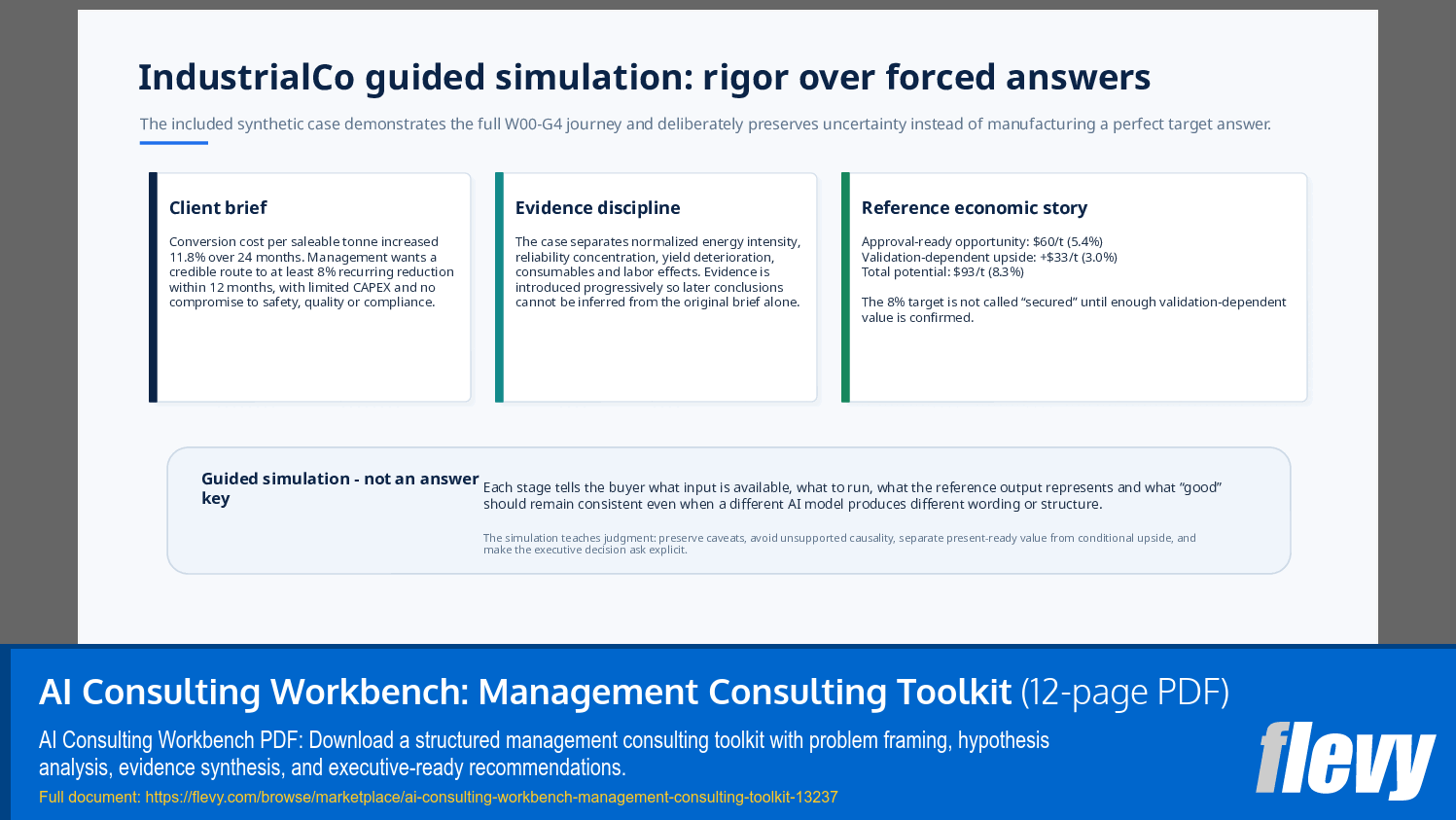
• IndustrialCo Guided Simulation – a realistic synthetic consulting case that walks through the complete workflow from W00 through G4.
• Quick Start Guide – practical instructions for using the Workbench efficiently.
• Single-user commercial license for professional consulting use.
The primary PDF provides the complete IndustrialCo guided simulation. The accompanying ZIP file contains the full AI Consulting Workbench package, including the offline interactive HTML Workbench, blank and populated Excel trackers, Quick Start Guide, guided simulation, and license.
The IndustrialCo simulation demonstrates how the methodology handles incomplete briefs, competing hypotheses, evidence quality, causal uncertainty, opportunity quantification, prioritization, and executive communication. Importantly, the case does not force the analysis to "prove" the client's target. It distinguishes between approval-ready value and validation-dependent upside, illustrating how the quality gates help prevent overclaiming.
The Workbench is designed for management consultants, independent consultants, internal strategy teams, transformation and PMO professionals, Operational Excellence practitioners, analysts, and managers who regularly turn ambiguous business problems into structured recommendations.
AI outputs may vary across models and runs. The Workbench is therefore not designed to generate one fixed answer. Its purpose is to provide a disciplined consulting reasoning system that helps users evaluate logic, evidence, traceability, quantification, and decision usefulness before recommendations reach the client.
AI Consulting Workbench is not an autonomous consulting agent and does not replace professional judgment. It is a structured decision-support and problem-solving toolkit designed to help consultants use AI more systematically, critically, and defensibly.
Got a question about the product? Email us at support@flevy.com or ask the author directly by using the "Ask the Author a Question" form. If you cannot view the preview above this document description, go here to view the large preview instead.
Source: Best Practices in Artificial Intelligence, Consulting Sales PDF: AI Consulting Workbench: Management Consulting Toolkit PDF (PDF) Document, Amine




























