
 Click main image to view in full screen. Unlock all 13 preview images:
AI & Automation Use Cases: Commercial Functions – PowerPoint PPTX Template
PowerPoint (PPTX) + Excel (XLSX) 135 Slides


BENEFITS OF THIS DOWNLOADABLE POWERPOINT DOCUMENT
- Accelerate AI Opportunity Identification -- Explore 125 implementation-oriented AI and automation use cases across major commercial functions to rapidly build a practical, high-value opportunity pipeline
- Strengthen Business Cases and Planning -- Each use case covers the problem, current state, approach, delivery profile, team, benefits, controls, risks, and data needs to support prioritization and execution
- Apply Practitioner-Grade Transformation Thinking -- Built from 20 years of consulting and transformation experience across EY, PwC, Accenture, Genpact, WNS, and Essar for direct use in workshops, roadmaps, and client engagements
ARTIFICIAL INTELLIGENCE PPT TEMPLATE DESCRIPTION
Organizations are under increasing pressure to turn Artificial Intelligence and Intelligent Automation from experimentation into measurable commercial impact. Yet one of the biggest challenges remains surprisingly basic: identifying the right use cases, understanding what each opportunity actually involves, and translating an idea into an implementable business initiative.
This toolkit addresses that gap.
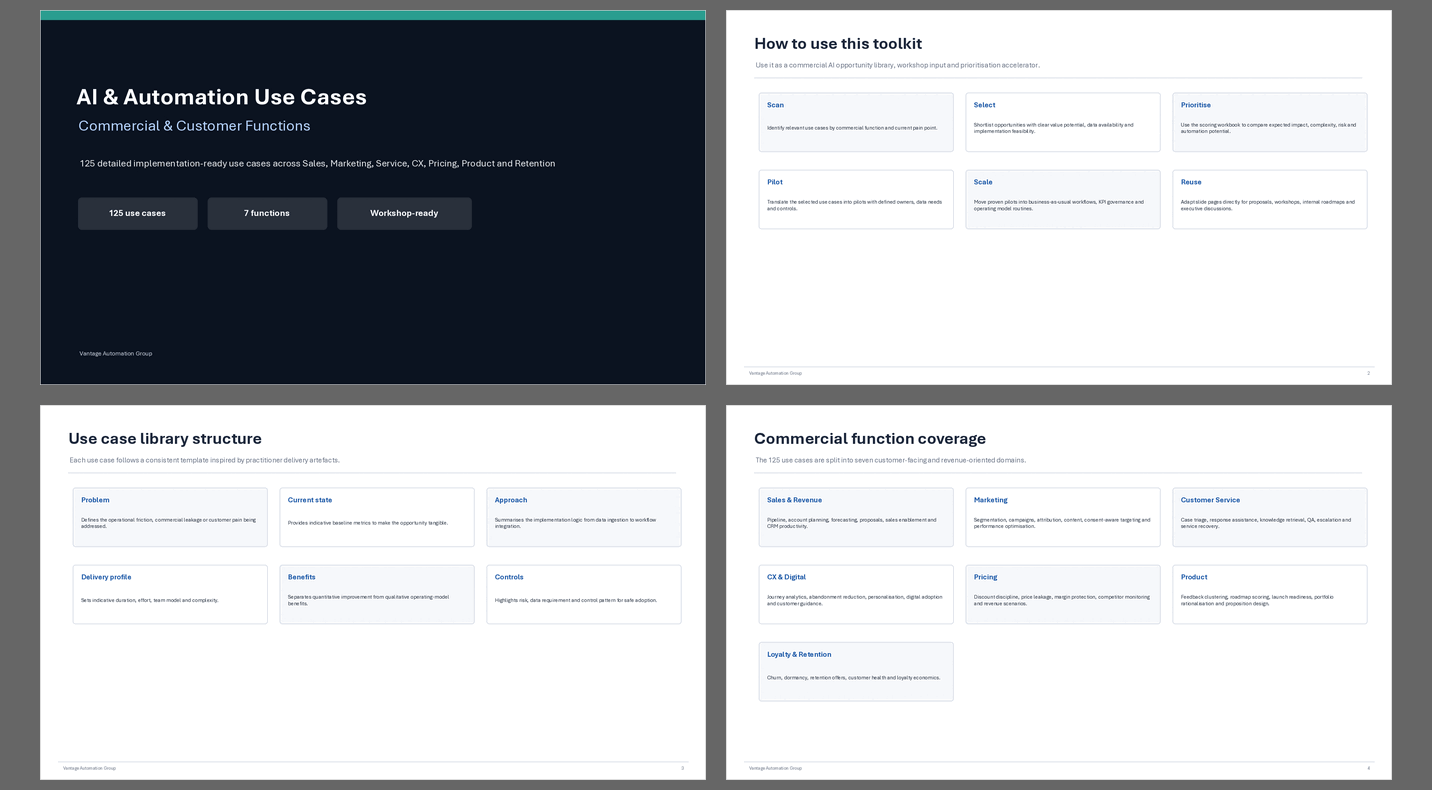
AI & Automation Use Cases for Commercial Functions provides a structured library of 125 detailed, implementation-oriented use cases covering the major commercial and customer-facing functions of an enterprise. It is designed for consulting teams, transformation leaders, AI and automation practitioners, commercial executives, digital teams, innovation functions, and business leaders who need practical opportunities—not generic AI ideas.
Unlike simple lists of AI use cases, this toolkit goes substantially deeper. Each use case is presented as a practical mini-business case and includes the business problem, current-state context, proposed automation or AI capability, implementation approach, indicative delivery profile, team requirements, quantitative benefits, qualitative benefits, control considerations, key risks, and data requirements.
The objective is simple: enable a buyer to move from "Where can we use AI?" to "Here is the opportunity, the expected impact, and a realistic path to implementation."
What the Toolkit Covers
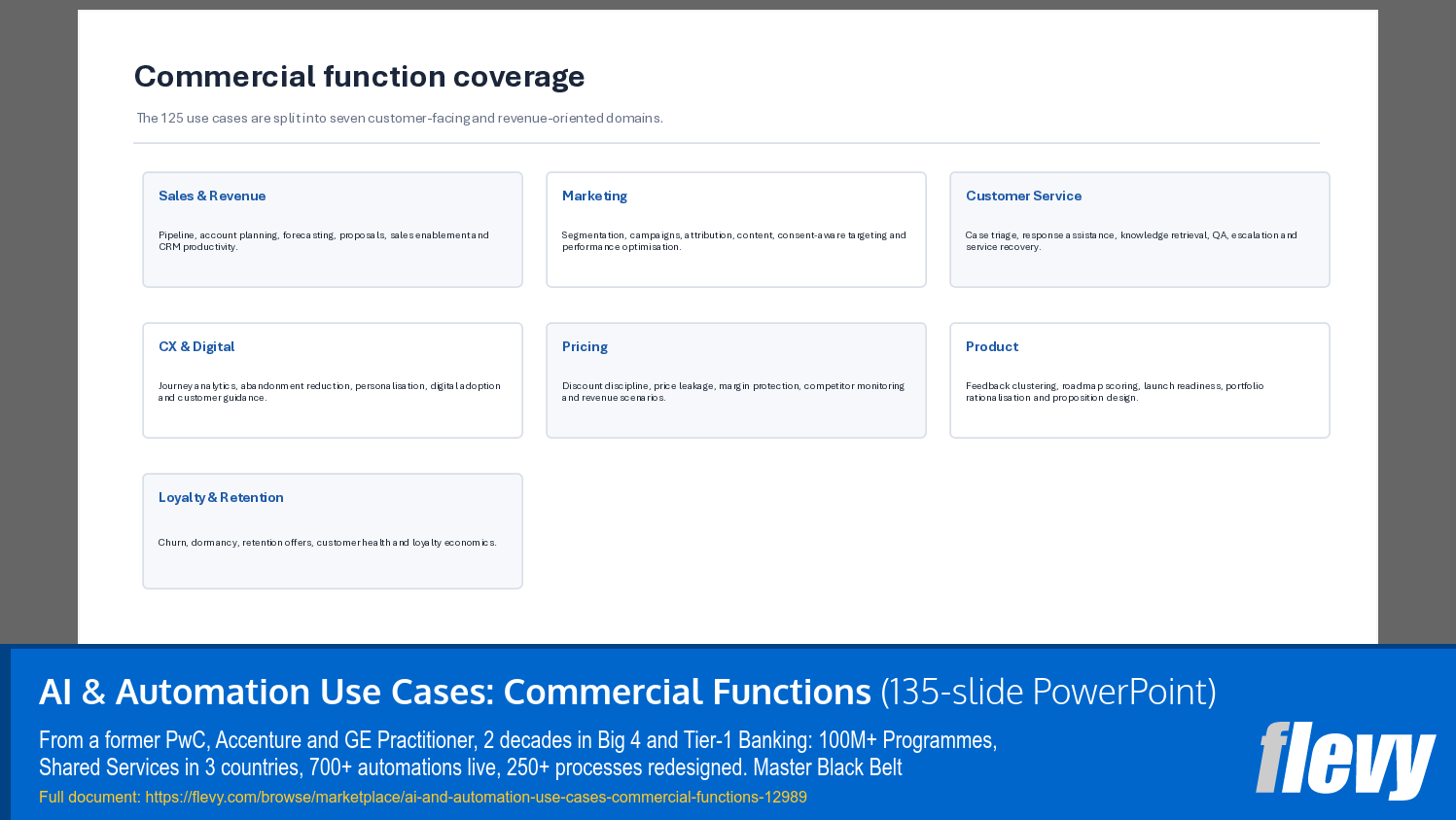
The 125 use cases span core commercial functions including:
Sales and Sales Operations
Marketing
Customer Service
Customer Experience
Product Management
Pricing and Revenue Management
Commercial Operations
Customer Analytics and Insights
Digital Channels
Customer Retention and Loyalty
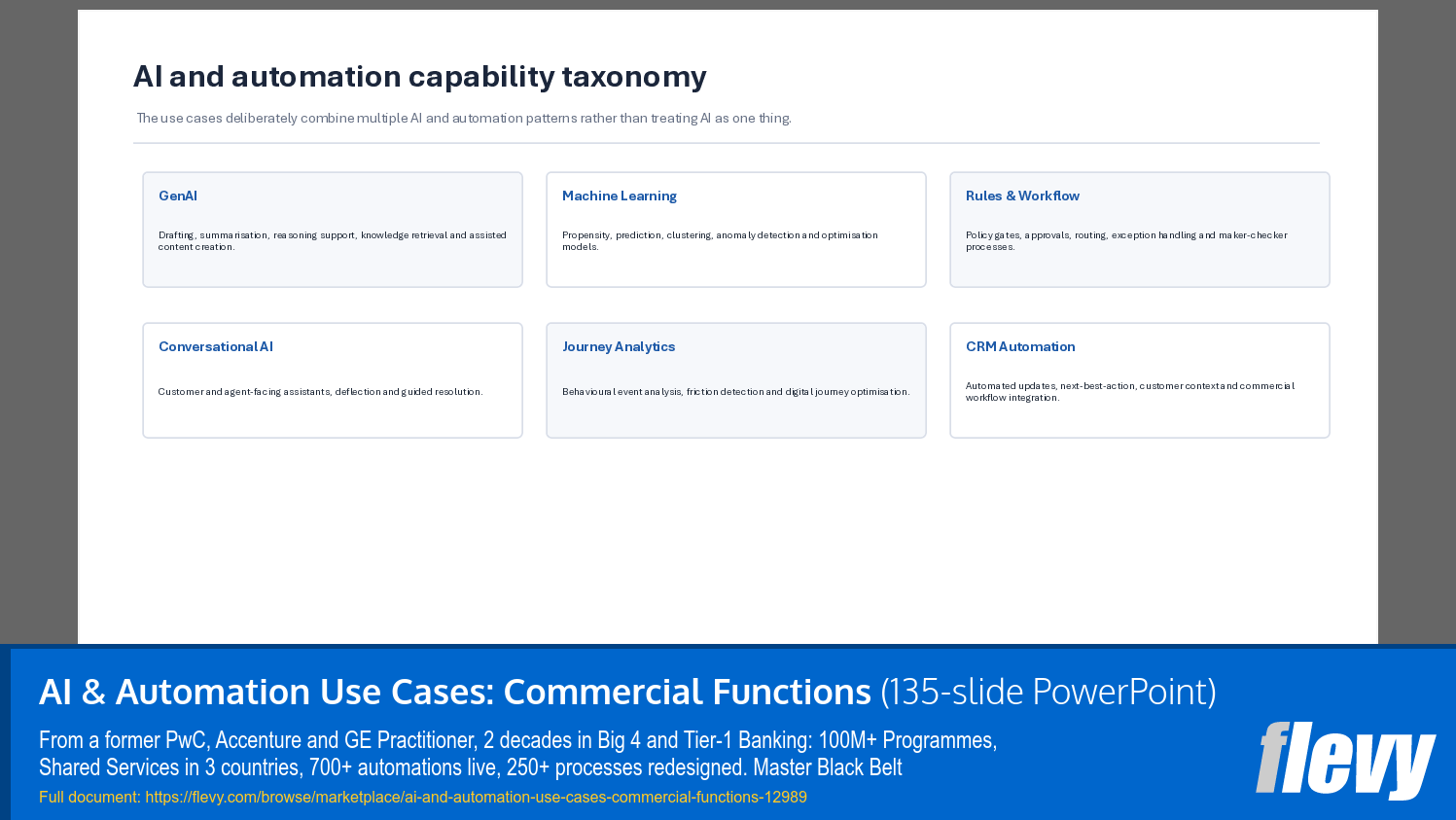
The use cases cover a broad range of technologies and automation patterns, including Generative AI, Agentic AI, Machine Learning, Predictive Analytics, Intelligent Document Processing, Conversational AI, Workflow Automation, Robotic Process Automation, Decision Engines, Rules-Based Automation, and AI-assisted human decision making.
Each opportunity has been structured to help the user assess not only what can be automated, but also how it can be implemented responsibly and what business value it can generate.
Built for Practical Application
This is not intended to be a theoretical AI reference deck.
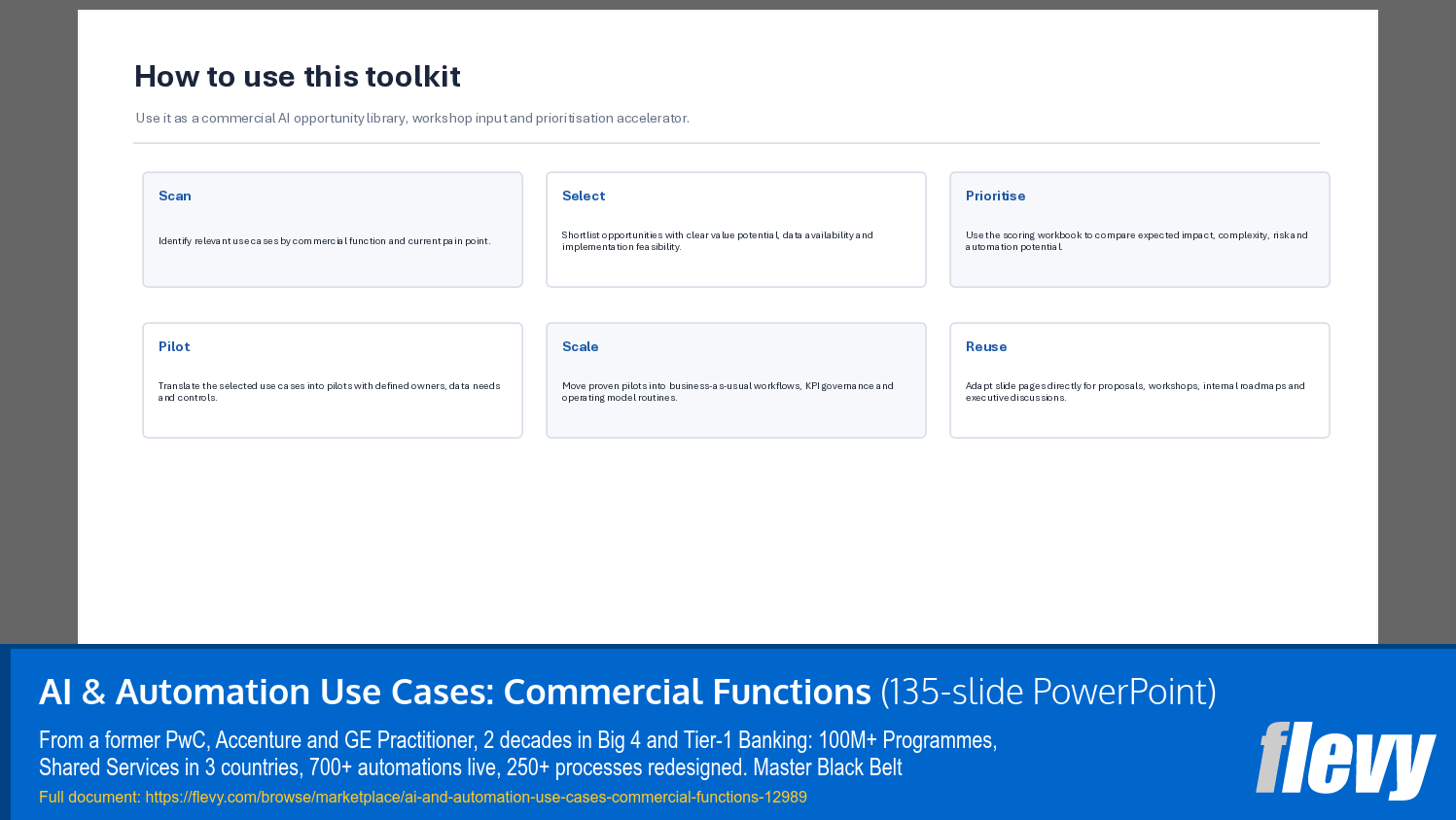
The toolkit can be used directly to:
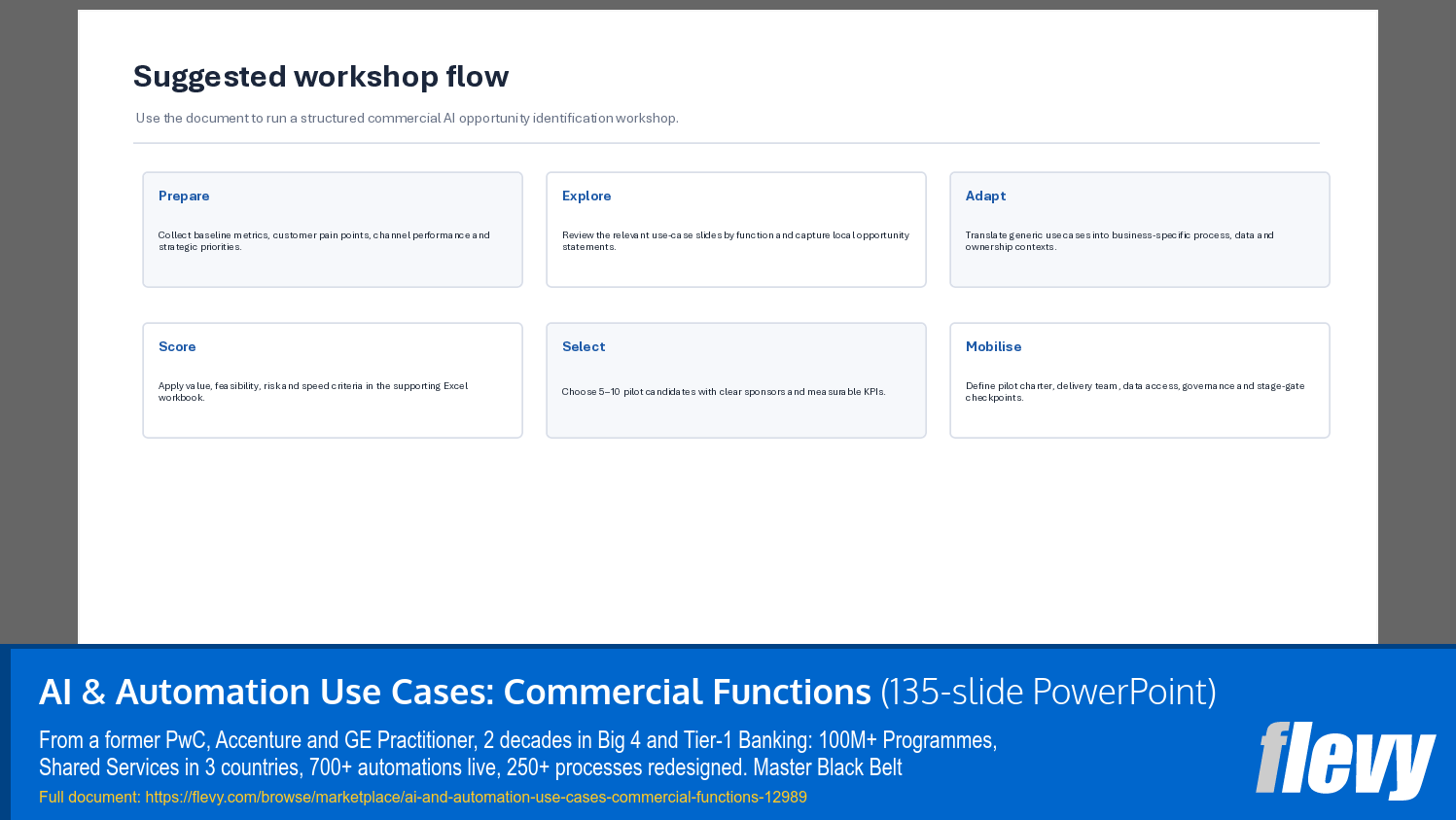
Conduct AI and automation opportunity-identification workshops
Build enterprise or functional AI pipelines
Develop transformation roadmaps
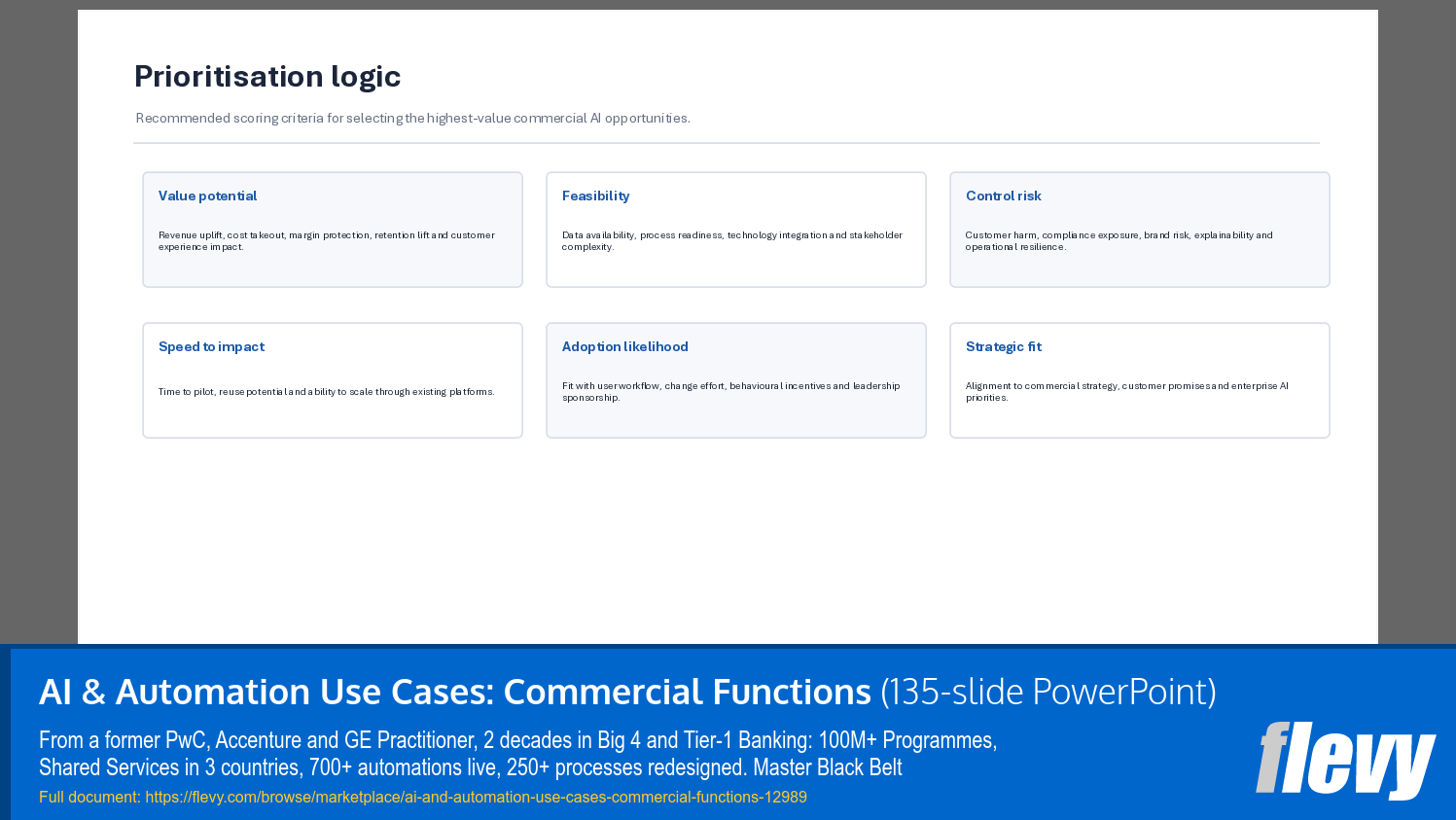
Prioritize high-value automation opportunities
Structure client discussions and consulting engagements
Support business case development
Benchmark existing AI initiatives
Develop AI investment portfolios
Identify quick wins versus strategic transformation initiatives
Educate executives and functional leaders on practical AI opportunities
Because every use case follows a consistent structure, users can quickly compare opportunities across functions and identify patterns in value potential, complexity, control requirements, delivery effort, and technology choices.
Practitioner-Led Perspective
The toolkit has been developed from a senior consulting and transformation practitioner perspective, grounded in more than 18 years of experience across consulting, transformation, operational excellence, program governance, digital initiatives, automation, enterprise architecture, resilience, and large-scale change programs.
The author's professional experience includes senior roles and engagements associated with globally recognized organizations including EY (Ernst & Young), PwC (PricewaterhouseCoopers), Accenture, Genpact, WNS, and Essar, providing exposure to enterprise transformation across multiple industries and geographies.
Professional qualifications and executive-development credentials include an MBA, INSEAD Emerging Leaders, Lean Ace, Six Sigma Black Belt, and Agile Scrum certification and training.
This combination of consulting, transformation, operational, technology, and automation experience has shaped the toolkit's central design principle:
Every use case should be commercially relevant, implementable, measurable, and understandable to both business and technology stakeholders.
More Than 125 Ideas
A major differentiator of this toolkit is the depth provided for each individual opportunity.
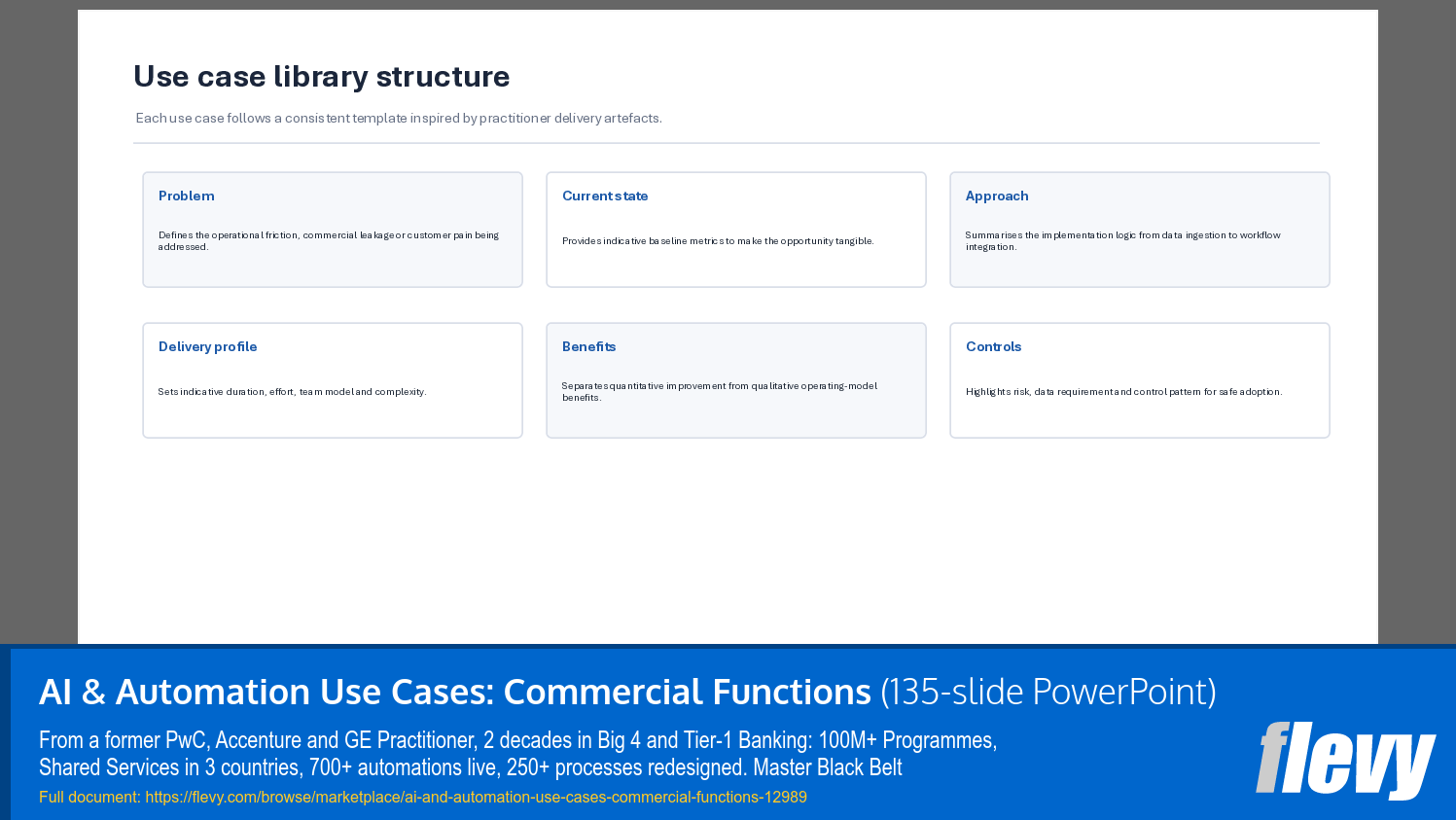
For every use case, the reader receives a structured view of:
Problem Statement – the operational or commercial challenge being addressed.
Current State – indicative baseline metrics or process characteristics that illustrate the starting point.
Approach – a step-by-step description of how AI and/or automation can be applied.
Delivery Profile – indicative implementation duration, effort, team composition, and complexity.
Quantitative Benefits – potential improvements to productivity, conversion, cycle time, service levels, cost, revenue, accuracy, or capacity.
Qualitative Benefits – improvements such as decision quality, customer experience, consistency, control, scalability, employee experience, and management visibility.
Control Pattern – the recommended level of automation and human oversight.
Key Risk – a practical risk or implementation consideration that should be managed.
Data Requirement – the information typically required to enable the solution.
This makes the toolkit suitable not only for ideation, but also as a starting point for opportunity assessment, prioritization, business case development, solution design, and implementation planning.
Who Should Use This Toolkit?
This resource is particularly useful for:
Management consultants
AI and automation consultants
Digital transformation teams
Chief Digital Officers
Chief Transformation Officers
Commercial executives
Sales and marketing leaders
Customer experience leaders
AI Centers of Excellence
Automation Centers of Excellence
Strategy and innovation teams
Product leaders
Technology executives
Shared-services leaders
Enterprise architecture teams
PMO and transformation-office professionals
The toolkit can be adapted to organizations of different sizes and industries and can serve as a reusable reference library across multiple transformation programs.
For organizations asking "Where should we deploy AI and automation next?", this toolkit provides 125 detailed places to start—and, critically, a structured view of what implementation could actually look like.
Got a question about the product? Email us at support@flevy.com or ask the author directly by using the "Ask the Author a Question" form. If you cannot view the preview above this document description, go here to view the large preview instead.
Source: Best Practices in Artificial Intelligence, Automation PowerPoint Slides: AI & Automation Use Cases: Commercial Functions PowerPoint (PPTX) Presentation Slide Deck, Vantage Automation Group
ABOUT THE AUTHOR
Vantage Automation Group publishes decision-grade frameworks, financial models and operating model blueprints for people running large-scale operations and transformation programmes.
The material is drawn from nineteen years of enterprise delivery -- across global consulting firms and industry -- covering operations transformation, target operating model design, operational resilience and
... [read more]
Ask the Author a Question
You must be logged in to contact the author.




























