
Agile Frameworks   154-slide PPT PowerPoint presentation slide deck (PPTX)
$79.00

Agile Frameworks (154-slide PPT PowerPoint presentation slide deck (PPTX)) Preview Image
Log in to unlock full preview.
Agile Frameworks (154-slide PPT PowerPoint presentation slide deck (PPTX)) Preview Image
Arrow   Click main image to view in full screen.

Agile Frameworks (PowerPoint PPTX Slide Deck)

PowerPoint (PPTX) 154 Slides

$79.00
Developed by a seasoned Management Consultant (ex-Microsoft and IBM), this presentation is a comprehensive guide to unlocking the transformative potential of Agile Frameworks.
Add to Cart


Immediate download
Fully editable PowerPoint
Free lifetime updates

BENEFITS OF THIS POWERPOINT DOCUMENT

  1. Comprehensive Coverage: A one-stop guide to the most important Agile frameworks, from foundational principles to advanced scaling techniques.
  2. Real-World Relevance: Includes actionable strategies and real-world case studies to inspire and guide your Agile journey.
  3. Time-Saving Resource: Professionally designed slides that are ready to present, saving you countless hours of research and preparation.

AGILE PPT DESCRIPTION

Agile Frameworks PPT: Download slides covering Scrum, Kanban, SAFe, LeSS, DAD & XP. Learn principles, scaling, and real-world Agile implementation strategies. Agile Frameworks is a 154-slide PPT PowerPoint presentation slide deck (PPTX) available for immediate download upon purchase.

This Agile Frameworks slide deck offers a deep dive into the most widely adopted Agile methodologies, including Scrum, Kanban, SAFe, LeSS, DAD, and XP. Designed for business leaders, project managers, and Agile practitioners, this resource provides a clear understanding of each framework's principles, roles, processes, and best practices.

Key Highlights:

Clear Comparisons: Easily compare the strengths, benefits, and best-use cases of each Agile framework to determine the right fit for your organization.
Scalable Practices: Learn to scale Agile effectively across teams and enterprises while ensuring alignment with business goals.
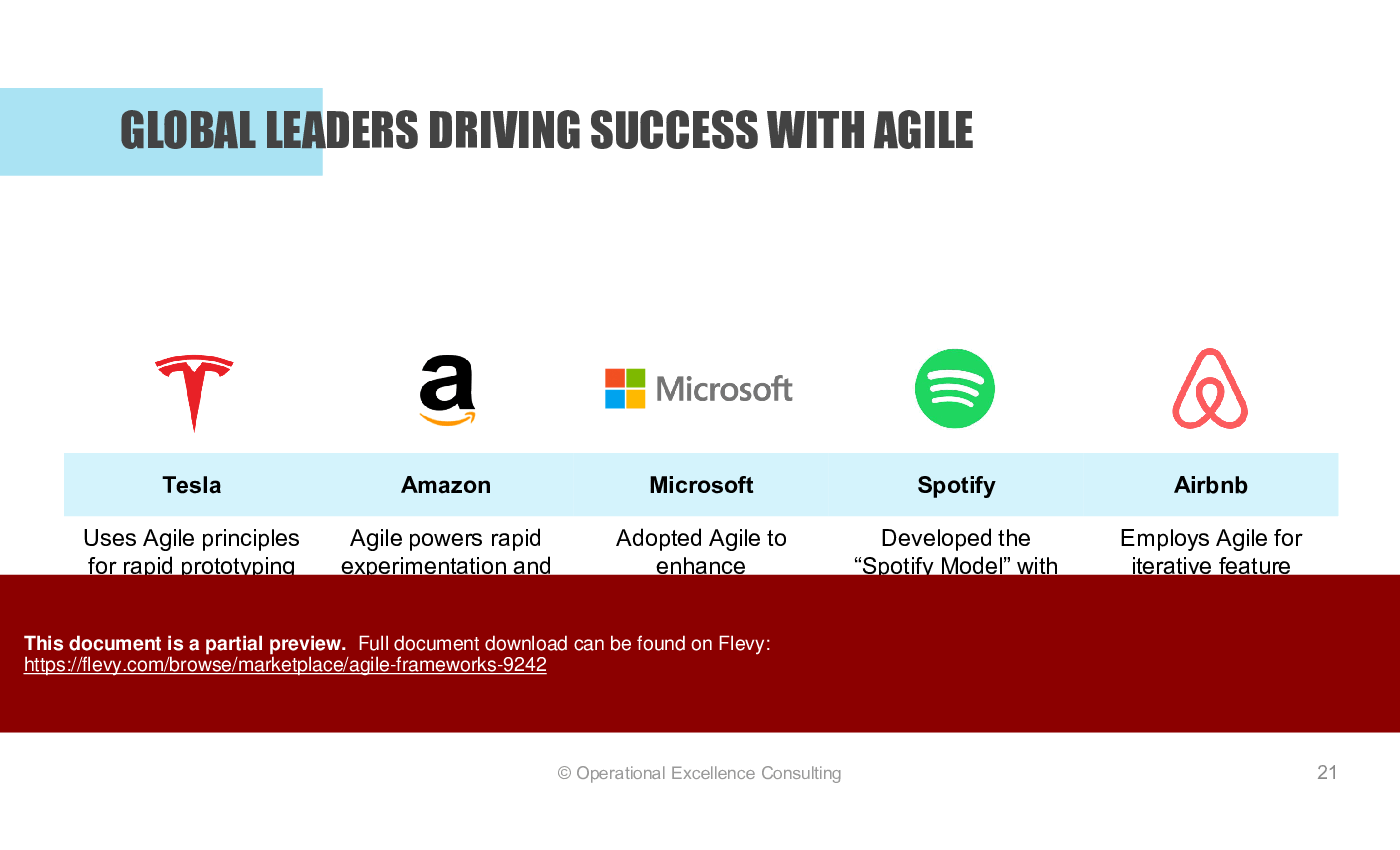
Real-World Insights: Explore case studies from industry leaders like Spotify, Intel, and Salesforce, showcasing how Agile frameworks deliver measurable results.
Practical Guidance: Receive actionable strategies for implementing each framework, avoiding common pitfalls, and measuring success with relevant metrics.
Boost Efficiency: Discover how Agile practices enhance collaboration, transparency, and accountability to deliver value faster with reduced overhead.

Whether you're starting your Agile journey or looking to refine your practices, this slide deck equips you with the knowledge, tools, and inspiration to achieve Agile excellence tailored to your business needs.

LEARNING OBJECTIVES

1. Understand Agile Principles: Gain a strong understanding of core Agile principles and how frameworks like Scrum, Kanban, SAFe, and others align with these principles.
2. Choose the Right Framework: Identify the most suitable Agile framework based on team size, project complexity, and organizational goals.
3. Implement and Scale Agile Practices: Learn how to implement best practices for scaling Agile and promoting continuous improvement within your organization.

CONTENTS

1. Introduction to Agile: A foundational overview of Agile principles, values, and benefits, highlighting its impact and distinction from traditional approaches.
2. Scrum: A time-boxed framework with clearly defined roles, events, and artifacts for delivering iterative value.
3. Kanban: A visual system focused on continuous delivery and optimizing workflow efficiency.
4. SAFe (Scaled Agile Framework): A structured framework for scaling Agile practices across large enterprises.
5. LeSS (Large-Scale Scrum): A lightweight approach to scaling Scrum for multiple teams working on the same product.
6. DAD (Disciplined Agile Delivery): A flexible, hybrid framework integrating Agile practices with governance and enterprise focus.
7. XP (Extreme Programming): A methodology emphasizing technical excellence and engineering best practices, such as TDD and pair programming.

Got a question about the product? Email us at support@flevy.com or ask the author directly by using the "Ask the Author a Question" form. If you cannot view the preview above this document description, go here to view the large preview instead.

MARCUS OVERVIEW

This synopsis was written by Marcus [?] based on the analysis of the full 154-slide presentation.


Executive Summary
The Agile Frameworks presentation is a detailed guide designed for organizations seeking to implement Agile methodologies effectively. Developed by a seasoned management consultant with experience at Microsoft and IBM, this presentation covers essential frameworks such as Scrum, Kanban, SAFe, LeSS, DAD, and XP. It provides insights into Agile principles, scaling strategies, and practical implementation techniques, enabling teams to enhance collaboration, improve product quality, and respond swiftly to changing market demands.

Who This Is For and When to Use
•  Project Managers overseeing Agile transformations
•  Product Owners responsible for backlog management
•  Development Teams implementing Agile methodologies
•  Executives seeking to understand Agile frameworks for strategic alignment

Best-fit moments to use this deck:
•  During Agile training sessions for teams and leadership
•  When initiating Agile transformations in organizations
•  For workshops focused on selecting the appropriate Agile framework

Learning Objectives
•  Understand the core Agile principles and methodologies
•  Implement best practices for scaling Agile and continuous improvement
•  Identify the right Agile framework for different organizational needs
•  Develop strategies for effective Agile adoption and team collaboration
•  Measure success metrics across various Agile frameworks
•  Facilitate Agile ceremonies and practices effectively

Table of Contents
•  Introduction to Agile (page 1)
•  Scrum (page 2)
•  Kanban (page 3)
•  Scaled Agile Framework (SAFe) (page 4)
•  Large-Scale Scrum (LeSS) (page 5)
•  Disciplined Agile Delivery (DAD) (page 6)
•  Extreme Programming (XP) (page 7)

Primary Topics Covered
•  Agile Principles - Agile emphasizes flexibility, collaboration, and iterative development to enhance customer satisfaction and value delivery.
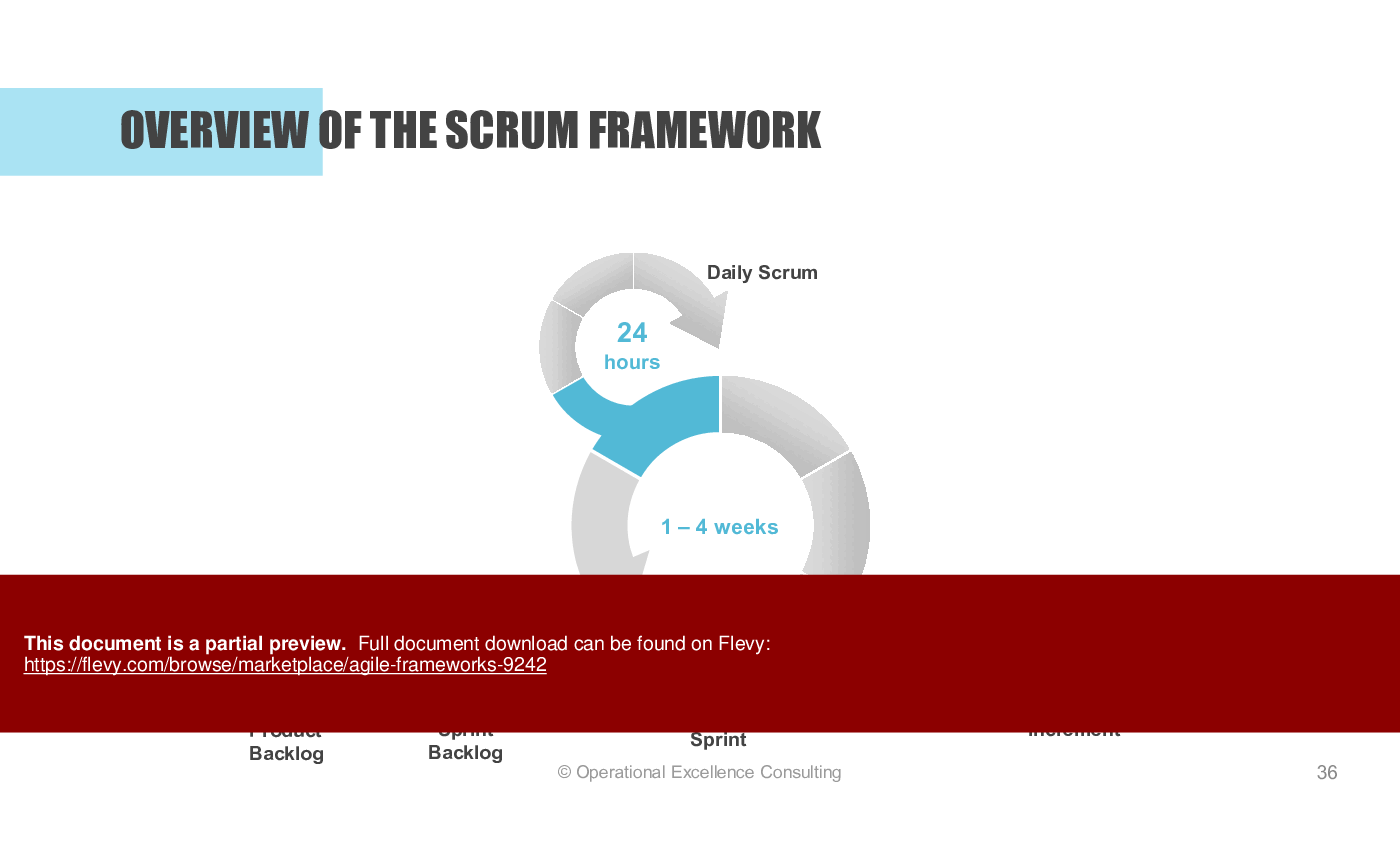
•  Scrum Framework - A structured approach involving defined roles and ceremonies to manage complex projects through teamwork and accountability.
•  Kanban Method - A visual workflow management system that optimizes task flow and enhances collaboration by limiting work in progress.
•  SAFe Framework - A comprehensive model for scaling Agile practices across large organizations, ensuring alignment and collaboration among multiple teams.
•  LeSS Framework - A lightweight scaling framework that simplifies Scrum for multi-team collaboration while maintaining its core principles.
•  Disciplined Agile Delivery (DAD) - A hybrid approach that integrates various Agile practices, focusing on governance and flexibility for complex projects.
•  Extreme Programming (XP) - A methodology prioritizing technical excellence and customer involvement through practices like pair programming and test-driven development.

Deliverables, Templates, and Tools
•  Agile transformation roadmap template
•  Scrum task board template for visualizing progress
•  Kanban board for workflow management
•  SAFe implementation checklist
•  DAD lifecycle management framework
•  XP best practices guide for software development

Slide Highlights
•  Overview of Agile principles and their impact on project management
•  Detailed comparison of Agile frameworks to aid in selection
•  Visual representations of Scrum and Kanban workflows
•  Key roles and responsibilities within the SAFe framework
•  Case studies demonstrating successful Agile implementations in various industries

Potential Workshop Agenda
Agile Framework Overview (60 minutes)
•  Introduce Agile principles and methodologies
•  Discuss the importance of Agile in modern project management

Framework Deep Dive (90 minutes)
•  Explore Scrum, Kanban, SAFe, LeSS, DAD, and XP in detail
•  Identify which framework fits specific organizational needs

Implementation Strategies (60 minutes)
•  Develop a roadmap for Agile adoption
•  Discuss best practices and common pitfalls in Agile transformations

Customization Guidance
•  Tailor the presentation to reflect specific organizational goals and challenges
•  Update case studies with relevant examples from your industry
•  Modify templates to align with existing project management tools and processes

Secondary Topics Covered
•  Agile metrics for measuring success
•  Challenges in Agile adoption and strategies to overcome them
•  The role of leadership in fostering an Agile culture
•  Continuous improvement practices within Agile frameworksDocument FAQ
What is Agile?
Agile is a flexible, collaborative approach to project management that emphasizes continuous improvement and customer satisfaction through iterative development.

What are the key benefits of using Scrum?
Scrum enhances team collaboration, improves product quality, and enables faster delivery of increments through defined roles and regular feedback loops.

How does Kanban differ from Scrum?
Kanban focuses on visualizing work and optimizing flow, while Scrum uses time-boxed sprints and defined roles to manage project tasks.

What is SAFe and when should it be used?
SAFe is a framework for scaling Agile across large organizations, best suited for environments with multiple interdependent teams working on shared objectives.

How can organizations measure success in Agile?
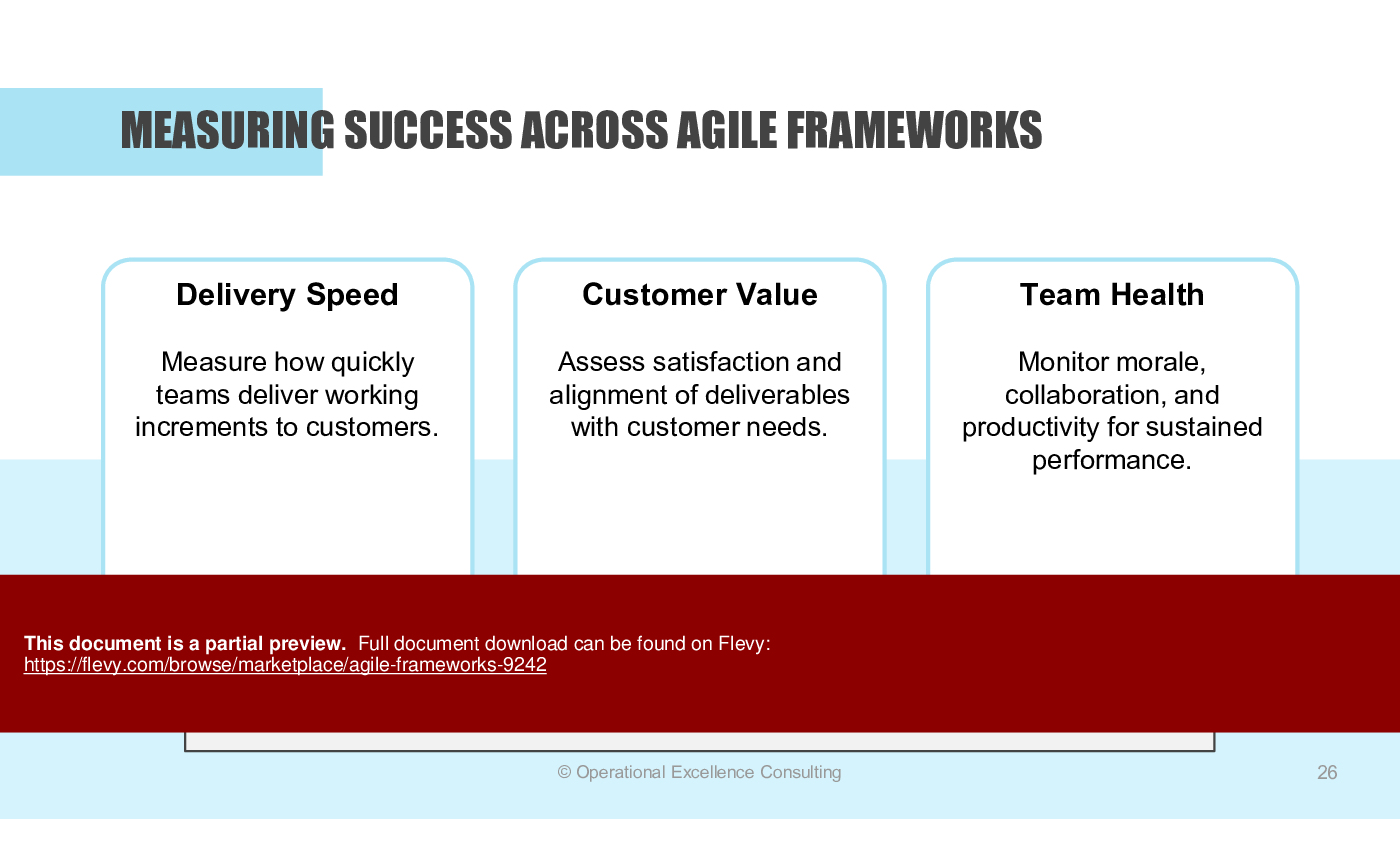
Success can be measured through metrics such as delivery speed, customer satisfaction, and team health, ensuring alignment with business goals.

What challenges might organizations face when transitioning to Agile?
Common challenges include resistance to change, lack of Agile expertise, and cultural misalignment, which can hinder successful adoption.

How can teams ensure continuous improvement in Agile?
Regular retrospectives and feedback loops are essential for identifying areas for improvement and adapting processes accordingly.

What is the role of leadership in Agile transformations?
Leadership plays a crucial role in championing Agile principles, providing support, and ensuring alignment with organizational goals.

Glossary
•  Agile - A mindset and methodology focused on delivering value through iterative development.
•  Scrum - An iterative framework for managing complex projects through teamwork and accountability.
•  Kanban - A visual workflow management method that optimizes task flow and enhances collaboration.
•  SAFe - A framework for scaling Agile practices across large organizations.
•  LeSS - A lightweight framework for scaling Scrum to larger teams.
•  DAD - A hybrid Agile framework that combines best practices from various methodologies.
•  XP - A methodology focused on technical excellence and customer involvement.
•  Backlog - A prioritized list of tasks or features to be completed in a project.
•  Sprint - A time-boxed period in Scrum during which specific work is completed.
•  Iteration - A cycle of development in Agile methodologies that focuses on delivering incremental improvements.
•  Velocity - A measure of the amount of work completed in a sprint.
•  WIP (Work In Progress) - The number of tasks currently being worked on in a Kanban system.
•  Retrospective - A meeting held at the end of a sprint to reflect on performance and identify improvements.
•  Stakeholder - An individual or group with an interest in the outcome of a project.
•  User Story - A brief description of a feature from the perspective of the end user.
•  Definition of Done - A shared understanding of what it means for work to be considered complete.
•  Burndown Chart - A visual representation of work completed versus work remaining in a sprint.
•  Epic - A large body of work that can be broken down into smaller tasks or user stories.
•  Feature - A distinct aspect of a product that delivers value to users.
•  Program Increment (PI) - A time frame in SAFe for delivering a set of features.
•  Scrum Master - The role responsible for ensuring the Scrum framework is followed.
•  Product Owner - The role responsible for defining and prioritizing the product backlog.
•  Development Team - A group of professionals working collaboratively to deliver increments of a product.

Source: Best Practices in Agile PowerPoint Slides: Agile Frameworks PowerPoint (PPTX) Presentation Slide Deck, Operational Excellence Consulting


$79.00
Developed by a seasoned Management Consultant (ex-Microsoft and IBM), this presentation is a comprehensive guide to unlocking the transformative potential of Agile Frameworks.
Add to Cart
  

ABOUT THE AUTHOR

Author image
Additional documents from author: 257
Terms of usage (for all documents from this author)

Operational Excellence Consulting, founded in 2009 by Allan Ung, draws from extensive experience at Microsoft, IBM, and Underwriters Laboratories (UL). We specialize in strategy deployment, customer experience design, and operational excellence, applying Design Thinking, Lean, and Systems Thinking to maximize customer value and minimize waste.

Our ... [read more]

Ask the Author a Question

You must be logged in to contact the author.

Click here to log in Click here register

Did you know?
The average daily rate of a McKinsey consultant is $6,625 (not including expenses). The average price of a Flevy document is $65.



Trusted by over 10,000+ Client Organizations
Since 2012, we have provided business templates to over 10,000 businesses and organizations of all sizes, from startups and small businesses to the Fortune 100, in over 130 countries.
AT&T GE Cisco Intel IBM Coke Dell Toyota HP Nike Samsung Microsoft Astrazeneca JP Morgan KPMG Walgreens Walmart 3M Kaiser Oracle SAP Google E&Y Volvo Bosch Merck Fedex Shell Amgen Eli Lilly Roche AIG Abbott Amazon PwC T-Mobile Broadcom Bayer Pearson Titleist ConEd Pfizer NTT Data Schwab


Read Customer Testimonials

 
"As a young consulting firm, requests for input from clients vary and it's sometimes impossible to provide expert solutions across a broad spectrum of requirements. That was before I discovered Flevy.com.

Through subscription to this invaluable site of a plethora of topics that are key and crucial to consulting, I "

– Nishi Singh, Strategist and MD at NSP Consultants
 
"My FlevyPro subscription provides me with the most popular frameworks and decks in demand in today’s market. They not only augment my existing consulting and coaching offerings and delivery, but also keep me abreast of the latest trends, inspire new products and service offerings for my practice, and educate me "

– Bill Branson, Founder at Strategic Business Architects
 
"I have used Flevy services for a number of years and have never, ever been disappointed. As a matter of fact, David and his team continue, time after time, to impress me with their willingness to assist and in the real sense of the word. I have concluded in fact "

– Roberto Pelliccia, Senior Executive in International Hospitality
 
"As a small business owner, the resource material available from FlevyPro has proven to be invaluable. The ability to search for material on demand based our project events and client requirements was great for me and proved very beneficial to my clients. Importantly, being able to easily edit and tailor "

– Michael Duff, Managing Director at Change Strategy (UK)
 
"FlevyPro provides business frameworks from many of the global giants in management consulting that allow you to provide best in class solutions for your clients."

– David Harris, Managing Director at Futures Strategy
 
"Flevy.com has proven to be an invaluable resource library to our Independent Management Consultancy, supporting and enabling us to better serve our enterprise clients.

The value derived from our [FlevyPro] subscription in terms of the business it has helped to gain far exceeds the investment made, making a subscription a no-brainer for any growing consultancy – or in-house strategy team."

– Dean Carlton, Chief Transformation Officer, Global Village Transformations Pty Ltd.
 
"I am extremely grateful for the proactiveness and eagerness to help and I would gladly recommend the Flevy team if you are looking for data and toolkits to help you work through business solutions."

– Trevor Booth, Partner, Fast Forward Consulting
 
"As a consulting firm, we had been creating subject matter training materials for our people and found the excellent materials on Flevy, which saved us 100's of hours of re-creating what already exists on the Flevy materials we purchased."

– Michael Evans, Managing Director at Newport LLC


Customers Also Like These Documents

Explore Related Management Topics


Your Recently Viewed Documents
Download our FREE Digital Transformation Templates

Download our free compilation of 50+ Digital Transformation slides and templates. DX concepts covered include Digital Leadership, Digital Maturity, Digital Value Chain, Customer Experience, Customer Journey, RPA, etc.