
A paper describing the key ingredients of Listening, Meeting and Presentations including Active Listening, Meetings and Workshops (what makes them unsuccessful, making them productive, posting the agenda, managing meetings, animals in meetings), Presentation Skills (First Impressions, Preparation, Research, Test for Relevance, Create Flow and Impact, Practice and Improve).

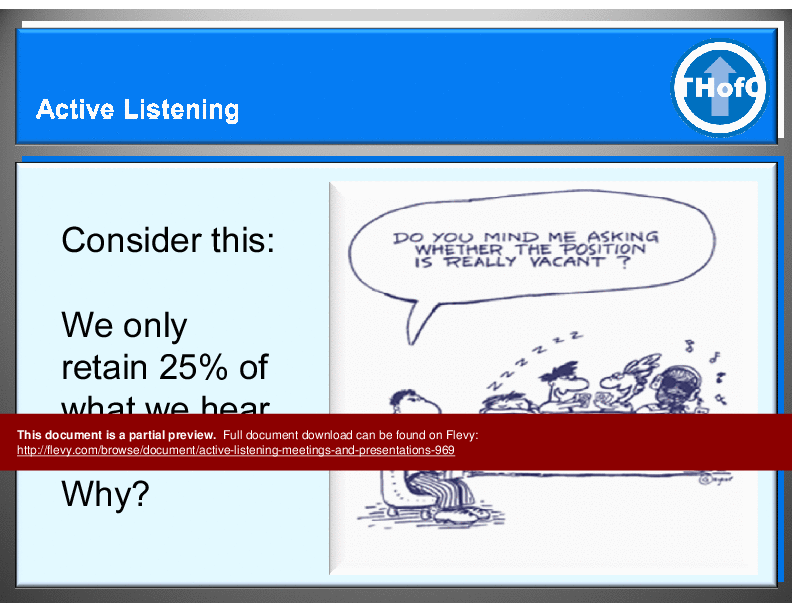
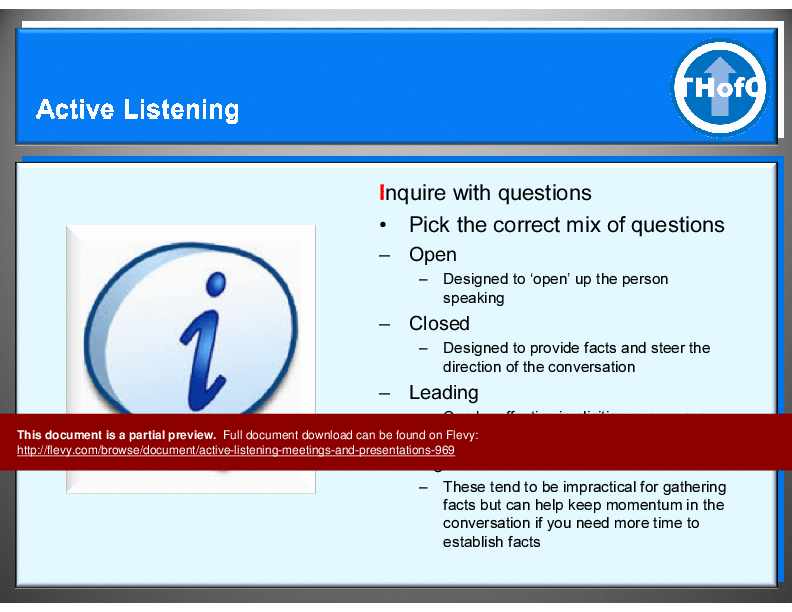
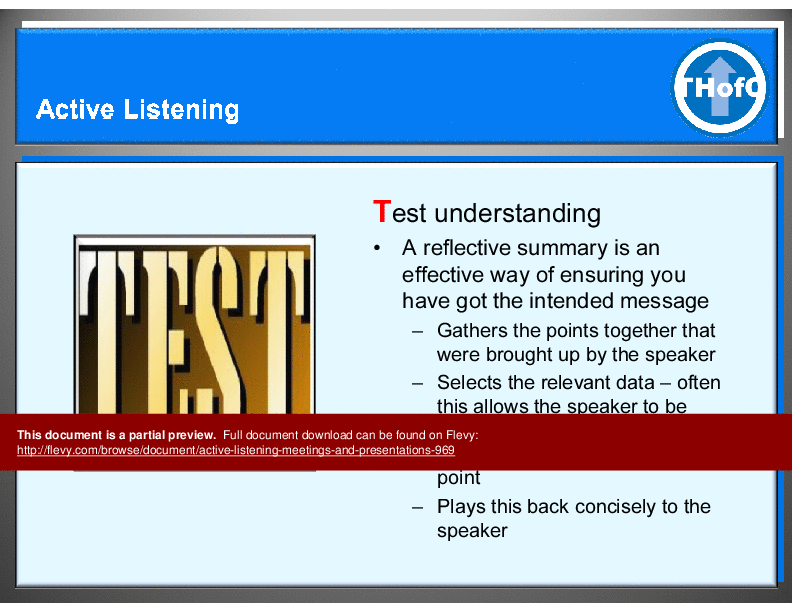
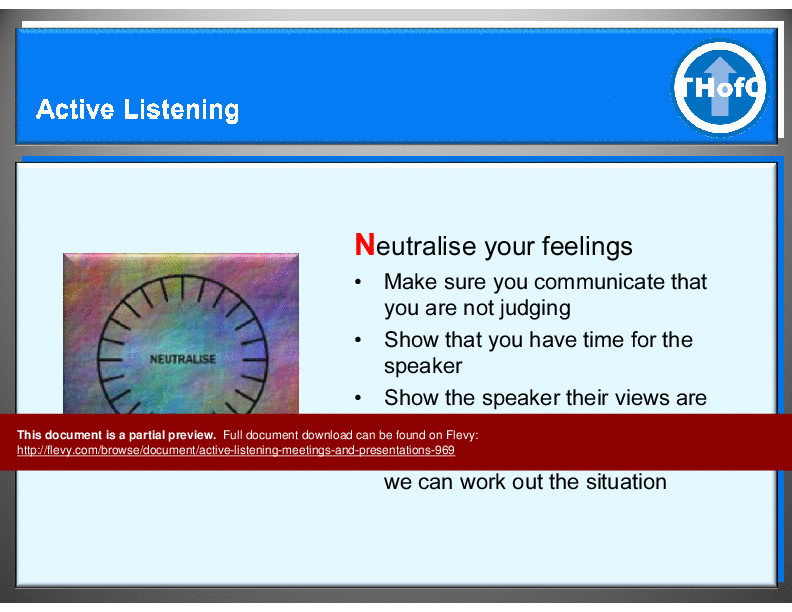
This PPT delves into the nuances of active listening, emphasizing its critical role in retaining information and fostering effective communication. The insights provided will help you understand why we only retain 25% of what we hear and how to improve this through strategic questioning and reflective summaries. By mastering these techniques, you can ensure that your team captures and processes vital information accurately.
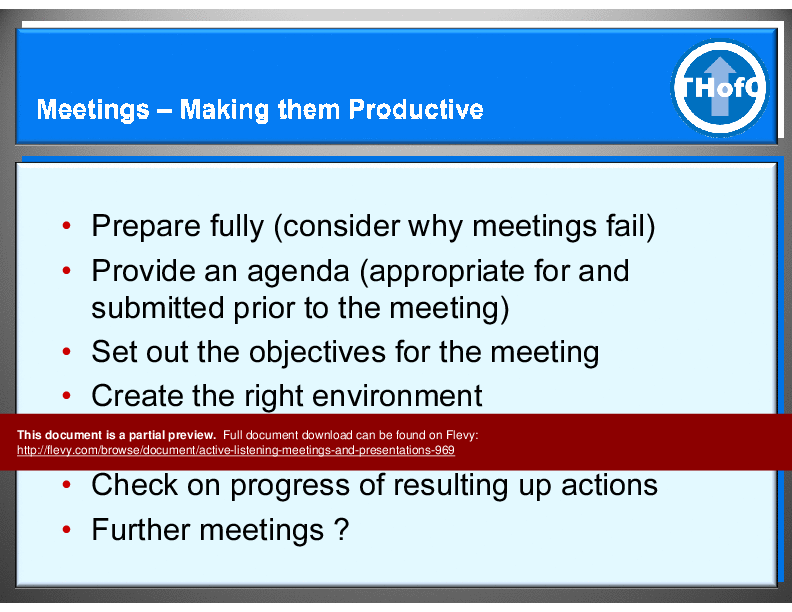
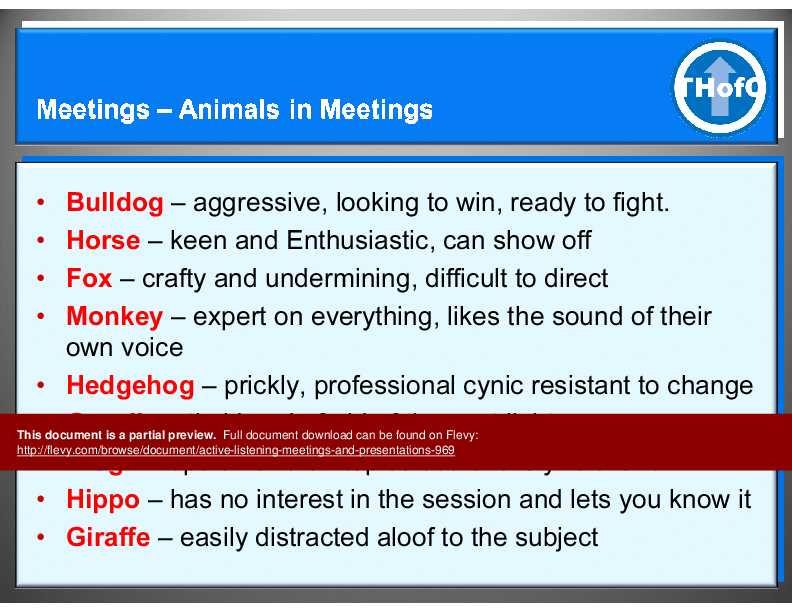
The section on managing meetings offers a comprehensive guide to making them productive. It covers everything from preparing fully and setting clear objectives to creating the right environment and following up on action items. The unique approach to identifying different "animals" in meetings provides a practical framework for managing diverse personalities and dynamics, ensuring that every meeting is both efficient and effective.
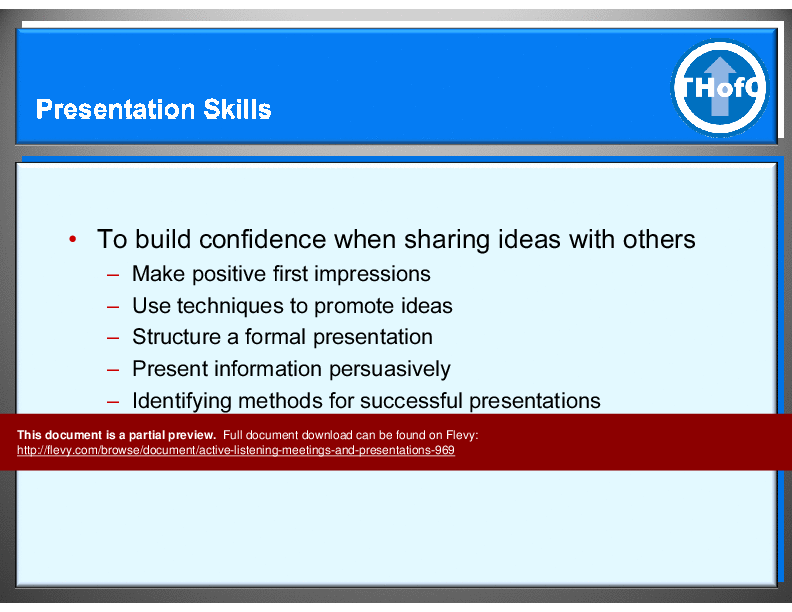
Presentation skills are broken down into actionable steps to build confidence and deliver impactful messages. The document covers the importance of first impressions, audience research, and content relevance. It also provides strategies for creating flow and impact, using hooks to maintain audience attention, and practicing to improve delivery. This resource is essential for anyone looking to enhance their presentation capabilities and engage their audience effectively.
Got a question about the product? Email us at support@flevy.com or ask the author directly by using the "Ask the Author a Question" form. If you cannot view the preview above this document description, go here to view the large preview instead.
Executive Summary
The "Active Listening, Meetings and Presentations" presentation equips corporate executives, integration leaders, and consultants with essential skills for effective communication and facilitation. Drawing on insights from a Change Leader of Tomorrow awardee with 50 years of experience across 30 industries, this deck focuses on active listening techniques, meeting management, and presentation skills. Users will learn how to enhance team communication, manage diverse personalities, and deliver impactful presentations, ultimately driving better outcomes in meetings and workshops.
Who This Is For and When to Use
• Corporate executives seeking to improve team communication and engagement
• Integration leaders managing cross-functional teams during transitions
• Consultants facilitating workshops or client meetings
• HR professionals aiming to enhance interpersonal communication skills
Best-fit moments to use this deck:
• During team-building sessions to foster better communication
• In workshops focused on enhancing meeting effectiveness
• When preparing for high-stakes presentations to stakeholders
Learning Objectives
• Define active listening and its importance in effective communication
• Build strategies for managing diverse personalities in meetings
• Establish techniques for structuring and delivering impactful presentations
• Create actionable agendas that drive meeting productivity
• Identify common pitfalls in meetings and how to avoid them
• Develop skills to summarize discussions and capture key takeaways
Table of Contents
• Active Listening Techniques (page 3)
• Managing Meetings and Workshops (page 14)
• Presentation Skills Overview (page 20)
• Common Meeting Pitfalls (page 15)
• Structuring Effective Agendas (page 17)
• Engaging Presentation Techniques (page 22)
• Audience Assessment Strategies (page 25)
• Creating Flow and Impact in Presentations (page 31)
Primary Topics Covered
• Active Listening - This section emphasizes the importance of fully engaging with speakers, summarizing their points, and reflecting on their emotions to enhance understanding.
• Meeting Management - Focuses on preparing for meetings, setting clear objectives, and creating a conducive environment for discussion.
• Presentation Skills - Covers techniques for making positive first impressions, structuring presentations, and engaging the audience effectively.
• Common Meeting Pitfalls - Identifies factors that lead to unsuccessful meetings and strategies to mitigate these issues.
• Agenda Structuring - Provides a framework for creating effective meeting agendas that outline objectives and expected contributions.
• Audience Engagement - Discusses methods for assessing audience needs and tailoring presentations accordingly.
Deliverables, Templates, and Tools
• Active listening checklist template for effective engagement
• Meeting agenda template that outlines objectives and expected contributions
• Presentation structure guide to ensure clarity and impact
• Audience assessment questionnaire to tailor content effectively
• Feedback forms for post-meeting evaluations
• Summary template for capturing key discussion points
Slide Highlights
• Overview of active listening techniques and their importance
• Common pitfalls in meetings and strategies to avoid them
• Structuring effective agendas with clear objectives
• Engaging presentation techniques to captivate the audience
• Audience assessment strategies for tailored presentations
Potential Workshop Agenda
Active Listening Workshop (90 minutes)
• Introduce active listening concepts and techniques
• Practice active listening exercises in pairs
• Group discussion on challenges faced in listening
Effective Meetings Session (60 minutes)
• Identify common pitfalls in meetings
• Develop strategies for creating productive agendas
• Role-play scenarios to practice meeting management
Presentation Skills Training (90 minutes)
• Discuss techniques for engaging presentations
• Structure presentations using provided templates
• Practice delivering short presentations with peer feedback
Customization Guidance
• Tailor the active listening techniques to fit your organizational culture
• Adjust meeting agendas to reflect specific team dynamics and objectives
• Modify presentation templates to align with branding and messaging guidelines
• Incorporate industry-specific examples to enhance relevance
Secondary Topics Covered
• Techniques for managing difficult personalities in meetings
• Methods for fostering open communication in teams
• Strategies for effective follow-up after meetings
• Importance of non-verbal communication in presentations
• Tips for using visual aids effectively
Topic FAQ
Document FAQ
These are questions addressed within this presentation.
What is active listening?
Active listening involves fully engaging with the speaker, summarizing their points, and reflecting on their emotions to enhance understanding and communication.
How can I make my meetings more productive?
Prepare thoroughly, set clear objectives, provide an agenda in advance, and manage the meeting environment to foster open communication.
What are common pitfalls in meetings?
Common pitfalls include lack of preparation, unclear objectives, wrong attendees, and poor management of time and discussion.
How do I structure an effective presentation?
Structure your presentation with a clear opening, a logically organized main section, and a strong closing that reinforces key points.
What techniques can I use to engage my audience?
Use hooks to gain attention, ask questions, and incorporate interactive elements to keep the audience engaged throughout your presentation.
How can I assess my audience's needs?
Conduct audience assessments through questionnaires or informal discussions to understand their expectations, knowledge level, and interests.
What is the importance of summarizing discussions in meetings?
Summarizing discussions ensures that all participants are aligned on key points, decisions made, and action items, reducing the risk of misunderstandings.
How can I improve my presentation skills?
Practice regularly, seek feedback, and study effective presenters to learn techniques that resonate with your audience.
Glossary
• Active Listening - Engaging fully with a speaker to enhance understanding.
• Meeting Agenda - A structured outline of topics to be discussed in a meeting.
• Presentation Skills - Techniques for effectively conveying information to an audience.
• Audience Assessment - Evaluating the needs and expectations of the audience.
• Feedback Form - A tool for gathering participant insights post-meeting or presentation.
• Non-verbal Communication - The transmission of messages without words, through body language and facial expressions.
• Hook - A technique used to capture the audience's attention at the beginning of a presentation.
• Summary - A concise recap of key points discussed in a meeting or presentation.
• Engagement Techniques - Methods used to involve the audience actively during a presentation.
• Pitfalls - Common mistakes or challenges that can hinder effective meetings or presentations.
• Structure - The organization of content in a presentation to ensure clarity and flow.
• Visual Aids - Tools such as slides or charts used to enhance presentations.
Source: Best Practices in Meeting Facilitation, Listening PowerPoint Slides: Active Listening, Meetings and Presentations PowerPoint (PPT) Presentation Slide Deck, The Highway of Change
|
Download our FREE Organization, Change, & Culture, Templates
Download our free compilation of 50+ slides and templates on Organizational Design, Change Management, and Corporate Culture. Methodologies include ADKAR, Burke-Litwin Change Model, McKinsey 7-S, Competing Values Framework, etc. |