The Ten Schools of Thought model from Henry Mintzberg is a framework that can be used to categorize the field of Strategic Management. It describes each school in context and provides a critique. Thus, it acts as a very good overview to the entire field of Strategic Management.
While academics and consultants keep focusing on these narrow perspectives, business managers will be better served if they strive to see the wider picture. Some of strategic management's greatest failings, in fact, occurred when one of these concepts was taken too seriously.
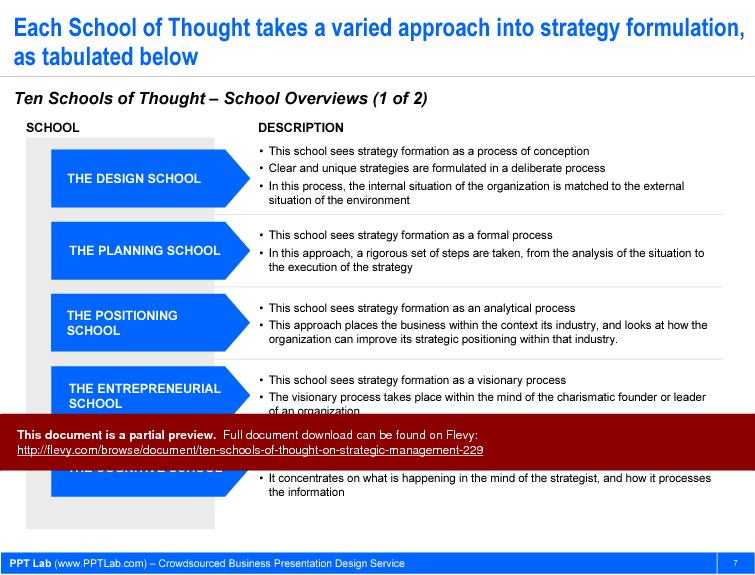
These 10 Schools of Thought are as follows:
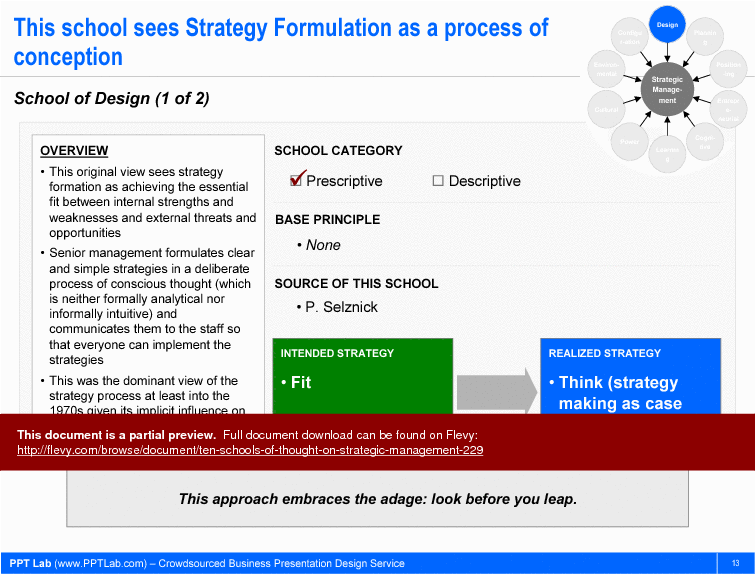
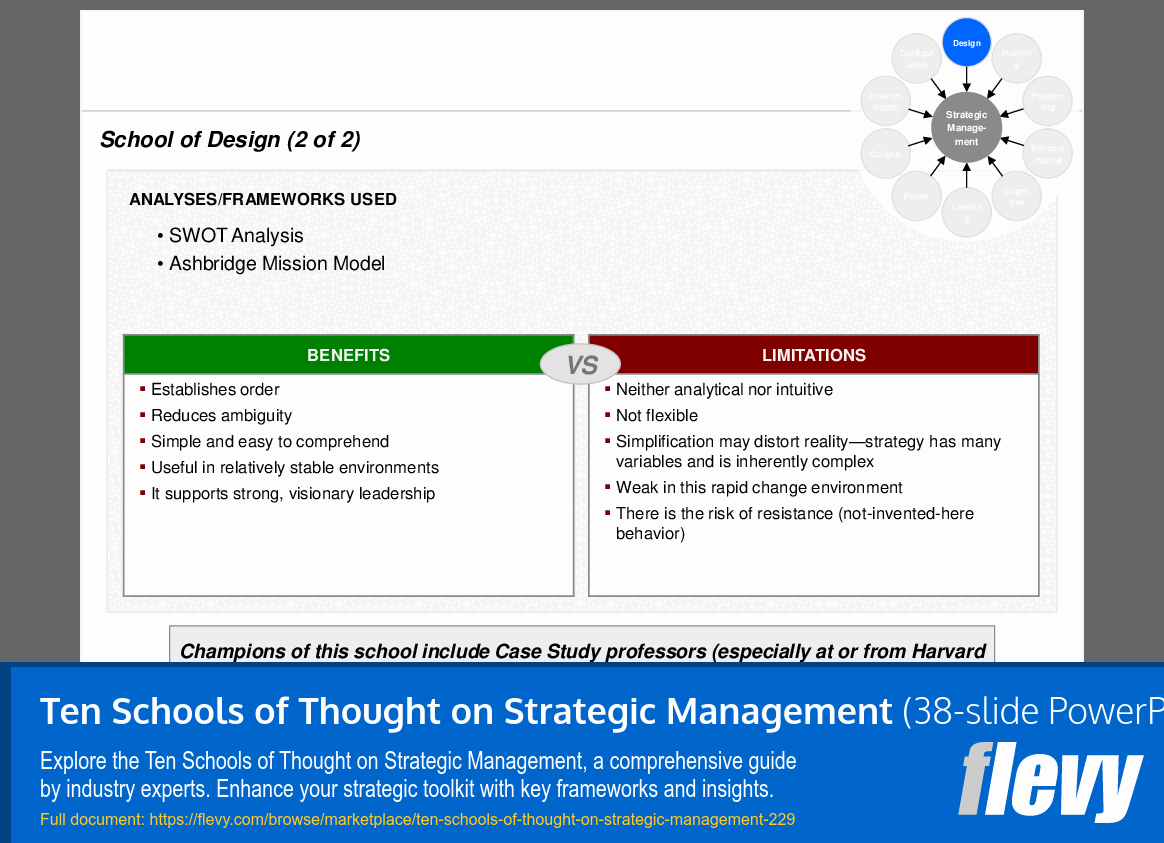
*The Design School
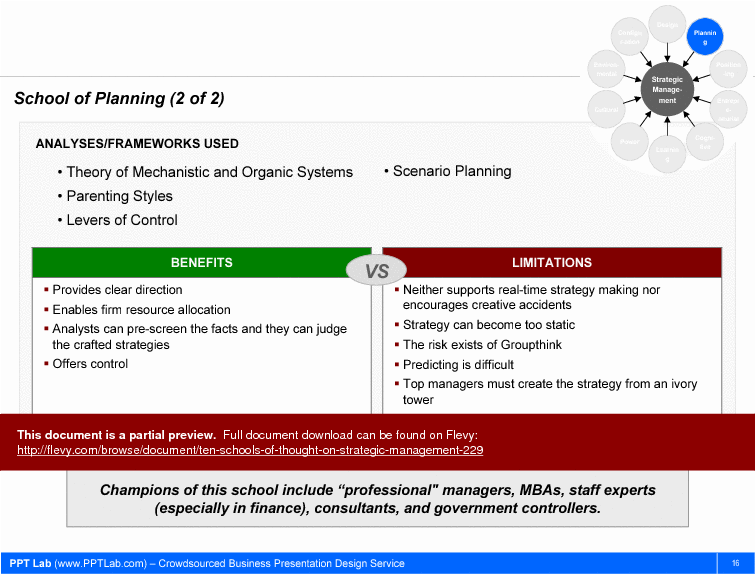
*The Planning School
*The Positioning School
*The Entrepreneurial School
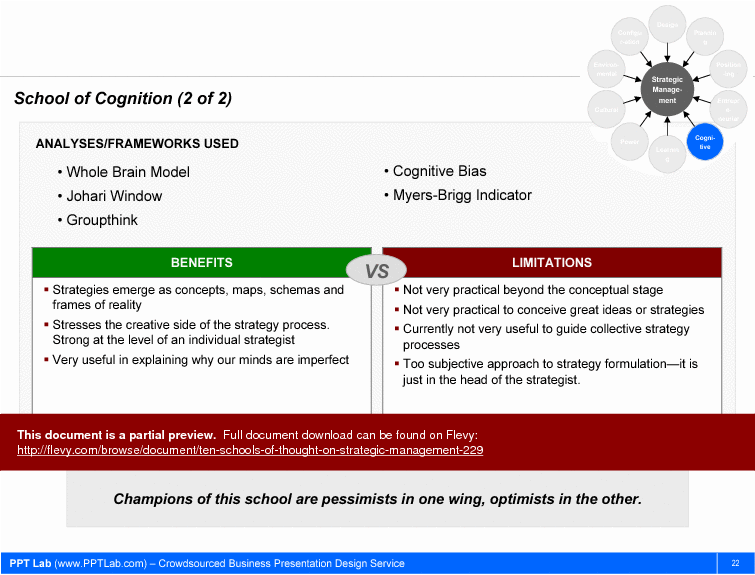
*The Cognitive School
*The Learning School
*The Power School
*The Cultural School
*The Environmental School
*The Configuration School
This document explains each School, its origins, benefit and limitations, related analyses/frameworks, and other attributes. Also includes PowerPoint templates for illustrating this model in your presentation.
This comprehensive document delves into the intricate details of each school, offering a deep dive into their foundational principles, strategic implications, and practical applications. It provides a balanced view by highlighting the strengths and weaknesses of each approach, enabling executives to make informed decisions. The inclusion of PowerPoint templates ensures that you can seamlessly integrate these concepts into your presentations, enhancing your strategic planning sessions.
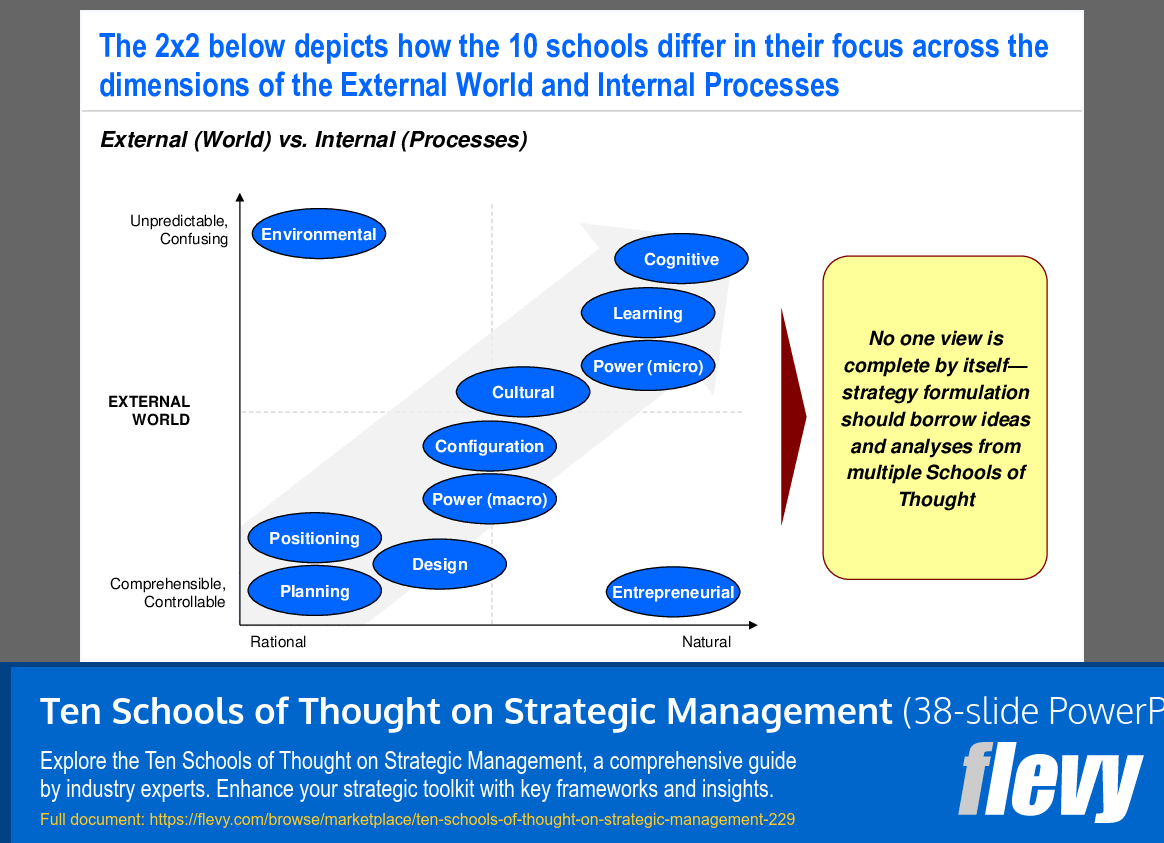
The visual aids, such as the 2x2 matrix, clarify how these schools differ in their focus on external versus internal processes. This document is a valuable resource for those looking to enrich their strategic toolkit with diverse perspectives. It is an indispensable guide for leaders aiming to navigate the complexities of strategic management with a nuanced understanding of various theoretical frameworks.
Got a question about the product? Email us at support@flevy.com or ask the author directly by using the "Ask the Author a Question" form. If you cannot view the preview above this document description, go here to view the large preview instead.
Executive Summary
The "Ten Schools of Thought on Strategic Management" presentation, developed by Henry Mintzberg, categorizes the field of Strategic Management into ten distinct schools, including Design, Planning, Positioning, and more. This framework serves as a critical overview, allowing users to understand the various perspectives and methodologies within Strategic Management. By utilizing this consulting-grade presentation, corporate executives and consultants can effectively communicate the nuances of each school, highlighting their origins, benefits, and limitations. This resource empowers users to enhance their strategic toolkit, facilitating informed decision-making and comprehensive strategy formulation.
Who This Is For and When to Use
• Corporate executives seeking to deepen their understanding of strategic frameworks
• Management consultants looking to enhance client presentations
• Strategy teams aiming to align on various strategic methodologies
• Business educators teaching strategic management concepts
Best-fit moments to use this deck:
• During strategic planning sessions to explore different approaches
• In workshops focused on strategy development and alignment
• For educational purposes in academic settings on strategic management
Learning Objectives
• Define the Ten Schools of Thought in Strategic Management
• Analyze the strengths and limitations of each school
• Apply relevant frameworks to real-world strategic scenarios
• Compare and contrast different strategic approaches
• Develop a comprehensive understanding of strategic formulation processes
• Illustrate the application of each school using PowerPoint templates
Table of Contents
• Overview (page 4)
• Ten Schools of Thought (page 12)
• Templates (page 33)
Primary Topics Covered
• Design School - Focuses on strategy formation as a process of conception, aligning internal strengths with external opportunities.
• Planning School - Views strategy formation as a formal process involving distinct steps and analyses to execute strategies effectively.
• Positioning School - Emphasizes analytical processes in strategy formulation, particularly through industry analysis and competitive positioning.
• Entrepreneurial School - Centers strategy formulation around the visionary insights of charismatic leaders, emphasizing intuition.
• Cognitive School - Investigates the mental processes involved in strategy formation, focusing on perception and information processing.
• Learning School - Considers strategy as an emergent process, integrating lessons learned over time into strategic actions.
• Power School - Views strategy formation as a negotiation process influenced by power dynamics within and outside the organization.
• Cultural School - Highlights the role of organizational culture in shaping strategy and discouraging significant changes.
• Environmental School - Sees strategy as a reactive process responding to external environmental challenges.
• Configuration School - Focuses on the transformation of organizational structures and decision-making processes in strategy formulation.
Deliverables, Templates, and Tools
• PowerPoint templates for each of the Ten Schools of Thought
• Frameworks for SWOT analysis and other strategic assessments
• Visual aids for illustrating strategic concepts and frameworks
• Case study examples to contextualize each school’s application
• Guidelines for conducting strategic workshops using the framework
Slide Highlights
• Overview slide capturing the essence of the Ten Schools of Thought
• Detailed slides for each school, outlining key characteristics and methodologies
• Comparative analysis visuals illustrating the strengths and limitations of each school
• Templates designed for easy integration into presentations
Potential Workshop Agenda
Introduction to Strategic Management (30 minutes)
• Overview of the Ten Schools of Thought
• Discussion on the relevance of strategic frameworks
Deep Dive into Each School (90 minutes)
• Explore the Design, Planning, and Positioning Schools
• Group discussions on practical applications
Interactive Strategy Formulation Session (60 minutes)
• Apply frameworks to real-world scenarios
• Group presentations on findings and insights
Customization Guidance
• Tailor the presentation templates to reflect your organization’s branding
• Adapt the content to focus on specific schools relevant to your strategic context
• Incorporate case studies from your industry to enhance relatability
• Modify the workshop agenda to fit your team’s specific needs and time constraints
Secondary Topics Covered
• The impact of culture on strategy formation
• The role of power dynamics in strategic decision-making
• The significance of environmental factors in shaping strategy
• The interplay between different schools of thought in practice
FAQ
What are the Ten Schools of Thought?
The Ten Schools of Thought are frameworks that categorize different approaches to strategy formulation, including Design, Planning, Positioning, and others.
How can this presentation be used in a corporate setting?
This presentation can be used for strategic planning sessions, workshops, and educational purposes to enhance understanding of various strategic methodologies.
Are there templates included in the presentation?
Yes, the presentation includes PowerPoint templates designed for each of the Ten Schools of Thought for easy integration into your own presentations.
What is the benefit of understanding these schools?
Understanding these schools allows strategists to leverage different perspectives, enhancing their ability to formulate effective strategies tailored to their organizational context.
Can this framework be applied to different industries?
Yes, the framework is versatile and can be adapted to various industries, allowing organizations to apply the insights from each school to their specific challenges.
How do I choose which school to apply?
Selecting a school depends on your organizational context, strategic goals, and the specific challenges you are facing.
What are the limitations of the Ten Schools of Thought?
While the framework provides valuable insights, it may oversimplify complex strategic situations and does not encompass all possible schools of thought.
How can I customize the templates?
You can modify the templates by adding your organization's branding, adjusting content to reflect your strategic focus, and incorporating relevant case studies.
Glossary
• Strategic Management - The process of formulating, implementing, and evaluating strategies to achieve organizational goals.
• SWOT Analysis - A strategic planning tool used to identify strengths, weaknesses, opportunities, and threats.
• Emergent Strategy - A strategy that develops over time as a result of ongoing learning and adaptation.
• Visionary Leadership - Leadership characterized by the ability to create a compelling vision and inspire others to follow.
• Cognitive Bias - Systematic patterns of deviation from norm or rationality in judgment, affecting decision-making.
• Contingency Theory - A theory that suggests that the best way to manage an organization depends on the specific circumstances.
• Cultural Intelligence - The capability to relate and work effectively across cultures.
• Power Dynamics - The influence and authority individuals or groups hold within an organization.
• Configuration - The arrangement of various elements within an organization that affects its strategy and operations.
• Negotiation - A dialogue between 2 or more parties aimed at reaching a beneficial outcome.
• Incrementalism - A strategy of making small, gradual changes rather than large-scale transformations.
• Strategic Alliance - A formal agreement between 2 or more parties to pursue a set of agreed-upon objectives while remaining independent organizations.
Source: Best Practices in Henry Mintzberg PowerPoint Slides: Ten Schools of Thought on Strategic Management PowerPoint (PPT) Presentation Slide Deck, PPT Lab
|
Download our FREE Strategy & Transformation Framework Templates
Download our free compilation of 50+ Strategy & Transformation slides and templates. Frameworks include McKinsey 7-S, Balanced Scorecard, Disruptive Innovation, BCG Curve, and many more. |










