
Triple Bottom Line (TBL)   32-slide PPT PowerPoint presentation slide deck (PPTX)
$29.00

Triple Bottom Line (TBL) (32-slide PPT PowerPoint presentation slide deck (PPTX)) Preview Image
Log in to unlock full preview.
Triple Bottom Line (TBL) (32-slide PPT PowerPoint presentation slide deck (PPTX)) Preview Image
Arrow   Click main image to view in full screen.

Triple Bottom Line (TBL) (PowerPoint PPTX Slide Deck)

PowerPoint (PPTX) 32 Slides FlevyPro Document

Top 1,000 Best Practice $29.00
FlevyPro price: FREE (included in subscription)
This framework is developed by a team of former McKinsey and Big 4 consultants. The presentation follows the headline-body-bumper slide format used by global consulting firms.
Add to Cart


Immediate download
Free lifetime updates

SUSTAINABILITY PPT DESCRIPTION

Editor Summary 32-slide PowerPoint presentation on the Triple Bottom Line (TBL) framework that evaluates organizational performance across profit, people, and planet. Read more

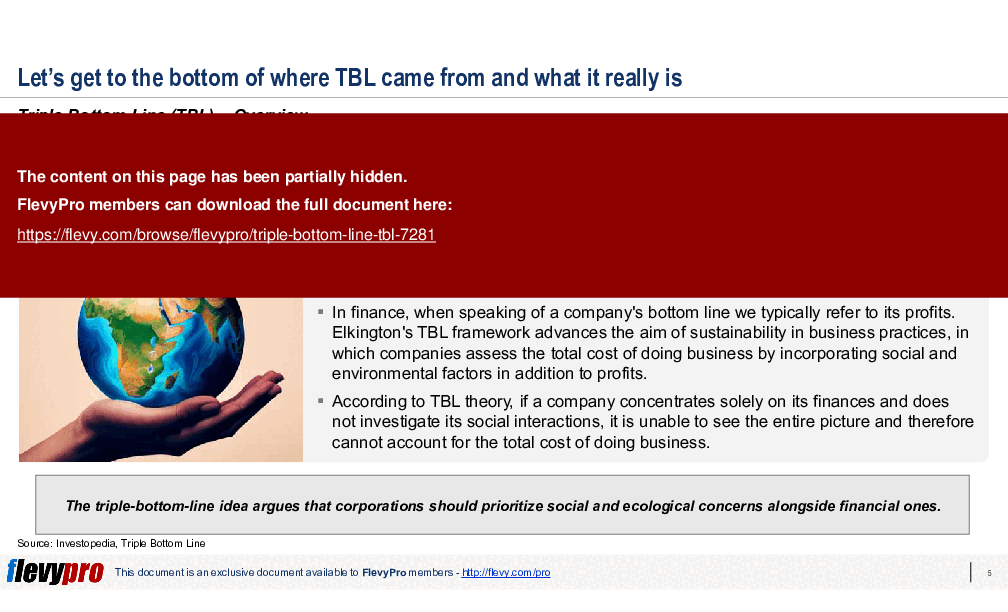
Traditional business models primarily prioritize economic gains and profitability. This narrow focus often disregards the social and environmental impacts of business activities. In economics, the Triple Bottom Line (TBL) asserts that organizations should prioritize social and environmental concerns alongside profits. The TBL theory proposes that there should be 3 bottom lines: profit, humans, and the environment.

A TBL seeks to evaluate an organization's commitment to Corporate Social Responsibility (CSR) and its environmental impact over time and expands the scope by considering the broader impacts of business decisions beyond financial gains.

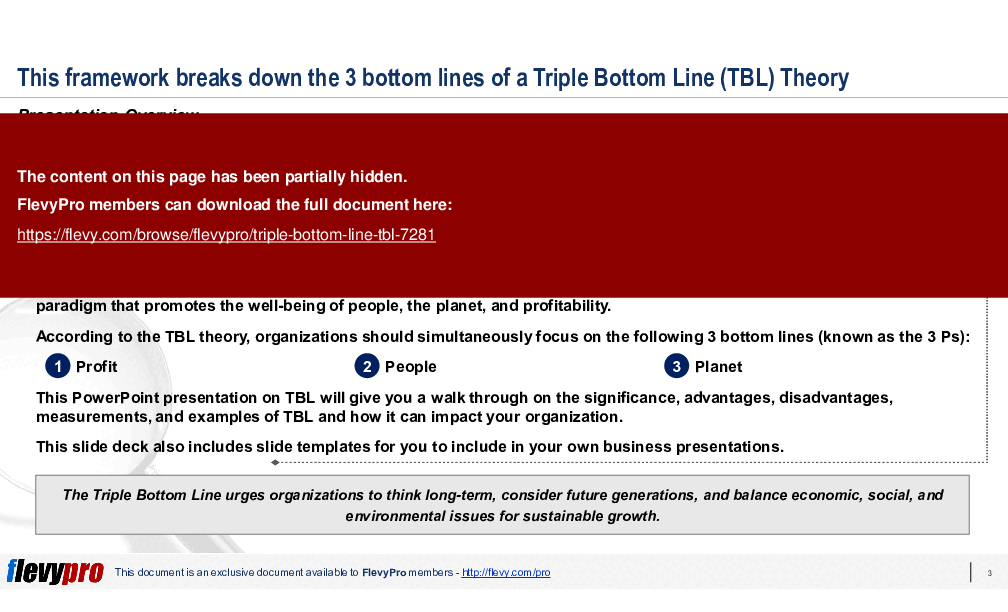
By addressing these problems, the Triple Bottom Line approach seeks to create a more sustainable and inclusive business paradigm that promotes the well-being of people, the planet, and profitability.

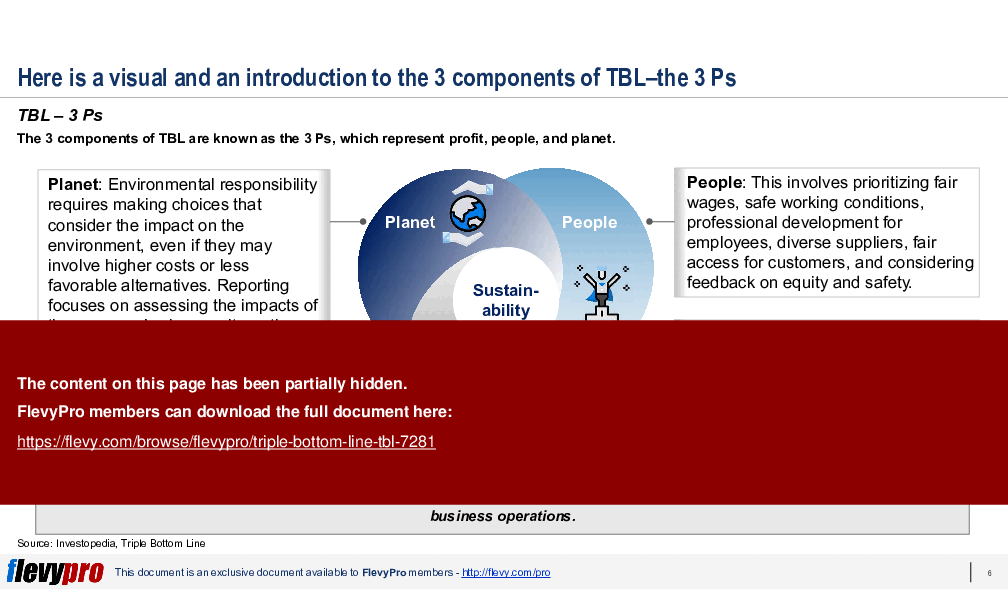
According to the TBL theory, organizations should simultaneously focus on the following 3 bottom lines (also known as the 3 Ps):

1. Profit (also sometimes referred to as Prosperity) – Profit goes beyond financial gains and includes ethical income generation, responsible financial obligations, and contributing to the community's economic wealth.

2. People – This involves prioritizing fair wages, safe working conditions, professional development for employees, diverse suppliers, fair access for customers, and considering feedback on equity and safety.

3. Planet – Environmental responsibility requires making choices that consider the impact on the environment, even if they may involve higher costs or less favorable alternatives. Reporting focuses on assessing the impacts of the company's chosen alternatives.

The Triple Bottom Line urges organizations to think long-term, consider future generations, and balance economic, social, and environmental issues for sustainable growth.

This presentation discusses the 3 Ps in detail, including examples of how to measure the parameter.

This PowerPoint presentation on TBL will give you a walk through on the significance, advantages, disadvantages, measurements, and examples of TBL and how it can impact your organization.

This slide deck also includes slide templates for you to include in your own business presentations.

This presentation provides actionable insights into how the Triple Bottom Line framework can be effectively integrated into your organization’s strategy. By leveraging the TBL approach, you can enhance stakeholder engagement and drive long-term sustainability while aligning your business goals with social and environmental responsibilities.

Got a question about this document? Email us at flevypro@flevy.com.

MARCUS OVERVIEW

This synopsis was written by Marcus [?] based on the analysis of the full 32-slide presentation.


Executive Summary
The Triple Bottom Line (TBL) presentation provides a comprehensive overview of a framework that evaluates an organization’s performance based on 3 critical dimensions: profit, people, and planet. Developed by sustainability expert John Elkington, this framework encourages businesses to consider social and environmental impacts alongside financial outcomes. The presentation equips corporate executives and consultants with insights into the significance, advantages, and challenges of adopting TBL principles. By utilizing this framework, organizations can foster sustainable growth while enhancing their commitment to Corporate Social Responsibility (CSR).

Who This Is For and When to Use
•  Corporate executives aiming to integrate sustainability into their business strategies
•  Consultants advising organizations on sustainable practices and CSR
•  Sustainability teams focused on measuring and reporting TBL metrics
•  Business leaders seeking to enhance stakeholder engagement through ethical practices

Best-fit moments to use this deck:
•  During strategic planning sessions focused on sustainability initiatives
•  When preparing reports for stakeholders on corporate social responsibility
•  In workshops aimed at educating teams about sustainable business practices
•  For presentations to investors interested in environmental, social, and governance (ESG) factors

Learning Objectives
•  Define the Triple Bottom Line and its importance in modern business practices
•  Analyze the 3 components of TBL: profit, people, and planet
•  Evaluate the advantages and disadvantages of implementing TBL strategies
•  Develop metrics to measure social and environmental impacts effectively
•  Create actionable plans to integrate TBL principles into organizational strategies
•  Foster stakeholder engagement through transparent reporting on TBL outcomes

Table of Contents
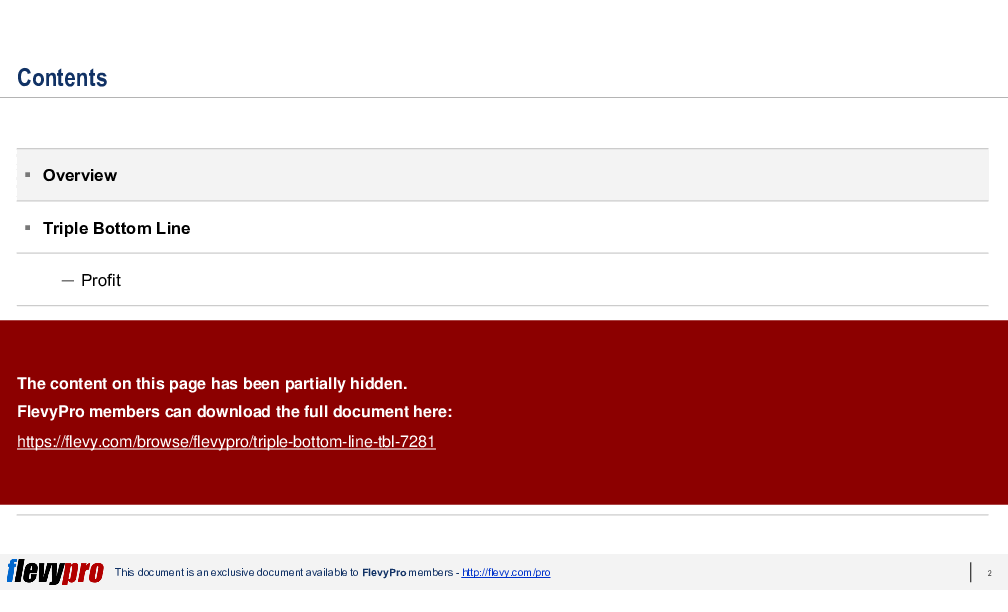
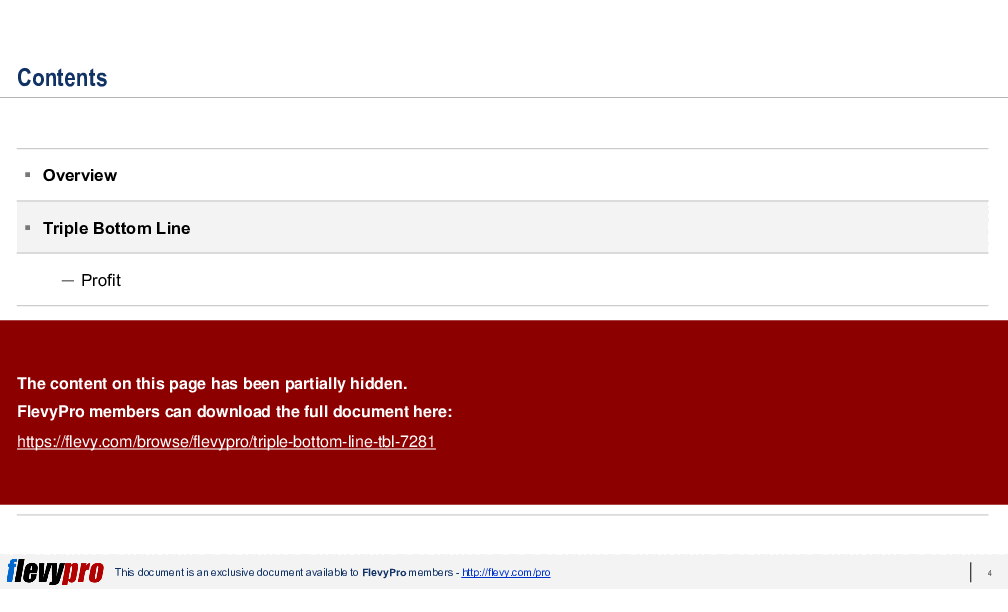
•  Overview (page 3)
•  Triple Bottom Line (page 5)
•  Profit (page 11)
•  People (page 14)
•  Planet (page 17)
•  TBL Examples (page 20)
•  Slide Design Structure & Templates (page 23)

Primary Topics Covered
•  Overview of TBL - The Triple Bottom Line framework emphasizes the need for businesses to assess their performance based on profit, people, and planet, promoting a more sustainable approach to business.
•  Profit - Profit is viewed through a broader lens, encompassing ethical income generation and responsible financial obligations to the community.
•  People - This aspect focuses on the welfare of all individuals connected to the organization, including employees, customers, and suppliers, emphasizing fair treatment and development.
•  Planet - Environmental responsibility is highlighted, requiring businesses to consider their ecological impact and make sustainable choices, even if they involve higher costs.
•  Advantages of TBL - The benefits of adopting TBL include improved employee retention, enhanced customer loyalty, and increased long-term profitability.
•  Disadvantages of TBL - Challenges include measuring social and environmental impacts, balancing conflicting priorities, and the potential for increased costs.

Deliverables, Templates, and Tools
•  TBL assessment framework template for evaluating organizational performance
•  Metrics guide for measuring social and environmental impacts
•  Reporting template for communicating TBL outcomes to stakeholders
•  Case studies of organizations successfully implementing TBL principles
•  Presentation slides for educating teams on TBL concepts and practices
•  Checklist for integrating TBL into business strategies

Slide Highlights
•  Overview of the Triple Bottom Line framework and its significance
•  Detailed breakdown of the 3 components: profit, people, and planet
•  Visual representation of TBL metrics and measurement strategies
•  Examples of organizations successfully implementing TBL principles
•  Guidelines for effective slide design and presentation structure

Potential Workshop Agenda
Introduction to TBL Concepts (60 minutes)
•  Overview of the Triple Bottom Line framework
•  Discussion on the importance of sustainability in business

TBL Implementation Strategies (90 minutes)
•  Breakout sessions to develop TBL metrics
•  Group presentations on proposed TBL initiatives

Case Studies and Best Practices (60 minutes)
•  Review of successful TBL implementations
•  Lessons learned and key takeaways

Customization Guidance
•  Tailor the TBL framework to align with specific organizational goals and values
•  Adjust metrics to reflect industry standards and stakeholder expectations
•  Incorporate case studies relevant to the organization’s sector for greater impact

Secondary Topics Covered
•  Corporate Social Responsibility (CSR)
•  Environmental, Social, and Governance (ESG) factors
•  Stakeholder engagement strategies
•  Sustainable business practices and reporting

Topic FAQ

What are the 3 components of the Triple Bottom Line framework?

The Triple Bottom Line framework evaluates performance across 3 components—profit (prosperity), people (social impacts and welfare), and planet (environmental impact). Profit includes ethical income generation and community obligations; people covers wages, safety, and development; planet covers ecological consequences—collectively known as the 3 Ps: profit, people, and planet.

How can organizations measure social and environmental impacts under TBL?

Measurement combines quantitative and qualitative indicators; common social metrics include employee satisfaction scores and supplier diversity, while environmental metrics include environmental impact assessments and greenhouse gas emissions. The Flevy Triple Bottom Line (TBL) presentation provides a metrics guide to help define and track these indicators, including suggested measurement approaches and examples.

What are typical benefits and challenges of adopting a TBL approach?

Reported benefits include improved employee retention, enhanced customer loyalty, and potential long-term profitability when social and environmental value are prioritized. Challenges include difficulty quantifying non-financial outcomes, balancing conflicting priorities, and potential higher short-term costs associated with sustainable choices, such as measurement complexity and trade-offs.

What should I look for when choosing a TBL toolkit or slide deck for my organization?

Prioritize resources that define the 3 Ps clearly, include practical assessment templates, offer a metrics guide and reporting templates, provide sector-relevant case studies, and allow customization of metrics and slides for stakeholder reporting—such as a TBL assessment framework template and reporting template.

How much time should I allocate to introduce TBL concepts to a management team?

Time depends on scope,, but the included workshop example in the presentation suggests a structured session totaling 210 minutes (3.5 hours): a 60-minute introduction, a 90-minute implementation session for developing metrics, and a 60-minute case studies and lessons session, as a starting point for internal rollout.

I need to prepare an ESG investor presentation—how can TBL structure that content?

Use TBL to present performance across profit, people, and planet, organize metrics and targets for each pillar, cite case studies to demonstrate outcomes, and use the provided reporting template and slide templates to format disclosures and investor-facing slides from the 32-slide deck.

Can the Triple Bottom Line be adapted to different industries and existing strategies?

Yes. The guidance recommends tailoring the TBL framework to organizational goals, adjusting metrics to reflect industry standards and stakeholder expectations, and incorporating sector-relevant case studies to increase relevance—resulting in industry-specific metrics and case-study examples.

What specific metrics capture the 'people' and 'planet' outcomes in TBL reporting?

'People' metrics frequently include employee satisfaction scores, fair wages, training completion, and workplace safety indicators; 'planet' metrics often include environmental impact assessments and greenhouse gas emissions. These types of metrics are described in the presentation’s metrics guide and example measurement approaches.

Document FAQ
These are questions addressed within this presentation.

What is the Triple Bottom Line?
The Triple Bottom Line is a framework that evaluates a company's commitment to social, environmental, and financial performance, emphasizing the importance of sustainability.

How can TBL benefit my organization?
Implementing TBL can enhance employee retention, attract customers and investors, and lead to long-term profitability through sustainable practices.

What are the challenges of measuring TBL?
Measuring social and environmental impacts can be complex, as it often involves quantifying non-financial outcomes and balancing conflicting priorities.

Can TBL be integrated into existing business strategies?
Yes, TBL can be tailored to fit within current business strategies, enhancing overall performance and stakeholder engagement.

What metrics should be used to measure TBL?
Metrics may include employee satisfaction scores, environmental impact assessments, and financial performance indicators that reflect ethical practices.

How can organizations communicate their TBL efforts?
Organizations can use transparent reporting and case studies to effectively communicate their TBL initiatives and outcomes to stakeholders.

What role do stakeholders play in TBL?
Stakeholders, including employees, customers, and investors, are integral to TBL, as their feedback and engagement can influence sustainable practices.

Is TBL applicable to all industries?
Yes, TBL principles can be adapted to fit any industry, promoting sustainability across various sectors.

Glossary
•  Triple Bottom Line (TBL) - A framework for measuring a company's commitment to social, environmental, and financial performance.
•  Corporate Social Responsibility (CSR) - Business practices that promote social and environmental sustainability.
•  Sustainability - The ability to maintain or improve conditions without compromising future generations.
•  Stakeholder Engagement - The process of involving individuals or groups that have an interest in the organization's activities.
•  Environmental Impact - The effect of an organization's actions on the natural environment.
•  Social Responsibility - The obligation of an organization to act for the benefit of society at large.
•  Ethical Income Generation - Financial practices that prioritize fairness and responsibility.
•  ESG Factors - Environmental, Social, and Governance criteria used to evaluate a company's ethical impact.
•  Sustainable Practices - Business methods that contribute to environmental health and social equity.
•  Performance Metrics - Standards used to measure the effectiveness of business practices.
•  Community Prosperity - The economic well-being of the local community influenced by business activities.
•  Fair Trade - A trading partnership that seeks greater equity in international trade, ensuring fair wages and conditions.
•  Diversity and Inclusion - Efforts to create a workforce that reflects a variety of backgrounds and perspectives.
•  Greenhouse Gas Emissions - Gases that trap heat in the atmosphere, contributing to climate change.
•  Corporate Governance - The system of rules and practices that direct and control a company.
•  Social Metrics - Measurements that assess a company's impact on social well-being.
•  Environmental Metrics - Measurements that assess a company's impact on the environment.
•  Financial Obligations - Responsibilities related to the financial commitments of a business.
•  Community Engagement - The process of building relationships with community members and stakeholders.
•  Sustainable Growth - Economic growth that meets present needs without compromising future generations.

SUSTAINABILITY PPT SLIDES

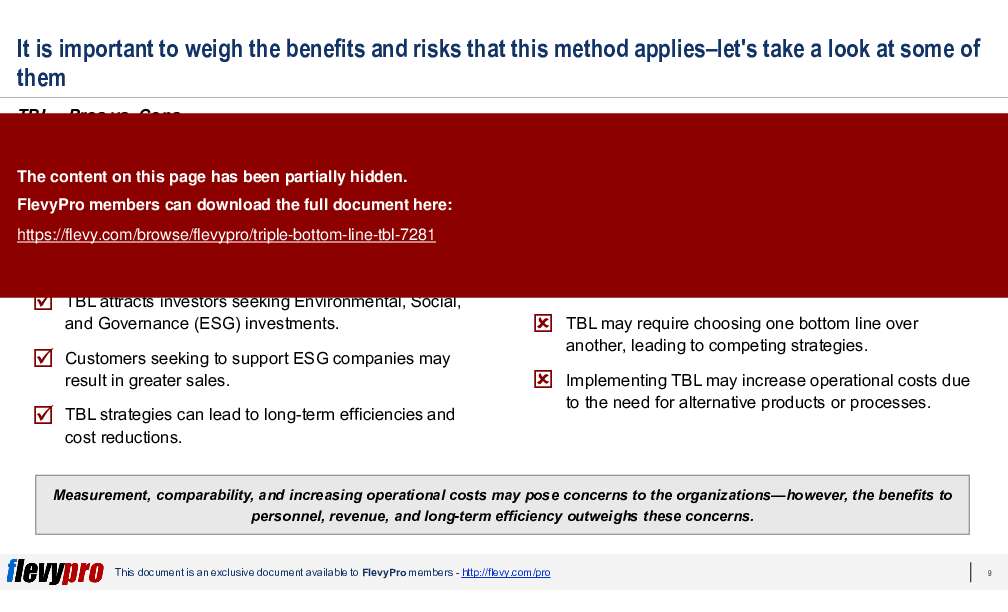
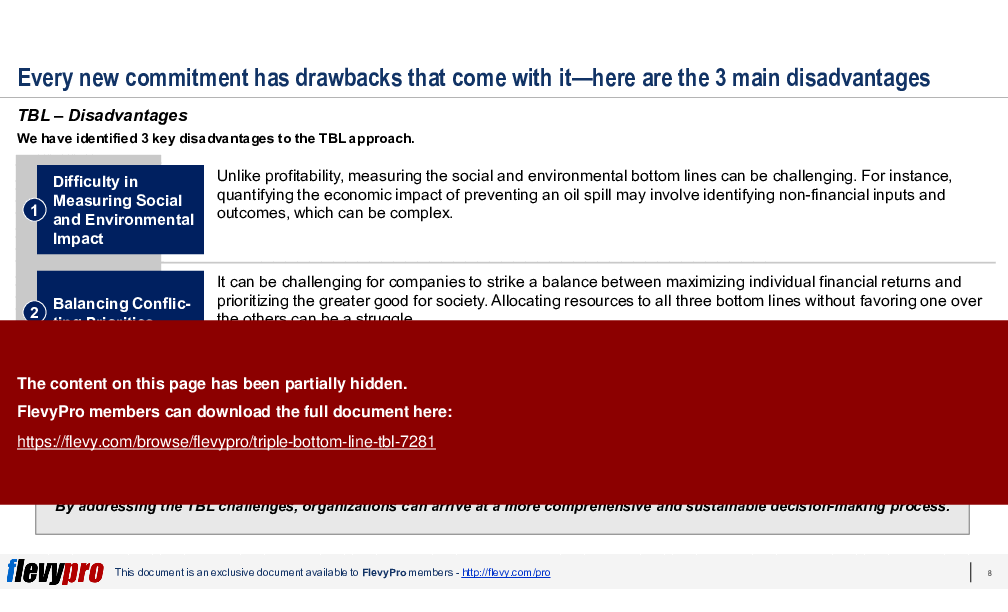
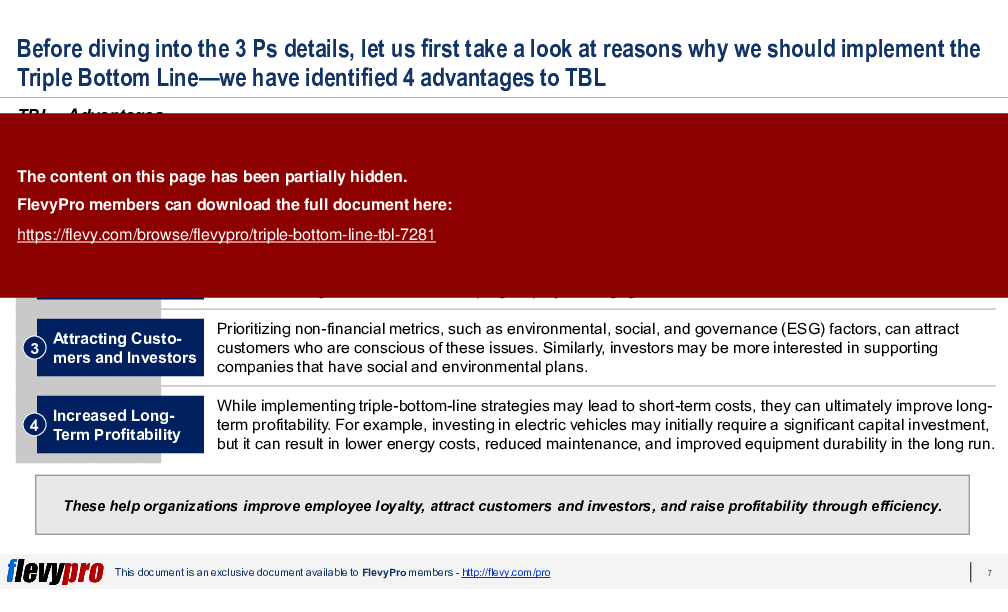
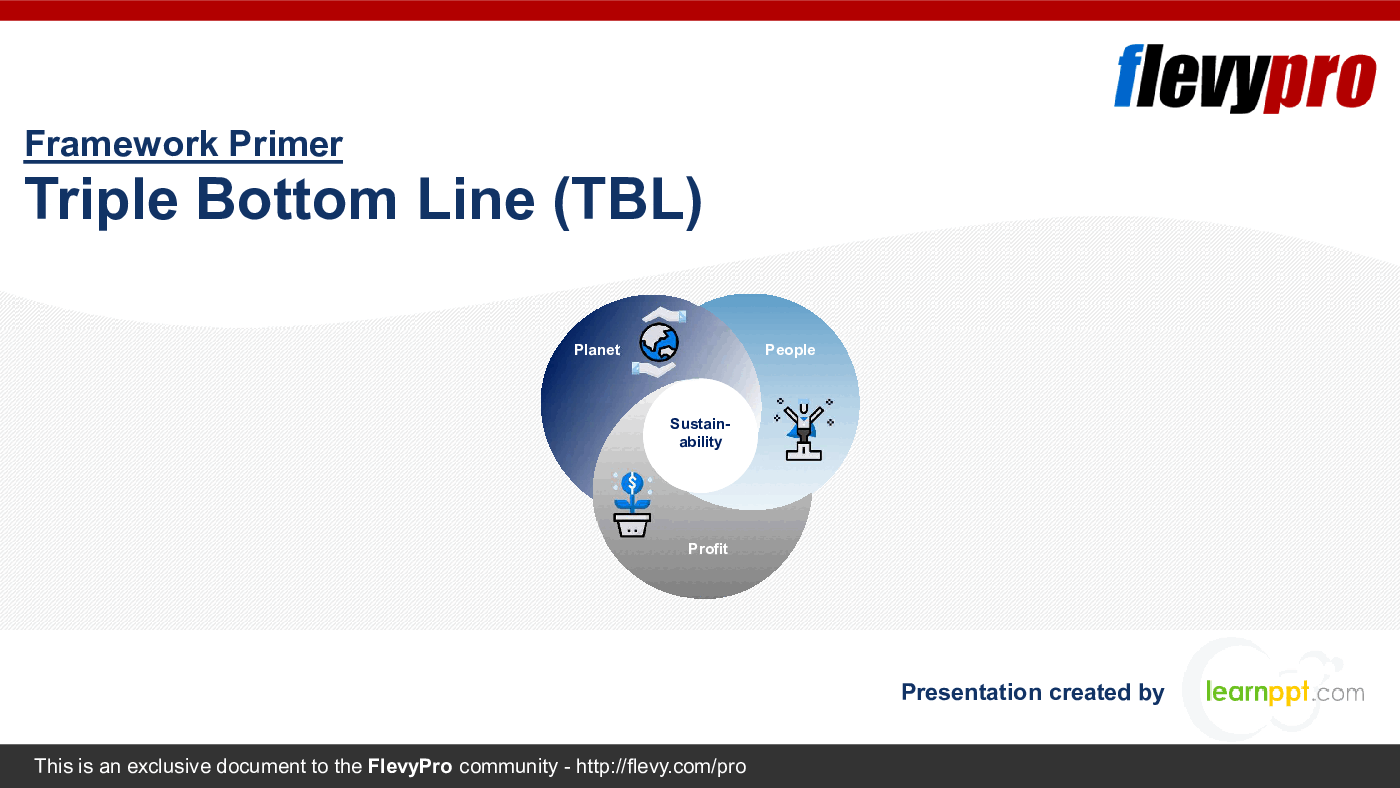
Understanding the Triple Bottom Line Framework

Integrating Environmental Impact into Business Strategy

Understanding Profit in the Triple Bottom Line Framework

Measuring the People Component of the Triple Bottom Line

Source: Best Practices in Sustainability, Business Ethics, Corporate Social Responsibility PowerPoint Slides: Triple Bottom Line (TBL) PowerPoint (PPTX) Presentation Slide Deck, LearnPPT Consulting


$29.00
FlevyPro price: FREE (included in subscription)
This framework is developed by a team of former McKinsey and Big 4 consultants. The presentation follows the headline-body-bumper slide format used by global consulting firms.
Add to Cart
  

Did you need more documents?

Consider a FlevyPro subscription from $39/month. View plans here.

For $10.00 more, you can download this document plus 2 more FlevyPro documents. That's just $13 each.

ABOUT FLEVYPRO

This document is part of the FlevyPro Library, a curated knowledge base of documents for our FlevyPro subscribers.

FlevyPro is a subscription service for on-demand business frameworks and analysis tools. FlevyPro subscribers receive access to an exclusive library of curated business documents—business framework primers, presentation templates, Lean Six Sigma tools, and more—among other exclusive benefits.

Click here to learn more about FlevyPro and its benefits.

Did you know?
The average daily rate of a McKinsey consultant is $6,625 (not including expenses). The average price of a Flevy document is $65.


Trusted by over 10,000+ Client Organizations
Since 2012, we have provided business templates to over 10,000 businesses and organizations of all sizes, from startups and small businesses to the Fortune 100, in over 130 countries.
AT&T GE Cisco Intel IBM Coke Dell Toyota HP Nike Samsung Microsoft Astrazeneca JP Morgan KPMG Walgreens Walmart 3M Kaiser Oracle SAP Google E&Y Volvo Bosch Merck Fedex Shell Amgen Eli Lilly Roche AIG Abbott Amazon PwC T-Mobile Broadcom Bayer Pearson Titleist ConEd Pfizer NTT Data Schwab


Read Customer Testimonials

 
"Last Sunday morning, I was diligently working on an important presentation for a client and found myself in need of additional content and suitable templates for various types of graphics. Flevy.com proved to be a treasure trove for both content and design at a reasonable price, considering the time I "

– M. E., Chief Commercial Officer, International Logistics Service Provider
 
"Flevy is our 'go to' resource for management material, at an affordable cost. The Flevy library is comprehensive and the content deep, and typically provides a great foundation for us to further develop and tailor our own service offer."

– Chris McCann, Founder at Resilient.World
 
"FlevyPro provides business frameworks from many of the global giants in management consulting that allow you to provide best in class solutions for your clients."

– David Harris, Managing Director at Futures Strategy
 
"[Flevy] produces some great work that has been/continues to be of immense help not only to myself, but as I seek to provide professional services to my clients, it gives me a large "tool box" of resources that are critical to provide them with the quality of service and outcomes they are expecting."

– Royston Knowles, Executive with 50+ Years of Board Level Experience
 
"I am extremely grateful for the proactiveness and eagerness to help and I would gladly recommend the Flevy team if you are looking for data and toolkits to help you work through business solutions."

– Trevor Booth, Partner, Fast Forward Consulting
 
"FlevyPro has been a brilliant resource for me, as an independent growth consultant, to access a vast knowledge bank of presentations to support my work with clients. In terms of RoI, the value I received from the very first presentation I downloaded paid for my subscription many times over! The "

– Roderick Cameron, Founding Partner at SGFE Ltd
 
"I have found Flevy to be an amazing resource and library of useful presentations for lean sigma, change management and so many other topics. This has reduced the time I need to spend on preparing for my performance consultation. The library is easily accessible and updates are regularly provided. A wealth of great information."

– Cynthia Howard RN, PhD, Executive Coach at Ei Leadership
 
"Flevy.com has proven to be an invaluable resource library to our Independent Management Consultancy, supporting and enabling us to better serve our enterprise clients.

The value derived from our [FlevyPro] subscription in terms of the business it has helped to gain far exceeds the investment made, making a subscription a no-brainer for any growing consultancy – or in-house strategy team."

– Dean Carlton, Chief Transformation Officer, Global Village Transformations Pty Ltd.


Customers Also Bought These Documents


Customers Also Like These Documents

Explore Templates on Related Management Topics


Your Recently Viewed Documents
Download our FREE Organization, Change, & Culture, Templates

Download our free compilation of 50+ slides and templates on Organizational Design, Change Management, and Corporate Culture. Methodologies include ADKAR, Burke-Litwin Change Model, McKinsey 7-S, Competing Values Framework, etc.