
Corporate commitment to Sustainability-based Management is strengthening.
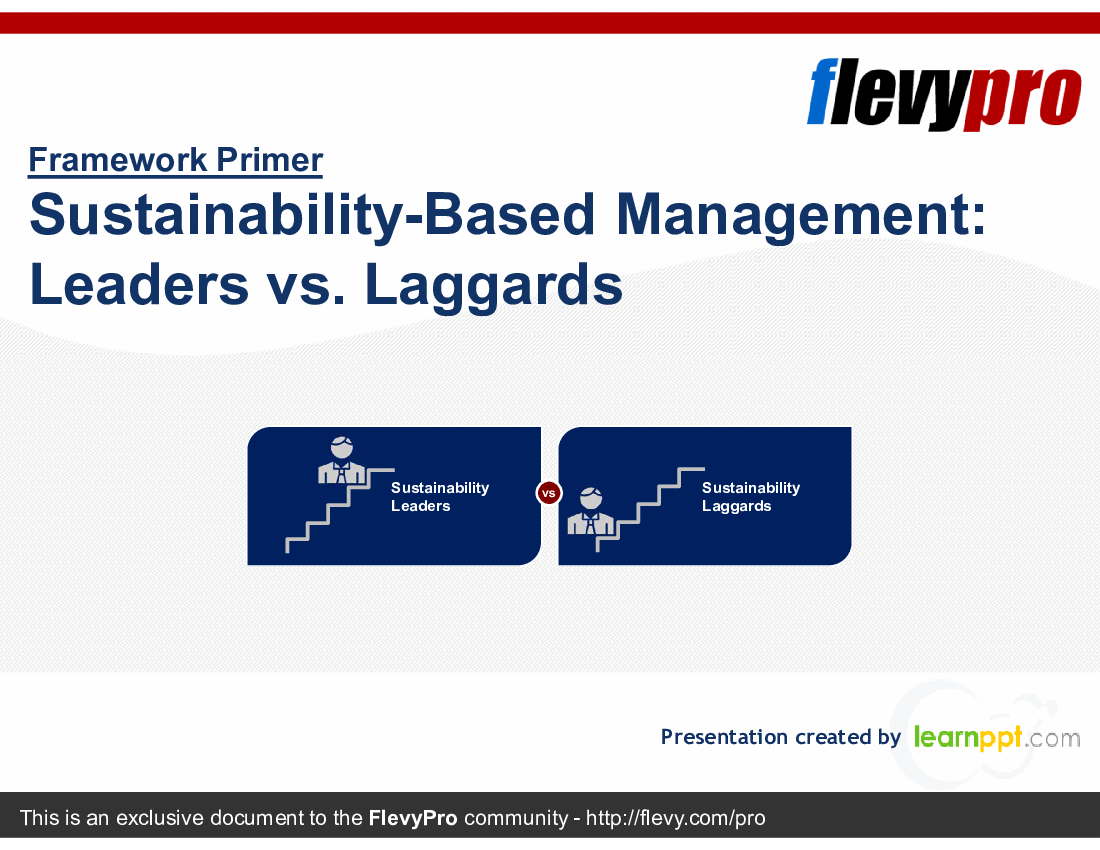
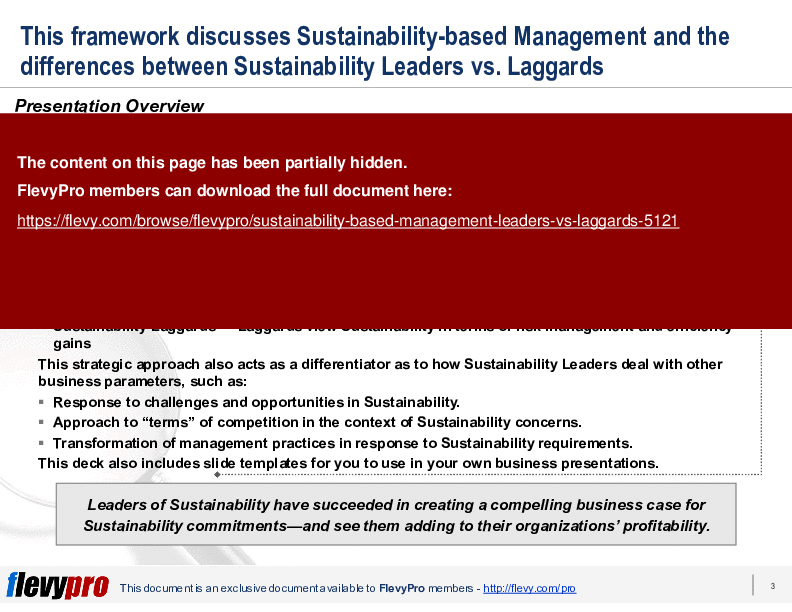
Even as organizations overall are strengthening their commitments to Sustainability, one cohort of organization is expanding its commitments far more aggressively than others. They have emerged as Sustainability Strategy Leaders, while others stand as Laggards. This presentation discusses the differences between these 2 groups in depth.
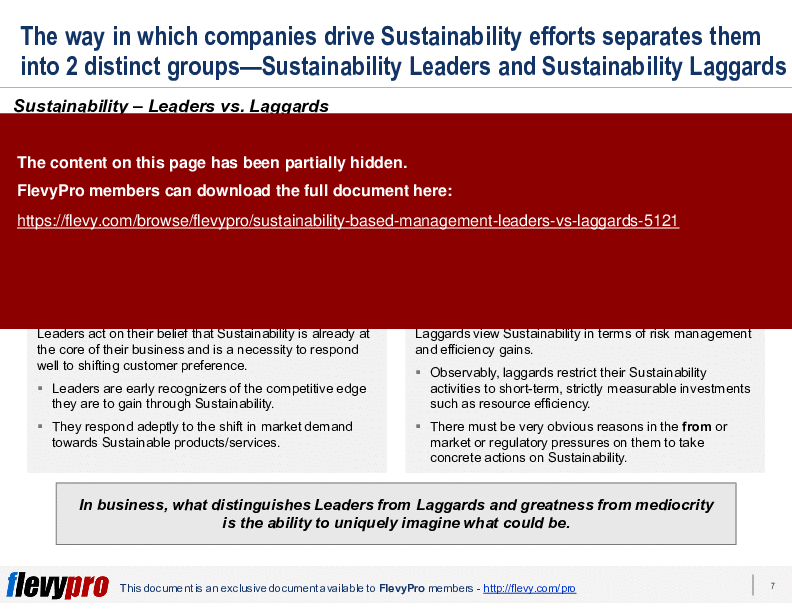
Strategic approach to sustainability is the main differentiator between Leaders and Laggards:
Sustainability Leaders — Leaders act on their belief that Sustainability is already at the core of their business and is a necessity to respond well to shifting customer preference. They have succeeded in creating a compelling business case for Sustainability commitments and see these efforts adding to their organizations' profitability.
Sustainability Laggards — Laggards view Sustainability in terms of risk management and efficiency gains
This strategic approach also acts as a differentiator as to how Sustainability Leaders deal with other business parameters, such as:
• Response to challenges and opportunities in Sustainability.
• Approach to "terms" of competition in the context of Sustainability concerns.
• Transformation of management practices in response to Sustainability requirements.
This deck also includes slide templates for you to use in your own business presentations.
This comprehensive presentation delves into the strategic nuances that set Sustainability Leaders apart from Laggards. Leaders integrate sustainability deeply into their core strategy, leveraging it to drive innovation and gain competitive advantage. They proactively engage stakeholders, manage risks effectively, and foster a culture of continuous improvement. In contrast, Laggards often view sustainability through a narrow lens of compliance and cost-saving measures, missing out on broader opportunities for growth and differentiation.
The PPT also highlights the significant external pressures driving the shift towards sustainability, including regulatory changes, investor expectations, and evolving customer preferences. Leaders adeptly navigate these pressures, turning them into opportunities for value creation. This presentation is a must-have for executives aiming to position their organizations at the forefront of sustainable business practices. It provides actionable insights and practical templates to help you transform sustainability from a compliance requirement into a strategic asset.
Got a question about this document? Email us at flevypro@flevy.com.
Executive Summary
The "Sustainability-Based Management: Leaders vs. Laggards" presentation provides an in-depth analysis of how organizations approach sustainability and the resulting impact on their business performance. Developed through collaboration between MIT Sloan and BCG Consulting Group, this framework delineates the characteristics that differentiate sustainability leaders from laggards. Leaders view sustainability as integral to their core business strategy, driving innovation and profitability, while laggards adopt a more reactive stance, focusing primarily on risk management and efficiency. This presentation equips executives with insights to enhance their sustainability strategies and leverage them for competitive advantage.
Who This Is For and When to Use
• Corporate executives seeking to integrate sustainability into their business models
• Sustainability officers responsible for implementing and tracking sustainability initiatives
• Strategy teams evaluating competitive positioning in relation to sustainability
• Change management leaders focused on driving organizational transformation towards sustainability
Best-fit moments to use this deck:
• During strategic planning sessions to align sustainability goals with business objectives
• In workshops aimed at enhancing organizational understanding of sustainability practices
• For presentations to stakeholders to demonstrate commitment to sustainability
Learning Objectives
• Define the strategic importance of sustainability in modern business contexts
• Differentiate between sustainability leaders and laggards based on their approaches and outcomes
• Identify key advantages of adopting sustainability as a core business strategy
• Develop actionable plans to transition from a laggard to a leader in sustainability
• Establish metrics to measure the impact of sustainability initiatives on business performance
• Foster a culture of sustainability within the organization through effective change management
Table of Contents
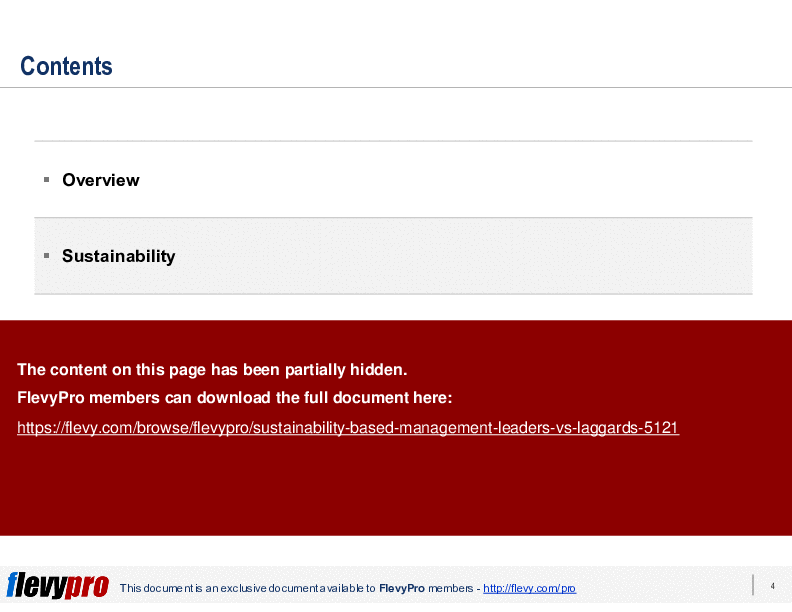
• Overview (page 3)
• Sustainability (page 5)
• Leaders vs. Laggards (page 7)
• Sustainability Leaders and Laggards (page 13)
• Templates (page 17)
Primary Topics Covered
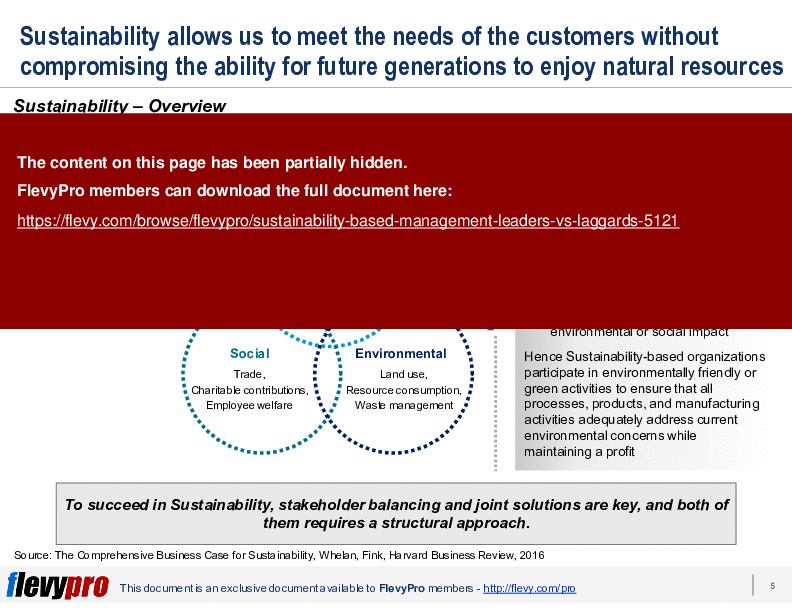
• Sustainability Overview - An introduction to sustainability as a business imperative, emphasizing the need for a triple bottom line approach.
• Leaders vs. Laggards - A comparative analysis of how sustainability leaders proactively integrate sustainability into their core strategies, while laggards adopt a reactive approach.
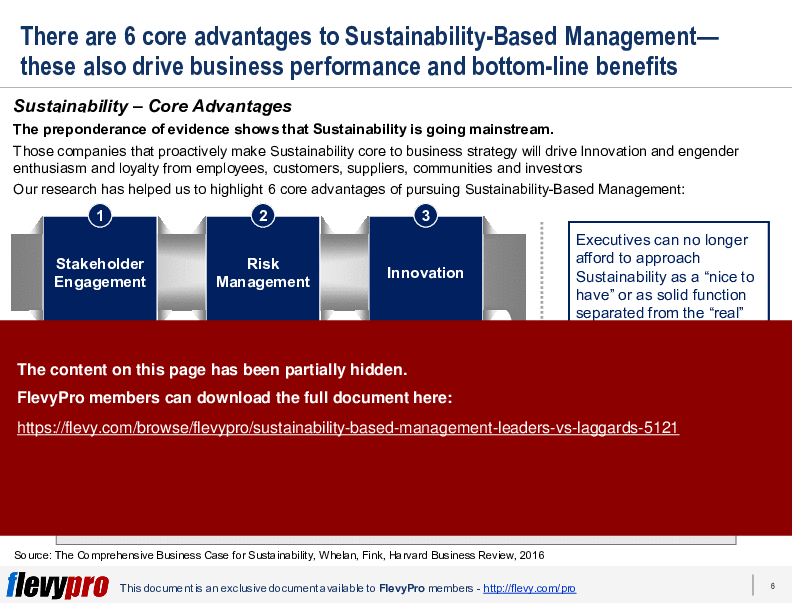
• Core Advantages of Sustainability - Six key benefits of sustainability-based management that drive business performance and stakeholder engagement.
• Change Management in Sustainability - Insights into the human aspects of integrating sustainability into business practices and how leaders manage this change effectively.
• Market Trends and Influencers - Examination of external pressures driving organizations towards sustainability, including customer demand and regulatory requirements.
• Future of Sustainability Practices - Discussion on how laggards are beginning to recognize the importance of sustainability and the potential for future alignment with leaders.
Deliverables, Templates, and Tools
• Framework for assessing sustainability strategies within organizations
• Comparative analysis template for evaluating sustainability leaders and laggards
• Action plan template for transitioning to sustainability leadership
• Metrics dashboard for tracking sustainability performance and impact
• Change management toolkit for implementing sustainability initiatives
• Stakeholder engagement plan template to align internal and external expectations
Slide Highlights
• Overview of sustainability and its importance to modern business practices
• Comparative slide detailing the characteristics of sustainability leaders versus laggards
• Graphical representation of the core advantages of sustainability-based management
• Insights into change management strategies employed by sustainability leaders
• Market trends highlighting the shift towards sustainability in various industries
Potential Workshop Agenda
Understanding Sustainability in Business (90 minutes)
• Define sustainability and its relevance to business strategy
• Discuss the triple bottom line and its implications for corporate performance
• Explore case studies of sustainability leaders
Transitioning from Laggards to Leaders (60 minutes)
• Identify gaps in current sustainability practices
• Develop a roadmap for enhancing sustainability initiatives
• Establish metrics for measuring progress
Engaging Stakeholders in Sustainability (90 minutes)
• Identify key stakeholders and their expectations
• Develop a stakeholder engagement strategy
• Create a communication plan to promote sustainability initiatives
Customization Guidance
• Tailor the presentation to reflect your organization’s specific sustainability goals and challenges
• Adjust templates to include industry-specific examples and case studies
• Modify metrics and KPIs to align with your organization's strategic objectives
• Incorporate internal data and insights to enhance relevance and impact
Secondary Topics Covered
• The role of corporate social responsibility in sustainability
• Strategies for fostering employee engagement in sustainability initiatives
• Best practices for reporting and transparency in sustainability efforts
• The impact of regulatory changes on sustainability practices
• Future trends in sustainability and their implications for business strategy
Topic FAQ
Document FAQ
These are questions addressed within this presentation.
What is the main difference between sustainability leaders and laggards?
Sustainability leaders proactively integrate sustainability into their core business strategies, viewing it as essential for competitive advantage, while laggards focus primarily on risk management and efficiency.
How can organizations transition from being laggards to leaders in sustainability?
Organizations can transition by developing a clear sustainability strategy, engaging stakeholders, and implementing change management practices that foster a culture of sustainability.
What are the core advantages of adopting sustainability-based management?
The core advantages include improved innovation, enhanced brand reputation, increased customer loyalty, better risk management, and improved financial performance.
How should organizations measure the impact of their sustainability initiatives?
Organizations should establish specific metrics and KPIs that align with their sustainability goals, allowing for tracking of progress and impact on overall business performance.
What role do external pressures play in driving sustainability efforts?
External pressures from customers, regulatory bodies, and investors are increasingly influencing organizations to adopt sustainable practices, as these factors shape market expectations and competitive dynamics.
How can change management facilitate the integration of sustainability into business practices?
Effective change management involves aligning organizational culture with sustainability goals, engaging employees in the process, and ensuring that leadership supports sustainability initiatives.
What are some common challenges organizations face in implementing sustainability strategies?
Common challenges include resistance to change, lack of resources, insufficient stakeholder engagement, and difficulty in measuring impact.
How can organizations effectively engage stakeholders in their sustainability efforts?
Organizations can engage stakeholders by communicating transparently about sustainability initiatives, seeking input, and demonstrating how these efforts align with stakeholder values and expectations.
Glossary
• Sustainability - The ability to meet present needs without compromising future generations' ability to meet theirs.
• Triple Bottom Line - An accounting framework that includes social, environmental, and financial performance.
• Stakeholder Engagement - The process of involving individuals or groups who may be affected by or can affect an organization's operations.
• Change Management - A structured approach to transitioning individuals, teams, and organizations from a current state to a desired future state.
• Corporate Social Responsibility (CSR) - A business model in which companies integrate social and environmental concerns in their operations and interactions with stakeholders.
• Sustainability Metrics - Quantitative measures used to assess an organization's sustainability performance.
• Risk Management - The identification, assessment, and prioritization of risks followed by coordinated efforts to minimize, monitor, and control the probability or impact of unfortunate events.
• Competitive Advantage - The attribute that allows an organization to outperform its competitors.
• Sustainability Strategy - A plan that outlines how an organization will integrate sustainability into its operations and decision-making processes.
• Environmental, Social, and Governance (ESG) - Criteria used to evaluate a company's operations and performance in relation to sustainability.
• Sustainability Reporting - The practice of measuring, disclosing, and being accountable for organizational performance towards the goal of sustainable development.
• Sustainability Leadership - The practice of leading an organization towards sustainable practices and policies.
• Laggards - Organizations that are slow to adopt new practices or technologies, particularly in sustainability.
• Leaders - Organizations that proactively embrace and implement sustainability practices.
• Innovation - The process of translating an idea or invention into a good or service that creates value or for which customers will pay.
• Employee Engagement - The emotional commitment the employee has to the organization and its goals.
• Market Trends - Patterns or tendencies in the market that indicate the direction in which it is moving.
• Stakeholder Expectations - The anticipated outcomes or requirements that stakeholders have regarding an organization's performance and actions.
• Sustainability Practices - Actions taken by organizations to operate in a manner that is environmentally and socially responsible.
Source: Best Practices in Leadership, Sustainability PowerPoint Slides: Sustainability-Based Management: Leaders vs. Laggards PowerPoint (PPTX) Presentation Slide Deck, LearnPPT Consulting
Did you need more documents?
Consider a FlevyPro subscription from $39/month. View plans here.
For $10.00 more, you can download this document plus 2 more FlevyPro documents. That's just $13 each.
|
Download our FREE Organization, Change, & Culture, Templates
Download our free compilation of 50+ slides and templates on Organizational Design, Change Management, and Corporate Culture. Methodologies include ADKAR, Burke-Litwin Change Model, McKinsey 7-S, Competing Values Framework, etc. |