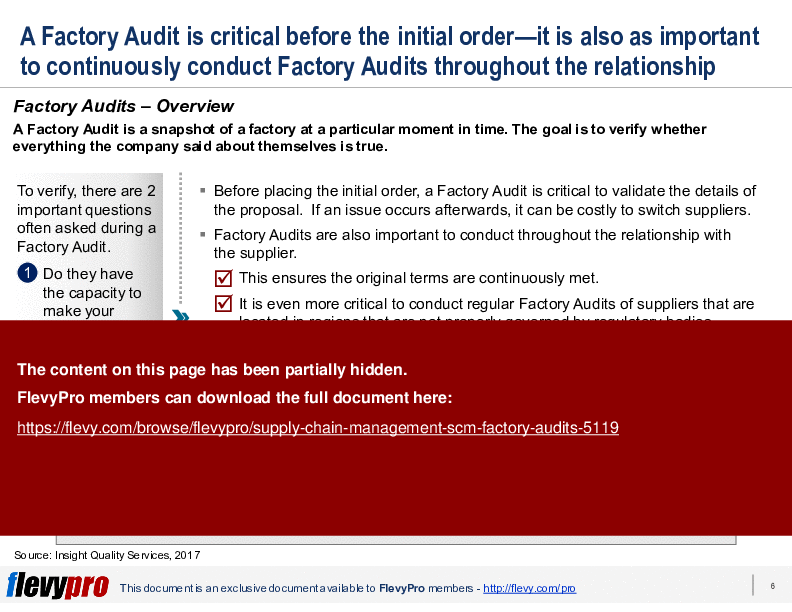

Factory Audits are often conducted by companies to confirm whether the supplier is delivering the supplied goods per agreed upon terms and standards (e.g. quality, safety, ethical, environmental, etc.). This has become an important undertaking for companies to continually ensure that it consistently meets its quality and performance standards. In a time where there is global competitiveness coupled with a disruptive economy, the importance of strengthening the Supply Chain has become a factor for survival and sustainability.
To further help companies that outsource production, new Factory Audit processes have been undertaken to evaluate supplier performance in more depth. Digital Audits is a new type of audit system that digitizes the process. It is transforming on-site facility inspection programs and increasing the effectiveness of Factory Audits as a risk management tool.
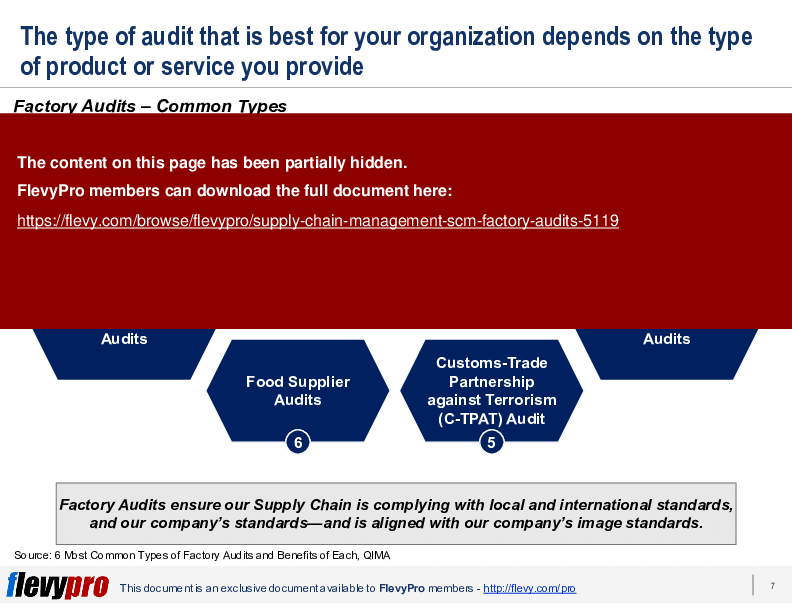
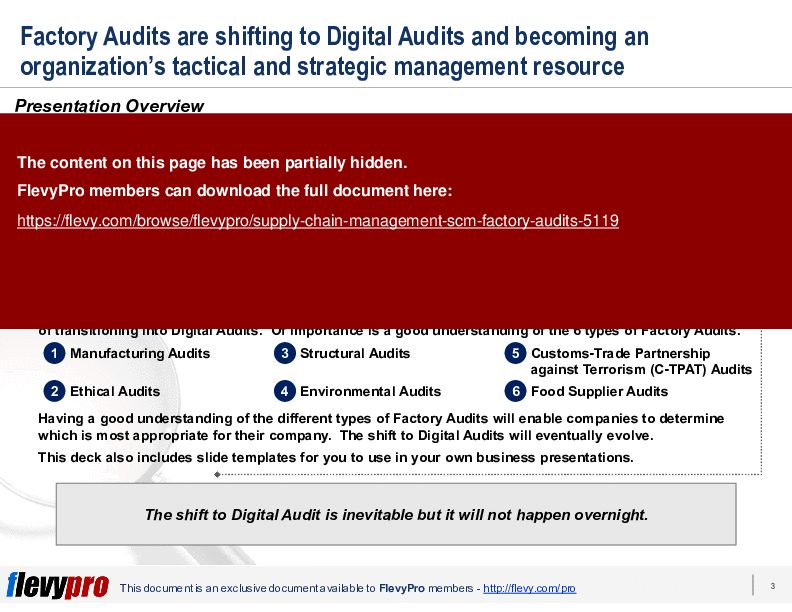
This presentation provides companies a tactical and strategic perspective of Factory Audits and the urgency of transitioning into Digital Audits. Of importance is a good understanding of the 6 types of Factory Audits.
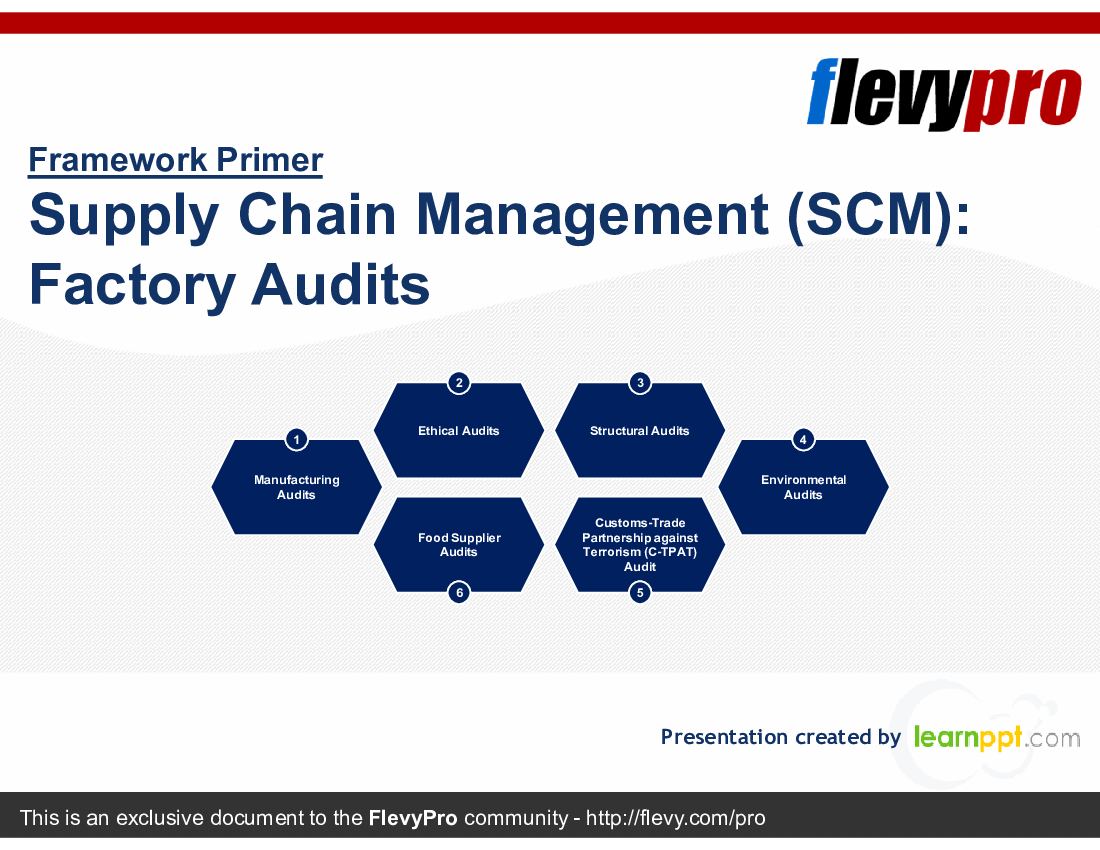
1. Manufacturing Audits
2. Ethical Audits
3. Structural Audits
4. Environmental Audits
5. Customs-Trade Partnership against Terrorism (C-TPAT) Audits
6. Food Supplier Audits
Having a good understanding of the different types of Factory Audits will enable companies to determine which is most appropriate for their company. The shift to Digital Audits will eventually evolve.
This deck also includes slide templates for you to use in your own business presentations.
This PPT also delves into the critical issues that hamper modern audit practices, such as standardization and cost inflation, providing real-world examples and solutions. It highlights the importance of continuous Factory Audits throughout the supplier relationship to ensure compliance and mitigate risks. The presentation includes comprehensive templates to streamline your audit processes and enhance your supply chain's resilience. This resource is indispensable for executives aiming to fortify their supply chain integrity and align with global standards.
Got a question about this document? Email us at flevypro@flevy.com.
Executive Summary
The Supply Chain Management (SCM): Factory Audits presentation offers a strategic and tactical overview of factory audits and their evolution towards digital formats. This resource is designed for organizations looking to enhance compliance, mitigate risks, and improve supplier performance through effective audit practices. By understanding the various types of factory audits—Manufacturing, Ethical, Structural, Environmental, Customs-Trade Partnership against Terrorism (C-TPAT), and Food Supplier Audits—companies can ensure alignment with both local and international standards. The transition to Digital Audits is emphasized as a critical step in modernizing audit processes, enabling organizations to better manage supply chain risks and maintain quality standards.
Who This Is For and When to Use
• Supply Chain Managers overseeing supplier relationships and compliance
• Quality Assurance teams responsible for ensuring product standards
• Compliance Officers focused on ethical and regulatory adherence
• Procurement professionals evaluating supplier capabilities
• Risk Management teams assessing operational risks in the supply chain
Best-fit moments to use this deck:
• During supplier onboarding to establish audit requirements
• When transitioning to digital audit processes
• For training sessions on factory audit best practices
• In strategy meetings focused on supply chain risk management
Learning Objectives
• Define the role and importance of factory audits in supply chain management
• Identify the 6 types of factory audits and their specific purposes
• Assess supplier performance through effective audit practices
• Develop a transition plan for implementing Digital Audits
• Enhance understanding of compliance with local and international standards
• Utilize templates for conducting various types of factory audits
Table of Contents
• Overview (page 1)
• Factory Audits (page 3)
• Digital Audits (page 12)
• Templates (page 15)
Primary Topics Covered
• Factory Audits Overview - An introduction to factory audits, emphasizing their importance in verifying supplier capabilities and compliance with standards.
• Types of Factory Audits - A detailed examination of 6 common types of factory audits, including their purposes and benefits.
• Digital Audits - Insights into the transition from traditional to digital audits, highlighting the advantages of digitized processes.
• Challenges in Audit Practices - An exploration of key issues affecting modern audit practices, including standardization, cost inflation, and fraud.
• Benefits of Digital Audits - A discussion on how digital audits enhance decision-making and supplier performance evaluation.
• Templates for Implementation - Practical templates to assist organizations in conducting various types of factory audits effectively.
Deliverables, Templates, and Tools
• Factory Audit checklist template for assessing supplier compliance
• Digital Audit implementation guide to transition from traditional methods
• Performance evaluation metrics for supplier audits
• Risk assessment framework for factory audits
• Compliance tracking template for ongoing supplier evaluations
• Audit report template for documenting findings and recommendations
Slide Highlights
• Overview of the 6 types of factory audits and their specific benefits
• Visual representation of the transition from traditional to digital audits
• Key challenges in audit practices illustrated with real-world examples
• Benefits of digital audits highlighted through case studies
• Templates for factory audits presented in an easy-to-use format
Potential Workshop Agenda
Factory Audits Introduction (60 minutes)
• Overview of factory audits and their significance
• Discussion on the 6 types of factory audits
• Q&A session
Digital Audits Transition (90 minutes)
• Overview of digital audit processes
• Case studies on successful transitions
• Group discussion on implementation challenges
Audit Best Practices (60 minutes)
• Review of audit templates and tools
• Interactive session on customizing templates for specific needs
• Wrap-up and feedback collection
Customization Guidance
• Tailor audit templates to reflect specific industry standards and regulations
• Adjust performance metrics based on organizational goals and supplier capabilities
• Incorporate company-specific terminology and branding into presentation materials
• Modify the workshop agenda to focus on relevant case studies and examples
Secondary Topics Covered
• The role of technology in modernizing audit practices
• Ethical considerations in factory audits
• The impact of global regulations on supply chain audits
• Strategies for improving supplier relationships through audits
• Trends in supply chain management and their implications for audits
Topic FAQ
Document FAQ
These are questions addressed within this presentation.
What are the main types of factory audits?
The main types of factory audits include Manufacturing, Ethical, Structural, Environmental, C-TPAT, and Food Supplier Audits, each serving specific compliance and performance evaluation purposes.
Why is transitioning to Digital Audits important?
Transitioning to Digital Audits enhances the effectiveness of factory audits, providing deeper insights into supplier performance and improving risk management capabilities.
How can I customize the audit templates provided?
Templates can be tailored by incorporating specific industry standards, adjusting performance metrics, and aligning them with your organization's branding and terminology.
What challenges do modern audit practices face?
Modern audit practices face challenges such as standardization issues, cost inflation, and the risk of fraud, which can undermine the effectiveness of audits.
How do Digital Audits improve decision-making?
Digital Audits provide real-time data and insights, allowing organizations to identify substandard suppliers quickly and address quality issues more effectively.
What is the role of compliance in factory audits?
Compliance ensures that suppliers meet local and international standards, protecting the organization’s brand and reputation while minimizing operational risks.
How often should factory audits be conducted?
Factory audits should be conducted before initial orders and regularly throughout the supplier relationship to ensure ongoing compliance and performance.
What benefits do Digital Audits offer over traditional audits?
Digital Audits offer cost savings, improved efficiency, enhanced risk management, and the ability to link CSR goals with product quality assessments.
Glossary
• Factory Audit - An assessment of a supplier's capabilities and compliance with standards.
• Digital Audit - A modern audit process that digitizes traditional factory audits.
• C-TPAT - Customs-Trade Partnership against Terrorism, focusing on supply chain security.
• Compliance - Adherence to laws and regulations governing operations.
• CSR - Corporate Social Responsibility, relating to ethical practices in business.
• Risk Management - The process of identifying and mitigating potential risks in operations.
• Supplier Performance - Evaluation of a supplier's ability to meet agreed-upon standards.
• Audit Template - A structured document used to guide the audit process.
• Performance Metrics - Standards used to measure supplier effectiveness and compliance.
• Supply Chain Management - The management of the flow of goods and services.
• Ethical Audit - An assessment focused on social accountability and working conditions.
• Environmental Audit - An evaluation of compliance with environmental regulations.
• Structural Audit - An assessment of the safety and integrity of facilities.
• Food Supplier Audit - A review of food safety and quality standards in supply chains.
• Manufacturing Audit - An evaluation of a supplier's production capabilities.
• Standardization - The process of establishing common standards for audits.
• Cost Inflation - The increase in costs associated with conducting audits.
• Fraud - Deceptive practices that undermine the integrity of audits.
• Audit Report - A document summarizing findings and recommendations from an audit.
• Supplier Code of Conduct - Guidelines outlining expected ethical practices for suppliers.
• Supply Chain Risk - Potential disruptions that can affect the flow of goods and services.
Source: Best Practices in Supply Chain Management, Manufacturing, Audit, Business Ethics, Corporate Social Responsibility PowerPoint Slides: Supply Chain Management (SCM): Factory Audits PowerPoint (PPTX) Presentation Slide Deck, LearnPPT Consulting
Did you need more documents?
Consider a FlevyPro subscription from $39/month. View plans here.
For $10.00 more, you can download this document plus 2 more FlevyPro documents. That's just $13 each.
|
Receive our FREE presentation on Operational Excellence
This 50-slide presentation provides a high-level introduction to the 4 Building Blocks of Operational Excellence. Achieving OpEx requires the implementation of a Business Execution System that integrates these 4 building blocks. |