Your AI assistant becomes a Flevy-powered consultant, with direct access to our full library of frameworks, templates, and case studies. Free to connect. No account, sign-in, or API key required.
STEP 1 · CHOOSE YOUR ASSISTANT
STEP 2 · CONNECT
1
Copy the Flevy MCP URL below.
2
Open the Claude connector settings and choose Add Custom Connector. Paste the URL and name it Flevy.
This framework is developed by a team of former McKinsey and Big 4 consultants. The presentation follows the headline-body-bumper slide format used by global consulting firms.
Editor Summary
Supply Chain Cost Reduction: Warehousing is a 33-slide PPTX by LearnPPT Consulting that applies Lean Six Sigma (LSS) to warehouse cost reduction.
Read moreIt details 6 LSS building blocks (Business Processes, People, Performance Management, Third Party Interactions, Layout, Ownership), explains Lean concepts (Muda, Lean Thinking) and tools (Kaizen, Kanban, Jidoka), describes a 3‑phase cost‑reduction approach plus DMAIC's 5 phases, and provides slide templates. Intended users include supply chain managers, operations managers, logistics directors, and management consultants. Sold as a digital download on Flevy.
Use this deck when warehousing costs or efficiency are under pressure and you need a structured LSS-based program to measure baseline performance, identify gaps, and implement improvement.
Supply chain managers benchmarking current warehouse KPIs and establishing a baseline for cost reduction.
Operations managers redesigning warehouse flow and flexible layouts to reduce waste and travel time.
Continuous improvement leads running Kaizen or DMAIC workshops to address specific process defects.
3PL/outsourcing managers improving third‑party interactions and contract performance monitoring.
The three‑phase baseline→gap→implement sequencing and the integration of DMAIC reflect standard Lean Six Sigma project structure.
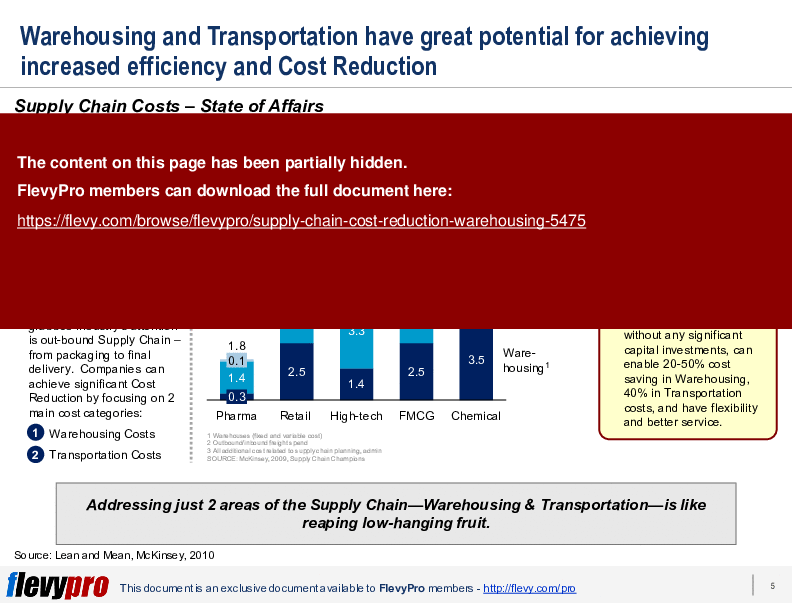
Companies are constantly looking to improve efficiency and reduce costs. One area that has a significant potential for achieving both is the Supply Chain.
Companies generally neglect Supply Chain simply because they do not consider it their core competency. Warehousing and Transportation in the Supply Chain have vast potential in terms of Cost Reduction and improving efficiency.
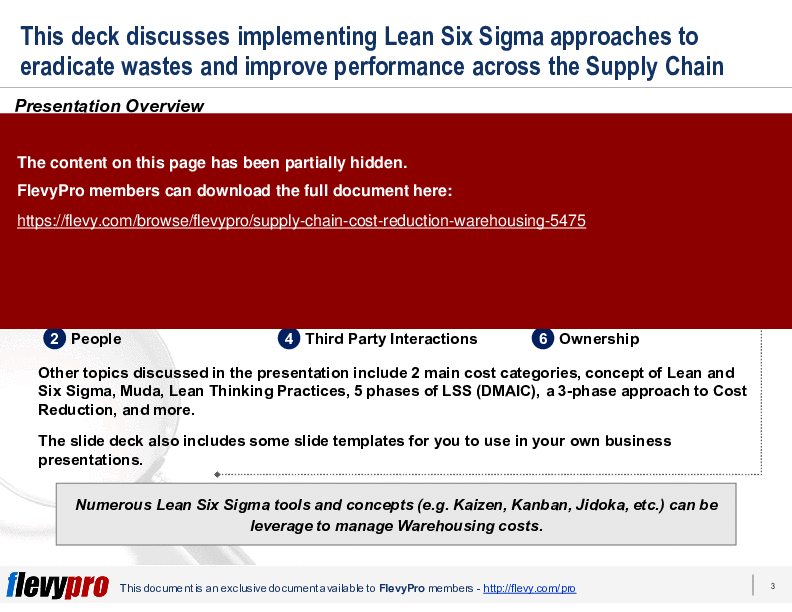
This presentation provides a detailed overview of the 6 building blocks in the Lean Six Sigma (LSS) Approach for improving Warehouse efficiency and cost effectiveness:
1. Business Processes
2. People
3. Performance Management
4. Third Party Interactions
5. Layout
6. Ownership
Numerous Lean Six Sigma tools and concepts (e.g. Kaizen, Kanban, Jidoka, etc.) can be leverage to manage Warehousing costs.
Other topics discussed in the presentation include 2 main cost categories, concept of Lean and Six Sigma, Muda, Lean Thinking Practices, 5 phases of LSS (DMAIC), a 3-phase approach to Cost Reduction, and more.
The slide deck also includes some slide templates for you to use in your own business presentations.
This comprehensive deck delves into the intricacies of Supply Chain Costs, with a particular emphasis on Warehousing Cost Reduction. It outlines a strategic 3-phase approach to address inefficiencies and optimize warehouse operations. The methodology begins with setting a baseline to gauge current performance, followed by identifying gaps, and culminates in implementing Lean Six Sigma (LSS) techniques. This structured approach ensures that businesses can systematically reduce costs while enhancing operational efficiency.
The presentation also highlights the importance of flexibility in warehouse layouts and the critical role of stakeholder collaboration. By focusing on the six building blocks of performance—Business Processes, People, Performance Management, Third Party Interactions, Layout, and Ownership—this PPT provides actionable insights and practical templates. These tools empower organizations to streamline their warehousing operations, ultimately driving significant cost savings and operational improvements.
What are the core elements of a Lean Six Sigma approach to reducing warehousing costs?
A Lean Six Sigma approach for warehousing focuses on 6 building blocks: Business Processes, People, Performance Management, Third Party Interactions, Layout, and Ownership. It also foregrounds Lean concepts like Muda and Lean Thinking Practices and uses LSS tools such as Kaizen, Kanban, and Jidoka, covering 6 building blocks.
What phases should a warehousing cost‑reduction program follow to be methodical?
A structured program begins by establishing a performance baseline, proceeds to identify gaps between current and target performance, and concludes with implementing Lean Six Sigma interventions. That three‑phase approach is typically executed using DMAIC's defined 5 phases for problem solving and control, aligning with LSS practice and DMAIC's 5 phases.
Which Lean tools are most relevant for warehouse waste elimination?
Common Lean and LSS tools for warehousing cited in the material include Kaizen for rapid improvement events, Kanban for flow and inventory control, and Jidoka for defect detection and stoppage. These tools are presented alongside Lean Thinking Practices and the concept of Muda, specifically naming Kaizen, Kanban, Jidoka.
How should I approach assessing whether my warehouse layout needs redesign?
Begin with baseline measurement of current operations to identify layout-driven inefficiencies, map flows against process and performance metrics, and test flexible layout options during gap analysis before implementing changes. The document highlights layout as one of 6 building blocks and recommends baseline measurement and gap identification.
What should I look for when purchasing a warehousing cost‑reduction presentation or toolkit?
Buyers should check slide count and format, whether the deck includes methodology (baseline, gap analysis, implementation), named LSS tools, and ready slide templates for presentations. For example, Supply Chain Cost Reduction: Warehousing is a 33‑slide PPTX that lists tools like Kaizen and includes slide templates.
How does a small improvement team use LSS methods without a long program timeline?
A small team can apply the three‑phase approach: measure a narrow baseline, run targeted gap analyses on critical processes, and pilot LSS tools (e.g., Kaizen events) for focused problems. The approach is designed to be staged, using DMAIC sequencing to scale interventions across phases.
If reducing third‑party logistics costs is the goal, what should I prioritize?
Prioritize clarity in Third Party Interactions and Performance Management: set baseline performance metrics, identify service gaps, and apply governance and process changes to contracts and handoffs. The material treats Third Party Interactions and Performance Management as distinct building blocks to address 3PL cost drivers.
What performance measures are appropriate for a warehousing LSS program?
Use baseline KPIs tied to business processes and ownership (e.g., cycle time, error rates, occupancy/utilization) and track them through a performance management system during gap identification and DMAIC implementation. The presentation emphasizes establishing a baseline and monitoring via the performance management building block.
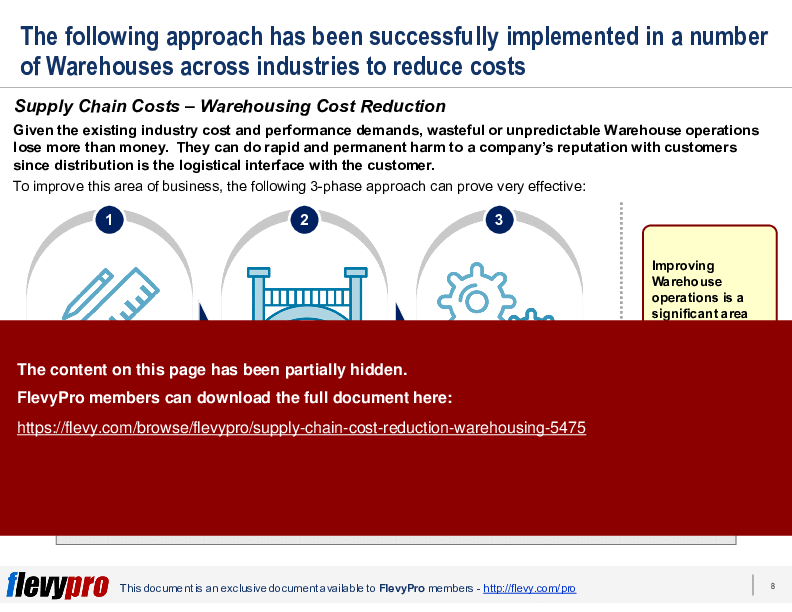
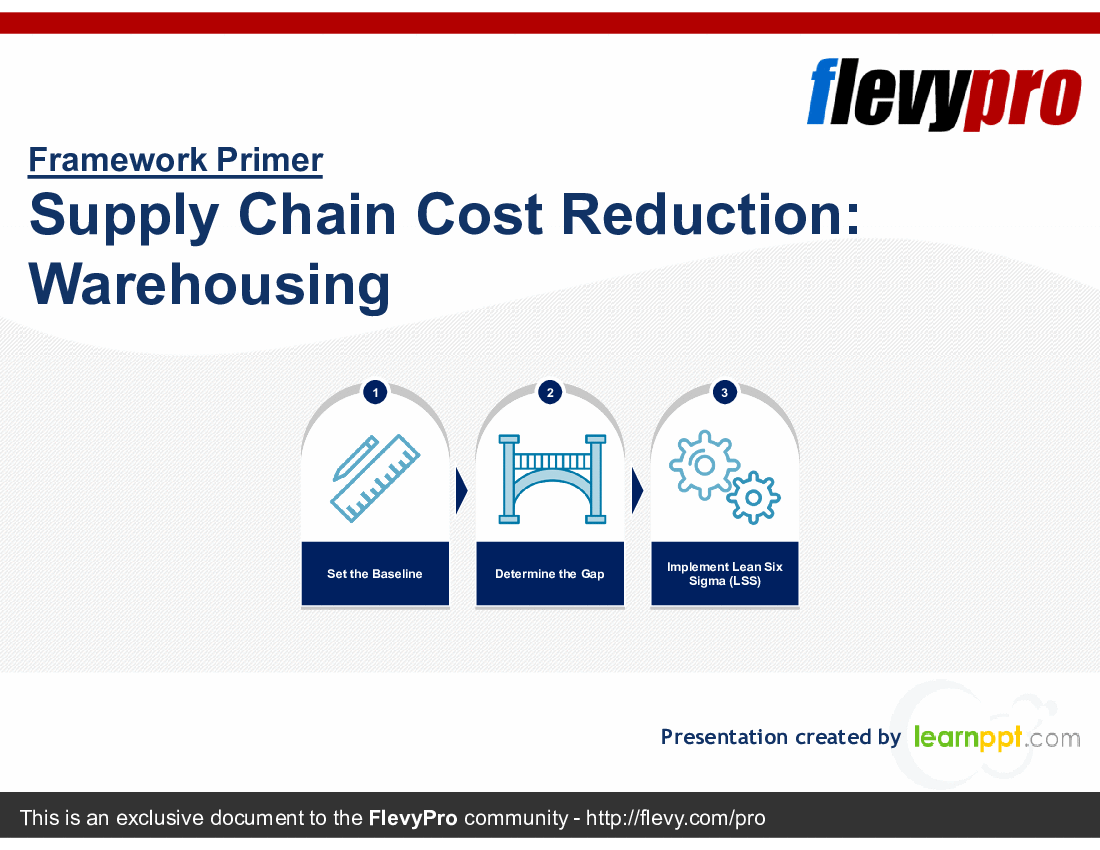
This PPT slide template outlines a structured approach to reducing warehousing costs, emphasizing efficient warehouse operations in the supply chain. Poor warehouse management risks damaging a company's reputation and financial standing, necessitating prompt action to avoid significant losses.
The solution involves a three-phase approach:
1. Set the Baseline - Assess current performance metrics to identify existing inefficiencies and set realistic goals.
2. Determine the Gap - Analyze data to identify discrepancies between current performance and desired outcomes, enabling targeted interventions.
3. Implement Lean Six Sigma (LSS) - Adopt continuous improvement methodologies that combine lean manufacturing principles with Six Sigma's focus on quality, streamlining processes and minimizing defects.
Improving warehouse operations enhances cost savings and refines the overall customer value proposition, highlighting the strategic importance of effective warehousing in a competitive environment.
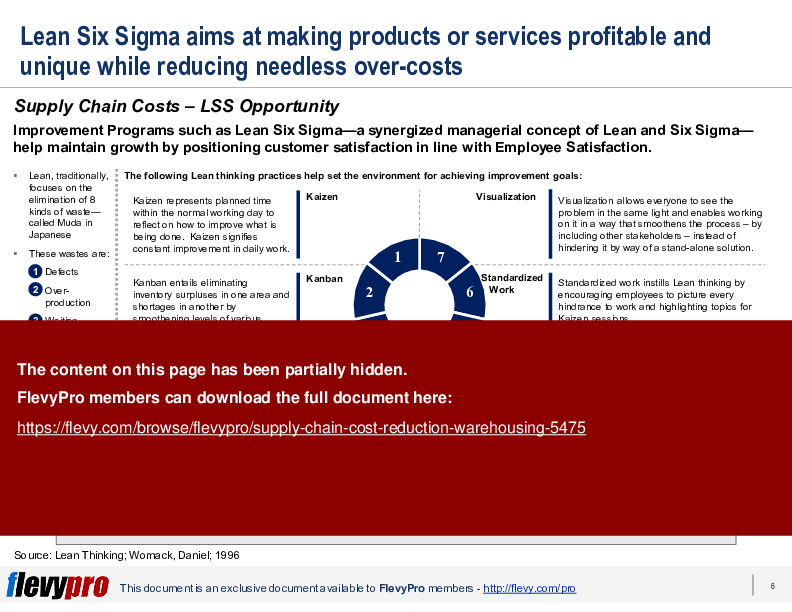
Lean Six Sigma (LSS) enhances supply chain efficiency by integrating Lean principles with Six Sigma methodologies to eliminate waste, categorized into eight types: defects, overproduction, waiting, and more. A circular diagram outlines key Lean practices, including Kaizen for continuous improvement and Kanban for effective inventory management aligned with demand. Automation (Jidoka) emphasizes human intervention in automated processes to maintain quality, engaging employees in problem-solving. Other tools like Standardized Work and SMED (Single-Minute Exchange of Die) streamline operations and enhance flexibility. Visualization enables collaborative problem-solving, while Andon promotes immediate communication and teamwork to address issues. This resource aids organizations in implementing LSS strategies to improve warehousing and supply chain efficiency.
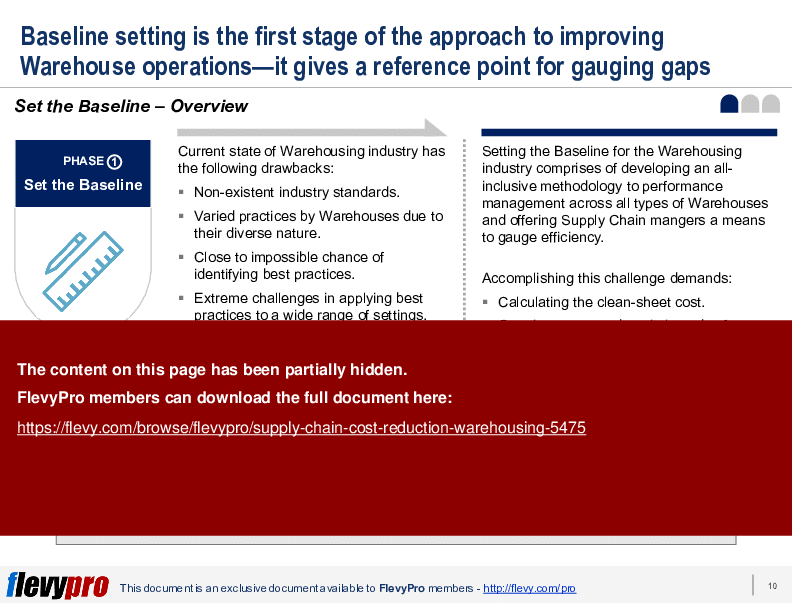
This PPT slide template analyzes warehouse efficiency, revealing performance gaps of 20-50% compared to an ideal "clean-sheet" model based on a McKinsey study of 40 facilities. Key benchmarks include actual performance at 81.6 picks per hour, a clean-sheet target of 122.4 picks per hour, and a retail benchmark of 170.0 picks per hour. Shortcomings such as layout inefficiencies, excessive storage distance, and poor picking layout undermine efficiency. Retail warehouses outperform due to reduced walking distances and better economies of scale. Many warehouses have not adapted to evolving business needs, failing to address product complexity, mergers, and new technologies. Streamlined processes and optimized layouts, rather than technology alone, are crucial for enhancing warehouse performance and achieving significant efficiency gains.
This PPT slide template outlines the implementation of Lean Six Sigma (LSS) techniques to improve warehousing operations by eliminating waste, reducing variability, and enhancing flexibility in supply chain processes. The framework consists of 6 foundational elements:
1. Business Processes - Streamlining operations through workflow analysis for optimal performance.
2. People - Engaging and training the workforce to foster a culture of continuous improvement.
3. Performance Management - Establishing metrics and KPIs to monitor progress and accountability.
4. Third Party Interactions - Managing relationships with external partners to enhance operational efficiency.
5. Layout - Optimizing the physical arrangement of warehousing spaces to improve workflows and reduce handling times.
6. Ownership - Ensuring clear accountability within teams to drive initiatives forward.
LSS techniques are pragmatic and require minimal financial investment, making them attractive for enhancing warehousing operations. Adopting these 6 building blocks can lead to substantial improvements in performance and operational efficiency.
This PPT slide template outlines strategies for managing employee performance through key actions. Leveraging performance metrics enhances employee morale and awareness. Displaying metrics visibly fosters competition, while daily discussions on performance keep teams aligned. Linking compensation to performance encourages prioritization of quality and speed, potentially increasing productivity by up to 20%. Real-time feedback mechanisms, such as voice technology, provide immediate insights, enhancing accountability. Measuring softer performance elements, like employee suggestions, cultivates a culture of continuous improvement. Recognizing top performers through initiatives like "employee of the month" boosts morale. These actions drive excellence, reinforce performance importance, and ensure long-term job satisfaction by making employees feel valued.
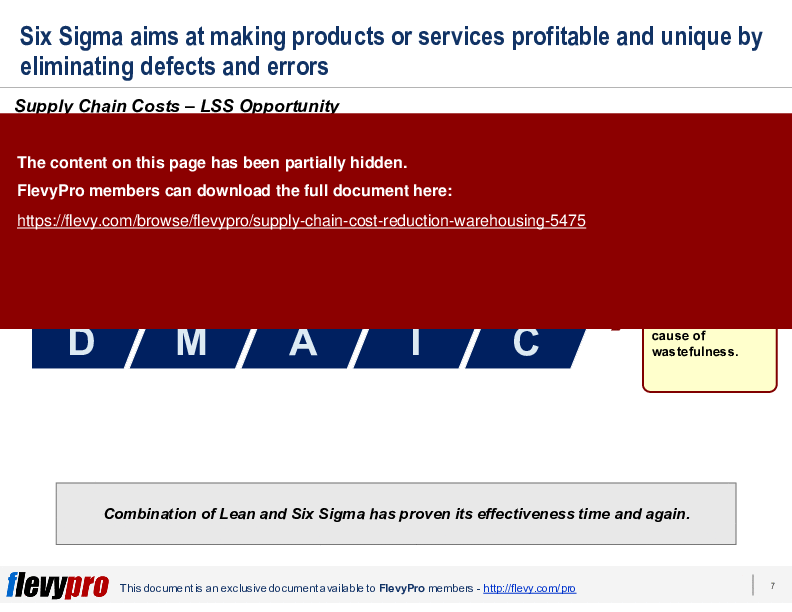
This PPT slide template outlines the application of Six Sigma to enhance product and service profitability through defect elimination and process variability reduction. Central to this methodology is the DMAIC framework: Define, Measure, Analyze, Improve, and Control. The Define phase identifies problems and sets goals; Measure quantifies current performance; Analyze identifies root causes of defects; Improve implements solutions; and Control ensures sustained improvements. This structured approach helps organizations pinpoint wastefulness, optimizing supply chain costs. Lean Six Sigma combines quality and efficiency strategies, providing a comprehensive solution for businesses aiming to streamline operations and enhance decision-making in operational processes.
This PPT slide template focuses on enhancing warehouse layouts to meet evolving stakeholder demands, emphasizing flexibility for long-term success. Adaptable warehouse designs are essential for responding to shifts in customer demand patterns, maintaining operational efficiency and customer satisfaction. Key actions include segregating assets by product type and customer needs to optimize operations. Minor adjustments, such as changing the picking process from higher to lower shelves, can lead to a 20% reduction in picking time. Replacing fixed equipment with flexible alternatives allows for quick reconfiguration of layouts. Locating items based on picking frequency streamlines operations and reduces congestion. Segmenting assets keeps performance at an optimum level, leading to higher customer satisfaction and highlighting the importance of continuous improvement in warehouse operations.
This framework is developed by a team of former McKinsey and Big 4 consultants. The presentation follows the headline-body-bumper slide format used by global consulting firms.
For $10.00 more, you can download this document plus 2 more FlevyPro documents. That's just $13 each.
ABOUT FLEVYPRO
This document is part of the FlevyPro Library, a curated knowledge base of documents for our FlevyPro subscribers.
FlevyPro is a subscription service for on-demand business frameworks and analysis tools. FlevyPro subscribers receive access to an exclusive library of curated business documents—business framework primers, presentation templates, Lean Six Sigma tools, and more—among other exclusive benefits.
The average daily rate of a McKinsey consultant is $6,625 (not including expenses). The average price of a Flevy document is $65.
Trusted by over 10,000+ Client Organizations
Since 2012, we have provided business templates to over 10,000 businesses and organizations of all sizes, from startups and small businesses to the Fortune 100, in over 130 countries.
"I have used Flevy services for a number of years and have never, ever been disappointed. As a matter of fact, David and his team continue, time after time, to impress me with their willingness to assist and in the real sense of the word. I have concluded in fact
that it is not at all just a repository of documents/resources but, in the way that David and his team manage the firm, it is like dealing with consultants always ready to assist, advise and direct you to what you really need, and they always get it right.
I am an international hospitality accomplished senior executive who has worked and lived during the past 35 years in 23 countries in 5 continents and I can humbly say that I know what customer service is, trust me.
Aside from the great and professional service that Flevy's team provide, their wide variety of material is of utmost great quality, professionally put together and most current.
Well done Flevy, keep up the great work and I look forward to continue working with you in the future and to recommend you to a variety of colleagues around the world.
"
– Roberto Pelliccia, Senior Executive in International Hospitality
"I have found Flevy to be an amazing resource and library of useful presentations for lean sigma, change management and so many other topics. This has reduced the time I need to spend on preparing for my performance consultation. The library is easily accessible and updates are regularly provided. A wealth of great information."
– Cynthia Howard RN, PhD, Executive Coach at Ei Leadership
"As a consultant requiring up to date and professional material that will be of value and use to my clients, I find Flevy a very reliable resource.
The variety and quality of material available through Flevy offers a very useful and commanding source for information. Using Flevy saves me time, enhances my expertise and ends up being a good decision."
– Dennis Gershowitz, Principal at DG Associates
"I am extremely grateful for the proactiveness and eagerness to help and I would gladly recommend the Flevy team if you are looking for data and toolkits to help you work through business solutions."
– Trevor Booth, Partner, Fast Forward Consulting
"Flevy is now a part of my business routine. I visit Flevy at least 3 times each month.
Flevy has become my preferred learning source, because what it provides is practical, current, and useful in this era where the business world is being rewritten.
many challenges and there is the need to make the right decisions in a short time, with so much scattered information, we are fortunate to have Flevy. Flevy investigates, selects, and puts at our disposal the best of the best to help us be successful in our work.
"
– Omar Hernán Montes Parra, CEO at Quantum SFE
"My FlevyPro subscription provides me with the most popular frameworks and decks in demand in today’s market. They not only augment my existing consulting and coaching offerings and delivery, but also keep me abreast of the latest trends, inspire new products and service offerings for my practice, and educate me
in a fraction of the time and money of other solutions. I strongly recommend FlevyPro to any consultant serious about success.
"
– Bill Branson, Founder at Strategic Business Architects
"As a small business owner, the resource material available from FlevyPro has proven to be invaluable. The ability to search for material on demand based our project events and client requirements was great for me and proved very beneficial to my clients. Importantly, being able to easily edit and tailor
the material for specific purposes helped us to make presentations, knowledge sharing, and toolkit development, which formed part of the overall program collateral. While FlevyPro contains resource material that any consultancy, project or delivery firm must have, it is an essential part of a small firm or independent consultant's toolbox.
"
– Michael Duff, Managing Director at Change Strategy (UK)
"As a young consulting firm, requests for input from clients vary and it's sometimes impossible to provide expert solutions across a broad spectrum of requirements. That was before I discovered Flevy.com.
Through subscription to this invaluable site of a plethora of topics that are key and crucial to consulting, I
have been able to exceed expectations and deliver quality advice and solutions to my clients. The quality and expertise of the authors are exemplary and gives me great confidence to use as part of my service offerings.
I highly recommend this company for any consultant wanting to apply international best practice standards in their service offerings.
"
– Nishi Singh, Strategist and MD at NSP Consultants
Receive our FREE presentation on Operational Excellence
This 50-slide presentation provides a high-level introduction to the 4 Building Blocks of Operational Excellence. Achieving OpEx requires the implementation of a Business Execution System that integrates these 4 building blocks.

 Click main image to view in full screen. Unlock all 12 preview images: