Your AI assistant becomes a Flevy-powered consultant, with direct access to our full library of frameworks, templates, and case studies. Free to connect. No account, sign-in, or API key required.
STEP 1 · CHOOSE YOUR ASSISTANT
STEP 2 · CONNECT
1
No copying needed. Flevy is in the official Claude Connectors Directory.
2
Click the button below, then click Connect on the Flevy listing.
This framework is developed by a team of former McKinsey and Big 4 consultants. The presentation follows the headline-body-bumper slide format used by global consulting firms.
Editor Summary
32-slide PowerPoint framework "Strategic Priorities Identification & Analysis" by LearnPPT Consulting presents a method to identify and qualify organizational strategic priorities from public documents (websites, annual reports, Form 10-K).
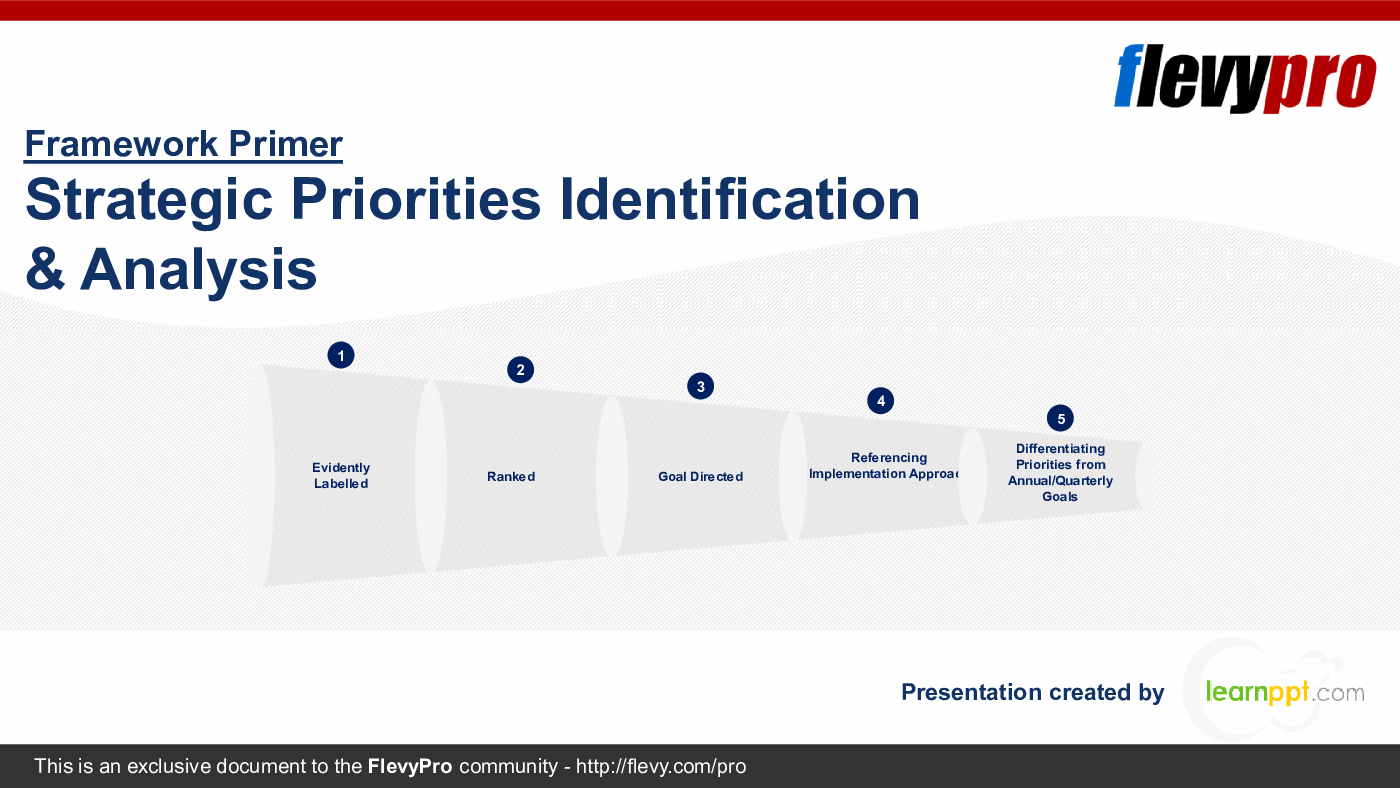
Read moreBreaks priorities into 4 categories (Dominant Logic, Market Positioning, Resources and Capabilities, Stakeholder Theory), defines 5 qualification filters (Evidently Labelled; Ranked; Goal Directed; Referencing Implementation Approach; Differentiating from Annual/Quarterly Goals), and covers 6 fundamentals of communicating priorities. Available on Flevy with immediate digital download.
Use this framework when teams must extract, prioritize, and communicate strategic objectives from public filings or internal strategy reviews—for example during an annual strategy refresh or competitive analysis.
Strategy executives mapping narrative statements from 10‑K and annual reports to the 4 priority categories and applying the 5 qualification filters.
Corporate strategy managers converting qualified priorities into board-ready slide decks using included templates.
Investor relations or corporate communications teams crafting stakeholder messages that follow the 6 communication fundamentals.
Management consultants benchmarking how leading firms articulate priorities in public documents for client recommendations.
The framework’s categorical decomposition, filter-based qualification, and presentation templates reflect consulting practice of turning strategic analysis into prioritized, implementable items.
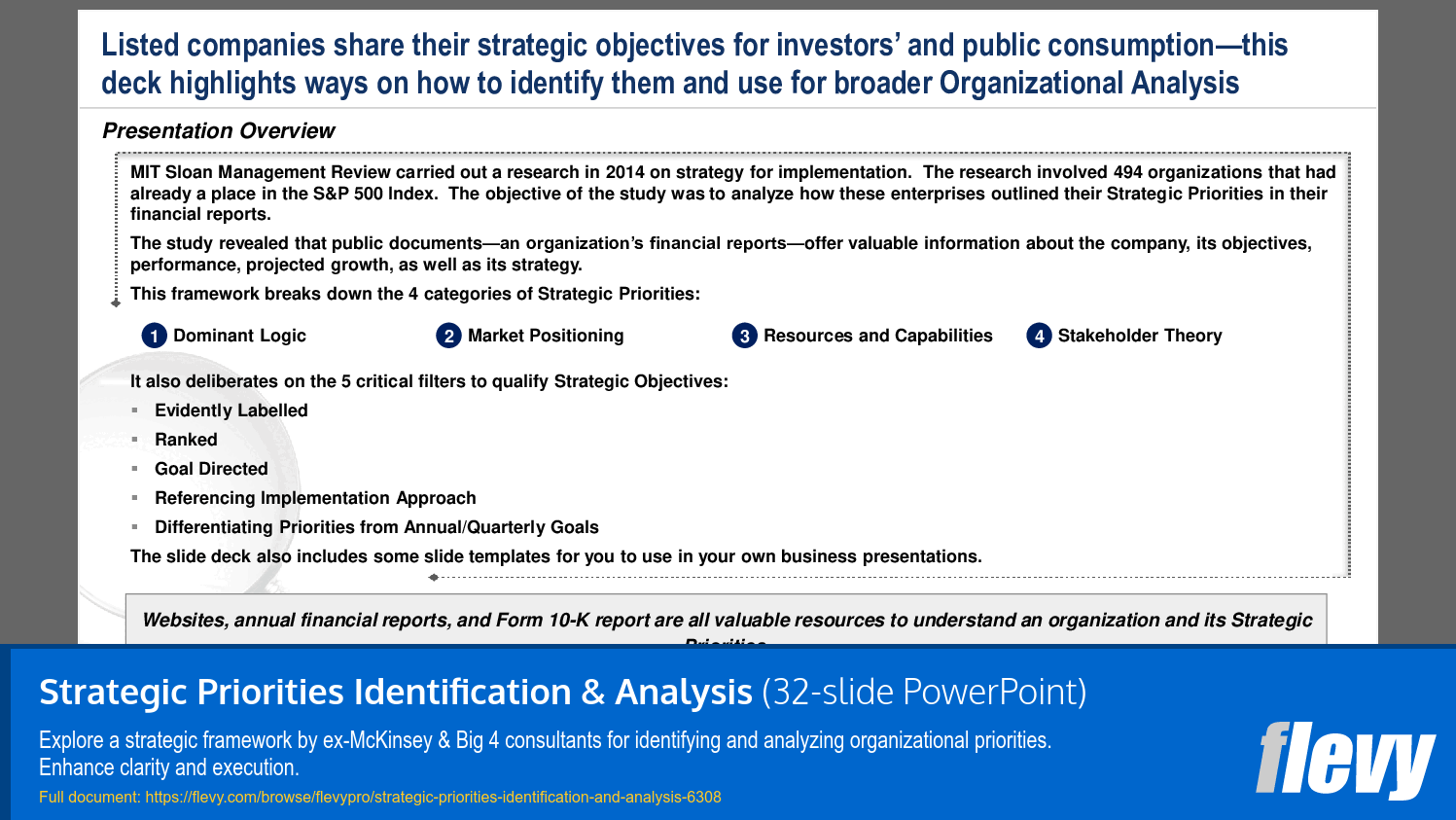
Public documents—an organization's financial reports—offer valuable information about the company, its objectives, performance, projected growth, as well as its Strategy. Websites, annual financial reports, and Form 10-K report are all valuable resources to understand an organization and its Strategic Priorities.
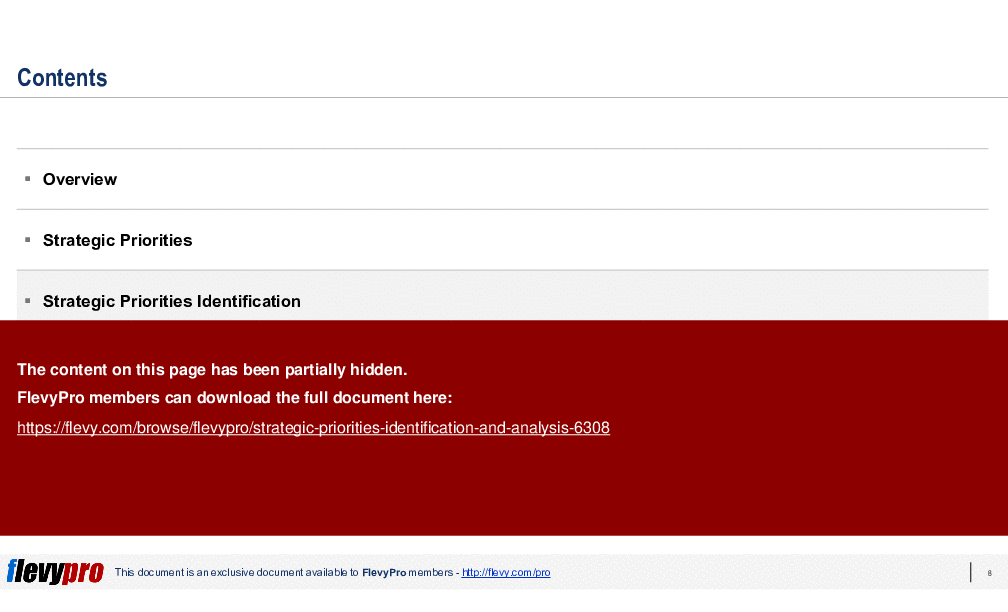
This framework breaks down the 4 categories of Strategic Priorities:
1. Dominant Logic
2. Market Positioning
3. Resources and Capabilities
4. Stakeholder Theory
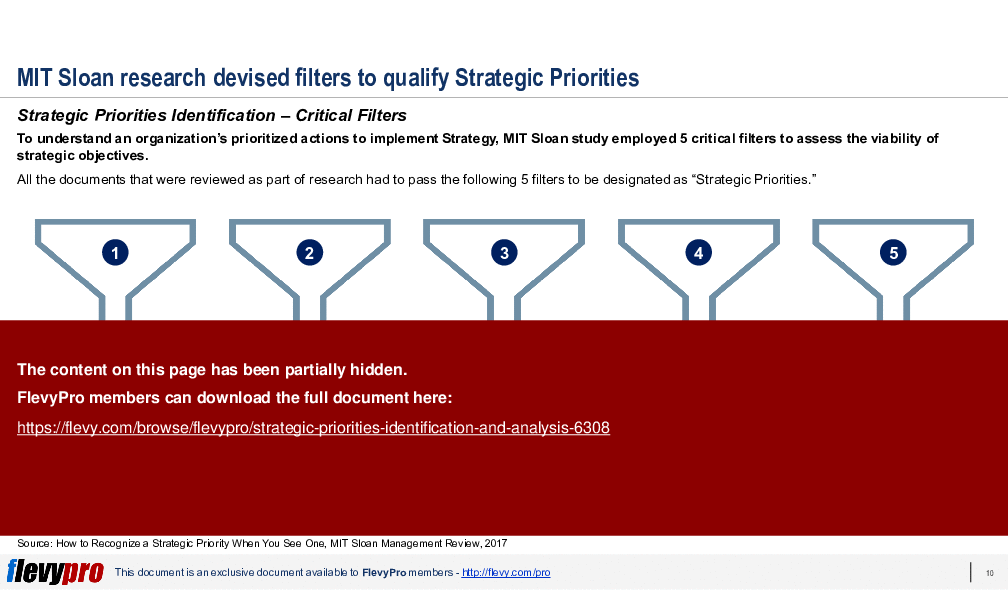
It also deliberates on the 5 critical filters to qualify Strategic Objectives:
This presentation also discusses 6 fundamentals of communicating Strategic Priorities.
The slide deck also includes some slide templates for you to use in your own business presentations.
This PPT provides a comprehensive approach to simplifying complex strategies, making them accessible and actionable for all levels of an organization. It emphasizes the importance of clear communication and the necessity of breaking down strategic priorities into understandable and executable components. The framework ensures that strategic objectives are not just theoretical, but are translated into everyday actions that drive the organization forward.
The analysis includes a detailed examination of how leading companies articulate their strategic priorities in public documents. It identifies key elements that make strategic priorities effective, such as being evidently labeled, ranked, and goal-directed. The document also highlights the importance of referencing implementation approaches and differentiating strategic priorities from regular goals, ensuring clarity and focus.
This presentation is a valuable resource for executives looking to refine their strategic planning process. It offers practical templates and examples to help organizations communicate their strategic priorities effectively. By following the guidelines and principles outlined in this document, companies can enhance their strategic alignment and execution, ultimately driving better business outcomes.
What public sources are most useful for identifying a company’s strategic priorities?
Public company websites, annual financial reports, and SEC filings such as the Form 10‑K are primary sources for extracting stated objectives, rationale, and forward-looking strategy. These documents commonly contain management discussion and disclosed strategy useful for initial priority identification, including the Form 10‑K report.
How can I categorize strategic priorities once I extract them from reports?
A common approach is to sort priorities into conceptual buckets: Dominant Logic, Market Positioning, Resources and Capabilities, and Stakeholder Theory. Categorizing statements into these 4 areas helps separate decisions about business model and market stance from capability investments and stakeholder commitments, ending with Stakeholder Theory.
What criteria should I use to qualify whether a statement is a strategic objective?
Use qualification filters such as whether the objective is Evidently Labelled, Ranked, Goal‑Directed, References an Implementation Approach, and is Differentiated from Annual/Quarterly Goals. Applying these 5 filters helps distinguish strategic priorities from routine targets, concluding with Evidently Labelled as a key filter.
What are practical ways to communicate strategic priorities so the organization understands them?
Practical steps include explicit labels for priorities, clearly ranked order, goal‑directed language, linkage to implementation approach, and distinction from short‑term targets; supplementing these with standardized slide templates improves clarity. Flevy's Strategic Priorities Identification & Analysis discusses 6 fundamentals for communicating priorities, summarized as 6 fundamentals.
What should I look for when buying a toolkit to extract and present strategic priorities on a tight timeline?
Prioritize a toolkit that provides a clear extraction method from public filings, a categorization framework, qualification filters, ready‑to‑use presentation templates, and examples from real company reports to shorten analysis and slide production; for example, a kit that includes 32 slides and templates.
I need to extract strategic priorities from a competitor’s annual report—what’s a good first step?
Start by scanning the competitor’s website, annual report, and Form 10‑K for statements about direction and goals, map those statements into the 4 priority categories (Dominant Logic, Market Positioning, Resources and Capabilities, Stakeholder Theory), then apply the 5 qualification filters to isolate true strategic priorities, using the 5 filters.
How should I judge the cost versus value of buying strategic‑priority slide templates and frameworks?
Evaluate expected time saved in analysis and slide creation, clarity gains for stakeholder alignment, and the templates’ fit to your reporting needs. If templates shorten executive preparation and standardize communication, their value may outweigh cost; check slide count and included artifacts—this product contains 32 slides.
What does the qualification filter "Referencing Implementation Approach" mean in practice?
It means a stated objective includes or points to how it will be delivered—resources, timing, programs, or governance—so it’s actionable rather than aspirational. Using this filter helps separate strategic priorities from vague goals by requiring implementation linkage, captured by the filter named Referencing Implementation Approach.
This PPT slide template outlines critical elements for communicating strategic priorities in financial reports. Focusing on a limited number of key priorities enhances significance and retention among stakeholders. Research shows that 78% of 311 companies listed 5 or fewer priorities, highlighting the value of conciseness. Clear descriptions of these priorities are essential; 72% of organizations included explanations of key terms, aiding in priority analysis. However, some organizations used titles without adequate explanations, causing confusion. Additionally, citing a plan of action is vital; 55% of organizations referenced actions taken or planned, which improves clarity and accountability in reporting. By emphasizing key priorities, providing clear descriptions, and citing actionable plans, organizations can enhance stakeholder alignment.
This PPT slide template classifies strategic priorities focused on resources and capabilities. Talent is the top priority, with 50 identified strategic priorities and 16% of companies recognizing its importance, highlighting effective human resource management. Tangible assets, including real estate and equipment, are also critical for success. Other key areas include culture (45 priorities), emphasizing organizational values, and balance sheet (46 priorities), which underscores financial health. Distribution reflects the necessity of effective go-to-market strategies. Brand is viewed as a valuable resource, while technology drives innovation. Digital strategies, with 32 priorities, indicate a shift towards online platforms and data analytics. Additional categories like sales and marketing, scale, and natural resources broaden the resource management perspective. Supply chain, production, intellectual property, and inventory management complete the comprehensive approach to strategic priorities.
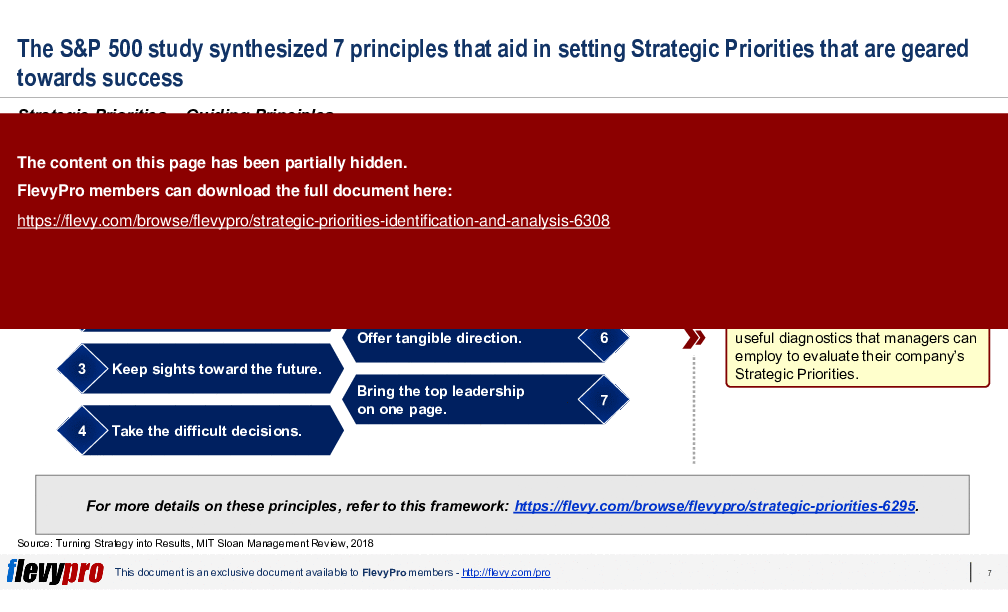
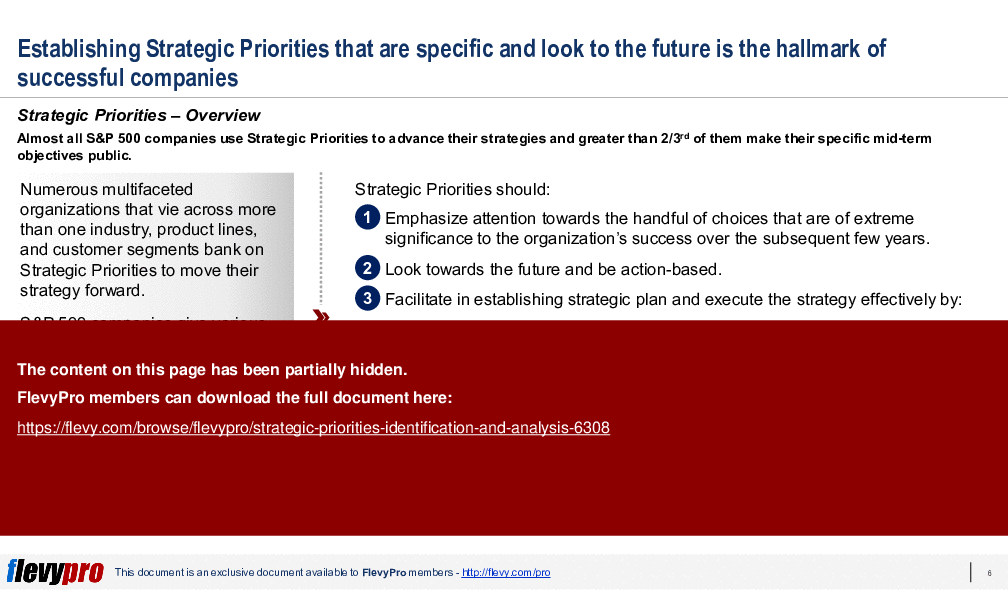
This PPT slide template outlines a framework from an S&P 500 study identifying 7 guiding principles for establishing strategic priorities. The first principle emphasizes limiting priorities to a manageable few to avoid dilution of focus. The second principle advocates for prioritizing intermediate-term actions that yield near-term results. The third principle encourages maintaining a forward-looking perspective. The fourth principle highlights the necessity of making tough decisions, often a barrier to effective prioritization. The fifth principle suggests addressing significant weaknesses that could hinder success. The sixth principle focuses on providing tangible direction to align teams and resources. Lastly, the seventh principle stresses the importance of unifying top leadership for cohesive strategy execution. Subsequent slides will explore these principles further and offer diagnostic tools for assessing strategic priorities.
This PPT slide template outlines strategic priorities classified under the dominant logic framework, detailing the percentage of companies focusing on each priority and the number of associated initiatives. Key categories include Portfolio, Superior Product, Cost, Innovation, Customer, Operational Excellence, Growth, Financial, M&A, Integration, Platform, Agility, and Execution. Cost management is a priority for 28% of companies, emphasizing operational efficiency and expense reduction. Innovation is crucial for 27% of firms, driving new products and technologies. The Customer category focuses on client retention for long-term success. Operational Excellence, Growth, and Financial categories aim to improve processes and achieve revenue targets. M&A and Integration highlight strategic partnerships, while Platform and Agility emphasize adaptability and ecosystem value creation.
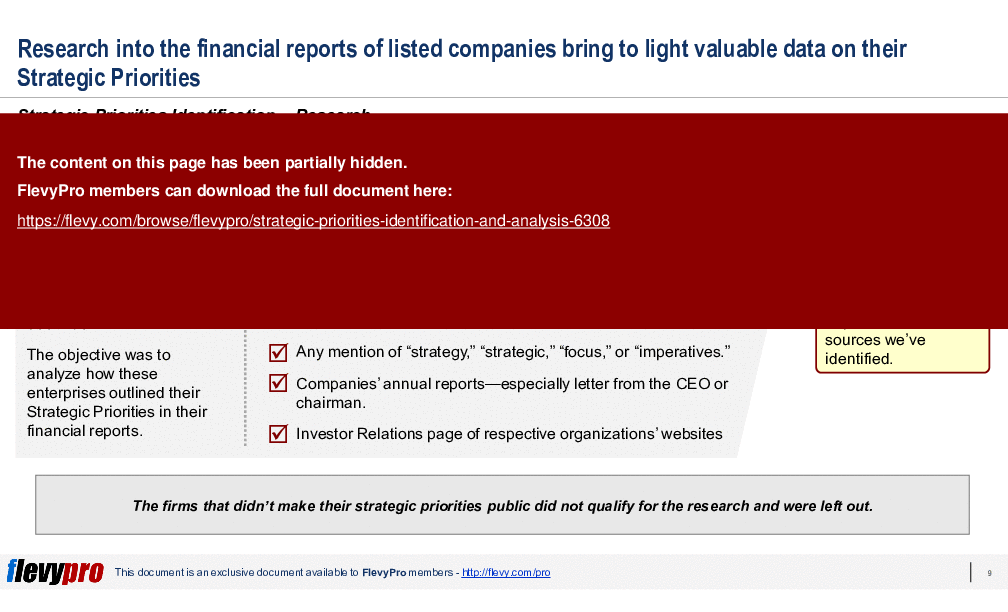
This PPT slide template summarizes findings from a 2014 MIT Sloan Management Review study analyzing how publicly listed companies articulate strategic priorities in financial reports. The research examined 494 S&P 500 organizations, focusing on Form 10-K reports, particularly Part 1, Item 1 and Part 2, Item 7, which detail business descriptions and operational strategies. Key terms such as “strategy,” “strategic,” “focus,” and “imperatives” were identified as indicators of corporate priorities. Additionally, CEO letters in annual reports and disclosures on Investor Relations pages were analyzed for strategic insights. Notably, some companies did not disclose their strategic priorities, indicating a gap in transparency that could impact stakeholder engagement. Understanding how strategic priorities are communicated is essential for corporate governance.
This PPT slide template outlines a methodology for identifying strategic priorities within organizations, focusing on terminology and ranking in public documents. The first filter, "Evidently Labelled," reveals that 96 organizations use "strategies," 35 refer to "strategic priorities," and 14 use "strategic initiatives," indicating diverse terminology. The second filter, "Ranked," highlights that 91% of 351 cases examined listed 6 or fewer strategic objectives, suggesting organizations prioritize a limited number of key goals for enhanced clarity and execution. Selecting fewer, impactful strategic priorities simplifies the strategic framework and aligns with best practices in financial reporting, improving communication of strategic intentions and overall effectiveness.
Source: Best Practices in Strategy Development PowerPoint Slides: Strategic Priorities Identification & Analysis PowerPoint (PPTX) Presentation Slide Deck, LearnPPT Consulting
This framework is developed by a team of former McKinsey and Big 4 consultants. The presentation follows the headline-body-bumper slide format used by global consulting firms.
For $10.00 more, you can download this document plus 2 more FlevyPro documents. That's just $13 each.
ABOUT FLEVYPRO
This document is part of the FlevyPro Library, a curated knowledge base of documents for our FlevyPro subscribers.
FlevyPro is a subscription service for on-demand business frameworks and analysis tools. FlevyPro subscribers receive access to an exclusive library of curated business documents—business framework primers, presentation templates, Lean Six Sigma tools, and more—among other exclusive benefits.
The average daily rate of a McKinsey consultant is $6,625 (not including expenses). The average price of a Flevy document is $65.
Trusted by over 10,000+ Client Organizations
Since 2012, we have provided business templates to over 10,000 businesses and organizations of all sizes, from startups and small businesses to the Fortune 100, in over 130 countries.
"As a consulting firm, we had been creating subject matter training materials for our people and found the excellent materials on Flevy, which saved us 100's of hours of re-creating what already exists on the Flevy materials we purchased."
– Michael Evans, Managing Director at Newport LLC
"I like your product. I'm frequently designing PowerPoint presentations for my company and your product has given me so many great ideas on the use of charts, layouts, tools, and frameworks. I really think the templates are a valuable asset to the job."
– Roberto Fuentes Martinez, Senior Executive Director at Technology Transformation Advisory
"FlevyPro has been a brilliant resource for me, as an independent growth consultant, to access a vast knowledge bank of presentations to support my work with clients. In terms of RoI, the value I received from the very first presentation I downloaded paid for my subscription many times over! The
quality of the decks available allows me to punch way above my weight – it's like having the resources of a Big 4 consultancy at your fingertips at a microscopic fraction of the overhead.
"
– Roderick Cameron, Founding Partner at SGFE Ltd
"I am extremely grateful for the proactiveness and eagerness to help and I would gladly recommend the Flevy team if you are looking for data and toolkits to help you work through business solutions."
– Trevor Booth, Partner, Fast Forward Consulting
"I have found Flevy to be an amazing resource and library of useful presentations for lean sigma, change management and so many other topics. This has reduced the time I need to spend on preparing for my performance consultation. The library is easily accessible and updates are regularly provided. A wealth of great information."
– Cynthia Howard RN, PhD, Executive Coach at Ei Leadership
"Flevy is now a part of my business routine. I visit Flevy at least 3 times each month.
Flevy has become my preferred learning source, because what it provides is practical, current, and useful in this era where the business world is being rewritten.
many challenges and there is the need to make the right decisions in a short time, with so much scattered information, we are fortunate to have Flevy. Flevy investigates, selects, and puts at our disposal the best of the best to help us be successful in our work.
"
– Omar Hernán Montes Parra, CEO at Quantum SFE
"Last Sunday morning, I was diligently working on an important presentation for a client and found myself in need of additional content and suitable templates for various types of graphics. Flevy.com proved to be a treasure trove for both content and design at a reasonable price, considering the time I
saved. I encountered a download issue during the ordering process. However, a quick email to Flevy's support team, even on a Sunday (!!!), resulted in assistance within less than an hour, allowing me to download the content I needed. Fantastic job, Flevy! I give 5 stars for both content/price and customer service. Thank you!
"
– M. E., Chief Commercial Officer, International Logistics Service Provider
"As a consultant requiring up to date and professional material that will be of value and use to my clients, I find Flevy a very reliable resource.
The variety and quality of material available through Flevy offers a very useful and commanding source for information. Using Flevy saves me time, enhances my expertise and ends up being a good decision."


 Click main image to view in full screen. Unlock all 12 preview images: