
Strategic Group Analysis (SGA)   28-slide PPT PowerPoint presentation slide deck (PPTX)
$29.00

Strategic Group Analysis (SGA) (28-slide PPT PowerPoint presentation slide deck (PPTX)) Preview Image
Log in to unlock full preview.
Strategic Group Analysis (SGA) (28-slide PPT PowerPoint presentation slide deck (PPTX)) Preview Image
Arrow   Click main image to view in full screen.

Strategic Group Analysis (SGA) (PowerPoint PPTX Slide Deck)

PowerPoint (PPTX) 28 Slides FlevyPro Document

$29.00
FlevyPro price: FREE (included in subscription)
This framework is developed by a team of former McKinsey and Big 4 consultants. The presentation follows the headline-body-bumper slide format used by global consulting firms.
Add to Cart


Immediate download
Free lifetime updates

COMPETITIVE ANALYSIS PPT DESCRIPTION

Editor Summary Strategic Group Analysis (SGA) is a 28-slide PowerPoint (PPTX) that delivers a five-step SGA process for competitive landscape assessment. Read more

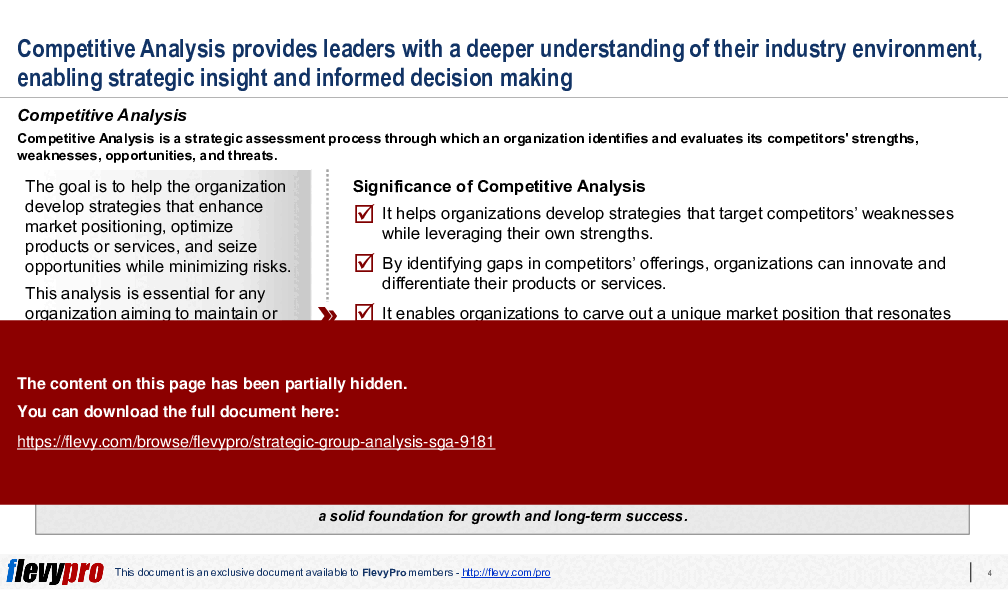
Competitive Analysis is a strategic assessment process through which an organization identifies and evaluates the strengths, weaknesses, opportunities, and threats of its competitors. The objective is to help the organization develop strategies that enhance its market position, optimize its products or services, and capitalize on opportunities while minimizing risks.

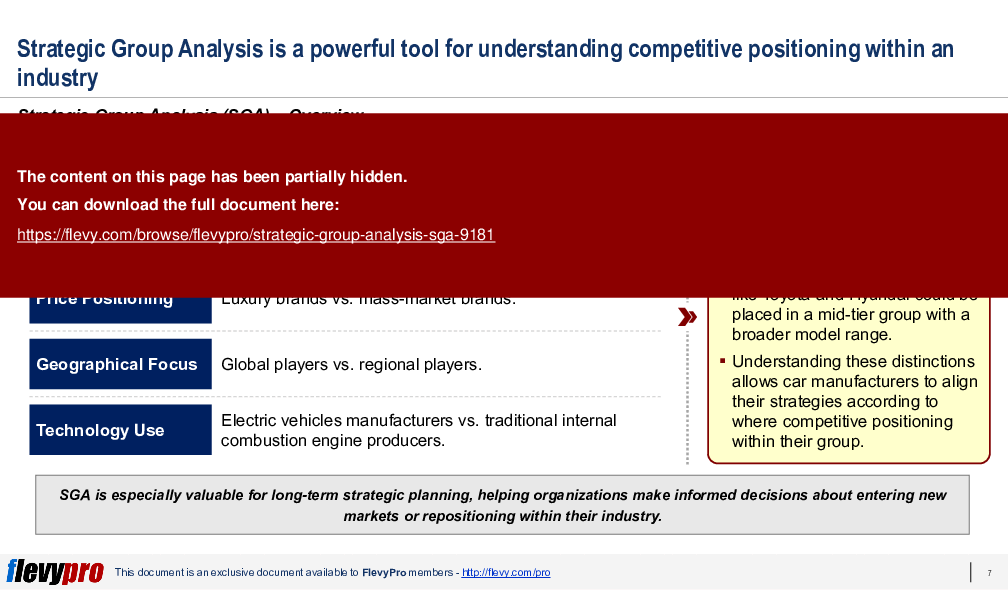
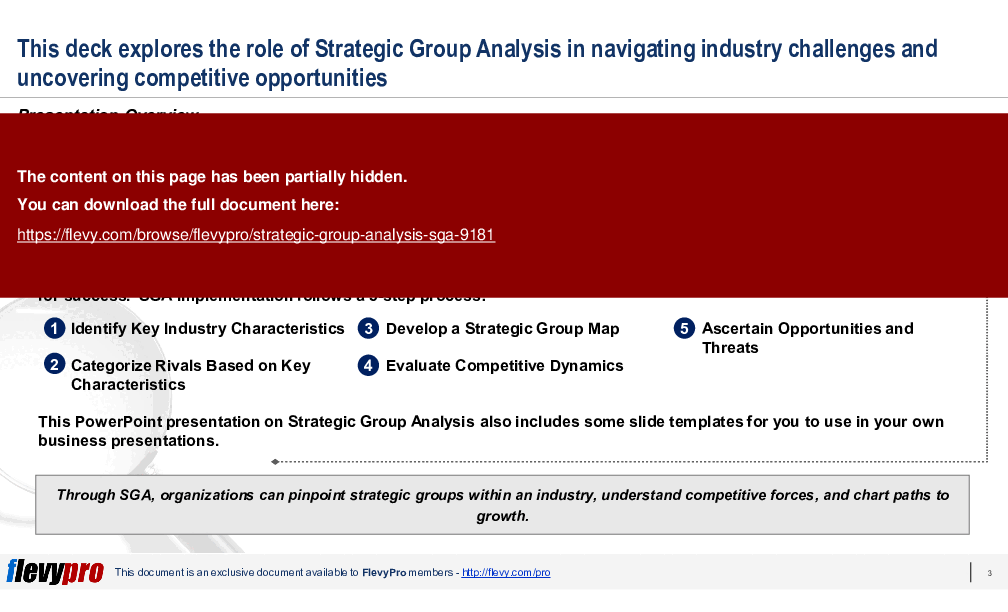
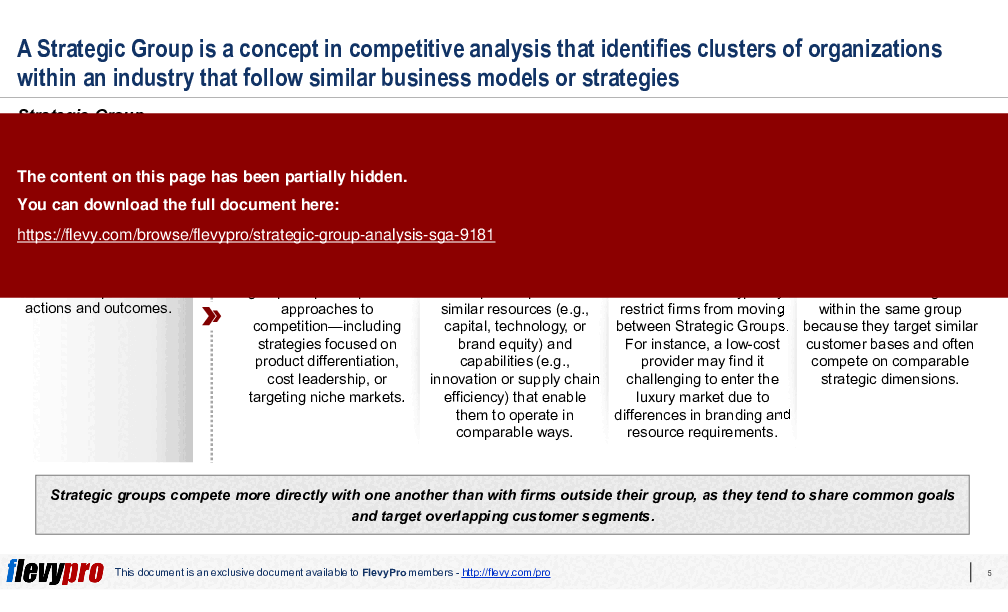
This PowerPoint deck delves into the concept of Strategic Group Analysis (SGA), a powerful strategic management tool used to identify and evaluate clusters of organizations within an industry that pursue similar business models or strategies.

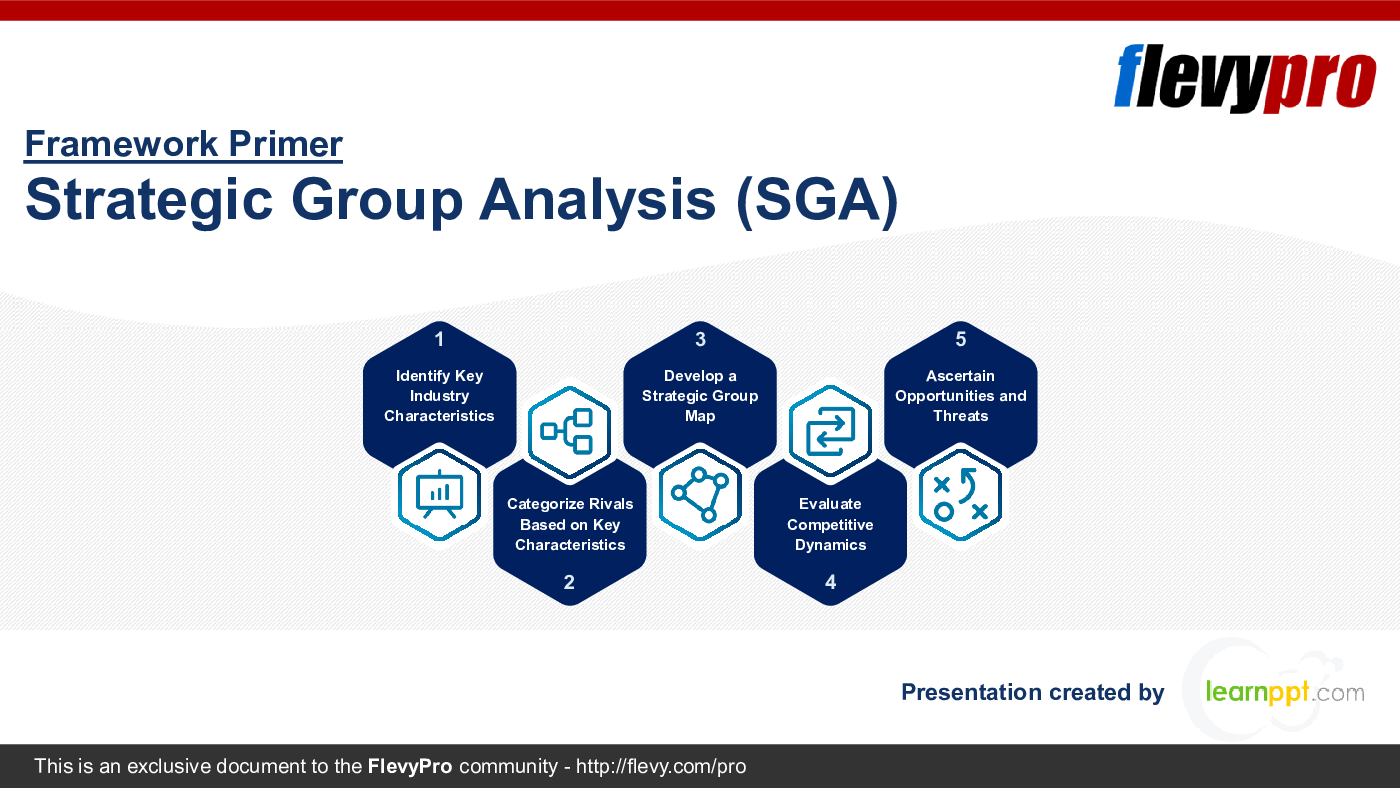
By adopting the SGA approach, organizations can uncover essential market insights, assess competitive forces, and plan for success. SGA implementation follows a 5-step process:

1. Identify Key Industry Characteristics – The foundation of SGA lies in recognizing the critical characteristics that differentiate firms within an industry. These characteristics highlight the elements by which organizations compete and distinguish themselves, allowing them to be categorized into strategic groups.

2. Categorize Rivals Based on Key Characteristics – This step involves constructing a classification system to highlight similarities and differences among organizations.

3. Develop a Strategic Group Map – After rivals are categorized, they can be placed on a strategic group map. This map visually represents the relative positioning of organizations, using chosen dimensions as the axes.

4. Evaluate Competitive Dynamics – This stage focuses on understanding how different rivals and strategic groups interact within the industry. This analysis aims to uncover the nature of competition within individual groups and between various groups.

5. Ascertain Opportunities and Threats – The last step of SGA involves leveraging insights from the strategic group map to identify areas for competitive advantage and prepare for challenges that may impact an organization's position.

Each of these steps is discussed in detail. Through SGA, organizations can pinpoint strategic groups within an industry, understand competitive forces, and chart paths to growth.

This PowerPoint presentation on Strategic Group Analysis also includes some slide templates for you to use in your own business presentations.

Got a question about this document? Email us at flevypro@flevy.com.

MARCUS OVERVIEW

This synopsis was written by Marcus [?] based on the analysis of the full 28-slide presentation.


Executive Summary
The Strategic Group Analysis (SGA) presentation is a comprehensive framework designed to assist organizations in navigating competitive landscapes and identifying strategic opportunities. Developed by experienced consultants, this PowerPoint deck outlines a structured five-step process for conducting SGA, enabling organizations to categorize rivals, evaluate competitive dynamics, and pinpoint opportunities and threats. By leveraging SGA, executives can enhance their strategic planning, optimize resource allocation, and make informed decisions that align with market positioning.

Who This Is For and When to Use
•  Corporate strategists focused on competitive analysis and market positioning
•  Business development teams seeking to identify growth opportunities
•  Consultants advising clients on strategic planning and market entry
•  Product managers aiming to understand competitive dynamics within their industry

Best-fit moments to use this deck:
•  During strategic planning sessions to assess competitive landscapes
•  When entering new markets or repositioning within existing ones
•  In workshops aimed at identifying strategic gaps and opportunities

Learning Objectives
•  Define the concept and importance of Strategic Group Analysis in competitive strategy
•  Identify key industry characteristics that differentiate firms within a sector
•  Categorize rivals based on strategic dimensions such as pricing and market focus
•  Develop a strategic group map to visualize competitive positioning
•  Evaluate competitive dynamics and assess intra- and inter-group competition
•  Ascertain opportunities and threats within the industry landscape

Table of Contents
•  Overview (page 3)
•  Strategic Group Analysis (SGA) (page 4)
•  SGA Implementation (page 10)
•  Slide Design Structure & Templates (page 18)

Primary Topics Covered
•  Overview of SGA - An introduction to Strategic Group Analysis, emphasizing its role in competitive strategy and market positioning.
•  Key Industry Characteristics - Identification of critical elements that differentiate firms within an industry, such as pricing strategy and distribution channels.
•  Categorization of Rivals - A systematic approach to grouping competitors based on strategic dimensions, facilitating clearer competitive analysis.
•  Strategic Group Mapping - Visual representation of competitive positioning, allowing organizations to identify clusters of similar firms.
•  Evaluation of Competitive Dynamics - Analysis of intra- and inter-group competition, mobility barriers, and market shifts that affect strategic positioning.
•  Opportunities and Threats Assessment - Identification of market gaps and trends that can inform strategic decisions and mitigate risks.

Deliverables, Templates, and Tools
•  Strategic Group Map template for visualizing competitive positioning
•  Categorization framework for classifying rivals based on key characteristics
•  Evaluation checklist for assessing competitive dynamics within strategic groups
•  Opportunity and threat assessment template to guide strategic planning
•  Slide design templates following the Headline-Body-Bumper format for effective presentations

Slide Highlights
•  Overview slide detailing the SGA process and its significance
•  Strategic Group Map example illustrating competitive positioning
•  Evaluation framework for assessing competitive dynamics within and between groups
•  Opportunity and threat identification slide to guide strategic decision-making
•  Template slides for categorizing rivals and developing strategic group maps

Potential Workshop Agenda
Introduction to SGA (30 minutes)
•  Overview of Strategic Group Analysis and its importance
•  Discussion on key industry characteristics

SGA Implementation Steps (90 minutes)
•  Identify key industry characteristics and categorize rivals
•  Develop a strategic group map and evaluate competitive dynamics

Opportunities and Threats Assessment (60 minutes)
•  Identify market gaps and assess potential threats
•  Group discussion on strategic implications and next steps

Customization Guidance
•  Tailor the strategic group map dimensions to reflect industry-specific characteristics
•  Adjust categorization frameworks to align with the organization’s competitive landscape
•  Incorporate company-specific data and metrics into the opportunity and threat assessment templates

Secondary Topics Covered
•  Competitive analysis methodologies and frameworks
•  Market segmentation strategies and their implications
•  Trends in industry dynamics and their impact on strategic positioning
•  Role of technology in shaping competitive landscapes

Topic FAQ

What are the core steps in conducting a Strategic Group Analysis?

Strategic Group Analysis follows a five-step process: identify key industry characteristics, categorize rivals by those characteristics, develop a Strategic Group Map to visualize positioning, evaluate competitive dynamics among and between groups, and ascertain opportunities and threats. These steps are presented as a five-step process.

How do I build a Strategic Group Map that shows competitor clusters?

Build a Strategic Group Map by selecting 2 or more industry characteristics (examples include pricing and distribution channels), plotting firms according to those dimensions, and identifying clusters of similar strategies. The map can be produced using the Strategic Group Map template included in Flevy's Strategic Group Analysis (SGA).

What factors should I analyze to assess competitive dynamics within groups?

Assess competitive dynamics by examining intra-group competition, inter-group competition, mobility barriers that prevent shifts between groups, and market shifts affecting positioning. These dynamics are evaluated using an analysis framework and an evaluation checklist provided in the SGA materials.

What elements should I look for when choosing an SGA template or deck?

Look for a clear five-step implementation guide, a Strategic Group Map template, a rival categorization framework, an evaluation checklist for competitive dynamics, an opportunity/threat assessment template, and slide design templates for presentation-ready output. Flevy's Strategic Group Analysis (SGA) includes these deliverables.

How much workshop time is typically needed to run an SGA session with stakeholders?

The sample workshop agenda in the deck totals about 3 hours: a 30-minute introduction to SGA, a 90-minute implementation session to identify characteristics, categorize rivals, and map groups, and a 60-minute opportunities and threats assessment and discussion.

If my company is entering a new market, how can SGA inform our strategy?

SGA helps by identifying relevant industry characteristics, categorizing incumbent rivals, and plotting their positions to reveal crowded clusters and potential gaps. Insights guide resource allocation and entry positioning using the Strategic Group Map and opportunity assessment templates described in the methodology.

How can product managers use SGA to benchmark competitor positioning?

Product managers can identify the industry characteristics that matter for their product, classify competitors against those dimensions, and plot relative positions to compare price, scope, or distribution focus. The categorization framework and Strategic Group Map template support this benchmarking process.

Are template decks useful compared with building SGA materials from scratch?

A ready-made deck supplies predefined templates (Strategic Group Map, categorization framework, evaluation checklist), slide design formats, and a suggested three-hour workshop agenda, allowing teams to apply the five-step SGA process without creating all materials from the ground up.

Document FAQ
These are questions addressed within this presentation.

What is Strategic Group Analysis?
Strategic Group Analysis is a framework used to identify and evaluate clusters of organizations within an industry that pursue similar business models or strategies.

How can SGA benefit my organization?
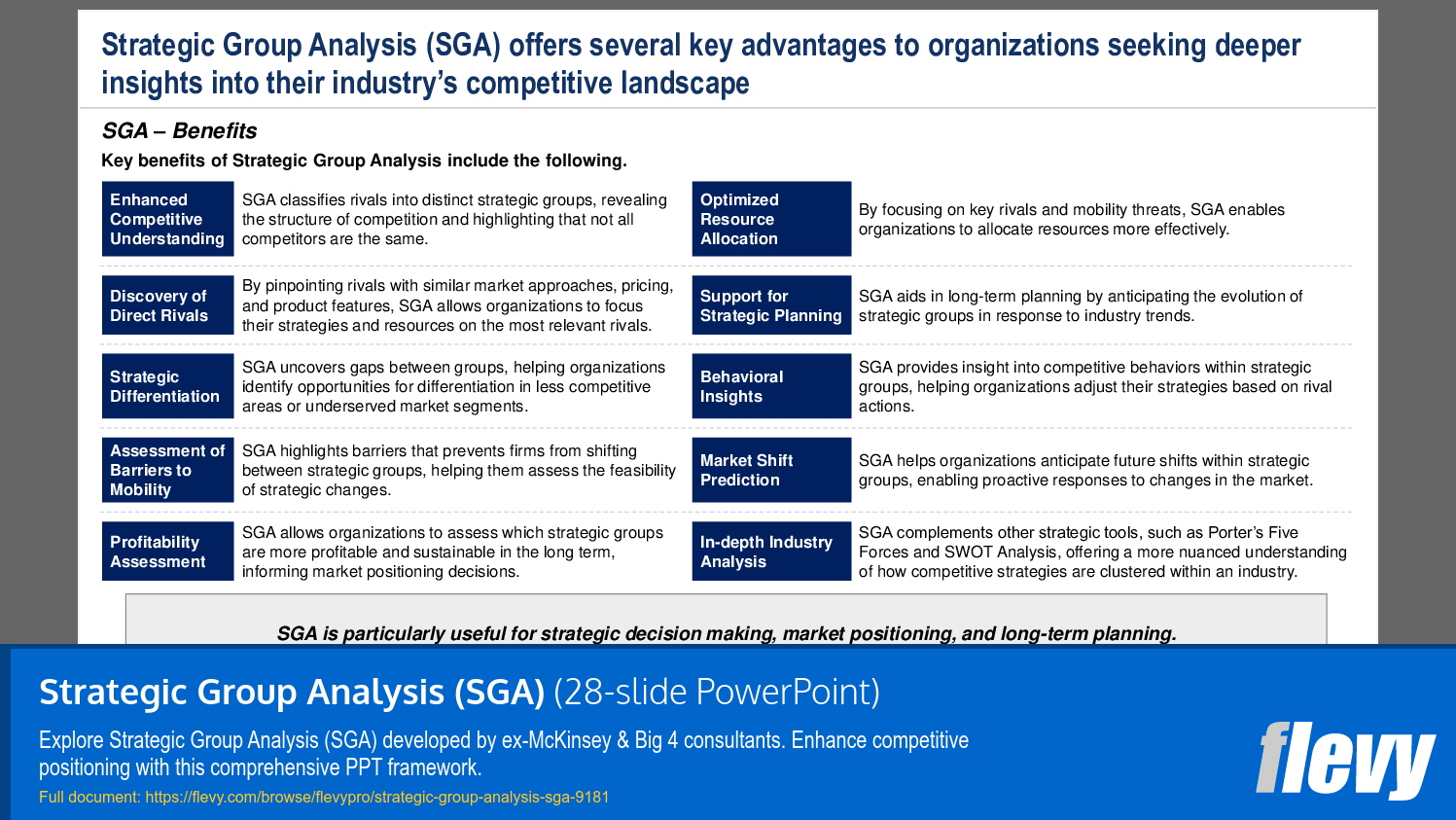
SGA helps organizations understand competitive dynamics, optimize resource allocation, and identify strategic opportunities and threats within their market.

What are the key steps in implementing SGA?
The key steps include identifying key industry characteristics, categorizing rivals, developing a strategic group map, evaluating competitive dynamics, and ascertaining opportunities and threats.

Can SGA be applied to any industry?
Yes, SGA is a versatile tool that can be applied across various industries to analyze competitive positioning and inform strategic decisions.

How do I categorize rivals effectively?
Categorization should be based on key strategic dimensions relevant to your industry, such as pricing, quality, and target segments.

What is a Strategic Group Map?
A Strategic Group Map visually represents the positioning of organizations within an industry based on selected strategic dimensions, helping to identify clusters of similar firms.

How can I assess competitive dynamics?
Competitive dynamics can be assessed by analyzing intra-group competition, inter-group competition, mobility barriers, and market shifts.

What should I do with the insights gained from SGA?
Insights from SGA should inform strategic planning, resource allocation, and decision-making processes to enhance competitive positioning.

Glossary
•  Strategic Group Analysis (SGA) - A framework for analyzing clusters of organizations within an industry.
•  Competitive Dynamics - The interactions and competitive behaviors among firms within and across strategic groups.
•  Strategic Group Map - A visual representation of the positioning of firms based on selected strategic dimensions.
•  Mobility Barriers - Factors that prevent firms from moving between strategic groups.
•  Market Shifts - Changes in consumer preferences or industry trends that affect competitive dynamics.
•  Opportunity Assessment - The process of identifying potential areas for growth within the market.
•  Threat Assessment - The evaluation of potential risks that could impact an organization’s competitive position.
•  Intra-Group Competition - Competition among firms within the same strategic group.
•  Inter-Group Competition - Competition between firms in different strategic groups.
•  Pricing Strategy - The approach a firm takes to set the prices of its products or services.
•  Distribution Channels - The methods used to deliver products to customers.
•  Target Segments - Specific customer demographics that a firm aims to serve.
•  Geographical Scope - The geographic area in which a firm operates.
•  Vertical Integration - The degree to which a firm controls its supply chain.
•  Innovation - The process of developing new products or improving existing ones.
•  Competitive Density - The level of competition within a market segment.
•  Entry Barriers - Obstacles that make it difficult for new firms to enter a market.
•  Substitutes - Alternative products or services that can fulfill the same need as a firm’s offerings.
•  Environmental Shifts - Changes in the external environment that can impact business operations.

COMPETITIVE ANALYSIS PPT SLIDES

Categorizing Rivals: Strategic Group Analysis Framework

Evaluating Competitive Dynamics in Strategic Group Analysis

Source: Best Practices in Competitive Analysis, Industry Analysis PowerPoint Slides: Strategic Group Analysis (SGA) PowerPoint (PPTX) Presentation Slide Deck, LearnPPT Consulting


$29.00
FlevyPro price: FREE (included in subscription)
This framework is developed by a team of former McKinsey and Big 4 consultants. The presentation follows the headline-body-bumper slide format used by global consulting firms.
Add to Cart
  

Did you need more documents?

Consider a FlevyPro subscription from $39/month. View plans here.

For $10.00 more, you can download this document plus 2 more FlevyPro documents. That's just $13 each.

ABOUT FLEVYPRO

This document is part of the FlevyPro Library, a curated knowledge base of documents for our FlevyPro subscribers.

FlevyPro is a subscription service for on-demand business frameworks and analysis tools. FlevyPro subscribers receive access to an exclusive library of curated business documents—business framework primers, presentation templates, Lean Six Sigma tools, and more—among other exclusive benefits.

Click here to learn more about FlevyPro and its benefits.

Did you know?
The average daily rate of a McKinsey consultant is $6,625 (not including expenses). The average price of a Flevy document is $65.


Trusted by over 10,000+ Client Organizations
Since 2012, we have provided business templates to over 10,000 businesses and organizations of all sizes, from startups and small businesses to the Fortune 100, in over 130 countries.
AT&T GE Cisco Intel IBM Coke Dell Toyota HP Nike Samsung Microsoft Astrazeneca JP Morgan KPMG Walgreens Walmart 3M Kaiser Oracle SAP Google E&Y Volvo Bosch Merck Fedex Shell Amgen Eli Lilly Roche AIG Abbott Amazon PwC T-Mobile Broadcom Bayer Pearson Titleist ConEd Pfizer NTT Data Schwab


Read Customer Testimonials

 
"I have found Flevy to be an amazing resource and library of useful presentations for lean sigma, change management and so many other topics. This has reduced the time I need to spend on preparing for my performance consultation. The library is easily accessible and updates are regularly provided. A wealth of great information."

– Cynthia Howard RN, PhD, Executive Coach at Ei Leadership
 
"If you are looking for great resources to save time with your business presentations, Flevy is truly a value-added resource. Flevy has done all the work for you and we will continue to utilize Flevy as a source to extract up-to-date information and data for our virtual and onsite presentations!"

– Debbi Saffo, President at The NiKhar Group
 
"As a small business owner, the resource material available from FlevyPro has proven to be invaluable. The ability to search for material on demand based our project events and client requirements was great for me and proved very beneficial to my clients. Importantly, being able to easily edit and tailor "

– Michael Duff, Managing Director at Change Strategy (UK)
 
"As a consulting firm, we had been creating subject matter training materials for our people and found the excellent materials on Flevy, which saved us 100's of hours of re-creating what already exists on the Flevy materials we purchased."

– Michael Evans, Managing Director at Newport LLC
 
"Flevy is now a part of my business routine. I visit Flevy at least 3 times each month.

Flevy has become my preferred learning source, because what it provides is practical, current, and useful in this era where the business world is being rewritten.

In today's environment where there are so "

– Omar Hernán Montes Parra, CEO at Quantum SFE
 
"Flevy.com has proven to be an invaluable resource library to our Independent Management Consultancy, supporting and enabling us to better serve our enterprise clients.

The value derived from our [FlevyPro] subscription in terms of the business it has helped to gain far exceeds the investment made, making a subscription a no-brainer for any growing consultancy – or in-house strategy team."

– Dean Carlton, Chief Transformation Officer, Global Village Transformations Pty Ltd.
 
"I like your product. I'm frequently designing PowerPoint presentations for my company and your product has given me so many great ideas on the use of charts, layouts, tools, and frameworks. I really think the templates are a valuable asset to the job."

– Roberto Fuentes Martinez, Senior Executive Director at Technology Transformation Advisory
 
"As an Independent Management Consultant, I find Flevy to add great value as a source of best practices, templates and information on new trends. Flevy has matured and the quality and quantity of the library is excellent. Lastly the price charged is reasonable, creating a win-win value for "

– Jim Schoen, Principal at FRC Group


Customers Also Bought These Documents


Customers Also Like These Documents

Explore Templates on Related Management Topics


Your Recently Viewed Documents
Download our FREE Strategy & Transformation Framework Templates

Download our free compilation of 50+ Strategy & Transformation slides and templates. Frameworks include McKinsey 7-S, Balanced Scorecard, Disruptive Innovation, BCG Curve, and many more.