
This framework is developed by a team of former McKinsey and Big 4 consultants. The presentation follows the headline-body-bumper slide format used by global consulting firms.
ODMM PPTX: Learn the Organizational Design Maturity Model to assess and improve your org structure. Download this detailed PPT template now. Organizational Design Maturity Model (ODMM) is a 33-slide PPT PowerPoint presentation slide deck (PPTX) available for immediate download upon purchase.
Assessing the maturity of an organization's design is crucial, as it directly impacts the organization's effectiveness and efficiency in achieving its goals. A mature Organizational Design ensures that the structure, processes, and roles are optimally aligned with the strategic objectives, facilitating better decision-making, communication, and execution. It also helps in identifying areas that require improvement or adaptation, especially in a rapidly changing business environment.
This Organizational Design assessment allows management to lead a more agile and responsive organization, capable of sustaining Growth and Competitive Advantage. To conduct this, we can leverage the Organizational Design Maturity Model (ODMM), which offers a structured lens through which organizations can introspectively evaluate their processes, practices, and behaviors.
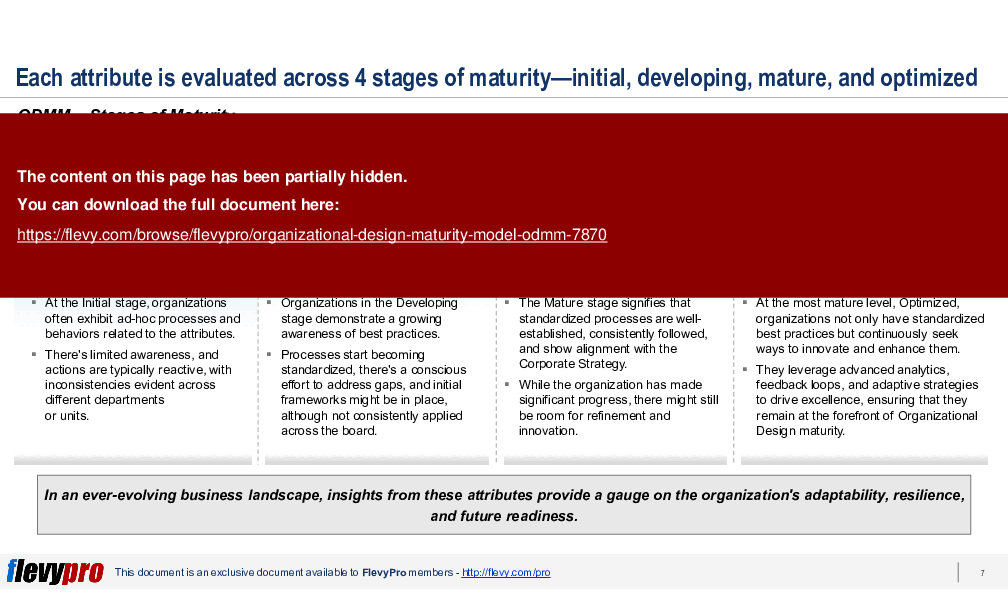
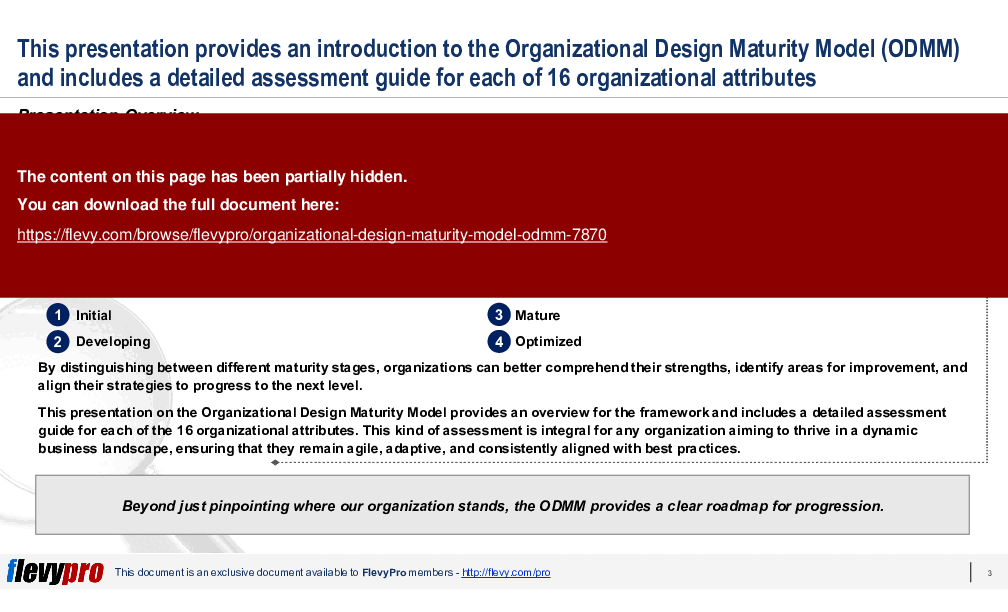
The ODMM evaluates an organization across 16 organizational attributes on a 4-stage maturity scale:
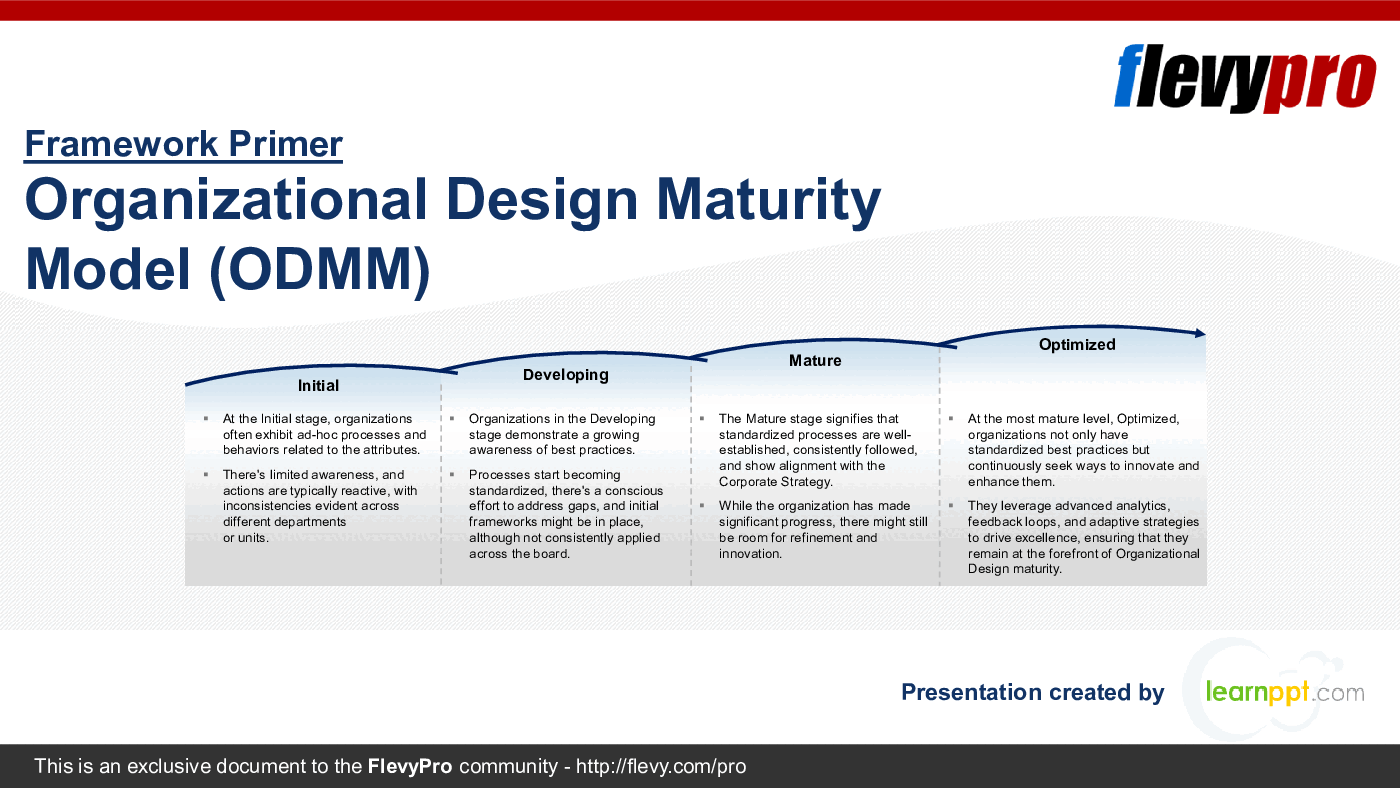
1. Initial – At the Initial stage, organizations often exhibit ad-hoc processes and behaviors related to the attributes.
2. Developing – Organizations in the Developing stage demonstrate a growing awareness of best practices.
3. Mature – The Mature stage signifies that standardized processes are well-established, consistently followed, and show alignment with the Corporate Strategy.
4. Optimized – At the most mature level, Optimized, organizations not only have standardized best practices but continuously seek ways to innovate and enhance them.
By distinguishing between different maturity stages, organizations can better comprehend their strengths, identify areas for improvement, and align their strategies to progress to the next level.
This PowerPoint presentation on the Organizational Design Maturity Model provides an overview for the framework and includes a detailed assessment guide for each of the 16 organizational attributes. Beyond just pinpointing where our organization stands, the ODMM also provides a clear roadmap for progression.
This kind of assessment is integral for any organization aiming to thrive in a dynamic business landscape, ensuring that they remain agile, adaptive, and consistently aligned with best practices.
This presentation is an excerpt from the complete Organizational Design Framework presentation, which dissects each phase in further depth, as well as covers more topics and frameworks.
The Organizational Design Maturity Model (ODMM) evaluates attributes across 4 stages: Initial, Developing, Mature, and Optimized. In the Initial stage, organizations operate with ad-hoc processes and lack awareness of best practices, leading to inconsistencies. The Developing stage sees a recognition of best practices, with processes beginning to standardize and initial frameworks established, though application remains inconsistent. The Mature stage indicates advanced capability with standardized processes aligned with Corporate Strategy, while still allowing for further refinement. The Optimized stage represents the pinnacle of maturity, where organizations maintain best practices and actively pursue continuous improvement through advanced analytics and feedback mechanisms. The ODMM serves as a diagnostic tool for assessing maturity levels and identifying growth areas, emphasizing the need for evolving processes to enhance resilience in changing business environments.
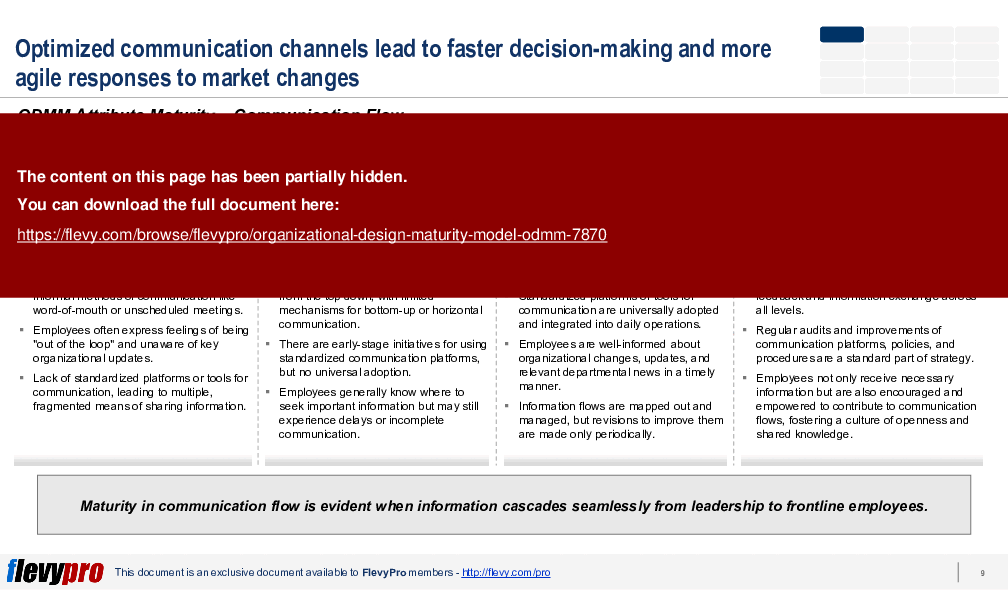
The maturity levels of communication flow within an organization are categorized into 4 stages: Initial, Developing, Mature, and Optimized. In the Initial stage, communication channels are poorly defined, leading to misunderstandings and reliance on informal methods, resulting in fragmented information sharing. The Developing stage introduces some formal channels,, but implementation is inconsistent, with top-down information dissemination and limited feedback mechanisms. The Mature stage establishes defined communication channels for both top-down and bottom-up interactions, with standardized tools widely adopted, though improvements occur only periodically. In the Optimized stage, communication channels are efficient, featuring real-time feedback mechanisms and regular audits for continuous improvement, fostering a culture of active employee contribution and agile decision-making.
The Organizational Design Maturity Model (ODMM) outlines 4 stages: Initial, Developing, Mature, and Optimized, focusing on role definitions. In the Initial stage, poorly defined roles lead to confusion, inefficiencies, and conflicts due to unclear responsibilities and lack of formal job descriptions. The Developing stage sees basic job titles emerge,, but descriptions remain inconsistent, causing workload imbalances. The Mature stage features clearly articulated roles, with periodic reviews ensuring alignment with organizational objectives, though some overlaps persist. In the Optimized stage, roles are precisely defined, with dynamic job descriptions that align with strategic goals and a continuous feedback loop, fostering collaboration and enhancing employee satisfaction and accountability. This progression highlights the critical role of defined job roles in organizational effectiveness and employee engagement.
This PPT slide presents a framework for assessing Talent Management maturity across 4 stages: Initial, Developing, Mature, and Optimized. In the Initial stage, Talent Management is informal, lacking defined processes for recruitment, development, and retention, resulting in inefficiencies. The Developing stage sees basic practices emerge, with partial alignment to organizational objectives and inconsistent career development efforts. The Mature stage marks formalized Talent Management integrated into organizational strategy, with comprehensive development programs and strengthened retention strategies. The Optimized stage recognizes Talent Management as a strategic function, prioritizing continuous learning and data-driven approaches to anticipate workforce needs and enhance employee engagement. This framework emphasizes strategic alignment and structured development initiatives for effective Talent Management.
This PPT slide outlines the maturity levels of Employee Engagement, categorized into 4 phases: Initial, Developing, Mature, and Optimized. In the Initial phase, employee engagement is neglected, with no tracking mechanisms, leading to high turnover and absenteeism. The Developing phase recognizes the importance of engagement, though it remains unmeasured and inconsistently managed, with occasional surveys lacking thorough analysis. In the Mature phase, engagement is regularly discussed at leadership meetings, with established feedback mechanisms and specific KPIs tracked. The Optimized phase integrates employee engagement into the Performance Management system, utilizing real-time analytics for trend monitoring and emphasizing personalized development and mentorship. This progression illustrates how organizations can enhance engagement strategies to improve overall effectiveness and employee satisfaction.
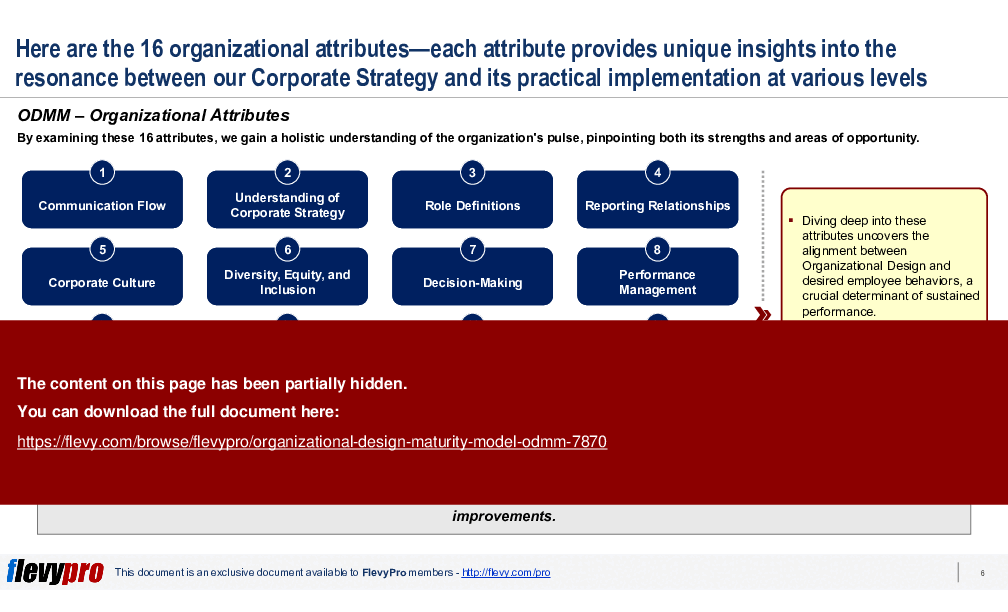
The Organizational Design Maturity Model (ODMM) outlines 16 key organizational attributes that assess the alignment between corporate strategy and implementation. Attributes such as Communication Flow, Corporate Culture, and Decision-Making provide insights into internal dynamics, revealing strengths and areas for improvement. The grid format facilitates analysis of how these attributes interact and contribute to organizational effectiveness. A thorough examination uncovers insights into the alignment of organizational design with desired employee behaviors, essential for sustained performance. These attributes reflect operational efficiency and collaboration capabilities, enabling organizations to identify actionable improvements that enhance communication and overall performance.
Source: Best Practices in Maturity Model, Organizational Design PowerPoint Slides: Organizational Design Maturity Model (ODMM) PowerPoint (PPTX) Presentation Slide Deck, LearnPPT Consulting
This framework is developed by a team of former McKinsey and Big 4 consultants. The presentation follows the headline-body-bumper slide format used by global consulting firms.
For $10.00 more, you can download this document plus 2 more FlevyPro documents. That's just $13 each.
ABOUT FLEVYPRO
This document is part of the FlevyPro Library, a curated knowledge base of documents for our FlevyPro subscribers.

FlevyPro is a subscription service for on-demand business frameworks and analysis tools. FlevyPro subscribers receive access to an exclusive library of curated business documents—business framework primers, presentation templates, Lean Six Sigma tools, and more—among other exclusive benefits.
The average daily rate of a McKinsey consultant is $6,625 (not including expenses). The average price of a Flevy document is $65.
Trusted by over 10,000+ Client Organizations
Since 2012, we have provided business templates to over 10,000 businesses and organizations of all sizes, from startups and small businesses to the Fortune 100, in over 130 countries.
"As a niche strategic consulting firm, Flevy and FlevyPro frameworks and documents are an on-going reference to help us structure our findings and recommendations to our clients as well as improve their clarity, strength, and visual power. For us, it is an invaluable resource to increase our impact and value."
– David Coloma, Consulting Area Manager at Cynertia Consulting
"One of the great discoveries that I have made for my business is the Flevy library of training materials.
As a Lean Transformation Expert, I am always making presentations to clients on a variety of topics: Training, Transformation, Total Productive Maintenance, Culture, Coaching, Tools, Leadership Behavior, etc. Flevy
It is well worth the money to purchase these presentations. Sure, I have the knowledge and information to make my point. It is another thing to create a presentation that captures what I want to say. Flevy has saved me countless hours of preparation time that is much better spent with implementation that will actually save money for my clients.
"
– Ed Kemmerling, Senior Lean Transformation Expert at PMG
"As a consulting firm, we had been creating subject matter training materials for our people and found the excellent materials on Flevy, which saved us 100's of hours of re-creating what already exists on the Flevy materials we purchased."
– Michael Evans, Managing Director at Newport LLC
"As a small business owner, the resource material available from FlevyPro has proven to be invaluable. The ability to search for material on demand based our project events and client requirements was great for me and proved very beneficial to my clients. Importantly, being able to easily edit and tailor
the material for specific purposes helped us to make presentations, knowledge sharing, and toolkit development, which formed part of the overall program collateral. While FlevyPro contains resource material that any consultancy, project or delivery firm must have, it is an essential part of a small firm or independent consultant's toolbox.
"
– Michael Duff, Managing Director at Change Strategy (UK)
"[Flevy] produces some great work that has been/continues to be of immense help not only to myself, but as I seek to provide professional services to my clients, it gives me a large "tool box" of resources that are critical to provide them with the quality of service and outcomes they are expecting."
– Royston Knowles, Executive with 50+ Years of Board Level Experience
"As an Independent Management Consultant, I find Flevy to add great value as a source of best practices, templates and information on new trends. Flevy has matured and the quality and quantity of the library is excellent. Lastly the price charged is reasonable, creating a win-win value for
the customer, Flevy and the various authors. This is truly a service that benefits the consulting industry and associated clients. Thanks for providing this service.
"
– Jim Schoen, Principal at FRC Group
"As a young consulting firm, requests for input from clients vary and it's sometimes impossible to provide expert solutions across a broad spectrum of requirements. That was before I discovered Flevy.com.
Through subscription to this invaluable site of a plethora of topics that are key and crucial to consulting, I
have been able to exceed expectations and deliver quality advice and solutions to my clients. The quality and expertise of the authors are exemplary and gives me great confidence to use as part of my service offerings.
I highly recommend this company for any consultant wanting to apply international best practice standards in their service offerings.
"
– Nishi Singh, Strategist and MD at NSP Consultants
"Flevy.com has proven to be an invaluable resource library to our Independent Management Consultancy, supporting and enabling us to better serve our enterprise clients.
The value derived from our [FlevyPro] subscription in terms of the business it has helped to gain far exceeds the investment made, making a subscription a no-brainer for any growing consultancy – or in-house strategy team."
– Dean Carlton, Chief Transformation Officer, Global Village Transformations Pty Ltd.
Download our free compilation of 50+ slides and templates on Organizational Design, Change Management, and Corporate Culture. Methodologies include ADKAR, Burke-Litwin Change Model, McKinsey 7-S, Competing Values Framework, etc.