


Megaprojects have a significant impact on a country's economic activity, productivity, social harmony, and environment. Most (estimates put it at 90%) Megaprojects end up being over time and over budget. Such overruns naturally have an impact not only on the finances of a country but other aspects as well.
Reason for such overruns consist of technical challenges, alterations in design and operational requisites, escalation in costs, disagreements over responsibility, and new regulations. The more complex a project, the difficult it is to foresee the difficulties, changing conditions, and unanticipated opportunities that will be encountered.
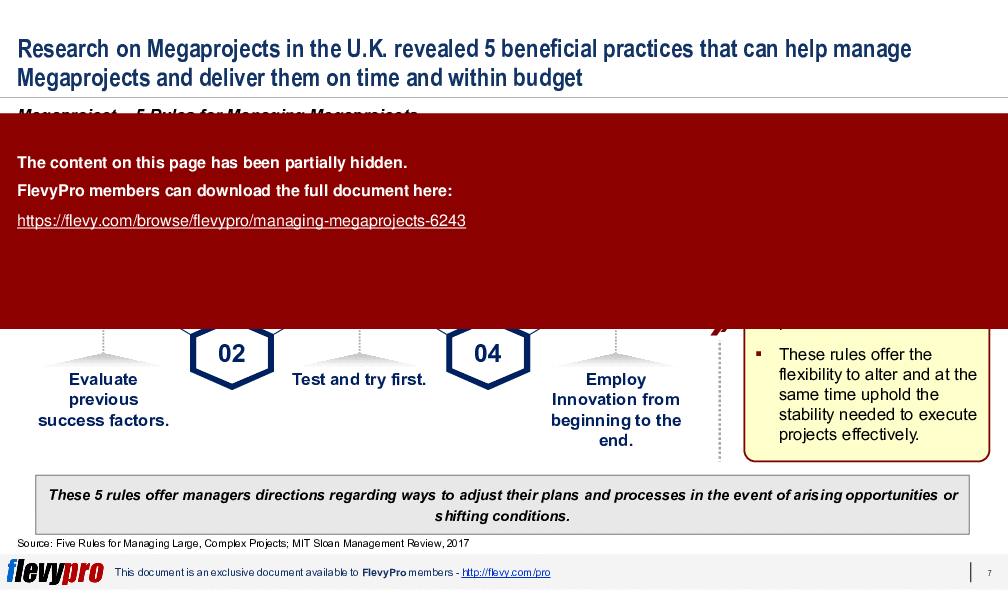
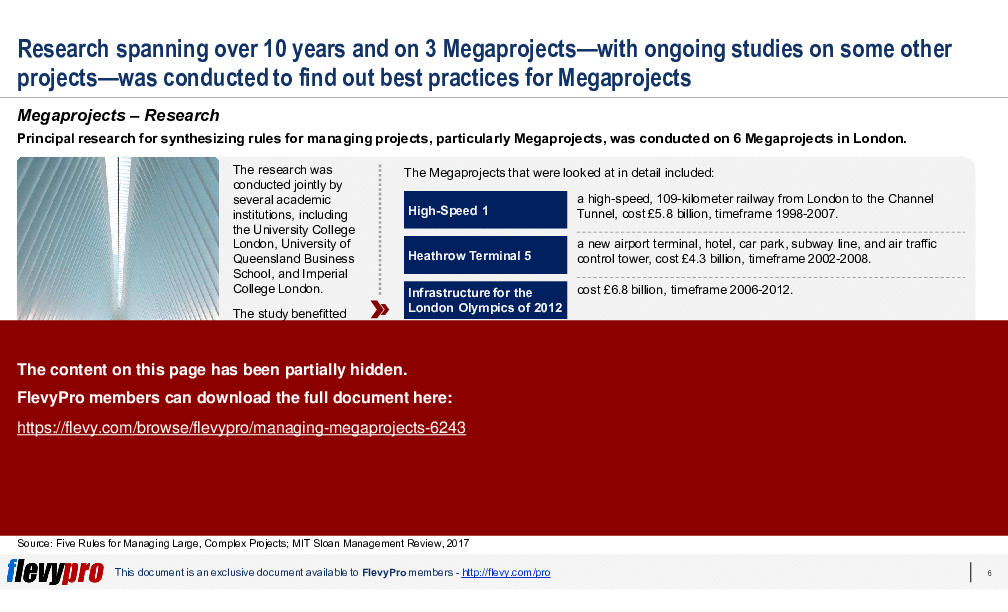
Innovation throughout the life span of the Megaproject can curtail such challenges. A study of 3 Megaprojects and continuing study of some more projects over a span of more than 10 years revealed 5 rules that can help in the management strategy of Megaprojects. In this presentation, we explore these 5 rules in depth, including case examples for each.
The slide deck also includes some slide templates for you to use in your own business presentations.
The PPT delves into the intricacies of managing megaprojects, emphasizing the importance of flexibility and innovation. It outlines five critical rules, supported by case studies from high-profile projects like Heathrow Terminal 5 and the London Olympics. These rules are designed to help project managers navigate the complexities and uncertainties inherent in large-scale projects, ensuring timely and budget-compliant delivery.
The presentation also highlights the significance of stakeholder engagement and risk management, offering practical templates for application in your own projects. By leveraging these insights, executives can enhance their strategic approach to megaproject management, driving better outcomes and minimizing risks.
Got a question about this document? Email us at flevypro@flevy.com.
Executive Summary
The "Managing Megaprojects" presentation provides a strategic framework for effectively overseeing large-scale projects, emphasizing the importance of innovation and adaptability. Developed by experts with backgrounds at McKinsey and Big 4 consulting firms, this presentation outlines 5 critical rules designed to mitigate common challenges such as budget overruns and schedule delays. By applying these rules, project leaders can enhance their ability to deliver megaprojects on time and within budget, ultimately contributing to economic growth and societal benefits.
Who This Is For and When to Use
• Project managers overseeing large-scale infrastructure projects
• Executives in charge of strategic planning and execution
• Consultants specializing in project management and operational efficiency
• Stakeholders involved in public-private partnerships
Best-fit moments to use this deck:
• During project initiation to set a strategic framework
• In stakeholder meetings to align on management practices
• For training sessions focused on project management best practices
• When assessing past project performance to inform future initiatives
Learning Objectives
• Define the characteristics and challenges of megaprojects.
• Identify and apply the 5 critical rules for managing megaprojects.
• Analyze case studies to extract lessons learned from previous megaprojects.
• Develop strategies for risk management and innovation in project execution.
• Create a flexible project plan that accommodates unforeseen circumstances.
• Foster collaboration among diverse stakeholders to enhance project outcomes.
Table of Contents
• Overview (page 1)
• Megaprojects (page 5)
• Managing Megaprojects (page 9)
• Templates (page 19)
Primary Topics Covered
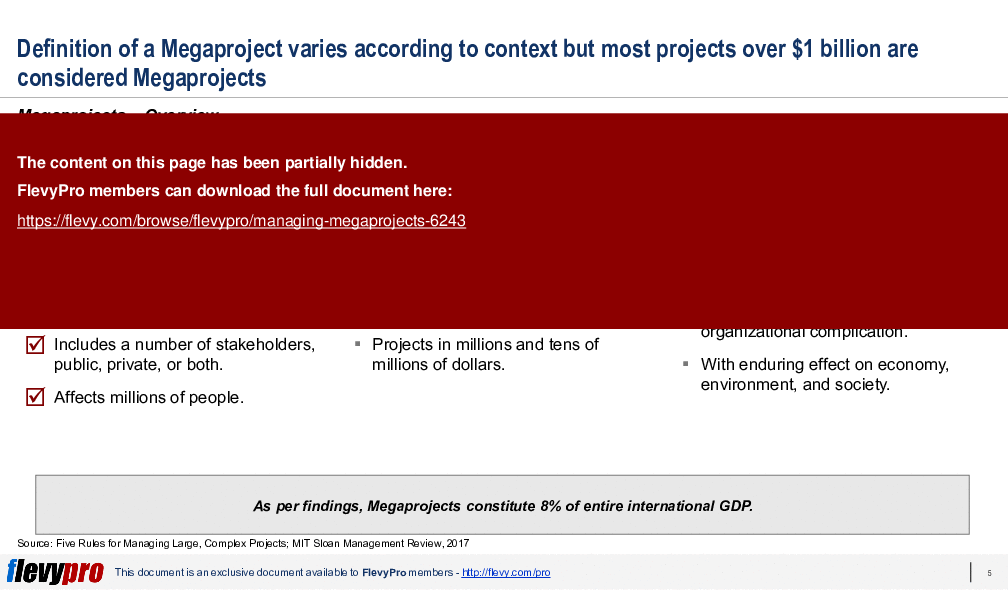
• Megaproject Definition - Megaprojects are typically defined as undertakings costing over $1 billion, involving multiple stakeholders and having significant economic and social impacts.
• Challenges in Megaprojects - Common issues include budget overruns, schedule delays, and complexities arising from stakeholder management.
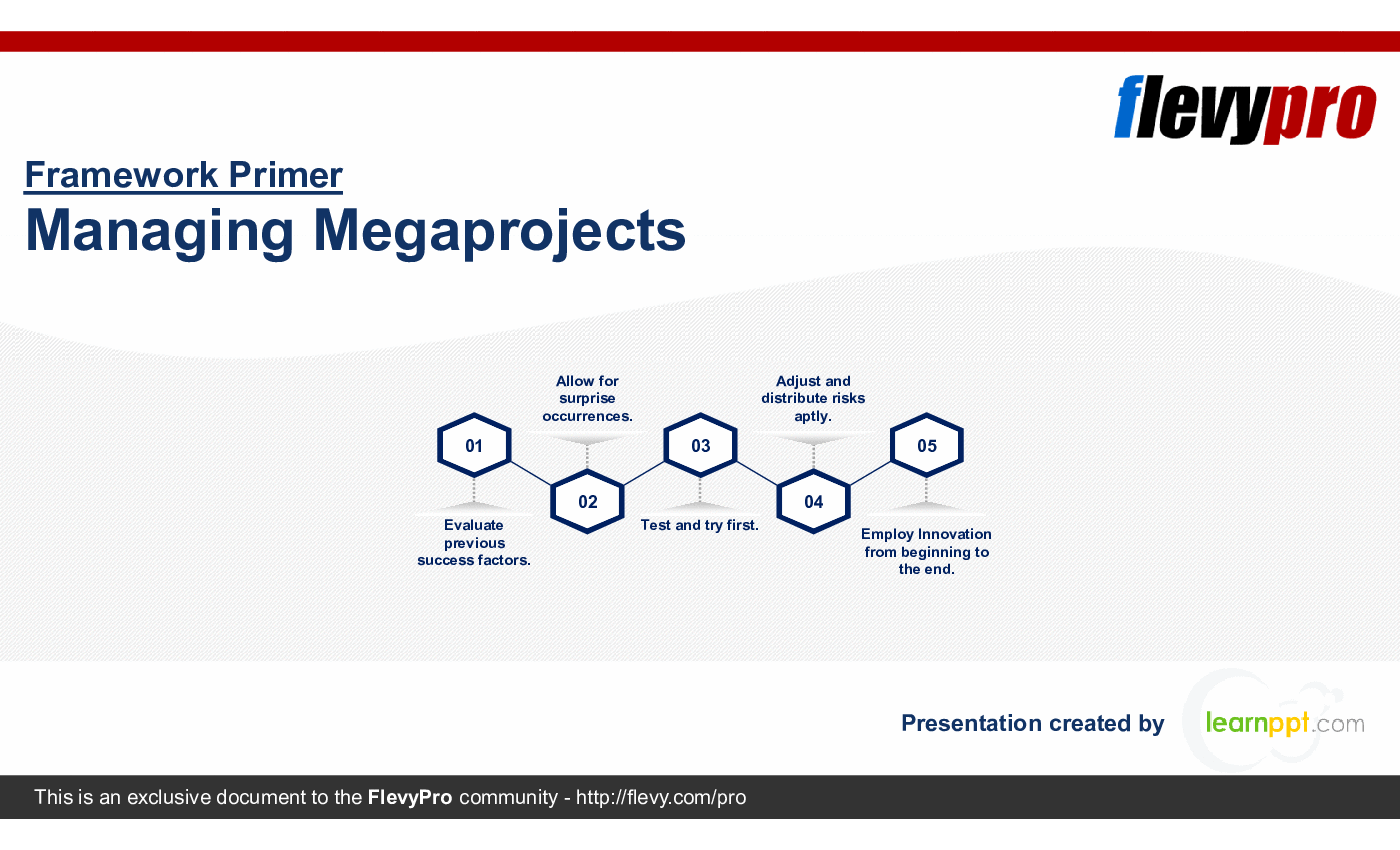
• Five Rules for Management - The presentation outlines 5 essential rules: evaluate previous success factors, allow for surprise occurrences, test and try first, adjust and distribute risks aptly, and employ innovation from beginning to end.
• Case Studies - Examples from notable megaprojects, such as Heathrow Terminal 5 and the London Olympics, illustrate the application of the 5 rules in real-world scenarios.
• Innovation in Megaprojects - Emphasizes the role of innovation in mitigating risks and enhancing project delivery.
• Risk Management Strategies - Discusses methods for identifying, assessing, and distributing risks throughout the project lifecycle.
Deliverables, Templates, and Tools
• Framework for evaluating previous success factors in megaprojects.
• Templates for flexible contract structures that accommodate changes.
• Risk assessment tools for identifying potential project pitfalls.
• Innovation strategy development guides to foster creative solutions.
• Case study analysis frameworks for learning from past projects.
• Collaboration models for engaging diverse stakeholders effectively.
Slide Highlights
• Overview of the 5 critical rules for managing megaprojects.
• Detailed case study analysis of Heathrow Terminal 5 and its innovative delivery model.
• Visual representation of the challenges faced by megaprojects and strategies to overcome them.
• Framework for risk management and the importance of flexibility in project execution.
• Summary of the economic and social impacts of successful megaprojects.
Potential Workshop Agenda
Introduction to Megaprojects (30 minutes)
• Overview of megaproject characteristics and challenges.
• Discussion on the importance of effective management strategies.
Applying the Five Rules (60 minutes)
• Interactive session on each of the 5 rules with real-world examples.
• Group activities to develop risk management strategies.
Case Study Review (45 minutes)
• Analysis of Heathrow Terminal 5 and the London Olympics.
• Lessons learned and best practices for future projects.
Innovation and Collaboration (30 minutes)
• Strategies for fostering innovation in project management.
• Techniques for engaging stakeholders and building collaborative teams.
Customization Guidance
• Tailor the framework to fit specific project types and stakeholder needs.
• Adjust risk management strategies based on project complexity and scale.
• Incorporate local regulations and requirements into contract templates.
• Modify case studies to reflect relevant industry contexts.
Secondary Topics Covered
• The role of technology in enhancing project management.
• Stakeholder engagement strategies for public-private partnerships.
• Best practices for communication and reporting in megaprojects.
• Environmental and social considerations in project planning.
• Financial management techniques for large-scale projects.
Topic FAQ
Document FAQ
These are questions addressed within this presentation.
What defines a megaproject?
A megaproject is typically defined as a project with a budget exceeding $1 billion, involving multiple stakeholders and significant economic and social implications.
Why do megaprojects often exceed budgets and timelines?
Common reasons include unforeseen technical challenges, changes in design requirements, escalating costs, and stakeholder disagreements.
How can the 5 rules improve project outcomes?
The 5 rules provide a structured approach to managing uncertainty, fostering innovation, and enhancing collaboration among stakeholders, leading to more effective project delivery.
What role does innovation play in managing megaprojects?
Innovation is crucial for addressing challenges, improving processes, and adapting to changing conditions throughout the project lifecycle.
How can past project experiences inform future initiatives?
Analyzing previous successes and failures helps identify best practices and avoid common pitfalls, ultimately leading to better project outcomes.
What are flexible contracts, and why are they important?
Flexible contracts allow for adjustments in response to changing project conditions, promoting collaboration and reducing conflict between stakeholders.
How can risk management be effectively implemented in megaprojects?
A proactive approach to risk management involves identifying potential risks early, assessing their impact, and developing strategies to mitigate them throughout the project lifecycle.
What are some examples of successful megaprojects?
Notable examples include Heathrow Terminal 5, the London Olympics, and Crossrail, each demonstrating effective management strategies and innovative practices.
Glossary
• Megaproject - A large-scale project typically costing over $1 billion.
• Innovation - The process of developing new ideas or methods to improve project outcomes.
• Risk Management - The identification, assessment, and prioritization of risks followed by coordinated efforts to minimize their impact.
• Stakeholder - An individual or group with an interest in the outcome of a project.
• Flexible Contract - A contract that allows for adjustments based on changing project conditions.
• Case Study - An in-depth analysis of a particular project used to illustrate best practices.
• Collaboration - The act of working together with others to achieve a common goal.
• Economic Impact - The effect of a project on the economy, including job creation and infrastructure development.
• Social Impact - The effect of a project on society, including community well-being and environmental considerations.
• Project Lifecycle - The stages a project goes through from initiation to completion.
• Delivery Model - The framework used to execute a project, including processes and methodologies.
• Performance Metrics - Standards used to measure the success of a project against its goals.
Source: Best Practices in Innovation, Real Estate, Construction, Megaproject PowerPoint Slides: Managing Megaprojects PowerPoint (PPTX) Presentation Slide Deck, LearnPPT Consulting
Did you need more documents?
Consider a FlevyPro subscription from $39/month. View plans here.
For $10.00 more, you can download this document plus 2 more FlevyPro documents. That's just $13 each.
|
Download our FREE Strategy & Transformation Framework Templates
Download our free compilation of 50+ Strategy & Transformation slides and templates. Frameworks include McKinsey 7-S, Balanced Scorecard, Disruptive Innovation, BCG Curve, and many more. |