This document provides a collection of 100+ Key Performance Indicators (KPIs) related to the Supply Chain functions listed further below.
Keeping in mind that each organization is different, the enclosed KPIs are intended as a general reference and their relevance depends on the specific circumstances of the company. Some KPIs are relevant to more than one function.
The key to effective performance management is not just about choosing the right KPIs, but also about using them in the right way. The document starts off with brief points to keep in mind when applying any KPI.
Contents
1. Buying
2. Inventory Management
3. Logistics/Transportation
4. Production Planning and Scheduling
5. Quality Control/Assurance
6. Strategic Sourcing
7. Supplier Relationship Management
8. Sustainability and Corporate Social Responsibility
9. Warehousing/Distribution
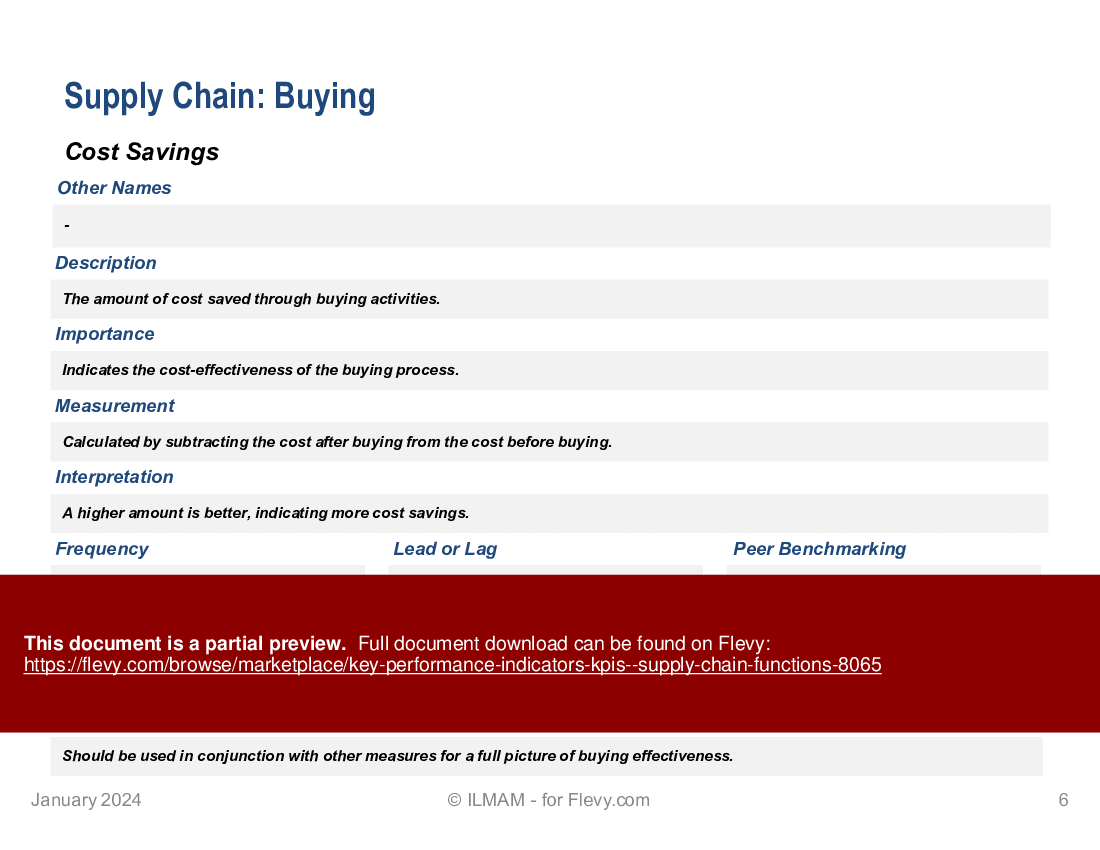
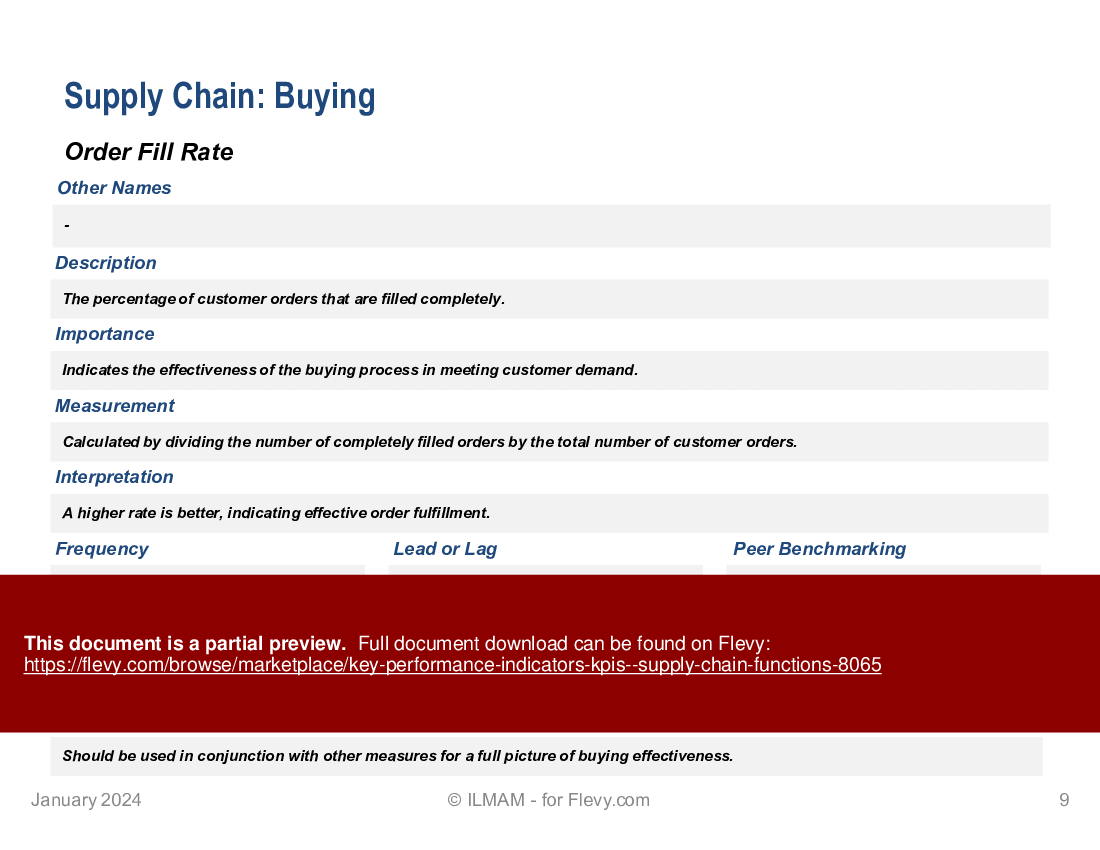
For each KPI listed, where relevant, the following elements are covered:
• The name of the function
• The name of the indicator, including common alternate names
• A brief description of the indicator and its importance
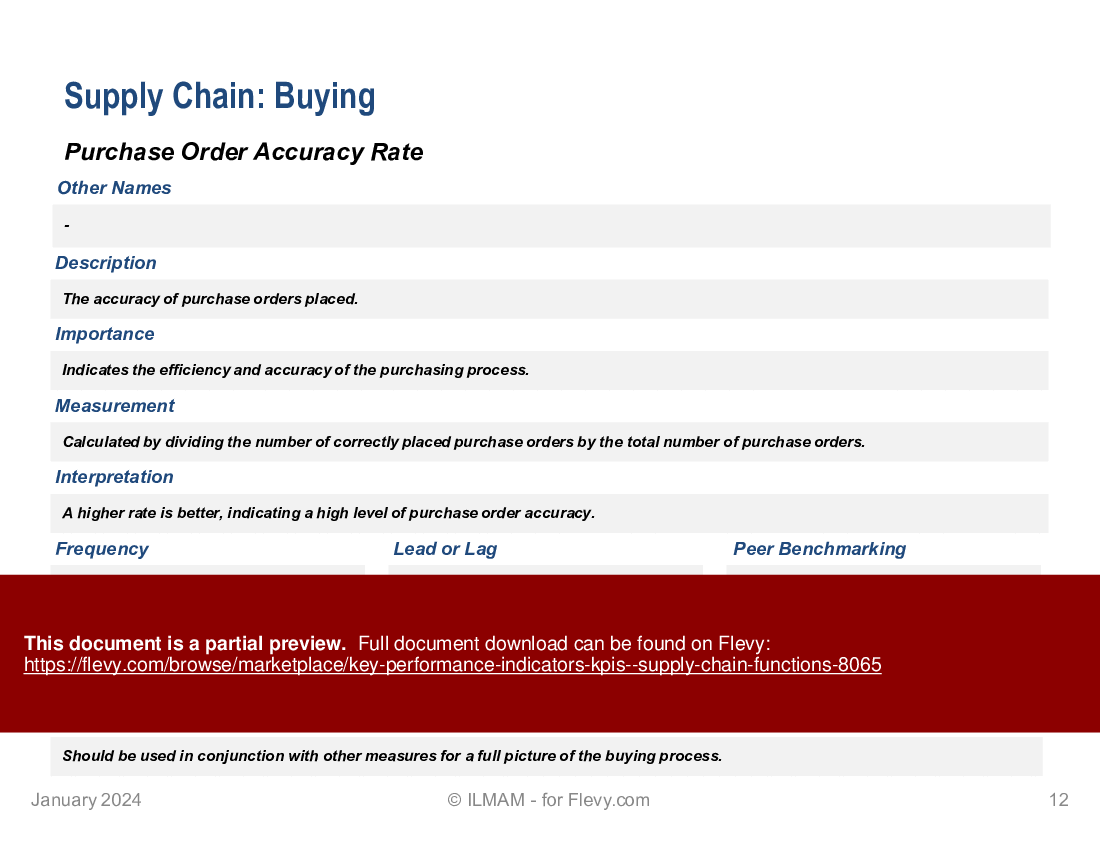
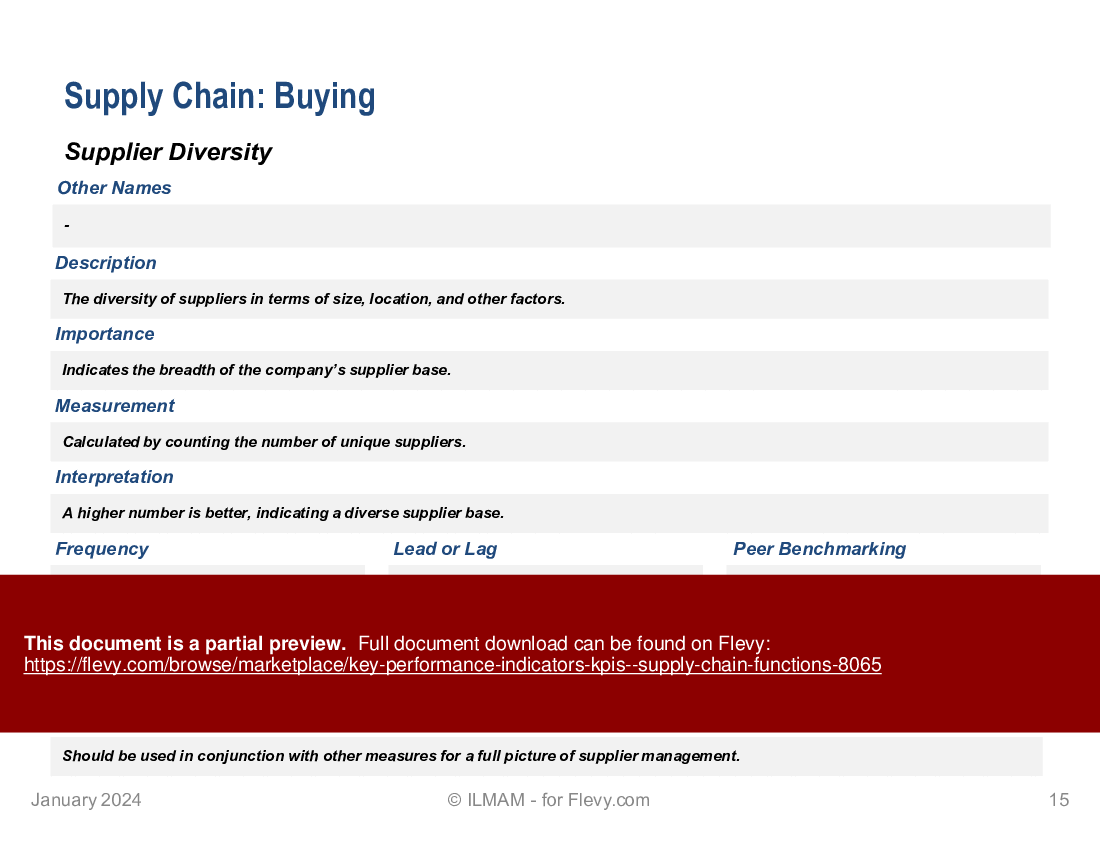
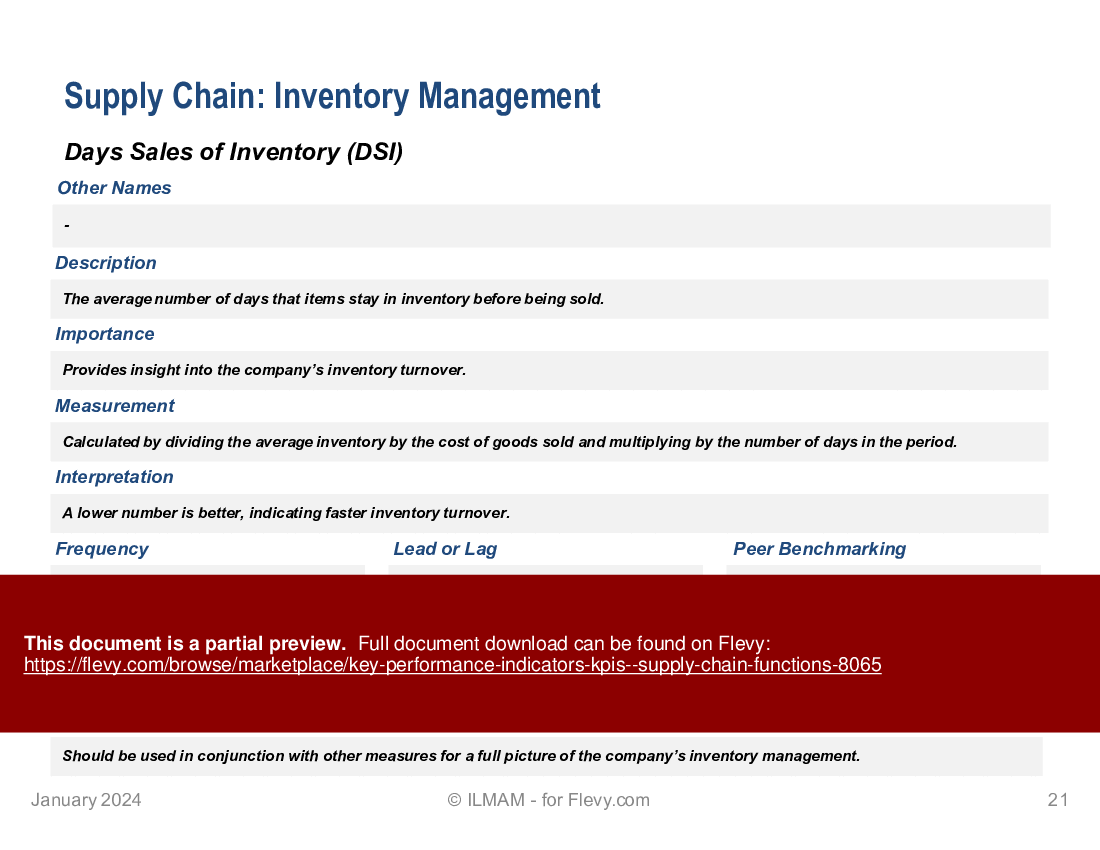
• Common measurement approach, interpretation, frequency, unit of measure and others
• Other information about the measure (e.g. suitability for peer bench marking, and others)
This PPT serves as a vital resource for organizations aiming to enhance their supply chain performance through the strategic use of Key Performance Indicators (KPIs). Each KPI is meticulously detailed, providing insights into its significance, measurement methods, and applicability across various supply chain functions. This comprehensive approach ensures that decision-makers can effectively assess and optimize their operations, aligning with their unique business objectives.
The KPIs included cover a wide range of areas, from buying and inventory management to logistics and quality control. This breadth allows for a holistic view of supply chain performance, enabling executives to pinpoint inefficiencies and drive continuous improvement. By leveraging these indicators, organizations can make informed decisions that lead to operational excellence and improved customer satisfaction.
Got a question about the product? Email us at support@flevy.com or ask the author directly by using the "Ask the Author a Question" form. If you cannot view the preview above this document description, go here to view the large preview instead.
Executive Summary
The "Key Performance Indicators | Supply Chain Functions" presentation is a meticulously crafted resource that outlines over 100 essential KPIs tailored for various supply chain functions. Designed in a professional MBB/Big 4 style, this PowerPoint deck serves as a comprehensive guide for corporate executives, integration leaders, and consultants looking to enhance their performance management strategies. The KPIs included cover critical areas such as buying, inventory management, logistics, production planning, quality control, strategic sourcing, supplier relationship management, sustainability, and warehousing/distribution. By leveraging these KPIs, organizations can gain actionable insights to drive operational excellence and align their supply chain performance with strategic business goals.
Who This Is For and When to Use
• Supply Chain Executives responsible for performance management and strategic alignment
• Operations Managers focused on optimizing supply chain efficiency
• Procurement Leaders aiming to enhance supplier relationships and cost management
• Quality Assurance Teams seeking to improve product quality and compliance
• Sustainability Officers tasked with tracking environmental and social impact metrics
Best-fit moments to use this deck:
• During quarterly performance reviews to assess supply chain effectiveness
• In strategic planning sessions to align KPIs with business objectives
• For training sessions aimed at educating teams on performance measurement
• When developing dashboards or reporting frameworks for supply chain metrics
Learning Objectives
• Define key performance indicators relevant to supply chain functions
• Build a tailored KPI framework that aligns with organizational goals
• Establish a systematic approach for measuring and reporting KPIs
• Identify actionable insights from KPI data to drive performance improvements
• Create a balanced scorecard that encompasses various supply chain dimensions
• Foster a culture of continuous improvement through regular KPI reviews
Table of Contents
• Introduction to KPIs (page 1)
• Buying KPIs (page 4)
• Inventory Management KPIs (page 19)
• Logistics/Transportation KPIs (page 32)
• Production Planning and Scheduling KPIs (page 41)
• Quality Control/Assurance KPIs (page 50)
• Strategic Sourcing KPIs (page 64)
• Supplier Relationship Management KPIs (page 77)
• Sustainability and Corporate Social Responsibility KPIs (page 91)
• Warehousing/Distribution KPIs (page 105)
Primary Topics Covered
• Buying KPIs - Metrics that evaluate the effectiveness and efficiency of the purchasing process, including cost per order and contract compliance rate.
• Inventory Management KPIs - Indicators that assess inventory accuracy, turnover rates, and carrying costs to optimize stock levels.
• Logistics/Transportation KPIs - Measures that track delivery performance, freight costs, and customer satisfaction related to logistics operations.
• Production Planning and Scheduling KPIs - Metrics that analyze production efficiency, cycle times, and adherence to schedules.
• Quality Control/Assurance KPIs - Indicators that evaluate product quality, defect rates, and customer complaints to ensure compliance with standards.
• Strategic Sourcing KPIs - Metrics that assess cost savings, supplier performance, and sourcing efficiency to enhance procurement strategies.
• Supplier Relationship Management KPIs - Measures that gauge supplier compliance, delivery reliability, and overall performance.
• Sustainability and Corporate Social Responsibility KPIs - Indicators that track environmental impact, energy consumption, and social initiatives.
• Warehousing/Distribution KPIs - Metrics that evaluate order accuracy, cycle times, and warehouse capacity utilization for effective distribution management.
Deliverables, Templates, and Tools
• KPI dashboard templates for tracking performance across supply chain functions
• Reporting frameworks for presenting KPI data to stakeholders
• Best practice guides for implementing and reviewing KPIs
• Benchmarking tools for comparing performance against industry standards
• Action plan templates for addressing underperforming KPIs
• Training materials for educating teams on KPI significance and usage
Slide Highlights
• Overview of the KPI framework that integrates multiple supply chain functions
• Visual representations of key metrics for quick reference and understanding
• Case studies demonstrating successful KPI implementation in organizations
• Charts and graphs illustrating trends and performance over time
• Actionable insights derived from KPI analysis to drive decision-making
Potential Workshop Agenda
KPI Framework Overview (60 minutes)
• Introduce the concept of KPIs and their importance in supply chain management
• Discuss the structure of the KPI framework and its components
• Review examples of effective KPIs across different supply chain functions
KPI Implementation Strategies (90 minutes)
• Identify key stakeholders and their roles in KPI management
• Develop a plan for integrating KPIs into existing performance management systems
• Create a timeline for KPI rollout and regular reviews
KPI Review and Continuous Improvement (60 minutes)
• Establish a process for regularly reviewing KPI performance
• Discuss methods for adjusting KPIs based on changing business needs
• Share best practices for fostering a culture of continuous improvement
Customization Guidance
• Tailor the KPIs to align with specific organizational goals and industry standards
• Adjust the frequency of KPI measurement based on operational needs and data availability
• Incorporate company-specific terminology and metrics for clarity and relevance
• Use historical data to set realistic performance targets for each KPI
• Develop a communication plan to ensure all stakeholders understand the KPIs and their significance
Secondary Topics Covered
• Risk management in supply chain operations
• Impact of technology on supply chain performance
• Trends in sustainable sourcing and corporate responsibility
• Strategies for enhancing supplier collaboration and engagement
• Methods for improving data quality and accuracy in KPI reporting
Topic FAQ
Document FAQ
These are questions addressed within this presentation.
What are KPIs and why are they important?
KPIs, or Key Performance Indicators, are measurable values that demonstrate how effectively an organization is achieving key business objectives. They are crucial for tracking performance and guiding decision-making.
How can I customize the KPIs for my organization?
Customize KPIs by aligning them with your specific business goals, industry benchmarks, and operational needs. Adjust measurement frequency and terminology to fit your organizational context.
What is the best way to present KPI data to stakeholders?
Use visual dashboards and reports that highlight key metrics, trends, and insights. Ensure the presentation is clear and tailored to the audience's needs for effective communication.
How often should KPIs be reviewed?
KPIs should be reviewed regularly, typically quarterly or monthly, to ensure they remain relevant and aligned with changing business objectives.
What should I do if a KPI is consistently underperforming?
Investigate the underlying causes of underperformance, adjust strategies as needed, and consider revising the KPI or its targets to better reflect realistic expectations.
Can KPIs be used across different supply chain functions?
Yes, many KPIs can be relevant across multiple functions, providing a holistic view of supply chain performance and facilitating cross-functional collaboration.
How do I ensure data quality for KPI measurement?
Implement robust data management practices, including regular audits, validation processes, and training for staff involved in data collection and reporting.
What role does technology play in KPI tracking?
Technology can enhance KPI tracking through automated data collection, real-time reporting, and advanced analytics, enabling more informed decision-making.
Glossary
• KPI - Key Performance Indicator, a measurable value that demonstrates how effectively an organization is achieving key business objectives.
• Benchmarking - The process of comparing performance metrics to industry standards or best practices.
• Data Quality - The accuracy, completeness, and reliability of data used for measurement and reporting.
• Sustainability - The practice of meeting current needs without compromising the ability of future generations to meet their own needs.
• Supplier Compliance - The degree to which suppliers adhere to contractual obligations and quality standards.
• Inventory Turnover - A measure of how many times inventory is sold and replaced over a period.
• Logistics - The management of the flow of goods and services from point of origin to point of consumption.
• Cost of Goods Sold (COGS) - The direct costs attributable to the production of the goods sold by a company.
• Supplier Diversity - The practice of sourcing from a diverse range of suppliers to enhance competition and innovation.
• Order Fulfillment - The process of receiving, processing, and delivering customer orders.
• Production Cycle Time - The total time from the beginning to the end of a production process.
• Quality Assurance - The systematic process of ensuring that products meet specified requirements and standards.
• Carbon Emissions - The release of carbon dioxide into the atmosphere, often measured to assess environmental impact.
• Waste Reduction - Efforts aimed at minimizing waste generation in business operations.
• Supplier Risk - The potential for loss or disruption due to supplier-related issues.
• Energy Efficiency - The goal of reducing the amount of energy required to provide products and services.
• Customer Satisfaction - A measure of how products and services meet or exceed customer expectations.
• Order Accuracy - The degree to which orders are fulfilled correctly without errors.
• Warehouse Utilization - The percentage of warehouse space that is actively used for storage and operations.
• Procurement Strategy - The plan for acquiring goods and services that aligns with organizational goals.
• Supplier Performance Scorecard - A comprehensive evaluation tool to assess supplier performance based on various metrics.
Source: Best Practices in Supply Chain Analysis, Key Performance Indicators, Procurement Strategy, Inventory Management PowerPoint Slides: Key Performance Indicators (KPIs) | Supply Chain Functions PowerPoint (PPTX) Presentation Slide Deck, ILMAM - Strategy & Management Consulting
This document is available as part of the following discounted bundle(s):

Save %!
Key Performance Indicators for Key Organizational Functions
This bundle contains 7 total documents. See all the documents to the right.
|
Receive our FREE presentation on Operational Excellence
This 50-slide presentation provides a high-level introduction to the 4 Building Blocks of Operational Excellence. Achieving OpEx requires the implementation of a Business Execution System that integrates these 4 building blocks. |









