

 Click main image to view in full screen.
ISO 37301:2021 (Compliance Management Systems) Awareness (PowerPoint PPTX Slide Deck)
PowerPoint (PPTX) 74 Slides


BENEFITS OF THIS POWERPOINT DOCUMENT
- Provides a framework to assist in the implementation of specific compliance-related requirements in any management system.
- Provides a tool for creating awareness of the ISO 37301:2021 standard.
- Supports the UN Sustainable Development Goals (SDGs).
COMPLIANCE PPT DESCRIPTION
ISO 37301:2021 is an international standard designed and formulated to help organizations implement a robust Compliance Management System (CMS).
The standard specifies requirements and provides guidelines for establishing, developing, implementing, evaluating, maintaining and improving an effective CMS within an organization.
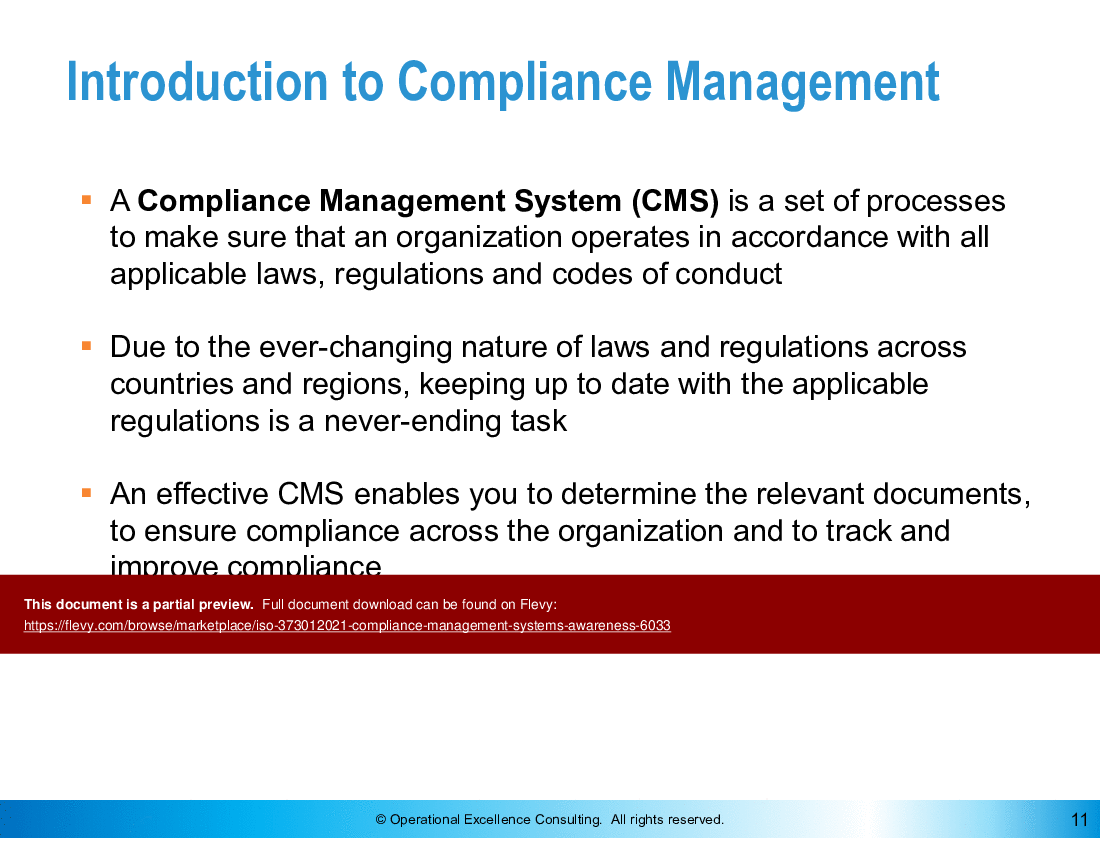
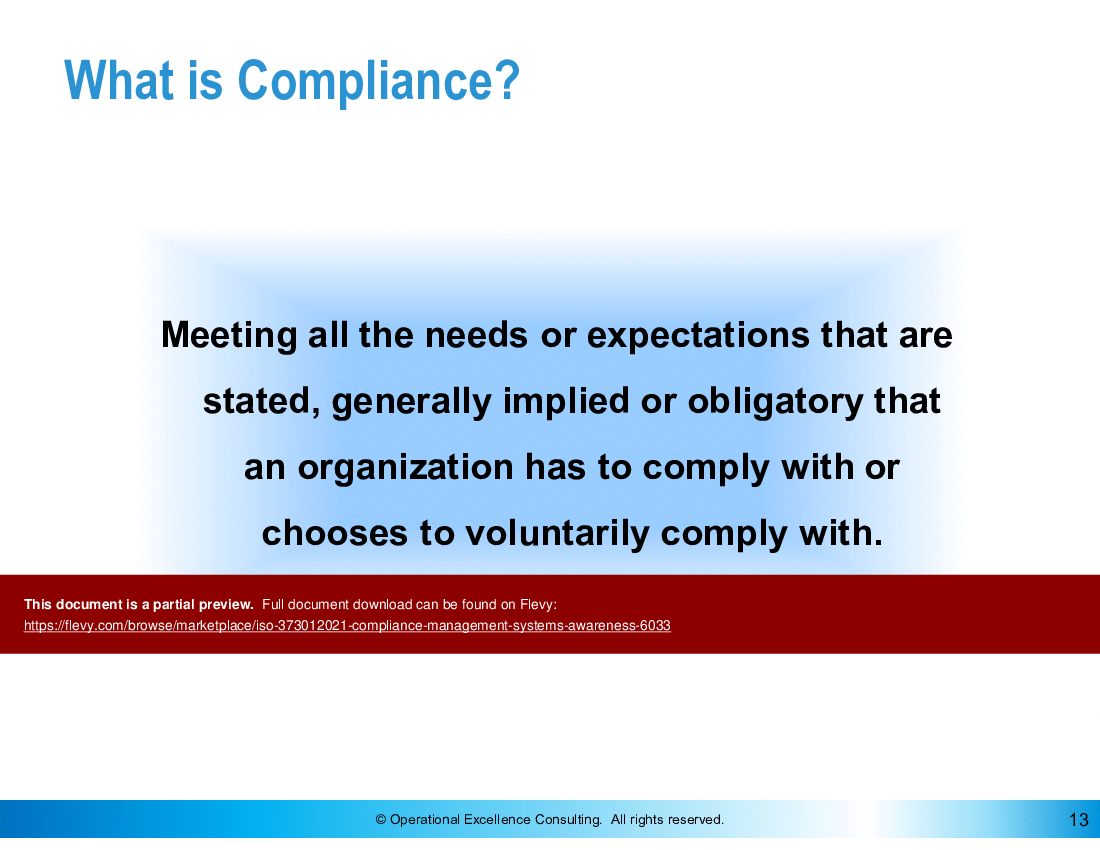
A CMS provides organizations a structured approach to meet all compliance obligations, i.e., requirements that they mandatorily have to comply with such as laws, regulations, court rulings, permits, licenses, as well as those that they voluntarily choose to comply with such as internal policies and procedures, codes of conduct, standards, and agreements with communities or NGOs.
This ISO 37301:2021 (CMS) Awareness PPT presentation can be used to brief your employees so as to create awareness of compliance best practices. The material can be integrated with your organization's management system standards training program. It includes the what and why of ISO 37301, the CMS clause structure, and offers practical tips on how to handle an audit session.
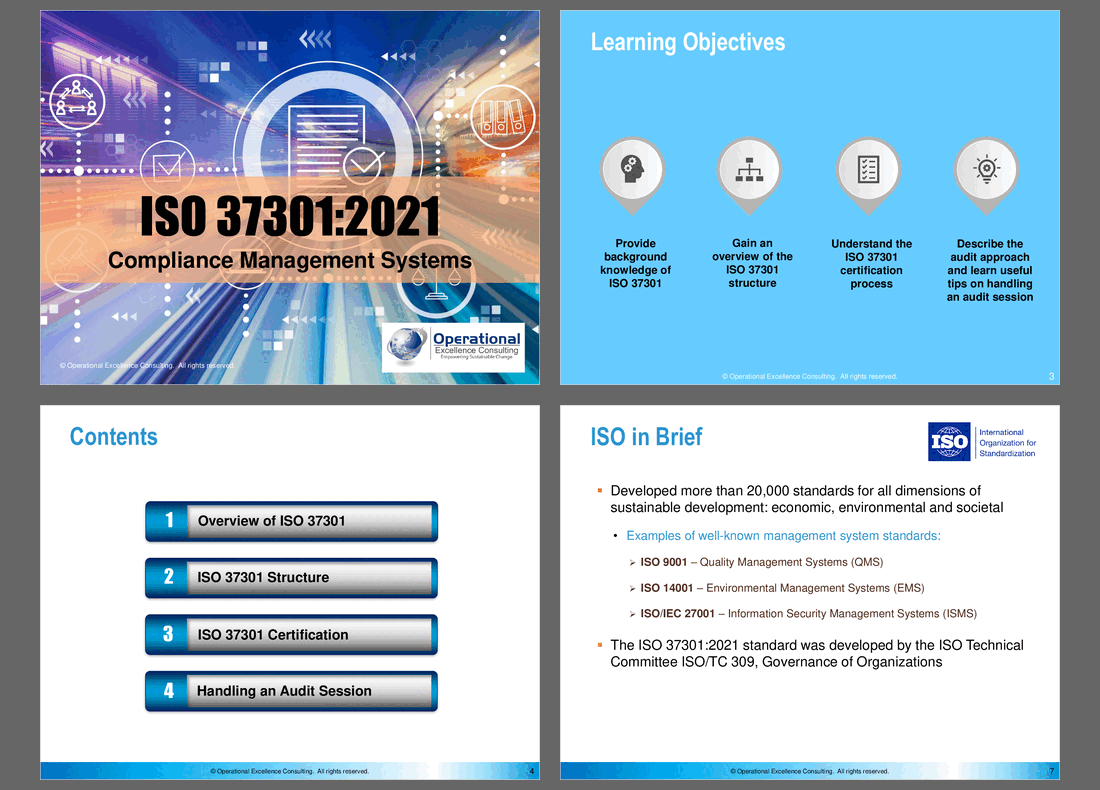
LEARNING OBJECTIVES
1. Provide background knowledge on ISO 37301.
2. Gain an overview of ISO 37301 structure.
3. Understand the ISO 37301 certification process.
4. Describe the audit approach and learn useful tips on handling an audit session.
CONTENTS
1. Overview of ISO 37301
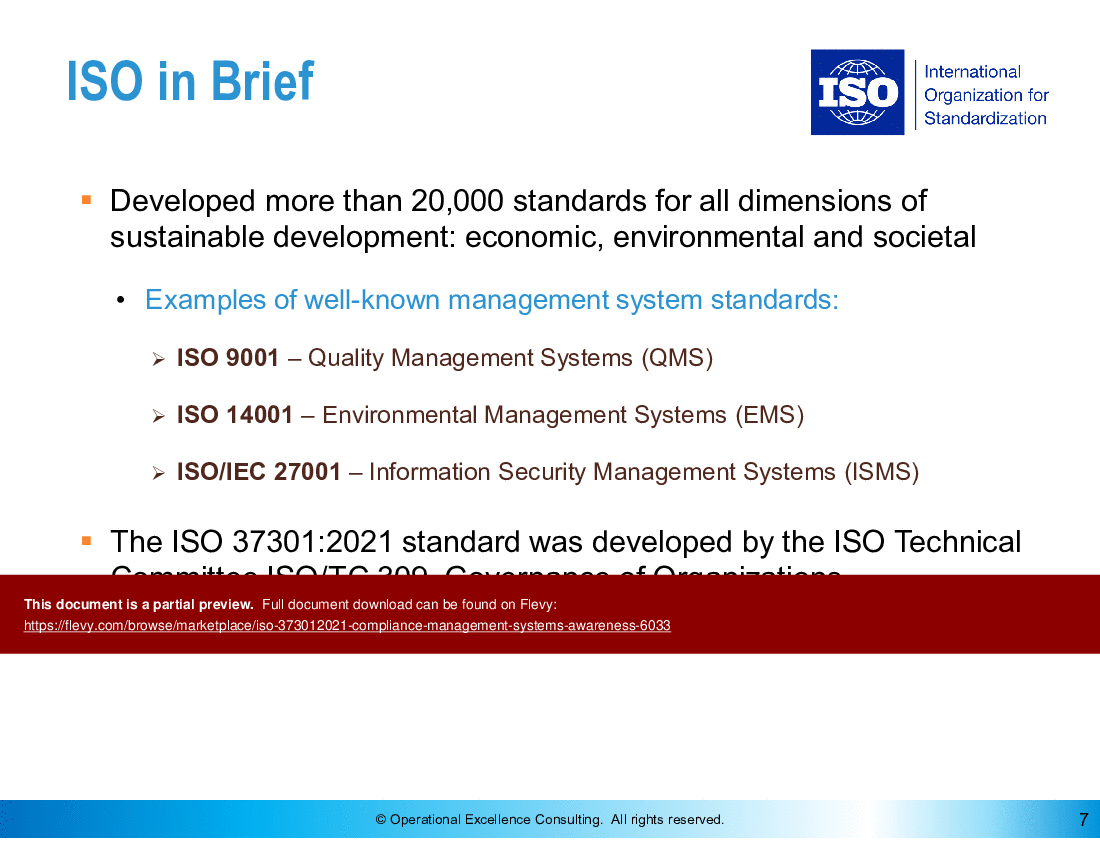
• About ISO
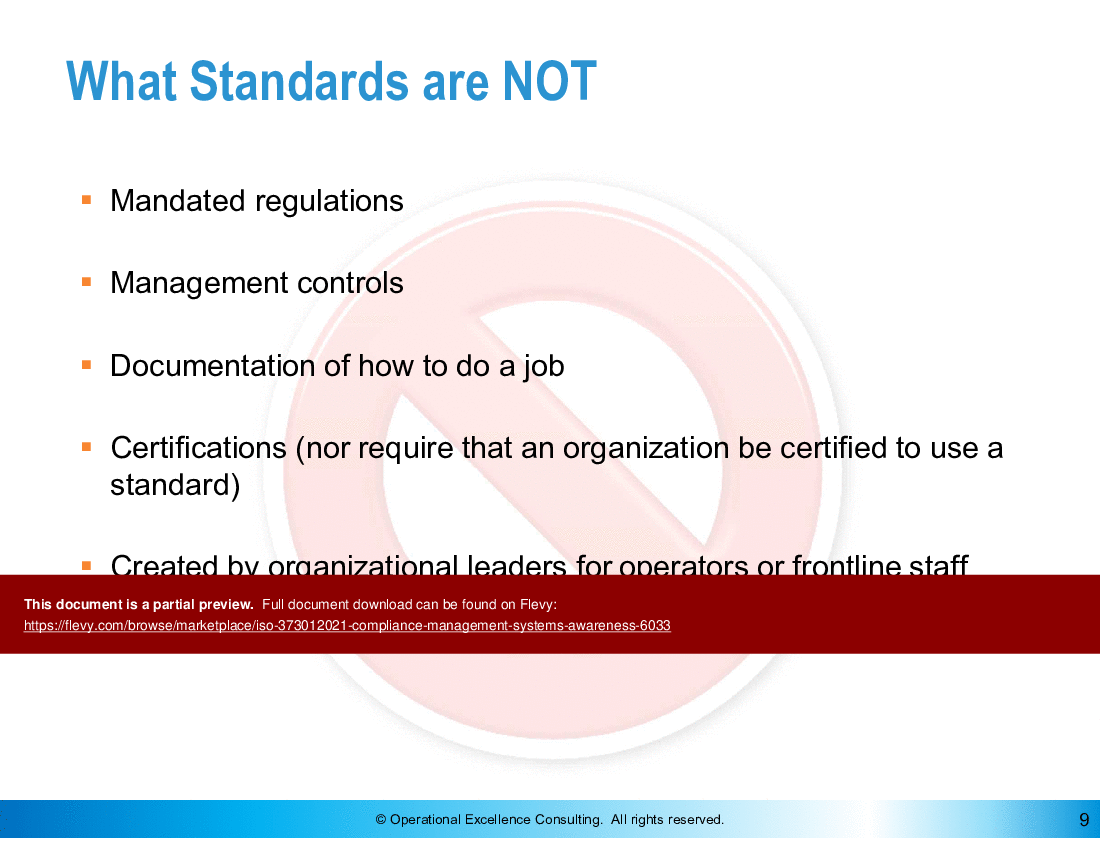
• What are Standards?
• Introduction to Compliance Management
• What is Compliance?
• Why is Compliance Management Important?
• What is ISO 37301?
• What is the Purpose of ISO 37301?
• Who is ISO 37301 For?
• How Does ISO 37301 Relate to ISO 37001?
• What is the Difference Between ISO 37301 and ISO 19600?
• How Does ISO 37301 Work?
• Benefits of ISO 37301
• Advantages of ISO 37301 Certification
• Getting Started to Setting Up a CMS
2. ISO 37301 Structure
• Annex L – Implications
• Overview of Annex L
• High-level Structure (HLS)
• HLS: The Same Core Elements
• The ISO 37301 Structure is Based on the ISO HLS for MSS
• The Plan-Do-Check-Act (PDCA) Process Model
• PDCA and ISO 37301 Clause Structure
• Elements of a Compliance Management System
• ISO 37301 Key Clause Structure (4-10)
• Context of the Organization
• Leadership
• Planning
• Support
• Operation
• Performance Evaluation
• Improvement
3. ISO 37301 Certification
• Becoming ISO 37301 Certified
• ISO 37301 Certification Process
• Audit Findings
4. Handling an Audit Session
• Rights of Auditee
• Rights of Auditor
• How to Handle the Audit Session?
• Auditee's Conduct
• Do's
• Don'ts
Appendix
• ISO 37301:2021 Detailed Clause Structure
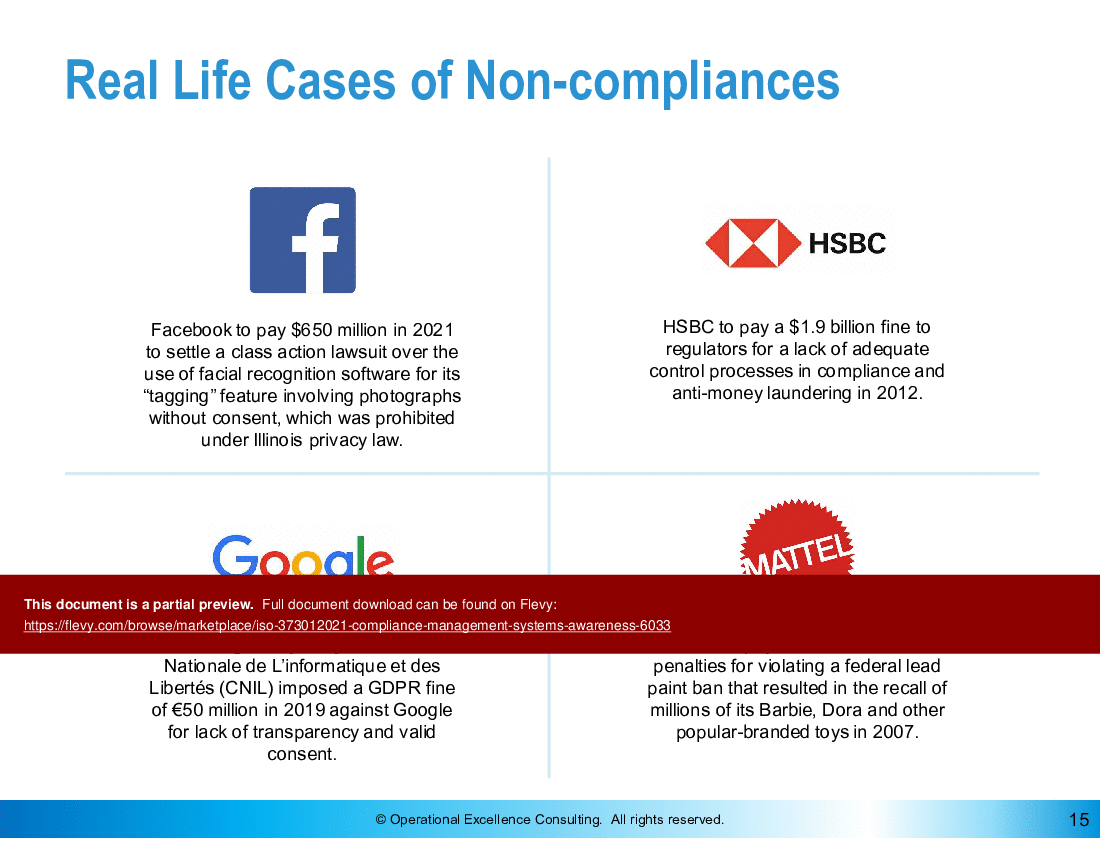
The presentation also covers real-life cases of non-compliance, highlighting the significant financial and reputational risks. It provides a detailed explanation of the Plan-Do-Check-Act (PDCA) process model, ensuring continuous improvement in compliance management.
Got a question about the product? Email us at support@flevy.com or ask the author directly by using the "Ask the Author a Question" form. If you cannot view the preview above this document description, go here to view the large preview instead.
MARCUS OVERVIEW
This synopsis was written by Marcus [?] based on the analysis of the full 74-slide presentation.
Executive Summary
The ISO 37301:2021 Compliance Management Systems Awareness presentation is crafted to enhance understanding of the ISO 37301 standard, which provides a framework for establishing and maintaining effective compliance management systems (CMS). Developed by an ex-ISO Management System Lead Auditor with extensive experience at major corporations, this presentation equips organizations with the knowledge to navigate compliance obligations effectively. Participants will gain insights into the certification process, audit approaches, and best practices for compliance management, enabling them to foster a culture of integrity and accountability within their organizations.
Who This Is For and When to Use
• Compliance Officers and Managers responsible for implementing compliance frameworks
• Corporate Executives seeking to enhance organizational compliance culture
• Internal Auditors conducting compliance audits and assessments
• Training and Development Managers focused on compliance training initiatives
Best-fit moments to use this deck:
• During compliance training sessions for new employees or teams
• As part of an internal audit preparation workshop
• When developing or updating compliance management systems
Learning Objectives
• Provide background knowledge of ISO 37301
• Gain an overview of the ISO 37301 structure
• Understand the ISO 37301 certification process
• Describe the audit approach and learn useful tips on handling an audit session
• Identify key compliance obligations and risks
• Develop strategies for effective compliance management
Table of Contents
• Overview of ISO 37301 (page 1)
• ISO 37301 Structure (page 2)
• ISO 37301 Certification (page 3)
• Handling an Audit Session (page 4)
Primary Topics Covered
• ISO 37301 Overview - This section provides a foundational understanding of the ISO 37301 standard and its significance in compliance management.
• ISO 37301 Structure - Details the high-level structure of the standard, including key clauses and their relevance to compliance management systems.
• ISO 37301 Certification - Outlines the certification process, including the steps required to achieve compliance and maintain certification.
• Handling an Audit Session - Offers practical guidance on managing audit sessions, including rights of auditees and auditors.
• Compliance Management Importance - Discusses the critical role of compliance management in mitigating risks and enhancing organizational reputation.
• Audit Findings - Explains the categories of audit findings, including major non-conformities, minor non-conformities, and observations.
Deliverables, Templates, and Tools
• Compliance Management System (CMS) framework template
• Internal audit checklist for ISO 37301 compliance
• Training materials for compliance awareness sessions
• Guidelines for conducting effective compliance audits
• Documentation templates for compliance obligations and risks
• Monitoring and measurement tools for compliance performance
Slide Highlights
• Overview of ISO 37301 slide that outlines the standard's purpose and benefits
• Detailed clause structure slide illustrating the high-level structure of ISO 37301
• Certification process flowchart that visually represents the steps to achieve ISO 37301 certification
• Audit session handling tips slide that provides actionable advice for auditees
• Real-life case studies of non-compliance highlighting the importance of effective compliance management
Potential Workshop Agenda
ISO 37301 Overview Session (60 minutes)
• Introduction to ISO 37301 and its significance
• Key elements of a Compliance Management System
• Discussion on compliance obligations and risks
ISO 37301 Certification Process Workshop (90 minutes)
• Steps to achieving ISO 37301 certification
• Internal audit preparation and best practices
• Review of audit findings and corrective actions
Handling Audit Sessions Training (60 minutes)
• Rights of auditees and auditors during the audit process
• Strategies for effective communication with auditors
• Role-playing scenarios to practice handling audit questions
Customization Guidance
• Tailor the presentation to include specific compliance obligations relevant to your organization
• Adjust examples and case studies to reflect industry-specific compliance challenges
• Incorporate organizational policies and procedures into the training materials
Secondary Topics Covered
• Principles of effective compliance management
• Strategies for fostering a culture of compliance within organizations
• The relationship between ISO 37301 and other ISO standards
• Continuous improvement in compliance management systems
• Risk assessment methodologies for compliance
Topic FAQ
What are the main clauses of ISO 37301 that organizations must address?
ISO 37301 uses the ISO High-Level Structure; key clauses include Context of the Organization, Leadership, Planning, Support, Operation, Performance Evaluation and Improvement. These are commonly referenced as clauses 4–10 and form the core elements of a Compliance Management System under ISO 37301, covering planning through continual improvement.How does the PDCA model apply to a Compliance Management System under ISO 37301?
The PDCA model frames CMS implementation: Plan (set objectives and identify obligations), Do (implement controls and processes), Check (monitor, measure and run internal audits), Act (take corrective actions and improvements). ISO 37301 maps its clause structure to the PDCA cycle to support continuous improvement, known as the PDCA process model.What types of audit findings should I expect during a compliance audit?
Compliance audits typically produce categorized findings: major non-conformities, minor non-conformities, and observations. Each category reflects the severity and required follow-up actions, and organizations prepare corrective actions and evidence to address them as part of the certification and continual improvement process, including documentation of findings.What should I look for in an ISO 37301 awareness training deck?
A useful training deck covers ISO 37301 background, clause structure (clauses 4–10), the certification process, audit handling tips, and practical tools such as a CMS framework template, internal audit checklist, training materials and documentation templates; decks that include actionable audit-handling guidance and checklists are particularly relevant for training and audit preparation.Are pre-built templates and checklists cost-effective for small compliance teams?
Pre-built templates centralize standard clause mappings, audit checklists, training slides and documentation patterns so small teams avoid creating materials from scratch; they can speed training and audit readiness. For example, purchases like Flevy’s ISO 37301:2021 (Compliance Management Systems) Awareness PPT presentation include a CMS framework template and an internal audit checklist.We have an upcoming external ISO 37301 certification audit — how should we prepare?
Preparation steps include implementing the CMS aligned to clauses 4–10, conducting internal audits, compiling compliance documentation and evidence, training staff on auditee rights and conduct, and rehearsing audit sessions using checklists and role-play. Using internal audit preparation materials and audit-handling guidance supports readiness for the external audit.How often should organizations run internal compliance audits under ISO 37301?
ISO 37301 guidance advises conducting internal audits regularly to monitor CMS performance and identify improvement opportunities. The standard highlights the role of internal audits within PDCA to verify compliance and drive corrective actions; organizations commonly use an internal audit checklist to structure these recurring reviews.How does ISO 37301 relate to ISO 19600 and ISO 37001?
ISO 37301 is the 2021 international standard specifying requirements for a Compliance Management System; organizations often compare and relate it to earlier guidance standards like ISO 19600 and to sector-specific standards such as ISO 37001. Materials that explain these relationships help clarify scope and differences between ISO 37301, ISO 37001 and ISO 19600.Document FAQ
These are questions addressed within this presentation.
What is ISO 37301?
ISO 37301:2021 specifies requirements for establishing, implementing, evaluating, maintaining, and improving an effective Compliance Management System within organizations.
Who can benefit from ISO 37301 certification?
Any organization, regardless of size or sector, can benefit from ISO 37301 certification as it applies universally to public, private, and non-profit entities.
What are the key benefits of implementing ISO 37301?
Implementing ISO 37301 helps organizations develop a culture of compliance, protect their reputation, and improve sustainability while preventing unethical conduct.
How does the certification process work?
The certification process involves implementing a CMS, conducting internal audits, and undergoing a compliance audit by a certification body to confirm adherence to ISO 37301 requirements.
What are the common audit findings?
Audit findings can be categorized as major non-conformities, minor non-conformities, or observations, each indicating varying levels of compliance issues.
How can organizations prepare for an audit session?
Organizations can prepare by understanding their rights during an audit, conducting internal audits, and being ready to provide evidence of compliance.
What is the Plan-Do-Check-Act (PDCA) model?
The PDCA model is a continuous improvement process that organizations use to establish objectives, implement processes, monitor performance, and take corrective actions.
How often should organizations conduct internal audits?
Organizations should conduct internal audits regularly to ensure ongoing compliance and to identify areas for improvement within their CMS.
What role does top management play in compliance management?
Top management is crucial in establishing a compliance culture, supporting compliance policies, and ensuring that the organization meets its compliance obligations.
Glossary
• Compliance Management System (CMS) - A set of processes to ensure adherence to laws, regulations, and codes of conduct.
• ISO 37301 - The international standard for compliance management systems published in 2021.
• Audit Findings - Results from an audit that indicate compliance status, categorized into major non-conformities, minor non-conformities, and observations.
• Plan-Do-Check-Act (PDCA) - A cyclical model for continuous improvement in management systems.
• Certification Body - An independent organization that conducts audits to verify compliance with standards.
• Non-conformity - A failure to meet specified requirements within a CMS.
• Compliance Obligations - Legal and regulatory requirements that an organization must adhere to.
• Internal Audit - A systematic evaluation of an organization’s compliance processes and controls.
• Continuous Improvement - Ongoing efforts to enhance processes, products, or services.
• Risk Assessment - The process of identifying and evaluating risks related to compliance.
• Top Management - Executives responsible for overseeing compliance and governance within an organization.
• Compliance Culture - An organizational environment that promotes adherence to compliance standards and ethical behavior.
• Stakeholders - Individuals or groups with an interest in the organization’s compliance performance.
• Documentation - Records that provide evidence of compliance and support the CMS.
• Training and Awareness - Programs designed to educate employees about compliance obligations and practices.
• Monitoring and Measurement - Processes for tracking compliance performance and identifying areas for improvement.
• Corrective Action - Steps taken to address non-conformities and prevent recurrence.
• Compliance Risk - The potential for legal or regulatory penalties due to non-compliance.
• Governance - The framework of rules and practices by which an organization is directed and controlled.
• Stakeholder Engagement - Involving stakeholders in compliance processes to enhance accountability and transparency.
• Ethics - Principles that guide behavior and decision-making within an organization.
Source: Best Practices in Compliance PowerPoint Slides: ISO 37301:2021 (Compliance Management Systems) Awareness PowerPoint (PPTX) Presentation Slide Deck, Operational Excellence Consulting
ABOUT THE AUTHOR

Operational Excellence Consulting, founded in 2009 by Allan Ung, draws from extensive experience at Microsoft, IBM, and Underwriters Laboratories (UL). We specialize in strategy deployment, customer experience design, and operational excellence, applying Design Thinking, Lean, and Systems Thinking to maximize customer value and minimize waste.
Our
... [read more]
Ask the Author a Question
You must be logged in to contact the author.




























