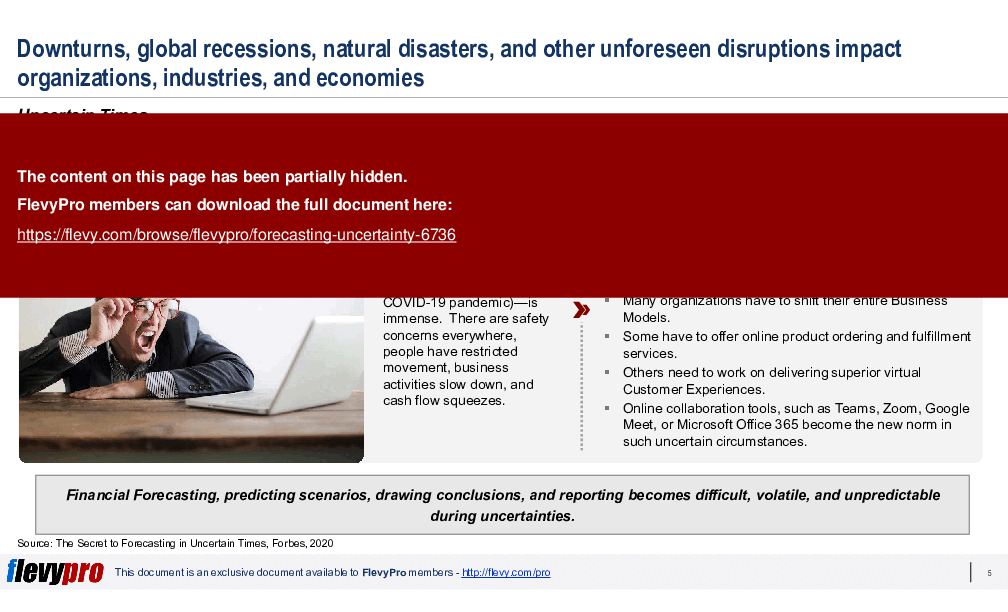

The impact of unforeseen crises—such as economic depressions, natural disasters, and black swan events (e.g. the recent COVID-19 pandemic)—is immense. There are safety concerns everywhere. People have restricted movement, business activities slow down, and cash flow squeezes.
Planners typically prepare forecasts based on historical trends, past performance, and market trends. During these uncertain times, customers' requirements shift dramatically and this demands different ways of working from the organizations.
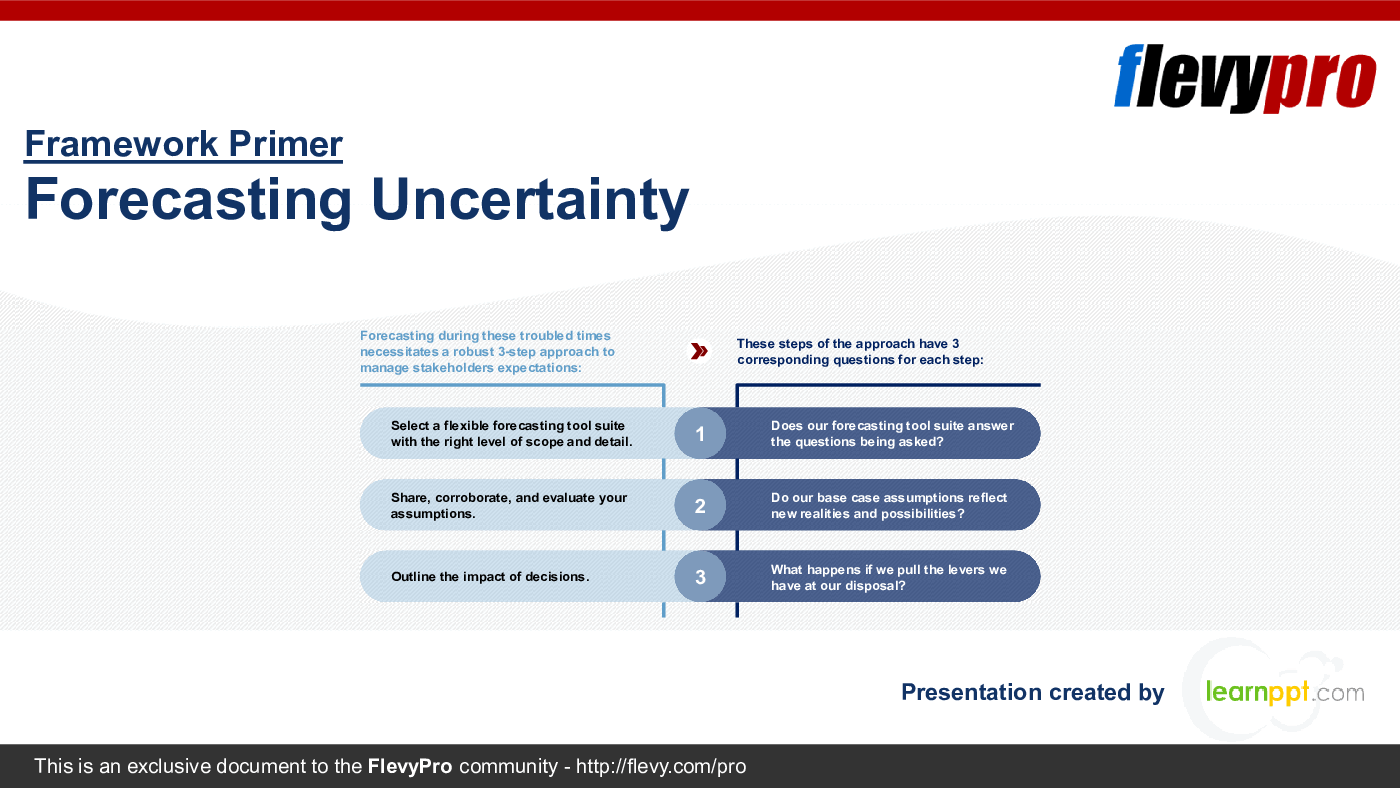
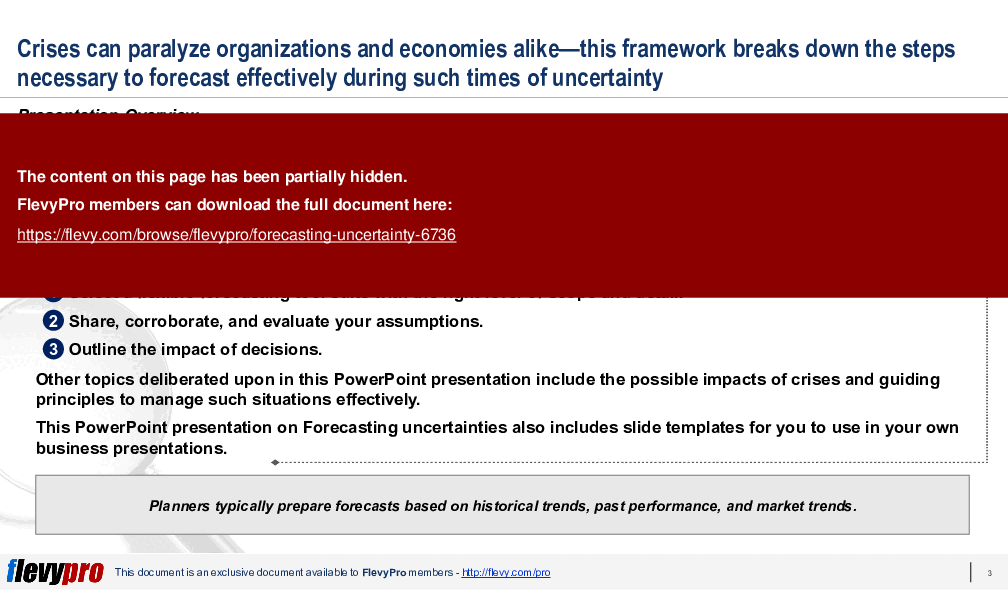
This framework provides a detailed overview of a robust 3-step approach to Forecasting in times of uncertainty:
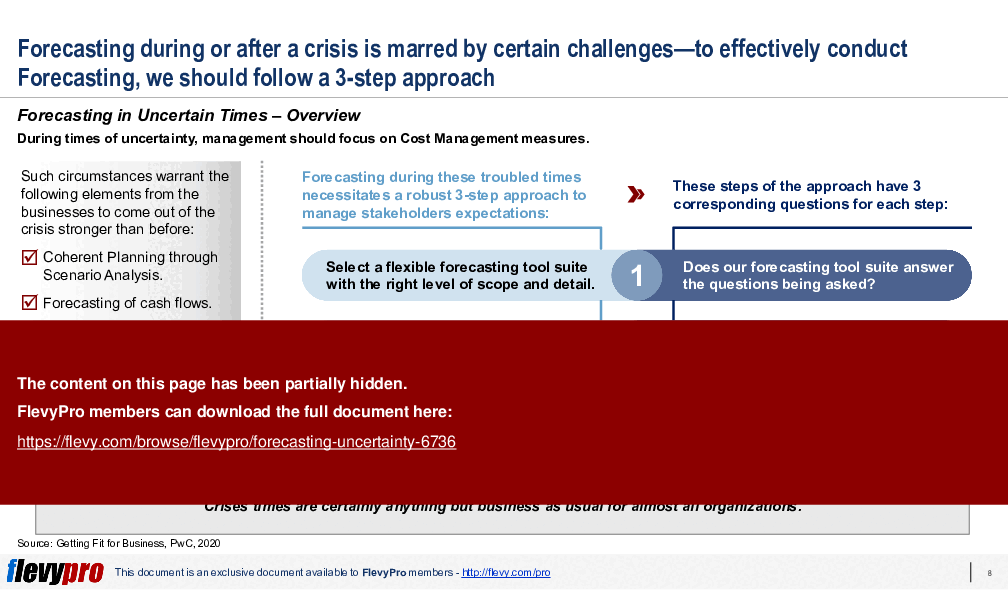
1. Select a flexible forecasting tool suite with the right level of scope and detail.
2. Share, corroborate, and evaluate your assumptions.
3. Outline the impact of decisions.
Once the 3-phased approach to forecasting has been successfully executed, uncertain times demand from the executives to concentrate on evaluating their organizations' existing capabilities and leveraging Business Intelligence tools. The next critical steps for the executives to focus on are:
1. Assess existing Forecasting and Scenario Planning competencies.
2. Create tactical models necessary for detailed analysis.
3. Confirm the assumptions.
Each of these 6 steps are discussed in detail in the presentation.
This PowerPoint presentation on Forecasting uncertainties also includes slide templates for you to use in your own business presentations.
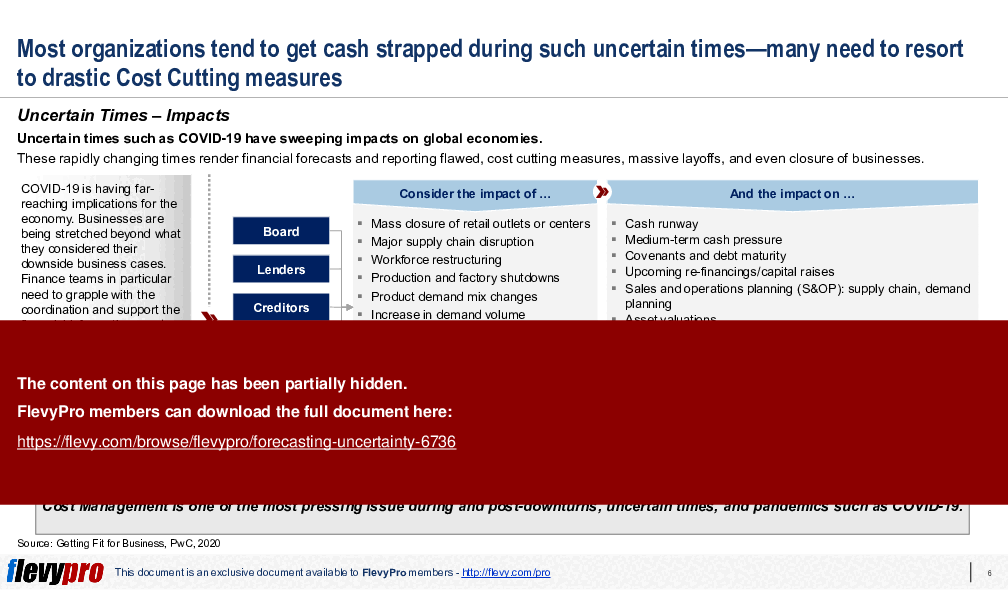
This presentation also delves into the critical impacts of crises on financial forecasting and scenario planning. It highlights the necessity of adapting business models, leveraging online collaboration tools, and managing cost-cutting measures. The PPT provides actionable insights for finance teams to support their organizations through economic disruptions. It also includes practical guidelines for holding effective forecasting meetings and appreciating team efforts during stressful conditions. This resource is indispensable for executives looking to navigate their companies through volatile and unpredictable times.
Got a question about this document? Email us at flevypro@flevy.com.
Executive Summary
The "Forecasting Uncertainty" presentation provides a structured framework designed to help organizations navigate the complexities of forecasting during turbulent times. Developed by seasoned consultants, this resource outlines a robust 3-step approach that focuses on selecting the right forecasting tools, validating assumptions, and assessing the impact of decisions. By utilizing this framework, corporate executives and finance teams can enhance their strategic planning capabilities, ensuring they effectively manage stakeholder expectations and respond to shifting market dynamics.
Who This Is For and When to Use
• Corporate Executives responsible for strategic decision-making and financial forecasting
• Finance Teams tasked with cash flow management and scenario analysis
• Business Planners engaged in risk assessment and operational planning
• Consultants advising organizations on crisis management and forecasting strategies
Best-fit moments to use this deck:
• During economic downturns or crises requiring immediate financial reassessment
• When implementing new forecasting tools or methodologies
• In preparation for stakeholder meetings focused on financial projections and scenarios
Learning Objectives
• Define a flexible forecasting tool suite that meets organizational needs
• Build a coherent narrative around base case assumptions for forecasting
• Establish a systematic approach to evaluate the impact of management decisions
• Create actionable insights from scenario analysis and forecasting data
• Develop a robust framework for ongoing financial monitoring and adjustment
• Enhance collaboration among teams to ensure alignment on forecasting efforts
Table of Contents
• Overview (page 1)
• Uncertain Times (page 5)
• Forecasting in Uncertain Times (page 8)
• Critical Next Steps (page 14)
• Slide Design Guide & Templates (page 19)
Primary Topics Covered
• Uncertain Times - This section discusses the challenges organizations face during crises, highlighting the need for adaptable forecasting strategies.
• Forecasting Framework - A detailed overview of the 3-step approach to forecasting uncertainty, including selecting tools, validating assumptions, and assessing decision impacts.
• Guiding Principles - Key principles for effective forecasting during uncertain times, emphasizing data utilization and frequent communication.
• Critical Next Steps - Actions to take post-forecasting, including assessing existing competencies and developing tactical models.
• Slide Design Guide - Best practices for structuring presentation slides to convey information effectively.
Deliverables, Templates, and Tools
• Flexible forecasting tool suite template for scenario planning
• Assumption validation checklist for consistent forecasting
• Impact assessment framework for decision-making
• Tactical model templates for detailed analysis
• Slide design templates following the consulting presentation framework
Slide Highlights
• Overview of the 3-step forecasting approach with corresponding questions
• Guidelines for effective forecasting during crises
• Templates for tactical models and critical next steps
• Visual aids illustrating the impact of uncertain times on organizations
Potential Workshop Agenda
Forecasting Strategy Session (90 minutes)
• Review the 3-step forecasting framework
• Discuss current forecasting tools and their effectiveness
• Identify key assumptions and validate them with data
Scenario Analysis Workshop (60 minutes)
• Conduct scenario planning exercises based on recent market changes
• Assess the impact of potential decisions on financial outcomes
• Develop a unified approach to communicate findings to stakeholders
Customization Guidance
• Tailor the forecasting tool suite to reflect specific organizational needs and industry standards
• Adjust the assumption validation process to include relevant external data sources
• Modify templates to align with internal reporting structures and stakeholder expectations
Secondary Topics Covered
• Crisis management strategies for financial forecasting
• The role of data analytics in enhancing forecasting accuracy
• Best practices for stakeholder communication during uncertain times
• Techniques for continuous improvement in forecasting processes
Topic FAQ
Document FAQ
These are questions addressed within this presentation.
What is the primary focus of the "Forecasting Uncertainty" presentation?
The presentation focuses on providing a structured framework for organizations to effectively forecast during uncertain times, emphasizing the importance of flexible tools and validated assumptions.
How can this framework help during a crisis?
This framework assists organizations in adapting their forecasting strategies to meet changing market conditions, ensuring they can manage stakeholder expectations and make informed decisions.
What are the key components of the 3-step approach?
The key components include selecting a flexible forecasting tool, sharing and validating assumptions, and outlining the impact of management decisions.
Who should use this presentation?
It is designed for corporate executives, finance teams, business planners, and consultants involved in strategic decision-making and financial forecasting.
What deliverables can be produced from this framework?
Deliverables include forecasting tool templates, assumption validation checklists, impact assessment frameworks, and tactical models for analysis.
How does the presentation address uncertain times?
It provides insights into the challenges faced during crises and offers a structured approach to navigate these challenges through effective forecasting.
Can the templates be customized for specific organizations?
Yes, the templates can be tailored to reflect the unique needs and reporting structures of individual organizations.
What is the importance of validating assumptions in forecasting?
Validating assumptions ensures that forecasts are based on accurate and relevant data, which is critical for making informed decisions during uncertain times.
How often should forecasting meetings be held?
The presentation recommends holding forecasting meetings regularly to analyze data and adjust strategies as needed.
What role does data analytics play in this framework?
Data analytics is essential for enhancing forecasting accuracy, enabling organizations to make data-driven decisions based on real-time insights.
Glossary
• Forecasting - The process of estimating future financial outcomes based on historical data and market trends.
• Scenario Analysis - A method used to evaluate the potential outcomes of different decisions or events.
• Assumption Validation - The process of confirming the accuracy and relevance of the assumptions used in forecasting.
• Tactical Models - Detailed models used to analyze specific aspects of a business's financial performance.
• Stakeholder Expectations - The anticipated needs and concerns of individuals or groups with an interest in the organization's performance.
• Data Analytics - The use of statistical and computational techniques to analyze data for decision-making.
• Crisis Management - Strategies and processes implemented to respond to and recover from unexpected events.
• Flexible Tool Suite - A collection of adaptable forecasting tools that can be customized for various scenarios.
• Impact Assessment - The evaluation of the potential effects of decisions on an organization's performance.
• Business Intelligence - Technologies and practices for collecting, analyzing, and presenting business data.
• Cash Flow Management - The process of monitoring, analyzing, and optimizing the net amount of cash receipts minus cash expenses.
• Financial Reporting - The process of producing statements that disclose an organization's financial status to management, investors, and regulators.
• Operational Planning - The process of planning the day-to-day operations of an organization to achieve its strategic goals.
• Crisis Forecasting - Predicting potential crises and their impacts on an organization to prepare appropriate responses.
• Cost Management - The process of planning and controlling the budget of a business or project.
• Stakeholder Communication - The practice of keeping stakeholders informed about organizational decisions and performance.
• Market Trends - Patterns and tendencies in the market that can influence business strategies and outcomes.
• Financial Assumptions - Estimates made about future financial performance based on historical data and market conditions.
• Revenue Projections - Estimates of future revenue based on various factors, including market conditions and business performance.
• Operational Agility - The ability of an organization to quickly adapt to changes in the market or environment.
• Strategic Planning - The process of defining an organization's direction and making decisions on allocating resources to pursue this direction.
Source: Best Practices in Scenario Planning, Disruption, Forecasting PowerPoint Slides: Forecasting Uncertainty PowerPoint (PPTX) Presentation Slide Deck, LearnPPT Consulting
Did you need more documents?
Consider a FlevyPro subscription from $39/month. View plans here.
For $10.00 more, you can download this document plus 2 more FlevyPro documents. That's just $13 each.
This document is available as part of the following discounted bundle(s):
Save %!
Disruption Frameworks
This bundle contains 4 total documents. See all the documents to the right.

|
Download our FREE Strategy & Transformation Framework Templates
Download our free compilation of 50+ Strategy & Transformation slides and templates. Frameworks include McKinsey 7-S, Balanced Scorecard, Disruptive Innovation, BCG Curve, and many more. |