
This framework is developed by a team of former McKinsey and Big 4 consultants. The presentation follows the headline-body-bumper slide format used by global consulting firms.
Editor Summary
First Law of Digital Transformation is a 20-slide PowerPoint presentation (PPTX) by LearnPPT Consulting that explains George Westerman’s observation that "technology changes quickly,, but organizations change much more slowly." The deck outlines 3 core elements—provide a clear and compelling vision, change how the organization collaborates, and invest in upgrading or replacing legacy technology infrastructure—and includes slide templates for business use.
Read moreTarget users include senior leaders, CIOs, transformation leads, and strategy executives. Sold as a digital download on Flevy.
Use this presentation when an organization faces stalled digital initiatives due to leadership gaps, siloed IT/business relationships, or outdated technology infrastructure.
CEOs and executive teams crafting and communicating a clear, organization-wide transformation vision to motivate employees and owners.
CIOs and IT leaders planning investment cases to upgrade or replace legacy infrastructure and align technology roadmaps with business goals.
Transformation leads designing new cross-functional collaboration mechanisms to break silos between IT and business units.
HR/OD professionals creating change programs that reinforce adoption and workforce motivation.
The emphasis on vision, collaboration change, and legacy modernization reflects the change-management focus highlighted by George Westerman at MIT Sloan.
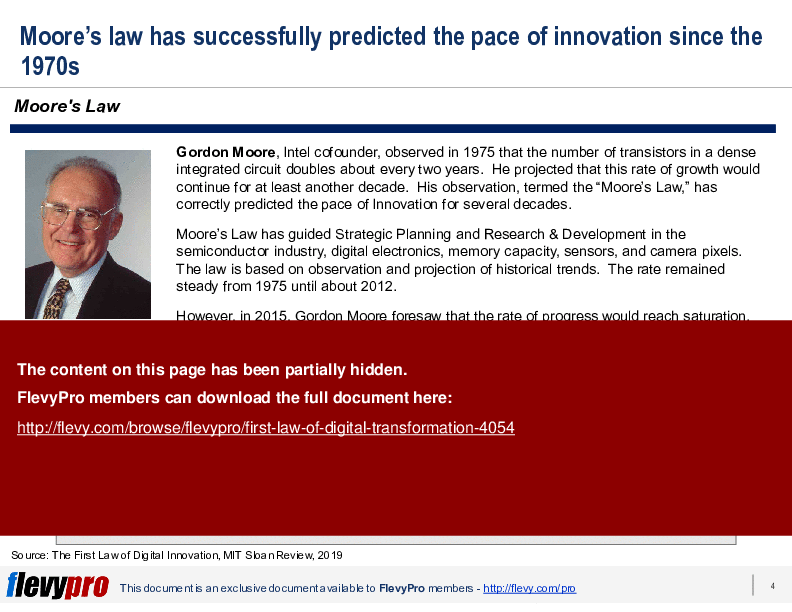
Moore's law has guided Strategic Planning and Research & Development in the semiconductor industry, digital electronics, memory capacity, sensors, and camera pixels. The law is based on observation and projection of historical trends. The rate remained steady from 1975 until about 2012. However, in 2015, Gordon Moore foresaw that the rate of progress would reach saturation. In fact, semiconductor advancement has declined industry-wide since 2010, much lower than the pace predicted by Moore's law.
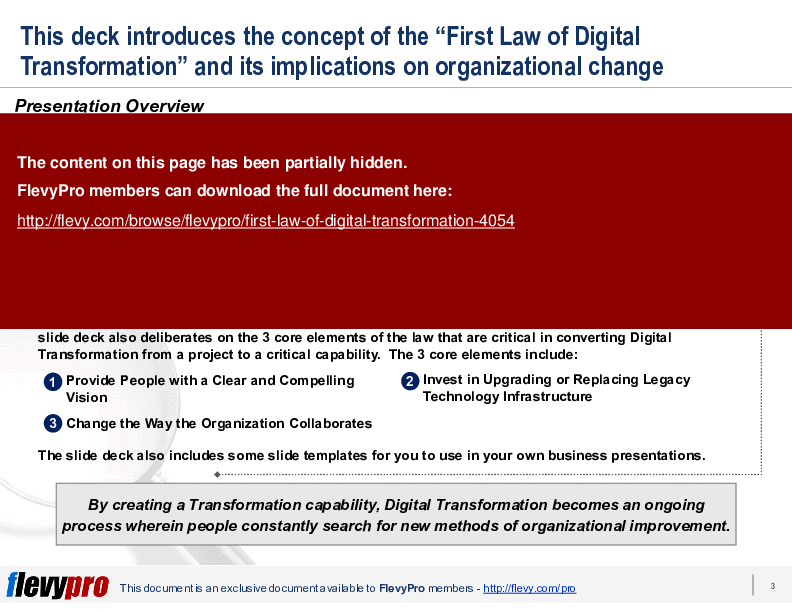
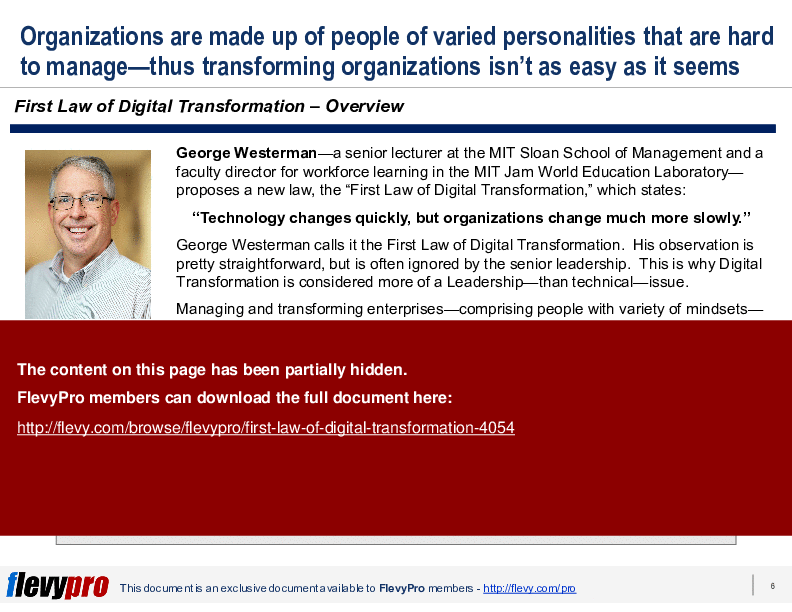
This presentation highlights a new law proposed by George Westerman—a senior lecturer at the MIT Sloan School of Management—which states that "technology changes quickly, but organizations change much more slowly." The law known as the "First Law of Digital Transformation" is a pretty straightforward observation, but is often ignored by the senior Leadership.
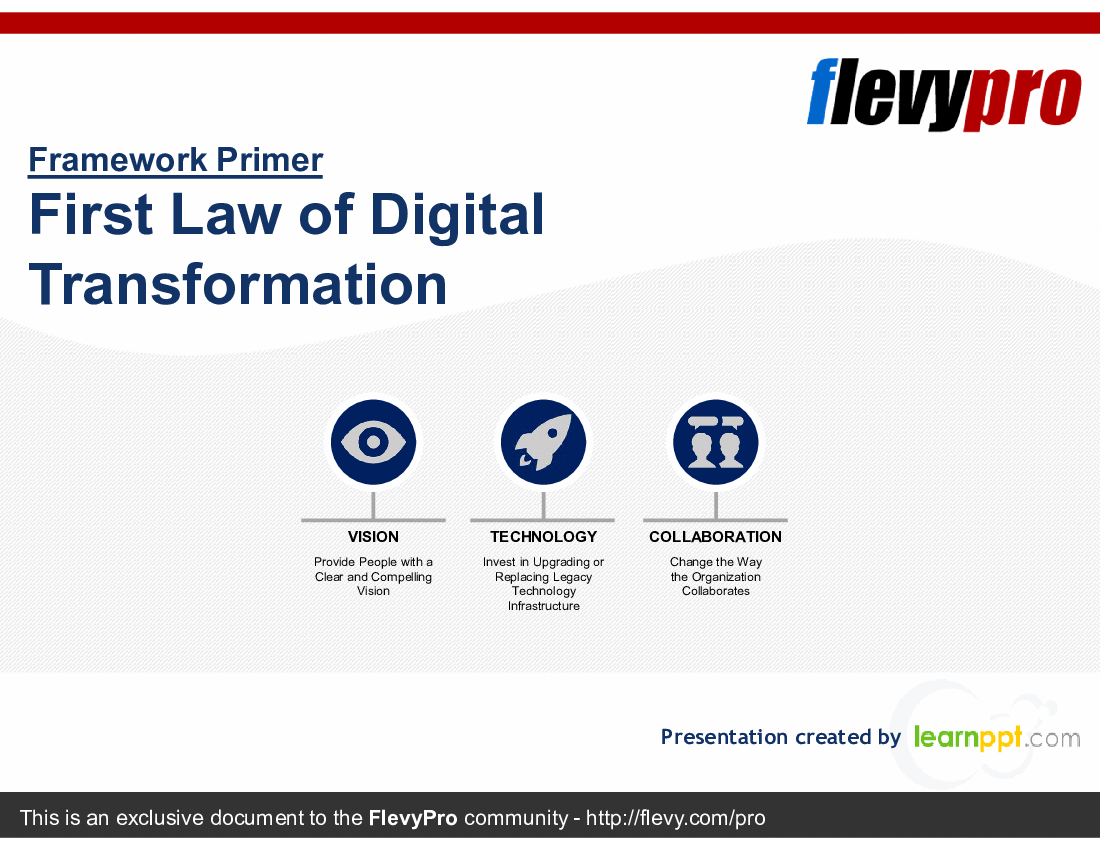
Organizations are formed by creating a balance between the desires of the owners and the desires of the workforce. The success of Transformation initiatives warrants motivating people to change positively. This slide deck also deliberates on the 3 core elements of the law that are critical in converting Digital Transformation from a project to a critical capability. The 3 core elements include:
1. Provide People with a Clear and Compelling Vision
2. Change the Way the Organization Collaborates
3. Invest in Upgrading or Replacing Legacy Technology Infrastructure
The slide deck also includes some slide templates for you to use in your own business presentations.
This presentation delves into the practical implications of the First Law of Digital Transformation, emphasizing the critical role of senior leadership in driving change. It underscores the necessity of fostering a culture of collaboration between IT and other business units to overcome organizational silos. The deck provides actionable insights on creating a compelling vision, upgrading legacy technology, and enhancing internal collaboration. It also includes practical templates to facilitate your own digital transformation initiatives. This resource is indispensable for executives aiming to navigate the complexities of organizational change in the digital age.
What is the "First Law of Digital Transformation" and who proposed it?
The First Law of Digital Transformation is the observation that technology advances faster than organizations change; it was articulated by George Westerman, a senior lecturer at the MIT Sloan School of Management, stating "technology changes quickly,, but organizations change much more slowly."
Why does senior leadership matter more than technology in transformation efforts?
Senior leadership matters because organizational change requires motivating people, aligning owners' and workforce desires, and setting a compelling direction; without leadership attention, technology advances alone won’t convert projects into sustained capabilities, reflecting the deck’s 3 core elements.
What practical actions implement the 3 core elements of the First Law?
Practical actions include creating and communicating a clear, compelling vision; redesigning collaboration practices across business and IT to remove silos; and establishing investment plans to upgrade or replace legacy infrastructure—three core elements emphasized in the presentation.
How should organizations address collaboration between IT and other business units?
Organizations should foster a culture and processes that enable joint decision-making, shared goals, and cross-functional workflows to reduce silos; the presentation highlights changing the way the organization collaborates as one of its 3 core elements.
What impact does legacy technology have on digital transformation timelines?
Legacy technology can slow adoption and limit the benefits of newer technology; the presentation therefore recommends investing in upgrading or replacing legacy technology infrastructure to accelerate transformation outcomes, explicitly naming the upgrade/replacement step.
How can slide templates support communication of a transformation plan?
Slide templates help structure and standardize executive messaging, making it easier to present a clear vision, collaboration changes, and technology investment cases; Flevy's First Law of Digital Transformation includes ready-to-use slide templates inside the 20-slide PPTX.
What should I look for when selecting a presentation or toolkit about digital transformation?
Look for materials that address leadership role and change, IT-business collaboration, and legacy technology investment, plus practical artifacts you can reuse; Flevy's First Law of Digital Transformation covers those topics and is authored by LearnPPT Consulting in a 20-slide PPTX.
Are prebuilt templates valuable for preparing a transformation briefing for executives?
Prebuilt templates can reduce time spent on slide design and let teams focus on strategy, stakeholder alignment, and messaging; the referenced deck provides such templates and is packaged as a 20-slide PowerPoint presentation.
This PPT slide outlines the critical role of senior leadership in driving successful digital transformation. Leadership must manage diverse mindsets among the workforce, addressing challenges posed by differing perspectives and fostering an environment conducive to change. Central to this transformation is the shift from viewing digital initiatives as isolated projects to cultivating a sustainable culture of innovation. Three core elements are essential: Collaboration, Technology, and Vision. Collaboration promotes integrated teamwork, Technology emphasizes upgrading outdated systems, and Vision requires leadership to articulate a clear direction. Senior leadership must also assess organizational readiness for change to ensure alignment with transformation efforts in a rapidly evolving digital landscape.
Source: Best Practices in Digital Transformation PowerPoint Slides: First Law of Digital Transformation PowerPoint (PPTX) Presentation Slide Deck, LearnPPT Consulting
This framework is developed by a team of former McKinsey and Big 4 consultants. The presentation follows the headline-body-bumper slide format used by global consulting firms.
For $10.00 more, you can download this document plus 2 more FlevyPro documents. That's just $13 each.
ABOUT FLEVYPRO
This document is part of the FlevyPro Library, a curated knowledge base of documents for our FlevyPro subscribers.
FlevyPro is a subscription service for on-demand business frameworks and analysis tools. FlevyPro subscribers receive access to an exclusive library of curated business documents—business framework primers, presentation templates, Lean Six Sigma tools, and more—among other exclusive benefits.
The average daily rate of a McKinsey consultant is $6,625 (not including expenses). The average price of a Flevy document is $65.
Trusted by over 10,000+ Client Organizations
Since 2012, we have provided business templates to over 10,000 businesses and organizations of all sizes, from startups and small businesses to the Fortune 100, in over 130 countries.
"FlevyPro has been a brilliant resource for me, as an independent growth consultant, to access a vast knowledge bank of presentations to support my work with clients. In terms of RoI, the value I received from the very first presentation I downloaded paid for my subscription many times over! The
quality of the decks available allows me to punch way above my weight – it's like having the resources of a Big 4 consultancy at your fingertips at a microscopic fraction of the overhead.
"
– Roderick Cameron, Founding Partner at SGFE Ltd
"Flevy is now a part of my business routine. I visit Flevy at least 3 times each month.
Flevy has become my preferred learning source, because what it provides is practical, current, and useful in this era where the business world is being rewritten.

many challenges and there is the need to make the right decisions in a short time, with so much scattered information, we are fortunate to have Flevy. Flevy investigates, selects, and puts at our disposal the best of the best to help us be successful in our work.
"
– Omar Hernán Montes Parra, CEO at Quantum SFE
"Flevy.com has proven to be an invaluable resource library to our Independent Management Consultancy, supporting and enabling us to better serve our enterprise clients.
The value derived from our [FlevyPro] subscription in terms of the business it has helped to gain far exceeds the investment made, making a subscription a no-brainer for any growing consultancy – or in-house strategy team."
– Dean Carlton, Chief Transformation Officer, Global Village Transformations Pty Ltd.
"As a consulting firm, we had been creating subject matter training materials for our people and found the excellent materials on Flevy, which saved us 100's of hours of re-creating what already exists on the Flevy materials we purchased."
– Michael Evans, Managing Director at Newport LLC
"[Flevy] produces some great work that has been/continues to be of immense help not only to myself, but as I seek to provide professional services to my clients, it gives me a large "tool box" of resources that are critical to provide them with the quality of service and outcomes they are expecting."
– Royston Knowles, Executive with 50+ Years of Board Level Experience
"If you are looking for great resources to save time with your business presentations, Flevy is truly a value-added resource. Flevy has done all the work for you and we will continue to utilize Flevy as a source to extract up-to-date information and data for our virtual and onsite presentations!"
– Debbi Saffo, President at The NiKhar Group
"The wide selection of frameworks is very useful to me as an independent consultant. In fact, it rivals what I had at my disposal at Big 4 Consulting firms in terms of efficacy and organization."
– Julia T., Consulting Firm Owner (Former Manager at Deloitte and Capgemini)
"One of the great discoveries that I have made for my business is the Flevy library of training materials.
As a Lean Transformation Expert, I am always making presentations to clients on a variety of topics: Training, Transformation, Total Productive Maintenance, Culture, Coaching, Tools, Leadership Behavior, etc. Flevy
It is well worth the money to purchase these presentations. Sure, I have the knowledge and information to make my point. It is another thing to create a presentation that captures what I want to say. Flevy has saved me countless hours of preparation time that is much better spent with implementation that will actually save money for my clients.
"
– Ed Kemmerling, Senior Lean Transformation Expert at PMG
Download our FREE Digital Transformation Templates
Download our free compilation of 50+ Digital Transformation slides and templates. DX concepts covered include Digital Leadership, Digital Maturity, Digital Value Chain, Customer Experience, Customer Journey, RPA, etc.









