
 Click main image to view in full screen. Unlock all 16 preview images:
Equipment Leasing Company Financial Model – Excel XLSX
Excel (XLSX)


BENEFITS OF THIS DOWNLOADABLE EXCEL DOCUMENT
- Provides a dynamic 10-Year Financial Plan for an Equipment Leasing Company.
- Suitable for either a startup or an operating Company and any type of Equipment.
- Supports up to 6 different Equipment types (contact us if you need more)
ASSET MANAGEMENT EXCEL DESCRIPTION
Financial model presenting a business scenario of an Equipment Leasing Company, which offers Monthly Leasing options to corporations and individuals.
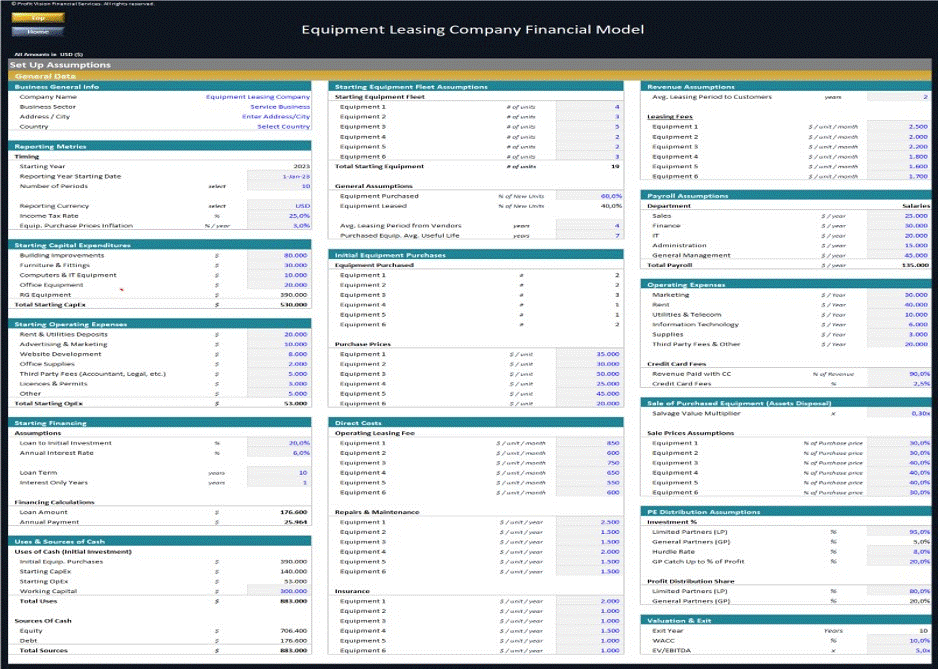
Suitable for either a startup or an operating Company and any type of Equipment, the model is a flexible tool for owners to calculate operating activities and analyze business profitability. It includes assumptions and calculations of the Total Equipment Fleet with units either purchased or leased, salvage value and units disposal (sale), Revenue assumptions (Monthly Rates, Leasing Contract period, Utilization rates, etc), Direct Costs (Leasing, Maintenance, Insurance), Payroll, OpEx, financing through Debt & Equity and Valuation & Exit Multiples in case of a potential sale of the business.
Outputs of the template include forecasted Annual Financial Statements (3 Statement Model), Breakeven Analysis, Profitability Analysis, various KPI and Financial Ratios, Dynamic Performance Dashboard, Business Valuation and Sensitivity Analysis, Investors Distribution Waterfall and a professional Executive Summary presenting company's results.
The template structure follows Financial Modeling Best Practices principles and is fully customizable with a dynamic functionality allowing users to select the desired forecasted Years (1 to 10). Output Reports & Charts are updated based on the selected forecast period.
Model Structure
Inputs & Model Calculations:
• General Business Info
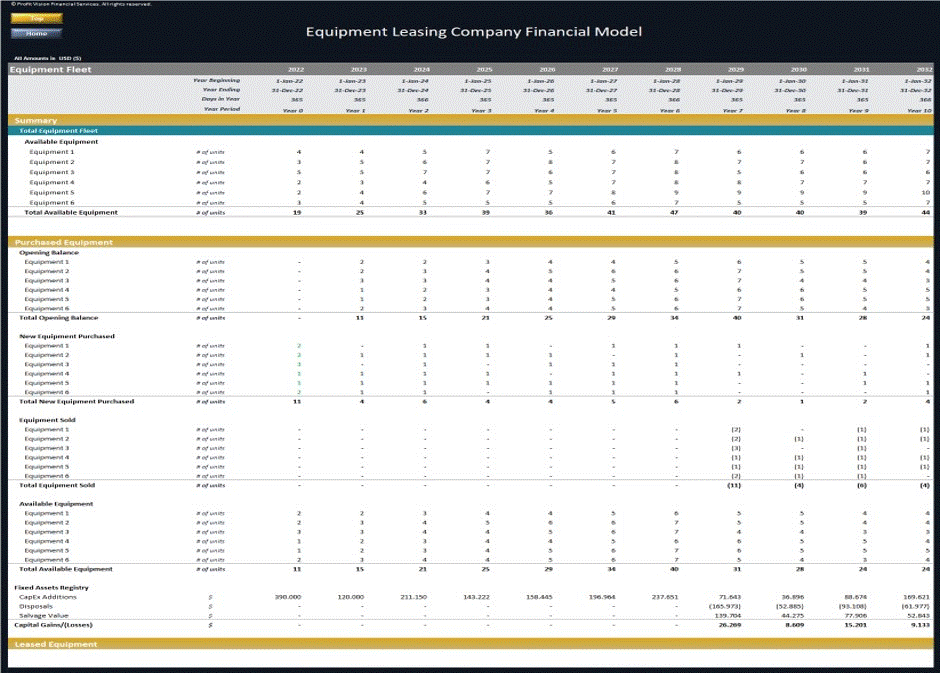
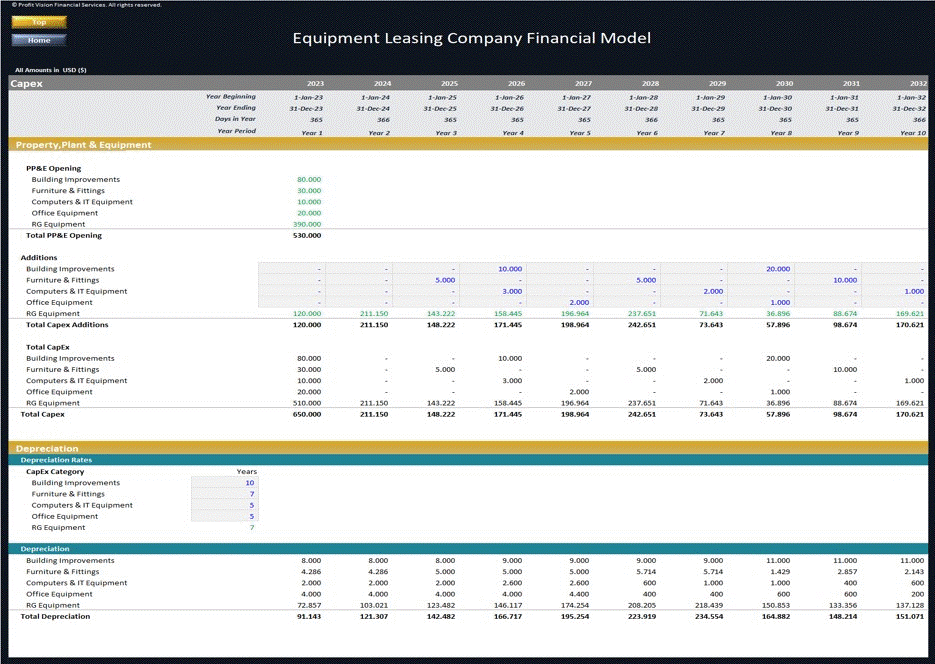
• Equipment Fleet Assumptions (Purchases, Leases) for 6 different types of equipment.
• Assets (Equipment) Disposal Assumptions and Calculations incl. Hold Period, Salvage Value Multiplier, Sale Prices, and Capital Gains (Losses)
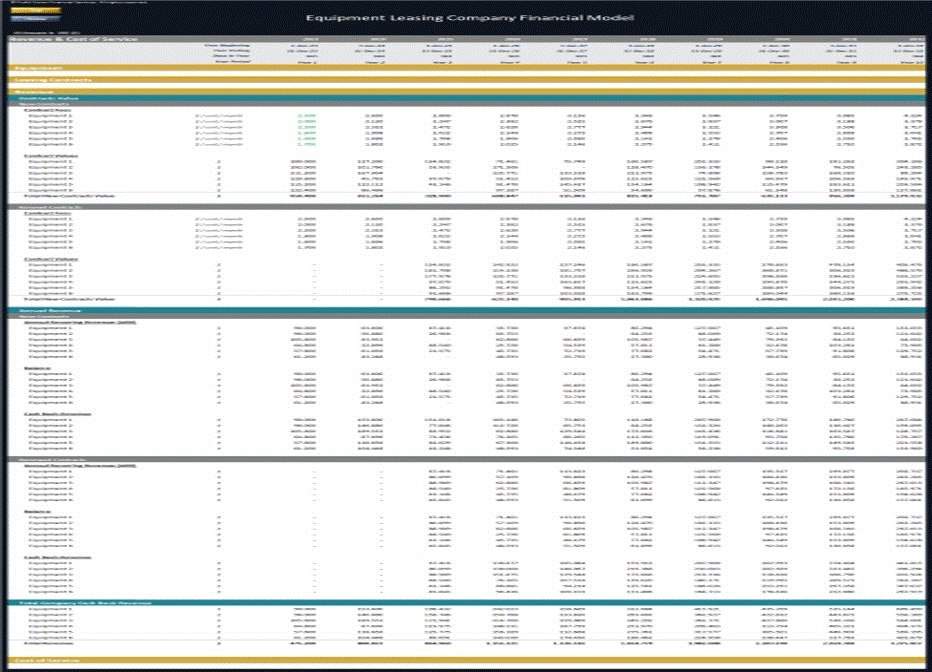
• Revenue Assumptions (Monthly Leasing Fees, Leasing Contract Period, Utilization Rates)
• Direct Costs (Leasing, Maintenance, and Insurance Costs)
• Payroll & Operating Expenses
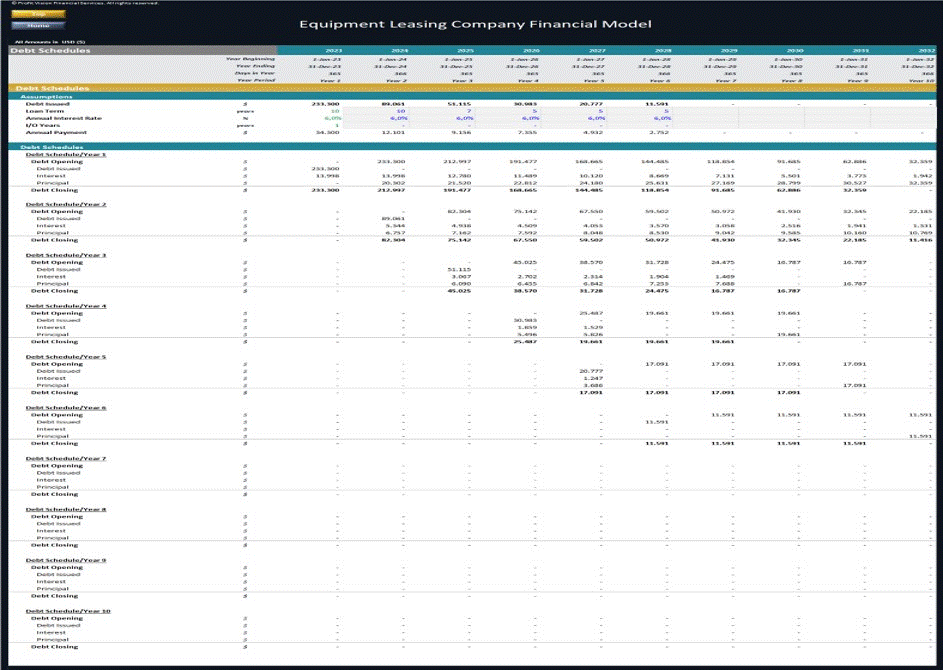
• Financing & Capital Structure – Uses & Sources of Cash analysis (Financing through Equity & Debt)
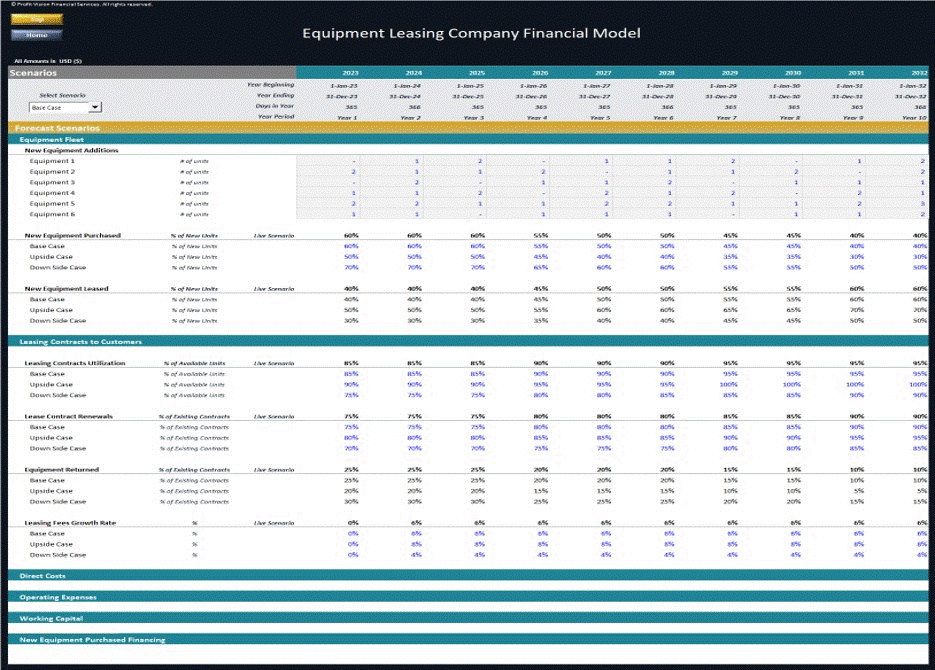
• Forecast Scenarios
• Exit Year Scenario & Valuation Multiples (EV/Revenue and EV/EBITDA)
Outputs:
• Dynamic 10-Year Forecast (3 Statement Model)
• Breakeven Analysis per Year
• Profitability Analysis per Equipment Type and Year
• Summary of various KPIs and Financial Ratios (Operating Metrics, Profit Margins, ROE, ROA, etc.)
• Dynamic Performance Dashboard
• Business Valuation (incl. Enterprise & Equity Value, DCF, Terminal Value, Unlevered & Levered Cash Flow, Project Return Metrics & Sensitivity Analysis)
• Private Equity Distribution Waterfall Model (80/20 split including GP Catch % option)
• Exit Year Executive Summary (can be used for investment decisions)
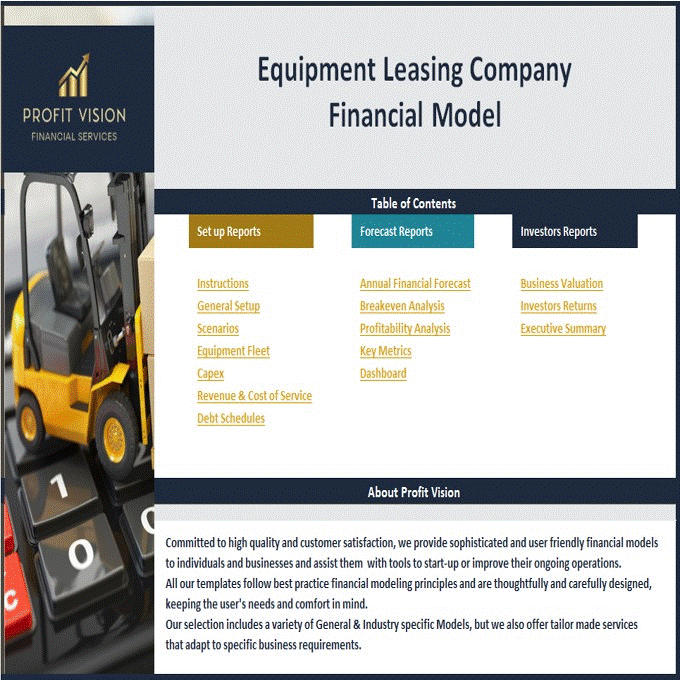
Detailed instructions on the use of the model are included in the Excel file.
Help & Support
Committed to high quality and customer satisfaction, all our templates follow best practice financial modeling principles and are thoughtfully and carefully designed, keeping the user's needs and comfort in mind.
Whether you have no experience or are well versed in finance, accounting, and the use of Microsoft Excel, our professional financial models are the right tools to boost your business operations!
If you experience any difficulty while using this template and cannot find the appropriate guidance in the provided instructions, please feel free to contact us for assistance.
If you need a template customized for your business requirements, please e-mail us and explain your specific needs briefly.
The model includes a comprehensive set of assumptions and calculations for various types of equipment, providing a robust foundation for financial forecasting. It also features detailed breakeven and profitability analyses, ensuring you have a clear understanding of your business's financial health.
Got a question about the product? Email us at support@flevy.com or ask the author directly by using the "Ask the Author a Question" form. If you cannot view the preview above this document description, go here to view the large preview instead.
TOPIC FAQ
What key input assumptions are required to build an equipment leasing financial model?
Core inputs include fleet assumptions for purchases and leases across up to 6 equipment types, disposal and salvage multipliers, monthly leasing fees, contract length, utilization rates, direct costs (leasing, maintenance, insurance), payroll, operating expenses, and financing mix (debt/equity). These are captured as structured model inputs for 6 equipment types.What typical financial outputs should an equipment leasing model produce?
Outputs typically include a linked 10-year 3-statement forecast, annual breakeven analysis, profitability by equipment type, summary KPIs and financial ratios, a dynamic performance dashboard, DCF and enterprise/equity valuation, sensitivity analysis, and an investor distribution waterfall. The template provides a Dynamic 10-Year Forecast (3-statement model).How are exit valuation scenarios modeled for a leasing company?
Exit scenarios use valuation multiples and cash-flow approaches: the model supports EV/Revenue and EV/EBITDA multiples, DCF with terminal value, unlevered and levered cash flows, and sensitivity testing of exit assumptions. These are consolidated in an Exit Year Executive Summary using EV/EBITDA and EV/Revenue multiples.How should financing and investor distributions be handled in this type of model?
Financing is modeled through explicit uses & sources of cash, allowing separate equity and debt tranches and linked interest/repayment schedules. Investor returns are shown via a private equity distribution waterfall, including an 80/20 split and an optional GP catch percentage. The template includes an 80/20 waterfall with GP catch option.What features should I look for when choosing an equipment leasing financial template?
Look for modular inputs (fleet, revenue, costs), support for purchases versus leases, disposal/salvage mechanics, financing and capital structure, scenario and sensitivity analysis, valuation outputs (DCF and multiples), and configurable forecast years. Also check for embedded instructions and dynamic forecast horizon of 1–10 years.How much Excel experience is needed to use a leasing financial model and can it be customized?
The model includes detailed instructions within the Excel file and is described as customizable; users with varying finance and Excel skills can adjust inputs, scenarios, and forecast length. Support and customization requests can be directed to the author, and the file includes detailed instructions in the Excel workbook.What model outputs are most useful when preparing materials for investors or a sale?
Investors commonly want a clear executive summary, DCF valuation, enterprise and equity values, sensitivity tables, and a projected investor return schedule. This model compiles those in an Exit Year Executive Summary alongside DCF, terminal value, and an investor distribution waterfall for presentation.How can a financial model help integrate or optimize an equipment fleet after an acquisition?
Use the model to compare purchased versus leased units, apply disposal and salvage assumptions for divestments, model utilization-driven revenue, and run breakeven and profitability analyses by equipment type to prioritize redeployment or disposal. The template provides profitability analysis per equipment type.Source: Best Practices in Asset Management, Integrated Financial Model Excel: Equipment Leasing Company Financial Model Excel (XLSX) Spreadsheet, Profit Vision
ABOUT THE AUTHOR

Profit Vision provides Consulting & Outsourced Financial Services as well as Financial Planning & Performance analysis to small and mid-size businesses by implementing efficient and effective tools to assist them with start-up business plans or improve their ongoing operations.
Our range of services include Financial & Operational Analysis, Business Planning, Budgeting & Forecasting, Cash Flow
... [read more]
Ask the Author a Question
You must be logged in to contact the author.




























