Your AI assistant becomes a Flevy-powered consultant, with direct access to our full library of frameworks, templates, and case studies. Free to connect. No account, sign-in, or API key required.
STEP 1 · CHOOSE YOUR ASSISTANT
STEP 2 · CONNECT
1
No copying needed. Flevy is in the official Claude Connectors Directory.
2
Click the button below, then click Connect on the Flevy listing.
This framework is developed by a team of former McKinsey and Big 4 consultants. The presentation follows the headline-body-bumper slide format used by global consulting firms.
Editor Summary
Digital Maturity Primer is a 29-slide PowerPoint by LearnPPT Consulting that outlines a Digital Maturity Model and 5 core best-practice areas: Digital Organization, Digital Strategy, Digital Experimentation, Digital Talent, and Digital Leadership.
Read moreThe deck describes the model's objectives, focus areas, capabilities, and phases from Initiate to Improve, and includes reusable slide templates for business presentations. Target users include executives and digital/transformation leaders. Available on Flevy with immediate digital download.
Use this deck when an organization must define or accelerate a staged digital transformation effort, assess current-state maturity, or communicate a roadmap to leadership.
Chief Digital Officers mapping a maturity baseline and prioritizing initiatives across organization, strategy, experimentation, talent, and leadership.
Transformation leads designing and scaling experiments that align pilots to core business strategy and analytics use cases.
Strategy consultants benchmarking client maturity and advising on objectives, focus areas, and capabilities.
Senior executives communicating phased progress from Initiate through Improve to stakeholders.
The staged approach and emphasis on organization, experimentation, talent, and leadership reflect common consulting practices for phased transformation programs.
Digital Transformation is a matter of survival now for all organizations particularly businesses.
Digital Transformation is typically more difficult than any change or Transformation program that an organization may undertake.
Most organizations struggle to make the fundamental alterations that are essential to bring about Digital Maturity. However, some companies are leading the way in achieving Digital Maturity.
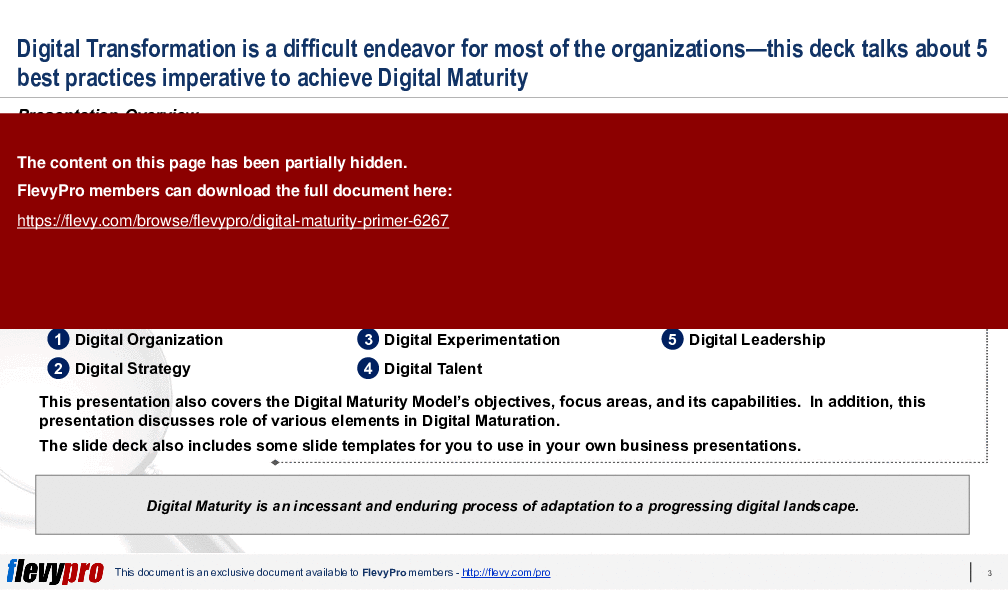
Research comprising of a survey and interviews elucidated Digital Maturity of these organizations. This slide deck provides an overview of the 5 best practice areas that Digitally Maturing companies undertake to lead the Digital Maturity battle:
1. Digital Organization
2. Digital Strategy
3. Digital Experimentation
4. Digital Talent
5. Digital Leadership
This presentation also covers the Digital Maturity Model's objectives, focus areas, and its capabilities. In addition, this presentation discusses role of various elements in Digital Maturation.
The slide deck also includes some slide templates for you to use in your own business presentations.
This presentation delves into the intricacies of achieving Digital Maturity by examining the pivotal role of organizational structure and leadership. It highlights how cross-functional teams and a culture of collaboration are essential in navigating the digital landscape. The deck outlines the phases of the Digital Maturity Model, providing clear objectives and focus areas for each stage, from Initiate to Improve.
The PPT also emphasizes the importance of experimentation and scaling digital initiatives to align with core business strategies. By leveraging advanced technologies like AI and data analytics, organizations can optimize their digital transformation efforts. This comprehensive guide is an invaluable resource for executives aiming to lead their companies through the complexities of digital evolution.
What are the most common focus areas companies tackle to achieve digital maturity?
Research in the presentation identifies 5 recurring focus areas that Digitally Maturing companies prioritize: Digital Organization, Digital Strategy, Digital Experimentation, Digital Talent, and Digital Leadership. These areas form the core of the recommended improvement agenda and are presented as the 5 best practice areas.
What does a Digital Maturity Model typically describe and how are stages framed?
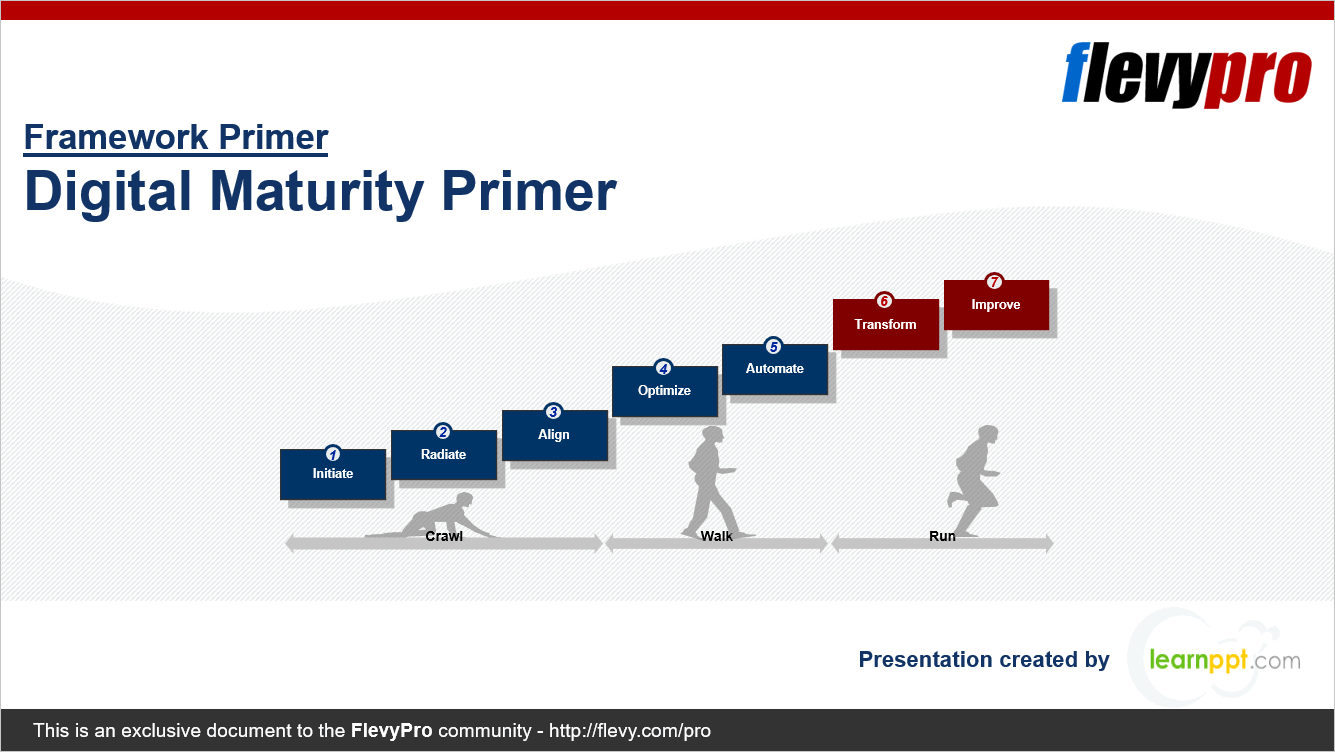
A Digital Maturity Model in the deck lays out objectives, focus areas, and capabilities for progression, describing phases as a sequence from initial activities through scaling and ongoing improvement. The model’s stages are presented conceptually as phases from Initiate to Improve.
Why is digital transformation often harder than other change programs?
The presentation notes digital transformation requires fundamental alterations to organizational structure, ways of working, leadership behaviors, and talent — changes that cut across functions and culture, making digital transformation more difficult than other programs and requiring fundamental organizational alterations.
How should teams be organized to support digital maturation?
The slides emphasize cross-functional teams and a culture of collaboration, with leadership enabling experimentation and scaling. Structuring teams around multidisciplinary squads and executive sponsorship is highlighted as a role-based approach, stressing the role of cross-functional teams and collaboration.
What should I look for in a digital maturity assessment toolkit if I have limited time and resources?
Prioritize a toolkit that clarifies objectives, focus areas, and capabilities; includes practical templates for presentations; and supports experimentation-to-scaling planning. The Digital Maturity Primer addresses these needs by mapping objectives and focus areas and providing slide templates.
How can I evaluate the cost versus value of buying a slide-based digital maturity toolkit?
Value is measured by how quickly the kit helps you assess maturity, align leadership, and structure experiments that map to business strategy and analytics needs. Practical deliverables to check for include clear objectives, focus areas, capabilities, and reusable slide templates.
We just completed a merger — what first step should we take to start digital maturity work?
Begin with a current-state Digital Maturity assessment to identify gaps in organization, strategy, talent, leadership, and experimentation capability. Use that baseline to prioritize integration and scaling activities; the Digital Maturity Primer frames assessments around the 5 focus areas.
As a CDO focused on scaling pilots, what elements should my framework emphasize?
Emphasize rapid experimentation tied to business KPIs, mechanisms for scaling successful pilots into core operations, executive sponsorship, and analytic capabilities (including AI and data analytics) to measure impact — with a specific focus on experimentation and scaling using AI and data analytics.
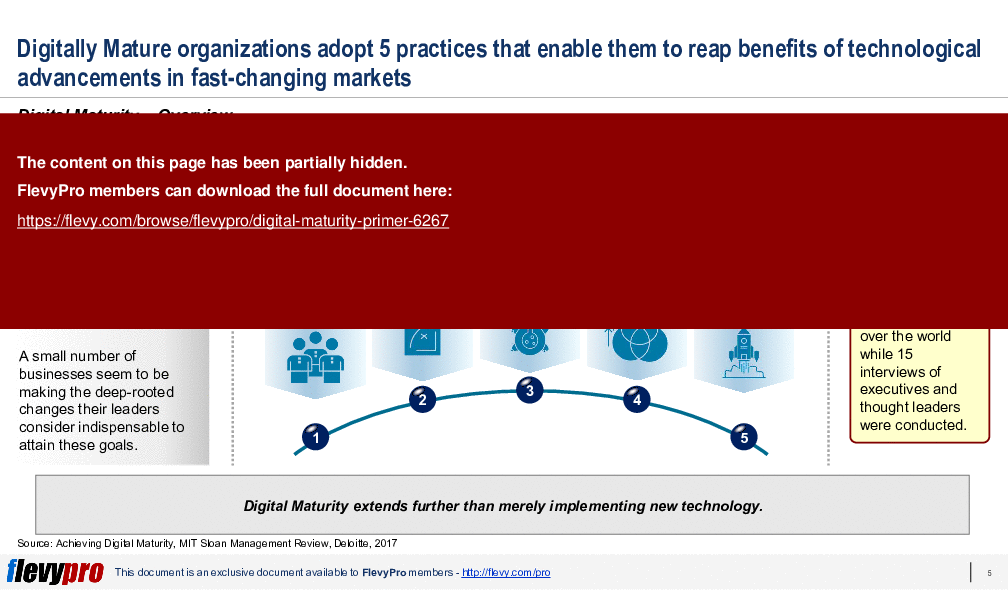
This PPT slide template outlines key components of digital maturity best practices within the framework of digital transformation. It identifies 5 critical areas: "Digital Organization," which focuses on structuring teams and processes to support digital initiatives; "Digital Strategy," emphasizing the need for a clear, actionable plan aligned with business objectives; "Digital Experimentation," advocating for a culture of innovation and testing to adapt to market changes; "Digital Talent," highlighting the importance of acquiring and developing skills within the workforce; and "Digital Leadership," which underscores the necessity of strong leadership to champion digital initiatives. This framework provides organizations with a roadmap to assess and enhance their digital capabilities.
This PPT slide template analyzes organizations' digital maturity levels, categorized into 3 groups based on self-assessment ratings. 34% of organizations are in the "Early" stage (ratings 1-3), indicating foundational digital integration and the start of digital transformation. The "Developing" stage (ratings 4-6) includes 41% of organizations, which are experimenting with digital technologies, but lack full integration. The "Maturing" stage (ratings 7-10) comprises 25% of organizations, where digital capabilities are embedded in business processes. The stability of these proportions suggests many companies face challenges advancing their digital initiatives. Assessing digital maturity is crucial for informing strategic decisions regarding technology investments and process improvements.
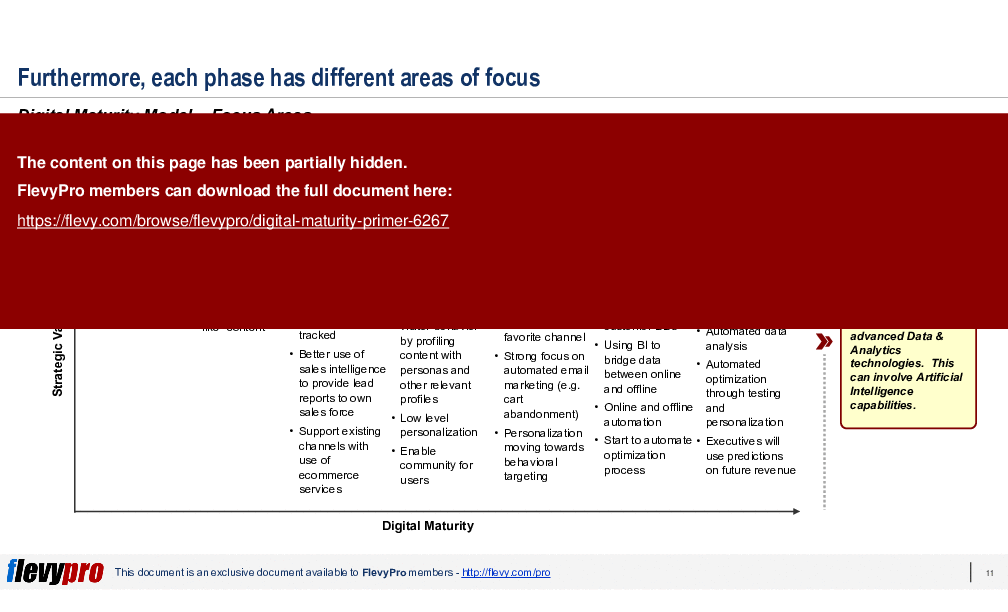
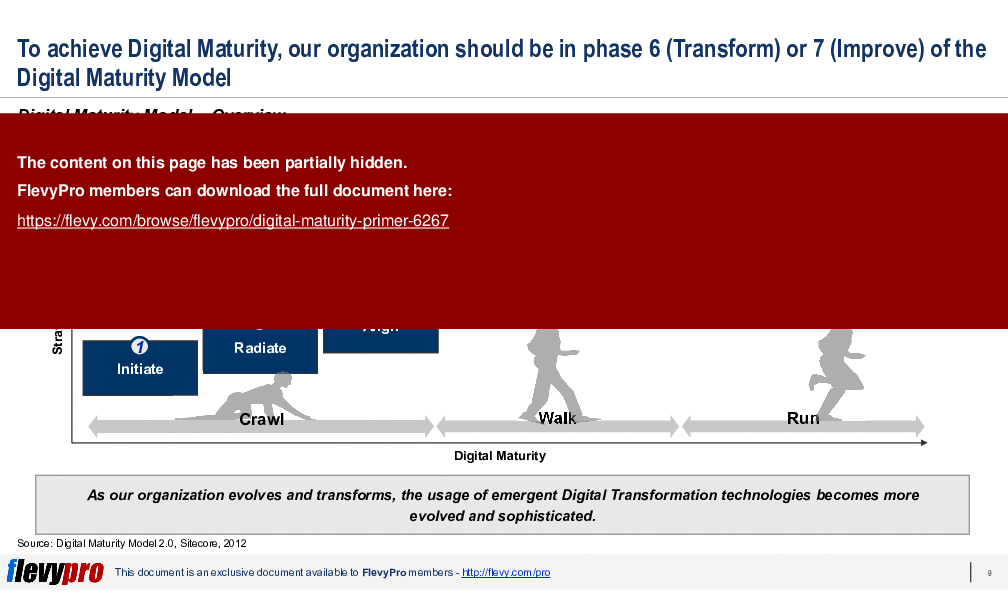
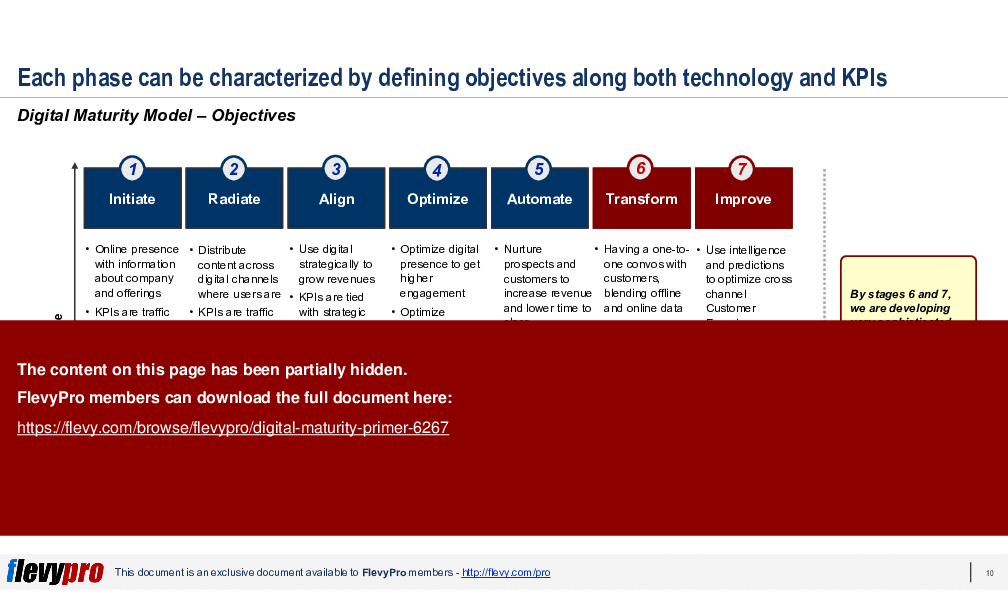
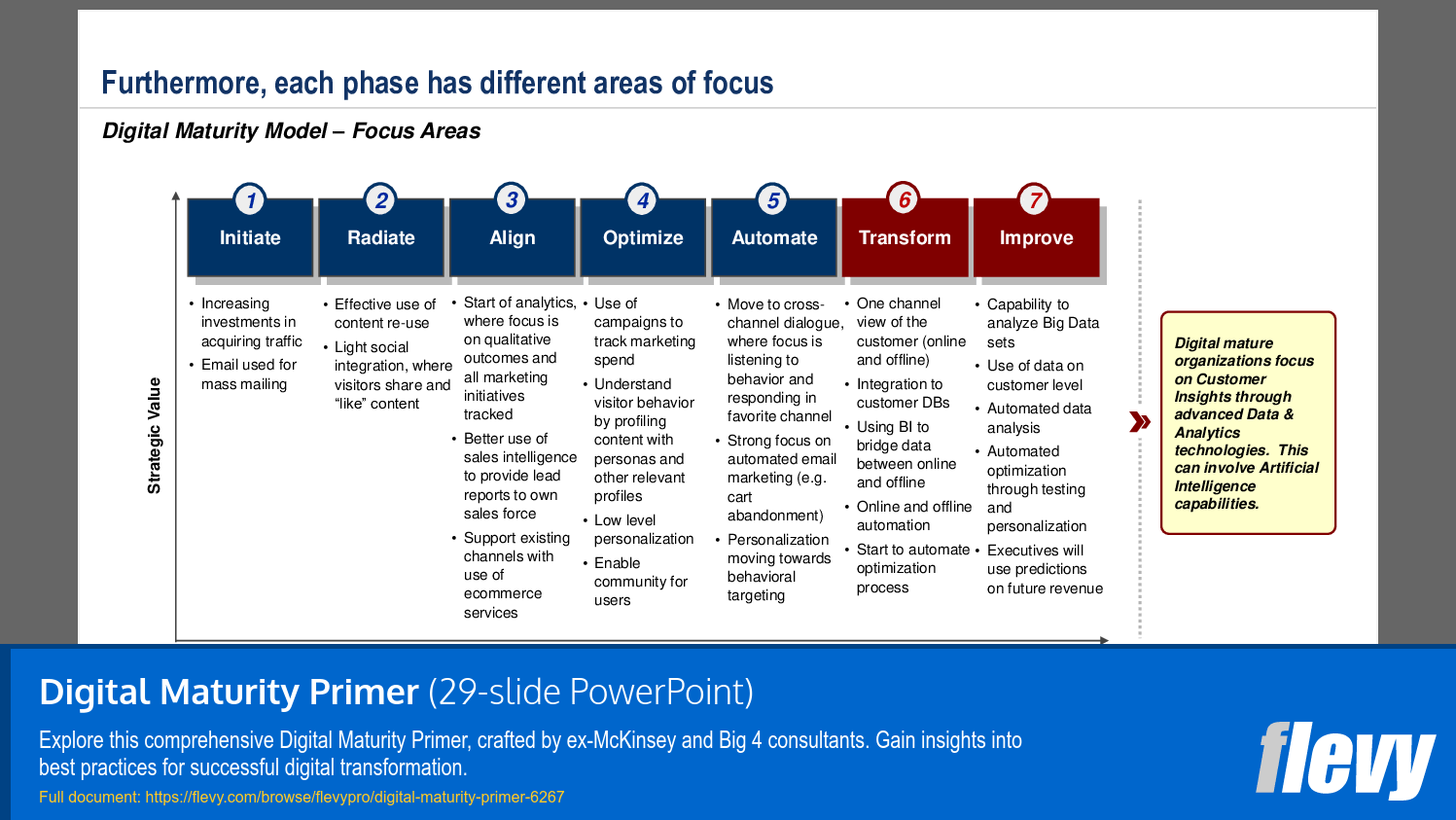
The Digital Maturity Model outlines a progression through 7 phases: "Initiate," "Radiate," "Align," "Optimize," "Automate," "Transform," and "Improve." In the "Initiate" phase, organizations focus on traffic acquisition through mass email campaigns. The "Radiate" phase emphasizes content reuse and social integration to enhance user engagement. The "Align" phase introduces analytics for tracking marketing initiatives and sales intelligence for improved reporting. The "Optimize" phase advocates for understanding visitor behavior and targeted campaigns. In the "Automate" phase, cross-channel dialogue and automated strategies, like cart abandonment emails, are prioritized. The "Transform" phase focuses on creating a unified customer view and integrating data across channels. Finally, the "Improve" phase highlights big data analysis and customer insights for automated optimization, enabling informed revenue predictions. This model serves as a roadmap for enhancing digital maturity and leveraging advanced data analytics.
This PPT slide template highlights the critical role of technology in achieving digital maturity. Currently, 53% of organizations leverage digital technology in new ways, categorized as Early (32%), Developing (57%), and Maturing (76%). This indicates progressive adoption of digital practices aligned with business strategy. Organizations must transform their innovation processes, design methodologies, and collaborative efforts to create offerings that utilize flexible digital platforms adaptable to new applications. This adaptability is essential for customer satisfaction in a rapidly evolving digital landscape. True digital maturity requires a fundamental transformation in technology integration within business operations.
This PPT slide template analyzes the relationship between digital maturity and experimentation in organizations, categorizing them into 3 stages: Early, Developing, and Maturing. In the Early stage, 86% of companies engage in small experiments, with only 8% pursuing larger initiatives. The Developing stage sees 96% conducting small experiments, while 10% attempt larger ones, indicating a gradual shift. In the Maturing stage, 98% are involved in experimentation, with 35% focusing on large-scale efforts and 52% on smaller ones. Digitally Maturing companies are 2.5 times more likely to engage in both small and large-scale experiments compared to Early stage companies, highlighting the need for a comprehensive experimentation strategy that aligns with business objectives and enhances organizational agility.
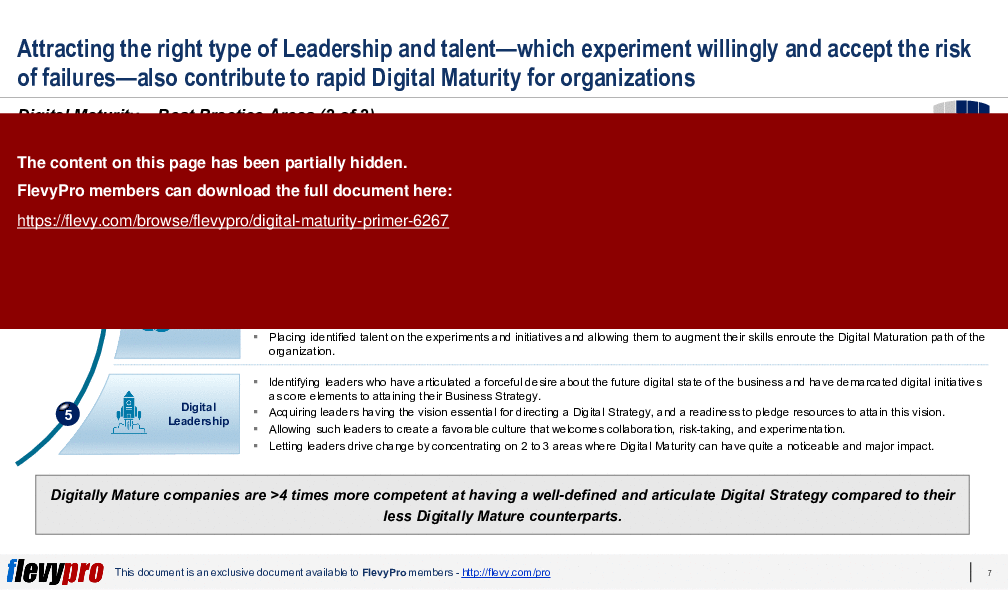
This PPT slide template outlines best practices for enhancing digital maturity through 3 pillars: Digital Experimentation, Digital Talent, and Digital Leadership. Digital Experimentation focuses on small-scale experiments that generate tangible business impacts, requiring a culture of experimentation and funding mechanisms to support initiatives. Quick digital experiments build knowledge and inform larger efforts. Digital Talent emphasizes attracting and retaining skilled individuals for digital transformation, fostering engaging environments for talent retention, and developing in-house capabilities. Digital Leadership highlights the need for leaders who articulate a clear vision and guide digital initiatives, fostering a collaborative culture that embraces risk-taking. Concentrated leadership efforts can significantly advance digital maturity.
Organizational culture is critical for achieving digital maturity. A framework illustrates how companies can cultivate a culture that supports digital transformation. As organizations progress from early to maturing stages, the percentage of employees recognizing and rewarding collaboration, valuing experimentation, and accepting failure increases significantly. Recognizing collaboration enhances teamwork and aligns with a continuous learning operational model. Organizations valuing experimentation adapt quickly to market changes by encouraging new ideas. Accepting failure is essential for innovation, allowing teams to experiment without fear of repercussions. Implementing initiatives that increase agility enables effective responses to changing market conditions. Cross-functional teamwork is vital for success in digital environments, promoting collaboration and creating an Agile framework that supports digital objectives. Cultural change requires shifting mindsets, essential for thriving in a digitally maturing landscape.
Digital transformation is a survival imperative for organizations, presenting challenges that often exceed those of other organizational changes. Companies are navigating their paths to digital maturity, informed by research including surveys and interviews. Five best practice areas for enhancing digital maturity are identified: Digital Organization, Digital Strategy, Digital Experimentation, Digital Talent, and Digital Leadership. The Digital Maturity Model serves as a framework for assessing objectives, focus areas, and capabilities necessary for effective digital transformation. This model aids organizations in identifying areas for improvement. Templates for business presentations are included to help executives communicate their digital transformation strategies effectively.
Source: Best Practices in Digital Transformation, Maturity Model, Digital Maturity PowerPoint Slides: Digital Maturity Primer PowerPoint (PPTX) Presentation Slide Deck, LearnPPT Consulting
This framework is developed by a team of former McKinsey and Big 4 consultants. The presentation follows the headline-body-bumper slide format used by global consulting firms.
For $10.00 more, you can download this document plus 2 more FlevyPro documents. That's just $13 each.
ABOUT FLEVYPRO
This document is part of the FlevyPro Library, a curated knowledge base of documents for our FlevyPro subscribers.
FlevyPro is a subscription service for on-demand business frameworks and analysis tools. FlevyPro subscribers receive access to an exclusive library of curated business documents—business framework primers, presentation templates, Lean Six Sigma tools, and more—among other exclusive benefits.
The average daily rate of a McKinsey consultant is $6,625 (not including expenses). The average price of a Flevy document is $65.
Trusted by over 10,000+ Client Organizations
Since 2012, we have provided business templates to over 10,000 businesses and organizations of all sizes, from startups and small businesses to the Fortune 100, in over 130 countries.
"As a young consulting firm, requests for input from clients vary and it's sometimes impossible to provide expert solutions across a broad spectrum of requirements. That was before I discovered Flevy.com.
Through subscription to this invaluable site of a plethora of topics that are key and crucial to consulting, I
have been able to exceed expectations and deliver quality advice and solutions to my clients. The quality and expertise of the authors are exemplary and gives me great confidence to use as part of my service offerings.
I highly recommend this company for any consultant wanting to apply international best practice standards in their service offerings.
"
– Nishi Singh, Strategist and MD at NSP Consultants
"Flevy is now a part of my business routine. I visit Flevy at least 3 times each month.
Flevy has become my preferred learning source, because what it provides is practical, current, and useful in this era where the business world is being rewritten.
many challenges and there is the need to make the right decisions in a short time, with so much scattered information, we are fortunate to have Flevy. Flevy investigates, selects, and puts at our disposal the best of the best to help us be successful in our work.
"
– Omar Hernán Montes Parra, CEO at Quantum SFE
"FlevyPro has been a brilliant resource for me, as an independent growth consultant, to access a vast knowledge bank of presentations to support my work with clients. In terms of RoI, the value I received from the very first presentation I downloaded paid for my subscription many times over! The
quality of the decks available allows me to punch way above my weight – it's like having the resources of a Big 4 consultancy at your fingertips at a microscopic fraction of the overhead.
"
– Roderick Cameron, Founding Partner at SGFE Ltd
"As a consultant requiring up to date and professional material that will be of value and use to my clients, I find Flevy a very reliable resource.
The variety and quality of material available through Flevy offers a very useful and commanding source for information. Using Flevy saves me time, enhances my expertise and ends up being a good decision."
– Dennis Gershowitz, Principal at DG Associates
"The wide selection of frameworks is very useful to me as an independent consultant. In fact, it rivals what I had at my disposal at Big 4 Consulting firms in terms of efficacy and organization."
– Julia T., Consulting Firm Owner (Former Manager at Deloitte and Capgemini)
"I have used Flevy services for a number of years and have never, ever been disappointed. As a matter of fact, David and his team continue, time after time, to impress me with their willingness to assist and in the real sense of the word. I have concluded in fact
that it is not at all just a repository of documents/resources but, in the way that David and his team manage the firm, it is like dealing with consultants always ready to assist, advise and direct you to what you really need, and they always get it right.
I am an international hospitality accomplished senior executive who has worked and lived during the past 35 years in 23 countries in 5 continents and I can humbly say that I know what customer service is, trust me.
Aside from the great and professional service that Flevy's team provide, their wide variety of material is of utmost great quality, professionally put together and most current.
Well done Flevy, keep up the great work and I look forward to continue working with you in the future and to recommend you to a variety of colleagues around the world.
"
– Roberto Pelliccia, Senior Executive in International Hospitality
"I am extremely grateful for the proactiveness and eagerness to help and I would gladly recommend the Flevy team if you are looking for data and toolkits to help you work through business solutions."
– Trevor Booth, Partner, Fast Forward Consulting
"I like your product. I'm frequently designing PowerPoint presentations for my company and your product has given me so many great ideas on the use of charts, layouts, tools, and frameworks. I really think the templates are a valuable asset to the job."
– Roberto Fuentes Martinez, Senior Executive Director at Technology Transformation Advisory

 Click main image to view in full screen. Unlock all 11 preview images: