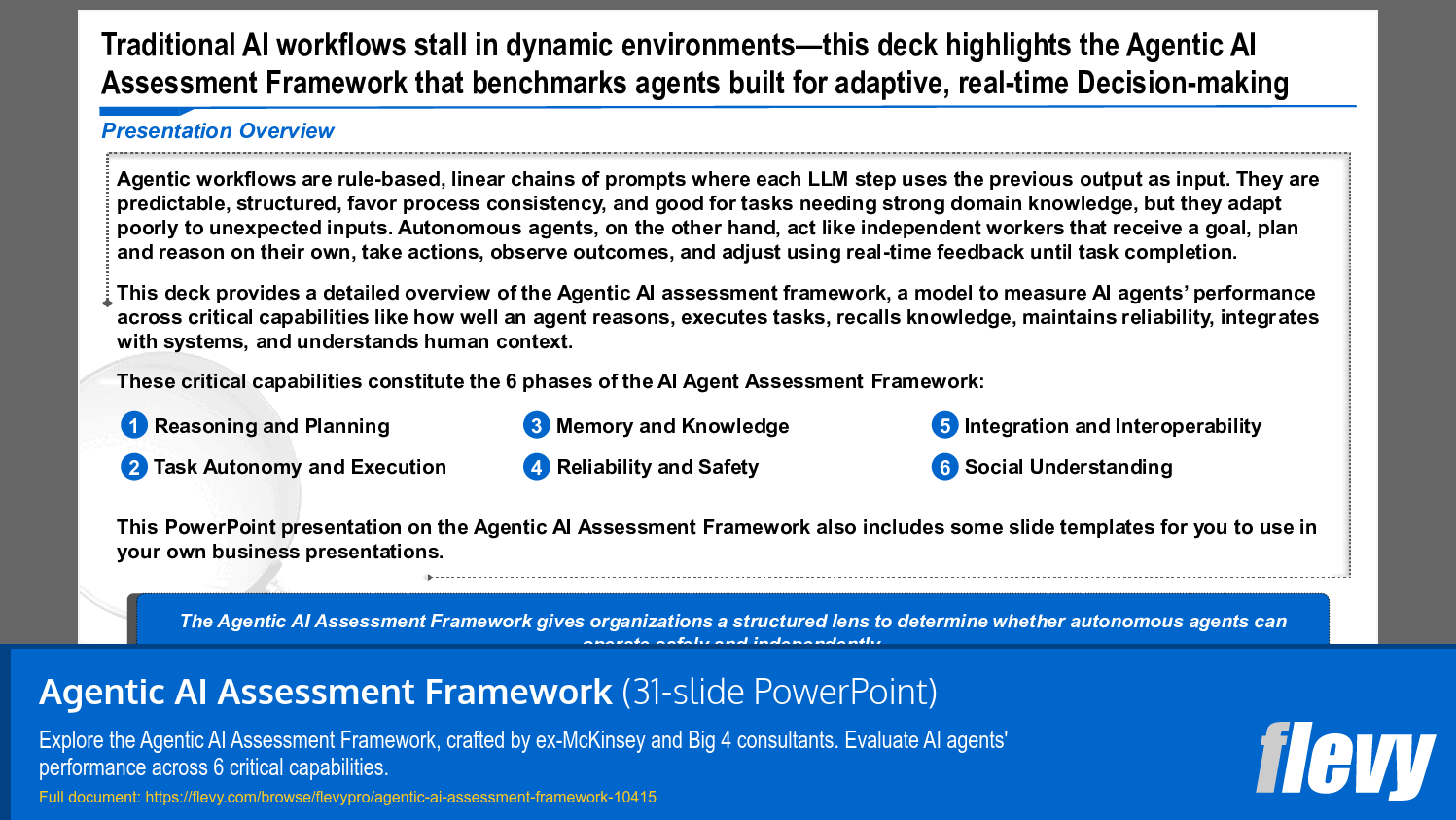
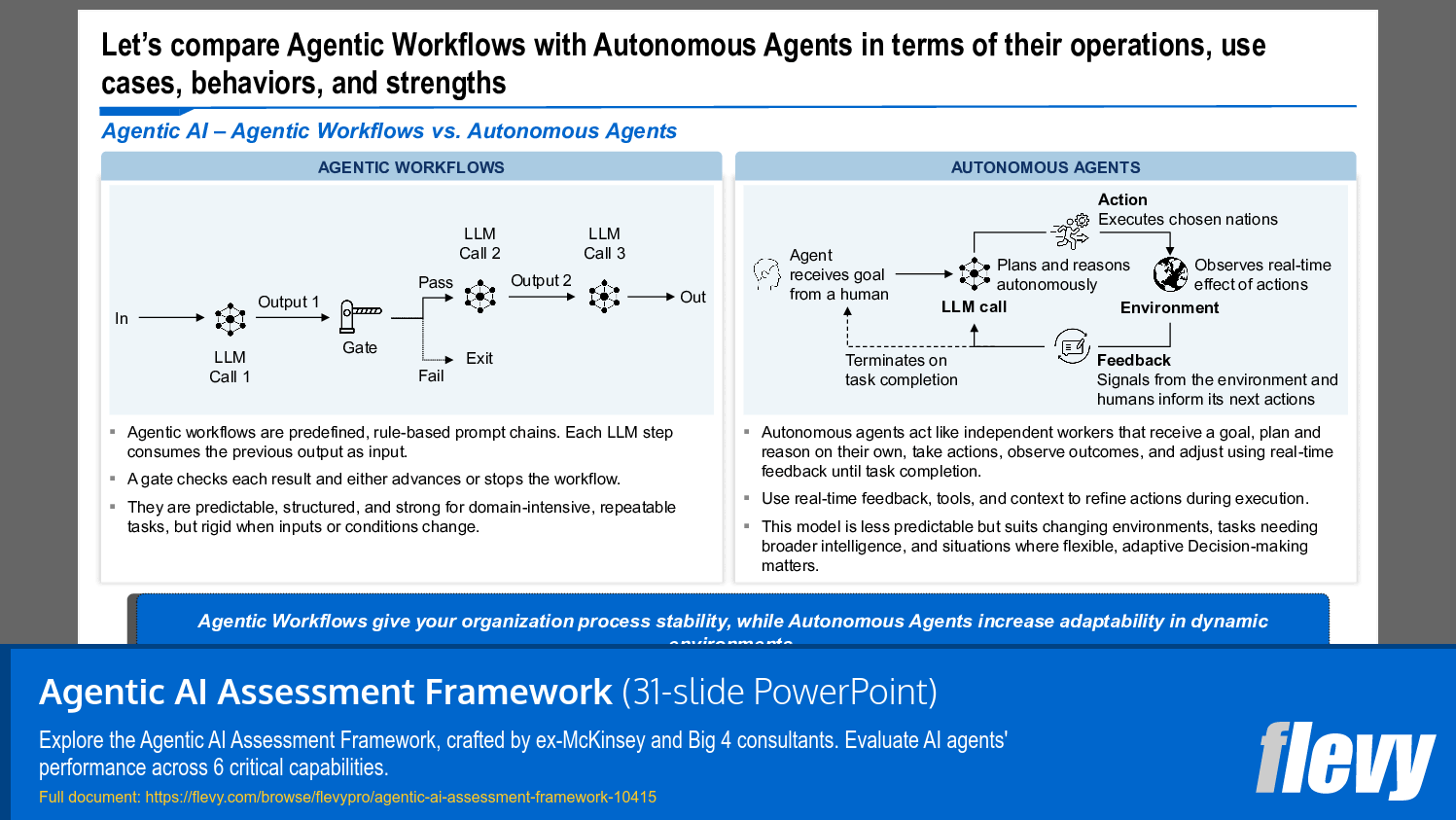
Agentic workflows are rule-based, linear chains of prompts where each LLM step uses the previous output as input. They are predictable, structured, favor process consistency, and good for tasks needing strong domain knowledge, but they adapt poorly to unexpected inputs.
Autonomous agents, on the other hand, act like independent workers that receive a goal, plan and reason on their own, take actions, observe outcomes, and adjust using real-time feedback until task completion.
This deck provides a detailed overview of the Agentic AI assessment framework, a model to measure AI agents' performance across critical capabilities like how well an agent reasons, executes tasks, recalls knowledge, maintains reliability, integrates with systems, and understands human context.
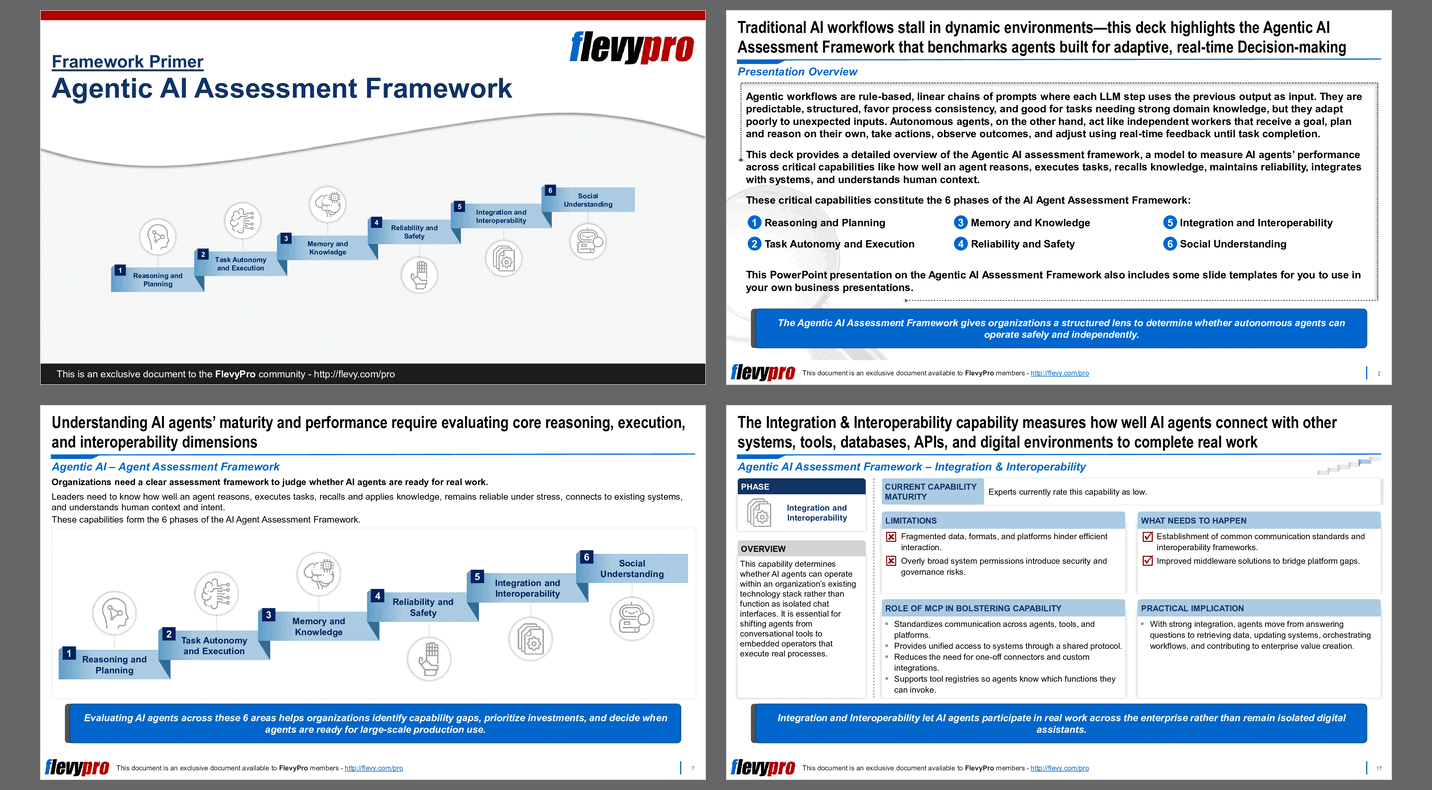
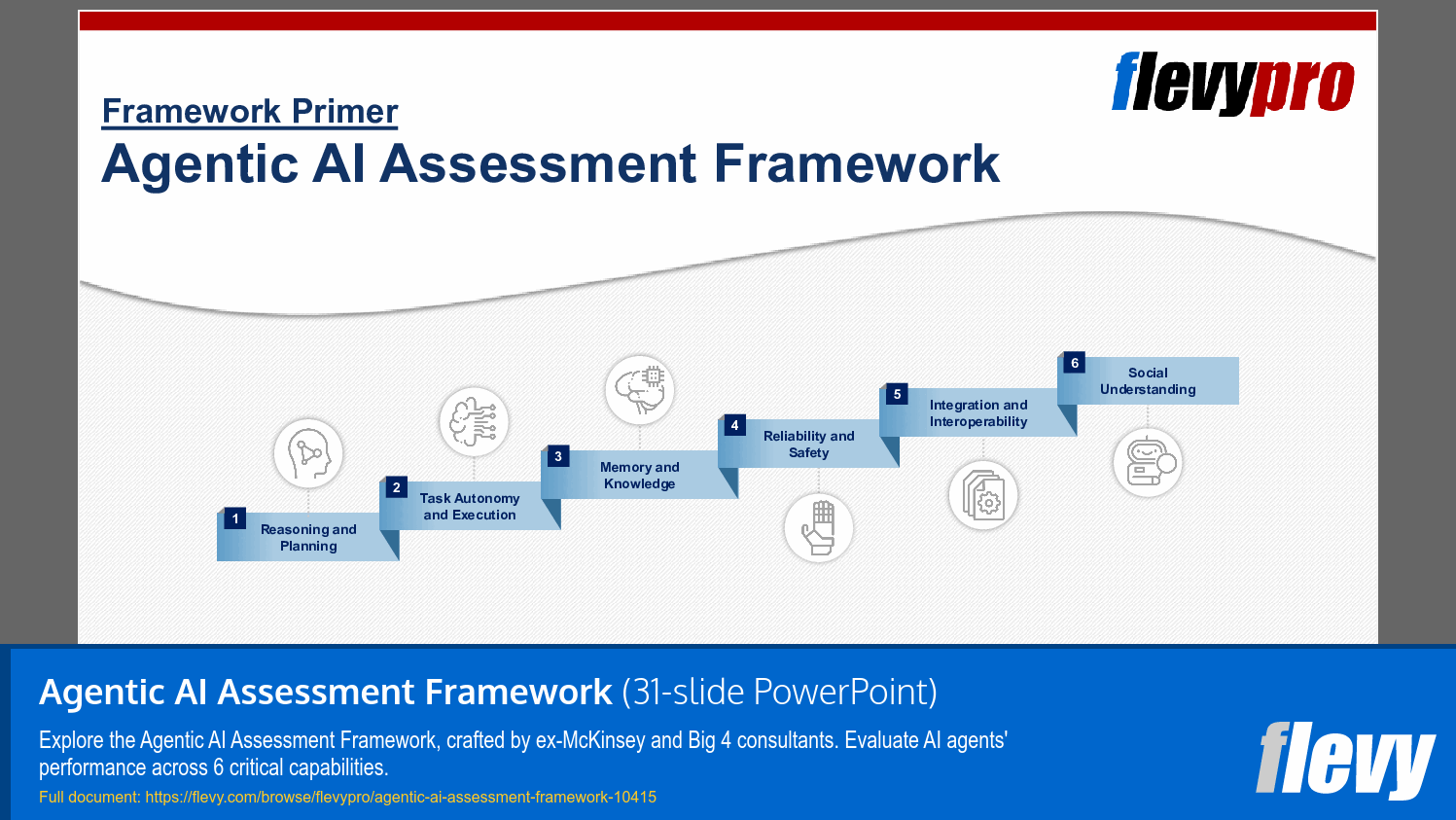
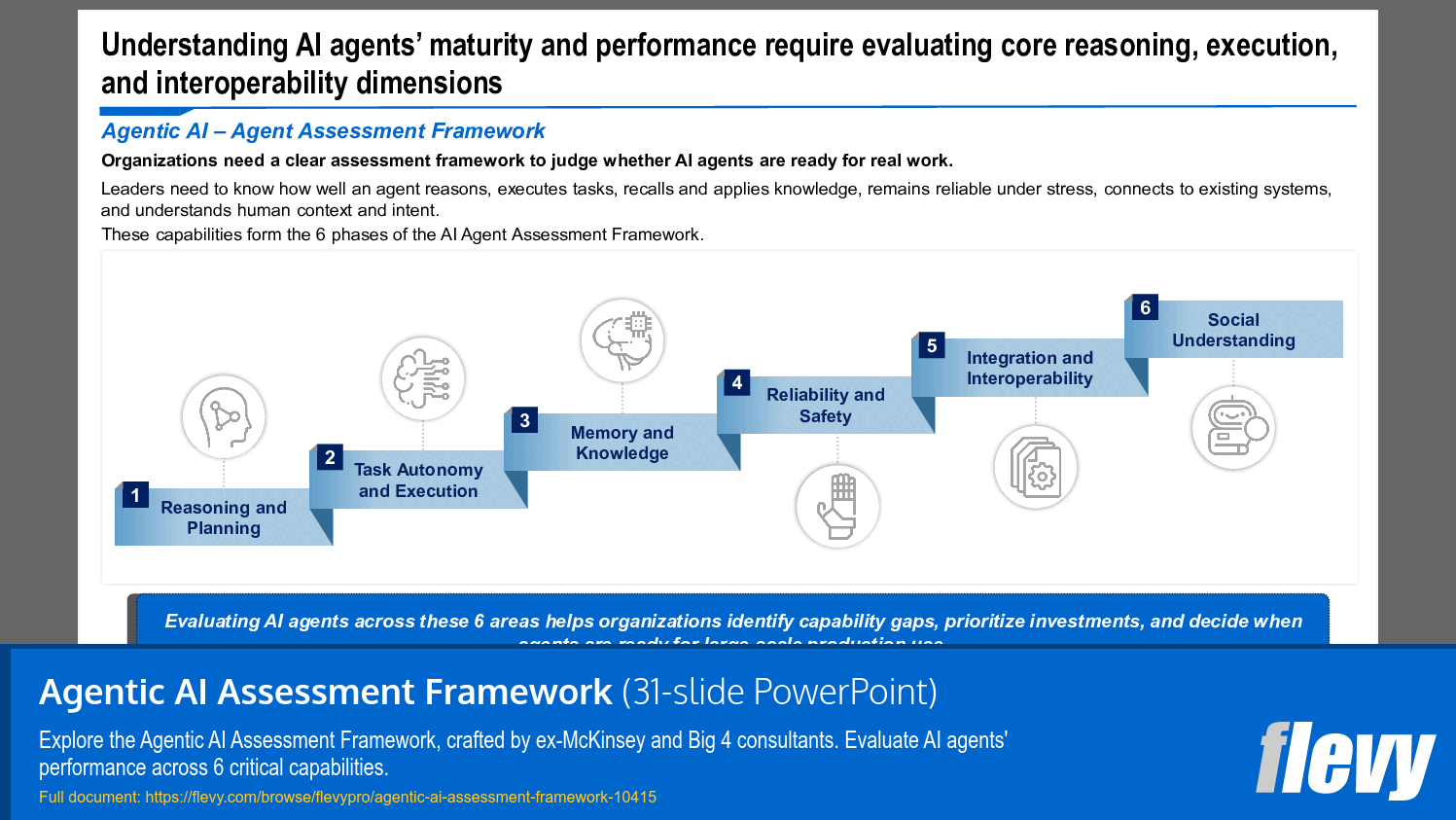
These critical capabilities constitute the 6 phases of the AI Agent Assessment Framework:
1. Reasoning and Planning
2. Task Autonomy and Execution
3. Memory and Knowledge
4. Reliability and Safety
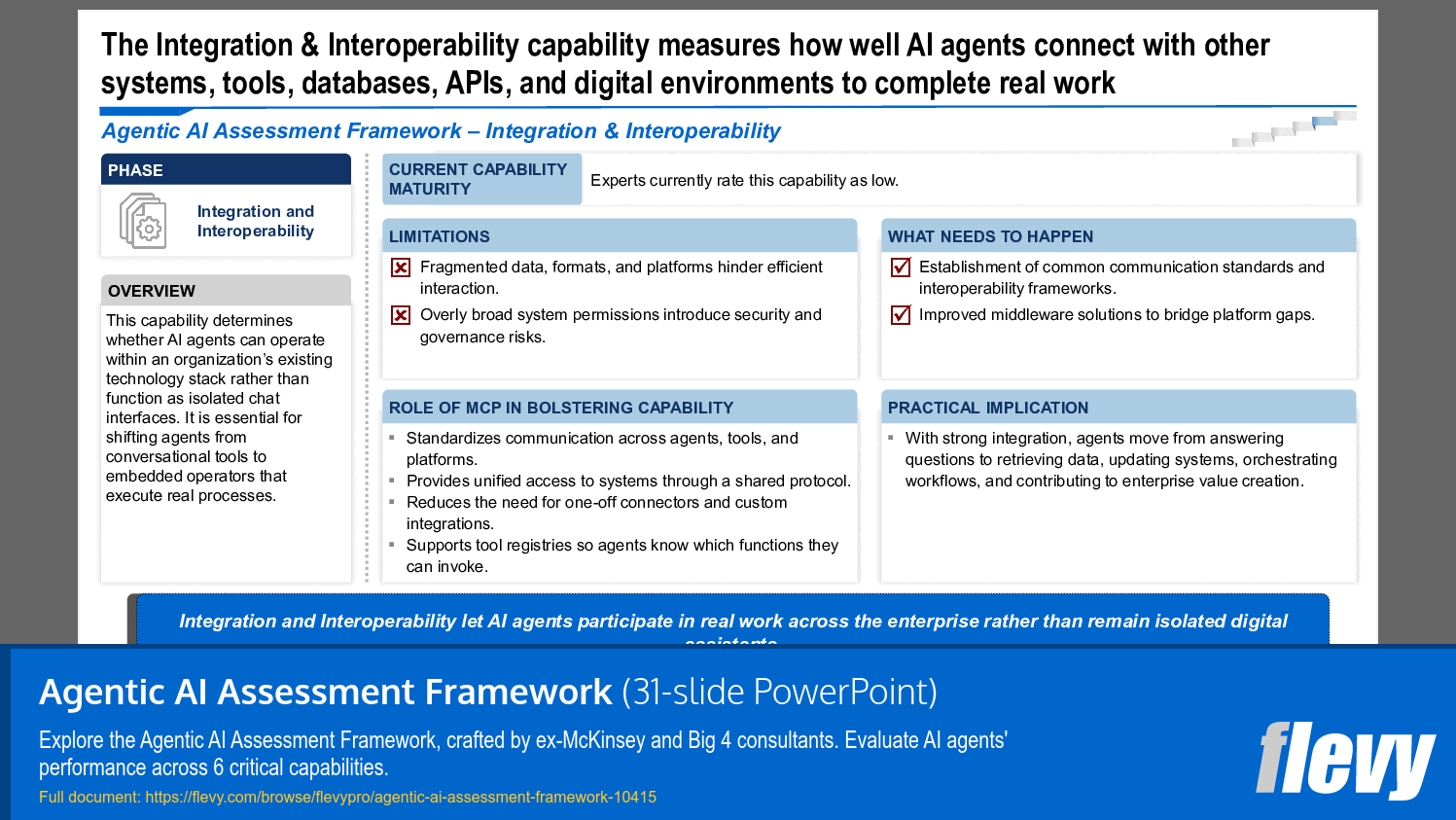
5. Integration and Interoperability
6. Social Understanding
The Agentic AI Assessment Framework gives organizations a structured lens to determine whether autonomous agents can operate safely and independently.
This PowerPoint presentation on the Agentic AI Assessment Framework also includes some slide templates for you to use in your own business presentations.
Got a question about this document? Email us at flevypro@flevy.com.
Executive Summary
The Agentic AI Assessment Framework is a structured tool designed to evaluate the performance of AI agents across 6 critical capabilities: Reasoning and Planning, Task Autonomy and Execution, Memory and Knowledge, Reliability and Safety, Integration and Interoperability, and Social Understanding. This framework, developed by experts with backgrounds in top consulting firms, offers organizations a comprehensive approach to assess whether their AI agents can operate autonomously and effectively in dynamic environments. By utilizing this framework, organizations can identify capability gaps, prioritize investments, and make informed decisions regarding the deployment of AI agents in real-world applications.
Who This Is For and When to Use
• Corporate executives overseeing AI strategy and implementation
• Integration leaders responsible for AI deployment and performance tracking
• Consultants advising organizations on AI capabilities and assessments
• Technology teams developing or integrating AI solutions
Best-fit moments to use this deck:
• During the evaluation phase of AI agent capabilities
• When assessing readiness for large-scale AI deployment
• For strategic planning sessions focused on AI investments
Learning Objectives
• Define the 6 critical capabilities of the Agentic AI Assessment Framework
• Evaluate AI agents’ performance across each capability
• Identify gaps in AI agent capabilities and prioritize areas for improvement
• Develop a roadmap for enhancing AI agent performance
• Understand the implications of AI agent capabilities on organizational strategy
• Apply the framework to real-world AI deployment scenarios
Table of Contents
• Overview (page 1)
• Agentic AI (page 4)
• Model Context Protocol (MCP) (page 9)
• Agentic AI Assessment Framework (page 13)
• Slide Design Structure & Templates (page 20)
Primary Topics Covered
• Agentic AI Overview - A comprehensive introduction to AI systems capable of autonomous decision-making and action-taking with minimal human intervention.
• Model Context Protocol (MCP) - A framework that facilitates the integration of AI agents with existing tools and data sources, enhancing their operational capabilities.
• Reasoning and Planning - The ability of AI agents to comprehend goals, interpret context, and create actionable plans autonomously.
• Task Autonomy and Execution - Evaluates whether AI agents can independently carry out tasks once a goal is defined.
• Memory and Knowledge - Reflects the capacity of AI agents to store, retrieve, and apply information over time, improving their effectiveness.
• Reliability and Safety - Measures the consistency and accuracy of AI agents' outputs while ensuring they operate within safe boundaries.
• Integration and Interoperability - Assesses how well AI agents connect with other systems and tools to execute real processes.
• Social Understanding - Evaluates AI agents' ability to interact in ways that are intuitive and respectful of human expectations.
Deliverables, Templates, and Tools
• Assessment templates for evaluating AI agent capabilities
• Roadmap templates for enhancing AI performance
• Slide templates for presenting findings and recommendations
• Framework documents detailing the 6 critical capabilities
• Guidelines for integrating AI agents with existing systems
• Best practice documents for deploying AI agents safely
Slide Highlights
• Overview of the Agentic AI Assessment Framework, outlining its purpose and structure.
• Detailed breakdown of each capability, including current maturity levels and necessary improvements.
• Visual representation of the Model Context Protocol (MCP) and its role in enhancing AI agent performance.
• Case studies illustrating the application of the framework in real-world scenarios.
Potential Workshop Agenda
Introduction to Agentic AI (30 minutes)
• Overview of the Agentic AI Assessment Framework
• Discussion on the importance of evaluating AI capabilities
Capability Assessment Workshop (60 minutes)
• Breakout sessions to evaluate AI agents against the 6 capabilities
• Group discussion on identified gaps and improvement strategies
Roadmap Development Session (45 minutes)
• Collaborative session to create a roadmap for enhancing AI performance
• Assign responsibilities and set timelines for implementation
Customization Guidance
• Tailor the framework to align with specific organizational goals and AI strategies.
• Adjust assessment criteria based on industry-specific requirements and challenges.
• Incorporate organizational terminology and metrics to enhance relevance and applicability.
Secondary Topics Covered
• Ethical considerations in AI deployment
• Best practices for integrating AI agents into existing workflows
• Future trends in AI capabilities and their implications for organizations
• Strategies for ensuring compliance and safety in AI operations
Topic FAQ
Document FAQ
These are questions addressed within this presentation.
What is the Agentic AI Assessment Framework?
The Agentic AI Assessment Framework is a structured tool for evaluating AI agents across 6 critical capabilities to determine their readiness for autonomous operation.
Who can benefit from this framework?
Corporate executives, integration leaders, consultants, and technology teams can utilize this framework to assess and enhance AI agent capabilities.
How does the Model Context Protocol (MCP) enhance AI agents?
MCP standardizes how AI agents connect to tools and data sources, improving their operational efficiency and reducing integration complexity.
What are the 6 critical capabilities assessed in this framework?
The framework assesses Reasoning and Planning, Task Autonomy and Execution, Memory and Knowledge, Reliability and Safety, Integration and Interoperability, and Social Understanding.
How can organizations use the findings from the assessment?
Organizations can identify capability gaps, prioritize investments, and develop strategies for enhancing AI agent performance based on assessment results.
What limitations do current AI agents face?
Current AI agents often struggle with multi-step reasoning, long-range task dependencies, and integration with external systems.
What practical implications arise from the assessment?
Without reliable AI agents, organizations may face challenges in delegating tasks, integrating AI into workflows, and ensuring customer-facing interactions are effective.
How can organizations ensure ethical AI deployment?
Organizations should establish guidelines for ethical AI use, focusing on transparency, accountability, and compliance with regulations.
What is the role of Memory and Knowledge in AI agents?
Memory and Knowledge allow AI agents to retain and apply information over time, improving their consistency and effectiveness in task execution.
Glossary
• Agentic AI - AI systems capable of autonomous decision-making and action-taking.
• Model Context Protocol (MCP) - A framework for integrating AI agents with existing systems and tools.
• Task Autonomy - The ability of AI agents to perform tasks independently.
• Memory and Knowledge - The capacity of AI agents to store and retrieve information over time.
• Reliability and Safety - Measures of the consistency and accuracy of AI agents' outputs.
• Integration and Interoperability - The ability of AI agents to connect with other systems and tools.
• Social Understanding - The capability of AI agents to interact in intuitive and respectful ways.
• Assessment Framework - A structured tool for evaluating capabilities and performance.
• Capability Gaps - Areas where AI agents lack the necessary skills or performance.
• Ethical AI - The responsible use of AI technologies in alignment with ethical guidelines.
• Autonomous Agents - AI systems that operate independently to achieve defined goals.
• Real-time Feedback - Immediate information that informs AI agents' actions and decisions.
• Multi-Agent Orchestration - The coordination of multiple AI agents to achieve complex tasks.
• Decision-making - The process by which AI agents determine actions based on data and context.
• Operational Efficiency - The effectiveness of AI agents in executing tasks and processes.
• Human-like Reasoning - The ability of AI agents to mimic human decision-making processes.
• Data-driven Decisions - Choices made by AI agents based on data analysis and insights.
• Guardrails - Safety measures that ensure AI agents operate within defined boundaries.
• Contextual Awareness - The understanding of situational factors that influence AI agents' actions.
• Performance Metrics - Standards used to measure the effectiveness of AI agents.
Source: Best Practices in Artificial Intelligence, Agentic AI PowerPoint Slides: Agentic AI Assessment Framework PowerPoint (PPTX) Presentation Slide Deck, LearnPPT Consulting
Did you need more documents?
Consider a FlevyPro subscription from $39/month. View plans here.
For $10.00 more, you can download this document plus 2 more FlevyPro documents. That's just $13 each.
|
Download our FREE Digital Transformation Templates
Download our free compilation of 50+ Digital Transformation slides and templates. DX concepts covered include Digital Leadership, Digital Maturity, Digital Value Chain, Customer Experience, Customer Journey, RPA, etc. |










