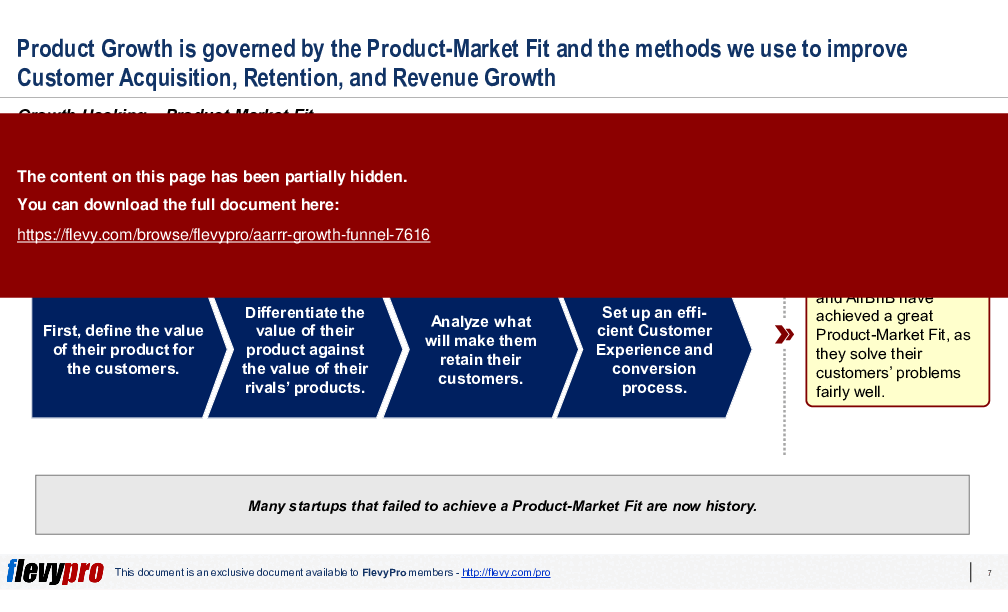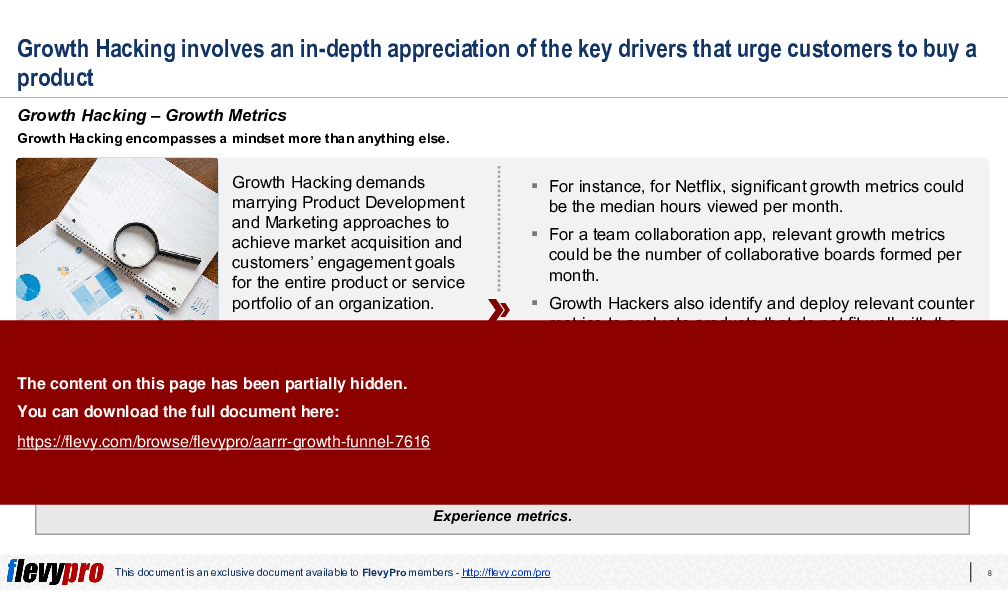
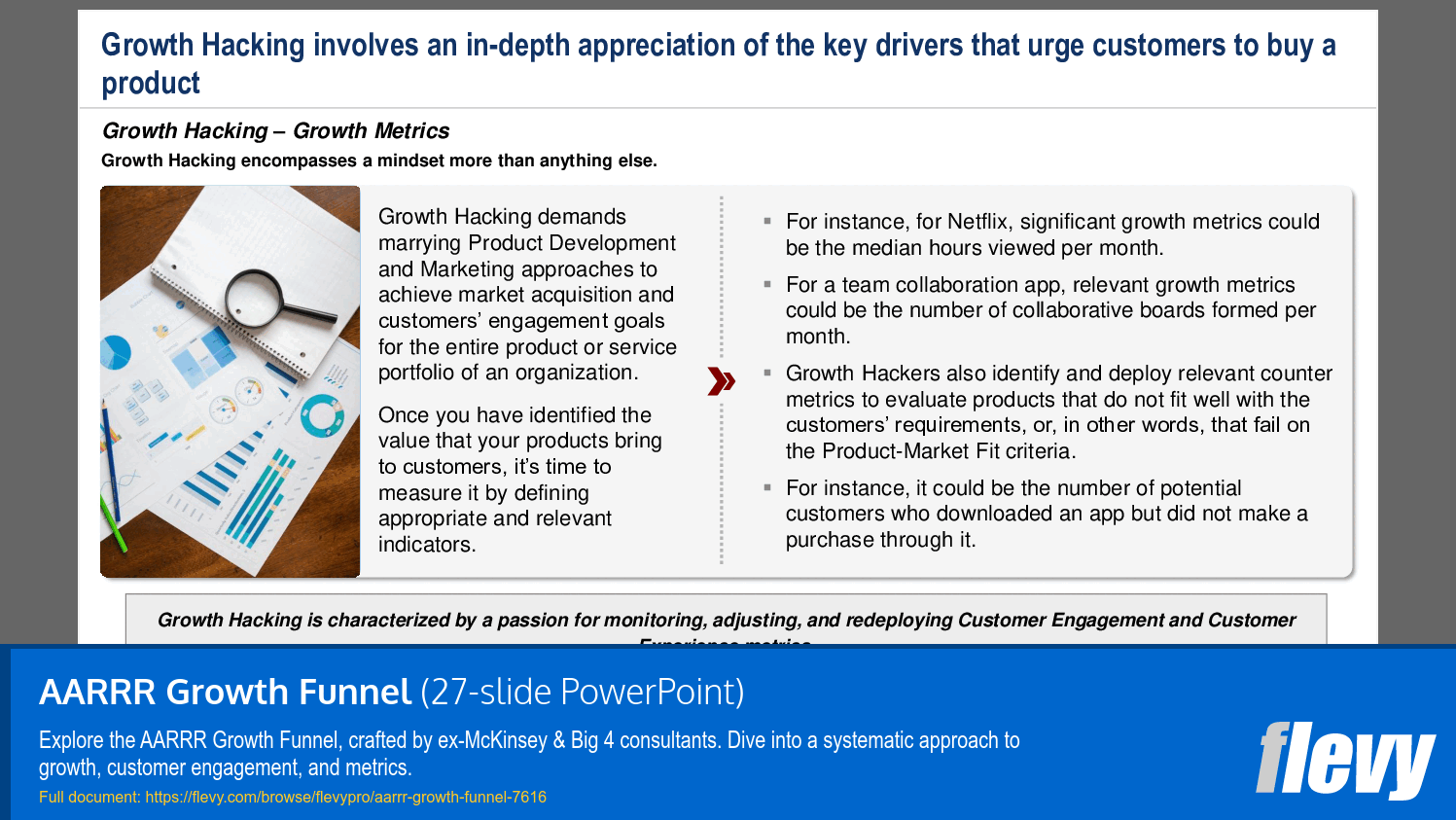

Growth Hacking is neither "scoring some quick wins to kick-start growth" nor "breaking into something one should not." Growth Hacking actually involves a consistent, scientific process to work towards business growth.
Growth Hacking is valuable for large enterprises, but more so for small businesses and startups with budget constraints. Growth of a business calls for a systematic methodology, processes, multidisciplinary capabilities, and the right people.
The term "Growth Hacking" is typically misconstrued by most executives. This PowerPoint presentation is aimed at busting the myths associated with the term and providing an in-depth deliberation on the AARRR Growth Funnel.
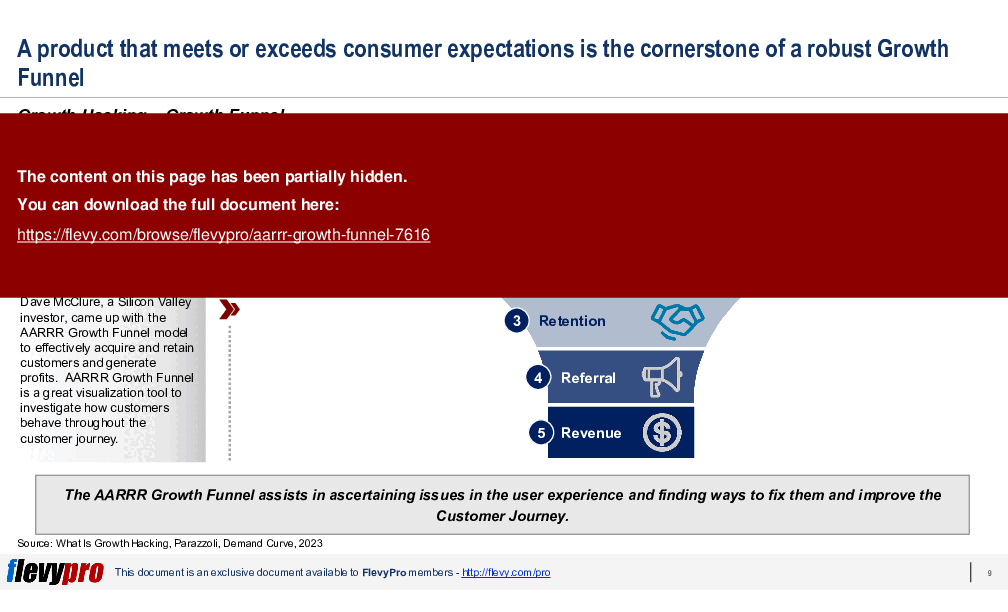
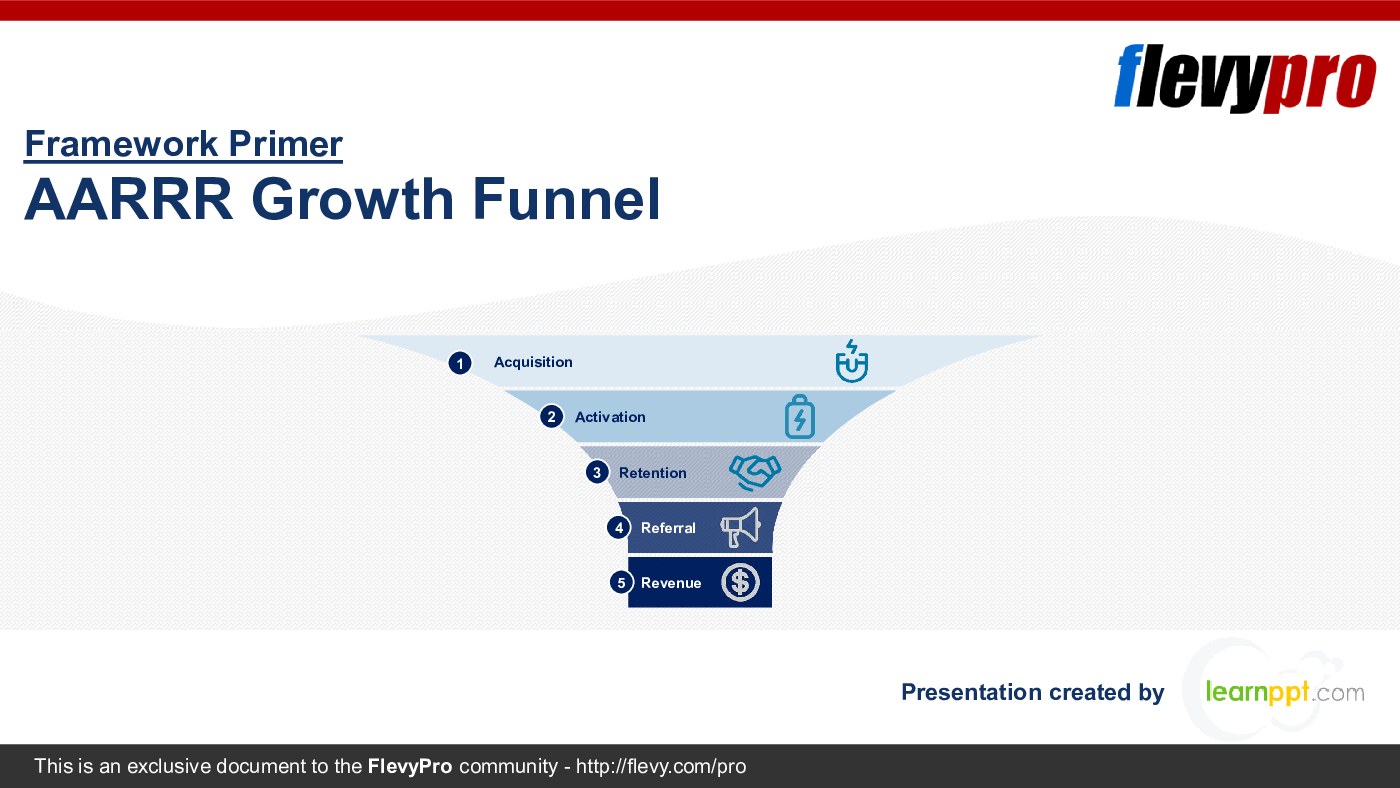
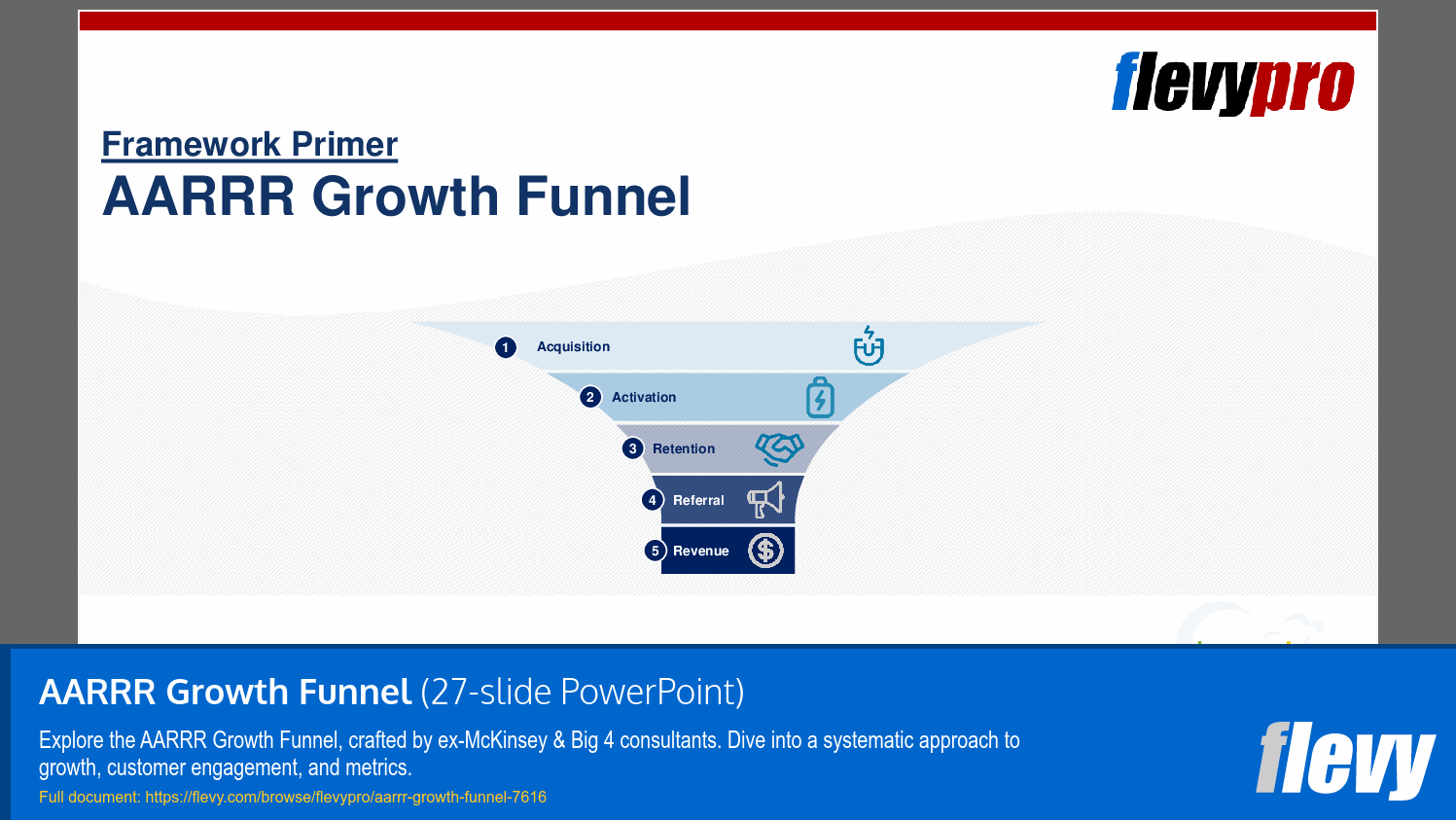
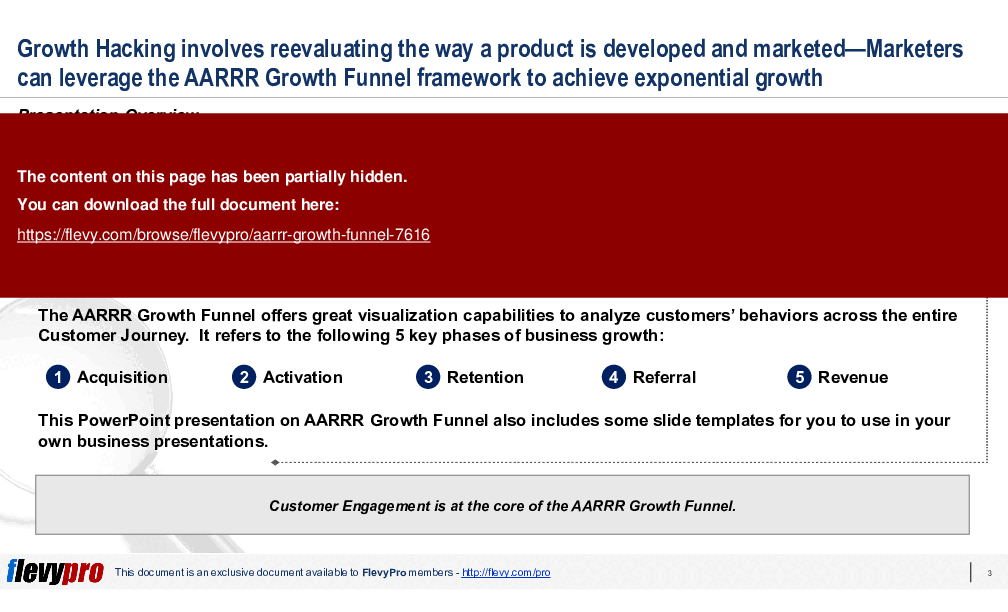
The AARRR Growth Funnel offers great visualization capabilities to analyze customers' behaviors across the entire Customer Journey. Customer Engagement is at the core of the AARRR Growth Funnel. It refers to the following 5 key phases of business growth:
1. Acquisition – In order for a product to be acquired by the maximum number of customers profitably, organizations need to invest in customer acquisition channels.
2. Activation – This phase involves activating customers through an extraordinary first impression and experience of your product.
3. Retention – Retention entails investing in customers who are happy with your product and give it a high rating score.
4. Referral – Acquisition of new customers requires engaging and retaining the current customer base to the extent that they become advocates of your product and communicate their positive experiences with their contacts.
5. Revenue – The AARRR Growth Funnel is a cyclic process. The last stage of the framework deals with the essential topic of Product Pricing Strategy.
Each of these 5 phases is discussed in depth in the presentation. Additional topics discussed include product-market fit, growth metrics, among others.
This PowerPoint presentation on AARRR Growth Funnel also includes some slide templates for you to use in your own business presentations.
Got a question about this document? Email us at flevypro@flevy.com.
Executive Summary
The AARRR Growth Funnel presentation provides a structured framework for understanding and implementing growth strategies within organizations. Developed by seasoned consultants, this PowerPoint deck offers insights into the 5 critical stages of customer engagement: Acquisition, Activation, Retention, Referral, and Revenue. By leveraging the AARRR model, executives can systematically analyze customer behavior, optimize marketing efforts, and enhance overall business performance. This presentation is designed to empower teams to adopt a scientific approach to growth hacking, ensuring that they can effectively engage customers and drive sustainable revenue.
Who This Is For and When to Use
• Marketing executives looking to enhance customer acquisition strategies
• Product managers aiming to improve user activation and retention
• Sales teams focused on leveraging referrals for growth
• Business analysts seeking to measure and optimize customer journeys
Best-fit moments to use this deck:
• During strategic planning sessions to align growth initiatives
• In workshops focused on customer journey mapping and optimization
• For training sessions aimed at educating teams on growth hacking principles
• When evaluating the effectiveness of current marketing strategies
Learning Objectives
• Define the AARRR Growth Funnel and its significance in customer engagement
• Build actionable strategies for each stage of the growth funnel
• Establish metrics to measure customer acquisition and retention success
• Identify effective referral strategies to leverage existing customers
• Analyze customer behavior to inform product development and marketing efforts
• Create a cohesive growth plan that integrates insights from the AARRR model
Table of Contents
• Overview (page 3)
• Growth Hacking (page 5)
• AARRR Growth Funnel (page 9)
• Slide Design Structure & Templates (page 17)
Primary Topics Covered
• Growth Hacking Overview - An introduction to growth hacking as a systematic approach to achieving business growth through innovative marketing strategies.
• AARRR Growth Funnel Phases - Detailed exploration of the 5 phases: Acquisition, Activation, Retention, Referral, and Revenue, emphasizing their interconnectivity.
• Customer Acquisition Strategies - Techniques for driving traffic to a business's website through various channels such as SEO, PPC, and social media marketing.
• Customer Activation Techniques - Best practices for creating impactful first experiences that encourage ongoing product use.
• Retention Strategies - Approaches to foster customer loyalty and reduce churn through engagement and support.
• Referral Mechanisms - Insights into leveraging satisfied customers to drive new user acquisition through organic and incentivized referrals.
• Revenue Optimization - Strategies for pricing and upselling to maximize revenue from existing customers.
Deliverables, Templates, and Tools
• AARRR Growth Funnel framework template for visualizing customer engagement stages
• Customer journey mapping tools to identify touchpoints and optimize experiences
• Metrics dashboard templates for tracking key performance indicators across the funnel
• Onboarding process templates to streamline customer activation
• Referral program design templates to incentivize existing customers
• Pricing strategy frameworks to evaluate and optimize product pricing
Slide Highlights
• Visual representation of the AARRR Growth Funnel, illustrating the flow from Acquisition to Revenue
• Case studies showcasing successful growth hacking strategies from industry leaders
• Infographics detailing customer behavior metrics relevant to each funnel stage
• Templates for creating customized presentations based on the AARRR framework
• Key takeaways summarizing best practices for each phase of the growth funnel
Potential Workshop Agenda
Introduction to Growth Hacking (30 minutes)
• Overview of growth hacking principles
• Discussion on the importance of the AARRR model
AARRR Growth Funnel Deep Dive (60 minutes)
• Exploration of each funnel phase with real-world examples
• Group activity to map customer journeys using the AARRR framework
Strategy Development Session (90 minutes)
• Breakout groups to develop actionable strategies for each funnel phase
• Presentation of group strategies and feedback session
Customization Guidance
• Tailor the AARRR framework to align with specific industry metrics and customer behaviors
• Adjust the presentation templates to reflect company branding and terminology
• Incorporate case studies relevant to the organization’s market and audience
Secondary Topics Covered
• The role of data analytics in informing growth strategies
• Best practices for integrating marketing and product development efforts
• Techniques for fostering a culture of experimentation within teams
• The impact of customer feedback on product iterations and enhancements
Topic FAQ
Document FAQ
These are questions addressed within this presentation.
What is the AARRR Growth Funnel?
The AARRR Growth Funnel is a framework that outlines 5 key stages of customer engagement: Acquisition, Activation, Retention, Referral, and Revenue, designed to optimize business growth.
How can this presentation help my team?
This presentation provides actionable insights and strategies for each stage of the growth funnel, enabling teams to enhance customer engagement and drive revenue.
What types of businesses can benefit from the AARRR model?
The AARRR model is applicable to businesses of all sizes, particularly startups and small enterprises looking to maximize their marketing efforts with limited resources.
Can the templates be customized for our specific needs?
Yes, the templates included in the presentation can be tailored to fit your organization's branding and specific market requirements.
What metrics should we track for each funnel stage?
Key metrics include customer acquisition cost, activation rates, retention rates, referral rates, and revenue per customer.
How does growth hacking differ from traditional marketing?
Growth hacking focuses on rapid experimentation and data-driven decision-making to achieve growth, whereas traditional marketing often relies on established strategies and longer-term planning.
Is this framework suitable for large enterprises?
Yes, while particularly beneficial for startups, the AARRR framework can also be effectively applied within larger organizations to enhance agility and responsiveness.
How can we implement the strategies discussed in this presentation?
Begin by assessing your current customer journey, identifying gaps, and applying the AARRR strategies to optimize each stage for better engagement and growth.
Glossary
• AARRR - A framework for understanding customer engagement through Acquisition, Activation, Retention, Referral, and Revenue.
• Growth Hacking - A marketing strategy focused on rapid experimentation across marketing channels to identify the most effective ways to grow a business.
• Customer Journey - The complete experience a customer has with a brand, from initial awareness to post-purchase interactions.
• Retention Rate - The percentage of customers who continue to use a product over a specified period.
• Referral Program - A marketing strategy that encourages existing customers to refer new customers, often incentivized with rewards.
• Customer Acquisition Cost (CAC) - The total cost of acquiring a new customer, including marketing and sales expenses.
• Activation Rate - The percentage of users who take a specific action that indicates they have realized the value of a product.
• Churn Rate - The percentage of customers who stop using a product during a given time frame.
• Freemium Model - A pricing strategy where basic services are provided free of charge while more advanced features require payment.
• Customer Lifetime Value (CLV) - The total revenue a business can expect from a single customer account throughout the business relationship.
• Organic Virality - The natural spread of a product through customer referrals without incentives.
• Inorganic Virality - The spread of a product through incentivized referrals, often involving rewards for customers who refer others.
• User Onboarding - The process of guiding new users through the initial experience of using a product to ensure they understand its value.
• Pricing Strategy - The method companies use to price their products or services, considering market demand and competition.
• Customer Feedback Loop - The process of gathering customer feedback to inform product improvements and marketing strategies.
• Data Analytics - The process of examining data sets to draw conclusions about the information they contain, often used to inform business decisions.
• Market Fit - The degree to which a product satisfies market demand and meets customer needs.
• Customer Engagement - The interaction between a brand and its customers, aimed at fostering loyalty and retention.
• Marketing Channels - Various platforms or methods used to reach customers, including digital and traditional media.
• Conversion Rate - The percentage of users who take a desired action, such as making a purchase or signing up for a newsletter.
• Upselling - The practice of encouraging customers to purchase a more expensive item or upgrade their existing product.
• Cross-selling - The practice of selling complementary products to existing customers.
Source: Best Practices in Growth Strategy PowerPoint Slides: AARRR Growth Funnel PowerPoint (PPTX) Presentation Slide Deck, LearnPPT Consulting
Did you need more documents?
Consider a FlevyPro subscription from $39/month. View plans here.
For $10.00 more, you can download this document plus 2 more FlevyPro documents. That's just $13 each.
|
Download our FREE Strategy & Transformation Framework Templates
Download our free compilation of 50+ Strategy & Transformation slides and templates. Frameworks include McKinsey 7-S, Balanced Scorecard, Disruptive Innovation, BCG Curve, and many more. |