
Warehouse Costing: Cleansheet Analysis   23-slide PPT PowerPoint presentation slide deck (PPTX)
$29.00

Warehouse Costing: Cleansheet Analysis (23-slide PPT PowerPoint presentation slide deck (PPTX)) Preview Image
Log in to unlock full preview.
Warehouse Costing: Cleansheet Analysis (23-slide PPT PowerPoint presentation slide deck (PPTX)) Preview Image
Arrow   Click main image to view in full screen.

Warehouse Costing: Cleansheet Analysis (PowerPoint PPTX Slide Deck)

PowerPoint (PPTX) 23 Slides FlevyPro Document

Top 1,000 Best Practice $29.00
FlevyPro price: FREE (included in subscription)
This framework is developed by a team of former McKinsey and Big 4 consultants. The presentation follows the headline-body-bumper slide format used by global consulting firms.
Add to Cart


Immediate download
Free lifetime updates

WAREHOUSE MANAGEMENT PPT DESCRIPTION

Editor Summary Warehouse Costing: Cleansheet Analysis is a 23-slide PowerPoint presentation by LearnPPT Consulting that provides a structured, three-step Cleansheet methodology for accurately estimating warehousing costs: ascertaining critical parameters, performing bottom-up calculations, and determining ideal throughput metrics. Read more

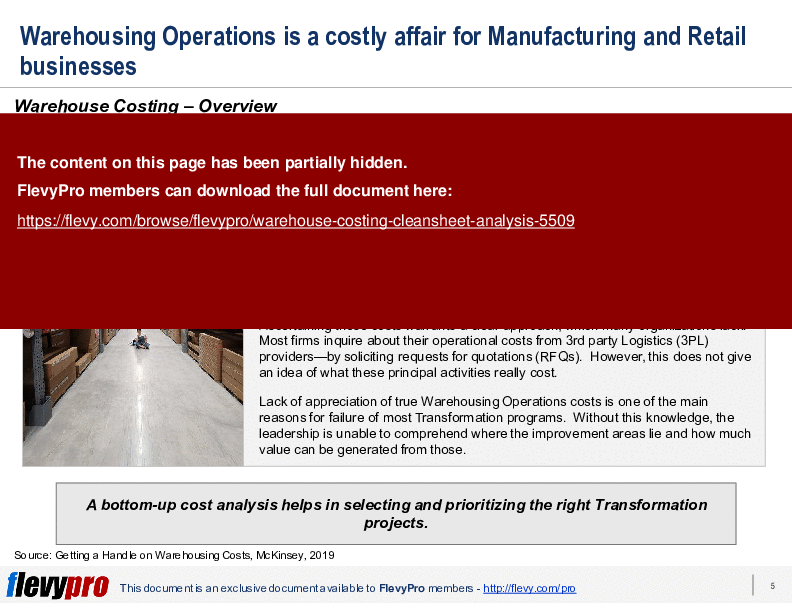
The Leadership at many Warehousing companies globally understands that they should spend less on Warehousing Operations, but is not aware of the real costs associated with it. In the same vein, most leaders are unable to tell how much is their human resources cost per facility.

Lack of appreciation of true Warehousing Operations costs is one of the main reasons for failure of most Warehouse Transformation Programs. Without this knowledge, the Leadership is unable to comprehend where the improvement areas lie and how much value can be generated from those.

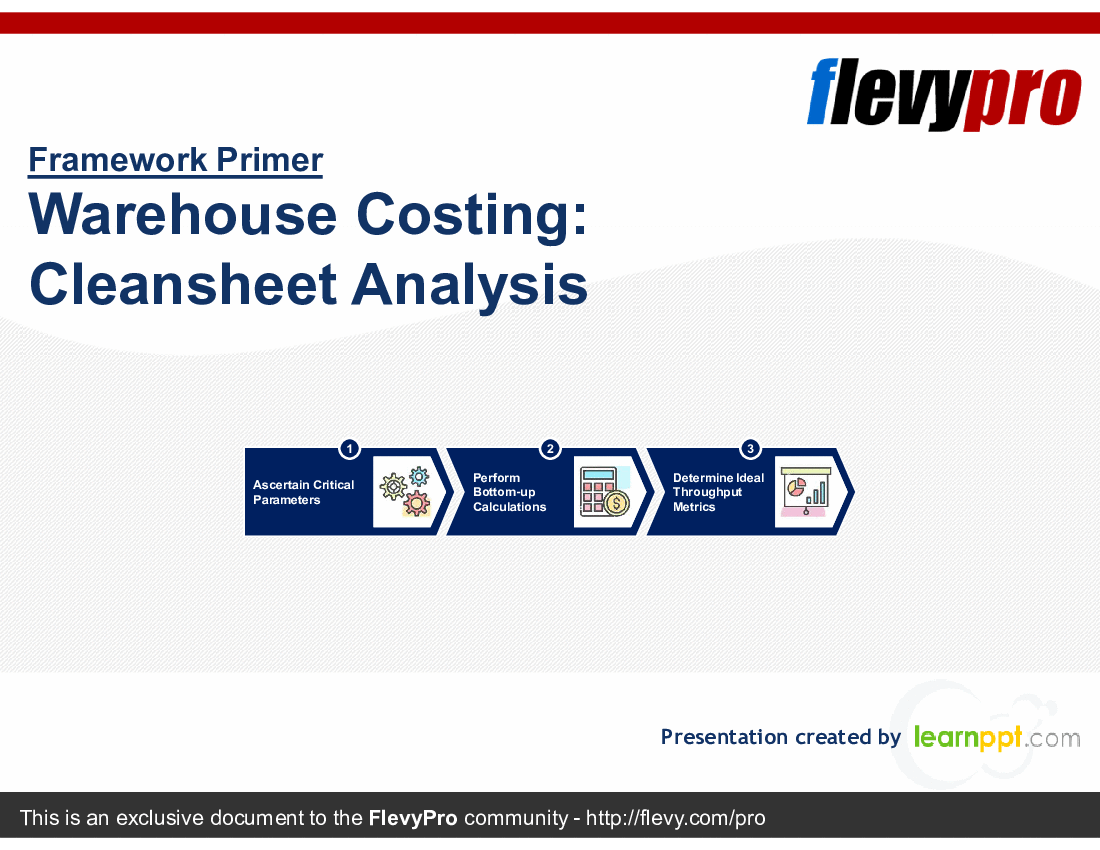
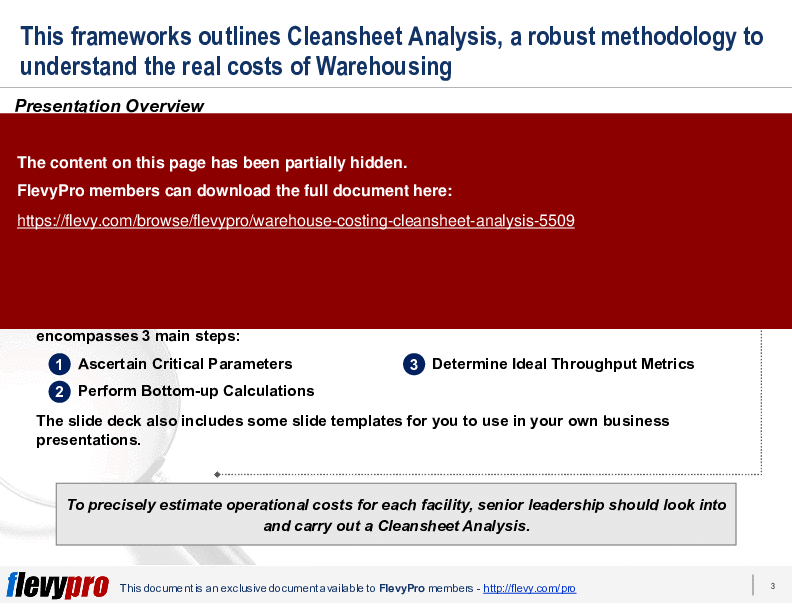
This deck provides a detailed overview of Cleansheet Analysis, which is a comprehensive yet clearer approach to accurately estimate the real Warehousing costs. The Cleansheet Analysis encompasses 3 main steps:

1. Ascertain Critical Parameters
2. Perform Bottom-up Calculations
3. Determine Ideal Throughput Metrics

The slide deck also includes some slide templates for you to use in your own business presentations.

The Cleansheet Analysis framework is designed to provide a granular view of warehousing costs, enabling leaders to pinpoint inefficiencies and optimize operations. This methodology not only identifies cost-saving opportunities, but also helps in benchmarking against industry standards. By leveraging this analysis, executives can make informed decisions that drive significant cost reductions and operational improvements.

This presentation is an essential tool for any organization looking to gain a competitive edge through cost-efficient warehousing. It includes detailed templates and step-by-step guidance to implement Cleansheet Analysis effectively. The insights gained from this analysis can lead to substantial savings and enhanced productivity, making it a must-have resource for senior leadership aiming to streamline their warehousing operations.

Got a question about this document? Email us at flevypro@flevy.com.

MARCUS OVERVIEW

This synopsis was written by Marcus [?] based on the analysis of the full 23-slide presentation.


Executive Summary
The "Warehouse Costing: Cleansheet Analysis" presentation provides a structured methodology to accurately assess warehousing costs. It addresses the critical need for organizations to understand their true operational expenses, which is essential for effective warehouse transformation initiatives. The Cleansheet Analysis consists of 3 key steps: ascertaining critical parameters, performing bottom-up calculations, and determining ideal throughput metrics. This framework equips senior leadership with the insights necessary to identify cost inefficiencies and prioritize improvement areas, ultimately driving significant savings in warehousing operations.

Who This Is For and When to Use
•  Senior executives in logistics and supply chain management
•  Warehouse operations managers seeking to optimize costs
•  Financial analysts focused on operational expenditure
•  Consultants advising on warehouse transformation strategies

Best-fit moments to use this deck:
•  During strategic planning sessions for warehouse operations
•  When assessing current warehousing costs versus industry benchmarks
•  In preparation for implementing warehouse automation technologies
•  For conducting facility inspections to identify improvement areas

Learning Objectives
•  Define the components of a Cleansheet Analysis for warehousing
•  Identify critical parameters affecting warehousing costs
•  Develop a bottom-up calculation model for warehousing operations
•  Determine ideal throughput metrics for efficient warehouse management
•  Evaluate the financial impact of automation in warehousing
•  Prioritize improvement initiatives based on cost analysis findings

Table of Contents
•  Overview (page 3)
•  Warehouse Costing (page 5)
•  Cleansheet Analysis (page 8)
•  Deriving Savings (page 13)
•  Templates (page 18)

Primary Topics Covered
•  Warehouse Costing Overview - An introduction to the significance of understanding warehousing costs and the common approaches used, including benchmarking and Cleansheet Analysis.
•  Cleansheet Analysis Steps - A detailed breakdown of the 3 main steps: ascertaining critical parameters, performing bottom-up calculations, and determining ideal throughput metrics.
•  Cost Drivers - Identification of key cost drivers in warehousing operations, including labor, equipment, and facility management.
•  Benchmarking vs. Cleansheet Analysis - Comparison of these 2 methodologies, highlighting the advantages of Cleansheet Analysis for precise cost estimation.
•  Automation Opportunities - Exploration of how automation technologies can enhance efficiency and reduce costs in warehousing operations.
•  Savings Potential - Discussion on the potential savings identified through Cleansheet Analysis and the importance of facility inspections.

Deliverables, Templates, and Tools
•  Cleansheet Analysis template for assessing warehousing costs
•  Bottom-up calculation model for warehouse processes
•  Ideal throughput metrics framework for operational efficiency
•  Cost benchmarking comparison chart
•  Facility inspection checklist for identifying improvement areas
•  Automation technology assessment guide

Slide Highlights
•  Overview of Cleansheet Analysis methodology and its importance
•  Detailed steps for performing a bottom-up cost analysis
•  Visual representation of cost drivers in warehousing
•  Comparative analysis of benchmarking versus Cleansheet Analysis
•  Case studies illustrating successful cost reduction through automation

Potential Workshop Agenda
Cleansheet Analysis Introduction (60 minutes)
•  Overview of the Cleansheet Analysis methodology
•  Discussion on the importance of understanding warehousing costs
•  Review of common cost drivers in warehousing

Hands-On Cleansheet Analysis (90 minutes)
•  Breakout sessions to assess critical parameters in participants' warehouses
•  Development of a bottom-up calculation model for a specific warehouse process
•  Group presentations of findings and insights

Automation in Warehousing (60 minutes)
•  Overview of automation technologies available for warehousing
•  Discussion on the financial implications of implementing automation
•  Case studies of successful automation initiatives in warehousing

Customization Guidance
•  Tailor the Cleansheet Analysis template to reflect specific warehouse configurations and operational metrics.
•  Adjust the bottom-up calculation model based on unique facility processes and labor structures.
•  Incorporate organization-specific benchmarks for comparison in the cost analysis.

Secondary Topics Covered
•  The role of third-party logistics (3PL) in warehousing cost management
•  Strategies for effective contract negotiations with 3PL vendors
•  The impact of market trends on warehousing operations and costs
•  Best practices for continuous improvement in warehouse management

Topic FAQ

What is Cleansheet Analysis and how does it estimate warehouse costs?

Cleansheet Analysis estimates true warehousing costs by identifying lowest possible costs for each major element and comparing them with actual expenses. It uses a bottom-up approach that first ascertains critical parameters, then builds activity-level cost calculations, and finally determines ideal throughput metrics across 3 key steps.

What cost drivers should I include in a warehouse cost model?

A warehouse cost model should capture primary cost drivers such as labor (FTEs and productivity), equipment (material handling and automation), and facility management (rent, utilities, maintenance). The Warehouse Costing: Cleansheet Analysis highlights these drivers as central inputs for bottom-up calculations and benchmarking.

How does a bottom-up Cleansheet approach differ from benchmarking for warehousing?

Benchmarking compares overall performance against industry standards (a top-down view), while Cleansheet uses detailed activity-level inputs to estimate the lowest feasible costs for each element. The deck contrasts these methods and prescribes bottom-up calculations and throughput metrics as the Cleansheet alternative.

What kinds of automation technologies are typically evaluated for warehouse cost reduction?

Common automation technologies assessed for cost and throughput impact include automated guided vehicles (AGVs), robotic picking systems, advanced conveyor solutions, and automated storage/retrieval systems (AS/RS). The product materials list these technologies within the automation assessment guide.

What should I look for when choosing a warehouse costing template or toolkit?

Choose a template that supports activity-level bottom-up calculations, includes throughput metric frameworks, offers benchmarking comparison charts, and provides a facility inspection checklist and automation assessment guide. These elements enable precise cost estimation and prioritization of improvement initiatives.

How much time and workshop structure is recommended to run a hands-on Cleansheet session?

A suggested workshop agenda in the deck totals about 210 minutes (3.5 hours) split into 3 modules: a 60-minute Cleansheet introduction, a 90-minute hands-on bottom-up analysis, and a 60-minute automation discussion, designed for cross-functional participants developing models and presenting findings.

I need to build a business case for warehouse automation—what analysis should I perform first?

Begin with a bottom-up Cleansheet Analysis to quantify current labor, equipment, and facility costs, then model automation scenarios to estimate OPEX reductions and throughput changes. Flevy's Warehouse Costing: Cleansheet Analysis includes an automation technology assessment guide and templates to support that evaluation.

How often should I update a warehouse Cleansheet Analysis to keep it relevant?

Update the Cleansheet Analysis regularly, especially when there are significant operational changes, market shifts, or before and after implementing new technologies; the deck explicitly recommends re-running the analysis when operations or technology change.

Document FAQ
These are questions addressed within this presentation.

What is Cleansheet Analysis?
Cleansheet Analysis is a comprehensive approach to understanding the true costs of warehousing by identifying the lowest possible costs for each major element and comparing them with actual expenses.

How does Cleansheet Analysis differ from benchmarking?
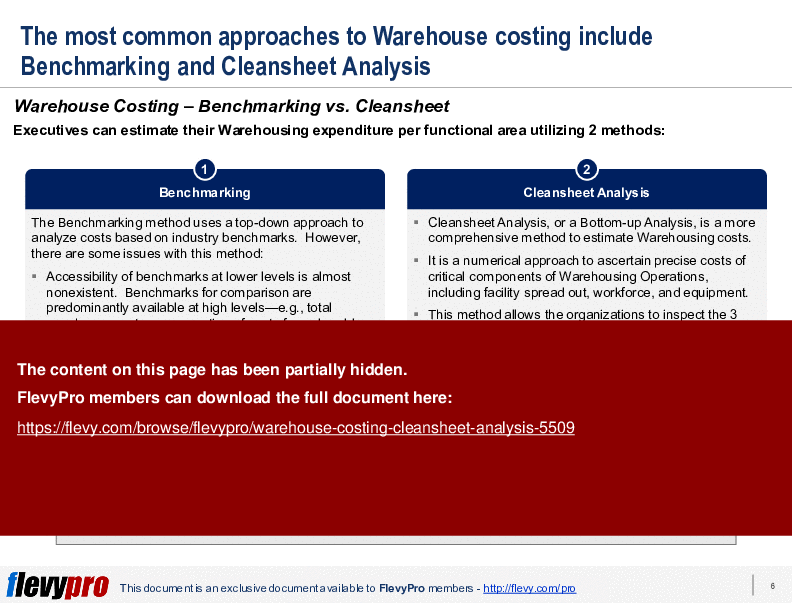
Cleansheet Analysis provides a bottom-up approach to cost estimation, focusing on specific operational components, while benchmarking typically uses top-down industry standards that may not reflect unique operational realities.

What are the key steps in performing a Cleansheet Analysis?
The key steps include ascertaining critical parameters, performing bottom-up calculations for each major warehouse process, and determining ideal throughput metrics to optimize operations.

How can automation impact warehousing costs?
Automation can significantly reduce labor costs, improve efficiency, and enhance throughput, leading to overall cost savings in warehouse operations.

What types of automation technologies are available for warehouses?
Technologies include automated guided vehicles (AGVs), robotic picking systems, advanced conveyor systems, and automated storage/retrieval systems (AS/RS).

How can I use the Cleansheet Analysis template?
The template can be customized to fit your specific warehouse operations, allowing you to input relevant data and calculate potential cost savings.

What is the expected outcome of conducting a Cleansheet Analysis?
The expected outcome is a clearer understanding of warehousing costs, identification of improvement areas, and a prioritized action plan for cost reduction initiatives.

How often should a Cleansheet Analysis be conducted?
It is advisable to conduct a Cleansheet Analysis regularly, especially when there are significant changes in operations, market conditions, or when implementing new technologies.

Glossary
•  Cleansheet Analysis - A method for estimating true warehousing costs by identifying the lowest possible costs for each major element.
•  Bottom-up Calculation - A detailed analysis of costs at the activity level within warehousing operations.
•  Throughput Metrics - Measurements that determine the efficiency of warehouse operations in terms of output.
•  3PL - Third-party logistics providers that manage logistics and warehousing functions for businesses.
•  Automation - The use of technology to perform tasks with minimal human intervention, enhancing efficiency in warehousing.
•  Cost Drivers - Factors that significantly influence the costs associated with warehousing operations.
•  Benchmarking - A method of comparing operational performance against industry standards or competitors.
•  Operational Expenditure (OPEX) - Ongoing costs for running a product, business, or system.
•  Capital Expenditure (CAPEX) - Funds used by an organization to acquire or upgrade physical assets such as property, industrial buildings, or equipment.
•  SKU - Stock Keeping Unit, a unique identifier for each distinct product and service that can be purchased.
•  FTE - Full-Time Equivalent, a unit that indicates the workload of an employed person.
•  Facility Inspection - A thorough review of a warehouse's operations and processes to identify areas for improvement.

WAREHOUSE MANAGEMENT PPT SLIDES

Cleansheet Analysis Framework for Warehouse Cost Optimization

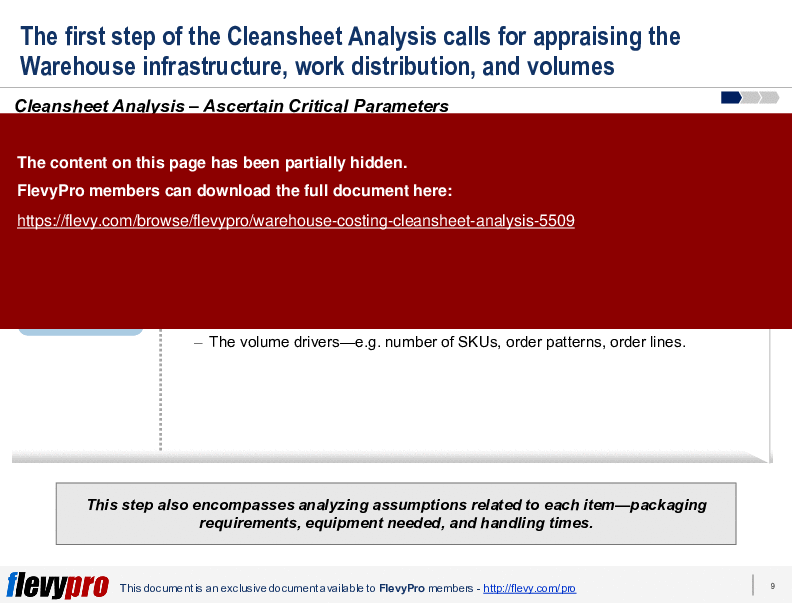
Initial Phase of Cleansheet Analysis: Key Evaluations

Comparative Analysis of Warehouse Costing Methods

Enhancing Warehouse Efficiency through Automation Technologies

Final Step: Ideal Throughput Metrics in Warehousing

Source: Best Practices in Supply Chain Management, Cost Reduction, Automation, Warehousing PowerPoint Slides: Warehouse Costing: Cleansheet Analysis PowerPoint (PPTX) Presentation Slide Deck, LearnPPT Consulting


$29.00
FlevyPro price: FREE (included in subscription)
This framework is developed by a team of former McKinsey and Big 4 consultants. The presentation follows the headline-body-bumper slide format used by global consulting firms.
Add to Cart
  

Did you need more documents?

Consider a FlevyPro subscription from $39/month. View plans here.

For $10.00 more, you can download this document plus 2 more FlevyPro documents. That's just $13 each.

ABOUT FLEVYPRO

This document is part of the FlevyPro Library, a curated knowledge base of documents for our FlevyPro subscribers.

FlevyPro is a subscription service for on-demand business frameworks and analysis tools. FlevyPro subscribers receive access to an exclusive library of curated business documents—business framework primers, presentation templates, Lean Six Sigma tools, and more—among other exclusive benefits.

Click here to learn more about FlevyPro and its benefits.

Did you know?
The average daily rate of a McKinsey consultant is $6,625 (not including expenses). The average price of a Flevy document is $65.


Trusted by over 10,000+ Client Organizations
Since 2012, we have provided business templates to over 10,000 businesses and organizations of all sizes, from startups and small businesses to the Fortune 100, in over 130 countries.
AT&T GE Cisco Intel IBM Coke Dell Toyota HP Nike Samsung Microsoft Astrazeneca JP Morgan KPMG Walgreens Walmart 3M Kaiser Oracle SAP Google E&Y Volvo Bosch Merck Fedex Shell Amgen Eli Lilly Roche AIG Abbott Amazon PwC T-Mobile Broadcom Bayer Pearson Titleist ConEd Pfizer NTT Data Schwab


Read Customer Testimonials

 
"If you are looking for great resources to save time with your business presentations, Flevy is truly a value-added resource. Flevy has done all the work for you and we will continue to utilize Flevy as a source to extract up-to-date information and data for our virtual and onsite presentations!"

– Debbi Saffo, President at The NiKhar Group
 
"[Flevy] produces some great work that has been/continues to be of immense help not only to myself, but as I seek to provide professional services to my clients, it gives me a large "tool box" of resources that are critical to provide them with the quality of service and outcomes they are expecting."

– Royston Knowles, Executive with 50+ Years of Board Level Experience
 
"My FlevyPro subscription provides me with the most popular frameworks and decks in demand in today’s market. They not only augment my existing consulting and coaching offerings and delivery, but also keep me abreast of the latest trends, inspire new products and service offerings for my practice, and educate me "

– Bill Branson, Founder at Strategic Business Architects
 
"Flevy is now a part of my business routine. I visit Flevy at least 3 times each month.

Flevy has become my preferred learning source, because what it provides is practical, current, and useful in this era where the business world is being rewritten.

In today's environment where there are so "

– Omar Hernán Montes Parra, CEO at Quantum SFE
 
"I have used FlevyPro for several business applications. It is a great complement to working with expensive consultants. The quality and effectiveness of the tools are of the highest standards."

– Moritz Bernhoerster, Global Sourcing Director at Fortune 500
 
"As a young consulting firm, requests for input from clients vary and it's sometimes impossible to provide expert solutions across a broad spectrum of requirements. That was before I discovered Flevy.com.

Through subscription to this invaluable site of a plethora of topics that are key and crucial to consulting, I "

– Nishi Singh, Strategist and MD at NSP Consultants
 
"The wide selection of frameworks is very useful to me as an independent consultant. In fact, it rivals what I had at my disposal at Big 4 Consulting firms in terms of efficacy and organization."

– Julia T., Consulting Firm Owner (Former Manager at Deloitte and Capgemini)
 
"Last Sunday morning, I was diligently working on an important presentation for a client and found myself in need of additional content and suitable templates for various types of graphics. Flevy.com proved to be a treasure trove for both content and design at a reasonable price, considering the time I "

– M. E., Chief Commercial Officer, International Logistics Service Provider


Customers Also Bought These Documents


Customers Also Like These Documents

Explore Templates on Related Management Topics


Your Recently Viewed Documents
Document Bundle
$45.00 Bundle of 2 Documents
   
Document Bundle
$59.00 Bundle of 3 Documents
     
Receive our FREE presentation on Operational Excellence

This 50-slide presentation provides a high-level introduction to the 4 Building Blocks of Operational Excellence. Achieving OpEx requires the implementation of a Business Execution System that integrates these 4 building blocks.