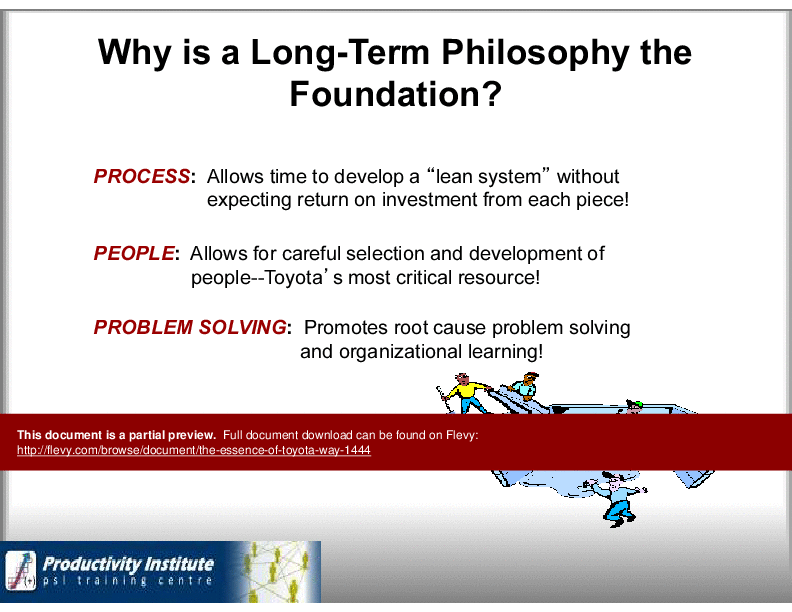

Many companies have viewed lean as a specific toolkit to lean out processes and improve performance. Those companies are usually disappointed when they find the tools do not sustain themselves and after the early low handing fruit gains are hard to come by. The Toyota Way is a total system of philosophy, processes, people, and problem solving. A long-term philosophy provides the framework for developing people who continuously improve processes using disciplined problem solving methods. Most of the lean tools serve to highlight problems. This seminar will not teach any specific tools, but rather focus on lean as a system teaching the way of thinking, giving examples from manufacturing and non-manufacturing, and discussing the role of leadership and cultural change.
Purpose: Understand how the philosophy, tools, leadership, and culture of the real Toyota Way can make any organization in any sector exceptional in customer satisfaction, quality, cost, safety and morale.
Objectives:
• Learn the philosophy of the Toyota Way;
• Develop an understanding of the reasons behind the tools;
• Envision where your organization can go based on Toyota Way principles;
• Understand the challenges and opportunities of growing a culture of continuous improvement;
• Learn about alternative implementation paths, their strengths and weaknesses.
The workshop will cover the 4 P's of Toyota way:
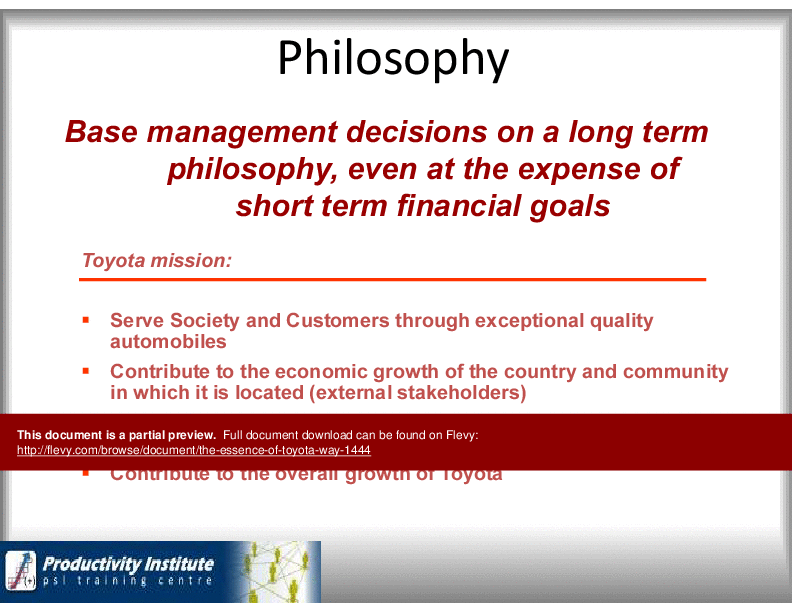
• The Philosophy and Purpose of the Toyota Way
• Process: Building Lean Systems
• Developing People and Culture
• Problem Solving and Implementation Issues
The workshop would also offer insights in to:
• The Toyota Way philosophy of Plan-Do-Check-Act
• Hoshin Kanri + Culture aligns people toward a common purpose
• Mechanistic versus organic approaches to lean deployment
• Sustaining the gains – based on building a culture of kaizen
• Alternative paths to culture of continuous improvement: strengths and weaknesses
Total no. of slides = 170
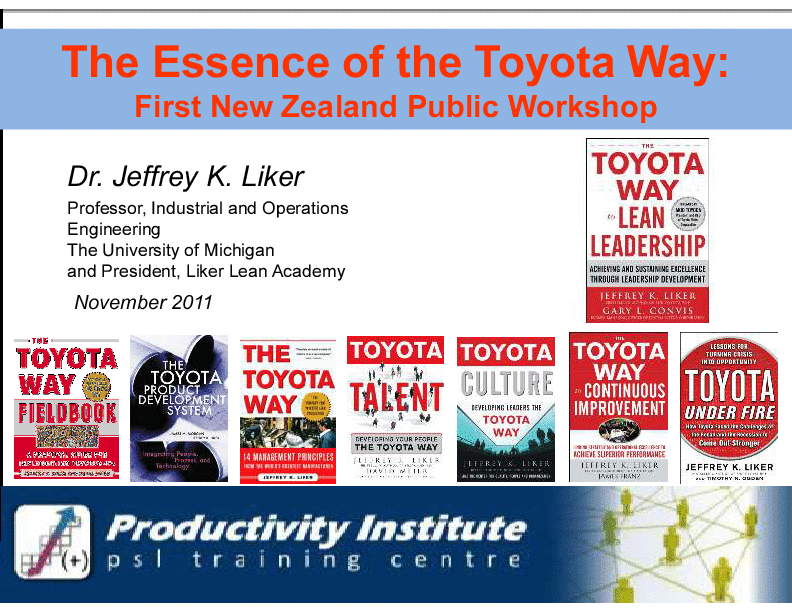
Disclaimer: Productivity Solutions Limited / Productivity Institute sponsored the visit of Dr. Jeffrey Liker, the author of Toyota Way to New Zealand in Nov 2011 and Dr. Liker delivered a 2 day workshop in Auckland under the PSL / PI banner.

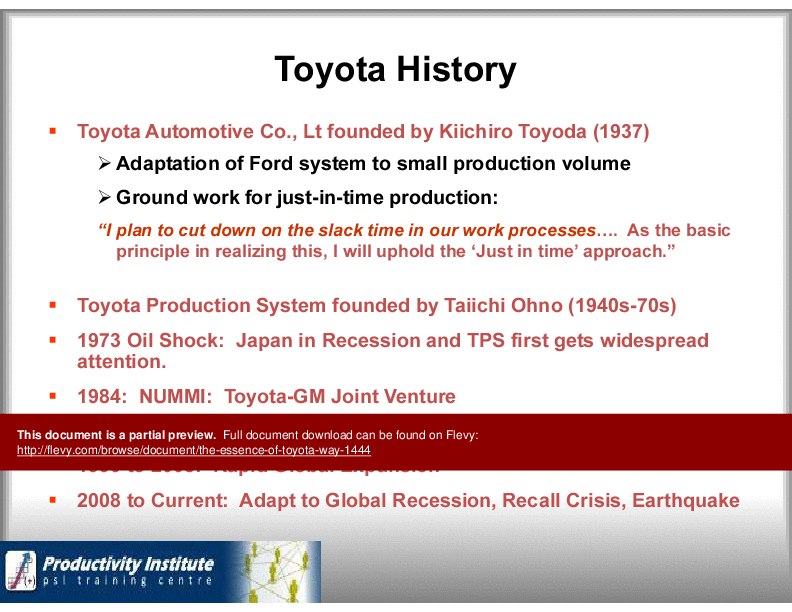
The presentation delves into the historical evolution of the Toyota Production System and its foundational principles. It provides real-world examples of waste elimination and value stream mapping, applicable to both manufacturing and service sectors.
Got a question about the product? Email us at support@flevy.com or ask the author directly by using the "Ask the Author a Question" form. If you cannot view the preview above this document description, go here to view the large preview instead.
Executive Summary
The "Essence of the Toyota Way" presentation, developed by Dr. Jeffrey K. Liker, a leading authority in Lean practices, provides an in-depth exploration of Toyota's renowned lean philosophy. This presentation is designed for corporate executives, integration leaders, and consultants who seek to implement lean principles within their organizations. It covers the foundational elements of the Toyota Production System (TPS), emphasizing continuous improvement, respect for people, and the elimination of waste. Participants will gain insights into Toyota's long-term philosophy, problem-solving techniques, and the importance of a culture that fosters employee engagement and accountability. This presentation serves as a comprehensive guide to understanding and applying the principles of lean management effectively.
Who This Is For and When to Use
• Corporate executives looking to enhance operational efficiency
• Lean practitioners and consultants aiming to implement TPS
• Integration leaders managing organizational change
• Teams focused on continuous improvement and waste reduction
Best-fit moments to use this deck:
• During strategic planning sessions to align on lean initiatives
• In workshops aimed at fostering a culture of continuous improvement
• When training teams on lean methodologies and practices
Learning Objectives
• Define the core principles of the Toyota Way and its application in various contexts
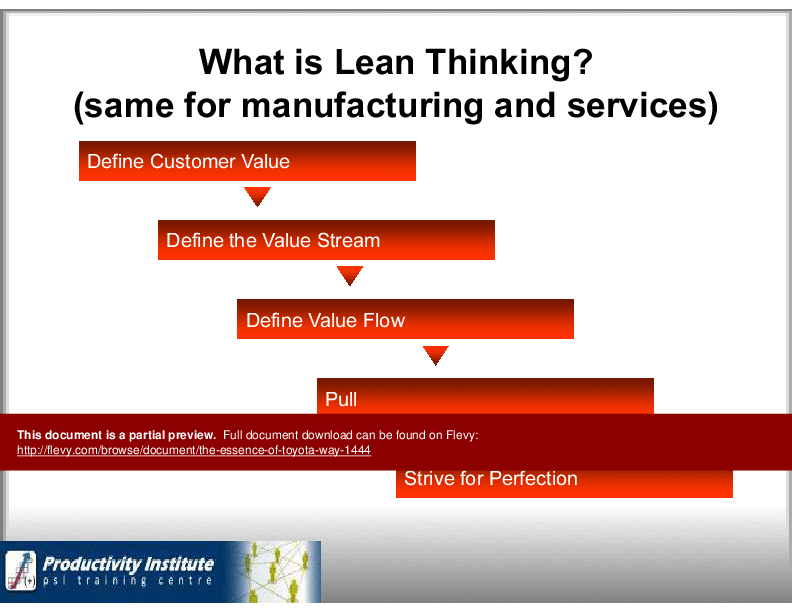
• Build a comprehensive understanding of lean thinking and its impact on organizational performance
• Establish a framework for continuous improvement through problem-solving techniques
• Identify and eliminate waste in processes to enhance value delivery
• Foster a culture of respect and collaboration among team members
• Develop actionable strategies for implementing lean practices in daily operations
Table of Contents
• Introduction to the Toyota Way (page 3)
• History of Toyota and Lean Development (page 5)
• Core Principles of Lean Thinking (page 10)
• Types of Waste in Organizations (page 15)
• The 4Ps of the Toyota Way (page 20)
• Problem Solving and Continuous Improvement (page 25)
• Value Stream Mapping Techniques (page 30)
• Implementing Lean Practices (page 35)
• Case Studies and Real-World Applications (page 40)
• Conclusion and Next Steps (page 45)
Primary Topics Covered
• Toyota History - An overview of Toyota's evolution from loom manufacturing to automotive excellence, highlighting key milestones in lean development.
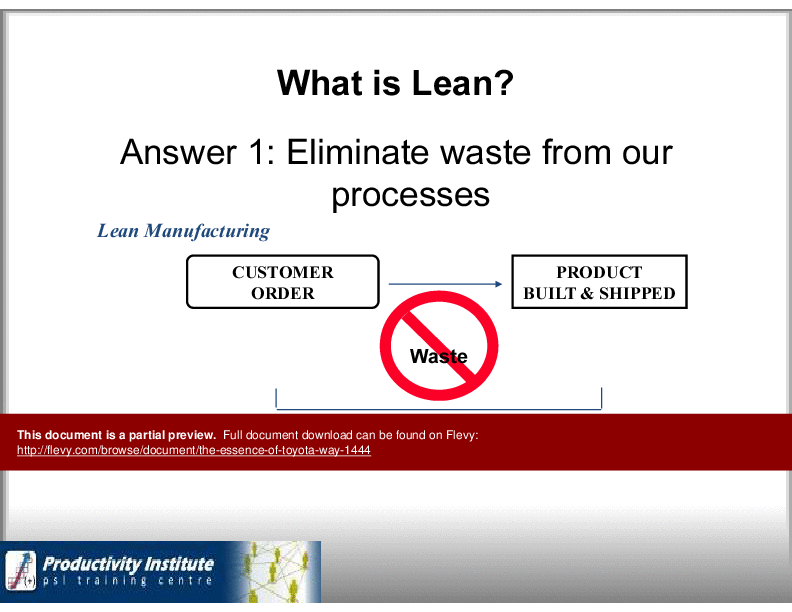
• Lean Philosophy - Understanding lean as a mindset focused on eliminating waste and enhancing value for customers.
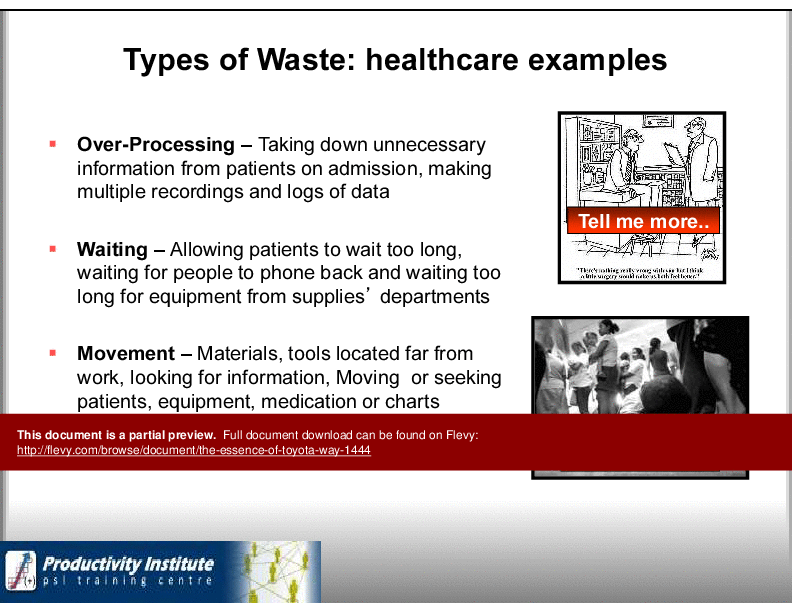
• Types of Waste - Identification of various waste categories, including overproduction, waiting, and defects, with examples from healthcare and manufacturing.
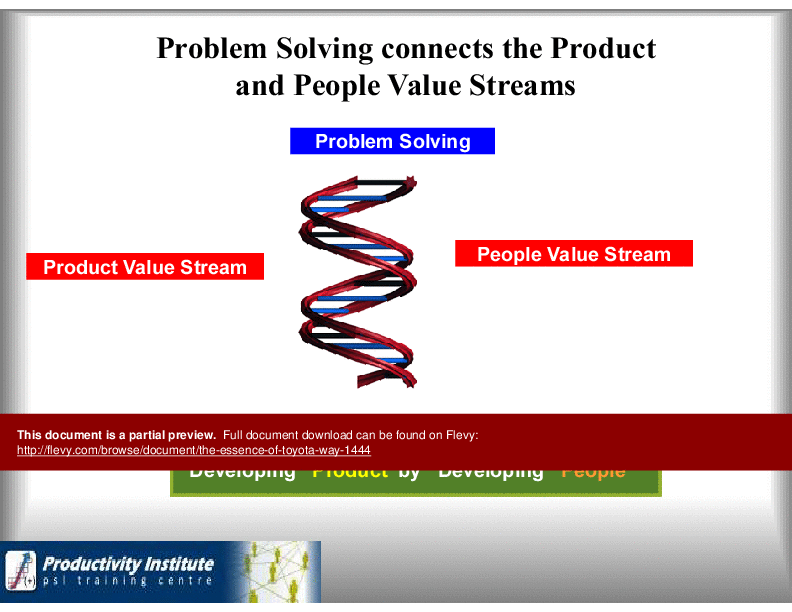
• 4Ps of the Toyota Way - Exploration of Philosophy, Problem Solving, People & Partners, and Process as the foundational elements of Toyota's lean approach.
• Continuous Improvement - Techniques for fostering a culture of ongoing enhancement through structured problem-solving methodologies.
• Value Stream Mapping - A visual tool for analyzing and optimizing the flow of materials and information in processes.
Deliverables, Templates, and Tools
• Lean implementation roadmap template for strategic planning
• Value stream mapping template for process analysis
• Standardized work charts for documenting best practices
• A3 report format for concise problem-solving documentation
• Training materials for on-the-job development (OJD)
• Visual management tools for tracking performance metrics
Slide Highlights
• Historical timeline of Toyota's development and key innovations in lean manufacturing
• Visual representation of the 4Ps of the Toyota Way and their interconnections
• Case study examples illustrating successful lean implementations in various industries
• Graphical depiction of types of waste with real-world examples
• Flowcharts demonstrating value stream mapping techniques
Potential Workshop Agenda
Introduction to Lean Principles (60 minutes)
• Overview of the Toyota Way and its significance
• Discussion on the importance of a lean mindset
Lean Implementation Strategies (90 minutes)
• Interactive session on identifying waste in current processes
• Group activity to develop value stream maps
Problem Solving Techniques (60 minutes)
• Introduction to the A3 problem-solving format
• Practical exercises on root cause analysis
Continuous Improvement Culture (60 minutes)
• Strategies for fostering engagement and accountability among team members
• Sharing best practices and success stories
Customization Guidance
• Tailor the presentation to reflect specific organizational goals and challenges
• Incorporate industry-specific examples to enhance relevance
• Adjust terminology and metrics to align with the organization's existing frameworks
Secondary Topics Covered
• The role of leadership in sustaining lean initiatives
• Cultural considerations in implementing lean practices across diverse teams
• The impact of technology on lean transformation efforts
• Strategies for overcoming common barriers to lean adoption
FAQ
What is the Toyota Way?
The Toyota Way is a principle-based approach to management that emphasizes continuous improvement, respect for people, and the elimination of waste.
How can lean practices be applied in service industries?
Lean principles can be adapted to service industries by focusing on value delivery, reducing wait times, and improving process flow.
What are the main types of waste identified in lean thinking?
The main types of waste include overproduction, waiting, defects, over-processing, inventory, motion, and unused talent.
How does Toyota ensure continuous improvement?
Toyota fosters continuous improvement through structured problem-solving methodologies, employee engagement, and a culture of accountability.
What tools are essential for implementing lean practices?
Essential tools include value stream mapping, standardized work charts, A3 reports, and visual management systems.
How can organizations measure the success of lean initiatives?
Success can be measured through key performance indicators (KPIs) such as cycle time, quality rates, and employee engagement scores.
What role does leadership play in lean transformation?
Leadership is crucial in setting the vision, providing resources, and fostering a culture that supports continuous improvement and employee involvement.
How can teams effectively identify waste in their processes?
Teams can identify waste by conducting value stream mapping exercises and engaging in regular process reviews to pinpoint inefficiencies.
What is the significance of the 4Ps of the Toyota Way?
The 4Ps—Philosophy, Problem Solving, People & Partners, and Process—serve as the foundational elements that guide Toyota's approach to lean management.
Glossary
• Lean - A systematic approach to identifying and eliminating waste in processes.
• Toyota Production System (TPS) - The integrated socio-technical system developed by Toyota to optimize production efficiency.
• Kaizen - A Japanese term meaning "continuous improvement," focusing on small, incremental changes.
• Value Stream Mapping - A visual tool used to analyze and optimize the flow of materials and information.
• A3 Report - A concise problem-solving report format used to communicate issues and solutions.
• Gemba - The actual place where work is done, emphasizing the importance of observing processes firsthand.
• PDCA Cycle - Plan-Do-Check-Act; a four-step management method used for continuous improvement.
• Hoshin Kanri - A strategic planning process that aligns goals across all levels of an organization.
• 5S - A workplace organization method that uses 5 Japanese terms: Sort, Set in order, Shine, Standardize, and Sustain.
• Andon - A visual feedback system for workers to signal problems in the production process.
• Jidoka - Automation with a human touch, allowing machines to detect problems and stop production.
• Heijunka - Production leveling to reduce waste and improve flow.
• Kanban - A scheduling system for lean and just-in-time production.
• TPM (Total Productive Maintenance) - A maintenance approach that aims to increase productivity by reducing downtime.
• Genchi Genbutsu - "Go and see" principle, emphasizing firsthand observation to understand a situation.
• Respect for People - A core value in the Toyota Way that emphasizes the importance of people in the organization.
• Continuous Improvement - An ongoing effort to improve products, services, or processes.
• Waste - Any activity that consumes resources without adding value to the customer.
• Root Cause Analysis - A method used to identify the underlying causes of problems.
• Standardized Work - The best-known method for performing a task efficiently and safely.
• Cultural Change - The process of transforming the values, beliefs, and behaviors of an organization.
Source: Essence of Toyota Way PowerPoint (PPT) Presentation Slide Deck, OpEx Academy NZ
|
Receive our FREE Primer on Lean Management
This 32-page presentation from Operational Excellence Consulting explains the Lean Management philosophy, based on the Toyota Production System (TPS). Learn to eliminate waste. |