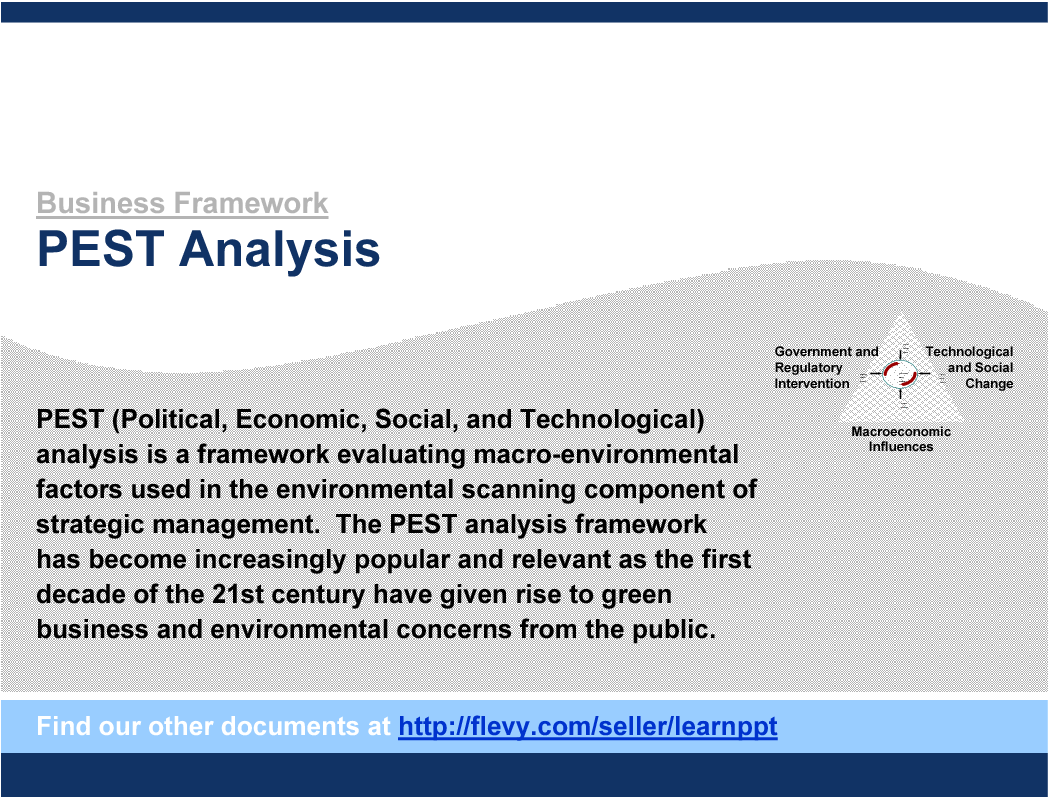
PEST (Political, Economic, Social, and Technological) analysis is a framework evaluating macro-environmental factors used in the environmental scanning component of strategic management. The PEST analysis framework has become increasingly popular and relevant as the first decade of the 21st century have given rise to green business and environmental concerns from the public.
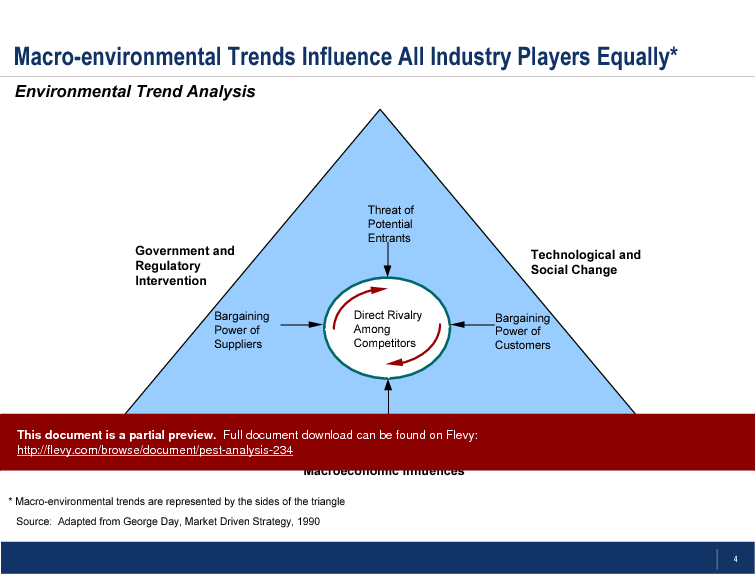
This PEST Analysis document offers a comprehensive approach to understanding macro-environmental trends that impact all industry players. The framework is meticulously designed to identify and analyze the political, economic, social, and technological factors that shape the competitive landscape. By leveraging this analysis, executives can pinpoint potential threats and opportunities, ensuring strategic decisions are grounded in robust environmental insights.
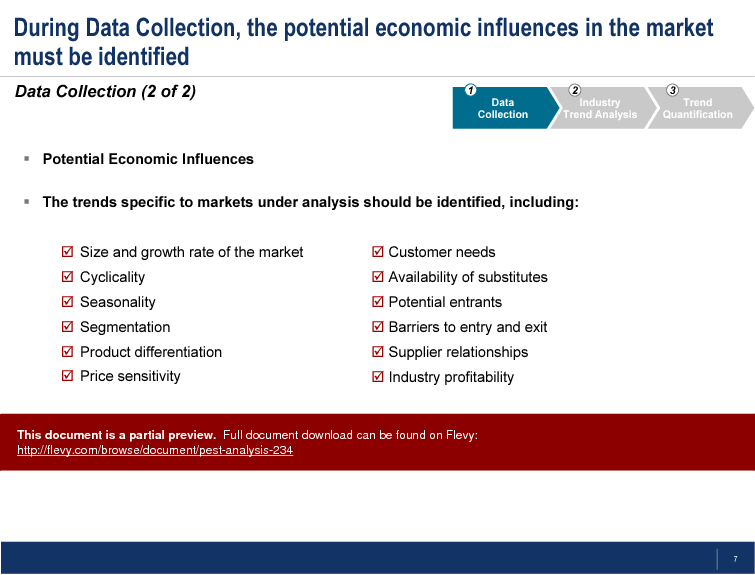
The document includes a detailed section on data collection, emphasizing the identification of potential economic influences. Key market trends such as size and growth rate, cyclicality, seasonality, and segmentation are thoroughly examined. The analysis also covers critical factors like customer needs, availability of substitutes, and barriers to entry and exit, providing a holistic view of the market dynamics.
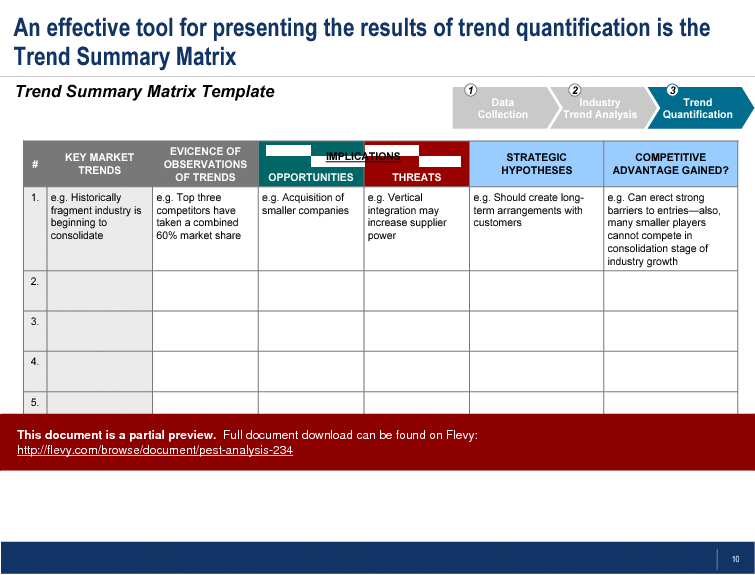
A Trend Summary Matrix Template is provided to facilitate the presentation of trend quantification results. This tool helps in categorizing key market trends, evidence of observations, implications, strategic hypotheses, and competitive advantages gained. It serves as an effective method for summarizing and communicating the strategic implications of identified trends, enabling executives to make informed, data-driven decisions.
Got a question about the product? Email us at support@flevy.com or ask the author directly by using the "Ask the Author a Question" form. If you cannot view the preview above this document description, go here to view the large preview instead.
Executive Summary
The PEST Analysis presentation is a consulting-grade framework designed to evaluate macro-environmental factors impacting strategic management. Created by former consultants from McKinsey, BCG, Deloitte, EY, and Capgemini, this deck provides a structured approach to understanding Political, Economic, Social, and Technological influences on business environments. Users will gain insights into how these factors shape competitive dynamics, industry value chains, and financial outcomes, enabling informed decision-making and strategic planning.
Who This Is For and When to Use
• Corporate strategists assessing market conditions and trends
• Business analysts conducting environmental scans
• Executives planning strategic initiatives or entering new markets
• Consultants advising clients on strategic positioning
Best-fit moments to use this deck:
• During the initial phases of strategic planning
• When assessing the impact of macro-environmental changes
• In preparation for industry analysis or competitive assessments
Learning Objectives
• Define the PEST framework and its components
• Analyze macro-environmental trends affecting business operations
• Identify key political, economic, social, and technological factors
• Evaluate the implications of these trends on competitive dynamics
• Develop strategic insights based on environmental analysis
• Support scenario-based planning efforts with data-driven insights
Table of Contents
• Introduction to PEST Analysis (page 2)
• Why We Use PEST Analysis (page 3)
• Strengths & Limitations of PEST Analysis (page 3)
• Environmental Trend Analysis Overview (page 4)
• Approach to Environmental Trend Analysis (page 5)
• Data Collection Methods (page 6)
• Identifying Economic Influences (page 7)
• Anticipating Industry Impact (page 8)
• Quantifying Trends (page 9)
• Trend Summary Matrix Template (page 10)
• PEST Analysis Top Tips (page 11)
Primary Topics Covered
• PEST Framework Overview - The PEST framework evaluates macro-environmental factors, including political, economic, social, and technological influences that affect market dynamics.
• Political Trends - Analysis of legislative outcomes, industry regulations, and government interventions that shape business environments.
• Economic Trends - Examination of macroeconomic indicators such as GDP growth, inflation, and labor availability that influence market conditions.
• Social Trends - Insights into cultural and demographic factors affecting consumer behavior and workforce dynamics.
• Technological Trends - Evaluation of innovations impacting product development and manufacturing processes.
• Environmental Trend Analysis - A structured approach to understanding how macro-environmental trends influence industry players and competitive dynamics.
Deliverables, Templates, and Tools
• PEST Analysis framework template for strategic evaluations
• Trend Summary Matrix for documenting key market trends and implications
• Data collection guidelines for conducting thorough environmental scans
• Quantification methods for analyzing macro-environmental trends
• Scenario planning tools to support strategic decision-making
Slide Highlights
• Overview slide detailing the PEST framework components
• Visual representation of macro-environmental influences on industry dynamics
• Trend Summary Matrix template for organizing key insights and strategic hypotheses
• Data collection methodologies outlined for effective trend analysis
• Summary of strengths and limitations of the PEST framework
Potential Workshop Agenda
Introduction to PEST Analysis (30 minutes)
• Overview of the PEST framework and its relevance
• Discussion on the importance of macro-environmental scanning
Data Collection Techniques (45 minutes)
• Review methods for gathering relevant data
• Identify key economic influences in the market
Trend Quantification and Analysis (60 minutes)
• Explore techniques for quantifying identified trends
• Develop strategic insights based on trend analysis
Customization Guidance
• Tailor the PEST framework to specific industry contexts by adjusting examples and case studies
• Incorporate company-specific data and trends into the analysis
• Modify the Trend Summary Matrix to reflect unique strategic hypotheses and competitive advantages
Secondary Topics Covered
• Integration of PEST analysis with other strategic frameworks
• Insights into the impact of macro-environmental changes on specific industries
• Best practices for conducting qualitative and quantitative analyses
• Use of PEST analysis in scenario planning and strategic forecasting
FAQ
What is PEST Analysis?
PEST Analysis is a framework used to evaluate macro-environmental factors—Political, Economic, Social, and Technological—that influence business operations and strategic planning.
How can PEST Analysis benefit my organization?
PEST Analysis provides insights into external factors that can impact your business, helping to inform strategic decisions and identify opportunities or threats in the market.
What are the limitations of PEST Analysis?
The qualitative nature of PEST Analysis can lead to vague conclusions if not supported by thorough data collection and verification efforts.
How do I conduct a PEST Analysis?
Begin by identifying relevant macro-environmental trends, gather data through primary and secondary research, and analyze how these trends affect your industry and competitive landscape.
Can PEST Analysis be used in conjunction with other frameworks?
Yes, PEST Analysis complements other frameworks such as Porter’s Five Forces and SWOT Analysis, providing a comprehensive view of the strategic landscape.
What types of data should I collect for PEST Analysis?
Focus on qualitative and quantitative data related to political regulations, economic indicators, social trends, and technological advancements relevant to your industry.
How often should PEST Analysis be conducted?
Regularly conducting PEST Analysis, especially during strategic planning cycles or when entering new markets, ensures that your organization remains responsive to external changes.
What is the Trend Summary Matrix?
The Trend Summary Matrix is a tool used to document key market trends, their implications, and strategic hypotheses, facilitating clearer insights and decision-making.
How can I quantify trends identified in PEST Analysis?
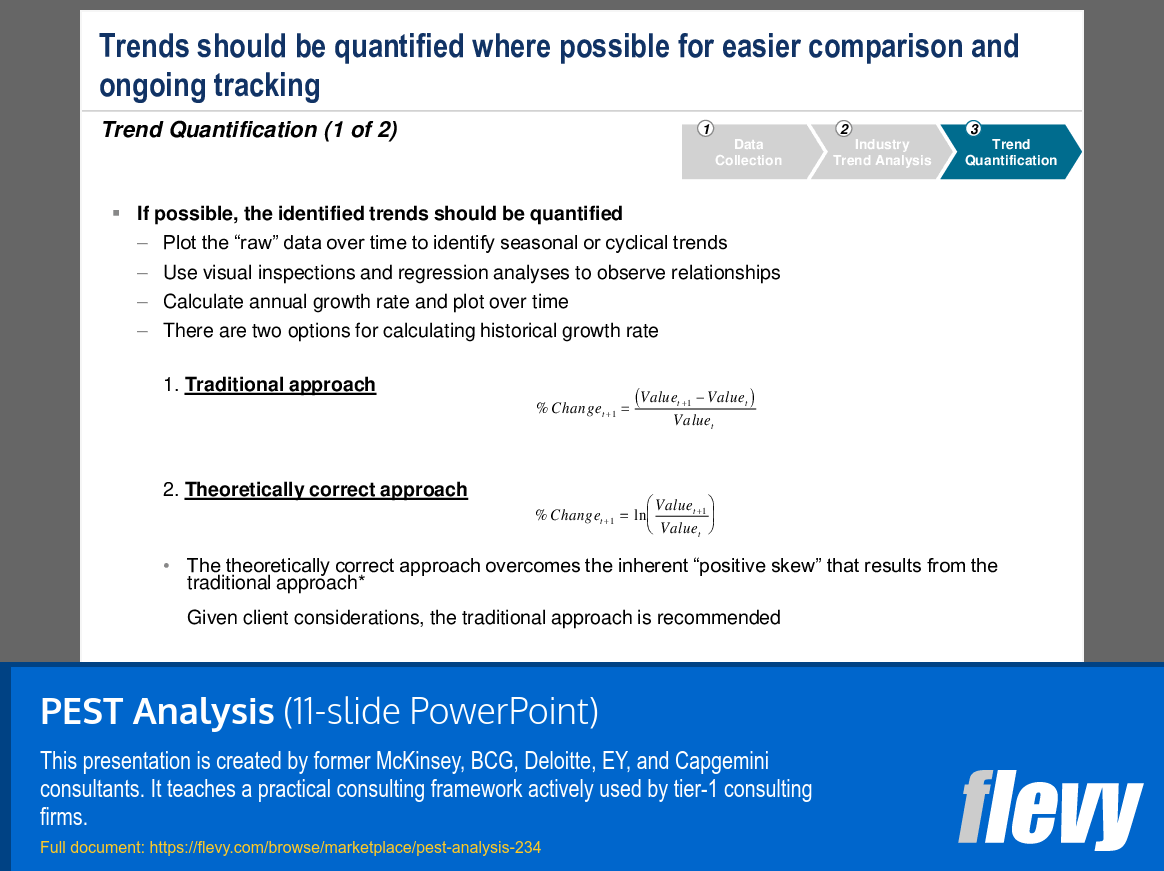
Quantification can be achieved through data visualization techniques, regression analyses, and calculating growth rates to track trends over time.
What are some common pitfalls in PEST Analysis?
Avoid losing sight of the most significant factors influencing your business and ensure that your analysis is grounded in reliable data sources.
Glossary
• PEST Analysis - A framework for evaluating macro-environmental factors affecting business strategy.
• Political Trends - Legislative and regulatory influences on industry operations.
• Economic Trends - Indicators of economic health impacting market conditions.
• Social Trends - Cultural and demographic factors influencing consumer behavior.

• Technological Trends - Innovations affecting product development and processes.

• Environmental Trend Analysis - A structured approach to understanding macro-environmental influences.
• Trend Summary Matrix - A tool for organizing key market trends and strategic implications.
• Data Collection - The process of gathering relevant information for analysis.
• Quantification - The method of measuring and analyzing trends over time.
• Scenario Planning - A strategic planning method that considers various future scenarios.
• Competitive Dynamics - The interactions and strategies among industry players.
• Market Segmentation - The process of dividing a market into distinct groups of consumers.
Source: Best Practices in STEEPLE, Environmental Analysis PowerPoint Slides: PEST Analysis PowerPoint (PPT) Presentation Slide Deck, LearnPPT Consulting
|
Download our FREE Strategy & Transformation Framework Templates
Download our free compilation of 50+ Strategy & Transformation slides and templates. Frameworks include McKinsey 7-S, Balanced Scorecard, Disruptive Innovation, BCG Curve, and many more. |