
 Click main image to view in full screen. Unlock all 30 preview images:
ISO 9001:2015 (QMS) Awareness Training – PowerPoint PPTX Template
PowerPoint (PPTX) + Zip archive file (ZIP) 85 Slides


BENEFITS OF THIS DOWNLOADABLE POWERPOINT DOCUMENT
- Structured QMS Framework: Provides a clear and practical overview of ISO 9001:2015 to support effective quality management and continual improvement.
- Updated Standards Awareness: Builds understanding of ISO 9001 requirements, including recent climate change considerations, aligning quality with organizational and sustainability objectives.
- Improved Audit Readiness: Offers practical guidance and tips to help participants prepare for and confidently participate in QMS audits.
QUALITY MANAGEMENT PPT TEMPLATE DESCRIPTION
Important Notice: ISO 9001 Standard Update
This training package is based on ISO 9001:2015. A newer version, ISO 9001:2026, is now available. If your organisation requires training aligned with the latest ISO 9001:2026 requirements, please do not purchase this product. Instead, view our updated ISO 9001:2026 QMS Awareness Training package.
ISO 9001:2015 is the world's most widely adopted standard for Quality Management Systems (QMS), providing a proven framework for organizations to consistently meet customer, regulatory, and business requirements while driving continual improvement. Applicable to organizations of all sizes and industries, it supports the establishment of disciplined, process-based management systems aligned to strategic objectives.
In 2024, ISO introduced amendments to ISO 9001:2015 to address climate change considerations. Organizations are now expected to determine whether climate change is relevant to their context and stakeholders, strengthening the integration of quality management with sustainability and risk management expectations.
Built on core principles such as customer focus, leadership, process approach, risk-based thinking, and evidence-based decision making, ISO 9001:2015 helps organizations manage risks and opportunities, enhance performance, and improve organizational resilience. This includes evaluating climate-related risks where applicable, ensuring quality, compliance, and sustainability are addressed in a coherent manner.
This ISO 9001:2015 Awareness PPT is designed for management, employees, new hires, and potential auditees. It provides a clear, practical understanding of the standard, its benefits, certification and audit processes, and key considerations for audit readiness. The presentation also serves as a valuable supplement for QMS professionals and internal auditor training, supporting effective and up-to-date QMS implementation.
||||||||||||||||||||||||||||||||||||||||||||||||||||||||||||||||||||||||||||||||||||||||||||||||||||||||||||||||||||||||||||||||||||||||||||||||||||||
This training package includes:
1. ISO 9001:2015 (QMS) Awareness PPT training presentation (PowerPoint format, in new 16:9 widescreen)
2. ISO 9001:2015 poster (PDF format, in color and monochrome, printable in A3 size)
3. ISO Certification Audit Poster (PDF format, in color and monochrome, printable in A3 size)
||||||||||||||||||||||||||||||||||||||||||||||||||||||||||||||||||||||||||||||||||||||||||||||||||||||||||||||||||||||||||||||||||||||||||||||||||||||
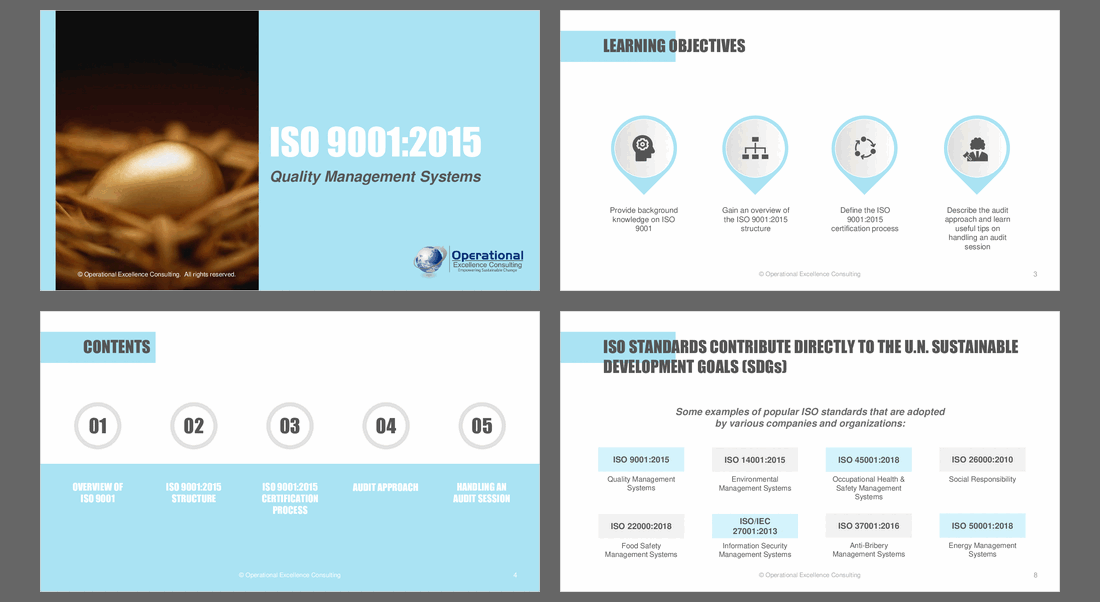
LEARNING OBJECTIVES
1. Understand the purpose, scope, and value of ISO 9001:2015.
2. Familiarize participants with the ISO 9001 high-level structure.
3. Explain the certification and audit process.
4. Prepare participants with practical guidance for audit participation and readiness.
CONTENTS
1. Overview of ISO 9001
• About ISO
• ISO Standards Contribute Directly to the U.N. Sustainable Development Goals (SDGs)
• What are Standards?
• What Standards are Not
• Why are Standards Important?
• Why an ISO Standard?
• What is a Management System?
• The ISO 9000 Series
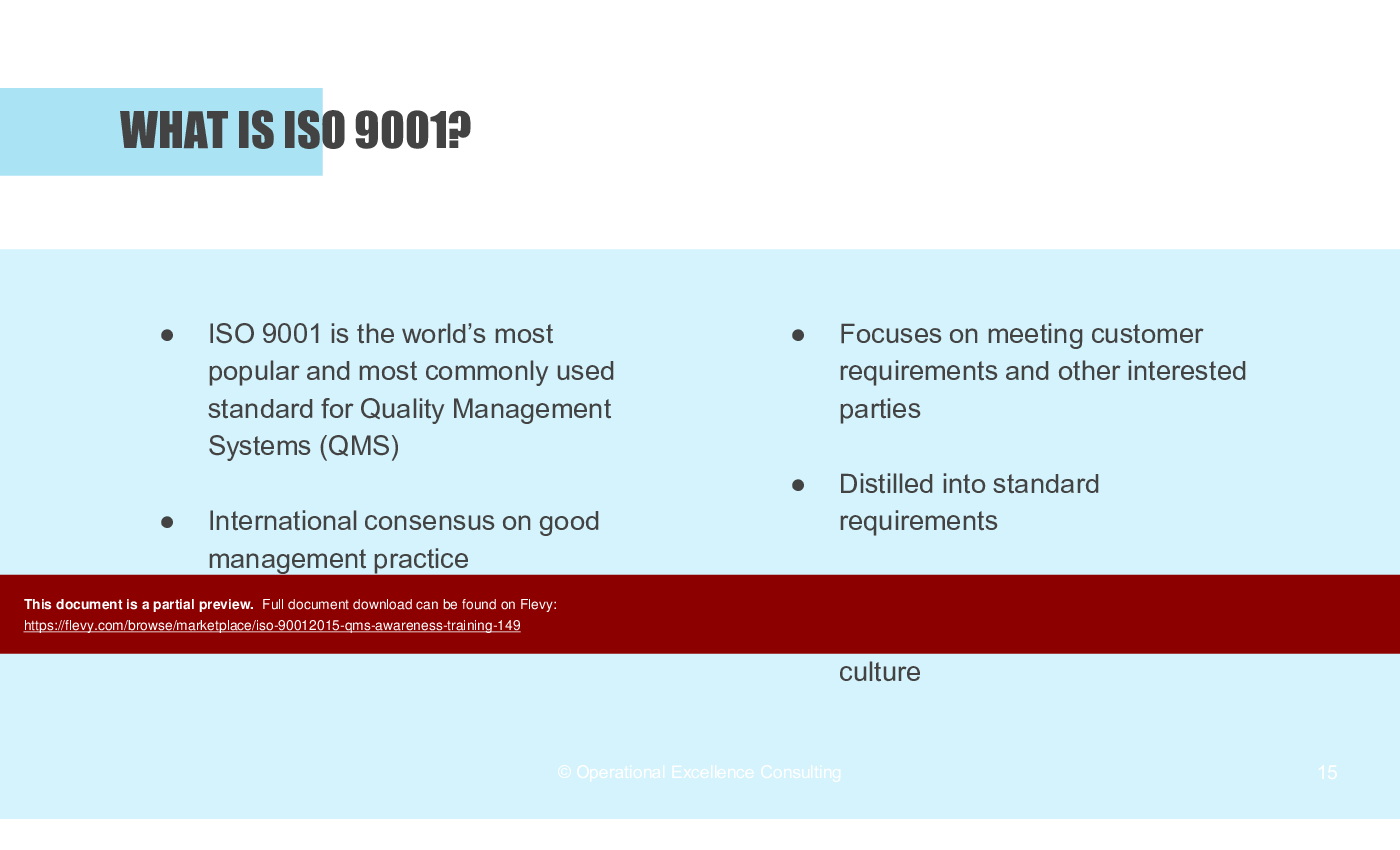
• What is ISO 9001?
• How Does ISO 9001 Work?
• Where Does ISO 9001 Come From?
• Why is a Quality Management System (QMS) Important?
• Advantages of Certification
• Accreditation & Certification Bodies
• Development of ISO 9001
• The Seven Quality Management Principles
• Why was ISO 9001 Revised?
• Key Improvements to ISO 9001:2015
• New Focus on Climate Action
• The Plan-Do-Check-Act (PDCA) Process Model
• Emphasis on Process Approach
• Risk-based Management
• Benefits of the New ISO 9001:2015
2. ISO 9001 Structure
• Annex L
• Annex L is a Framework for a Generic Management System
• High-Level Structure (HLS)
• The ISO 9001 Structure is Based on the High-Level Structure for Management System Standards
• HLS: The Same Core Elements
• ISO 9001:2015 Approach is Based on the PDCA Cycle
• PDCA and ISO 9001:2015 Clause Structure
• ISO 9001:2015 Key Clause Structure (4-10)
• Context of the Organization (updated clauses 4.1 and 4.2 now include climate-related considerations)
• Leadership
• Planning
• Support
• Operation
• Performance Evaluation
• Improvement
• 3 Steps to Align Your QMS with Climate Action
• The PDCA Cycle is the Engine of Continuous Improvement
• Continual Improvement
3. ISO 9001 Certification
• Becoming ISO 9001:2015 Certified
• Aligning/Transitioning to ISO 9001:2015
• ISO 9001:2015 Certification Process
• What Does Certification Assure?
4. Audit Approach
• What is a Quality Audit?
• What is an ISO Audit?
• What Are Audits Used For?
• Types of Quality Audits
• Internal Quality Audit
• Principles of Auditing
• Audit Focus
• Audit Approach
• Audit Emphasis
• Review of Documented Information
• Audit Findings
5. Handling an Audit Session
• Rights of Auditee
• Rights of Auditor
• How to Handle an Audit Session?
• Auditee's Conduct
• Interacting with Auditors: Do's
• Interacting with Auditors: Don'ts
Got a question about the product? Email us at support@flevy.com or ask the author directly by using the "Ask the Author a Question" form. If you cannot view the preview above this document description, go here to view the large preview instead.
PRESENTATION DEEP DIVE ANALYSIS
This deep-dive analysis was generated from the full 85-slide PowerPoint presentation.
Source: Best Practices in Quality Management, ISO 9001 PowerPoint Slides: ISO 9001:2015 (QMS) Awareness Training PowerPoint (PPTX) Presentation Slide Deck, Operational Excellence Consulting
ABOUT THE AUTHOR

Operational Excellence Consulting, founded in 2009 by Allan Ung, draws from extensive experience at Microsoft, IBM, and Underwriters Laboratories (UL). We specialize in strategy deployment, customer experience design, and operational excellence, applying Design Thinking, Lean, and Systems Thinking to maximize customer value and minimize waste.
Our
... [read more]
Ask the Author a Question
You must be logged in to contact the author.