
This presentation is created by former McKinsey, BCG, Deloitte, EY, and Capgemini consultants. It covers multiple Value Creation frameworks utilized by global strategy consulting firms.
Editor Summary
101-slide PowerPoint presentation titled Complete Guide to Value Creation, developed by former McKinsey, BCG, Deloitte, EY, and Capgemini consultants, delivering frameworks and slide templates to analyze and enhance Total Shareholder Return (TSR).
Read moreIncludes 5 core tools/templates: TSR Fact Base template, TSR Decomposition Model, Value Creation Strategy House model, management process redesign templates, and an investor strategy framework. Target users include corporate executives, strategy consultants, financial analysts, investor relations teams, and business unit leaders. Sold as a digital download on Flevy.
This deck is designed for situations where an organization needs to align management processes and capital allocation with shareholder-value objectives—such as strategic planning, investor communications, management-process redesign workshops, or training on value-based management.
Corporate executives setting TSR goals and defining capital-allocation priorities using a TSR fact base.
Strategy consultants building a TSR decomposition and identifying direct value-creation levers for client recommendations.
Investor relations teams preparing engagement plans that align business plans with dominant investor expectations.
Business unit leaders redesigning management processes and metrics to track TSR outcomes.
The guide’s 3-phase (9-step) process and 4-component Value Creation Framework reflect the structured, hypothesis-driven problem solving used at firms like McKinsey and BCG.
This presentation provides an in-depth discussion on Value Creation. Maximizing shareholder value is the strategic management philosophy driving countless organizations. The thinking here is the organization should first and foremost consider the interests of shareholders when making management decisions.
This presentation is broken into 3 core sections:
1. Total Shareholder Return (TSR) – TSR measures the change in a public company's stock price, in addition to its dividend yield, over a period of time. TSR is driven by 3 factors—Changes in Fundamental Value, Changes in Investor Expectations, Distribution of Free Cash Flow.
2. Value Creation Strategy – Developing a successful Value Creation Strategy requires a structured process for analyzing the dynamics of value creating in our organization and in our industry. We outline a 3-phase (9-step) approach to developing an integrated Value Creation Strategy.
3. Value Creation Framework – This framework is comprised of 4 components: Superior Relative Total Shareholder Return (RTSR), Value Creation Aspirations, Direct Levers of Value Creation, and Corporate Center Practices. We also compare this framework to traditional Value-Based Management (VBM) thinking.
This deck also includes slide templates for you to use in your own business presentations.
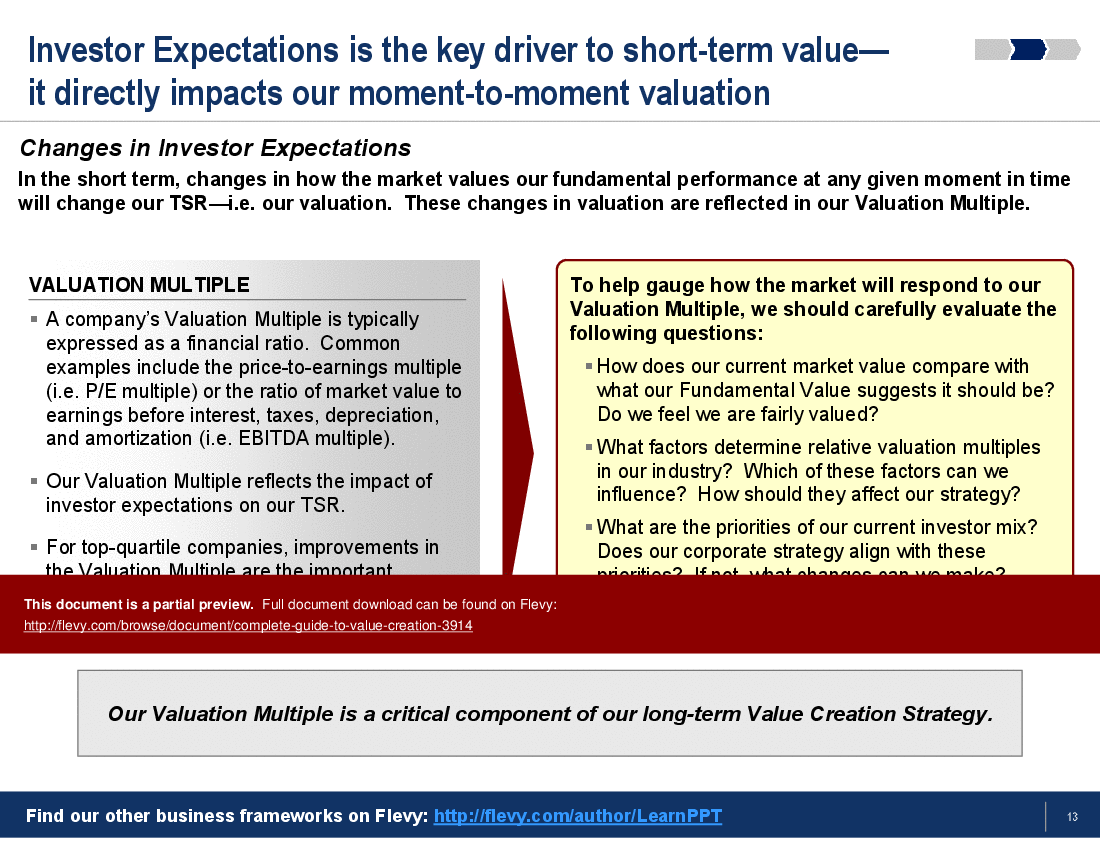
The guide delves into the nuances of investor expectations and their impact on short-term valuation. It emphasizes the importance of understanding the valuation multiple, a critical financial ratio reflecting investor sentiment. This component is essential for gauging market reactions and aligning corporate strategies with investor priorities. The presentation also provides a structured approach to redesigning management processes, ensuring that value creation strategies are seamlessly integrated into the company's operational framework.
The PPT further explores the significance of engaging with dominant investor groups to tailor strategies that resonate with their expectations. It outlines methods to quantify the TSR potential of current business plans, emphasizing the need for iterative evaluation and strategic adjustments. The guide concludes with practical templates and models for analyzing TSR sources, making it an indispensable resource for executives aiming to optimize shareholder value.
Got a question about the product? Email us at support@flevy.com or ask the author directly by using the "Ask the Author a Question" form. If you cannot view the preview above this document description, go here to view the large preview instead.
MARCUS OVERVIEW
This synopsis was written by Marcus [?] based on the analysis of the full 101-slide presentation.
Executive Summary
The "Complete Guide to Value Creation" presentation is a consulting-grade resource crafted by former consultants from McKinsey, BCG, Deloitte, EY, and Capgemini. This comprehensive guide focuses on maximizing Total Shareholder Return (TSR) through structured frameworks and strategic insights. It equips corporate executives and consultants with the necessary tools to analyze and enhance shareholder value, aligning management processes with value creation objectives. Users will gain a deep understanding of TSR drivers, develop actionable strategies, and implement best practices for sustainable value creation.
Who This Is For and When to Use
• Corporate executives focused on shareholder value enhancement
• Strategy consultants advising on value creation initiatives
• Financial analysts assessing company performance metrics
• Investor relations teams communicating value strategies
• Business unit leaders responsible for operational effectiveness
Best-fit moments to use this deck:
• During strategic planning sessions to align on TSR goals
• In workshops aimed at redesigning management processes
• When engaging with investor groups to discuss value creation strategies
• For training sessions on implementing value-based management practices
Learning Objectives
• Define Total Shareholder Return (TSR) and its significance in corporate strategy
• Analyze the core drivers of TSR: fundamental value, investor expectations, and free cash flow
• Develop a comprehensive TSR fact base to inform strategic decisions
• Establish appropriate TSR goals aligned with business objectives
• Redesign management processes to support value creation initiatives
• Engage effectively with dominant investor groups to align expectations
Table of Contents
• Overview of Value Creation (page 2)
• Total Shareholder Return (TSR) Overview (page 4)
• Value Creation Process (page 11)
• TSR Questions for the CEO (page 17)
• Value Creation Strategy Overview (page 20)
• Phase 1: Create TSR Fact Base (page 21)
• Phase 2: Establish TSR Goal (page 24)
• Phase 3: Redesign Management Processes (page 40)
• Value Creation Framework Overview (page 48)
• Component 1: Superior RTSR (page 56)
• Component 2: Value Creation Aspirations (page 62)
• Component 3: Direct Levers to Value Creation (page 68)
• Component 4: Corporate Center Practices (page 74)
Primary Topics Covered
• Total Shareholder Return (TSR) - TSR is the primary measure of value creation, encompassing stock price changes and dividend yields over time. Understanding its drivers is crucial for strategic management.
• Value Creation Strategy - A structured approach for analyzing organizational dynamics and industry factors that influence value creation, including a three-phase process for implementation.
• Value Creation Framework - This framework includes components such as Superior Relative Total Shareholder Return (RTSR), Value Creation Aspirations, and Direct Levers of Value Creation.
• Investor Engagement - Strategies for aligning business plans with investor expectations and effectively communicating value creation initiatives.
• Management Processes - Redesigning management practices to support value creation goals and align with corporate strategy.
Deliverables, Templates, and Tools
• TSR Fact Base template for identifying historical sources of TSR
• TSR Decomposition Model for analyzing TSR drivers
• Value Creation Strategy House model for aligning strategic priorities
• Management process redesign templates for integrating value creation goals
• Investor strategy framework for engaging with dominant investor groups
Slide Highlights
• Overview of TSR and its significance in corporate strategy
• Detailed breakdown of the TSR Decomposition Model
• Visual representation of the Value Creation Strategy House
• Key questions for CEOs regarding value creation strategy
• Framework for aligning corporate center practices with value creation goals
Potential Workshop Agenda
Value Creation Strategy Workshop (90 minutes)
• Introduction to TSR and its importance in corporate strategy
• Discuss the TSR Decomposition Model and its application
• Identify historical sources of TSR within the organization
Investor Engagement Session (60 minutes)
• Analyze dominant investor groups and their expectations
• Develop strategies for aligning business plans with investor priorities
• Create a communication plan for engaging with investors
Management Process Redesign Session (90 minutes)
• Review current management processes and identify gaps
• Redesign processes to support value creation initiatives
• Establish metrics for tracking progress against TSR goals
Customization Guidance
• Tailor the TSR fact base to reflect specific organizational metrics and historical performance
• Adjust the Value Creation Strategy House model to align with unique business objectives
• Incorporate industry-specific benchmarks into the TSR Decomposition Model
• Modify investor engagement strategies based on the specific investor mix of the organization
Secondary Topics Covered
• Long-term vs. short-term value considerations
• The impact of dividends and free cash flow on TSR
• The role of competitive strategy in value creation
• Portfolio management practices for optimizing value
• Corporate center practices that support value creation
Topic FAQ
What are the main drivers of Total Shareholder Return (TSR)?
TSR is driven by 3 core factors: changes in fundamental value, changes in investor expectations, and the distribution of free cash flow. These drivers are the basis for analyzing past performance and forecasting potential shareholder returns, organized in the guide as the primary TSR decomposition inputs, i.e., 3 drivers.
What are the phases of a value creation strategy in this approach?
The presentation outlines a 3-phase (9-step) approach: Phase 1 Create TSR Fact Base, Phase 2 Establish TSR Goal, and Phase 3 Redesign Management Processes. Each phase includes specific templates and analysis steps to build an integrated value creation plan, captured across the deck’s Phase 1–3 slides.
What is a TSR Decomposition Model and how is it used?
A TSR Decomposition Model breaks total shareholder return into component drivers—price appreciation, valuation multiple changes, dividend yield, and cash distribution effects—to diagnose historical sources of TSR and quantify future potential. The guide includes a dedicated TSR Decomposition Model template for this analysis.
What should I look for when choosing a value-creation toolkit for executive strategy work?
Choose a toolkit that provides a clear TSR definition, a fact-base template, a decomposition model, tools for setting TSR goals, and process-redesign templates to embed value priorities. Flevy’s Complete Guide to Value Creation explicitly lists a TSR Fact Base template and a TSR Decomposition Model among its deliverables.
How much time should I budget to run a value creation workshop using materials like these?
The guide provides sample agendas with typical session lengths: a 90-minute Value Creation Strategy Workshop, a 60-minute Investor Engagement Session, and a 90-minute Management Process Redesign Session. Budget for focused 60–90 minute sessions depending on scope, with the 90-minute workshop as a core option.
I need to present a TSR-based plan to investors—what framework helps align expectations?
Use an investor strategy framework combined with a TSR fact base and the Value Creation Strategy House to show how business plans map to TSR drivers and investor priorities. The presentation includes an investor strategy framework and guidance on analyzing dominant investor groups for alignment.
How can managers redesign processes to support value creation?
Managers should review current management processes to identify gaps, redesign decision gates and metrics to prioritize TSR drivers, and establish tracking systems for TSR goals. The deck supplies management process redesign templates and recommends establishing metrics tied to TSR outcomes.
Are slide templates and models worth purchasing rather than building internally for value-creation work?
Consider whether ready-made templates cover the specific analyses you need and can be tailored to your data; customization guidance in the deck includes adapting the TSR fact base and decomposition model to organizational metrics. Flevy’s Complete Guide to Value Creation includes slide templates such as the TSR Fact Base and TSR Decomposition Model.
Document FAQ
These are questions addressed within this presentation.
What is Total Shareholder Return (TSR)?
TSR is a measure that combines stock price appreciation and dividend yield to assess the total return to shareholders over a specific period.
How can I use this presentation to improve our value creation strategy?
This presentation provides frameworks and tools to analyze TSR drivers, set strategic goals, and redesign management processes to enhance shareholder value.
What are the core drivers of TSR?
The core drivers of TSR include changes in fundamental value, changes in investor expectations, and the distribution of free cash flow.
How do I engage with dominant investor groups effectively?
Understanding the priorities of your dominant investors and aligning your value creation strategy with their expectations is key to effective engagement.
What is the Value Creation Framework?
The Value Creation Framework is a structured approach that includes components such as Superior RTSR, Value Creation Aspirations, and Direct Levers to Value Creation, designed to enhance shareholder value.
How can I measure the success of our value creation initiatives?
Success can be measured through tracking TSR, evaluating management processes, and assessing alignment with investor expectations.
What is the importance of redesigning management processes?
Redesigning management processes ensures that organizational practices are aligned with value creation goals, facilitating better decision-making and accountability.
How can I customize the templates provided in this presentation?
Templates can be customized by incorporating specific organizational data, adjusting metrics to reflect industry standards, and aligning with unique strategic objectives.
Glossary
• Total Shareholder Return (TSR) - A measure of the total return to shareholders, including stock price changes and dividends.
• Value Creation Strategy - A structured approach to enhancing shareholder value through strategic planning and management processes.
• Relative Total Shareholder Return (RTSR) - A metric comparing a firm's TSR to that of its peers or market index.
• Free Cash Flow - Cash generated by a company after accounting for capital expenditures, available for distribution to investors.
• Investor Strategy - A plan for engaging with different investor segments to align expectations and enhance value perception.
• Corporate Center Practices - Headquarters activities that influence organizational culture and align with value creation goals.
• Decomposition Model - A framework for analyzing the components contributing to TSR.
• Operational Effectiveness - The efficiency with which a company utilizes its resources to achieve its objectives.
• Portfolio Management - The process of managing a company's investments to optimize returns.
• Competitive Strategy - The approach a company takes to gain a competitive advantage in its industry.
• Management Processes - The systems and practices used to guide decision-making and resource allocation within an organization.
• Dividends - Payments made to shareholders from a company's earnings.
• Valuation Multiple - A financial metric used to compare a company's market value to a financial performance measure, such as earnings.
• Earnings Before Interest and Taxes (EBIT) - A measure of a firm's profit that includes all expenses except interest and income tax expenses.
• Economic Value Added (EVA) - A measure of a company's financial performance that shows the net profit after deducting the cost of capital.
• Return on Investment (ROI) - A performance measure used to evaluate the efficiency of an investment.
• Strategic Planning - The process of defining a company's direction and making decisions on allocating resources to pursue that direction.
• Capital Allocation - The process of deciding how to distribute financial resources among various projects or investments.
• Incentive Compensation - Financial rewards given to employees based on performance metrics.
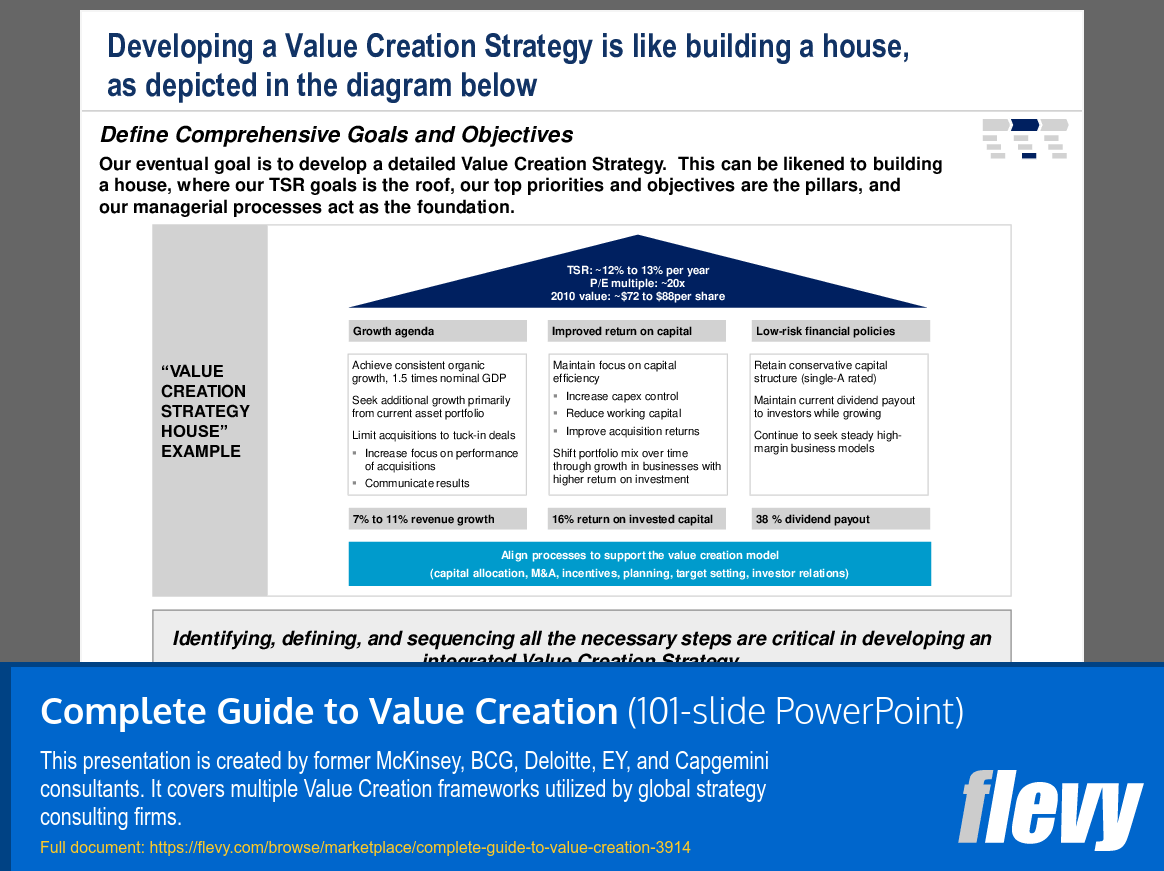
This PPT slide outlines a structured approach to developing a Value Creation Strategy, likening it to constructing a house. The strategy aligns with financial targets, represented as the roof, while organizational priorities and objectives serve as the pillars, and managerial processes form the foundation. Key areas include:
1. Growth Agenda: Achieving consistent organic growth at 1.5 times nominal GDP, with a revenue growth target of 7% to 11% and focusing on easily integrated acquisitions.
2. Improved Return on Capital: Enhancing capital efficiency through capex control and reduced working capital, targeting a 16% return on invested capital.
3. Low-Risk Financial Policies: Maintaining a conservative capital structure with a single-A rating and a steady 38% dividend payout to ensure investor confidence while pursuing growth.
Aligning these components is essential for effective strategy development.
This PPT slide outlines a framework for managing value creation through 3 interconnected dimensions that influence total shareholder return (TSR). The first dimension focuses on managing fundamental value for long-term growth, requiring a comprehensive strategy that aligns with long-term objectives. The second dimension addresses managing investor expectations for short-term value, emphasizing the alignment of communication and performance metrics with investor perceptions. The third dimension revolves around managing free cash flow yield, highlighting the importance of prioritizing cash utilization for operational needs and shareholder interests. Coordinating these dimensions is essential, as changes in one area significantly impact the others, necessitating an integrated approach to drive sustainable performance and meet stakeholder expectations.
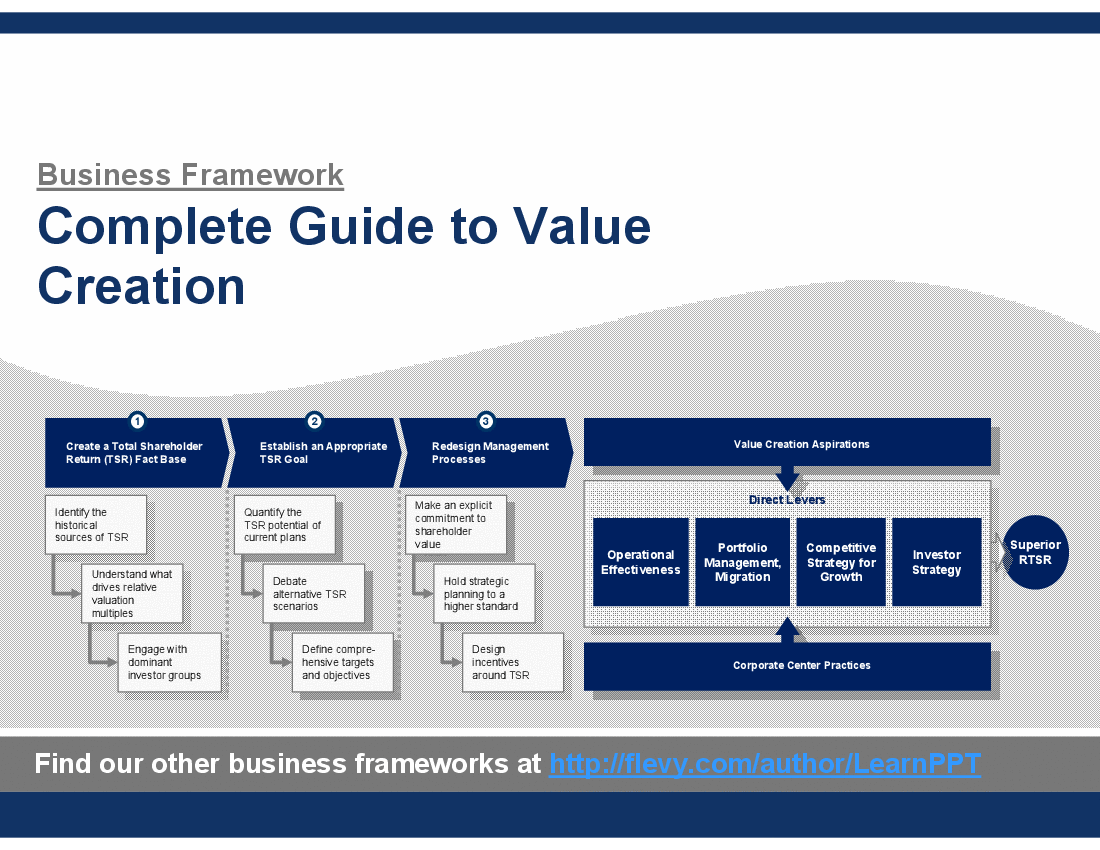
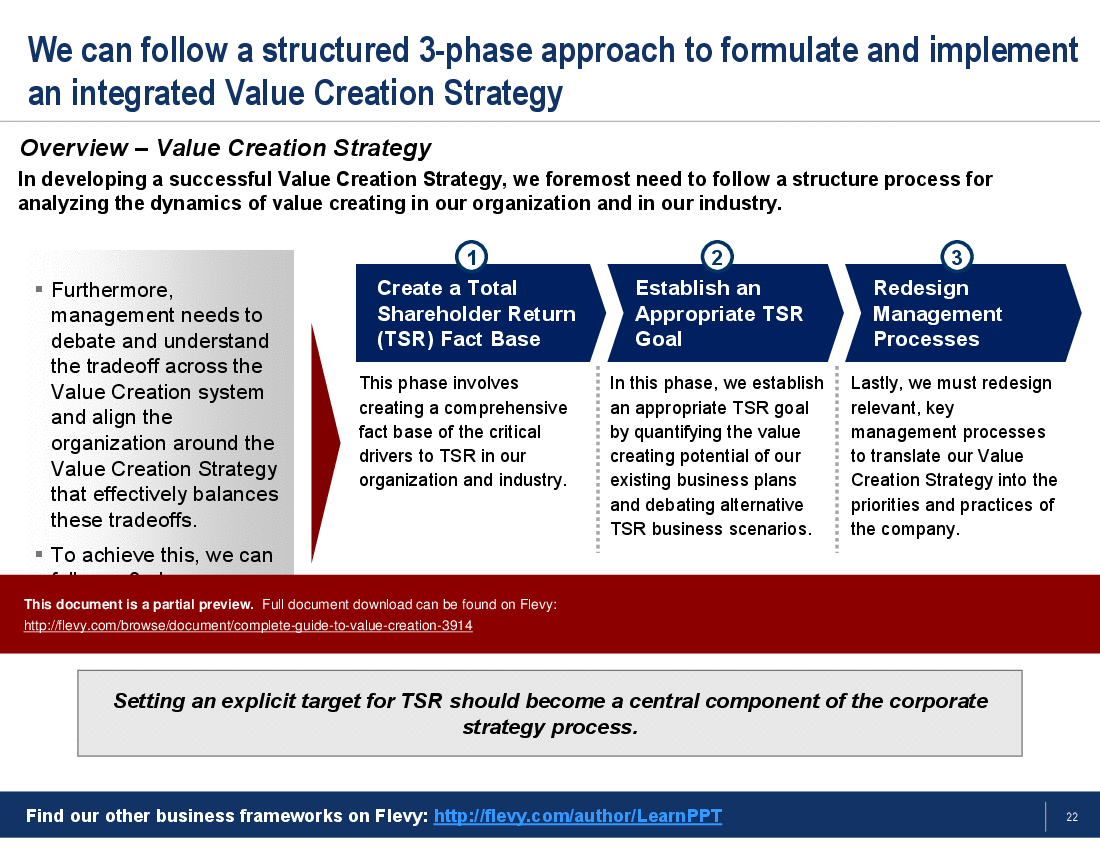
This PPT slide outlines a structured Value Creation Strategy divided into 3 phases: "Create a Total Shareholder Return (TSR) Fact Base," "Establish TSR Goals," and "Redesign Management Processes." The first phase focuses on understanding historical TSR sources, analyzing factors influencing relative valuation multiples, and engaging with investor groups for insights. The second phase emphasizes quantifying strategic plans and debating various TSR scenarios to define targets aligned with the strategic vision. The final phase aims to embed shareholder value in operational frameworks, including higher standards for strategic planning and aligning incentives with TSR objectives. This framework provides a roadmap for enhancing value creation and informs strategic decisions and long-term performance.
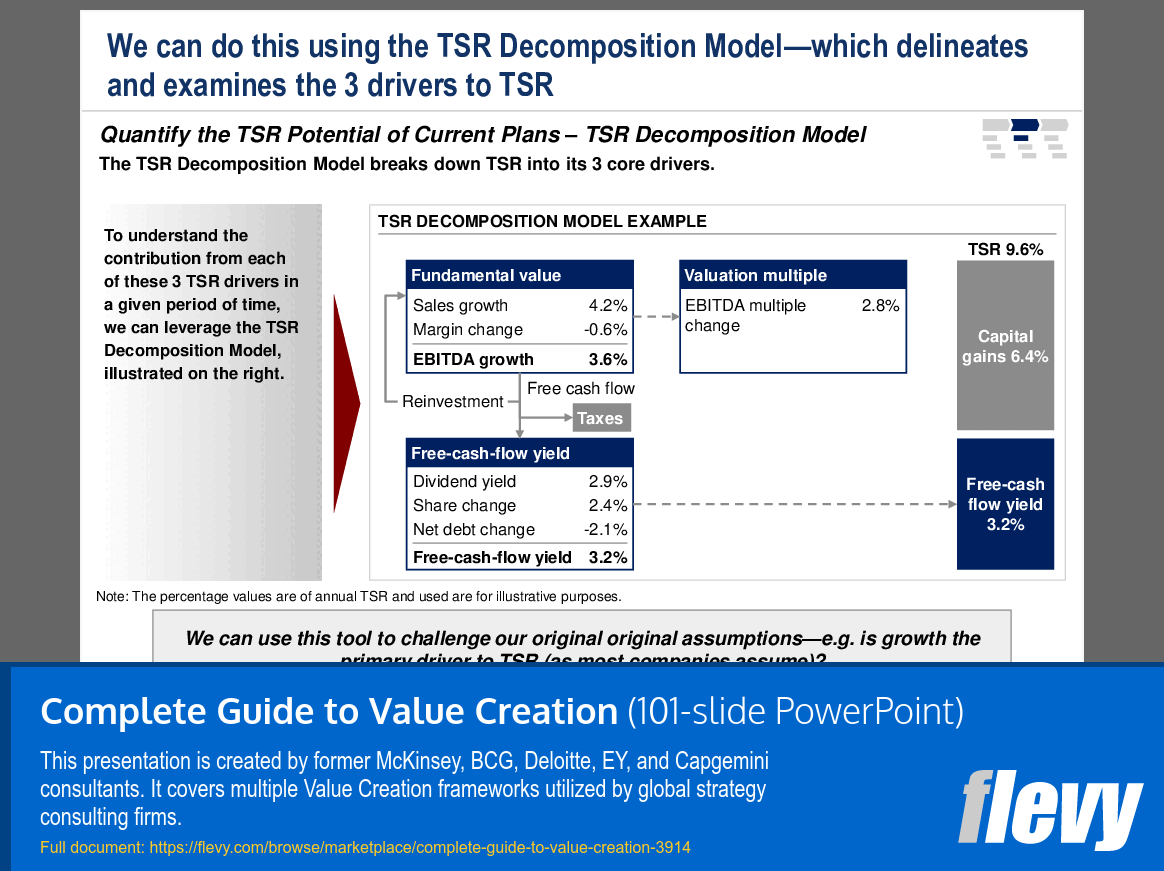
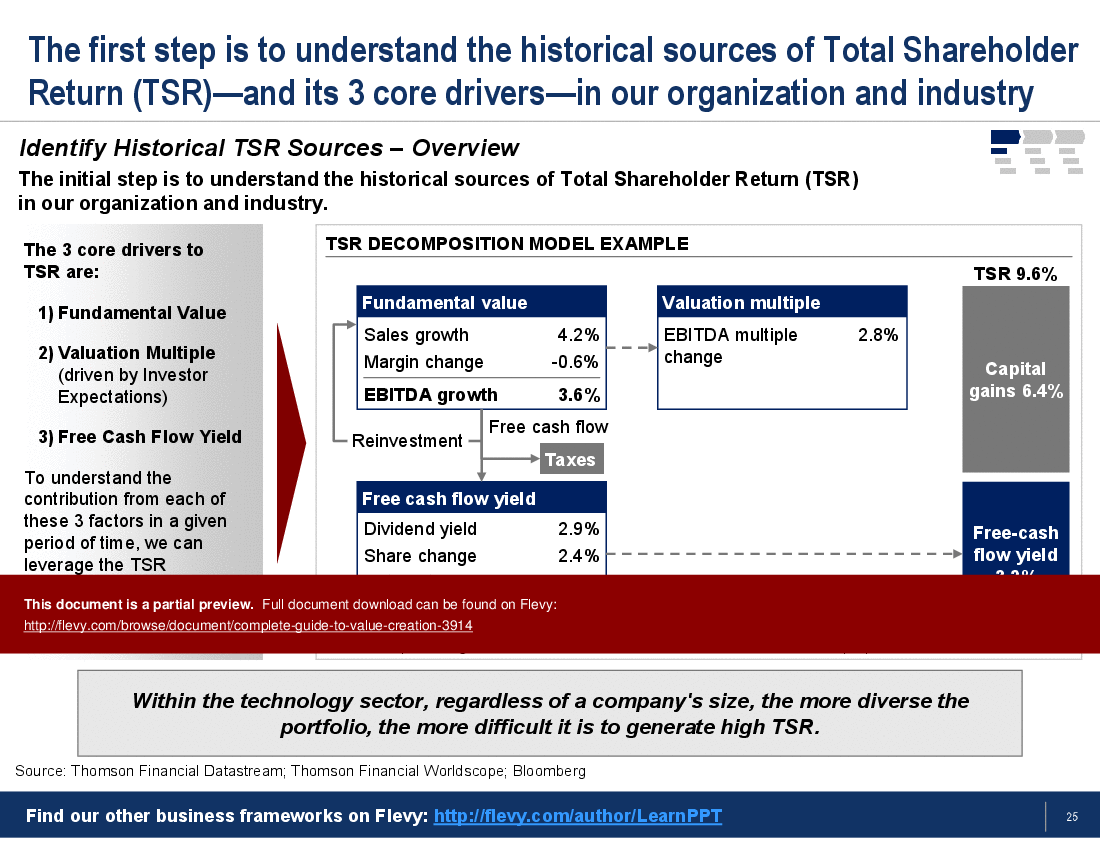
The TSR (Total Shareholder Return) Decomposition Model analyzes the components of TSR, highlighting 3 main drivers: fundamental value, valuation multiple, and free-cash-flow yield. TSR is calculated at 9.6%. Under fundamental value, sales growth is 4.2%, margin change is -0.6%, and EBITDA growth is 3.6%, indicating mixed performance. The valuation multiple shows an EBITDA multiple change of 2.8%, reflecting market perceptions of earnings potential. The free-cash-flow yield includes dividend yield (2.9%), share change (2.4%), and net debt change (-2.1%), resulting in an overall yield of 3.2%. This model serves as a tool for executives to analyze and optimize strategies for enhancing shareholder returns.
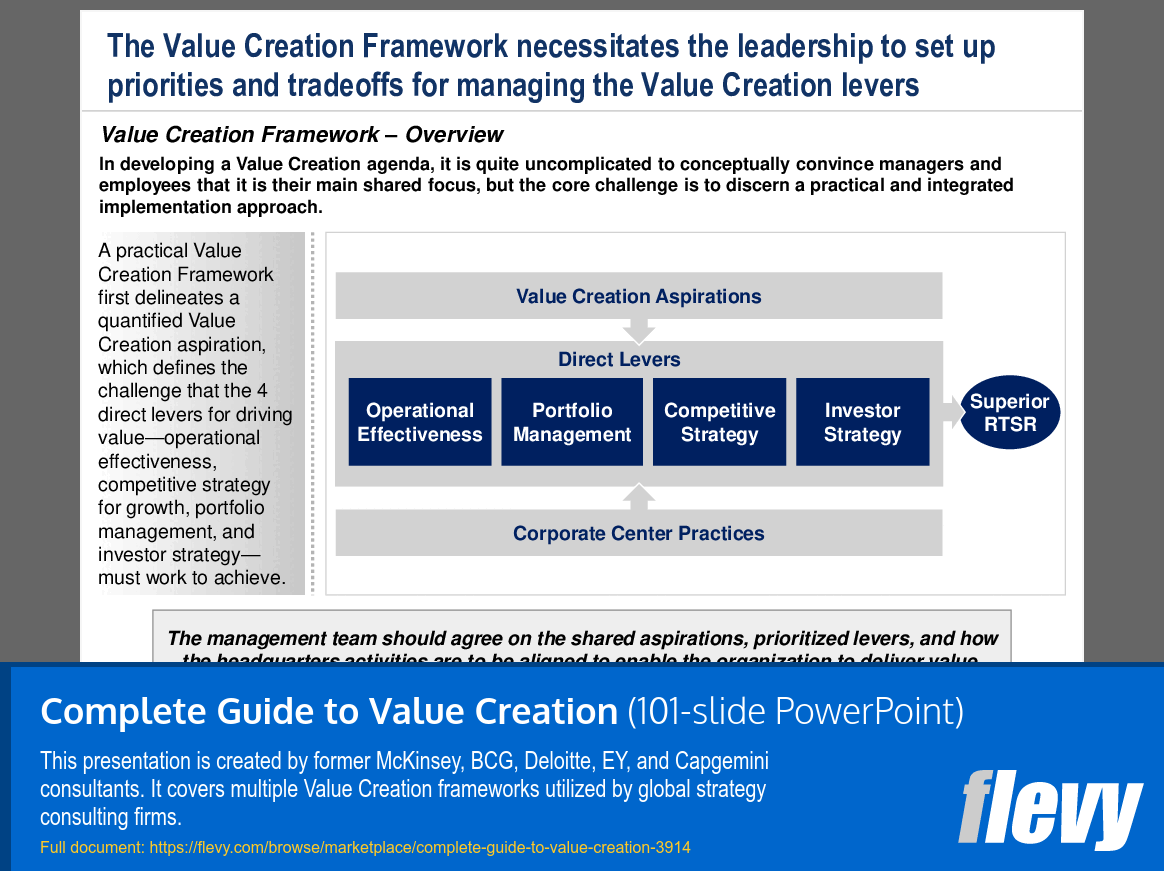
The Value Creation Framework emphasizes the need for leadership to establish priorities and manage trade-offs among levers that drive value. Central to this framework are Value Creation Aspirations, which define quantified goals supported by 4 levers: Operational Effectiveness, Portfolio Management, Competitive Strategy, and Investor Strategy. These levers must work together to effectively drive value. Additionally, Corporate Center Practices refer to the governance structures that support these strategies, indicating a holistic approach is necessary. The management team must align their activities with shared aspirations and prioritized levers to navigate the complexities of value creation effectively.
The TSR Decomposition Model evaluates 3 key drivers: Fundamental Value, Valuation Multiple, and Free Cash Flow Yield. Fundamental Value includes sales growth of 4.2% and a margin change of -0.6%, resulting in EBITDA growth of 3.6%. Reinvestment and taxes also influence free cash flow, essential for sustaining operations and funding growth. The Valuation Multiple section notes an EBITDA multiple change of 2.8%, indicating market expectations of future performance. Finally, the Free Cash Flow Yield segment tracks cash flow distribution, with a dividend yield of 2.9%, share change of 2.4%, and net debt change of -2.1%, leading to a free cash flow yield of 3.2%. These components interact to provide a comprehensive view of value creation and financial performance.
This PPT slide analyzes a company's value creation strategies over time, highlighting the relationship between cumulative returns and strategic focus across a 20-year period. From 1985 to 2004, total shareholder return (TSR) fluctuated significantly, with a peak of 26% in the mid-1990s due to sales growth and margin improvements. However, by 2004, TSR declined to -2%, attributed to strong growth at the expense of cash flow and deteriorating margins. The analysis underscores the necessity for companies to adapt their value creation strategies in response to changing market conditions and internal performance metrics, emphasizing agility in a dynamic business environment.
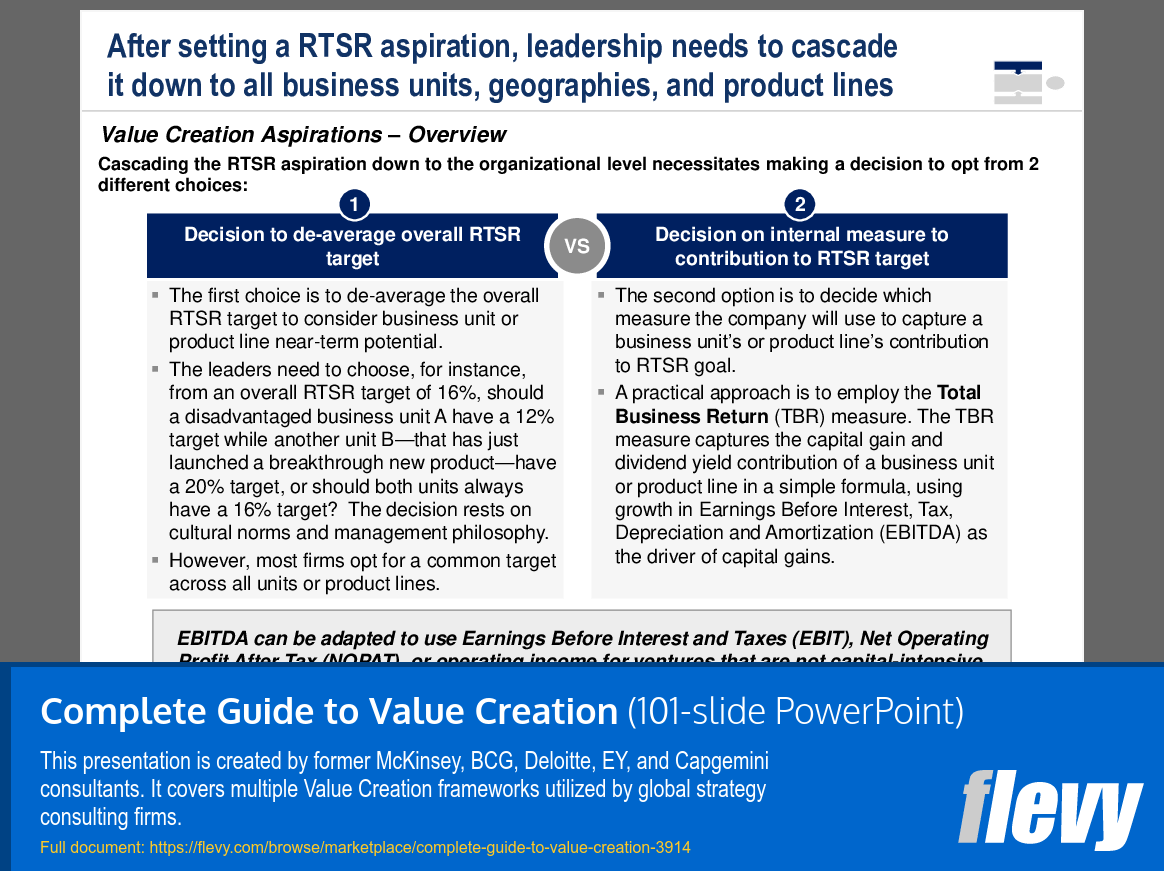
This PPT slide outlines 2 critical decisions for leadership after establishing a Return to Shareholders (RTSR) aspiration. The first decision is whether to de-average the RTSR target, allowing for tailored targets for individual business units or product lines. For instance, a struggling unit might have a target of 12%, while a successful unit could aim for 20%. This decision is influenced by the organization's cultural norms and management philosophy, with many firms typically opting for a uniform target.
The second decision involves measuring each unit's contribution to the RTSR goal, with the Total Business Return (TBR) measure recommended for quantifying capital gain and dividend yield. TBR simplifies calculations by using Earnings Before Interest, Tax, Depreciation, and Amortization (EBITDA) as the primary driver of capital gains. These decisions directly impact how effectively the company pursues its RTSR aspirations while ensuring accountability across units.
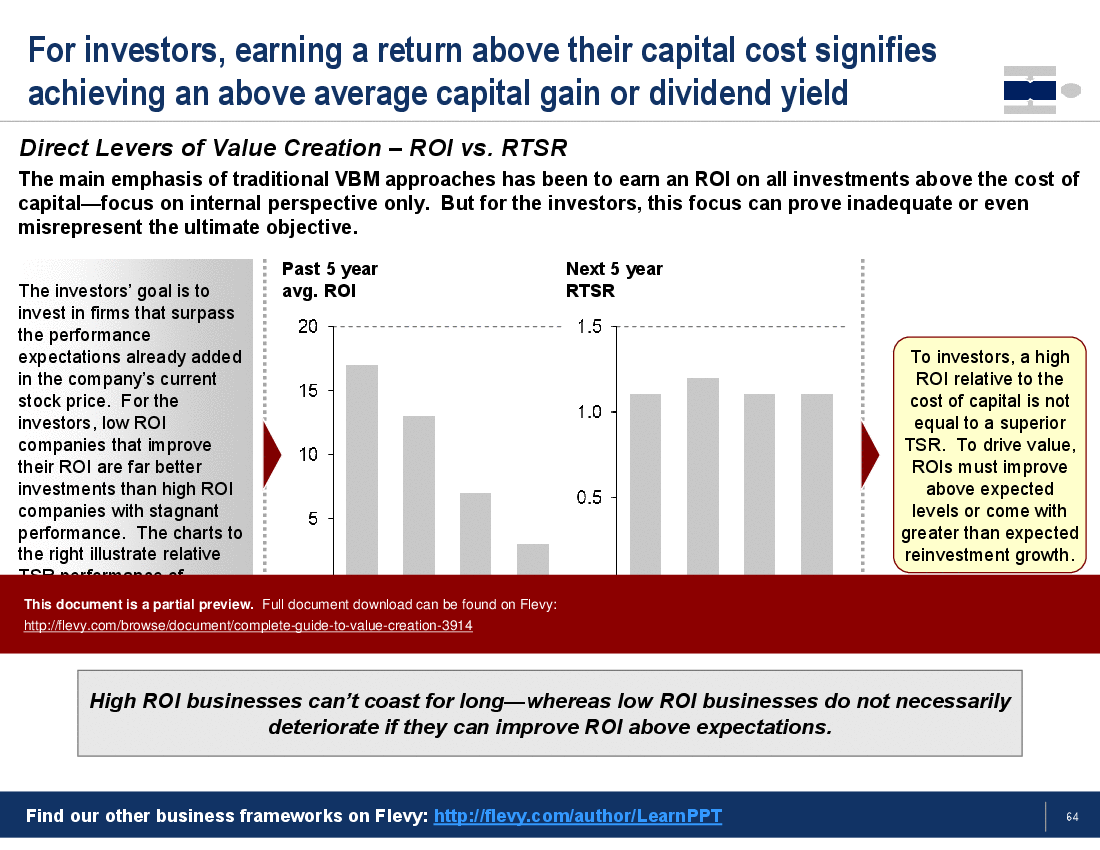
This PPT slide analyzes value creation across industries, demonstrating that success is not limited to specific sectors. The chart displays average annual Total Shareholder Return (TSR) from 2000 to 2004, revealing performance disparities among sectors. Technology and Media show low TSR, indicating challenges, while Consumer and Utilities exhibit higher TSR figures. This data suggests that top performers exist in all industries, challenging the belief that certain sectors are inherently less capable of generating value. The commentary emphasizes that consistently outperforming the market requires innovation and strategic focus on value creation, regardless of industry context.
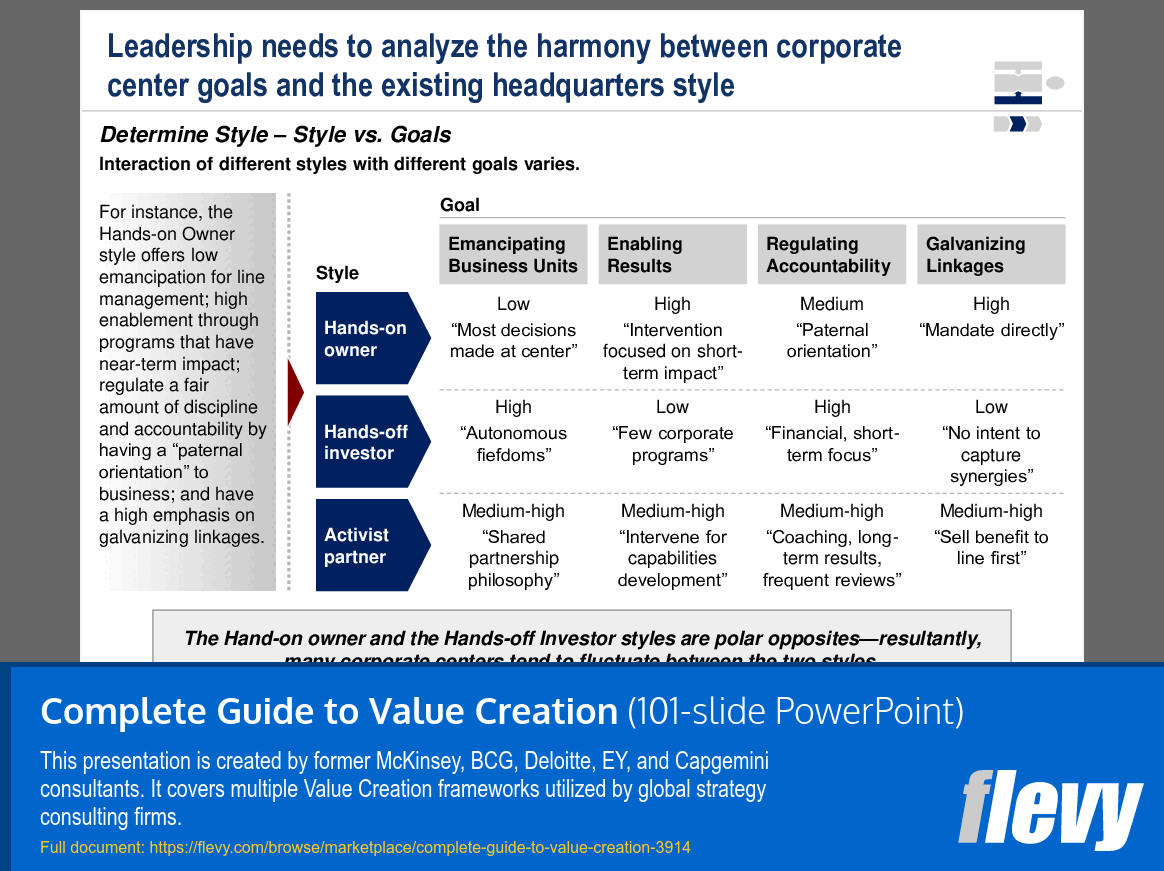
This PPT slide categorizes 3 leadership styles: Hands-on Owner, Hands-off Investor, and Activist Partner, evaluated against 4 goals: Emancipating Business Units, Enabling Results, Regulating Accountability, and Galvanizing Linkages. The Hands-on Owner style features centralized decision-making, emphasizing short-term impact and medium accountability through direct intervention. The Hands-off Investor style promotes autonomy with decentralized decision-making, focusing on independent operations and strong financial accountability,, but with minimal synergy capture. The Activist Partner style balances intervention and collaboration, emphasizing long-term results and capability development. Organizations often oscillate between the Hands-on Owner and Hands-off Investor styles, impacting alignment with corporate objectives.
Total Shareholder Return (TSR) is a key metric for assessing value creation in public companies, encompassing changes in stock price and dividend yield over time. The 3 primary drivers of TSR include:
1. Changes in Fundamental Value, which refers to the discounted value of future cash flows, including margins, asset productivity, cost of capital, and growth potential.
2. Changes in Investor Expectations, quantified through a company's expectation premium, highlighting the influence of market perceptions on short-term valuations.
3. Distribution of Free Cash Flow, focusing on how companies allocate free cash flow to investors via dividends, share buybacks, or debt repayments, impacting shareholder satisfaction and perceived value creation.
TSR is a comprehensive measure that informs investment decisions and corporate strategies.
This PPT slide outlines a structured approach for implementing effective corporate center practices in 3 phases. The first phase focuses on balancing 4 core goals: emancipation, enablement, regulation, and galvanization, which are essential for maximizing organizational potential. The second phase addresses corporate center style, differentiating between centralized and decentralized management styles, which significantly impact operational effectiveness. The final phase emphasizes aligning corporate center practices with established goals and management style to support strategic direction. This alignment is critical for enhancing operational efficiency and value creation within the organization.
This PPT slide outlines a structured approach to enhancing company value creation through brand establishment and investor strategy. A strong brand mitigates discounts and enables a sustainable premium over intrinsic value. Key focus areas include acquisition, diversification, and capital structure, which influence investor perceptions and business strategy. The Fact-Based Development section emphasizes segmenting investors by investment style and assessing company credibility to enhance valuation. The Tailored Communication/Outreach Strategy details executing a communication plan that targets new investors, reports on business lines, and maintains transparency through strategic milestone reporting. A sustainable brand is essential for maintaining investor confidence and preventing value erosion, guiding organizations in refining investor strategies and enhancing market positioning.
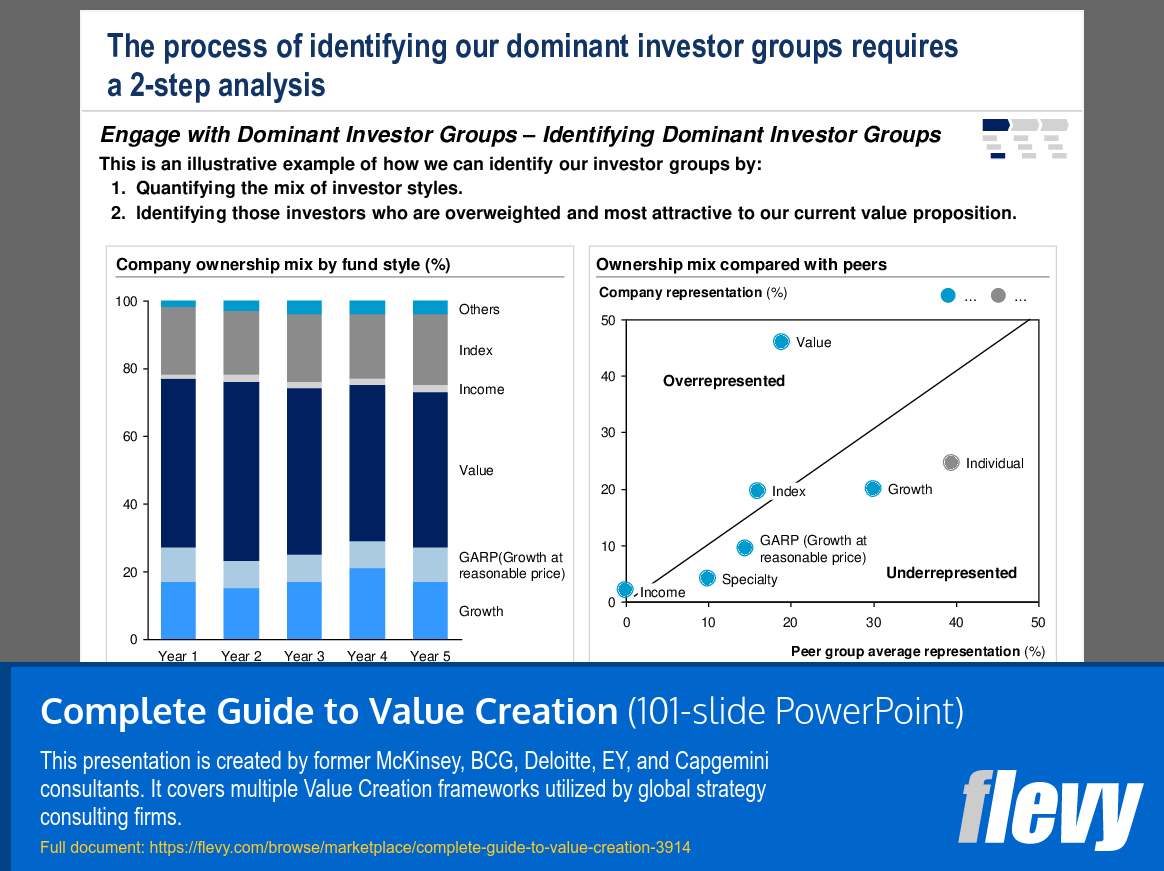
This PPT slide outlines a structured approach to identifying dominant investor groups through a two-step analysis. The left section categorizes the company’s ownership mix by fund style—Value, Growth, GARP (Growth at Reasonable Price), Income, Index, and Others—over a five-year period, showing their respective ownership percentages. The right section features a scatter plot comparing the company’s ownership mix to peer averages, with axes for company and peer representation percentages. Key fund styles are plotted, revealing overrepresented styles like Value and Index, and underrepresented styles such as Income and Specialty. This analysis informs strategic decision-making by aligning investment strategies with market dynamics and enhancing investor engagement.
Source: Best Practices in Value Creation PowerPoint Slides: Complete Guide to Value Creation PowerPoint (PPT) Presentation Slide Deck, LearnPPT Consulting
This presentation is created by former McKinsey, BCG, Deloitte, EY, and Capgemini consultants. It covers multiple Value Creation frameworks utilized by global strategy consulting firms.
We are a team of management consultants trained by top tier global consulting firms (including McKinsey, BCG, Deloitte, EY, Capgemini) with a collective experience of several decades. We specialize in business frameworks based on real-life consulting engagements.
We have served 100s of clients that range from Fortune 500 companies to tech startups to
... [read more] $1B+ private companies.
Utilize our consulting frameworks to apply structured thinking & analysis to address your business challenges, uncover strategic insights, and implement workable solutions. Our PowerPoint presentations follow traditional consulting slide design formats, starting with a clear slide headline. Easily customize and repurpose our slides for your own business presentations.
Beyond business frameworks & methodologies, we also offer PowerPoint templates and other business templates. Our templates are professionally designed and have been used in thousands of deliverables & work products across hundreds of clients.
The average daily rate of a McKinsey consultant is $6,625 (not including expenses). The average price of a Flevy document is $65.
Trusted by over 10,000+ Client Organizations
Since 2012, we have provided business templates to over 10,000 businesses and organizations of all sizes, from startups and small businesses to the Fortune 100, in over 130 countries.
Read Customer Testimonials
"I have used FlevyPro for several business applications. It is a great complement to working with expensive consultants. The quality and effectiveness of the tools are of the highest standards."
– Moritz Bernhoerster, Global Sourcing Director at Fortune 500
"The wide selection of frameworks is very useful to me as an independent consultant. In fact, it rivals what I had at my disposal at Big 4 Consulting firms in terms of efficacy and organization."
– Julia T., Consulting Firm Owner (Former Manager at Deloitte and Capgemini)
"As a small business owner, the resource material available from FlevyPro has proven to be invaluable. The ability to search for material on demand based our project events and client requirements was great for me and proved very beneficial to my clients. Importantly, being able to easily edit and tailor
the material for specific purposes helped us to make presentations, knowledge sharing, and toolkit development, which formed part of the overall program collateral. While FlevyPro contains resource material that any consultancy, project or delivery firm must have, it is an essential part of a small firm or independent consultant's toolbox.
"
– Michael Duff, Managing Director at Change Strategy (UK)
"My FlevyPro subscription provides me with the most popular frameworks and decks in demand in today’s market. They not only augment my existing consulting and coaching offerings and delivery, but also keep me abreast of the latest trends, inspire new products and service offerings for my practice, and educate me
in a fraction of the time and money of other solutions. I strongly recommend FlevyPro to any consultant serious about success.
"
– Bill Branson, Founder at Strategic Business Architects
"As a niche strategic consulting firm, Flevy and FlevyPro frameworks and documents are an on-going reference to help us structure our findings and recommendations to our clients as well as improve their clarity, strength, and visual power. For us, it is an invaluable resource to increase our impact and value."
– David Coloma, Consulting Area Manager at Cynertia Consulting
"As a consulting firm, we had been creating subject matter training materials for our people and found the excellent materials on Flevy, which saved us 100's of hours of re-creating what already exists on the Flevy materials we purchased."
– Michael Evans, Managing Director at Newport LLC
"As a consultant requiring up to date and professional material that will be of value and use to my clients, I find Flevy a very reliable resource.

The variety and quality of material available through Flevy offers a very useful and commanding source for information. Using Flevy saves me time, enhances my expertise and ends up being a good decision."
– Dennis Gershowitz, Principal at DG Associates
"I like your product. I'm frequently designing PowerPoint presentations for my company and your product has given me so many great ideas on the use of charts, layouts, tools, and frameworks. I really think the templates are a valuable asset to the job."
– Roberto Fuentes Martinez, Senior Executive Director at Technology Transformation Advisory
Download our free compilation of 50+ Strategy & Transformation slides and templates. Frameworks include McKinsey 7-S, Balanced Scorecard, Disruptive Innovation, BCG Curve, and many more.